In a Nutshell:
- Bale grazing is a way of feeding livestock in the winter by providing bales of hay to animals out on the land, instead of indoors.
- By spreading bales around, farmers can distribute fertilizer deposition and wear across the pasture.
- Adam Ledvina bale-grazes goats on pasture and was curious to learn how animal traffic near the unspooled bales affected the soil and plant community.
Key Findings:
- Areas covered by the tracks of the unspooled prairie hay bales had higher species diversity.
- Soil under the areas of unspooled bales had higher phosphorus, potassium, and micronutrients than non-bale-grazed areas.
- Bale-grazed areas also had deeper soil penetrability.
Background

Methods
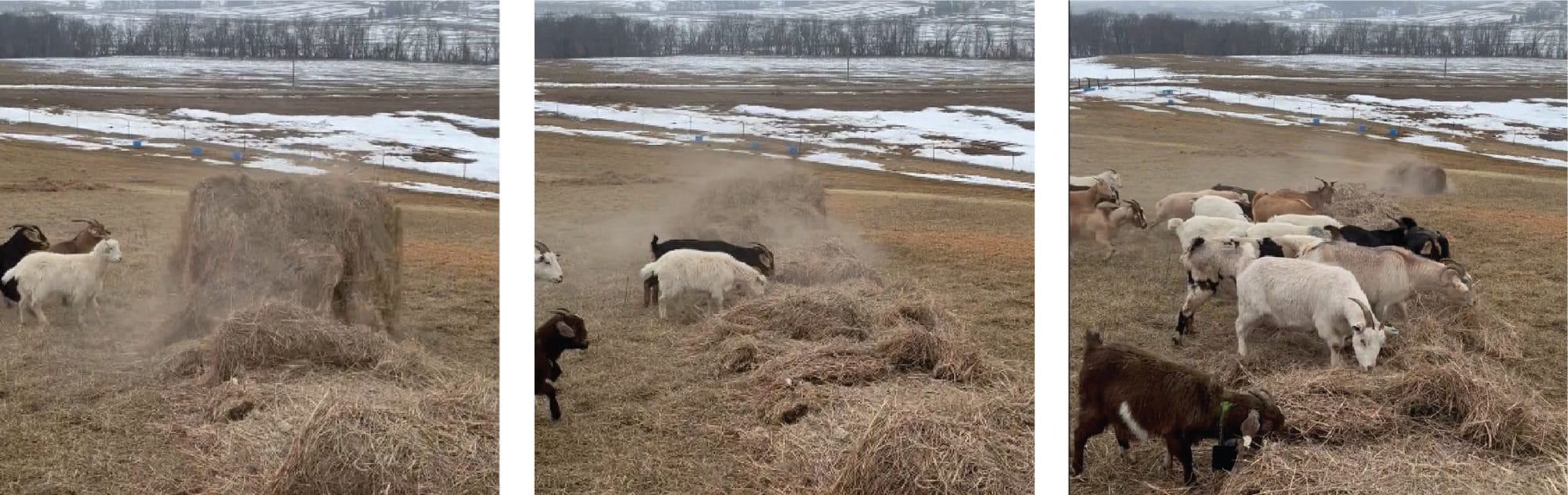
Ledvina hayed mixed prairie into round bales. Prairie hay has a higher diversity of plants, with a greater range of digestibilities, than monocultural timothy or alfalfa hay. Round bales were unrolled, either by hand, by gravity (downhill), or by bale roller arm off the bed of a truck. As the bale unrolls it leaves a swath of hay four feet wide (the height of the bale) by approximately 100 yards. Ledvina has a herd of 500 head of goats. He rolled out one bale every other day throughout the winter, from December 5, 2023, through March 15, 2024. Near the end of winter Ledvina invested in the afore-mentioned bale-roller arm, which allowed him to unspool the bale from the back of his moving truck, giving him more control over the layout of the strip. The field was not grazed after the end of the bale grazing, so observations on the effects of the treatment were not swayed by goat activity after the end of treatment.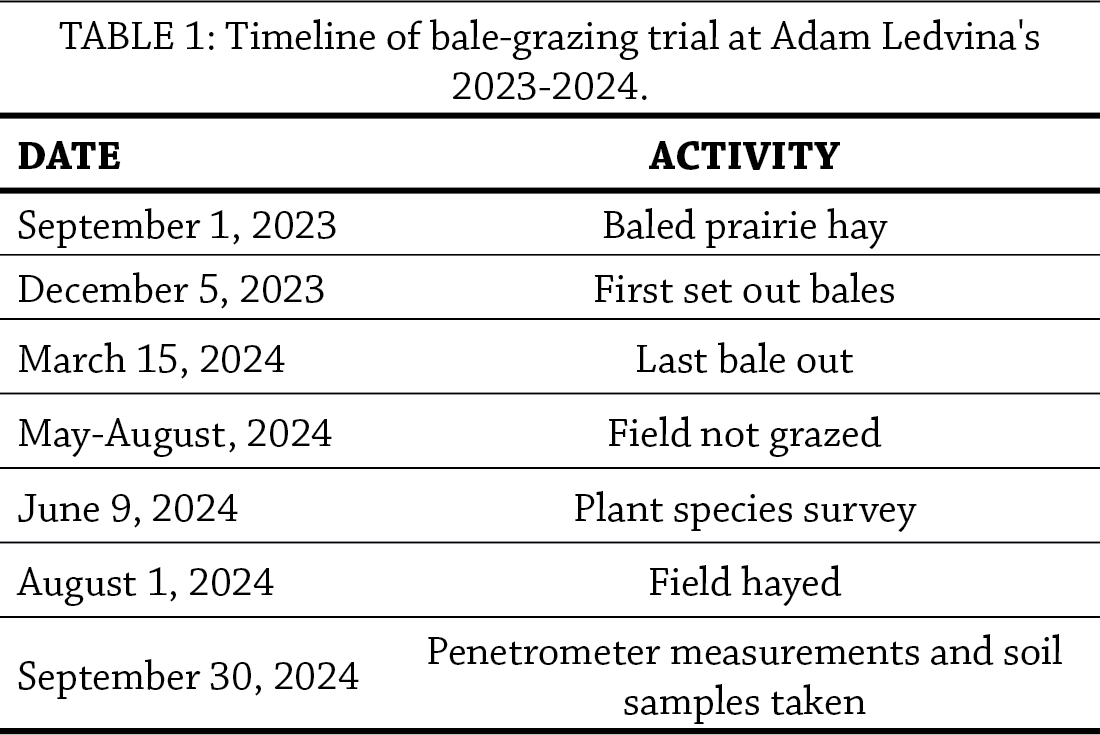
Results and Discussion
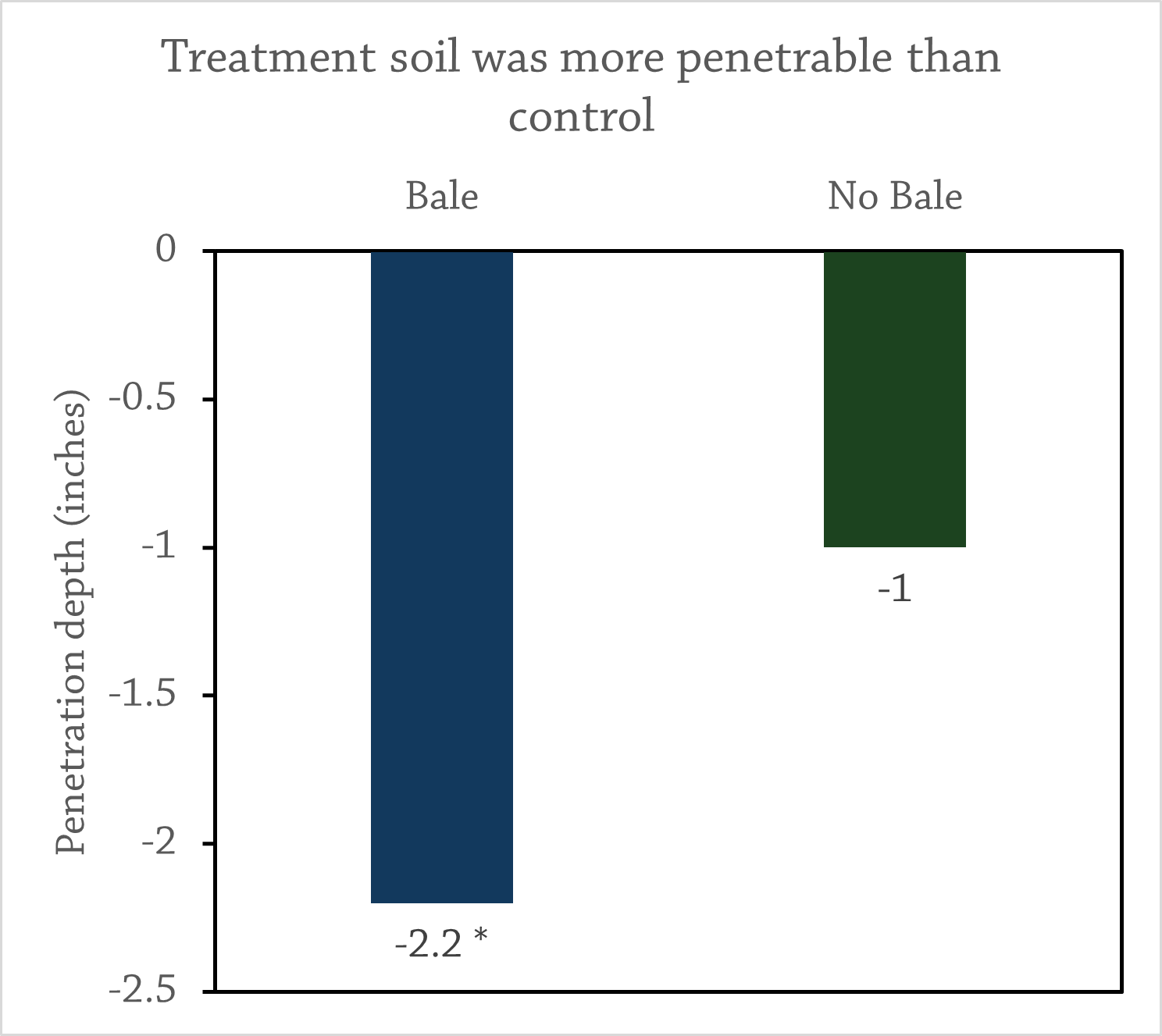
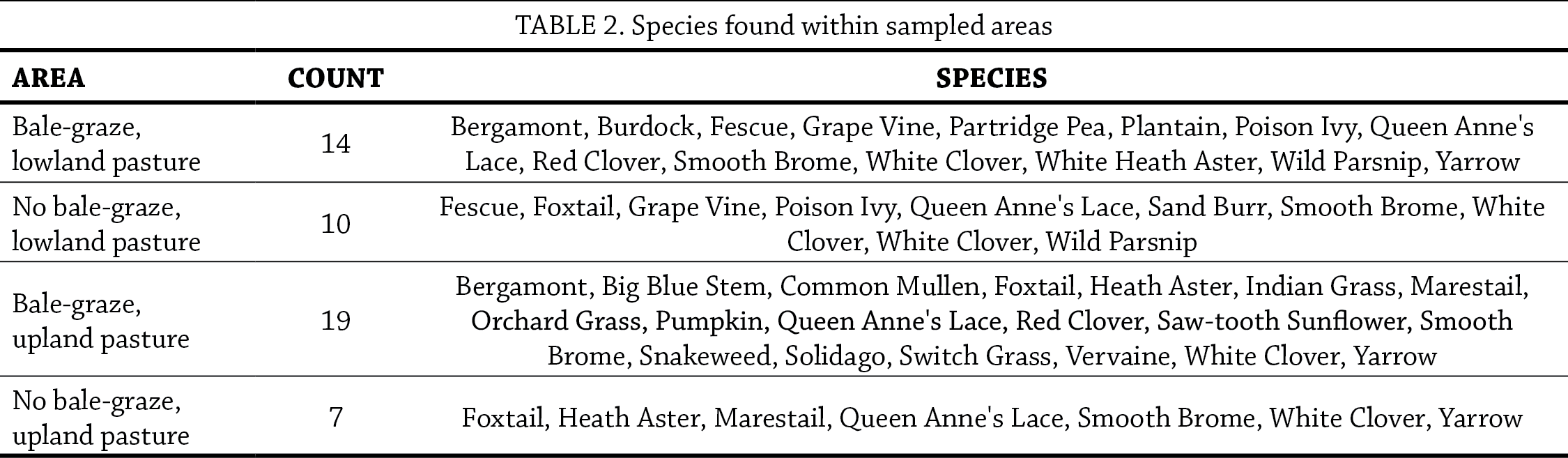
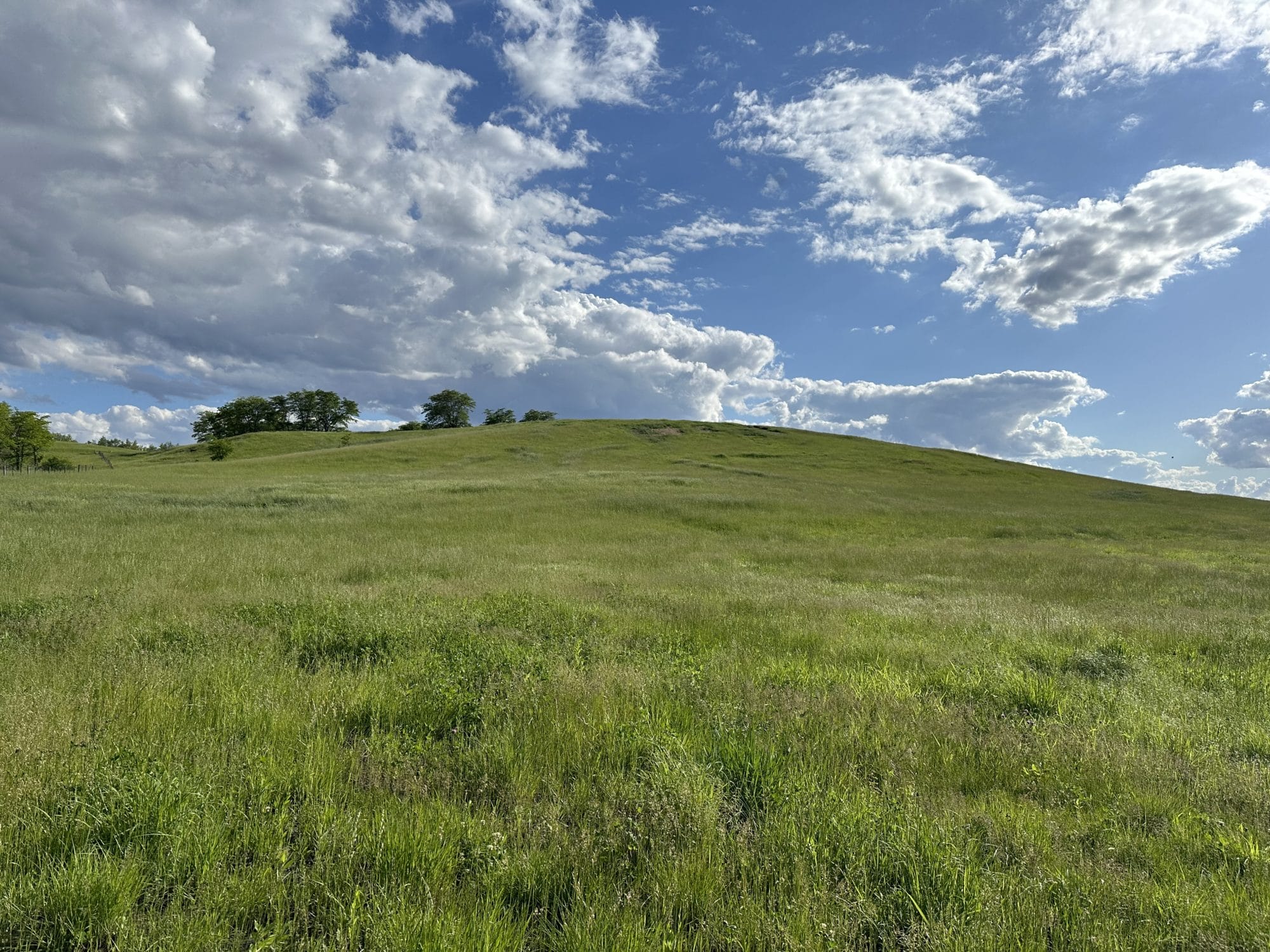
The depth at which the soil provided 300 psi of resistance was significantly deeper in bale-covered area, compared to non-bale-grazed areas (Figure 1). This could be indicative of better rooting and denser stands of plants within the track of the bales. Ledvina observed denser, taller, and lusher plant growth in the areas where the bales unrolled. The tracks of the bales were visible the summer following the bale grazing as lush stripes across the landscape; strips not made of leftover decaying bale material but by flourishing plants (photo below). The bales seem to have been successful at introducing new species to the field. The survey of plant species counted four more species in the lowland bale area than the lowland control, and 12 more species within the upland bale track than outside it (Table 2). These seeds came from the prairie that was hayed to make the bales, and the bale tracks provided an effective environment for their establishment, with goats’ hooves pressing them in, the bale’s mulch sheltering them, and goats’ waste fertilizing them. The soil tests found much higher nutrient concentrations in the aggregate sample from within the bales’ track than the sample from outside the tracks (Table 3). Potassium was 3.5 times higher and phosphorus was six time higher; micronutrients were all also higher within the bale than without, except calcium, which was 20% lower in the bale-grazed area. All these results together suggest that unrolled bales, grazed by goats in the winter, can potentially improve soil and plant stand conditions in future growing seasons.

Conclusions and Next Steps
Because the measurements in the trial were taken in pairs, one inside and one outside of the strip left by the unrolled bale, we have been able to examine the effects of the bale on the local soil and plant communities. Over time, more and more of bale-grazed field would once have been covered by a strip. Care and planning could be invested in covering the field as efficiently as possible or targeting problem areas with more frequent coverage. For a farmer already practicing bale grazing, this information could help inform plans for how to arrange bales to ameliorate target problem areas. Ledvina was pleased with the additional forage diversity that the bales introduced. He wrote that “The amount of phosphorus, potassium, and organic matter increased more than we expected. With this data we intend to use bale grazing as a tool to boost nutrients across our farm and cut our chemical fertilizers”. Ledvina intends to bale graze all of his pasture this winter. Going forward, it would be interesting to compare bale grazing as a system to indoor wintering and feeder usage, in terms of average daily gain and feed efficiency, though many of the benefits of bale grazing suggested by this trial lay outside of these traditional economic measures of livestock feed conversion. Furthermore, how the local arrangement of feed, fertilization, and disturbance compared to other bale grazing set-ups (e.g. scattered bales) could be explored. At a landscape level, or a whole farm operation level, are soil fertility, plant diversity and productivity, and goat nutrition benefited from spreading the bale grazing out across the land? This trial suggests that they are, but further work will be needed to prove it.Appendix – Trial Design and Weather Conditions