In a Nutshell:
- Horticulture farmers sometimes grow seed for seed contracts to diversify their enterprises or just to try something new.
- Seed contracts usually offer a set price for a set weight of seed. For those who have not grown seed before, it can be hard to tell if the payment is worth the labor and time required, especially for a seed like tomato that needs post-harvest processing.
- Hannah Breckbill and Emily Fagan decided to compare the enterprise budgets of growing tomatoes for sale vs. growing tomatoes to fill a seed contract.
Key Findings
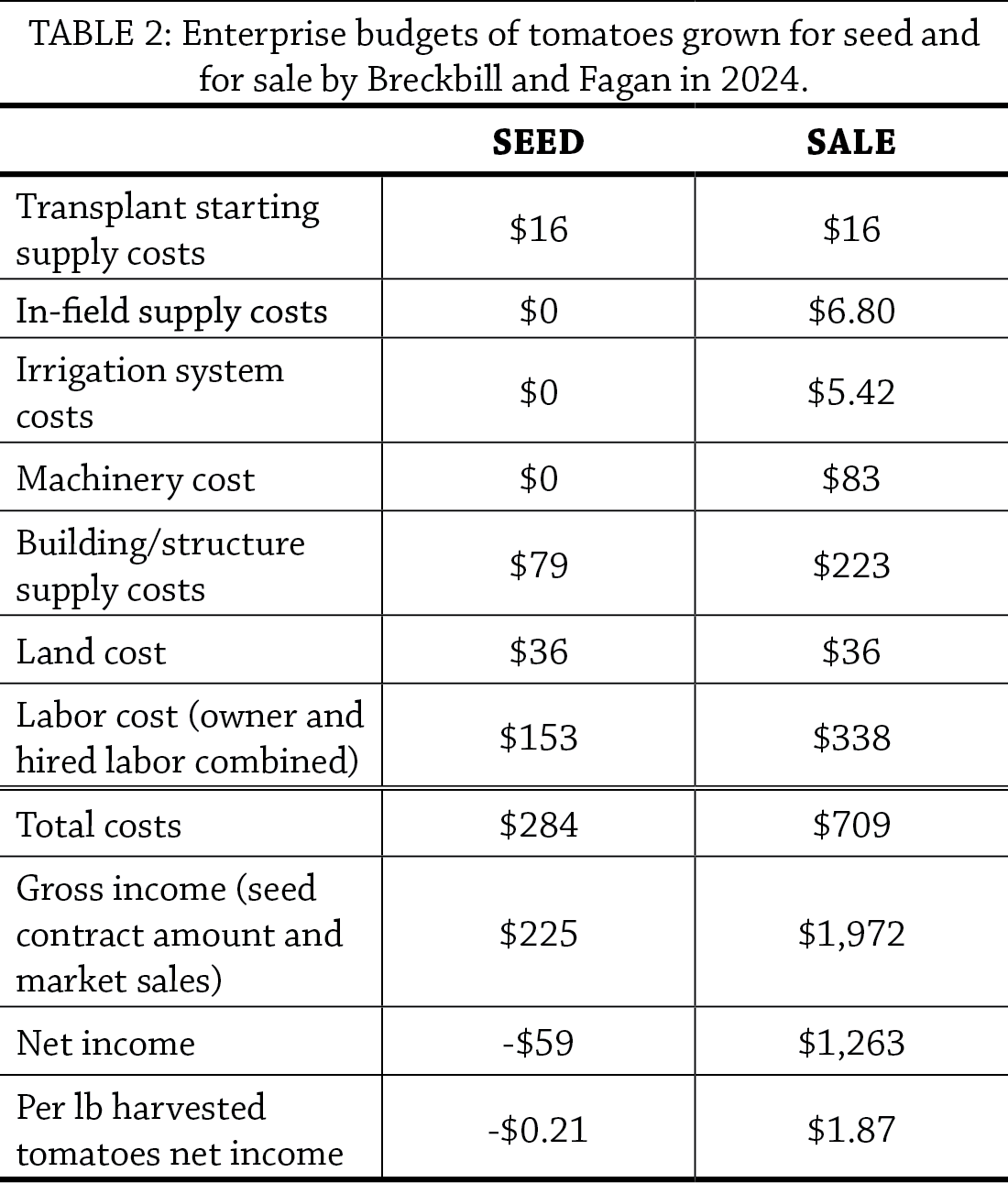
- After accounting for all supplies, labor and infrastructure use, tomatoes for sale had a net income of $1,263 while tomatoes for seed had a net income of -$59.
- If Breckbill and Fagan get another tomato seed contract, they will make the enterprise more profitable by planting fewer tomato plants overall and selling some of the excess fruit from the seed tomatoes.
Background
Growing seeds can be a small but easy way for many vegetable farmers to diversify their enterprise because it fits easily within existing growing activities. Many smaller, regional seed companies offer set seed contracts for an amount of seed that is attainable for smaller-scale growers. While the guaranteed sale of seed is attractive, farmers should always read contracts carefully and consider all of the risks and benefits before signing [1]. It can be difficult to tell if the relatively small payment is worth the space and labor required, especially for those who are new to growing seed and do not know exactly how many plants they will need. Hannah Breckbill and Emily Fagan have found that competition at their farmers market increases in the summer and that they are often unable to sell all the tomatoes that they grow. In 2024, they decided to sign a seed contract to grow 0.5 lb of KC 146 tomato seed for $225. They tracked the labor, time, and other factors contributing to the economics of their seed production enterprise, as well as time, labor, and sales contributing to their usual tomato for sale enterprise. Fagan hoped that “this trial will give us some insight into how to make growing tomatoes more profitable.”
Methods
Design
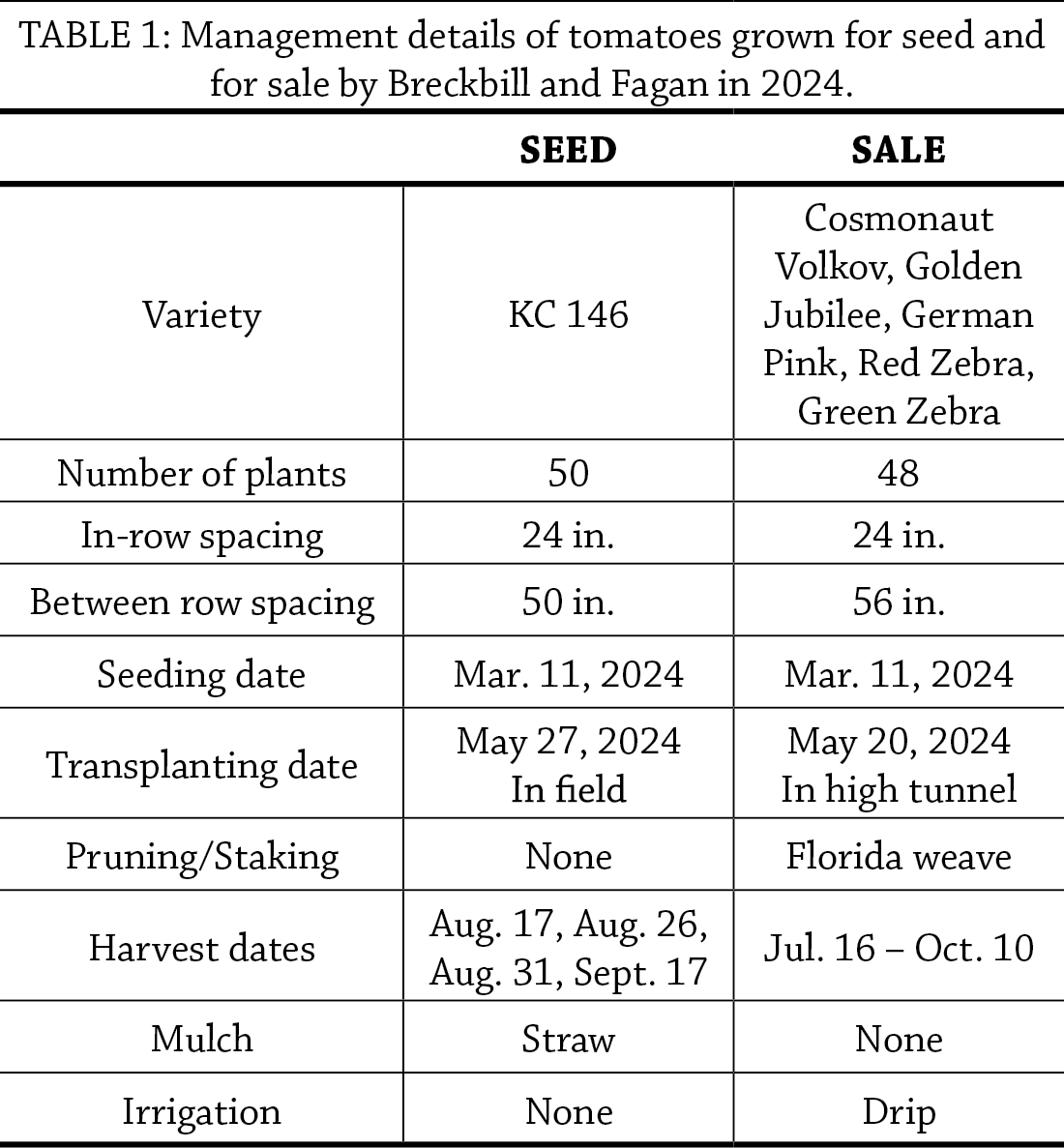
For this enterprise budget, Breckbill and Fagan did not replicate their treatments. They seeded equal numbers of tomatoes in their two treatments and otherwise managed the treatments as they desired for the different end uses. Tomatoes for seed were grown outdoors without staking or irrigation and with straw mulch, while tomatoes for sale were grown in a high tunnel, staked and irrigated (Table 1).
 Measurements
Breckbill & Fagan tracked all costs and labor time related to seeding, bed preparation, transplanting, plant care, harvest and post-processing for seed or time spent on sale of tomatoes. The farmers included the cost of their own labor.
Measurements
Breckbill & Fagan tracked all costs and labor time related to seeding, bed preparation, transplanting, plant care, harvest and post-processing for seed or time spent on sale of tomatoes. The farmers included the cost of their own labor.
Results and Discussion
Breckbill and Fagan found that their tomato for sale enterprise had a net profit of $1,263 while the tomato seed enterprise had a net profit of -$59 (Table 2). Costs, including labor and income associated with the tomato sale enterprise, were also more than double those associated with the seed sale enterprise.

Conclusions and Next Steps
Fagan noted that participating in this trial was key for their farm in figuring out the financials of growing tomato seed for contract. “The accountability to keep all the data [was the most useful aspect]! It's so useful to keep good track of all the details, but if I wasn't doing this for a PFI trial I would be less organized and not keep good enough track of things to come to a real conclusion.”
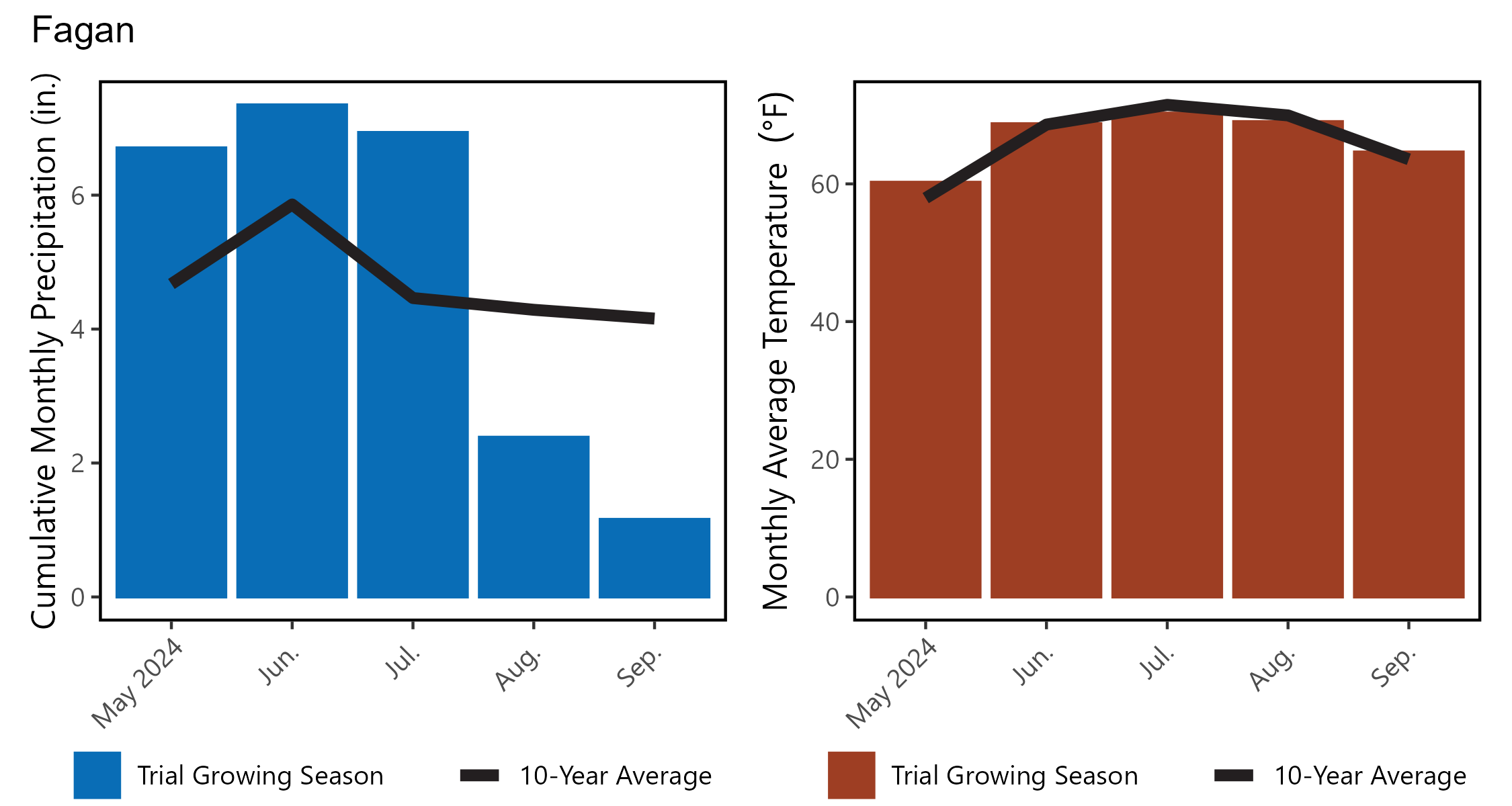
Appendix – Weather Conditions
References
[1] “Contracting in Agriculture: Making the Right Decision. Information For Farmers from USDA.” 2016. [Online]. Available: https://www.fsa.usda.gov/sites/default/files/documents/2016%20Drake%20FSA%20NSAC%20Production%20Contracts%20Guide.pdf [2] A. H. Sparks, “nasapower: A NASA POWER Global Meteorology, Surface Solar Energy and Climatology Data Client for R,” J. Open Source Softw., vol. 3, no. 30, p. 1035, Oct. 2018, doi: 10.21105/joss.01035. [3] A. H. Sparks et al., nasapower: NASA POWER API Client. (May 18, 2024). Accessed: Sep. 11, 2024. [Online]. Available: https://cran.r-project.org/web/packages/nasapower/index.html