One: Firm Seedbed for Uniform Seed Depth
A firm seedbed means that oat seeds can be planted with good seed to soil contact and at a uniform depth. Uniform depth allows all plants to emerge at the same time, so that when it comes time to harvest, the plants are at the same maturity. With uneven depth, plants will mature at different rates, meaning that some plants might not be ripe when others are ready to harvest. Check out this video clip from ISU agronomy professor Matt Liebman's presentation at the small grains short course in January. He explains some of the management considerations at planting time:Two: Economic Seeding Rate/Plant Population
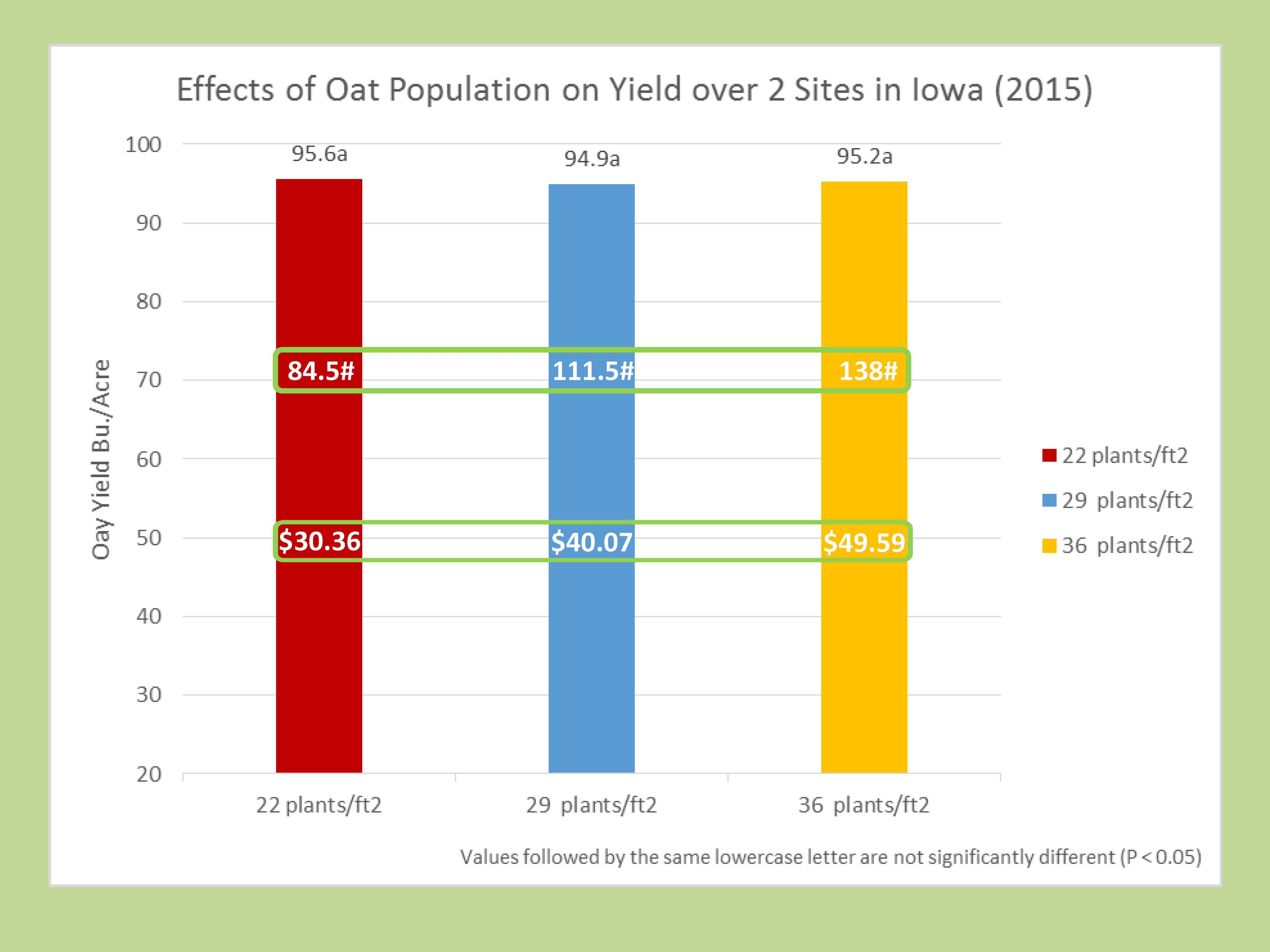
With corn and soybean production, it's common to think about both desired plant population and seeding rate in terms of seeds and plants per acre (or square foot). But with seeding small grains or cover crops, we talk about bushels or lbs per acre. Agronomy graduate student David Weisberger presented at the small grains short course about his research interviewing various producers from around the state. He found that seeding rates varied from 1.75-5 bu/acre among oat producers across the state. He wanted to see if there was an optimal economical seeding rate, and he conducted research on the farms of Aaron Lehman and Doug Alert, both PFI members. He looked at three populations: 22 plants/sq ft, 29 plants/sq ft, and 36 plants/sq ft. Using the following formula (To calculate lbs/acre from desired plant population, the Alberta Ministry for Agriculture and Forestry has a useful calculator), he determined seeding rates: Those rates were 84.5, 111.5, and 138 lbs/acre. On these two farms, he found no difference in yield among the three populations. Note that the 22 plants/sq ft correspond with the stand density that Matt suggests in the video above. Because the heavier seeding rate was more expensive, and yields were the same, the lower seeding rate was more cost effective in this study.
 He will have additional data on this research project after the 2016 season.
Three: Planting Date for a Cool Season Crop
The bottom line is to get oats in early (it gets hot in Iowa, and oats are a cool season crop). David Weisberger at Iowa State says that planting time is important for a number of reasons:- Heat stress at anthesis results in a greater potential yield loss than heat stress at tillering, jointing or grain filing
- Reduced number of seeds fertilized and formed
- Later season heat stress due to delayed planting dates = shorter period of grain fill = lower test weight potential
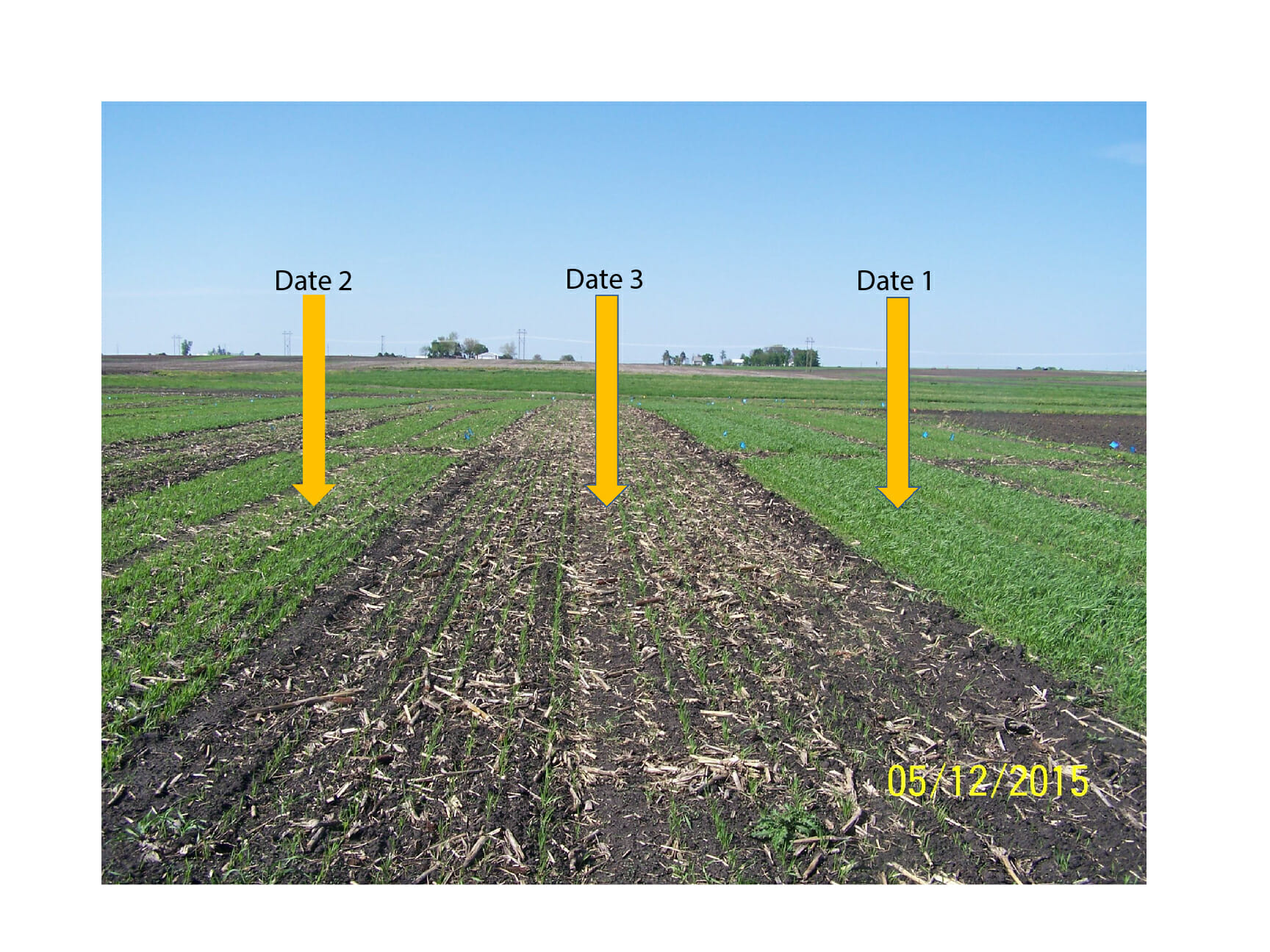
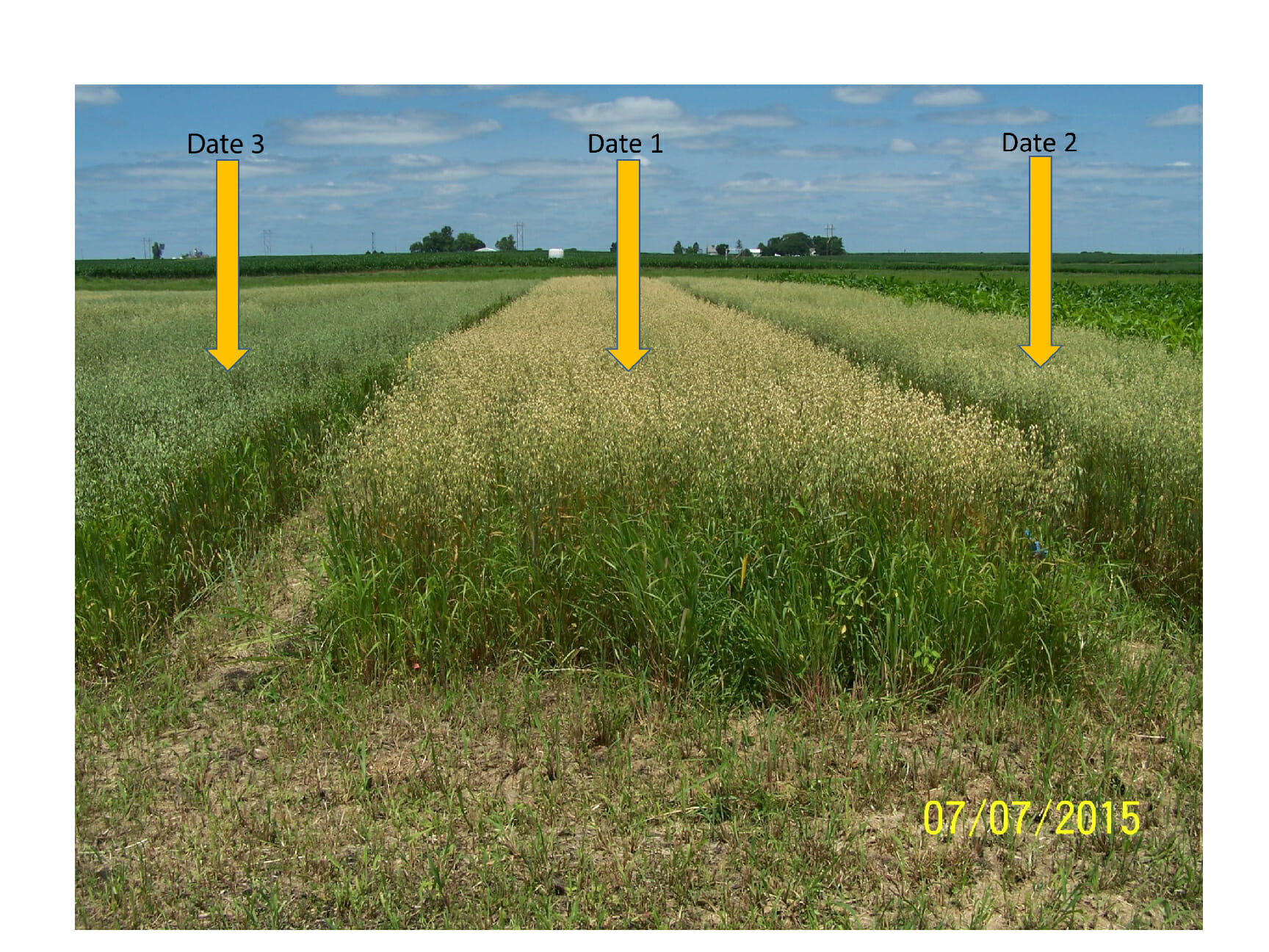 In another snippet from the small grains short course, Matt Liebman adds a few more reasons why planting date is important: