For the Hjertaas family, dialogue and shared values are guiding succession plans
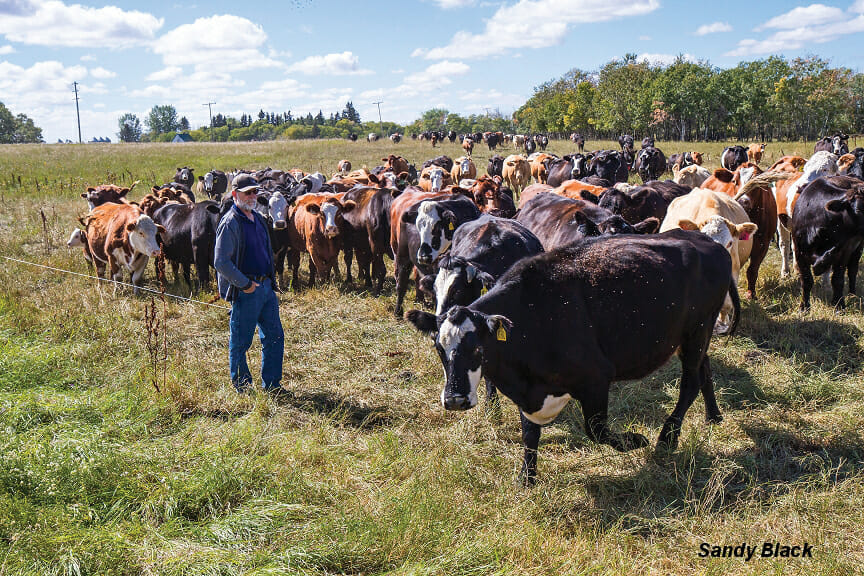
Blain and Naomi Hjertaas have been farming near Redvers, Canada, for 46 years on farmland that has been farmed by Blain's family since 1915. About 12 years ago, the couple was pondering the next step for their farm. Their three kids had all gone off to college and then to professions off-farm. “We thought that maybe a few more years and then we'll sell the farm and go and put our feet up at the lake and be done,” Blain says. Before acting on this thought, however, their oldest son said he'd like to try farming. “That put things into a different perspective,” Blain says. “We said, ‘Sure, let's do that. Let's give it a whirl and see what happens.'” Blain spoke about his farm transfer journey at PFI's annual conference in January, which was themed Reclaiming Resilience. “Part of resilience is planning for that next generation,” Blain says, “whether it's our own families or somebody that's going to intern and maybe eventually have ownership. If I just had a sale and sold it, the book closes on the 105 years of knowledge my family has accumulated about our farmland. I don't think that augers well for society.” Blain's experience offers potential insight for others working on farm transfer.
Be Profitable
Being profitable, Blain argues, is vital if families are to be successful in succession planning – or in business more generally. He agrees with Henry Ford's quote: “Whether you think you can, or you think you can't –you're right.” In Blain's view, all farmers have the potential to turn a profit – but he says they have to be willing to delegate some of the tasks they enjoy doing. “We're farmers because we like to work with our hands. We're good at feeding cows, fixing fence, seeding, combining, hauling grain, growing vegetables,” Blain says. “We really like doing that kind of stuff. But those are what I call in-jobs. There's only one job on my farm that I can't hire out, and that's the thinking.”“Part of resilience is planning for that next generation, whether it's our own families or somebody that's going to intern and maybe eventually have ownership.” – Blain HjertaasWhile a lot of farmers don't relish the business aspect of farming, Blain says it's critical for farmers to analyze farm profit. “Maybe it's an hour every morning for five days a week. Maybe it's three hours two mornings a week. You need to teach yourself habits to work on the business.” While Blain says he counts on financial experts for advice, he stresses that “you can ask them what they think about your ideas, but they can't dream them up for you.”
Start Early
Blain advises, “Don't wait until you're 94 with one foot in the grave before you start. My son and daughter-in-law have been farming with us now for 12 years, and we have no formal plan in place. We still don't, to this very day, and that's probably a mistake. We should have pushed that a little bit harder.”Ensure Alignment of Values
Soil health is paramount to Blain and Naomi, a value that influences their succession planning. “If my son said he was going to be a big-time chemical user, and soil health didn't mean anything to him, we wouldn't get along very well and succession wouldn't work,” Blain says. He and Naomi let their returning son and his wife know that if they wished to come back to the farm, it was important their beliefs and land ethic aligned. As big proponents of Holistic Management, they asked their son and daughter-in-law to take Holistic Management training. “So they did,” Blain says, “and they bought into it well, which made it work really well for our goals to align.”