Farm History
Ron and his wife, Maria Vakulskas Rosmann, operate Rosmann Family Farms, a 700-acre certified organic, diversified crop and livestock operation that includes cattle, hogs, egg layers and a range of crops, and Farm Sweet Farm, the on-farm store spearheaded and run by Maria. Their three sons – David, Daniel and Mark – are all involved. Ron and Maria have been farming together since they were married in 1978, and together are the fourth generation of Rosmanns to farm the family land. Ron returned to the farm after graduating from Iowa State University with a degree in biology. His dad retired shortly after.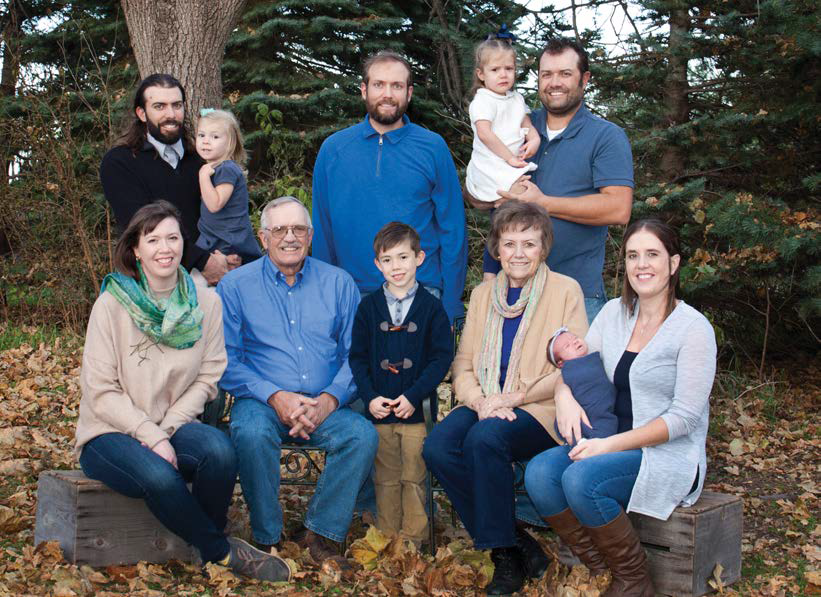
“If there's a good reason to do something differently that can make you more profitable as well as more environmentally sound, why not?” – Ron RosmannLearning about the Thompson farm influenced the Rosmanns to quit chemicals cold turkey the next year. “We went back to using chemicals a little bit in the early ‘90s, because we were concerned about an increase in weeds,” Ron says. In 1993, Ron received a grant from Sustainable Agriculture Research and Education. With the grant, he compared ridge-till with and without herbicides on his farm. “Out of that trial, there was no yield difference between treatments,” Ron says. “That's when we decided to do everything certified organic.”
PFIers From the Start
The Rosmanns have been active in Practical Farmers since the beginning. “I went to the first meeting, where people identified a gap in university research,” Ron says. “It was during the farm crisis: What were universities doing to help farmers in terms of environment and economics?” Ron recalls that around this time, New Farm Magazine put out a survey that asked what type of research farmers trust most. The options were university small-plot research, experiment station research, on-farm research and private company research. Ron says, “Responses showed that on-farm research, done on a working farm, was most trustworthy by a significant margin.” A steering committee, led by Dick and Sharon Thompson and Larry Kallem, formed the organization in 1985. Their first board meeting and newsletter came out in 1986. Ron was vice-president of PFI's initial board. “Our goal with PFI was to conserve our natural resources, do less harm to the environment and maintain our bottom line.” Practical Farmers was important, Ron says, because farmers doing on-farm research were the heart and soul of the organization. “On-farm research provides data to help answer farming questions. On-farm research is exciting!” Ron says. “It keeps you young of heart and young of mind. You have data that propels you to decide what to do or not to do, versus a prescription where you just listen to somebody else tell you how to do it.” Maria was involved early on by putting her communications degree to work. She sent out press releases for field days for a few years in the late 1980s. Maria says, “I have not had as much involvement in PFI as Ron, and that's by choice.” Maria stayed home with three little boys as Ron went to many PFI meetings in the early days. “The organization was started correctly,” Maria says. “Spouses were included as part of the farm from the beginning. It wasn't Dick Thompson's farm, it was Dick and Sharon Thompson's farm. PFI was that way from day one.” This, Maria says, was a departure from the traditional way farms were viewed. “When my parents would come visit, they'd say, ‘We're coming to visit Ron's farm. Is that okay with Ron?' Dick and Sharon really set the stage for inclusivity.” “PFI has impacted everything about how we farm,” Ron says. “We've gotten to answer whether or not practices can work with on-farm research. We've gotten the courage to make changes by learning from other farmers who have gone through it before us.” Maria adds a disclaimer about the farm's ability to change: “Many farmers are constrained by renting ground, by being children of parents that are still farming. Ron's father retired soon after Ron came back to the farm, providing Ron the ability to make decisions. Some farmers are in their 50s and 60s and waiting for their parents to retire so they can make decisions someday.”“The organization was started correctly. Spouses were included as part of the farm from the beginning. It wasn't Dick Thompson's farm, it was Dick and Sharon Thompson's farm. PFI was that way from day one . . . . Dick and Sharon really set the stage for inclusivity.” – Maria Vakulskas RosmannRon agrees, and adds his own caveat. “We don't want to give the impression that we have all the answers. One Dick Thompson quote I use a lot is, ‘We don't have all the answers. We're trying to ask the right questions.'”