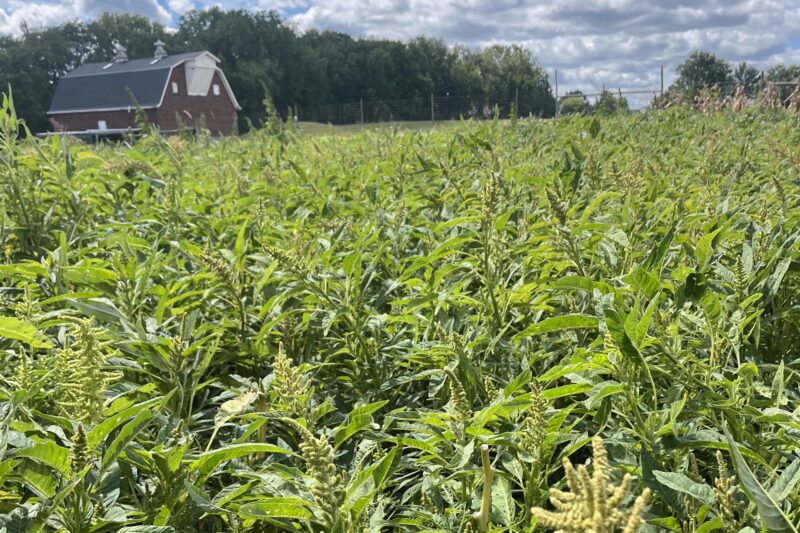
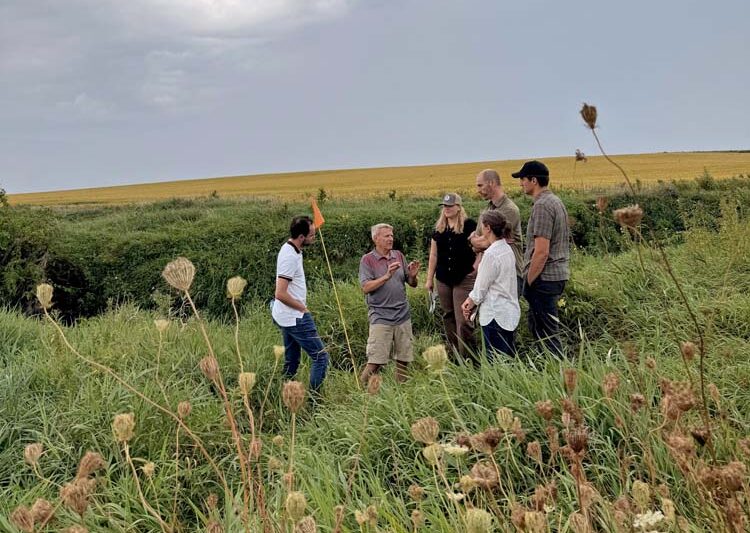
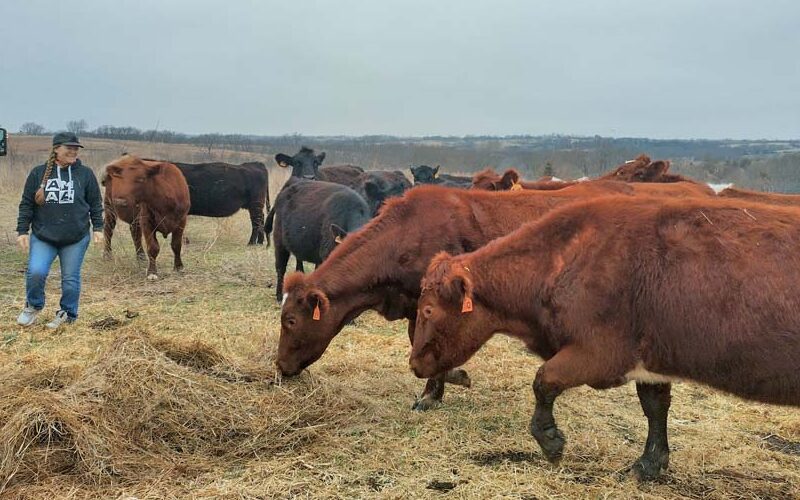
Some farmers are choosing cover crops in the wake of more frequent extreme-weather events.
For Robert and Cody Geary, June 2024 was one for the record books.
The father and son farm together near Elk Point, South Dakota, in a narrow strip of land less than 10 miles wide between the Missouri and Big Sioux rivers in the southeast corner of the state.
In their fields, already moist from a particularly wet spring, rainfall around the summer solstice that year was about normal. But Sioux Falls, 70 miles to the north, saw 6.49 inches of rainfall over two days, brought by a chain of intense thunderstorms. It was the highest two-day total ever recorded for the city.
Areas just south of Sioux Falls near where the Rock River flows into the Big Sioux recorded anywhere from 10 to 17 inches by the morning of June 22.
All that water was headed downriver toward the Gearys' farm.
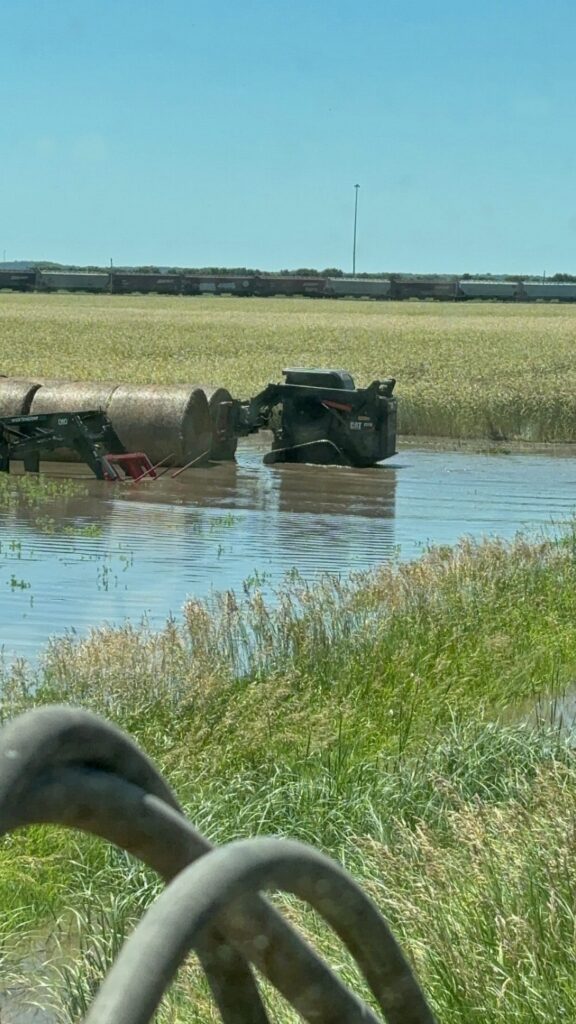
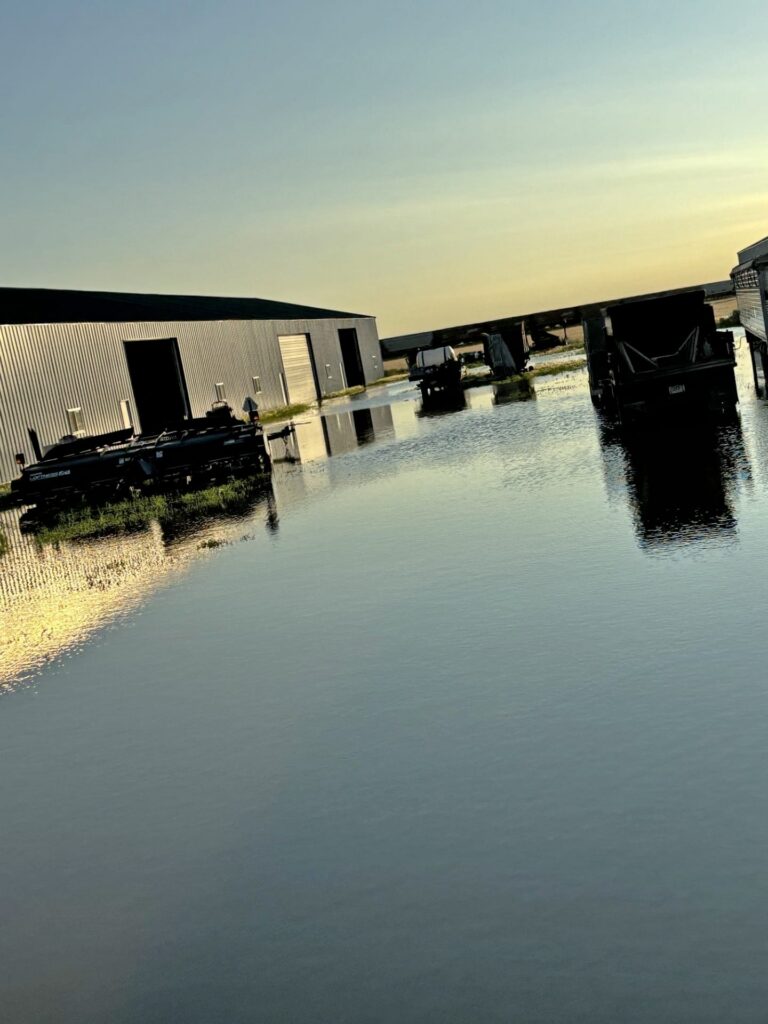

Flood waters on Cody and Robert Geary's farm near Elk Point, South Dakota, took more than two weeks to recede and clean-up efforts lasted months beyond that. Photos provided by the Geary's.
Rising Waters
Farming in a river valley, Robert and Cody have seen their fair share of flooding.
“Normally, from the time that Sioux Falls gets a big rain, we typically have a week to prepare and know what to expect,” Cody says. But this series of intense storms was different. “This time, we only had two days.”
The Gearys run a diversified operation that includes corn, soybeans, rye, alfalfa and livestock. Their rye, planted the previous fall, was nearly ready to combine when the floods arrived. The corn and beans were just hitting their stride. In the flat, low-lying fields, they didn't stand a chance.
“When the flood hit our area, I had 200-pound calves at a farm nearby. When we pulled in at three in the morning to load them up, the water was a quarter-mile away. When we pulled out, it was about 2 feet deep, and that was in just 15 minutes,” Cody recounts. Robert adds, “There was 3 feet of water over the dikes along the Sioux River and big draining ditches we've got. It was just a big wall like a tsunami.”
Like many others in the area, the Gearys' crops were largely devastated. Of their 3,000 cropped acres, they harvested only 160 acres. They lost somewhere between 15,000 and 20,000 hay and straw bales to 18 inches of water on the ground in their sheds. Despite struggling to find the help and financial support they so desperately needed, they still found time to help local nonprofits clean up their own storm damages.
Facing the Extreme
The late-June flooding set records across much of the Midwest. But weather events are nothing new to farmers. Farmers here have always had to contend with floods, droughts, hailstorms, tornados, blizzards, derechos – and more – as they work to make a living off the land. Risk management is just another part – albeit a crucial one – of a vocation so tied to nature's cycles.
Data shows, however, that these intense weather events are happening more often than they once were. The Iowa Department of Agriculture and Land Stewardship notes that 2024 was the most active severe-weather year yet for the state of Iowa, with a total of 939 reports of tornadoes, severe wind or severe hail. Likewise, according to the National Oceanic and Atmospheric Administration's National Centers for Environmental Information, the number of billion-dollar weather-related disasters in Iowa has been increasing. In the 1980s, NCEI reports, the state had an average of 0.8 of these costly events per year. This increased to an average of three per year in the 2010s. Astoundingly, in 2024 alone, Iowa had seven disasters costing $1 billion or more.
Nick Sennert, a farmer in northwest Iowa, has noticed those extremes. He farms with two friends, Neil Krummen and Jessob Steffen, growing corn, soybeans, oats, buckwheat and winter camelina. Together, they share equipment and focus on the regenerative practices of no-till, cover cropping, animal integration and extended rotations to reduce synthetic inputs and improve soil biology. For Nick, 2024 as a whole was a noteworthy year. “We started with the wettest season on record in the spring and finished with the driest August and September on record. It was really tough.”
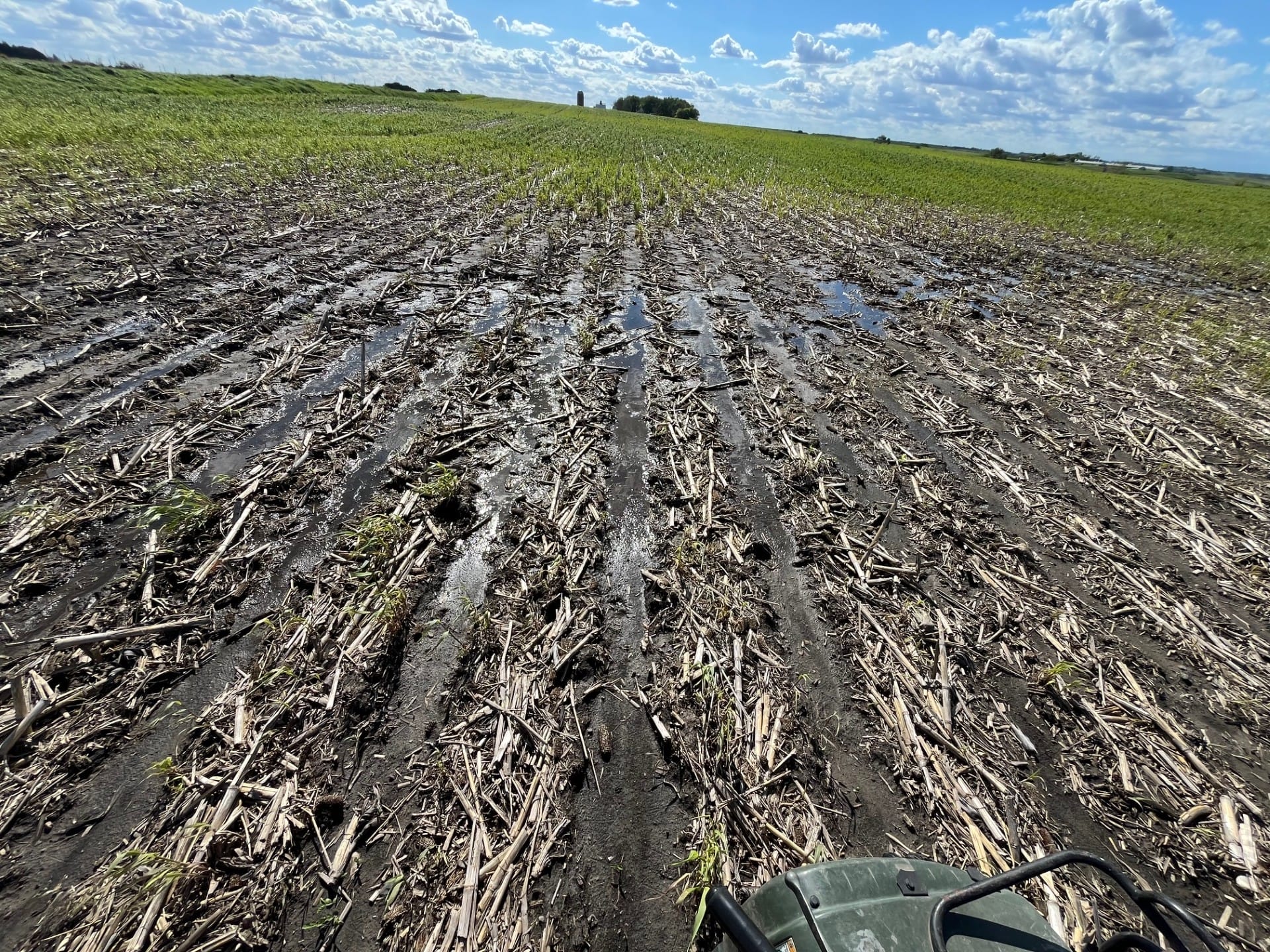
Nick farms near Linn Grove, Iowa, about 85 miles east and slightly north of the Gearys. Though he didn't experience river flooding from the same severe weather event as the Gearys, Nick still witnessed damage to others' fields. His own fields became saturated throughout the unseasonably wet May and June, which led to good yields in some areas and drowned-out spots in others.
Amidst all the rain, Nick kept his rye cover crop growing even after soybeans were planted in between the rows. “The hope was that by delaying termination, it [the rye] was going to alleviate some of that excess moisture,” he says. The soybeans did survive, and things looked promising for many farms as the rain helped the entire state climb out of its four-year drought by July 2024. But the period of relief was brief. By September, Buena Vista County, where Nick farms, was back to being listed as “abnormally dry.” Likely as a result, his soybeans died early.
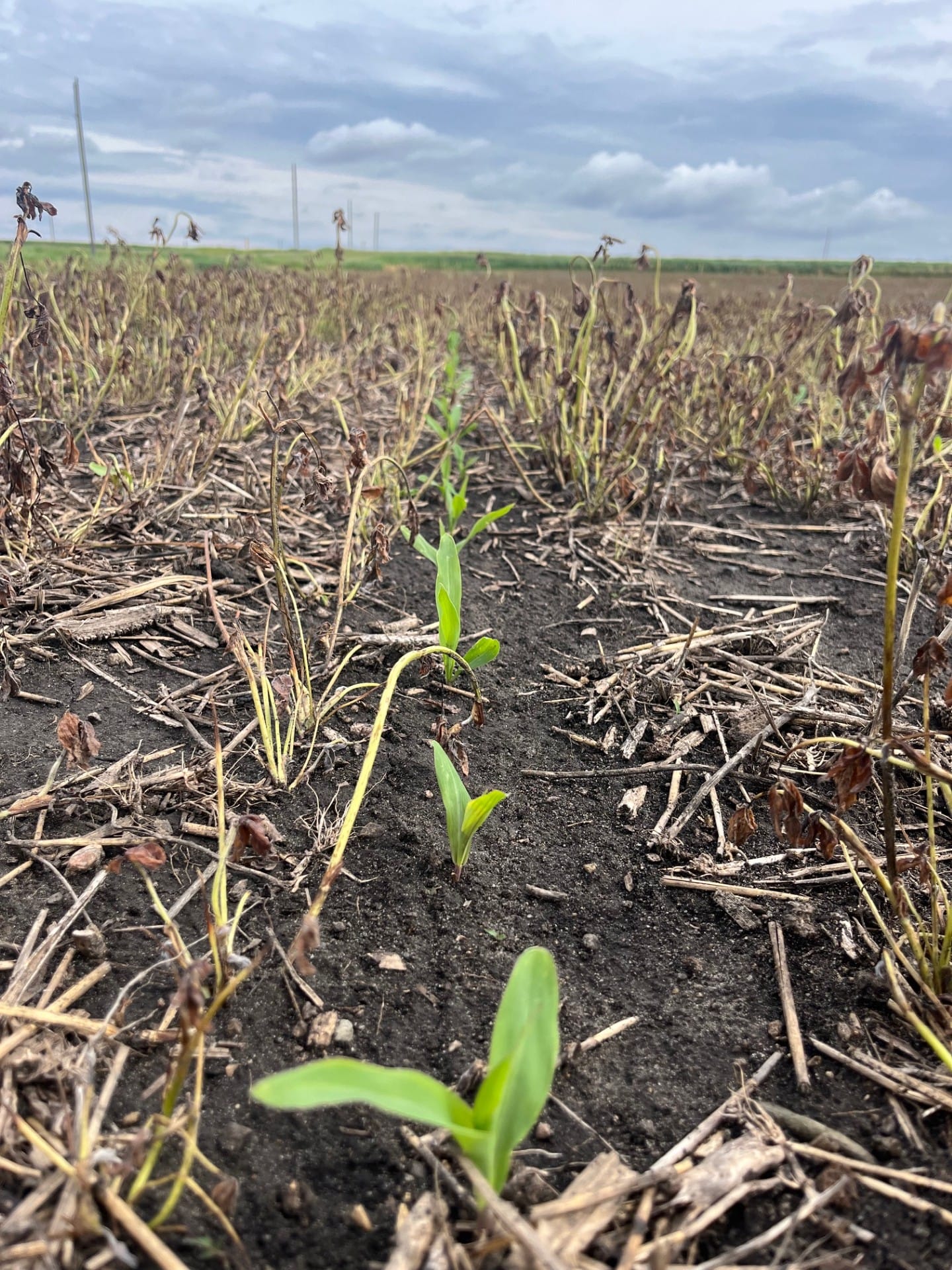
Yet, he pushed onward. Into the powder-dry dirt, Nick planted a rye cover crop, convinced of the benefits. “The diversity of roots brings a tremendous amount of soil health,” he says. “And the root exudates excite different biology to work synergistically together.”
Though he didn't see much growth in the fall, he says he will continue planting cover crops in spite of abnormal weather events.
“I'm not there yet, but once the soil biology is ready to the degree that I want it to be, I think during those extreme weather conditions is when crops should thrive,” he says.
Soils with extensive root matter and high biological activity show increased water-holding capacity in wet and dry seasons, as well as a greater ability to let water filter down rather than pool on the soil's crust.
Keeping Bases (and Fields) Covered
Back in Elk Point, Cody and Robert also had to navigate how to move forward in the wake of the 2024 floods. It was a long road. The flood water took more than two weeks to recede from their fields. Cody says, “I bet we spent close to three months cleaning up all the logs and silt, household garbage and corn stalks that floated down. It was a mess.”
The flood, however, was the impetus they needed to plant cover crops for the first time. It's something Cody had been considering since learning about agronomy and soil health in college. In August 2024, he and Robert planted the Hi-Fly Mix from Millborn Seeds, which includes radish, rapeseed, crimson clover and annual ryegrass. Each species offers specific benefits to soil health, from reducing compaction and fixing nitrogen to suppressing weeds.
“They [cover crops] get the microorganisms going and keep them alive more than a soybean crop would after a flood,” Cody says. “We wanted to help create a healthier soil and to not have soil erosion and blowing that you see in a lot of fields today.”
Cody and Robert also planted oats and rye in some fields through August and September. While oats aren't winter-hardy and die with the first freeze, rye can withstand the winter's cold. This makes rye a good option for farmers who want to get more growth come spring – though Cody worries that the particularly harsh winter South Dakota experienced may have inhibited that spring growth this year. But he knows cover crops are an investment. “It's going to take more than one year to know how much cover crops are improving the soil.”
Nick also acknowledges the long-term outlook necessary for success with cover crops. “There's a learning curve to integrating cover crops into the system,” he says. “That may include the wettest of the wet years or the driest of the dry – and sometimes, you may experience both in the same year.”
After several years of planting cover crops and gradually adding new regenerative practices on his farm, Nick offers some advice: “As you're approaching cover crops, start on 5% of your acres. Have adequate expectations and be ready with a Plan A, B and C before seeding your cover crops and before terminating them.” Most importantly, he maintains his positive outlook, recognizing that often one must experience failures and obstacles to truly learn and improve.
As Robert and Cody put up a dike around their farm equipment and buildings for protection in case of a future flood, it's clear that they, too, are focused on growth and preparedness in the aftermath of their disastrous flood.
Meanwhile, the cover crops rising out of their once-soaked fields are just another sign of their resilience – now and whenever they weather the next storm.