Trial Design and Planting Methods
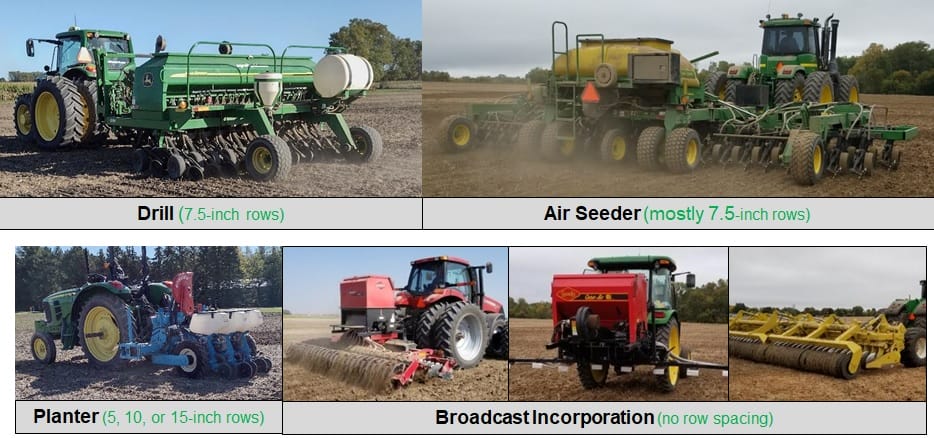
The planting methods varied in row spacing, seeding depth and seed spacing. Farmers performed the trials on their own acres using three types of planters and four planting treatments. The control treatment was a conventional “spill type” drill or an air seeder planting in 7.5-inch rows.| Row Spacing | Seeding Depth achieved | Seed Spacing | Population/ Seeding Rate | |
| Conventional Drill (Control) | 7.5-inch | ½ inch to 2 inches deep | 0.7 inch (variable) | 1.2-1.4 million seeds/acre |
| Air Seeder | 7.5-inch (mostly) | 1 inch to 2 inches deep | 0.5 inch (variable) | 1.2-1.4 million seeds/acre |
| Precision Planter (1) | 5-inch | 1 inch deep | 1.1 inches | 1.2 million seeds/acre |
| Precision Planter (2) | 10-inch | 1 inch deep | 0.5 inch | 1.2 million seeds/acre |
| Precision Planter (3) | 15-inch | 1 inch deep | 0.4 inch | 1.2 million seeds/acre |
| Broadcast with Incorporation (1) | None | Surface to 3 inches deep | None | 1.2-1.4 million seeds/acre (standard) |
| Broadcast with Incorporation (2) | None | Surface to 3-inches deep | None | 1.6-1.8 million seeds/acre (30% increase) |
Yield Results
Yields were similar between broadcast and drill treatments planted at the standard seeding rate and increased rate. The increased broadcast seeding rate improved the yield by 2%, which did not make up for the increased seed costs.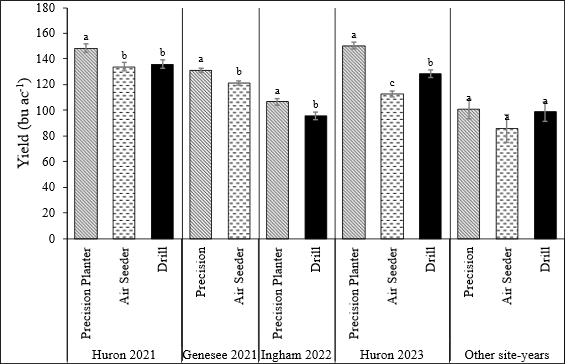
Planting Timing and Impact on Yield
Manni recommends using the ‘fly-free' date for the Hessian fly to inform planting times. The Hessian fly is no longer a common pest for small grains in our region but the ‘fly-free' dates – the dates the adults are no longer laying their eggs on small grains – are still applicable for guiding planting times. In Iowa, these dates range from Sept. 16 in northern Iowa to Sept. 28 in the southern tier of Iowa counties. September wheat plantings yielded 150-160 bushels per acre. Wheat planted after the early October date resulted in a 20% loss in yield. Through his research, Manni concluded in Michigan the optimal seeding rate in September is 1 million seeds per acre. It is recommended to increase the seeding rate to 1.2-1.4 million seeds per acre in early to mid-October and increase to 1.6 million seeds per acre in late October. Planting early does not always equate to increased yields, but you will save on the cost of seed. If planting late, yields cannot recover by planting a higher seeding rate; the key is a longer fall growing season. The plants should have enough time to produce three to four tillers by winter. Manni suggests planting a test strip with a reduced seeding rate of 20% to 30% if you are planting at the optimal time. This allows you to gauge if a reduced seeding rate will work for your field conditions.Canopy Structure
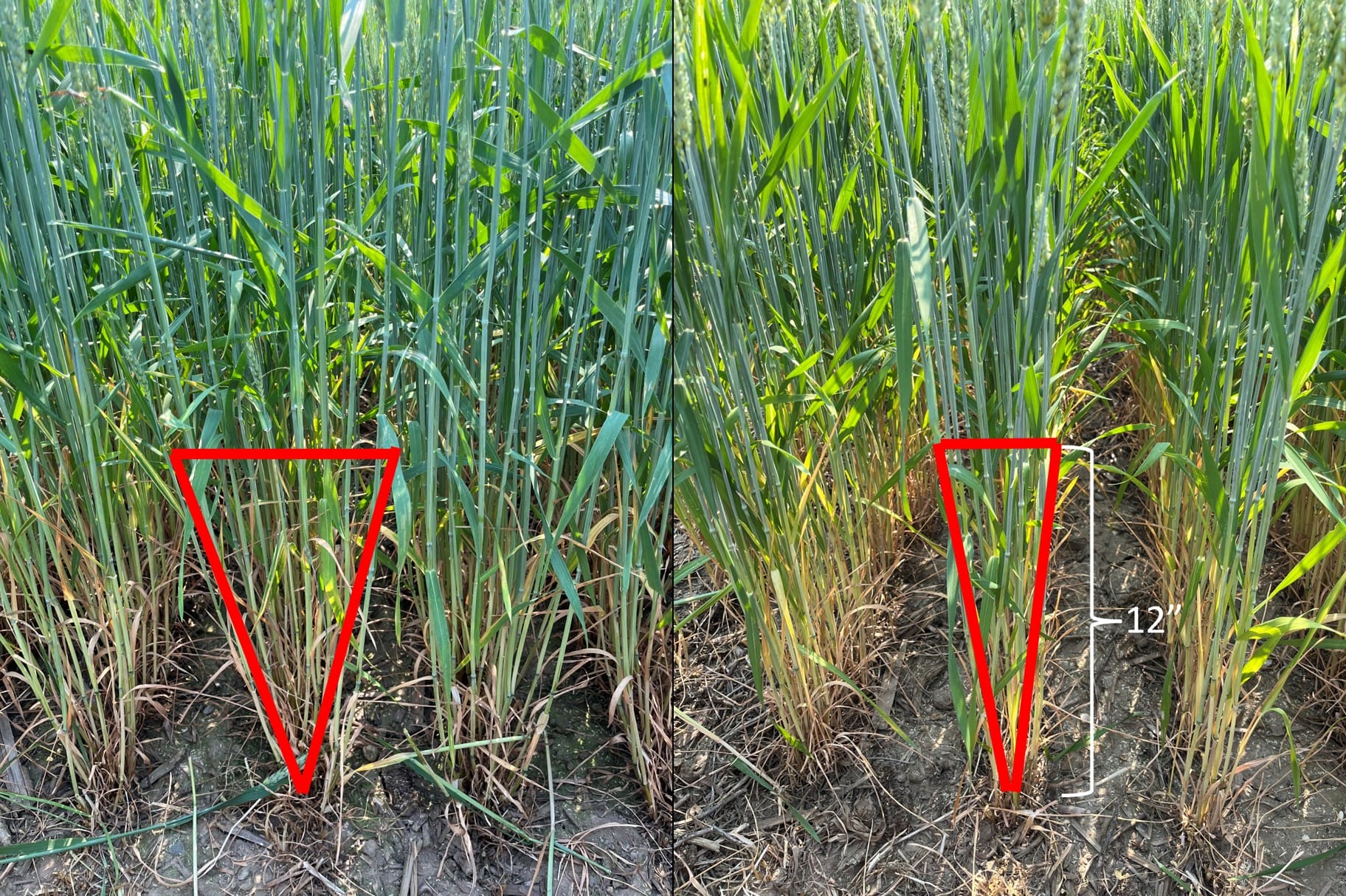
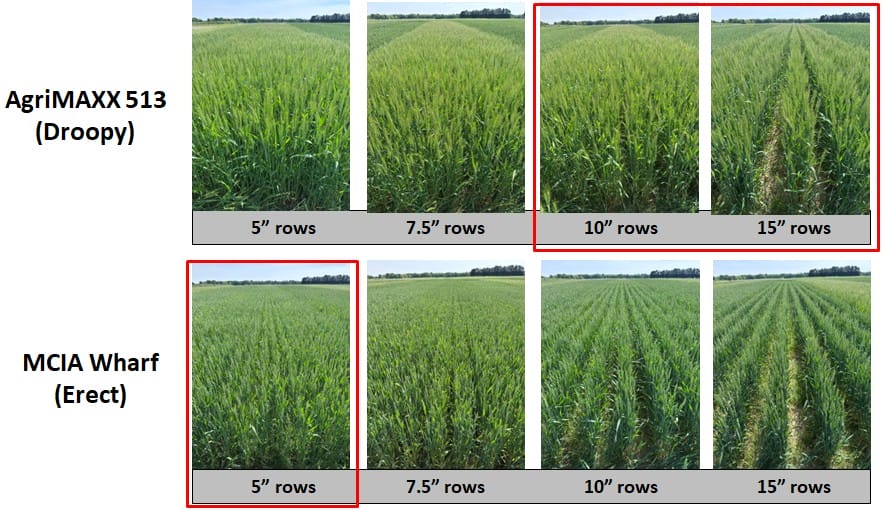
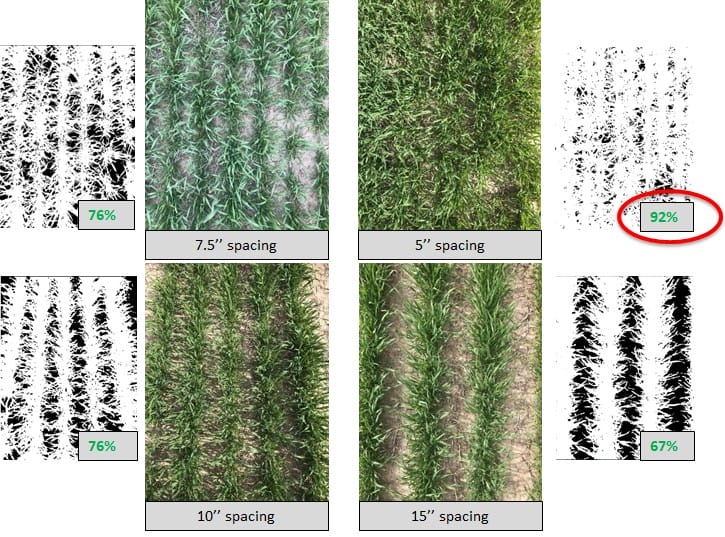
Winter wheat varieties have two main canopy types, planophile and erectophile. Planophile varieties have droopy, spread-out canopies. Erectophile varieties have upright canopies. The canopy structure affects how much light is intercepted, light use efficiency and grain yield.