Connecting Through Cost-Share
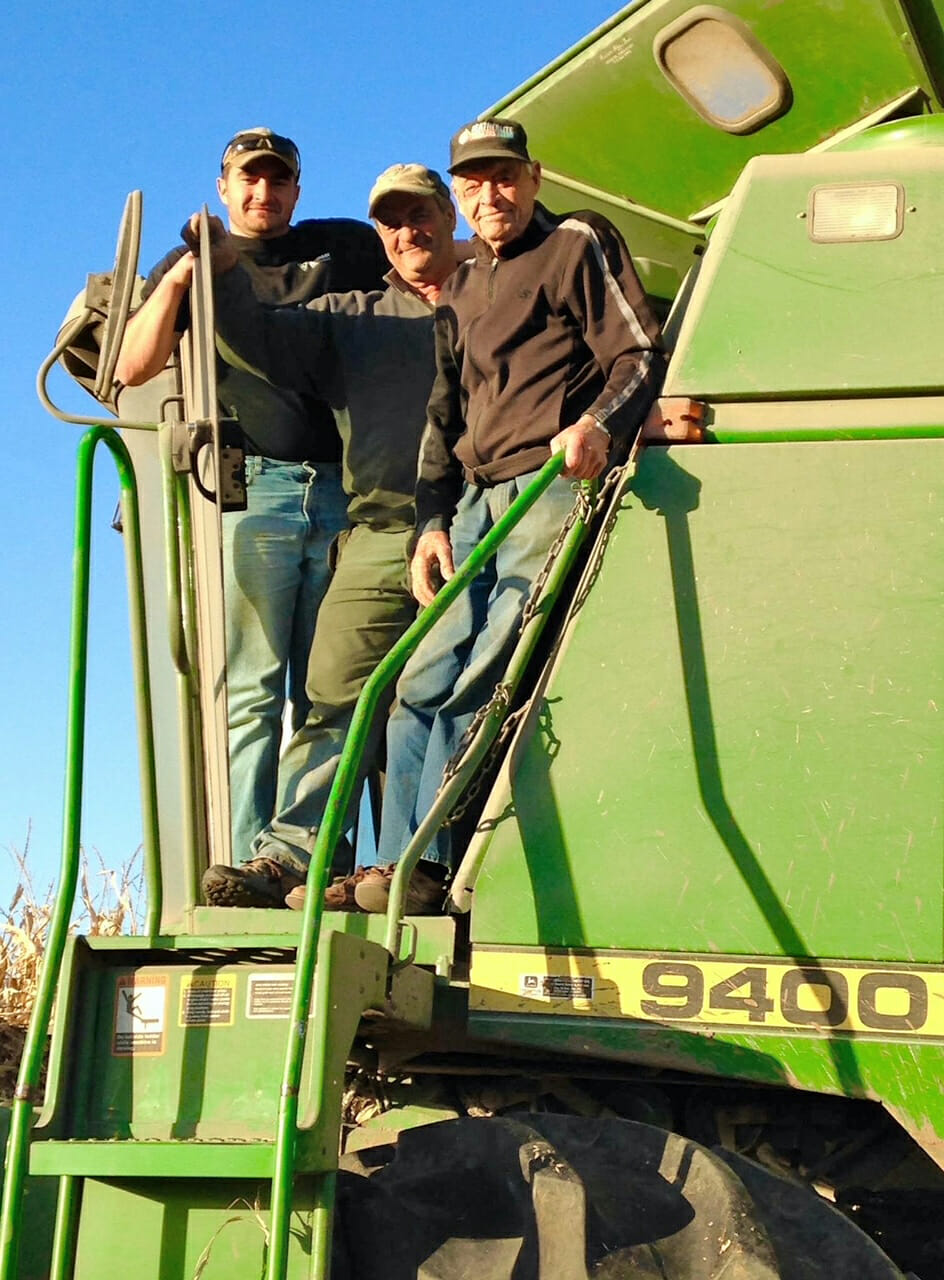
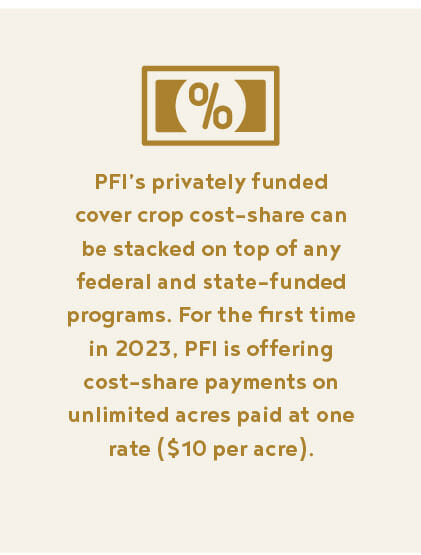 The Van Arkels were first introduced to Practical Farmers in 2015 through a gift membership. But it was PFI's cover crop cost-share program that got them more involved – in 2018, Dave and Zach attended a PFI meeting to learn more about it, and while there, they decided to sign up. Though the family had started using covers three years earlier, they credit state and private cost-share programs like PFI's with helping make cover crops work financially as they further integrate covers on their farm.
The Van Arkels' positive experience with PFI's cost-share program led to further engagement. In 2022, Dave and Zach volunteered for shifts at PFI's Farm Progress Show booth to talk with farmers from around the country about cover crops. Zach says he enjoyed hearing other farmers' experiences. “I like farming because there isn't always a completely right answer,” he says. “We are just trying to do the best with what we have.”
The Van Arkels were first introduced to Practical Farmers in 2015 through a gift membership. But it was PFI's cover crop cost-share program that got them more involved – in 2018, Dave and Zach attended a PFI meeting to learn more about it, and while there, they decided to sign up. Though the family had started using covers three years earlier, they credit state and private cost-share programs like PFI's with helping make cover crops work financially as they further integrate covers on their farm.
The Van Arkels' positive experience with PFI's cost-share program led to further engagement. In 2022, Dave and Zach volunteered for shifts at PFI's Farm Progress Show booth to talk with farmers from around the country about cover crops. Zach says he enjoyed hearing other farmers' experiences. “I like farming because there isn't always a completely right answer,” he says. “We are just trying to do the best with what we have.”

Pacing Cover Crop Progress
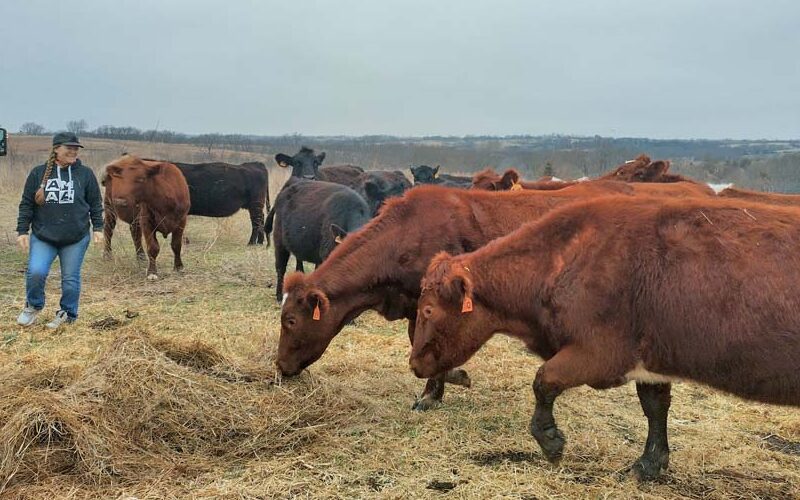
With their own sheep, Zach and Grace graze their flock of 100 ewes on the cereal rye cover crop whenever they get the chance. “Grazing [cover crops] makes a lot of sense if you have livestock,” Zach says. “It helps us make cover crops work financially.” However, the Van Arkels are still learning exactly how cover crops balance out financially on their row crop ground without cost-share incentives. One challenge is that cover crops add another layer of management. So far, Dave and Zach have tried to keep things simple, which has allowed them to seed covers affordably and quickly. They typically broadcast their cover crop with fertilizer in the fall, which is a pass through the field they would've had to make anyway. “If someone wants to try cover crops, it is so simple to just go out and broadcast it,” Dave says. “We are making the same number of herbicide passes, so it doesn't really cost us outside of seed using this practice.”