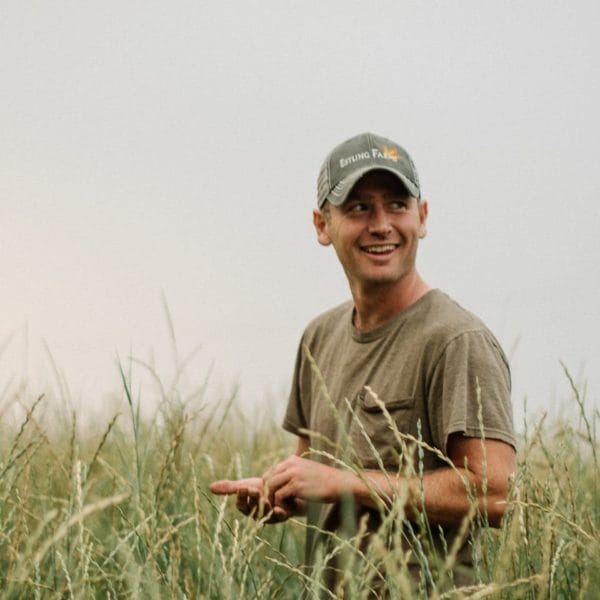
 Jade Estling farms just south of the Lake of the Woods, an area in northern Minnesota known more for its walleye than farming. Being south of a lake creates a humid microclimate that is good for growing grass and grains. Estling Farms cultivates the majority of their 3,700 acres with seed production crops like wheat, rye, Kernza, soybeans, corn, radish, buckwheat and winter camelina. They also grow perennial rye grass and Kentucky bluegrass for the turf seed market.
Jade rotates between six to 10 different crop species for seed production, depending on which fields are best suited for each crop. He grows wheat, barley, oats, turf grass seed and soybeans consistently each year. The closest place for him to sell into the commodity market is 105 miles away so growing for seed production makes better financial sense.
Jade Estling farms just south of the Lake of the Woods, an area in northern Minnesota known more for its walleye than farming. Being south of a lake creates a humid microclimate that is good for growing grass and grains. Estling Farms cultivates the majority of their 3,700 acres with seed production crops like wheat, rye, Kernza, soybeans, corn, radish, buckwheat and winter camelina. They also grow perennial rye grass and Kentucky bluegrass for the turf seed market.
Jade rotates between six to 10 different crop species for seed production, depending on which fields are best suited for each crop. He grows wheat, barley, oats, turf grass seed and soybeans consistently each year. The closest place for him to sell into the commodity market is 105 miles away so growing for seed production makes better financial sense.
Cover Crop Benefits
Jade's fields typically have too much moisture in the spring and few have drainage tiles. Cover crops soak up the moisture while capturing the sunlight, and if legumes are planted, they also provide nitrogen credits. Jade is more interested in utilizing diverse crop rotations and planting cover crops than having to install tiling. “We work with the natural systems and ecosystems and it's hard to put dollars and cents on that when there is a benefit, like when we're breaking pest cycles.”Equipment: Planting, Underseeding and Fertilizing Crops
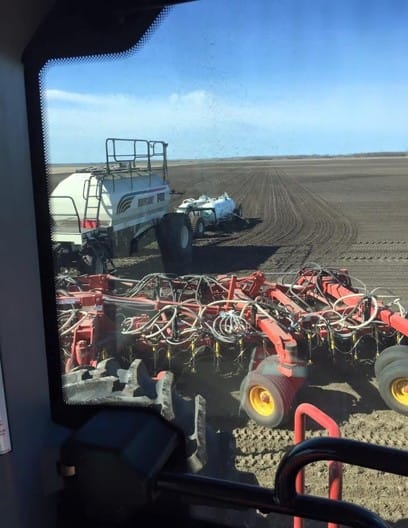
Planting Green Experiment: Conventional Tillage, Vertical Tillage and No-Till
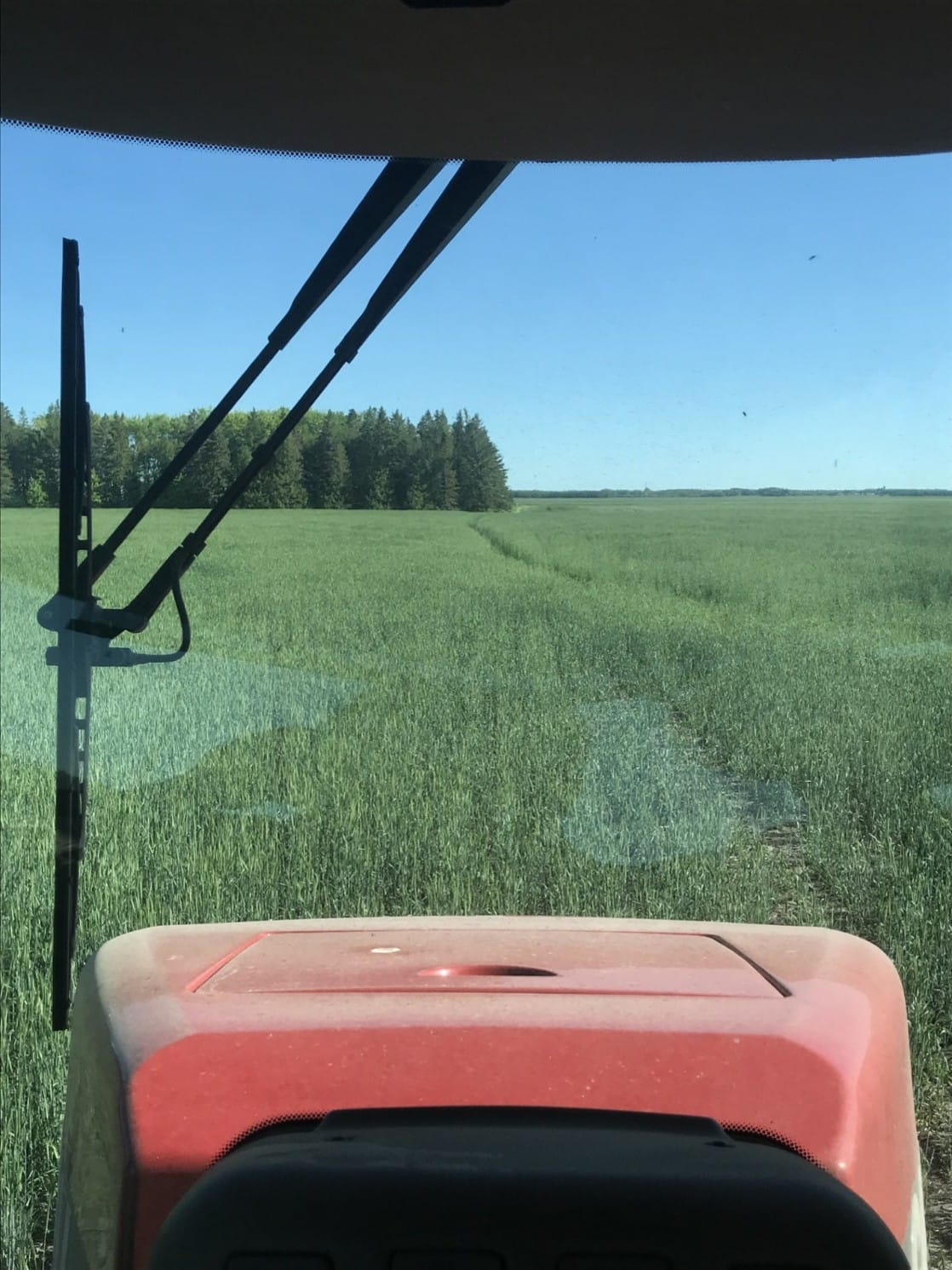
Frost-Seeding Red Clover
Jade started frost-seeding red clover into cereal rye to help control disease cycles and for the nitrogen credit. When he started this practice, nitrogen prices were at 90 cents to $1 per unit and clover seed and application was $35 an acre. Jade was happy with the results and felt like he was breaking even by planting clover and getting 30 to 40 units of nitrogen credit while also drying the overly wet soil profile out. To get started frost-seeding, he bought a small pull behind seeding unit with 150-pound capacity to attach behind his side by side. That spring, he went out when most of the snow had melted and would spread seed for three to four hours in the early morning until the frost started to lift. After the rye was harvested later that summer, the clover took off and grew to thigh high by October. He has now switched to an air boom system in a Case Titan spreader with multiple bins, and a micro-bin to put the clover on. He top dresses the rye with urea or ammonium sulfate or a blend of those. He has found that it is important to either work closely with someone at the co-op or have the equipment to do it yourself because the window of time to frost seed is so short, especially where he is in northern Minnesota. Having his own equipment has also allowed him to plant red clover into his spring wheat. He will do this if he isn't underseeding grass for seed production. Jade says he must be observant of the fields and their history, keeping track of chemical rotation restrictions and what weeds he would expect to have in the upcoming growing season. This is because he is limited by the herbicides that he can spray on spring wheat that will achieve some broadleaf control but not hurt the clover.Technology for Precision Management and Crop Health Indicators
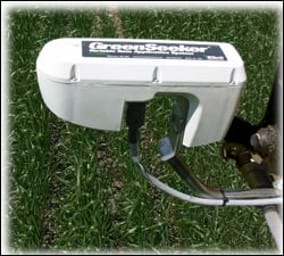 Estling Farms uses a GreenSeeker, which is an optical sensor that measures plant health and vigor in terms of the Normalized Difference Vegetative Index. The sensor sends out short pulses of red and infrared light and then gauges the amount of each light type reflected from the plant. A healthy green plant will absorb most of the red light and reflect the infrared light. The strength of the detected light is an indicator of the crop's health.
They also use satellite imagery to aid in precision management. In years where the rye stands have 95-98% coverage, Jade has found that the clover establishment is low. He uses this information to determine which areas in his fields he won't plant clover because it is unlikely to get established, which allows him to save on seed cost. He will also look at areas of water damage or compacted soils and increase the seeding rate to help alleviate these issues.
This past spring, in response to a cool and wet spring, he had a drone plant red clover into the winter camelina being grown for seed production. Having a tool to allow him to change course or make an informed decision in the middle of a growing season also allows him to cut costs, improve a field or increase his overall profitability.
“You try to have this cookie cutter approach, but each year is a little different,” Jade says. “We aren't a factory.”
Estling Farms uses a GreenSeeker, which is an optical sensor that measures plant health and vigor in terms of the Normalized Difference Vegetative Index. The sensor sends out short pulses of red and infrared light and then gauges the amount of each light type reflected from the plant. A healthy green plant will absorb most of the red light and reflect the infrared light. The strength of the detected light is an indicator of the crop's health.
They also use satellite imagery to aid in precision management. In years where the rye stands have 95-98% coverage, Jade has found that the clover establishment is low. He uses this information to determine which areas in his fields he won't plant clover because it is unlikely to get established, which allows him to save on seed cost. He will also look at areas of water damage or compacted soils and increase the seeding rate to help alleviate these issues.
This past spring, in response to a cool and wet spring, he had a drone plant red clover into the winter camelina being grown for seed production. Having a tool to allow him to change course or make an informed decision in the middle of a growing season also allows him to cut costs, improve a field or increase his overall profitability.
“You try to have this cookie cutter approach, but each year is a little different,” Jade says. “We aren't a factory.”