Types of Arrangements
This extra promotion has led to questions about the rates to charge for grazing arrangements. Rates depend on the grazing arrangement. Depending on the operation type and available resources, the agreement you choose may vary and could affect the rates charged. The most common types of agreements are:- Pasture rent: Pasture is rented at a per-acre, monthly or daily rate. Pasture cash rental rates can be found in Iowa State University's “Cash Rental Rates for Iowa 2021 Survey.” 2021 rental rates for improved permanent pasture range from $69-$98 per acre per year, depending on your district.
- Contract grazing: A flat rate is paid per animal per month or per day by the livestock owner to the landowner. This can be applied to all classes of livestock.
- Per pound of gain: These incentive-based agreements pay based on average daily gain or milk production per day or per grazing season.
- Resource sharing: Resources the livestock owner and landowner contribute are itemized. Every change in contribution (resource) changes how the profit is split.
Determine Your Rate
To decide on a fair grazing rate, all parties need to understand the costs they'll incur for entering into the grazing arrangement. For landowners, costs could relate to the value of the land or crop that will be grazed, or to infrastructure that will be needed, such as fencing or watering. For the livestock owner, costs could include the amount of labor that will be required or whether extra services will be provided, like herd management or supplemental feeding. Consider these questions when determining your rates:- What is the value of the land or crop being grazed?
- What is the amount of labor and additional services being provided?
- What type of livestock are being grazed?
- Sorghum Grazing: $1.60 x 170 cow days per acre = $272
- Hay Bale Grazing: $2 x 132 cow days per acre = $264
- Grazing + Hay Feeding = $272 + $264 = $536 per acre
Additional Rate Formulas
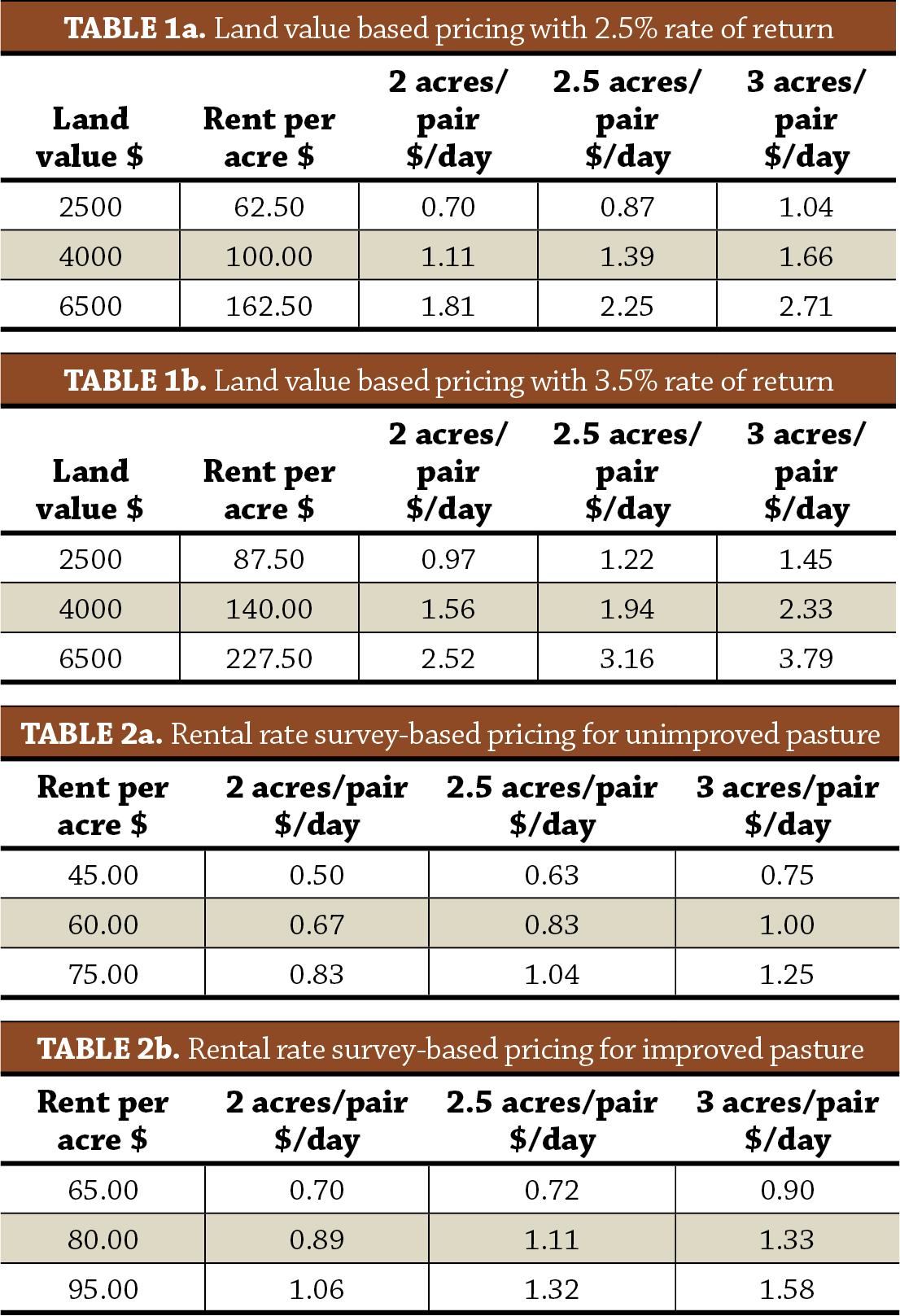
Because livestock and land enterprises vary, so can these calculation rates. Another example, listed in ATTRA's “Grazing Contracts for Livestock” publication, comes from Kevin Fulton, a custom grazier in Litchfield, Nebraska. He uses a formula that includes all costs associated with grazing: (weight of the animal) x (forage intake) x (forage price) + daily management fee = daily grazing fee. This fee structure can easily be adjusted based on animal gain and billed on a monthly basis. If setting the price based on animal gain, it's important to know the livestock you're receiving are built for gaining on pasture. Other contracts may be primarily based on husbandry fees and reimbursements. A sample grazing custom grazing contract from Meg Grzeskiewicz of Rhinestone Cattle Consulting, based in Colden, New York, chooses rates based on this method. In her contract, the livestock owner pays the experienced grazier a husbandry fee of $1.25 per animals per day when no hay is fed, and $1 per animal per day when hay is fed. The livestock owner is also responsible for reimbursing direct expenses like hay, transport, minerals, vet bills and breeding expenses. Some landowners may choose to determine grazing rates based on land value or rate of return. The Iowa Beef Center published land value-based pricing and rental rate survey-based pricing in 2017 (see Tables 1a–2b). These rates assume a grazing season of 180 days.