1. Simplify planter set-up
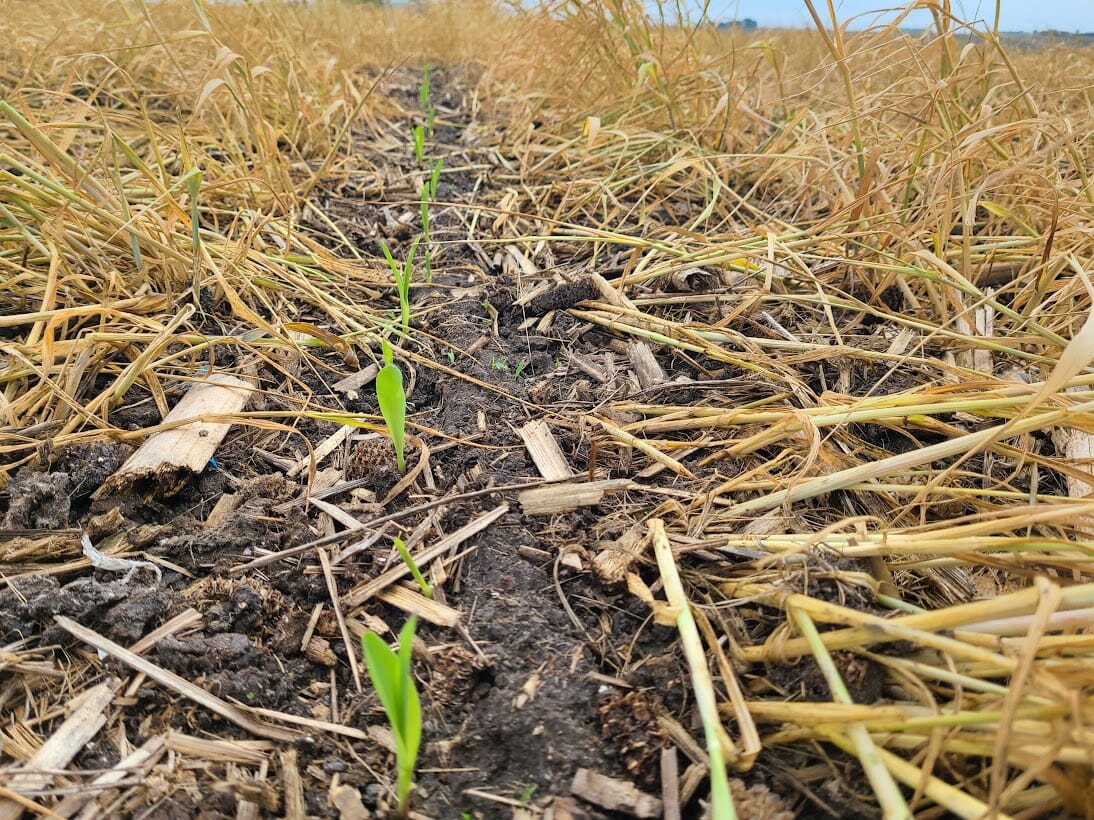
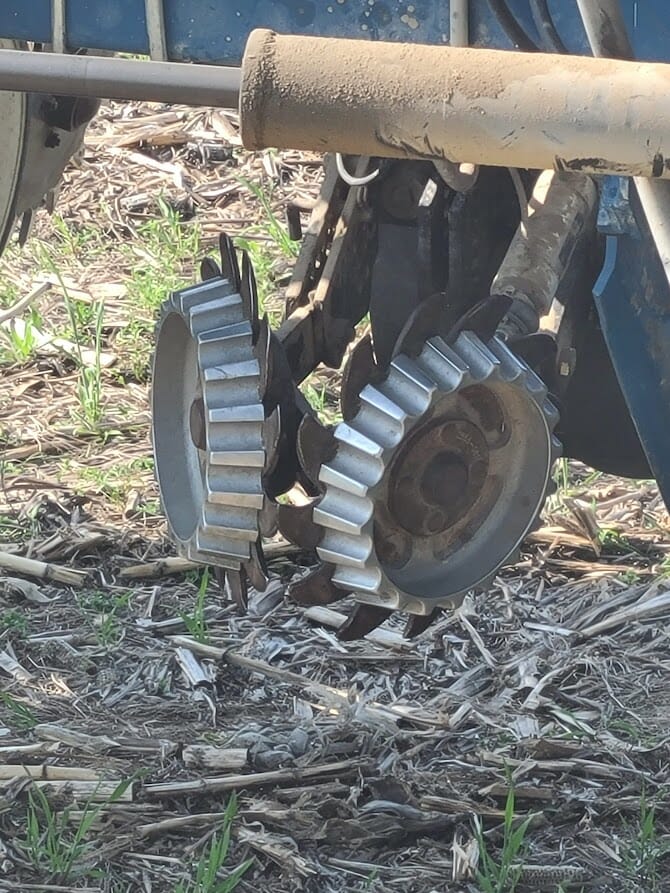
To plant soybeans into a cover, Jason's planter set-up is simply sharp double disk openers and Yetter Twister closing wheels. For corn, Jason uses Precision Planting CleanSweep to engage SharkTooth row cleaners from the cab, on the go. The row cleaners sit on 1.5-in. wide treader wheels to prevent the row cleaners from going too deep.2. Check for planting depth
When planting into a dense rye cover, Jason lowers the planter depth settings down a notch. He points out that, cover or not, planting depth is field specific, noting, “It is important to get out of the cab and dig to check depth.” Jason plants corn closer to three inches deep, stating, “the soil temperature is less variable at a deeper depth; less warm-cold-warm-cold. It is easier on the seedling.”3. For corn, terminate before planting and apply N at planting to avoid N tie-up
Jason has encountered challenges when planting immediately before terminating: the temporarily injured rye – having been run over with the tractor and planter – has reduced capacity for uptake and metabolization of the burndown product. For this reason, Jason chemically terminates rye 4 – 48 hours before planting corn. To avoid nitrogen tie-up for corn at planting, Jason recommends that anyone with a rye cover before corn moves at least 40 units of nitrogen from their sidedress application to planting time. N fertilizer application method matters. Jason has observed that simply spraying liquid N at planting onto the rye cover crop can result in the nitrogen product getting tied up in the rye biomass instead of reaching the soil. Instead of broadcast-spraying liquid N, Jason uses a coulter sidedress machine before planting to apply liquid nitrogen (32%) and sulfur (ATS) stabilized with a carbon source, or he applies the same products behind the planter closing wheels on top of the ground next to the row. He adds that using a carbon source like sugar or humates will devolatilize the fertilizer and prevent losses.