Enrolling in Beneficial Insects Cost-Share Program: Enhancing Farm Health and Native Insect Habitats
During the spring of 2024, Tricia applied for and was accepted into the Practical Farmers of Iowa's beneficial insects cost-share program. Run in partnership with the Xerces Society, this program focuses on planting beneficial insect habitats on urban farms that serve their local communities with fresh foods such as fruits, vegetables, herbs and honey. Tricia first learned of this program at PFI's annual conference in January of 2024. “I learned about the program and then decided to just apply and see. I applied in early summer and the application was painless and was quick to fill in; just a few questions and that was it!” Tricia's motivation for signing up was to further enrich her farm's health and fitness by increasing the food and habitat supply for native beneficial insects in her area. According to the Xerces Society, the number of honeybees across North America has increased to the highest numbers yet, while native bee populations continue to decline. Introducing a single honeybee hive means 15,000 to 50,000 additional mouths to feed in an area that may already lack sufficient flowering resources. This increases competition with native bees and raises the energy costs of foraging, which can be significant. Establishing an area's native trees, shrubs, grasses and forbs encourages the establishment of native insect populations.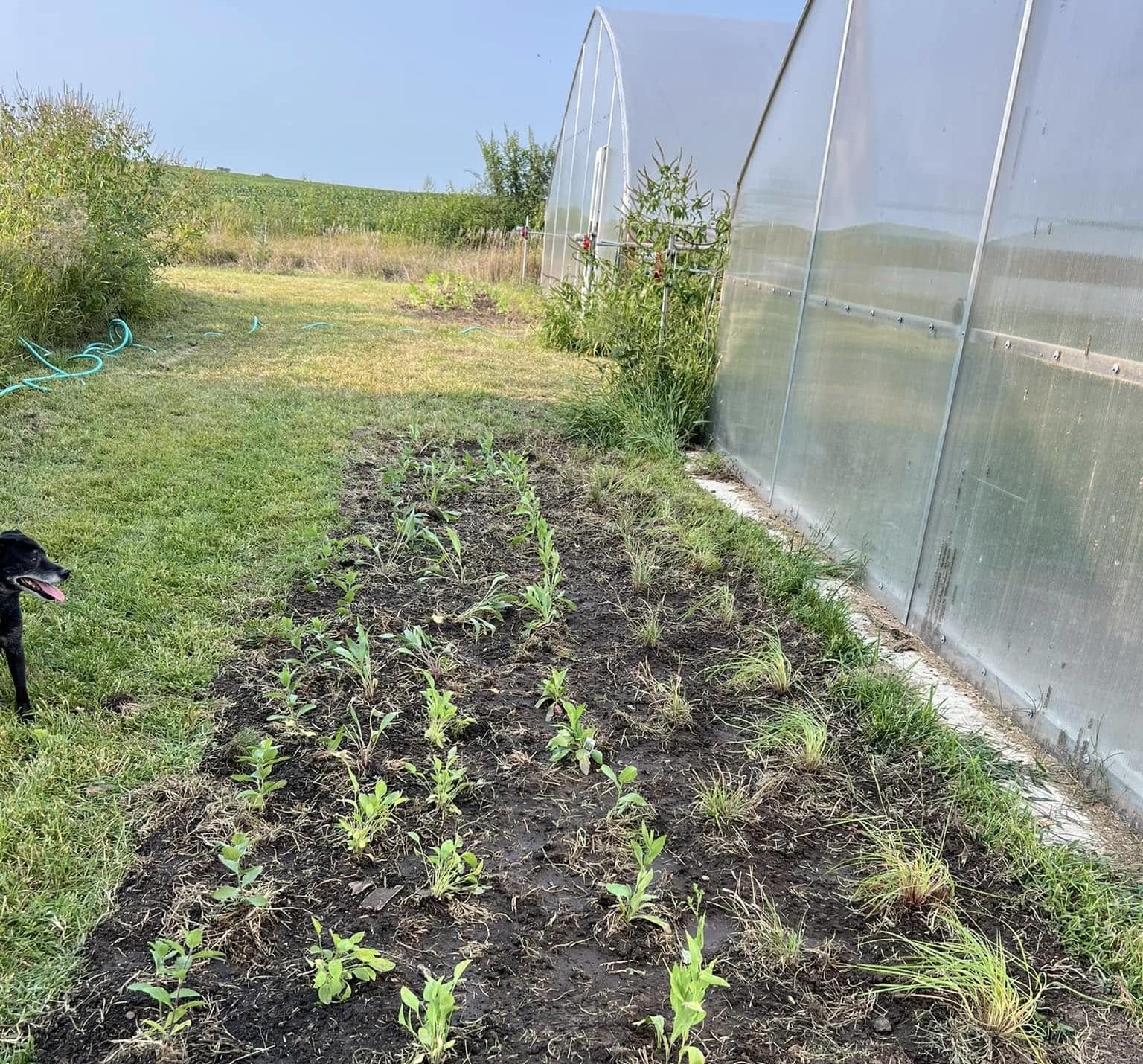
The Planting
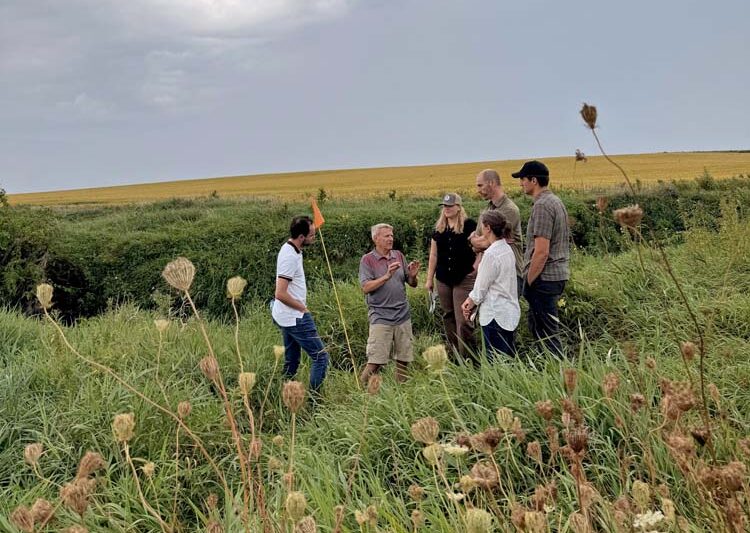
Grace Yi of Practical Farmers of Iowa, alongside Sarah Nizzi of Xerces Society, conducted a site visit to Engelbrecht Farm to determine the best places for planting pollinator habitat on Tricia's 15,000 square foot urban farm. The main pollinator strip that was planted is a five-foot strip that stretches 100 feet along the edge of the farm. By September, Tricia and her family, along with several volunteers were planting the pollinator strip.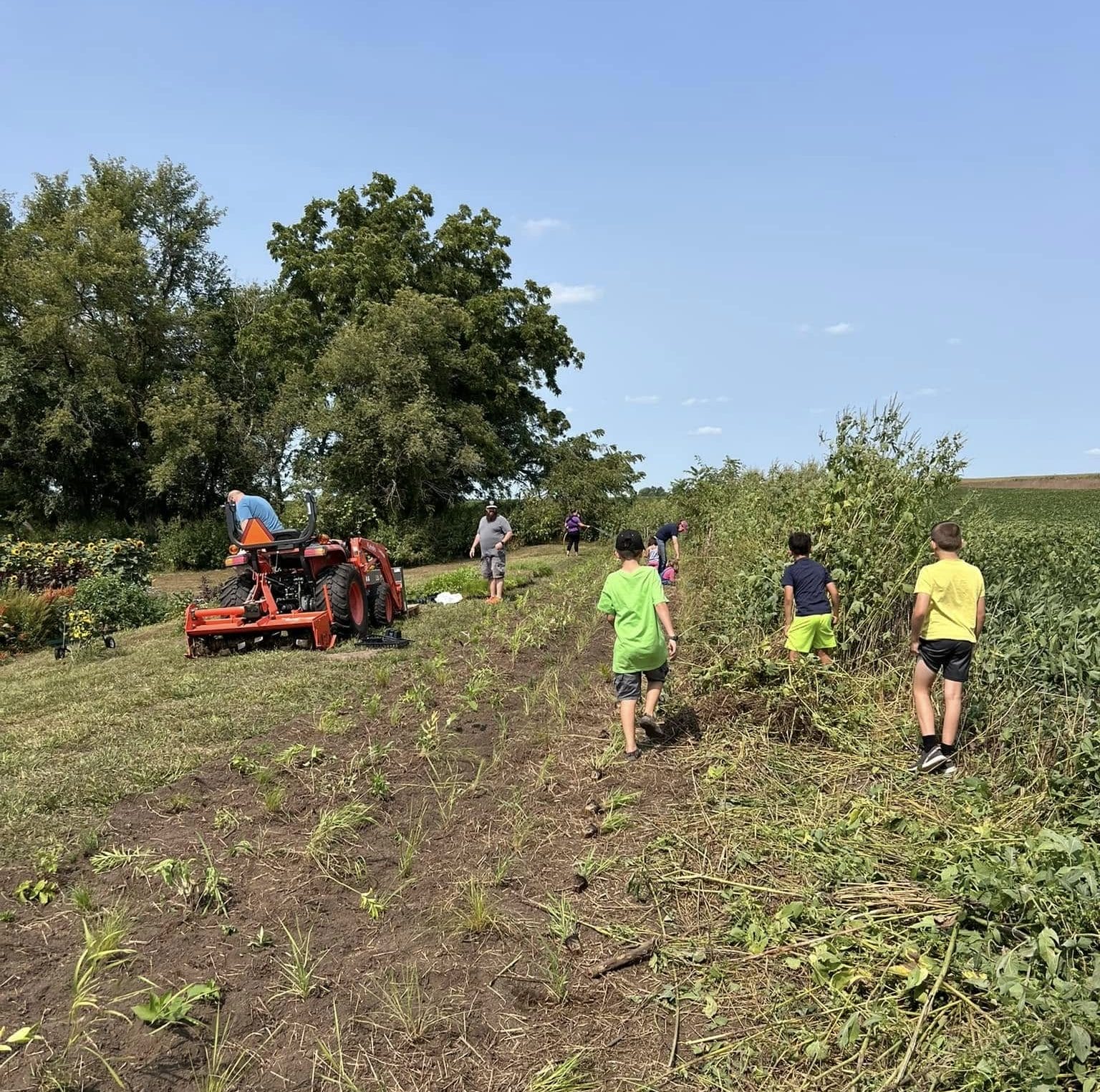

What the Future Holds and Advice for Others
While the application, prep and planting process were straightforward for Engelbrecht Farm, Tricia does have some advice for those wanting to do something similar on their own urban farms, the first being to make sure your intended pollinator plot is ready for planting. Weed removal is critical, as is continually weeding as the native pollinator plants are establishing themselves. “It can take several attempts over a series of weeks to really remove all the weeds because they grow back just when you thought you got them all,” Tricia says. “In the end, my best piece of advice is to find a program like this one that can help you get those beneficial plants and insects onto your farm. Providing habitat is essential to healthy farms.”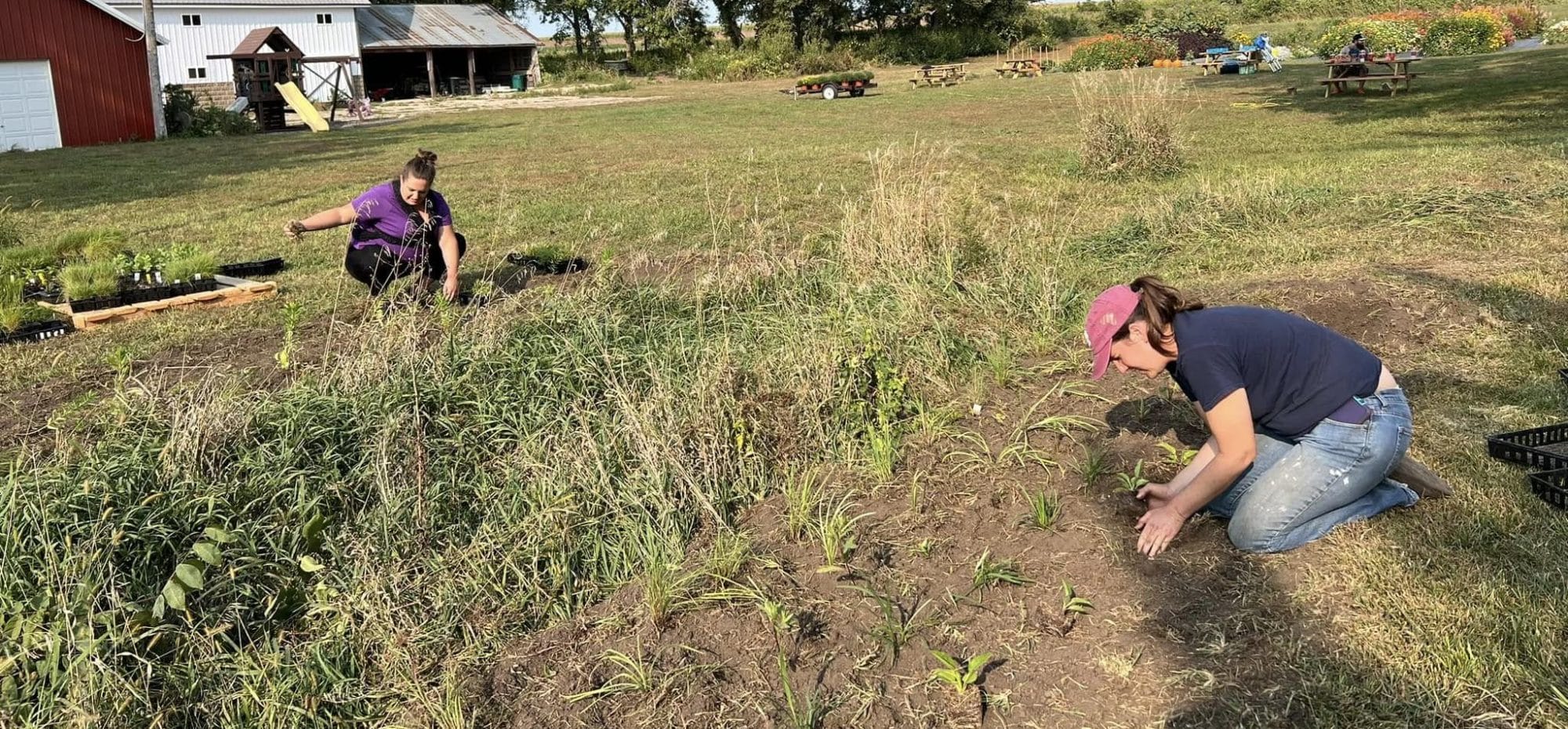
Funding for this project is made possible by USDA NRCS Iowa, Ceres Trust, Practical Farmers of Iowa and Xerces Society.