Raising vegetables is hard work. It's physically demanding, runs on a rigid schedule and requires endless decisions. These strains lead many farmers to adapt their operations to accommodate changing needs. Here, three farmers share reflections on what they changed, and why.
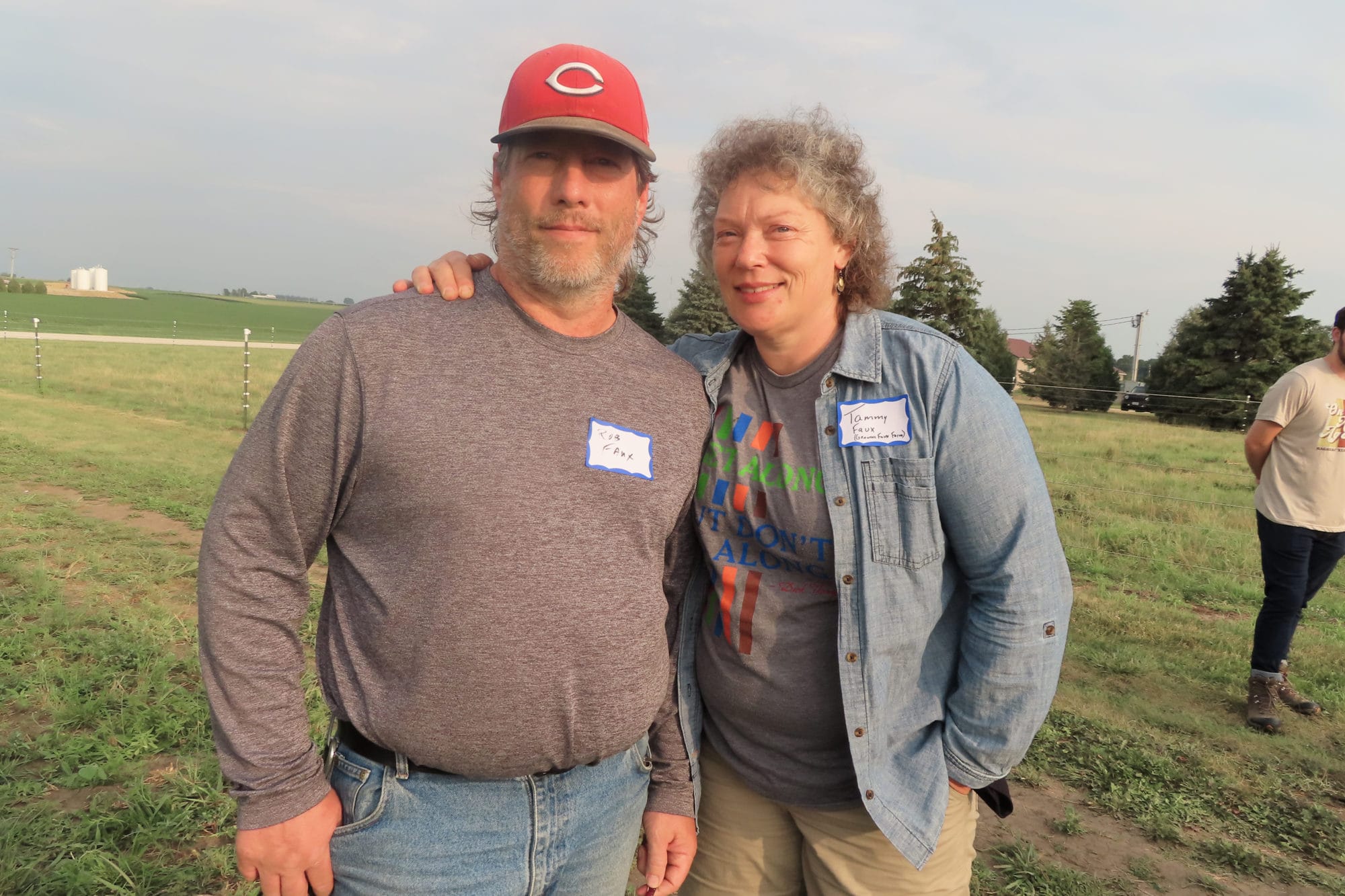
Rob and Tammy Faux
At Genuine Faux Farm, near Tripoli, Iowa, Rob and Tammy Faux work on a system of five-year plans. Like many produce farms, flexibility and adaptability have been hallmarks of their farm's evolution. They started their farm in 2004 with sales at area farmers markets, launching their CSA with 20 members in 2005. “Our first five-year plan said that our CSA was going to be no bigger than 40 shares. But also, sometimes opportunities knock and you have to work within your plan to seize them,” Rob says. By 2008, they were up to 120 CSA members plus four weekly farmers markets. A core group of customers sustained them against turnover, with new customers providing the profit. Over time, Rob and Tammy noticed changes to that core group as customers' lives and needs changed. New subscriptions flagged. “Around that time, the CSA model in Iowa was starting to struggle,” Rob says. “The CSA wasn't going to keep us in the black anymore.” Recognizing the need to adapt, he and Tammy branched out, selling to restaurants in nearby Waterloo and providing bulk sales to a retirement community. By 2019, they planned to drop the CSA entirely and switch to a system of prepay credits. “Customers could use their credits to purchase the produce as we had it available, and when they ran out of credits, they could purchase more,” Rob says. When the COVID-19 pandemic hit in 2020, Rob and Tammy found they needed to adapt again. They couldn't secure workers and decided Rob needed to find supplemental work. Since 2007, Rob had worked full-time on the farm while Tammy, a professor of social work, taught at nearby Wartburg College. In April 2020, Rob started a remote, part-time job with the Pesticide Action & Agroecology Network. Around the same time, he was diagnosed with kidney cancer. “It was a messy year,” Rob says. Currently, they've scaled down to a level Rob describes as “mildly frantic to keep it doable.” They still raise some produce in high tunnels, along with turkeys, broiler chickens and eggs. With two off-farm jobs, their main goal is for expenses and income to add up to zero. He adds, “We're still seeking that magic balance of farming plus off-farm jobs plus time to enjoy life.” Identifying core values – like avoiding pesticides and seeking to right-size the farm – along with mapping out five-year plans has helped them set intentions, gauge their progress and revise plans as needed. As they work on their next five-year plan in late 2024, Rob and Tammy know it'll look different. “As we progress through our lives, the major medical things are going to happen more often, so that must be reflected in our plan,“ Rob says. “We know there will be pivots, not just in our farms but in our lives. The idea of possibility has always been a big fuel of our farm – how can we be healthier, more sustainable, more efficient, make things work better. Right now, I'm even more optimistic about next year.”Donna Warhover
Laura Krouse