In a Nutshell:
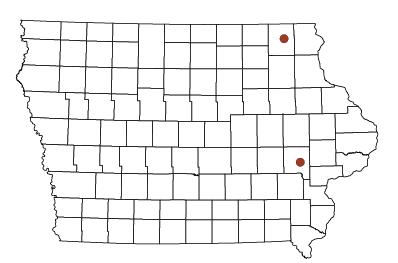
- Alec Amundson, Sam Bennett and Steve Saltzman wondered if fungicide seed treatments might be more necessary for their early-planted soybeans than neonicotinoid seed treatments. The objective of their research was to compare the effects of fungicide and neonic insecticide soybean seed treatments on soybean plant populations, yield and profitability.
- Cooperators compared soybeans grown from fungicide-treated seed and soybeans grown from seed treated with their typical seed treatment combination of either fungicide and neonicotinoid insecticide or a combination of fungicide, neonicotinoid insecticide and nematicide. Saltzman additionally compared untreated soybean seed.
Key Findings:
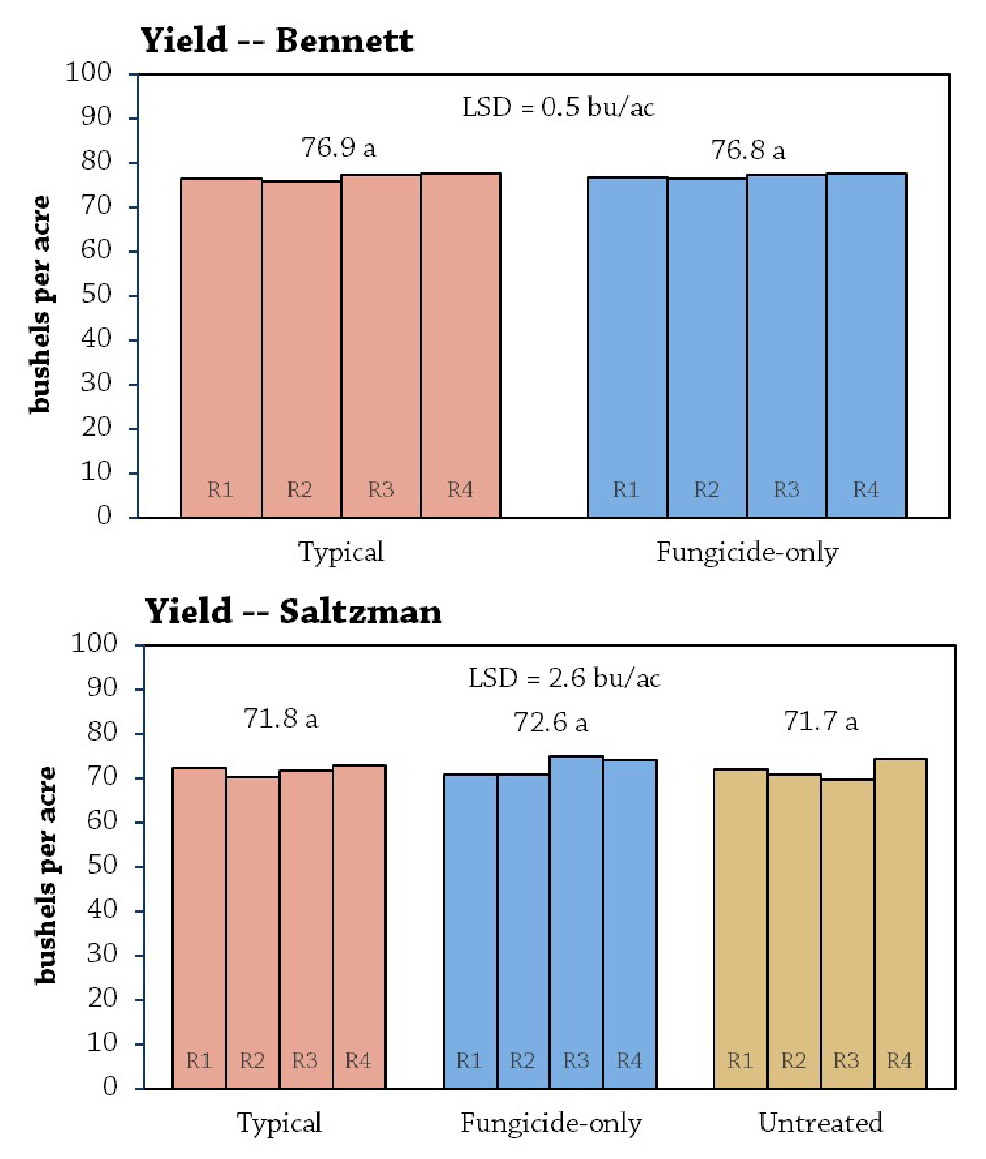
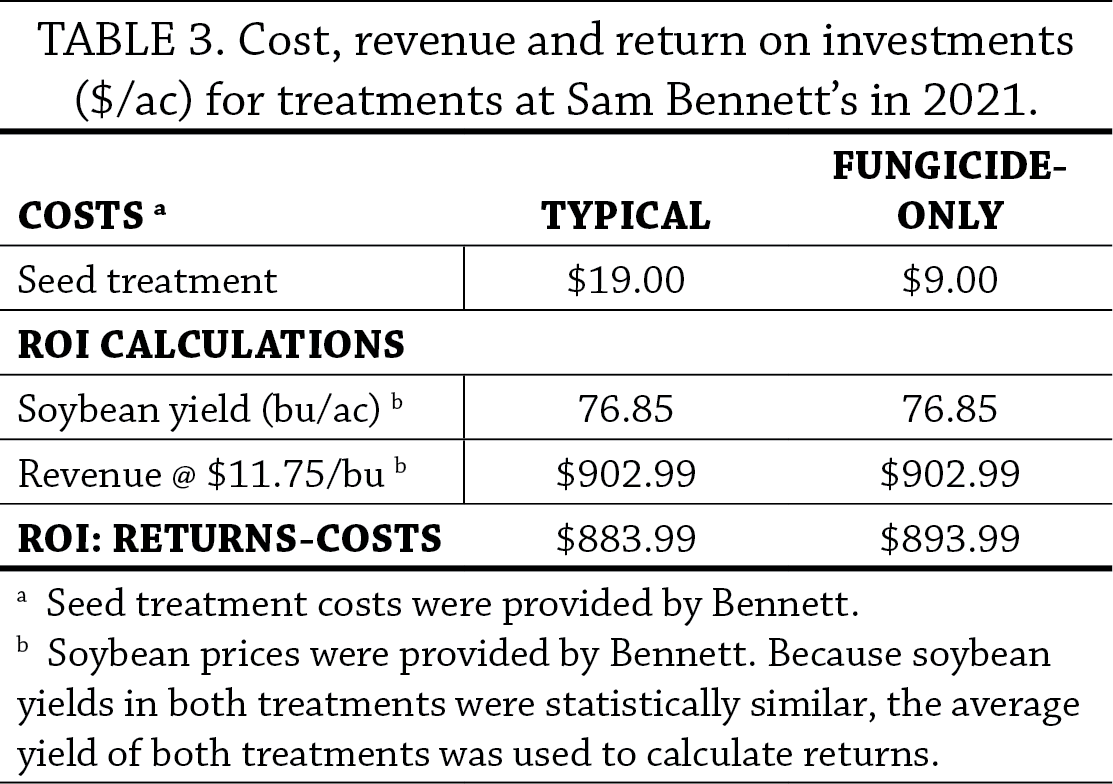
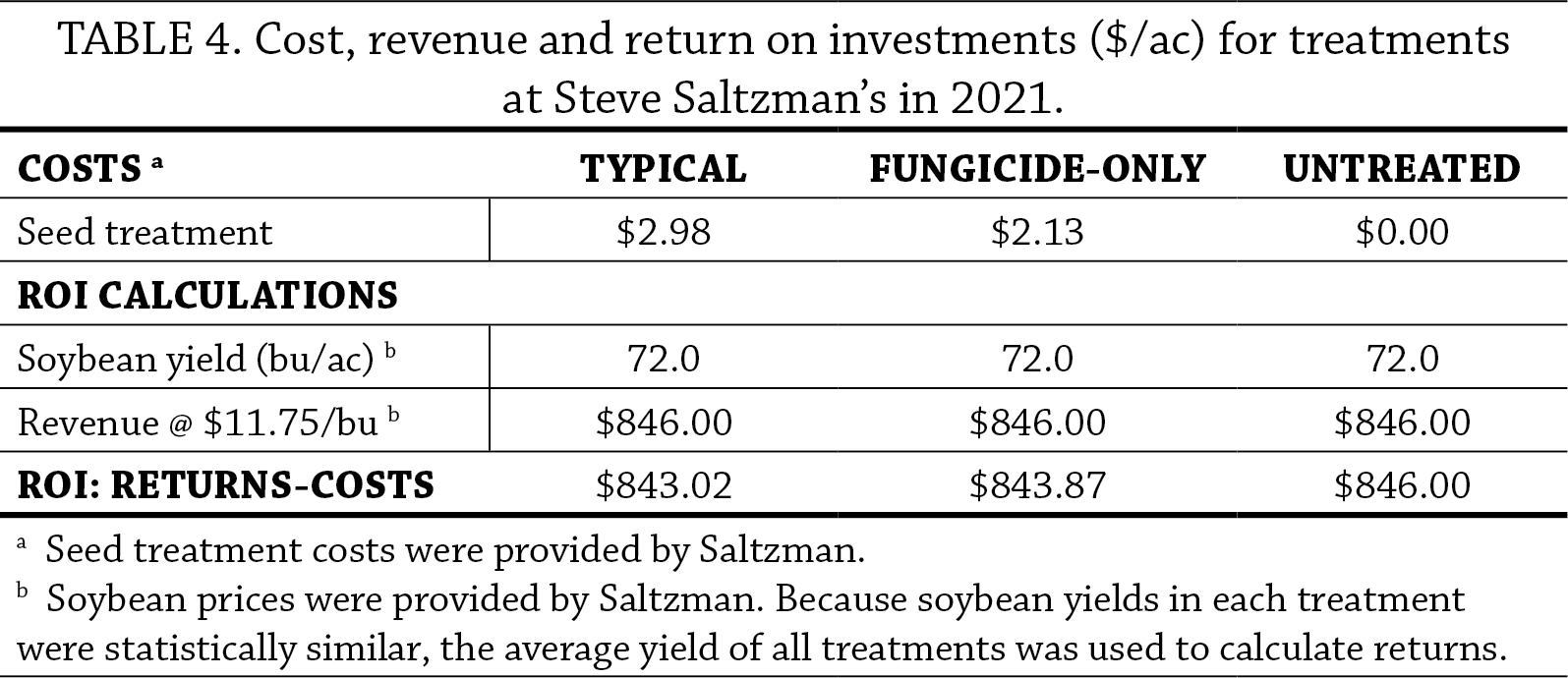
- Soybean yields and populations between treatments at each site were statistically similar. Bennett saved $10.00/ac by eliminating nematicide and insecticide from his seed treatment, and Saltzman saved $3.00/ac.
- These results contribute evidence to a growing body of research showing neonicotinoid seed treatments provide value in only a narrow set of circumstances.
Background
Neonicotinoid seed treatments (“neonics”) are widely used to protect soybean seedlings against a broad range of insect pests up to four weeks after planting. Because neonics are relatively inexpensive, they are commonly applied in a preventive manner without first scouting to confirm the presence of target insect pests. Research has consistently shown that neonics generally do not improve plant population or yield. Field studies in Quebec, Canada, for example, found that using neonics in corn and soybean to prophylactically treat wireworm failed in all cases to improve plant stands and yields.[1] PFI farmer-researchers conducted trials in 2014 and 2015 to determine the value of neonics. Of 5 total trials that compared soybean yield between untreated seed and seed treated with neonics only or with a combination of neonics and fungicide, none experienced yield increases as a result of using treated seed.[2] In a more recent PFI on-farm trial, Dick Sloan showed that planting untreated soybean seed was more profitable than planting seed treated with neonicotinoid and fungicide.[3] Sam Bennett, a PFI farmer-researcher, was interested in determining the profitability of neonics in his operation. He commented, “I want to take ownership of what I’m applying to my farm instead of just using pesticides because it’s what is ‘standard.’ I hope to work toward eliminating insecticides that could be harmful to pollinators without sacrificing yield or profitability.” Indeed, the widespread and indiscriminate use of neonics often pencils out to an added cost with no return while also harming beneficial insects, wildlife, soil health and water quality.[4,5] In concert with Steve Saltzman and Alec Amundson, Bennett hypothesized fungicide seed treatments are more necessary to early-planted soybean yield than neonics. Together, they designed on-farm trials to compare soybean yield, population and return on investment between their typical pesticide-treated soybean seed and soybean seed treated only with fungicide. When asked about how the research might impact his farm, Saltzman replied, “I’m hoping for data to help myself and others make informed decisions about seed treatments in the future.” Amundson added, “As neonics come under pressure, this research will allow us to gauge the actual need of insecticide seed treatments.”
Methods
DesignTo determine the value of neonicotinoid seed treatments, the cooperators compared plant populations and yields of soybeans between the following treatments:
- Typical – soybean seed treated with fungicide and neonicotinoid insecticide, or with fungicide, neonicotinoid insecticide and nematicide
- Fungicide-only – soybean seed treated only with a fungicide
Cooperators assigned treatments randomly to neighboring strips of soybeans, then replicated each treatment a minimum of four times. Randomization and replication allowed us to conduct statistical analyses to assess the effects of each treatment on soybean populations and yield.
Amundson’s trial site was preceded by a cereal rye (VNS) cover crop flown into standing corn. He fertilized the trial site on November 6, 2020, with 5-13-21-2.5S applied at a rate of 68 gal/ac. Amundson established treatment strips on April 21 of the following spring by planting soybeans in both treatments. He planted 5 replications of each treatment, which resulted in a total of 10 strips (5 reps × 2 treatments) that each measured 80 ft by 2,400 ft (Figure A1). Soybean seed in Amundson’s typical treatment was treated with EverGol Energy (fungicide), Lumisena (fungicide) and Gaucho 600 (insecticide), and soybean seed in his fungicide-only treatment was treated only with EverGol Energy and Lumisena. Amundson planted beans in all treatments on 15-in. row spacing and at a population of 155,000 seeds/ac. On May 18, Amundson applied the post-emergent herbicides Zidua SC (4 oz/ac) and Roundup PowerMax (36 oz/ac).


Results and Discussion
Soybean plant population
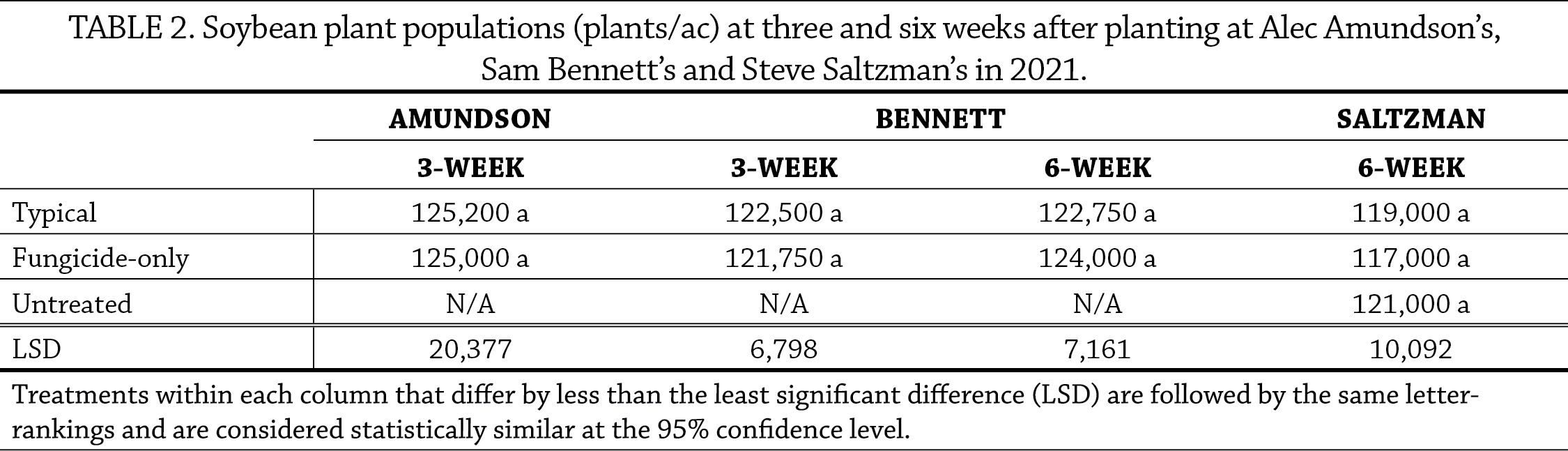
At Amundson’s, soybean plant populations at three weeks after planting soybeans were statistically similar (Table 2). Unfortunately, a late spring freeze that occurred just after his first sampling date killed Amundson’s beans and prevented him from collecting all other trial data. Bennett was able to sample plant populations at both three and six weeks after planting soybeans. On both occasions, soybean plant populations in both his treatments were statistically similar. Saltzman was prevented from sampling plant populations at 3 weeks after planting. His first sampling occurred approximately six weeks after planting soybeans, and he did not conduct a second sampling. Soybean populations in all three of Saltzman’s treatments were statistically similar.
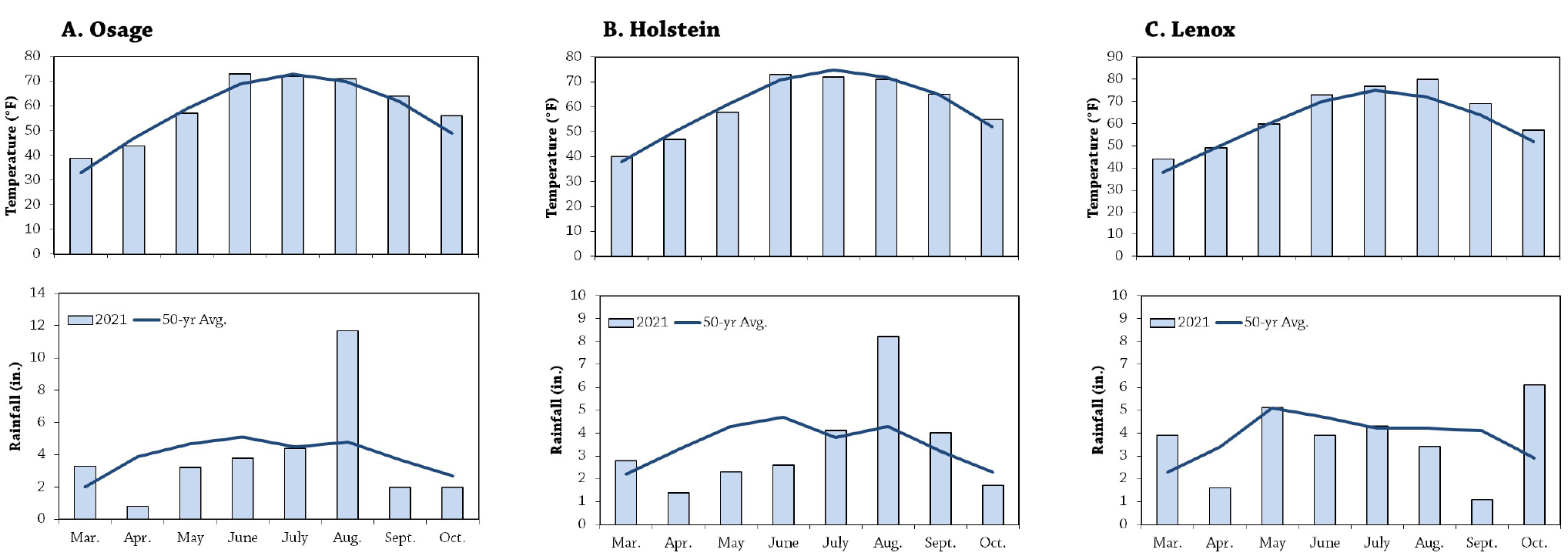
The data at all three sites support the idea that insecticide seed treatments might not be necessary in early-planted soybeans in Iowa. At first glance of Saltzman’s data, one might also question the benefit of fungicide seed treatments; however, uncharacteristically low precipitation throughout April, May and June likely kept fungal disease pressure at low levels (Figure A2).
Conclusions and Next Steps
The combined results of Amundson’s, Bennett’s and Saltzman’s data provide evidence that neonicotinoid seed treatments may not be necessary in early-planted soybeans. Likewise, Bennett’s data showed the addition of nematicide to his typical fungicide-insecticide seed treatment provided no benefit to soybean populations or yield. Saltzman remarked, “The findings were about what I expected based on my own non-replicated testing in the past. Contributing empirical evidence that treating soybean seed offers minimal value in most years is the most valuable aspect of conducting this trial.” Although Amundson’s trial didn’t pan out quite as he hoped, he walked away from the trial with valuable data and new ideas to explore and said, “I think we can adjust our seed treatment plans on all crops going forward.” These results enhance an already strong body of literature showing neonicotinoid seed treatments protect soybean yield only in a certain and limited set of circumstances.
Appendix-Trial Design and Weather Conditions

References
- Labrie, G., A.-È. Gagnon, A. Vanasse, A. Latraverse and G. Tremblay. 2020. Impacts of neonicotinoid seed treatments on soil-dwelling pest populations and agronomic parameters in corn and soybean in Quebec (Canada). PLoS ONE. 15:1–20. https://doi.org/10.1371/journal. pone.0229136 (accessed October 2021).
- Gailans, S., D. Sloan, B. Lynch and W.& D. Johnson. 2015. Are neonicotinoid seed treatments in soybean production worth it? 2015 Update. Practical Farmers of Iowa Cooperators’ Program. https://practicalfarmers.org/research/5195/ (accessed October 2021).
- Nelson, H. and D. Sloan. 2021. Are Neonic + Fungicide Soybean Seed Treatments Justified? Practical Farmers of Iowa Cooperators’ Program. https://practicalfarmers.org/research/are-neonic-fungicide-soybean-seed-treatments-justified/ (accessed October 2021).
- Hopwood, J., S.H. Black, M. Vaughan and E. Lee-Mäder. 2013. Beyond the Birds and the Bees: Effects of Neonicotinoid Insecticides on Agriculturally Important Beneficial Invertebrates. The Xerces Society for Invertebrate Conservation. https://xerces.org/publications/guidelines/beyond-birds-and-bees (accessed October 2021).
- Goulson, D. 2013. An overview of the environmental risks posed by neonicotinoid insecticides. Journal of Applied Ecology. 50:977–987. https://besjournals.onlinelibrary.wiley.com/doi/full/10.1111/1365-2664.12111 (accessed October 2021).
- Iowa Environmental Mesonet. 2021. IEM “Climodat” Reports. Iowa State University Department of Agronomy. https://mesonet.agron.iastate.edu/climodat/ (accessed August 2021).