In a Nutshell:
- Carmen & Maja Black and Helaina Thompson, Mark Quee and Jon Yagla wanted to test new basil varieties bred for downy mildew resistance to see if they provided a longer harvest window and more produce than the traditional Genovese variety.
- They hypothesized that, the Prospera DMR and Rutgers Devotion DMR varieties would survive longer through the season and provide a more productive harvest period because they would not succumb to mortality caused by downy mildew.
Key Findings:
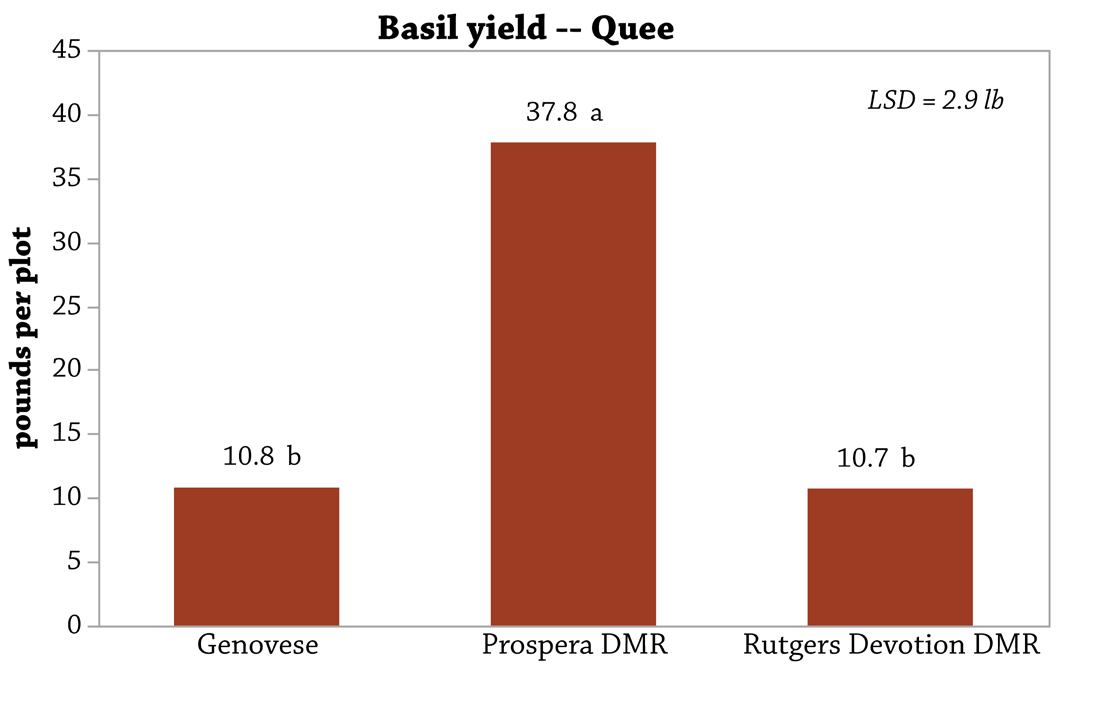
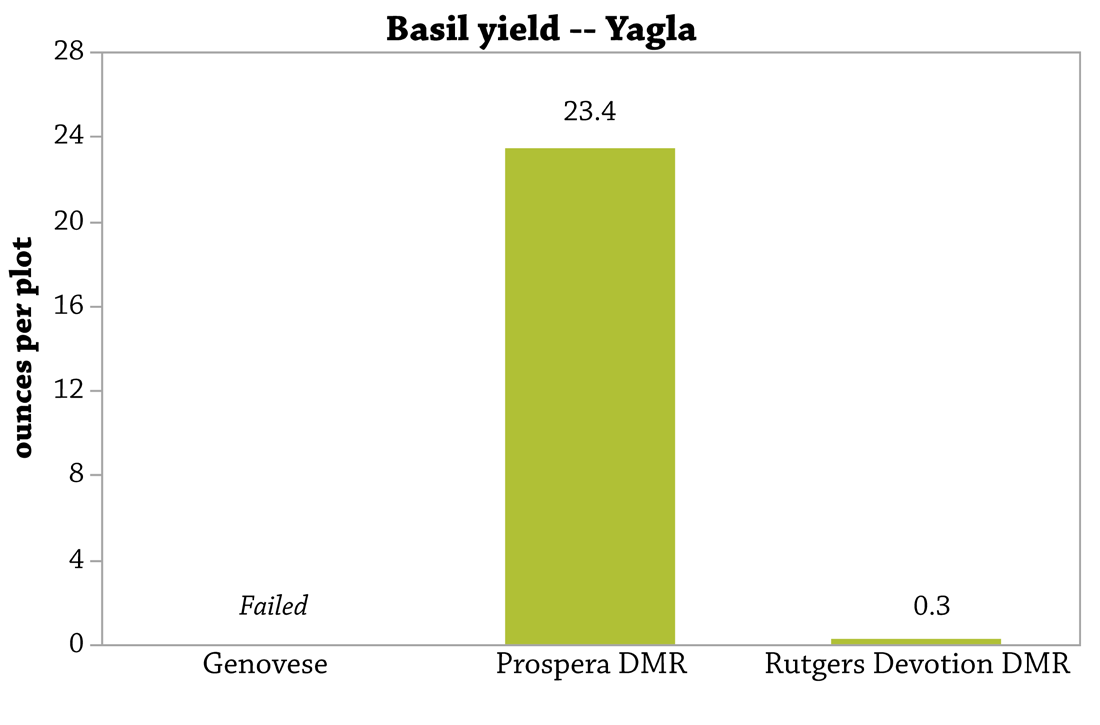
- Across all three farms, Prospera DMR yielded best among the three varieties tested. It was the variety least susceptible to mortality by downy mildew.
Background
Methods
Design
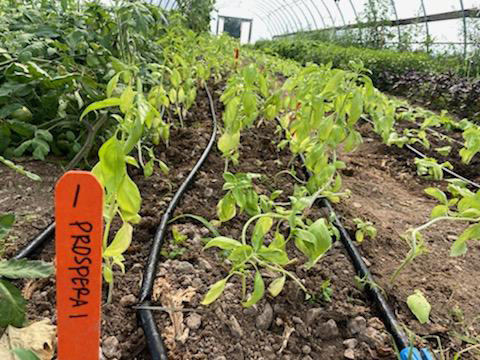
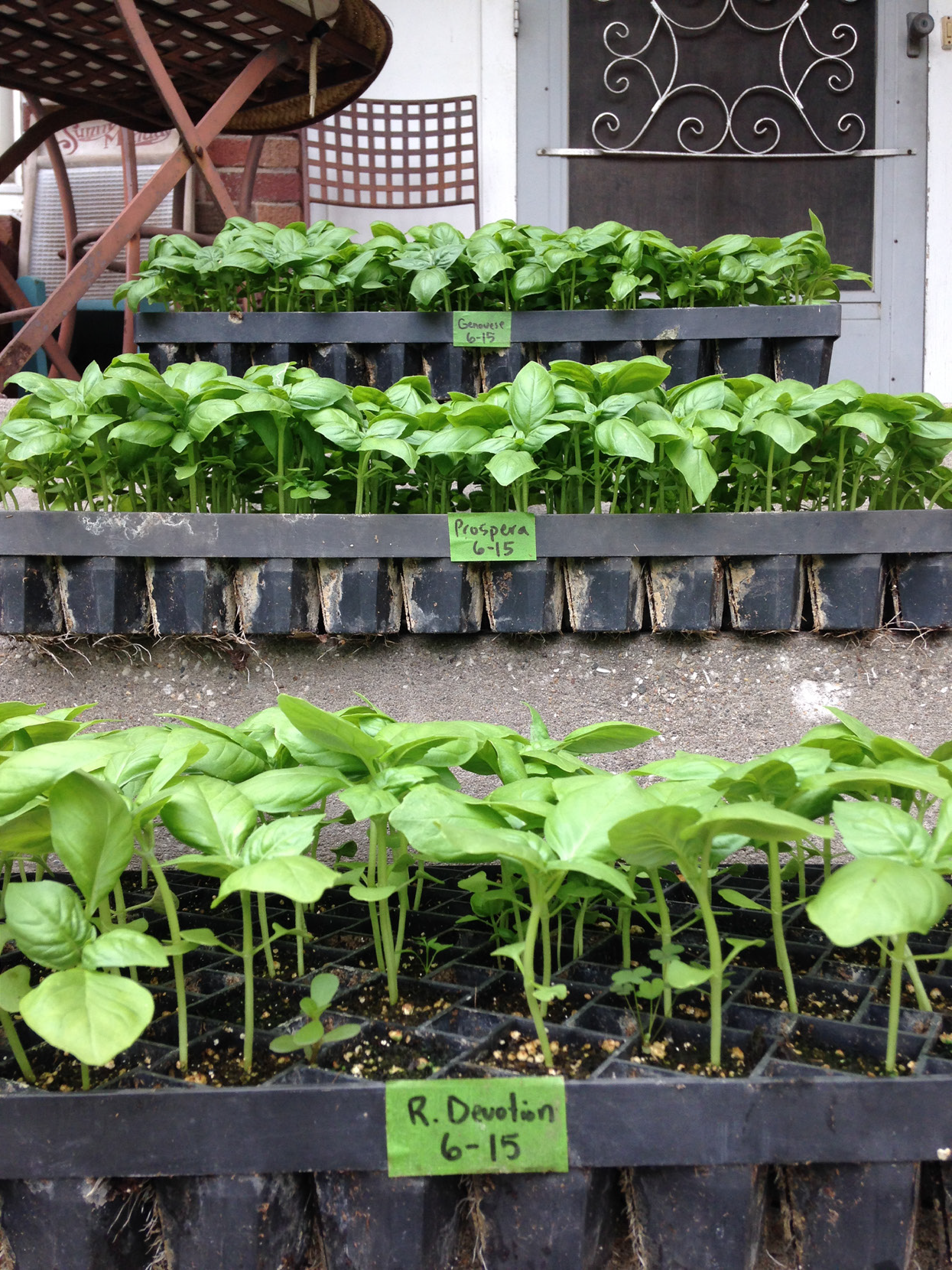
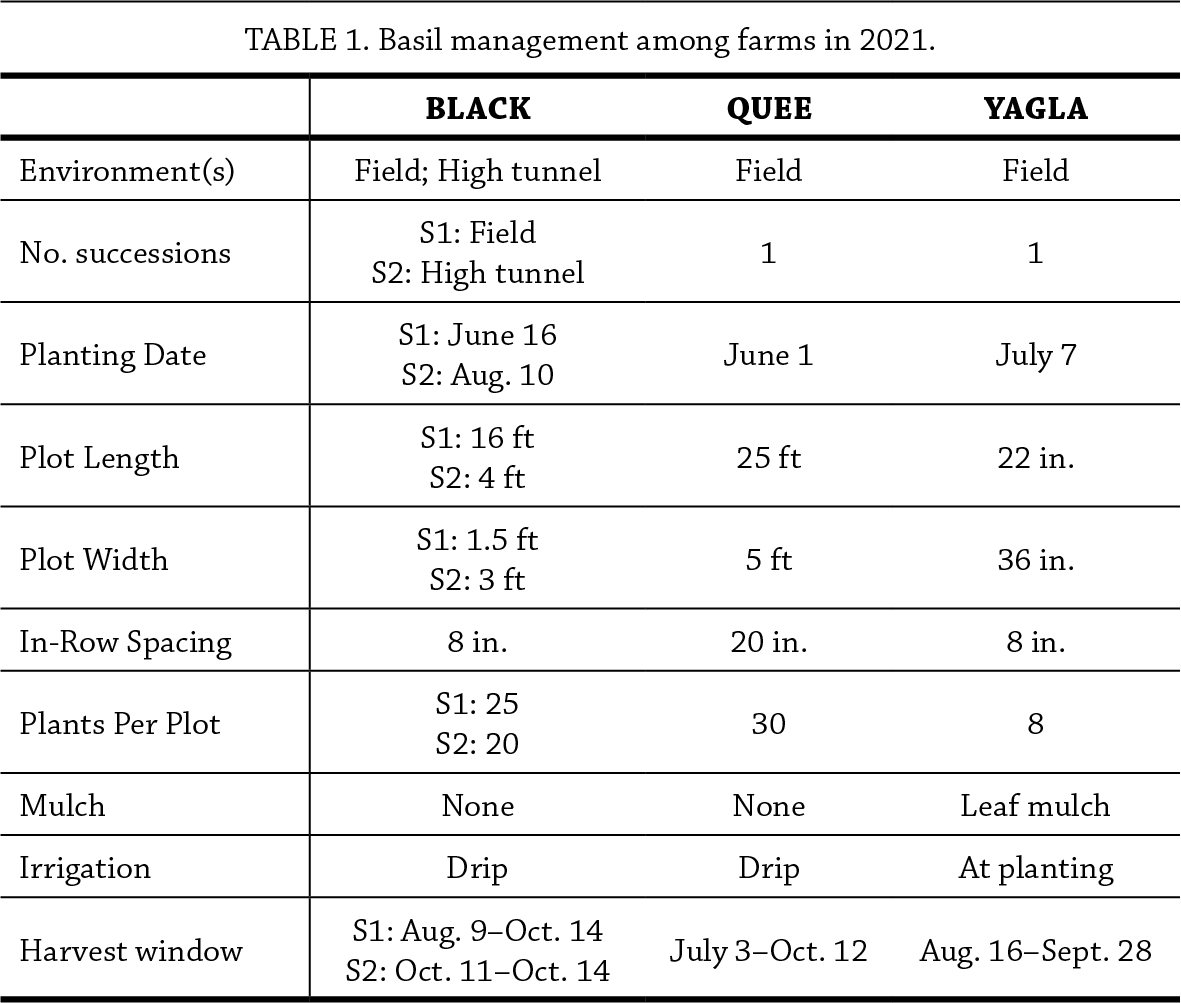
Cooperators established four replication of three basil varieties in as many environments as they wanted. Varieties included: Prospera DMR, Rutgers Devotion DMR and Genovese. DMR refers to “downy mildew resistant” and Genovese was the control. The Blacks and Thompson decided to trial varieties in two environments: field and high tunnel. Both Quee and Yagla only trialed outside in the field. Each of these studies involved four replications of the three varieties (Figure A1). Management at each farm is detailed in Table 1.
 Measurements
Each of the cooperators determined the yield of the basil for each of their varieties by collecting the plot weight of the basil each harvest date. While harvesting the cooperators also observed any downy mildew that they saw.
Data analysis
To rank the effect of variety on basil yield, we calculated Tukey’s least significant difference (LSD). If the difference in yield for any two varieties was greater than or equal to the LSD, we confirm that variety had a statistically significant effect on yield. On the other hand, if the difference in yield was less than the LSD, we consider the varieties to be statistically similar. We used a 95% confidence level to calculate the LSDs, which means that we would expect our rankings to occur 95 times out of 100. We could make these statistical calculations because the farmers’ experimental designs involved replication and randomization of their treatments (varieties) (Figure A1).
Measurements
Each of the cooperators determined the yield of the basil for each of their varieties by collecting the plot weight of the basil each harvest date. While harvesting the cooperators also observed any downy mildew that they saw.
Data analysis
To rank the effect of variety on basil yield, we calculated Tukey’s least significant difference (LSD). If the difference in yield for any two varieties was greater than or equal to the LSD, we confirm that variety had a statistically significant effect on yield. On the other hand, if the difference in yield was less than the LSD, we consider the varieties to be statistically similar. We used a 95% confidence level to calculate the LSDs, which means that we would expect our rankings to occur 95 times out of 100. We could make these statistical calculations because the farmers’ experimental designs involved replication and randomization of their treatments (varieties) (Figure A1).

Results and Discussion
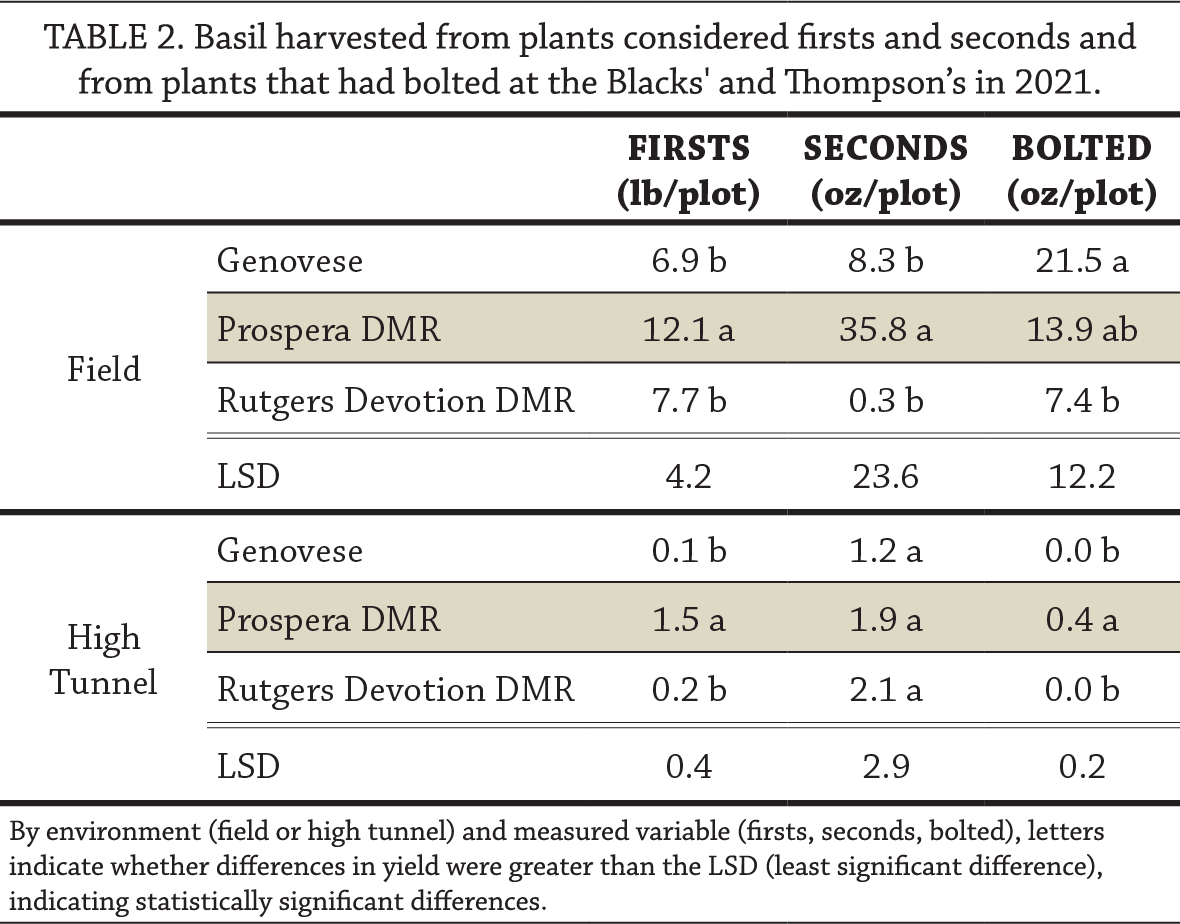
At Blacks’ and Thompson’s, they segregated basil leaves into three quality categories during harvest: firsts (highest quality); seconds (lower quality); bolted (leaves harvested from plants that had bolted). “I harvested good basil leaves off the plants that bolted, I just separated the bolt material from the edible leaves,” Thompson said. “The bolt separation process is a hassle but necessary, we think, for a nice-looking bundle, so it’s good to know if one of the varieties has less bolting.” For each quality category, Prospera DMR yielded best and did so in both environments (Table 2).
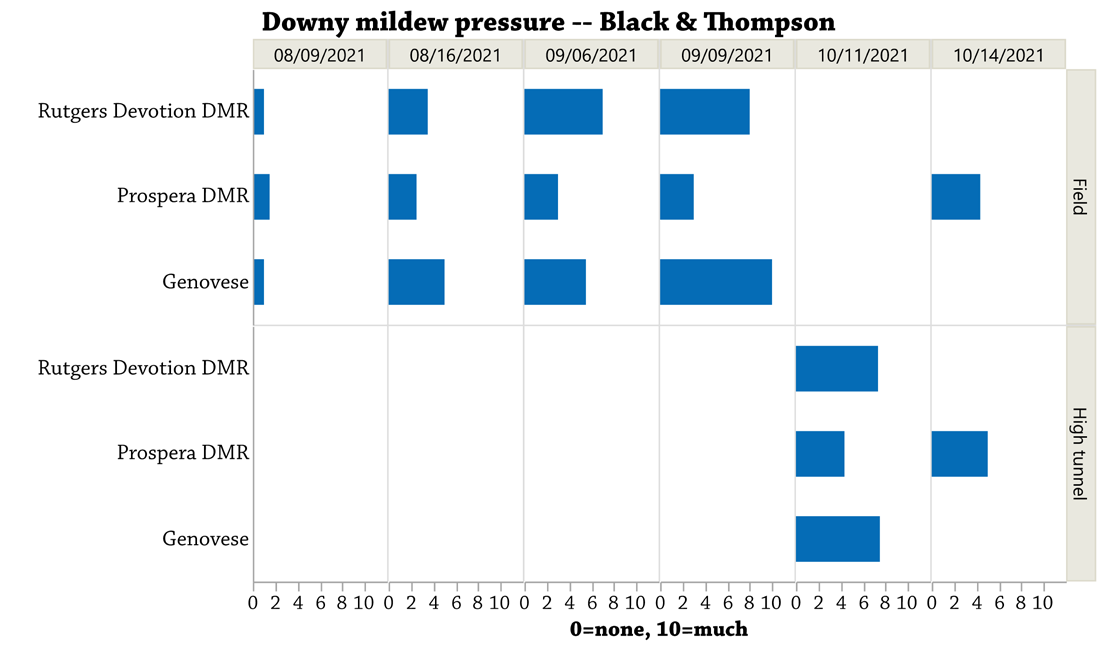
 Downy mildew pressure was consistently least for Prospera DMR throughout the harvest periods in the field and in the high tunnel at Blacks’ and Thompson’s (Figure 1). By the Oct. 14 harvest date in both environments, Prospera DMR plants were the only ones still alive and producing marketable quality.
Conclusions and Next Steps
Across all three farms, Prospera DMR was the clear winner. It was the only variety of the three tested to survive throughout the course of each trial at each location. The other varieties (Genovese and Rutgers Devotion DMR) suffered far more downy-mildew pressure, which shortened the lifespans of the plants and ultimately reduced yield. “I now have a better understanding of which Italian basil variety to grow in my location for downy mildew resistance,” Yagla said. “It is great to have a basil variety (Prospera DMR) that will actually survive on the farm here in Iowa City!” Quee is likewise sold on Prospera DMR and will use it for the bulk of his basil production going forward. “We learned that disease resistant plant breeding can be successful, and (for now) what variety of basil we want to grow on our farm,” said Carmen Black about their plans for the future. For Helaina Thompson, the value of their results extend beyond this trial: “For me, the most valuable aspect of conducting this trial was learning about the downy mildew strains and plant breeding, and learning how to use that knowledge to make better decisions in the future-- not just for basil.”
Appendix - Trial Design and Weather Conditions

References
- Dicklow, M.B. and A. Madeiras. 2018. Downy Mildews of Ornamental Plants. University of Massachusetts Amherst. https://ag.umass.edu/greenhouse-floriculture/fact-sheets/downy-mildews-of-ornamental-plants (accessed October 2021).
- McGrath, M.T. 2021. Basil Downy Mildew. Cornell University. https://www.vegetables.cornell.edu/pest-management/disease-factsheets/basil-downy-mildew/ (accessed October 2021).
- Iowa Environmental Mesonet. 2021. Climodat Reports. Iowa State University. http://mesonet.agron.iastate.edu/climodat/ (accessed October 2021).