In a Nutshell:
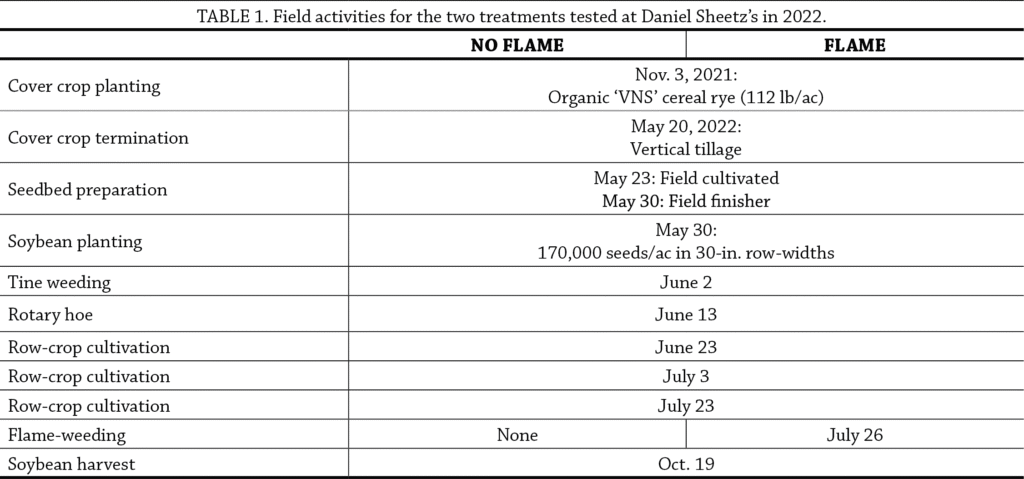
- In propane-fueled flame weeding, weed plant tissues are exposed to propane-fueled flames. The exposure to such great heat causes plant cells to rupture, which reduces the weed’s ability to survive.
- Daniel Sheetz wished to learn if flame-weeding could be a viable option in organic soybean production, which typically entails several tillage passes for weed control.
Key Findings:
- Compared with his typical practice, adding a flame-weeding pass did not improve weed control or soybean yields.
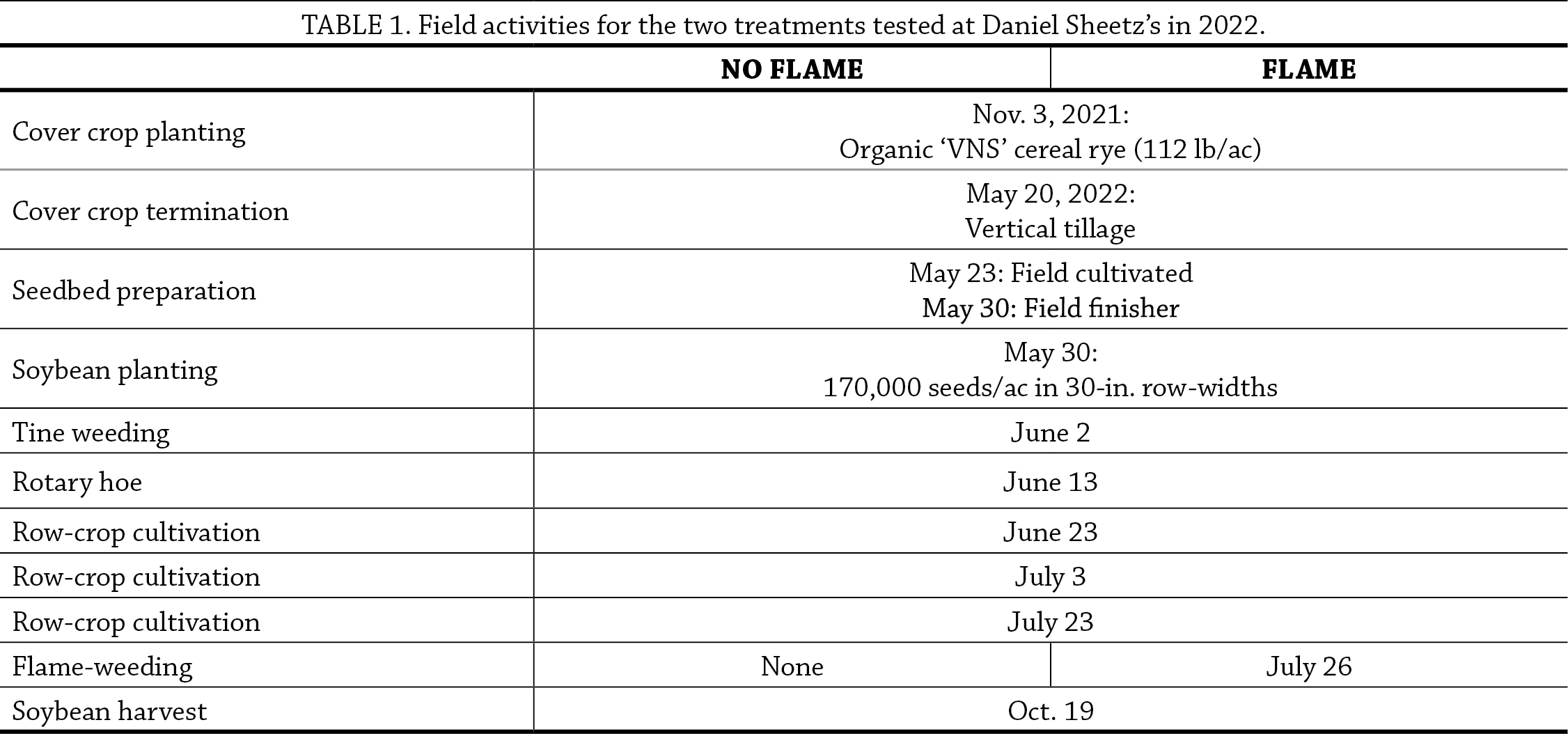
- The flame-weeding pass occurred a bit later than Sheetz intended but he was impressed with how well the soybeans withstood the heat from the flamer in late July.
Methods
DesignAfter terminating a cereal rye cover crop with vertical tillage on May 20, Sheetz planted soybeans in 30-in. row-widths at a population of 170,000 seeds/ac on May 30. He then compared two weed management strategies, one of which involved flame-weeding:
- No flame: Standard practice. Tine-weeding, rotary hoe, cultivation.
- Flame: Flame-weed soybeans at approximately V5 stage using a 6-row flame cultivator kit attached to a cultivator tool bar. In addition to cultivation passes.
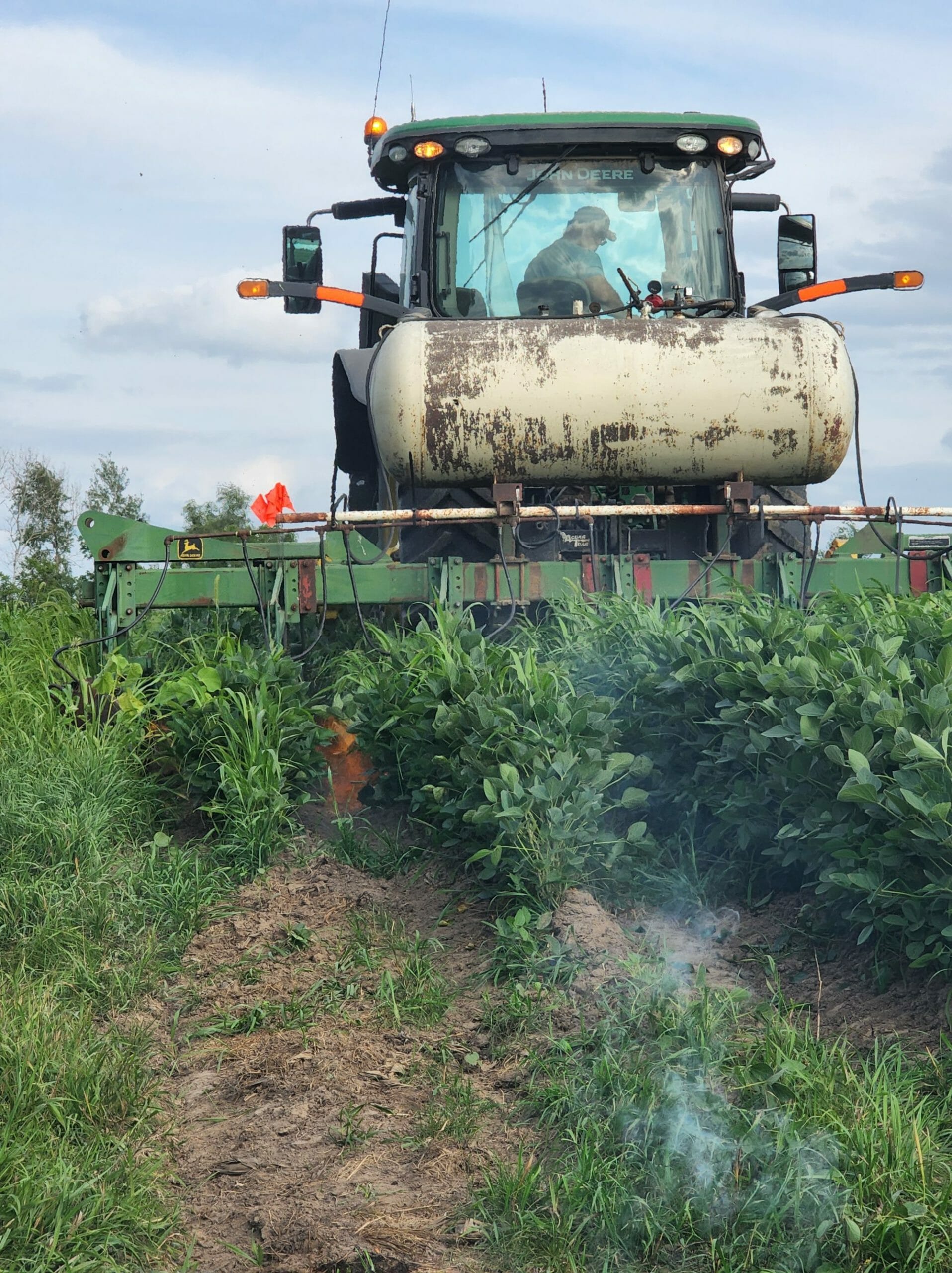
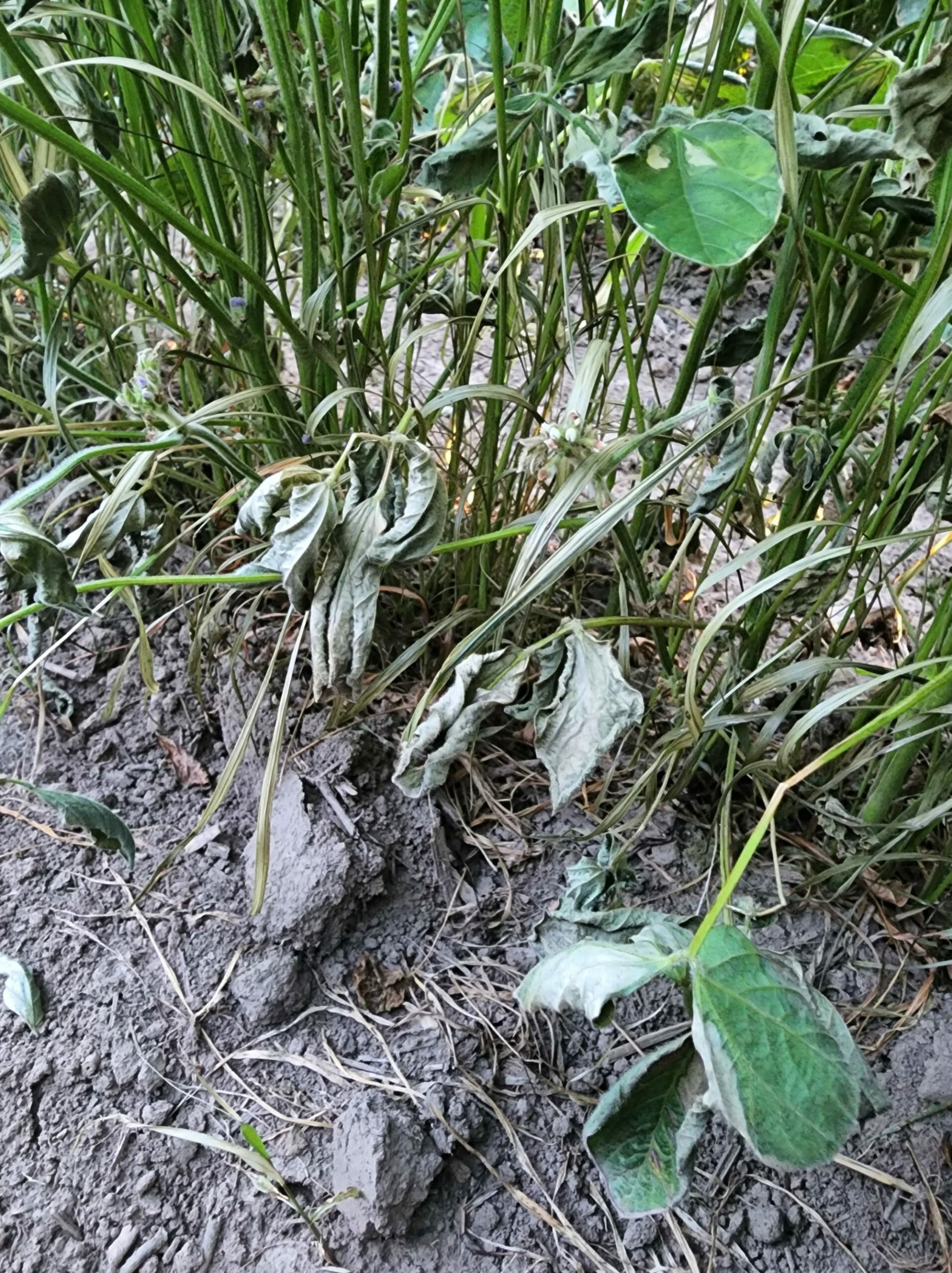
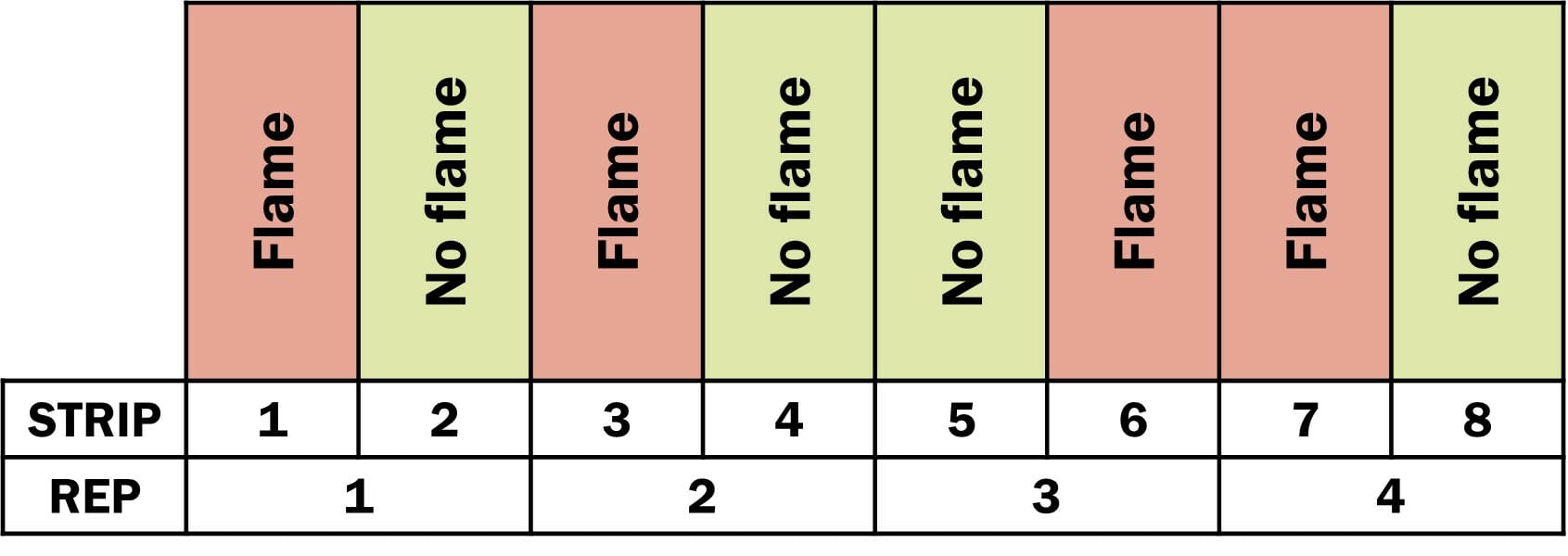
Both treatments were replicated four times for a total of eight strips (Figure A1). Each strip measured 22 ft wide by 400 ft long. Field management is provided in Table 1 below.
Results and Discussion
Weed density
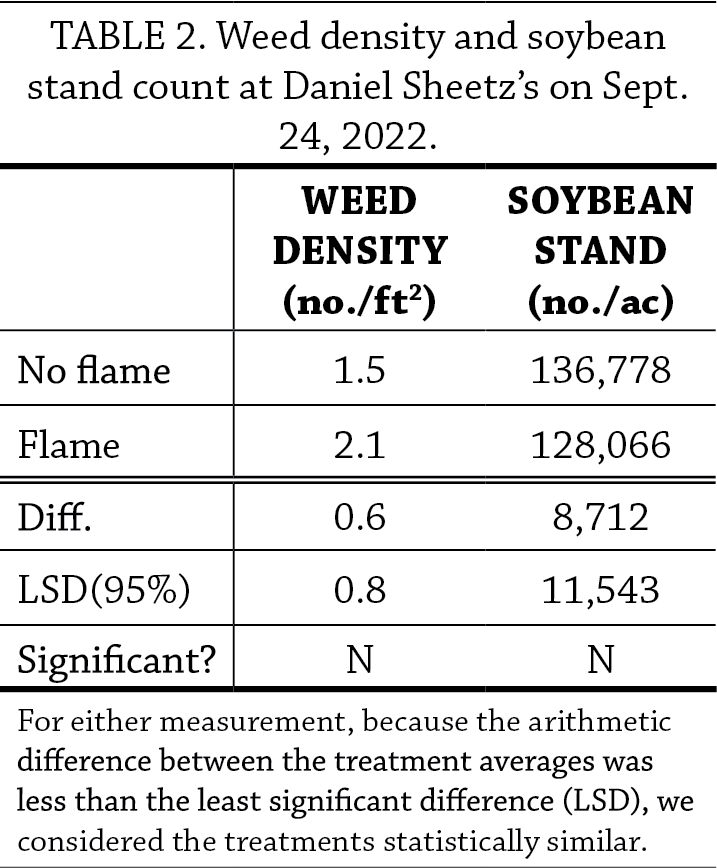
Sheetz saw no difference in the number of weeds observed between the two treatments in late September (Table 2). In other words, the flame-weeding pass in late July provided no better weed control than forgoing the flame-weeding. On average, Sheetz observed 1.8 weeds per square-foot.
 Soybean yield
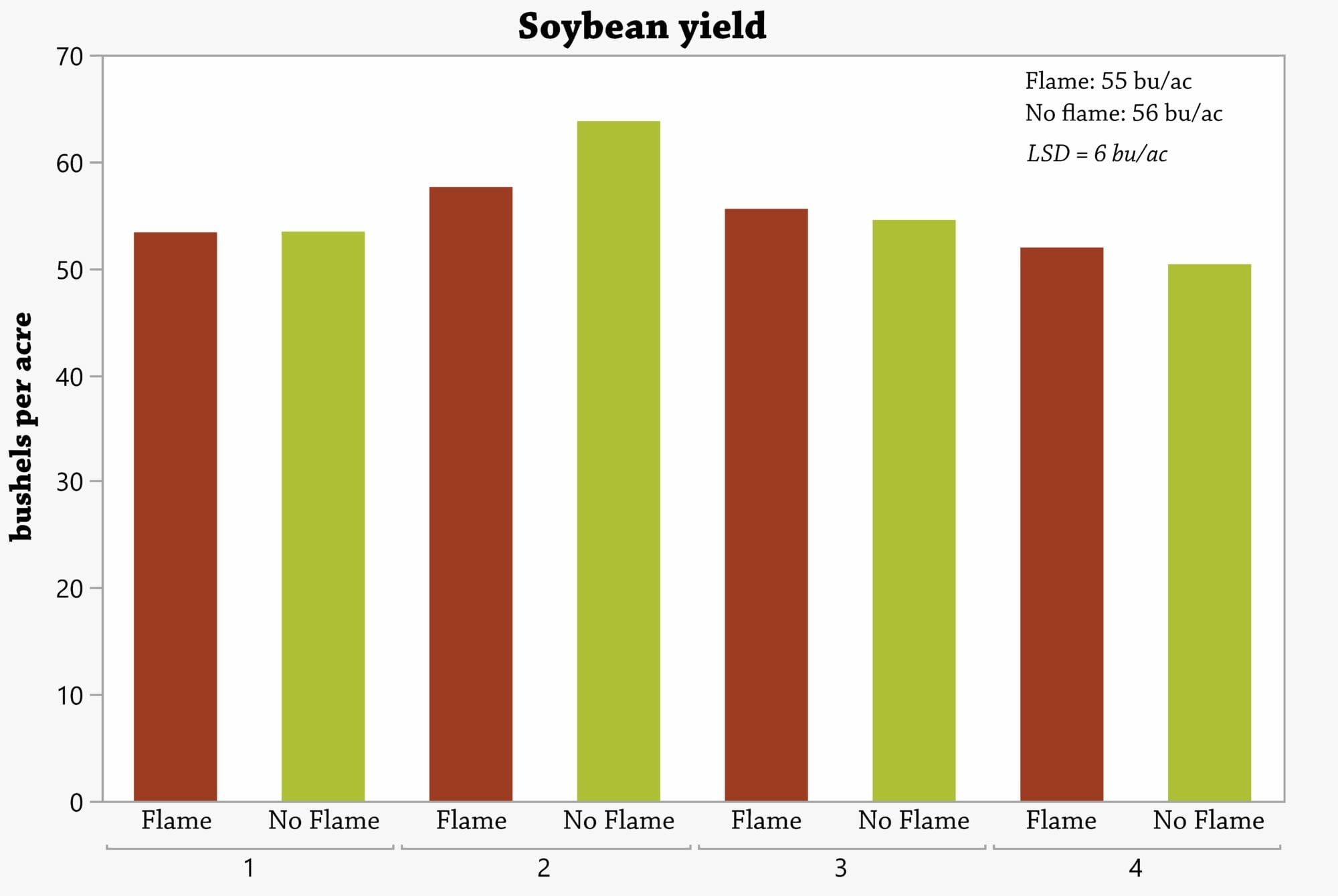
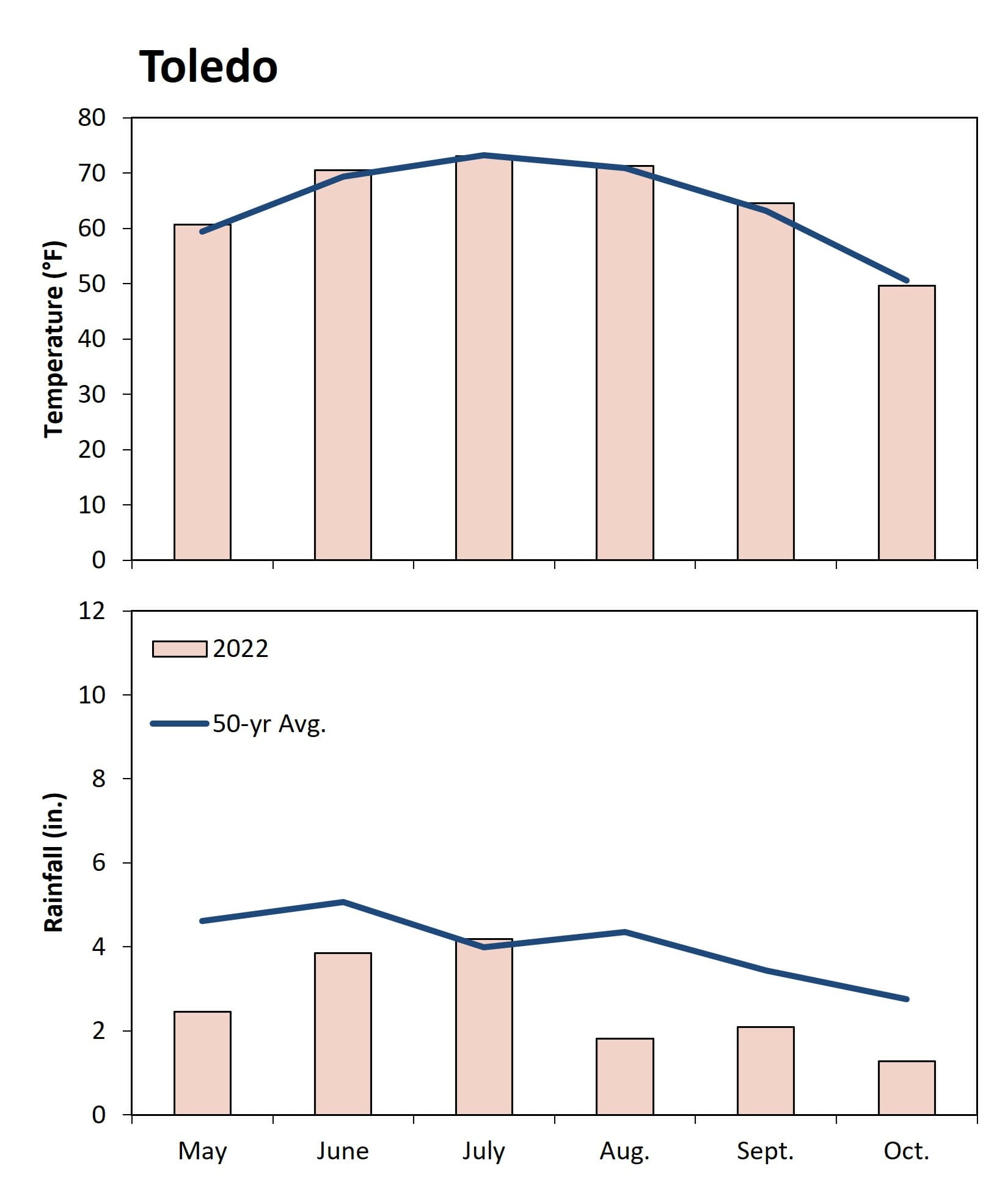
s did not statistically differ between the flame and no-flame treatments (Figure 1). Across both treatments, the field averaged 55 bu/ac of organic soybeans. Impressive yields considering drought conditions resulting from far less precipitation than normal in June, August and September (Figure A2).
Soybean yield
Soybean yields did not statistically differ between the flame and no-flame treatments (Figure 1). Across both treatments, the field averaged 55 bu/ac of organic soybeans. Impressive yields considering drought conditions resulting from far less precipitation than normal in June, August and September (Figure A2).

Conclusions and Next Steps
“Flame weeding is a slow process and I would need to increase the size of my flame-weeder to make flame weeding a viable option in my operation,” Sheetz said when reflecting on the trial’s results. Because flame-weeding did not improve weed control or improve soybean yields, the flame-weeding pass turned out to be an extra, unnecessary field operation. “My flame-weeding pass was later than planned, therefore the results were less than I expected,” Sheetz said because the original plan was for flame-weeding to occur between the first and second cultivation passes. In the trial, the flame-weeding occurred after the third cultivation pass (Table 1). “The timing of the flame-weeding is probably important in order to acquire more relevant results,” Sheetz said. He also noted that earlier flame-weeding may have been more effective when weeds were smaller.
Appendix – Trial Design and Weather Conditions
References
- Iowa Environmental Mesonet. 2022. Climodat Reports. Iowa State University. http://mesonet.agron.iastate.edu/climodat/ (accessed December 2022).