In a Nutshell:
- Honeyberries evolved in boreal forests; the cooperators hypothesized that they might benefit from being shaded.
- Honeyberries require pollination from a different variety. For commercial production varieties are developed in pairs with a compatible counterpart that flowers at the same time.
Key Findings:
- Alice McGary found that shade significantly increased her berry yield.
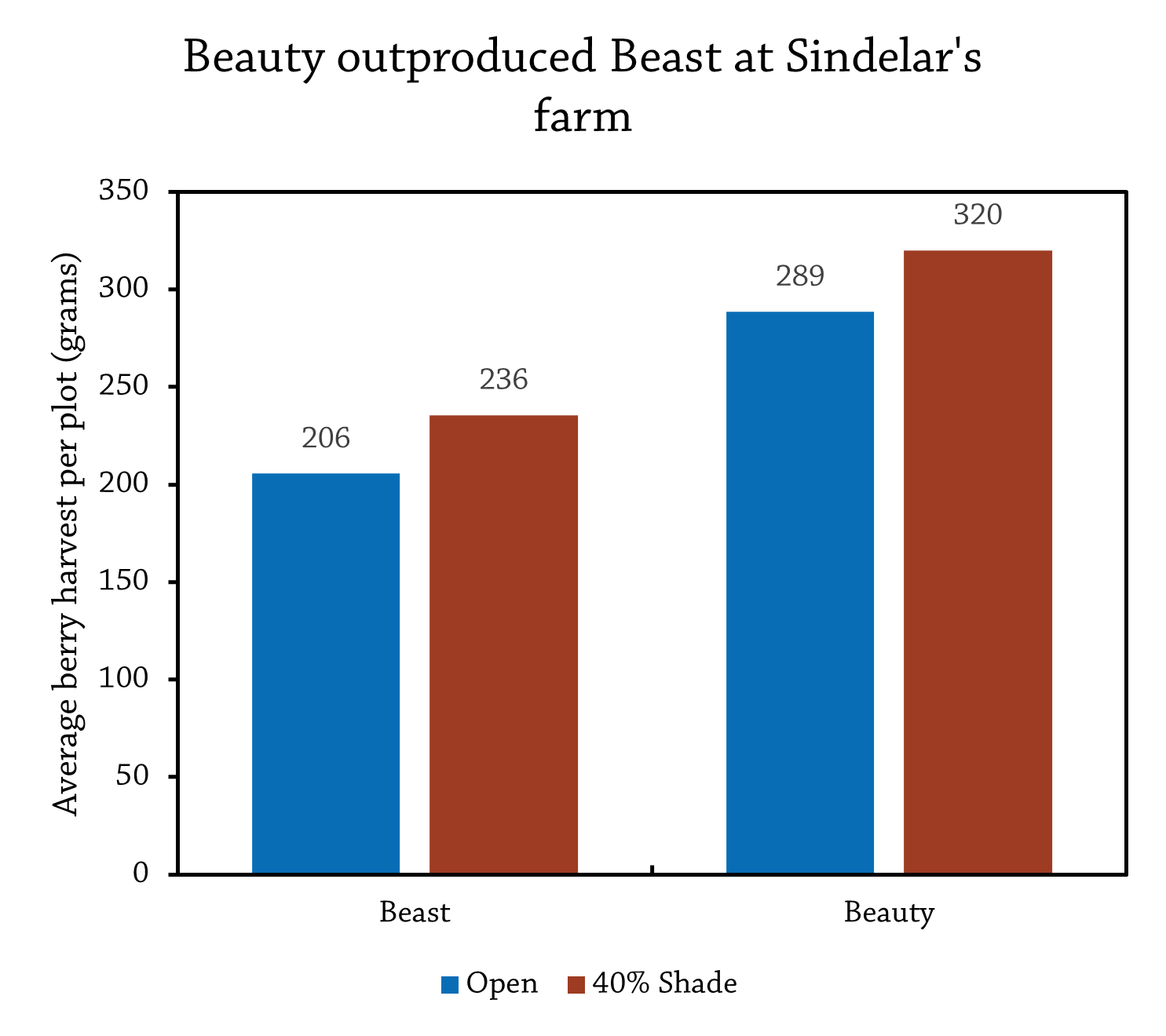
- Jeff Sindelar found that berry yield was significantly affected by variety.
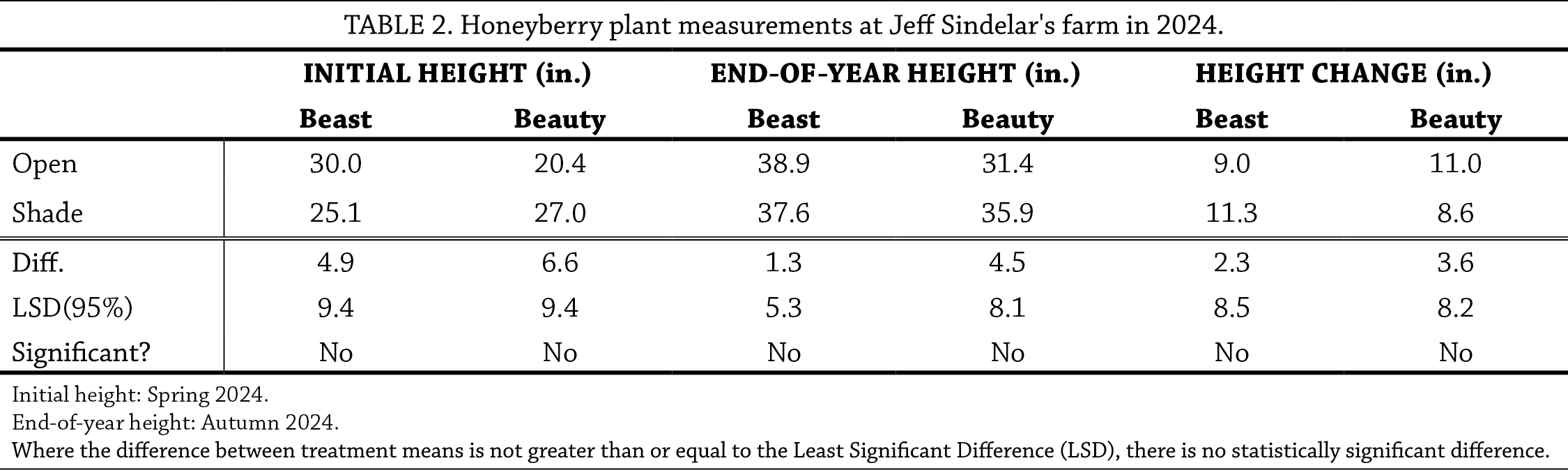
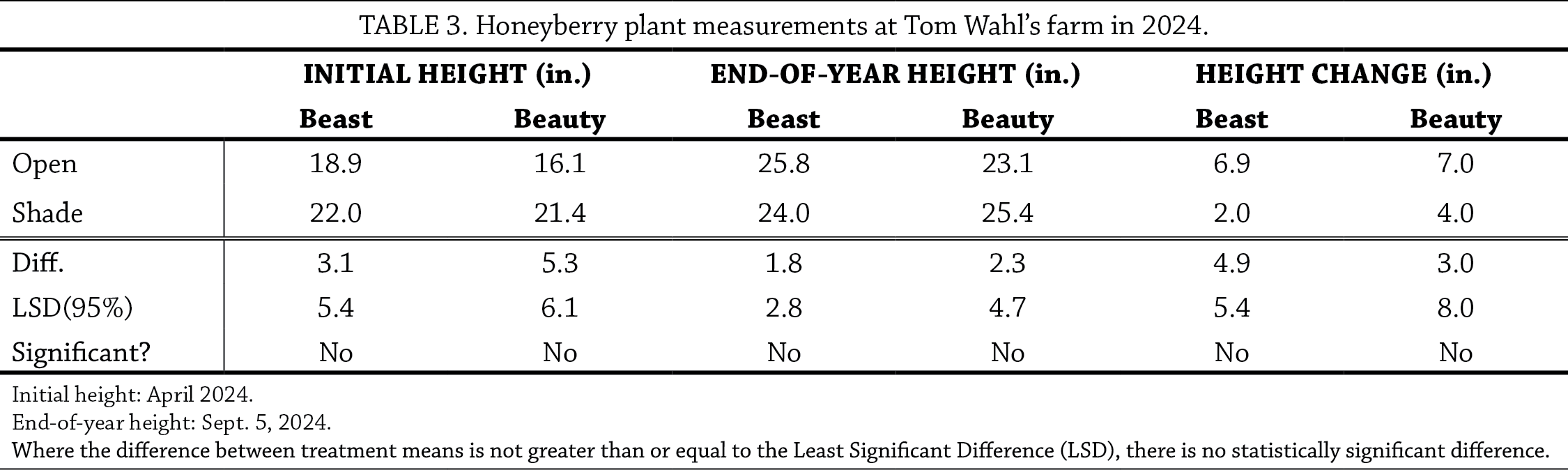
- Jeff Sindelar and Tom Wahl found that plant growth was negatively correlated with starting height—shorter plants grew to ‘catch up’ and produce more even final heights.
- Eric Franzenburg did not see any significant differences.
Background
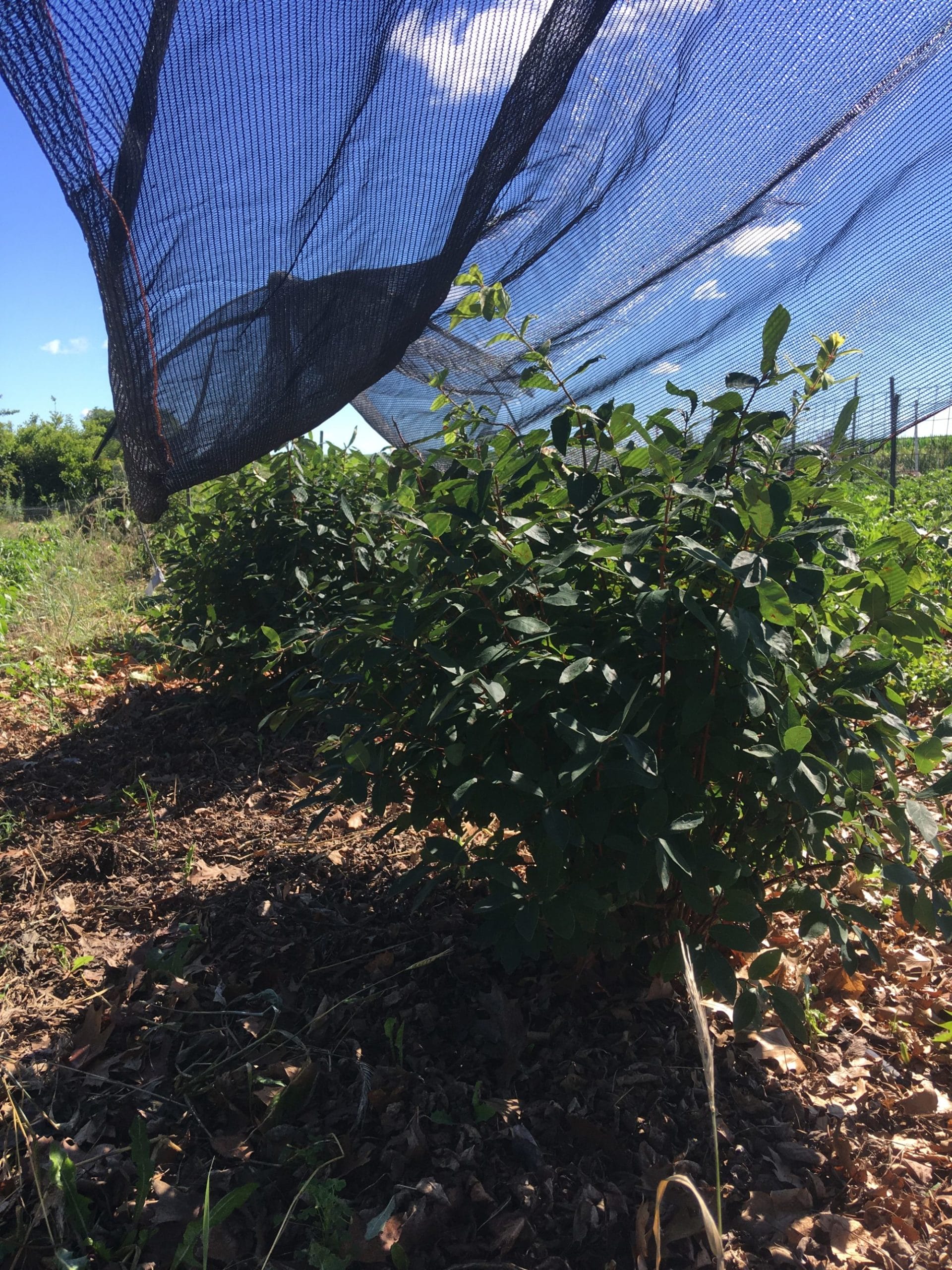
Honeyberries (Lonicera caerulea), aka Haskap and Blue Honeysuckle, are berries that grow in northern forests. They are native to the boreal forests of Siberia, Japan, and North America. Honeyberries are intolerant of inbreeding, meaning that they must be pollinated by a different variety. Breeding programs at the University of Saskatchewan have produced paired sets of varieties which come into flower at the same time, allowing them to most efficiently pollinate each other [1]. To support the establishment of plantations of these northern berries in the more southerly climate of Iowa, cooperators looked to answer three main research questions:- Can you effectively establish a fruiting honeyberry population in Iowa?
- Do plants benefit from shading?
- Do different varieties grow differently, or respond differently to shade?
Methods
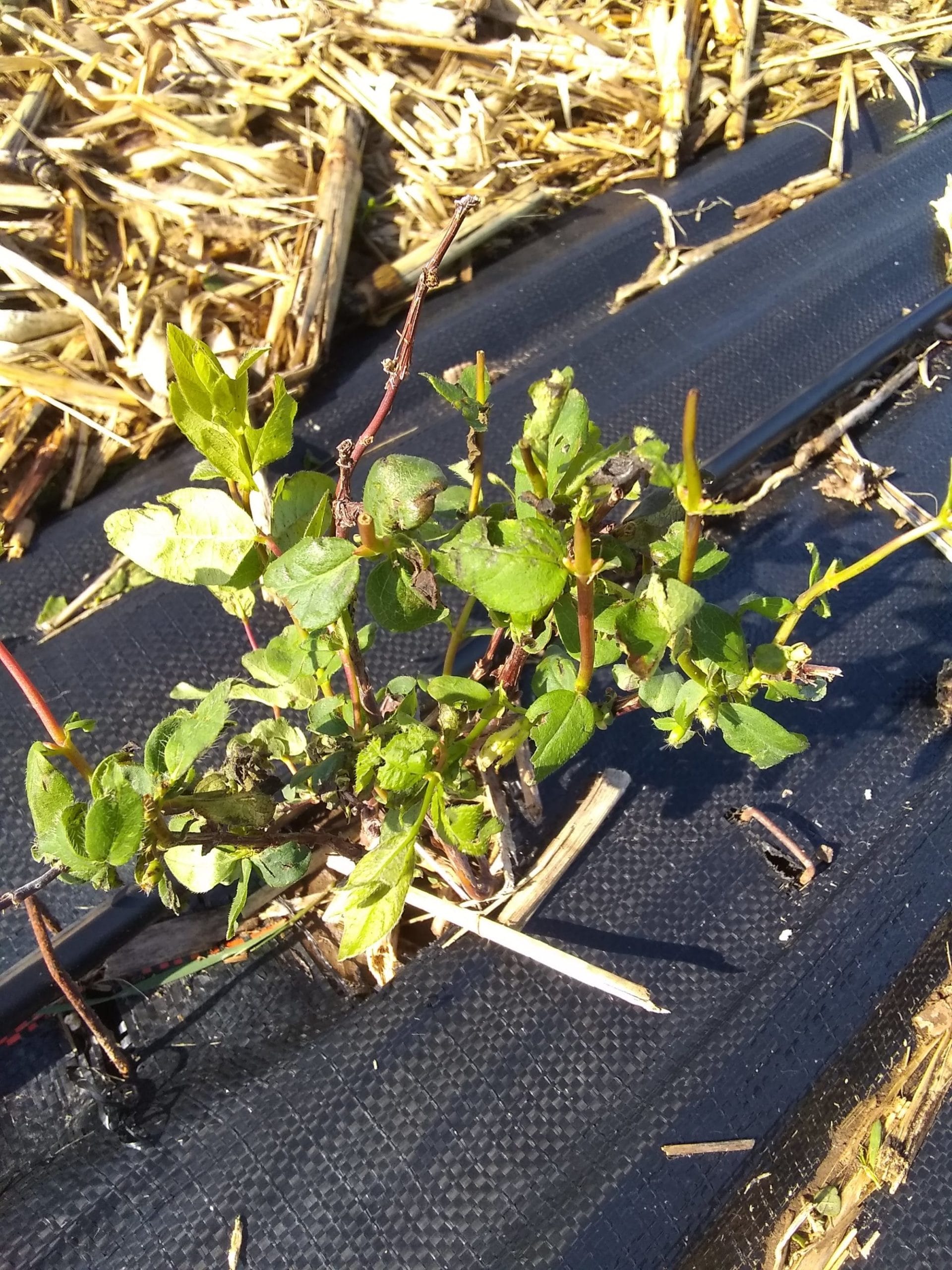
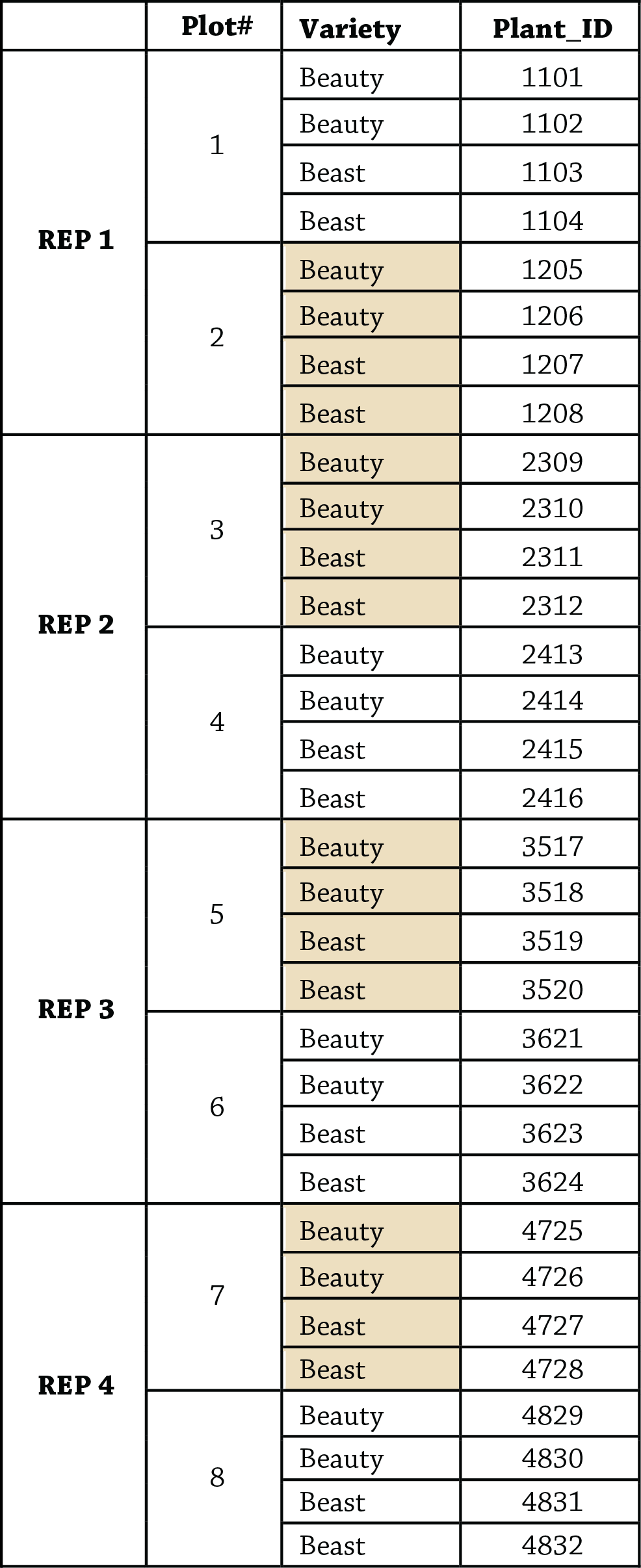
Design A pair of varieties was chosen: Beauty and Beast were developed by the University of Saskatchewan as a complementary pair. To enable each variety to most efficiently pollinate the other, the varieties were laid out next to each other, alternating, to maximize ‘surface area’ with the other variety. Because variety is not an independent variable in this trial, the spatial arrangement of the varieties is not randomized. However, the independent shade vs. open treatment variable was randomized across the replications, see Figure A1. Young plant stocks were obtained from HoneyberryUSA nursery (Bagley, MN) and transplanted in the spring of 2022. The ‘shade-treated’ plants were grown under 40% shade cloth.
Results and Discussion
Results on the effect of shade on the honeyberry plants were mixed. Which variety had larger plants, with which treatment, varied across the different locations. No significant effects on plant vegetative growth could be attributed to shade treatment (Tables 1, 2, 3).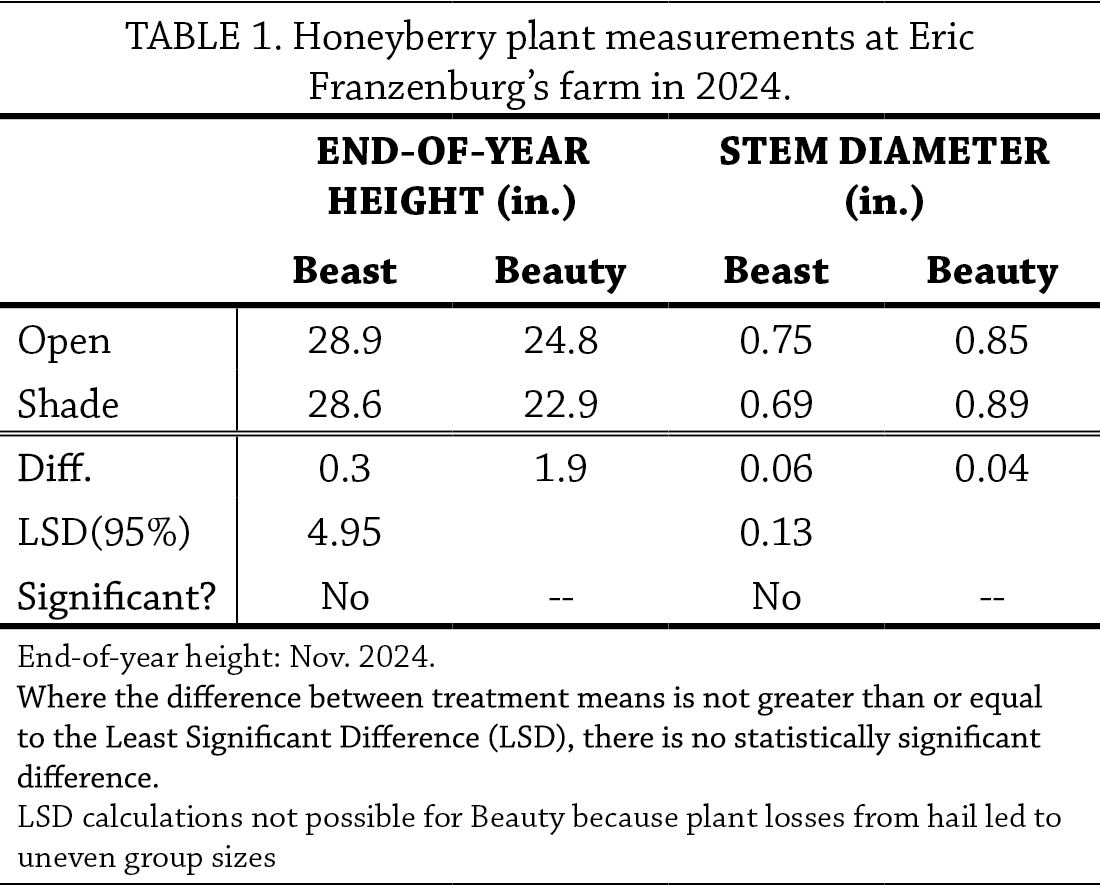

Conclusions and Next Steps
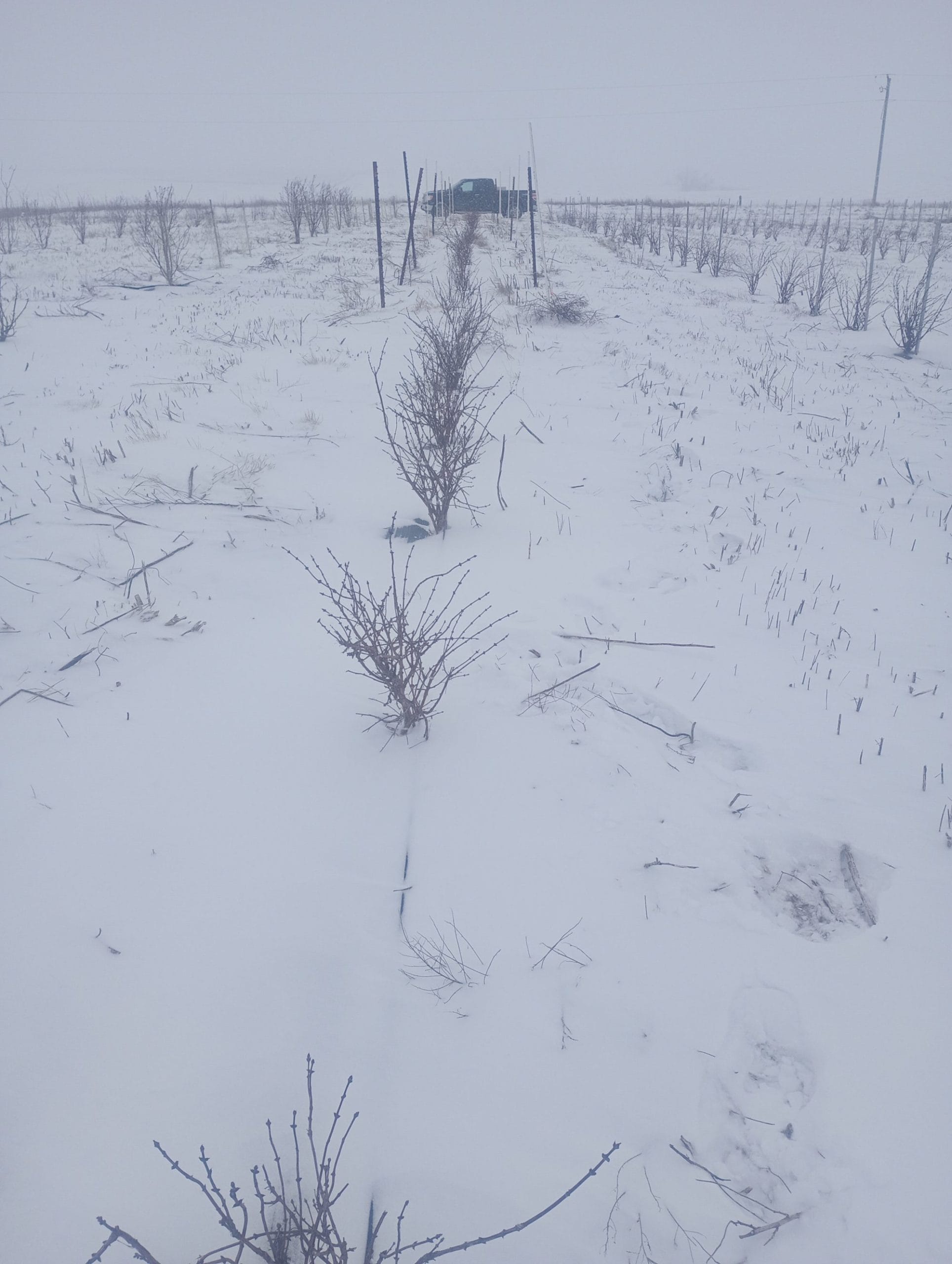
This concludes a three-year project. Although some plants produced berries this year, fruit production will increase over the next couple of years before beginning to taper off.The cooperators shared their reflections, looking back at the past three years or the project: Sindelar remarked that deer control was and would continue to be a major issue for him; he was putting up fences to try to keep them away from the berries. McGary wrote that “It's a slow trial, so I'm learning slowly… I think honeyberries like shade. So I need to give them some shade, maybe planting tall sunflowers near them.” All of the cooperators wrote about how important teamwork between participants in the project was for their knowledge gain. A visit to Sindelar’s farm at the beginning of the project provided a valuable orientation for the other cooperators, sharing what works for the Sindelars in their established patches for the others to apply to their own setups. Ongoing collaboration enabled researchers to learn from one another, and helped build a mini network of producers growing this niche crop in a novel environment.Appendix – Trial Design and Weather Conditions
References
[1] “Honeyberry Establishment with Shade Cloth - Practical Farmers of Iowa.” Accessed: Feb. 20, 2025. [Online]. Available: https://practicalfarmers.org/research/honeyberry-establishment-with-shade-cloth/ [2] A. H. Sparks, “nasapower: A NASA POWER Global Meteorology, Surface Solar Energy and Climatology Data Client for R,” J. Open Source Softw., vol. 3, no. 30, p. 1035, Oct. 2018, doi: 10.21105/joss.01035. [3] A. Sparks, nasapower: NASA-POWER Data from R. (2024). [Online]. Available: https://CRAN.R-project.org/package=nasapower