In a Nutshell:
- Anna Hankins & Shae Pesek typically raise Broad Breasted White turkeys in the farmyard consisting of grasses, clovers and weeds.
- They were eager to see if there was an advantage to raising turkeys on a cover crop mix because such an advantage might encourage them to increase their use of cover crops on the farm. Any advantage would have had to compensate for the cost of the cover crop seed in order to justify the practice.
Key Findings
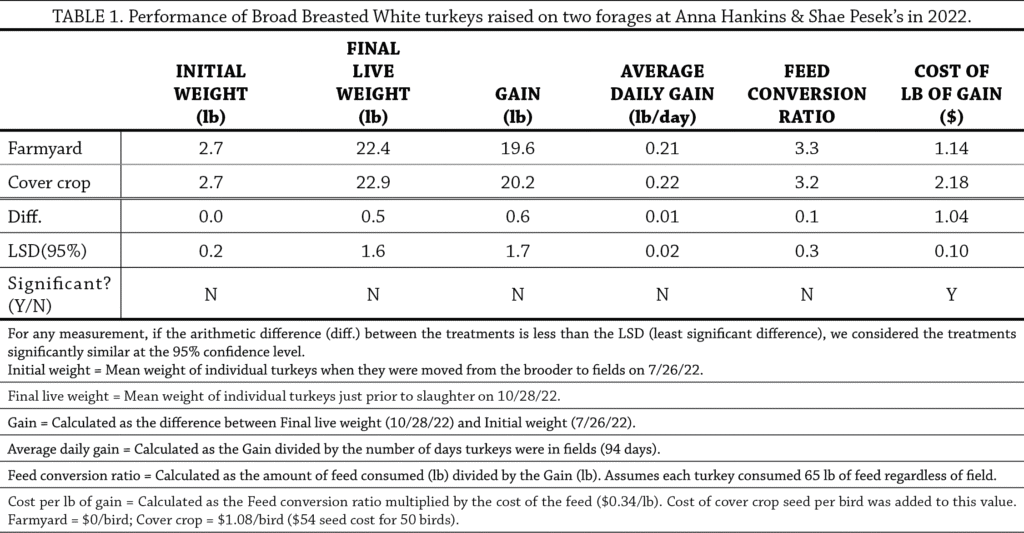
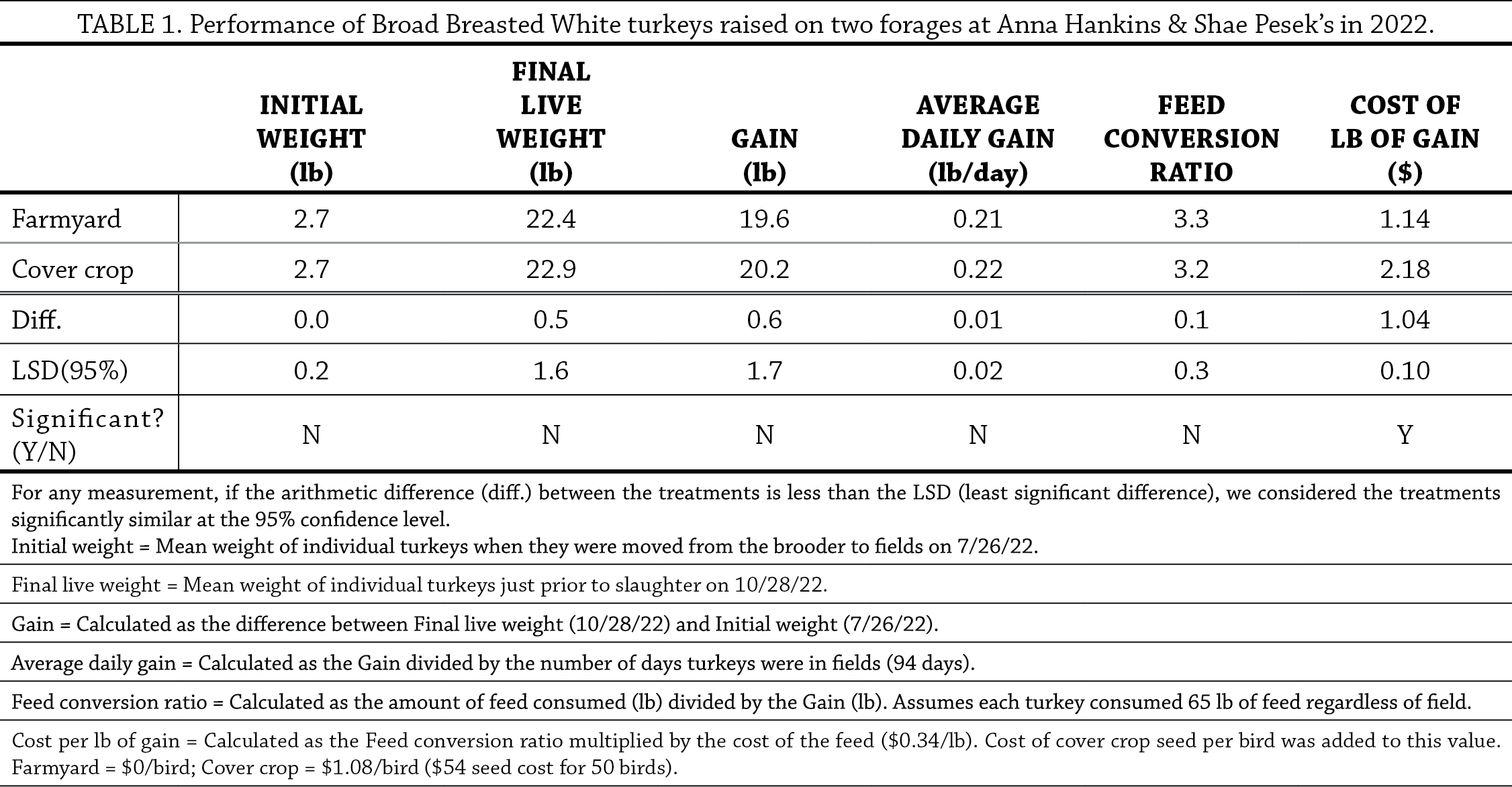
- Between the farmyard and the cover crop mix, turkeys performed similarly in terms of final live weight, gain and average daily gain.
- There was an economic advantage to the farmyard because it was less expensive (no cover crop seed cost), and turkeys performed similarly in either area.
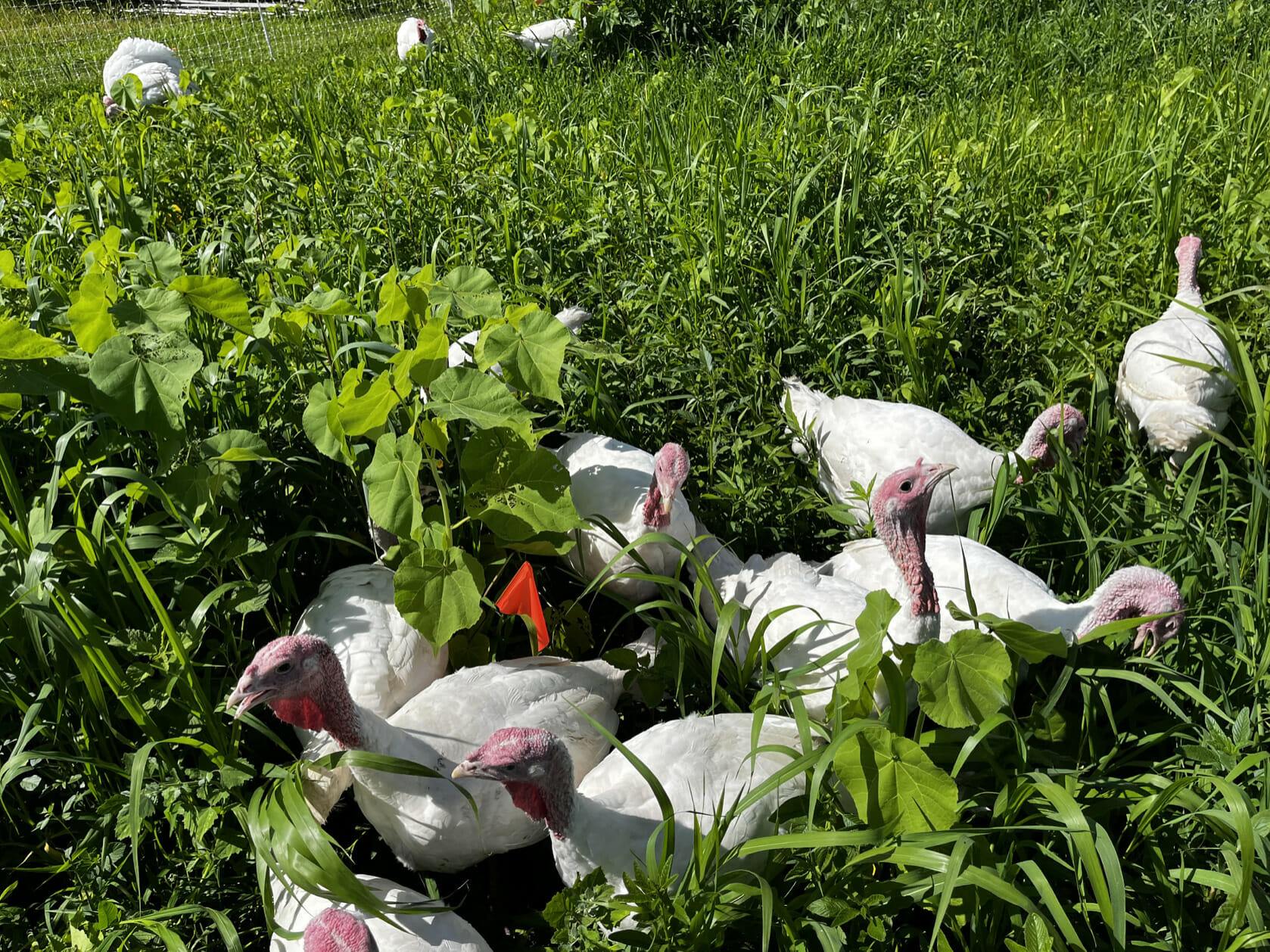
- Farmyard – Turkeys graze farmyard (crabgrass, clover, weeds) and have free choice access to grain and water. Typical practice.
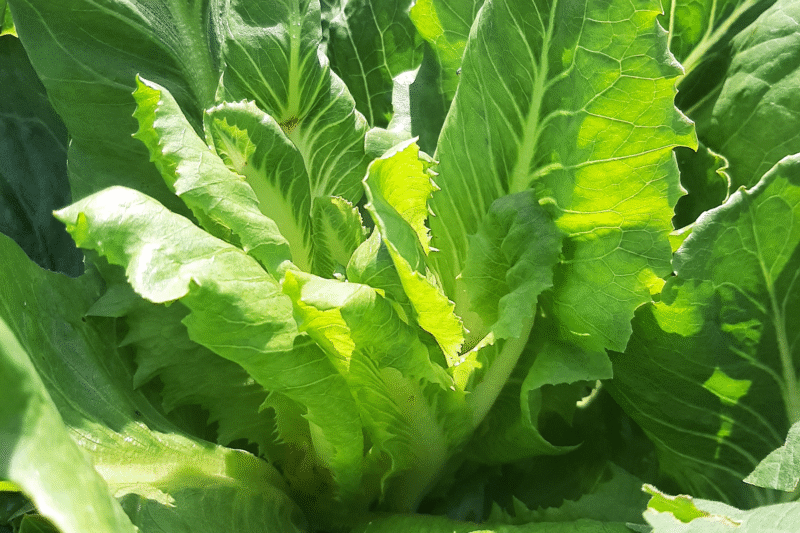
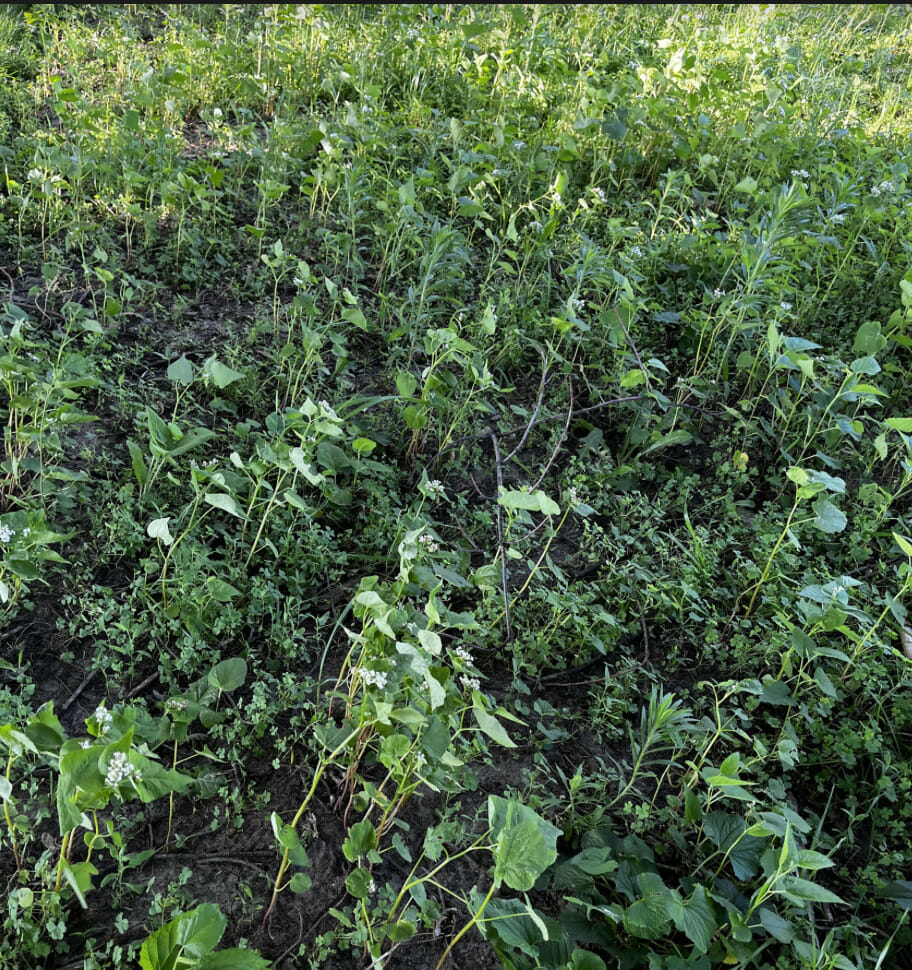
- Cover crop – Turkeys rotationally graze an annual cover crop mix (annual ryegrass, daikon radish, crimson clover, kale, rapeseed, sunflower, buckwheat) and have free choice access to grain and water. Experimental practice.
Conclusions and Next Steps
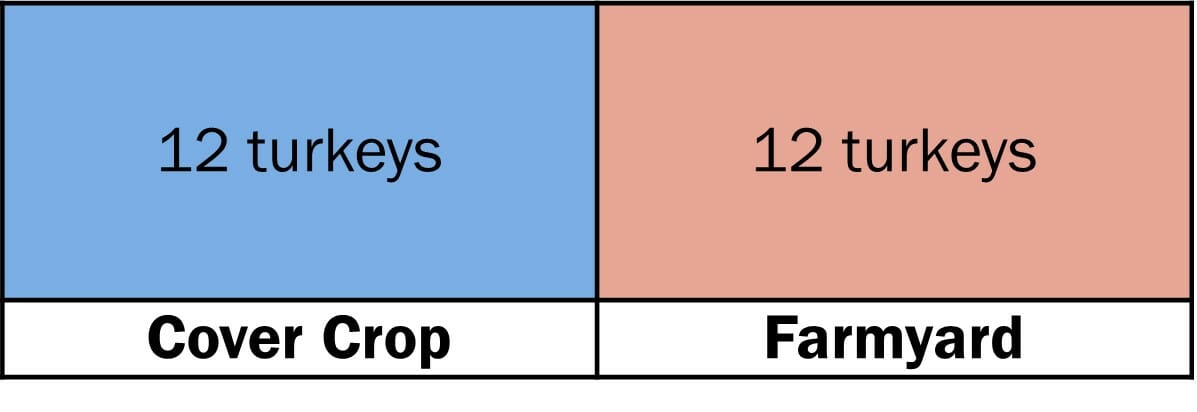
Though raising Broad Breasted White turkeys on cover crops did not improve the birds’ performance compared with Hankins & Pesek’s typical practice of raising the birds on the existing farmyard, they took away some valuable observations. “This trial made us realize that the quantity of forage the birds can and will eat is vastly different than we anticipated,” Hankins said. She wonders how the turkeys would have performed if they could have dedicated more than ¼ acre to cover crops for raising the birds. Hankins also noted the importance of honing their practices and costs for pastured poultry enterprises on their farm; especially for turkeys which can come with a relatively large profit margin. “It feels like it’s worth the time and resources to dive into trials this one,” Hankins said. “The most valuable part of this trial was learning about turkey trial design. It also made us dive into looking at other resources and we realized that there’s a real hole that could be filled in terms of sharing knowledge about pasture raised turkeys at scale.”
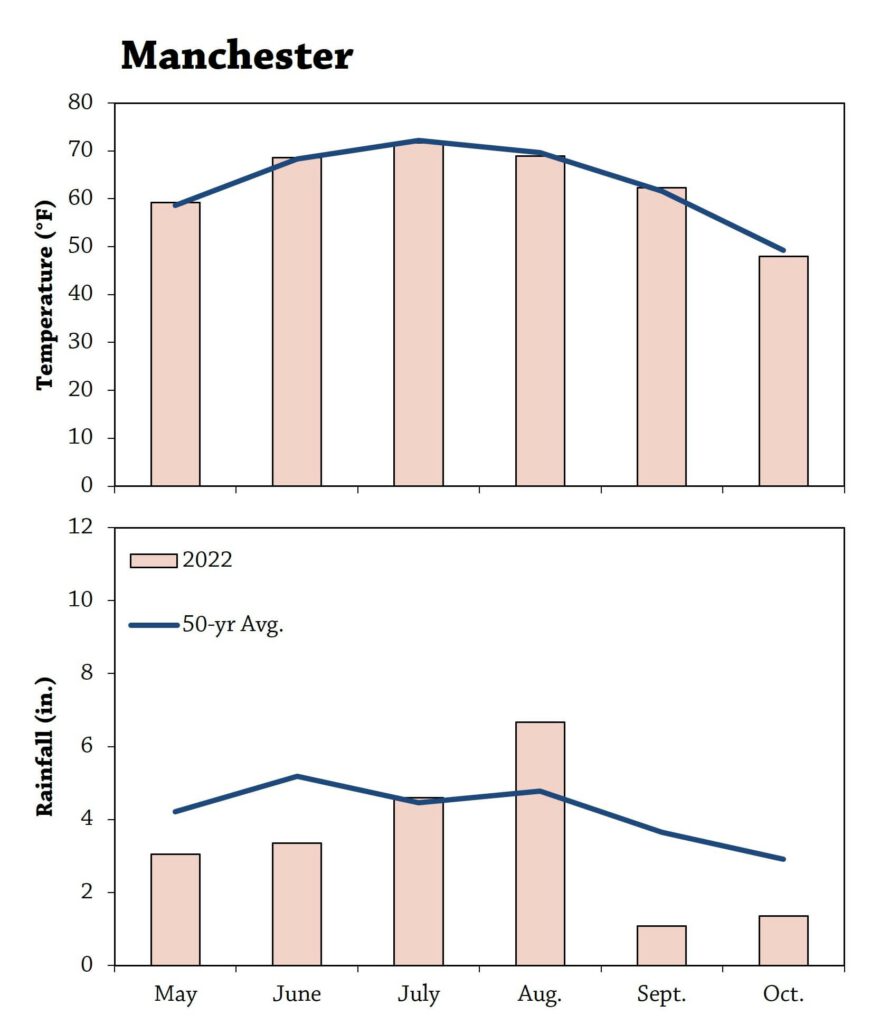
Appendix – Trial Design and Weather Conditions
References
- Iowa Environmental Mesonet. 2022. Climodat Reports. Iowa State University. http://mesonet.agron.iastate.edu/climodat/ (accessed December 2022).