In a Nutshell:
- Tarping is an increasingly common practice on vegetable farms for bed preparation and weed or cover crop termination. Farmers place either a black or a clear tarp on the ground for weeks to months to block light and/or heat the soil.
- Last year, Hannah Breckbill & Emily Fagan experimented with tarping with a black tarp to terminate a rye cover crop. This year, they focused their efforts on determining how long they should leave a black tarp on to terminate annual weeds from late May into June.
- Marlon Mormann is newer to tarping and conducted a trial comparing groundcover in plots where a clear tarp was used from mid-April through May and plots where no tarp was used.
Key Findings
- Breckbill & Fagan found that three weeks of tarping with black tarps significantly reduced the coverage of living annual weeds and resulted in more bare ground at tarp removal compared to one week of tarping.
- Mormann’s clear tarps successfully reduced the number of living perennial weeds compared to not tarping, but there were still some living perennial weeds after clear tarping for 46 days.
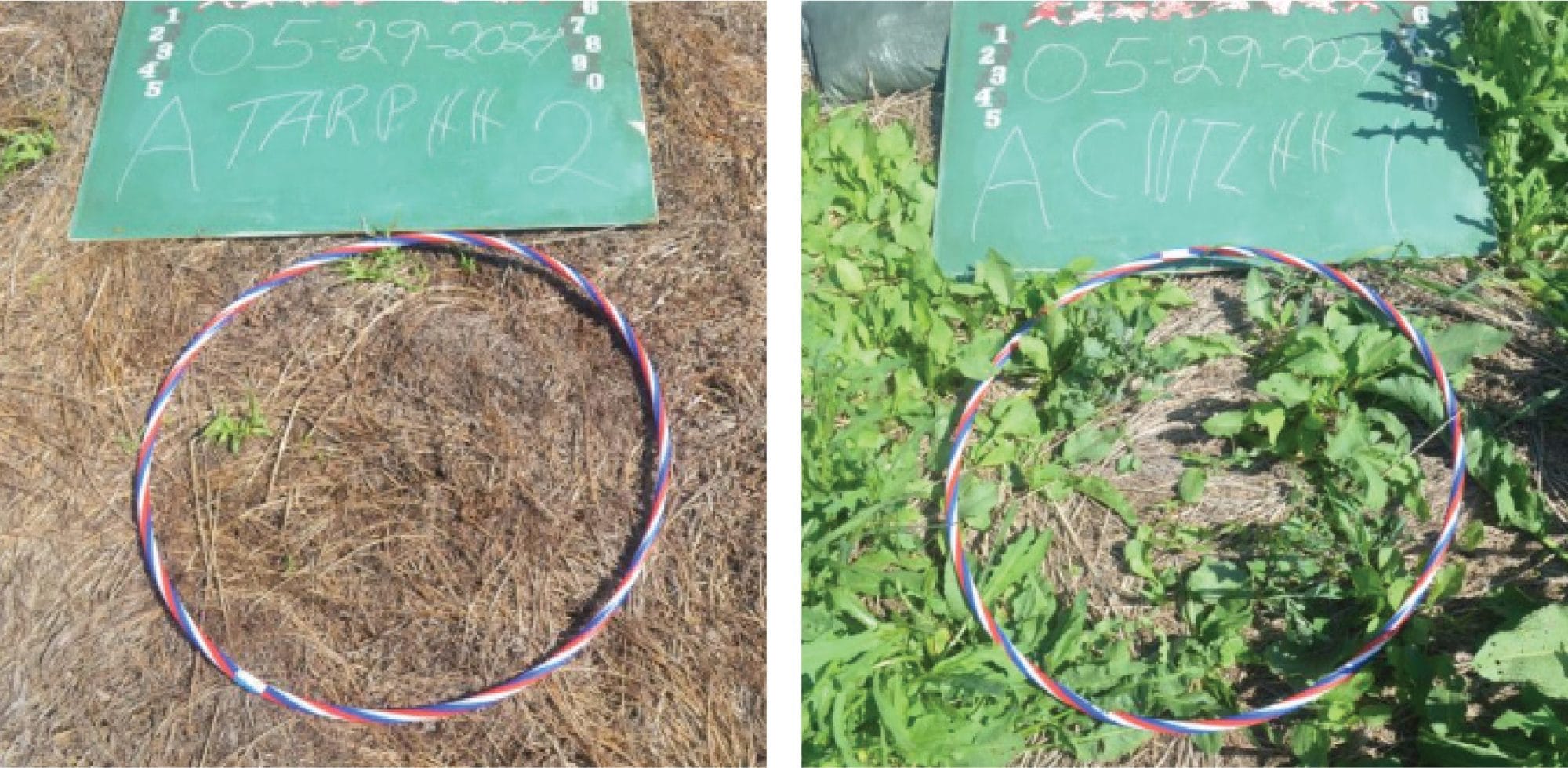
- Some weed regrowth was seen after all treatment lengths in the week after tarp removal (Breckbill & Fagan) and several weeks after clear tarp removal (Mormann).
Methods
Design
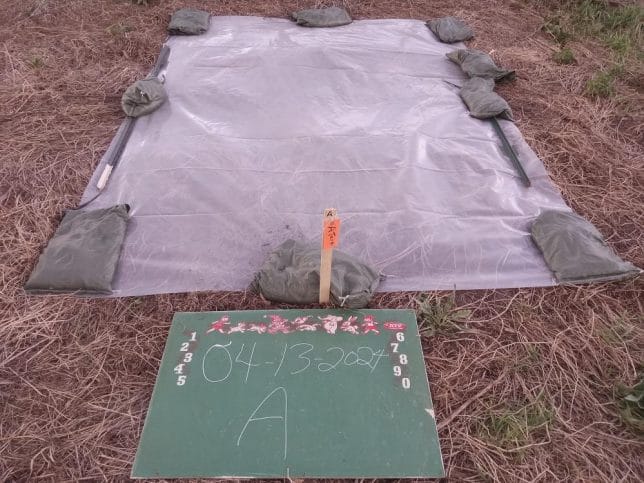
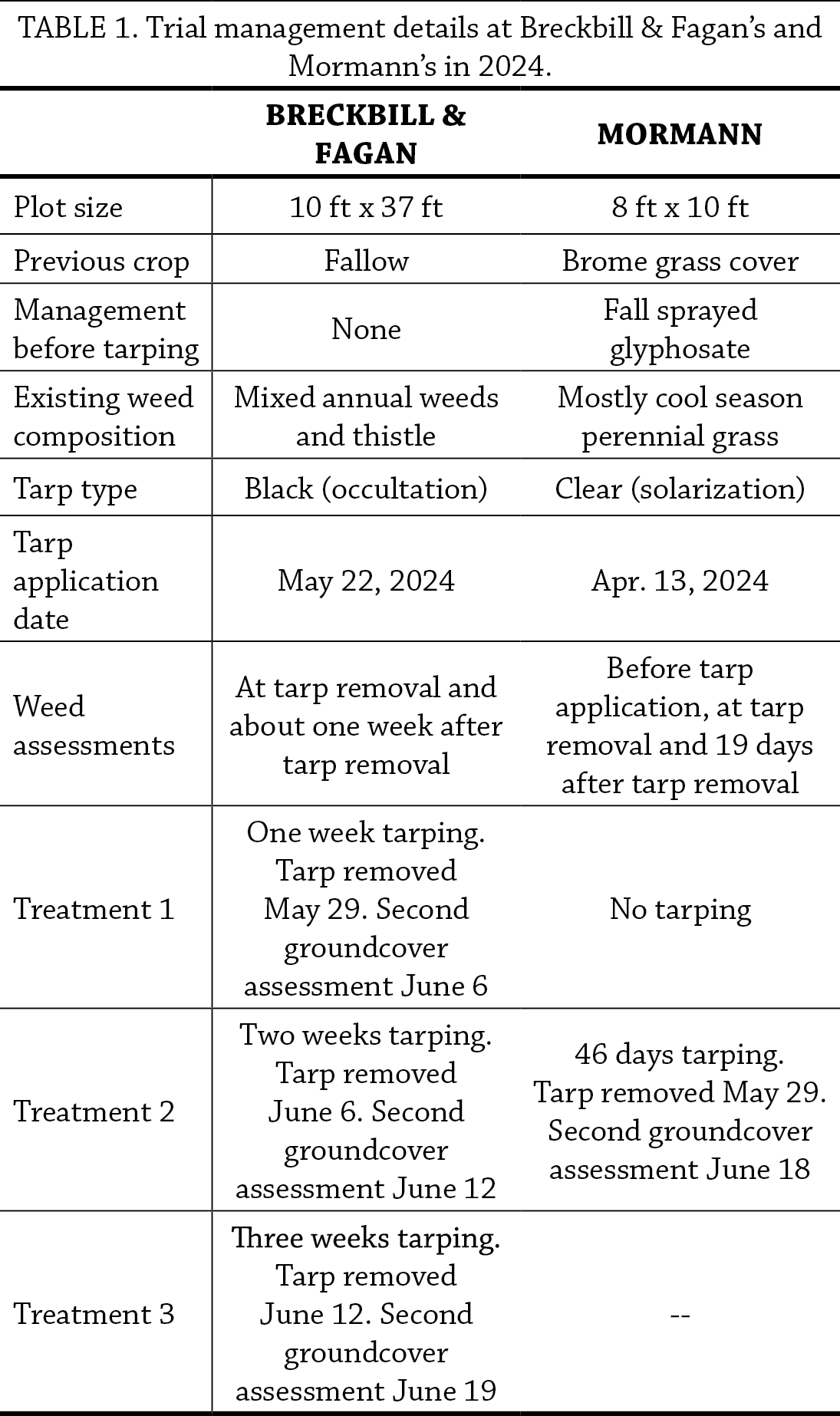
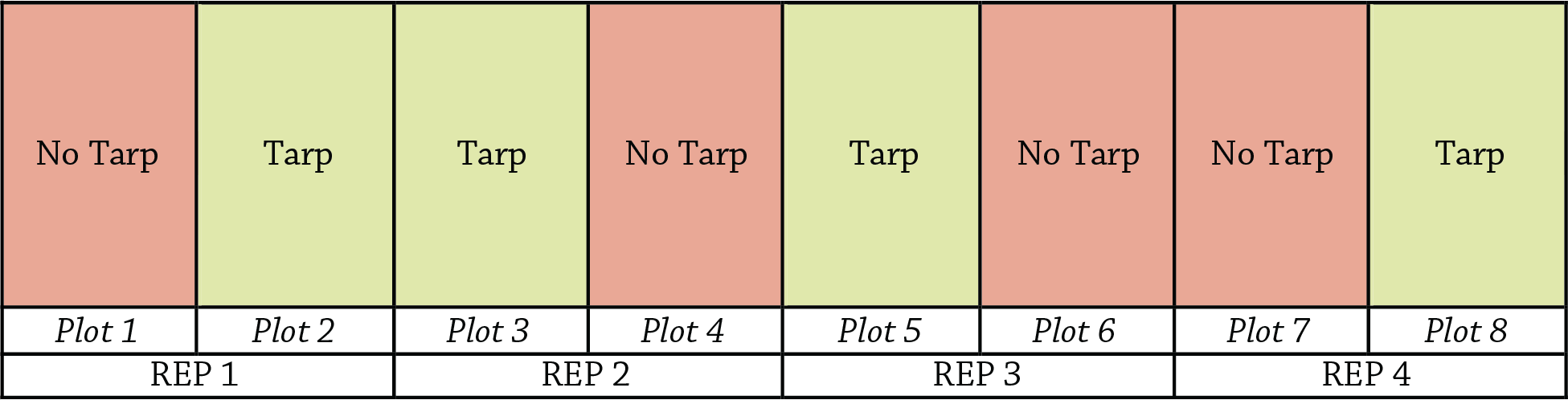
Number of treatments and treatments varied between farms based on the farmer’s goals and are shown in Table 1. Each farmer established four randomized replicates of each treatment (Figure A1). Replication and treatment randomization allow for statistical analysis and conclusions about the effect of the treatments on yield.
 Measurements
Breckbill & Fagan and Mormann chose three random locations in each replicate and estimated groundcover percent coverage of the following categories within ring of a known size (ex. hula hoop): living annual weeds, dead annual weeds, living perennial weeds, dead perennial weeds, and bare soil. Breckbill & Fagan performed these measurements on the day that tarps were removed and repeated them about one week after tarps were removed. Mormann performed these measurements at tarp application and at tarp removal, and qualitatively assessed weed regrowth with pictures 19 days after tarp removal and at sweet corn planting (Table 1).
Weather
To provide some additional context about solar heat inputs during this trial, we calculated the number of growing degree days (GDDs) accumulated during the tarping period and in the period between tarp removal and the second weed assessment. We used 32 °F as the base temperature. GDDs are calculated for each day that tarps were on the ground and then summed to get total GDD accumulation. The average daily air temperature is calculated for each day using NASA POWER modelled earth surface temperatures [3] then the base temperature (32 °F) is subtracted from the mean, resulting in the total GDDs accumulated that day. Days when the average daily air temperature is less than 32 °F are assumed to add 0 GDDs. We also note precipitation accumulation in the period between tarp removal and second weed assessment, sourced from the NASA POWER dataset.
Data analysis
To evaluate the effect of the tarping treatments on weed suppression, we used an analysis of variance (ANOVA) followed by Tukey’s Honest Significant Difference (HSD) at 95% confidence. If the difference between the two treatments was greater than the HSD, we considered this to be a statistically significant effect. 95% confidence means that 95 times out of 100, the differences we see between treatments would be due to true differences in the means rather than random chance. On the other hand, if the resulting difference between the two treatments was less than the HSD, we would consider the treatment results to be statistically similar. We could make these statistical calculations because the cooperators’ experimental design involved replication of the treatments (Figure A1).
Measurements
Breckbill & Fagan and Mormann chose three random locations in each replicate and estimated groundcover percent coverage of the following categories within ring of a known size (ex. hula hoop): living annual weeds, dead annual weeds, living perennial weeds, dead perennial weeds, and bare soil. Breckbill & Fagan performed these measurements on the day that tarps were removed and repeated them about one week after tarps were removed. Mormann performed these measurements at tarp application and at tarp removal, and qualitatively assessed weed regrowth with pictures 19 days after tarp removal and at sweet corn planting (Table 1).
Weather
To provide some additional context about solar heat inputs during this trial, we calculated the number of growing degree days (GDDs) accumulated during the tarping period and in the period between tarp removal and the second weed assessment. We used 32 °F as the base temperature. GDDs are calculated for each day that tarps were on the ground and then summed to get total GDD accumulation. The average daily air temperature is calculated for each day using NASA POWER modelled earth surface temperatures [3] then the base temperature (32 °F) is subtracted from the mean, resulting in the total GDDs accumulated that day. Days when the average daily air temperature is less than 32 °F are assumed to add 0 GDDs. We also note precipitation accumulation in the period between tarp removal and second weed assessment, sourced from the NASA POWER dataset.
Data analysis
To evaluate the effect of the tarping treatments on weed suppression, we used an analysis of variance (ANOVA) followed by Tukey’s Honest Significant Difference (HSD) at 95% confidence. If the difference between the two treatments was greater than the HSD, we considered this to be a statistically significant effect. 95% confidence means that 95 times out of 100, the differences we see between treatments would be due to true differences in the means rather than random chance. On the other hand, if the resulting difference between the two treatments was less than the HSD, we would consider the treatment results to be statistically similar. We could make these statistical calculations because the cooperators’ experimental design involved replication of the treatments (Figure A1).
Results and Discussion
Black occultation tarping – Breckbill & Fagan
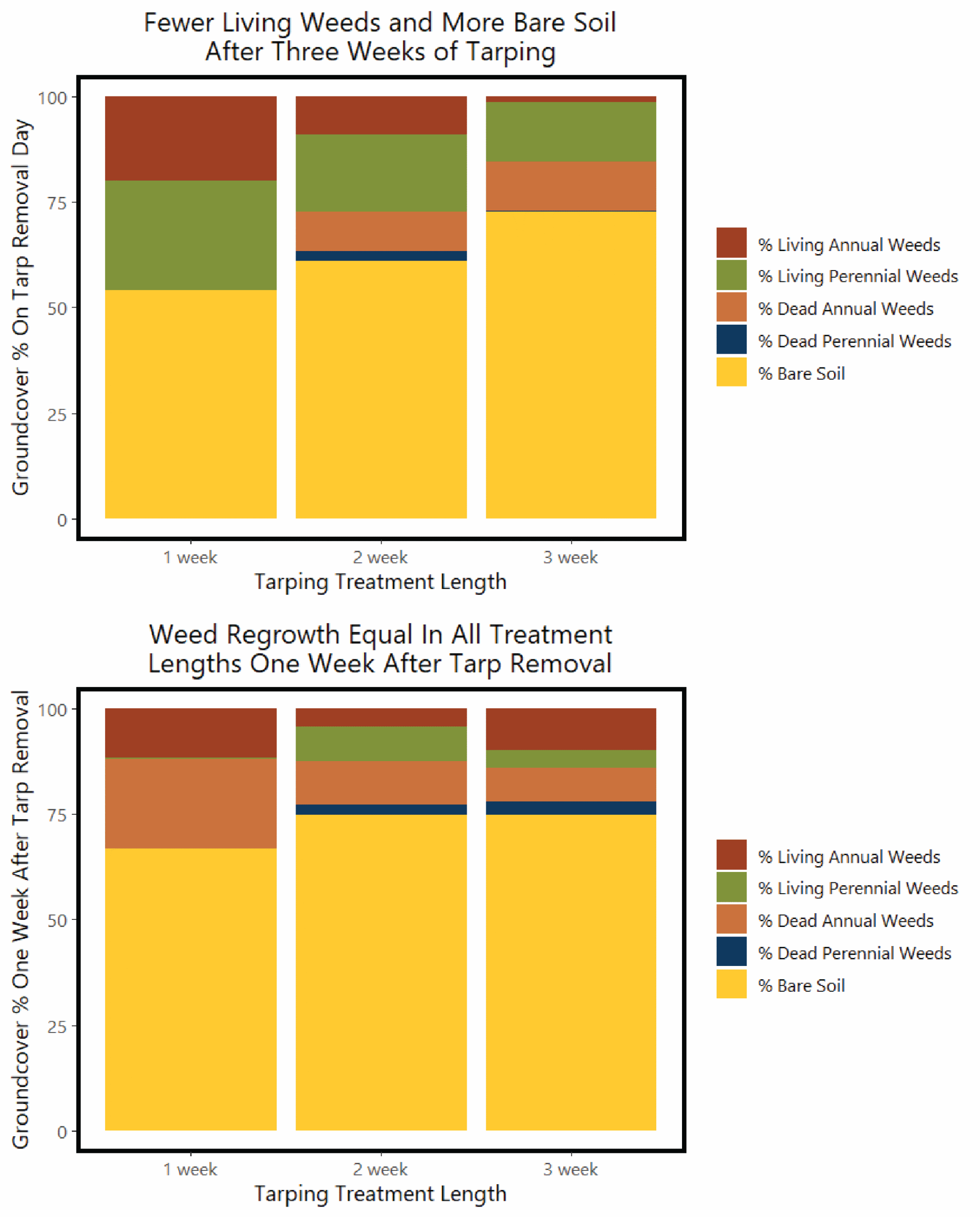
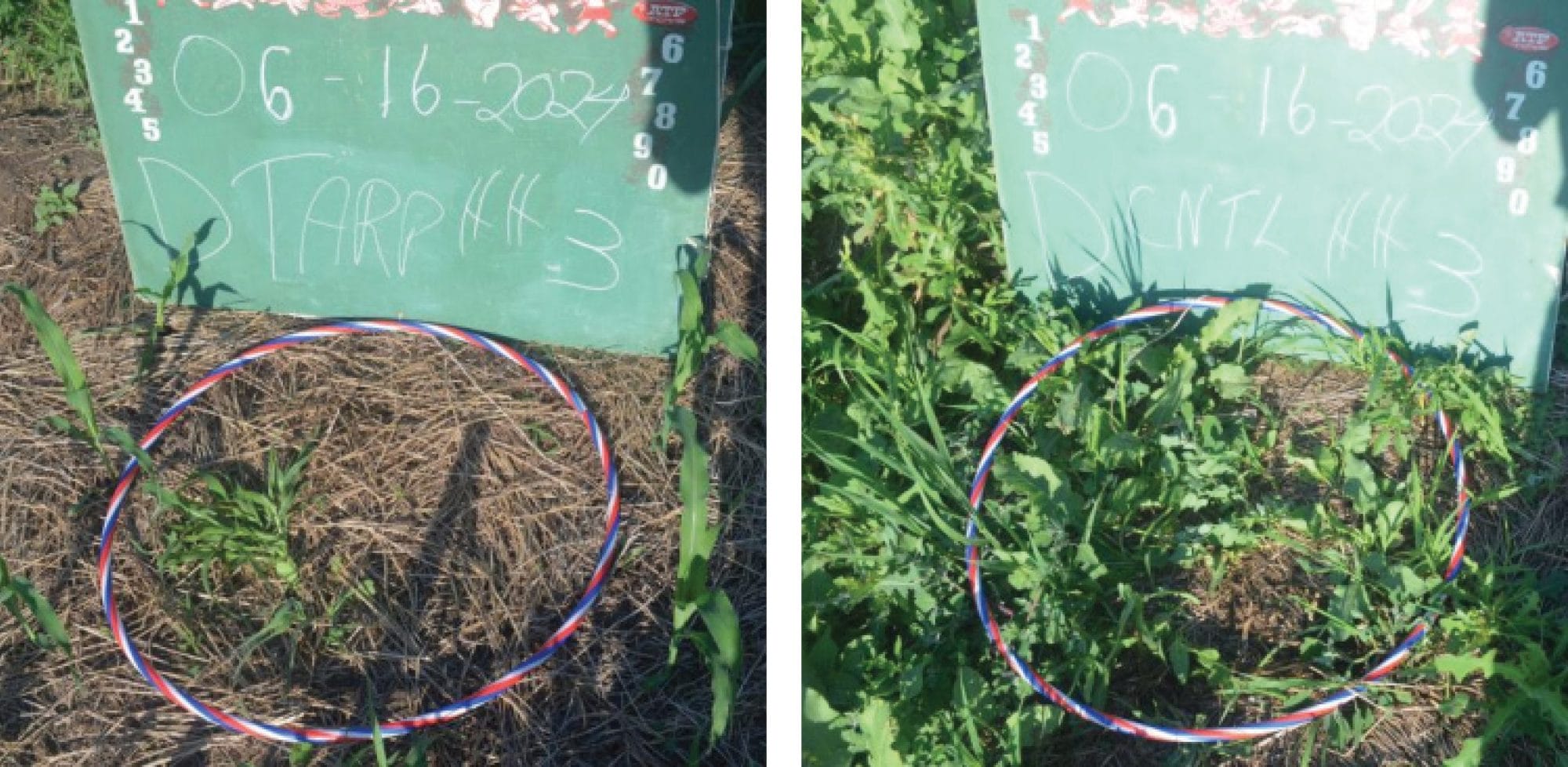
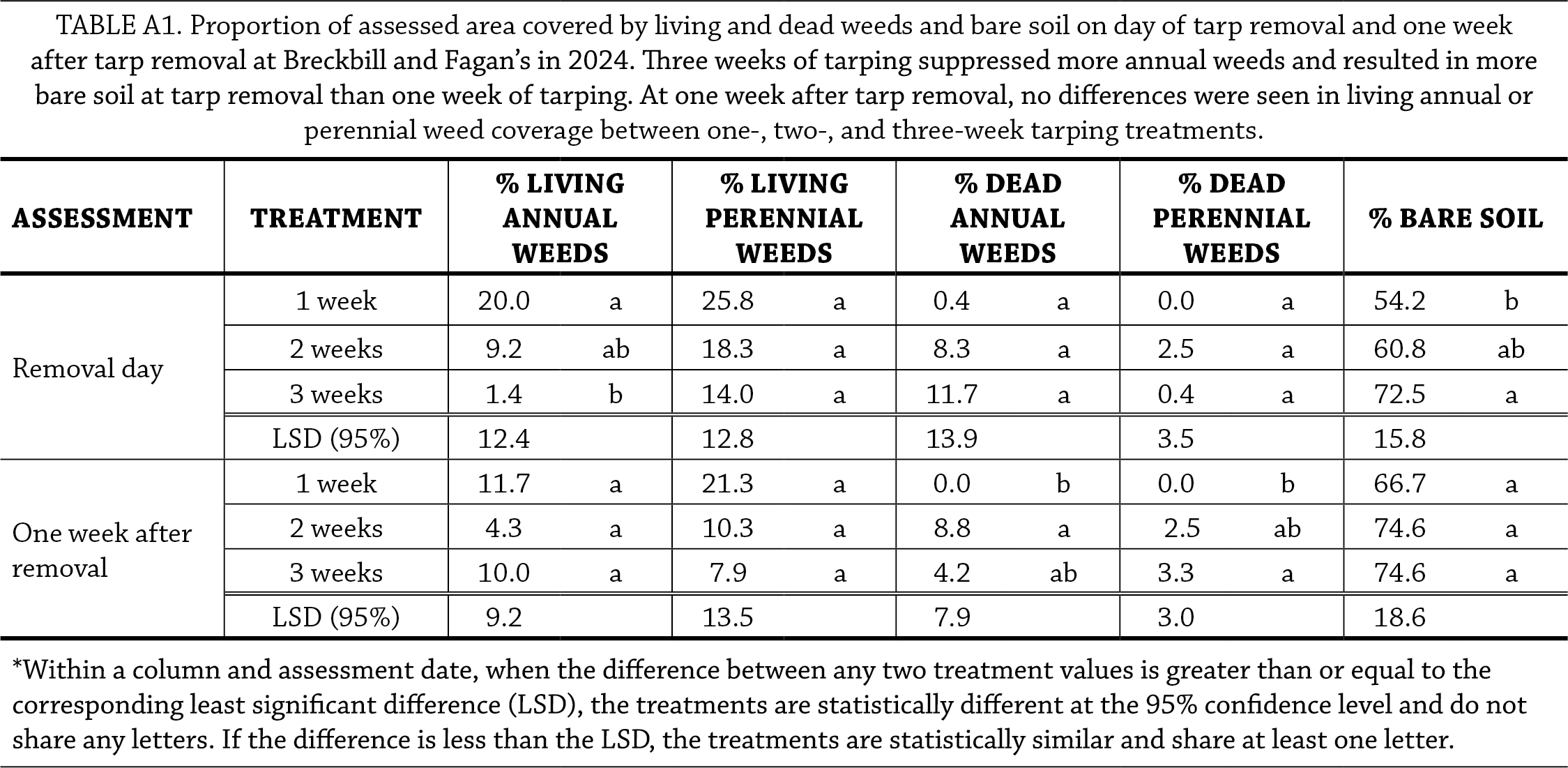
At tarp removal, Breckbill & Fagan observed significantly fewer living annual weeds after three weeks of tarping (1%) compared to one week of tarping (20%). Bare soil also made up a higher proportion of groundcover after three weeks of tarping (73%) compared to one week (54%) (Figure 1; Table A1). The prevalence of bare soil indicates enhanced biomass decomposition and nutrient cycling after three weeds of tarping, which could allow for easier planting and better plant growth. While there were no statistically significant differences in annual weed coverage after one and two weeks of tarping or perennial weed coverage after any treatment length, living weed coverage generally trended lower with increased tarping treatment length (Table A1). Fagan noted that the spot they chose for the trial had fewer annual weeds generally than they expected, and that in retrospect she probably would have chosen a different spot to better answer their questions about annual weed suppression, specifically.

Conclusions and Next Steps
Tarping with black plastic or clear plastic tarps can be an effective method for creating a weed-free bed for planting, but both Breckbill & Fagan and Mormann note that tarps are not able to stop 100% of weeds. Farmers should expect some regrowth by a week or so after tarp removal, especially in wet and warm conditions. Both farms hope to continue using tarps and would like to study tarping efficacy at different times of year as temperature and sunlight hours vary.
Funding Acknowledgement
This material is based upon work supported by the U.S. Department of Agriculture, under agreement number NR226114XXXXG004. Any opinions, findings, conclusions, or recommendations expressed in this publication are those of the author(s) and do not necessarily reflect the views of the U.S. Department of Agriculture. In addition, any reference to specific brands or types of products or services does not constitute or imply an endorsement by the U.S. Department of Agriculture for those products or services.
Appendix – Trial Design and Weather Conditions
References
[1] N. Lounsbury, S. Birthisel, J. Lilley, and R. Maher, “Tarping in the Northeast: A Guide for Small Farms.” University of Maine Cooperative Extension, 2022. Accessed: Jun. 20, 2023. [Online]. Available: https://extension.umaine.edu/publications/1075e/ [2] E. Link, E. Fagan, and H. Breckbill, “Tarping for No-TIll Cover Crop Termination,” Practical Farmers of Iowa, 2023. [Online]. Available: https://practicalfarmers.org/research/tarping-for-no-till-cover-crop-termination/ [3] A. H. Sparks, “nasapower: A NASA POWER Global Meteorology, Surface Solar Energy and Climatology Data Client for R,” J. Open Source Softw., vol. 3, no. 30, p. 1035, Oct. 2018, doi: 10.21105/joss.01035. [4] S. K. Birthisel and E. R. Gallandt, “Trials Evaluating Solarization and Tarping for Improved Stale Seedbed Preparation in the Northeast USA,” Org. Farming, vol. 5, no. 1, Art. no. 1, Dec. 2019, doi: 10.12924/of2019.05010052.