Maintaining Dreams
A Win-Win
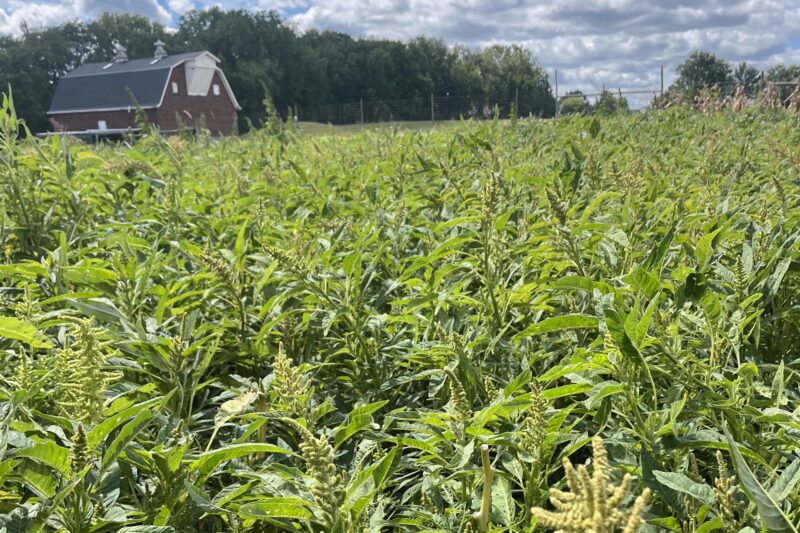
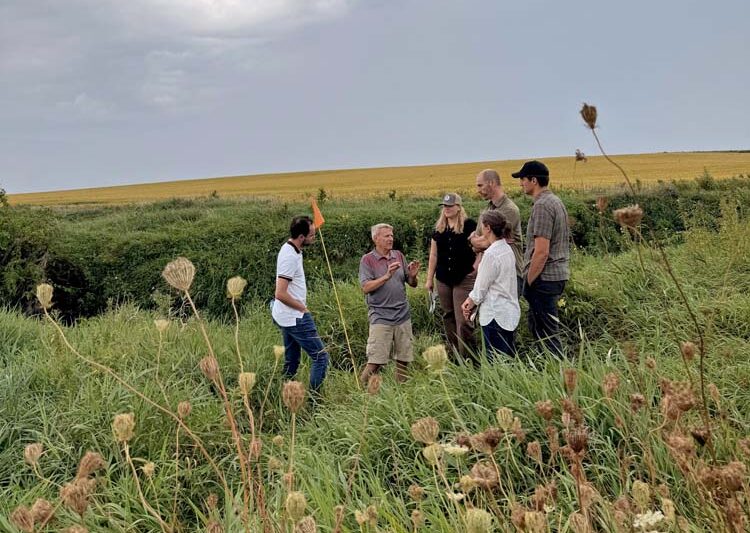
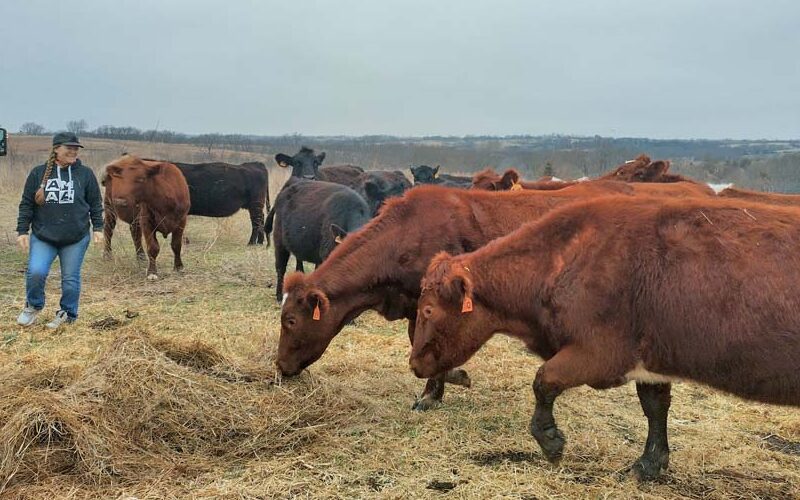
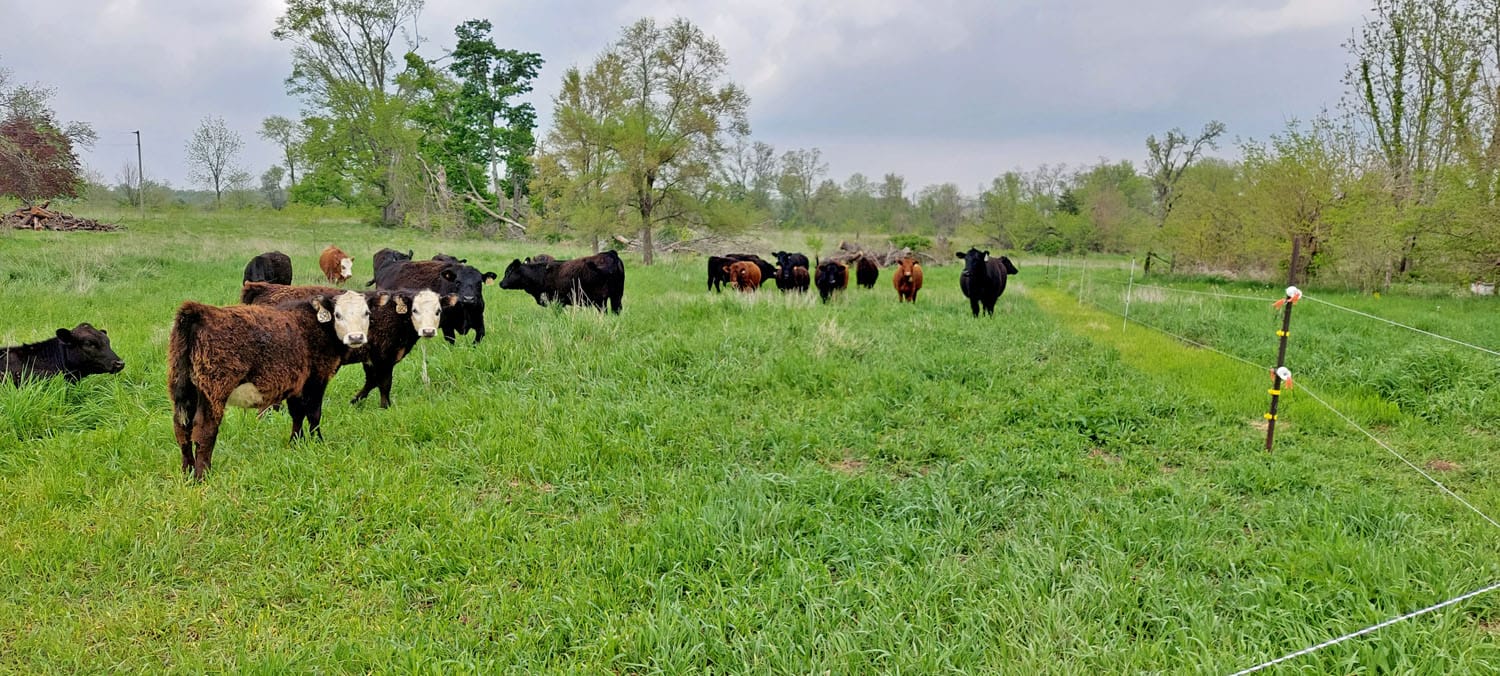
Back at Night and Day Ranch, Laura looks at the pile of step-in posts and spools of polywire fencing she bought with her husband, Mike, using grazing infrastructure cost-share funds. These portable fencing components had just been pulled from neighboring properties for the season and wrapped up for storage and reuse. The livestock are home for the winter and only a fraction of fence is needed to graze cornstalks in the field. “I knew you were going to ask me how much fencing there was, and I just don't remember,” Laura says with a laugh. “It's a lot.” All that new fencing let the Kenistons divide their animals and graze based on more specific needs. Now, they have up to four separate groups grazing at a time based on species and seasonal birthing. It takes more coordinating, but the relationships they've built allow that flexibility. Their first partnership was with Laura's uncle, who farms her family's row-crop ground. He didn't take much convincing. “Fertilizer prices skyrocketed last summer,” she says. “So we said, ‘Hey, instead of driving manure back and forth across the field wasting fuel and time, why don't we let the cattle eat up some of the corn on the ground and spread the manure for you?' It was a win-win.” Laura also connected with Sean Stokes and Drew Erickson at the Rodale Institute Midwest Organic Center, which owns land across the street from her farm. The pair are exploring ways to integrate livestock as part of their experiments with small grains. One of the questions they want to answer is what role the cattle play in these integrated systems. “Is it just manure that matters (for soil health), or is there more to it?” Sean says. “Is it the actual grazing, urine and hoof action? Or does simply spreading manure give the same effect?” Thanks to the portable fencing, Laura is able to take part in the research project. For Sean and Drew, having neighbors with cattle and fencing made the partnership easy.