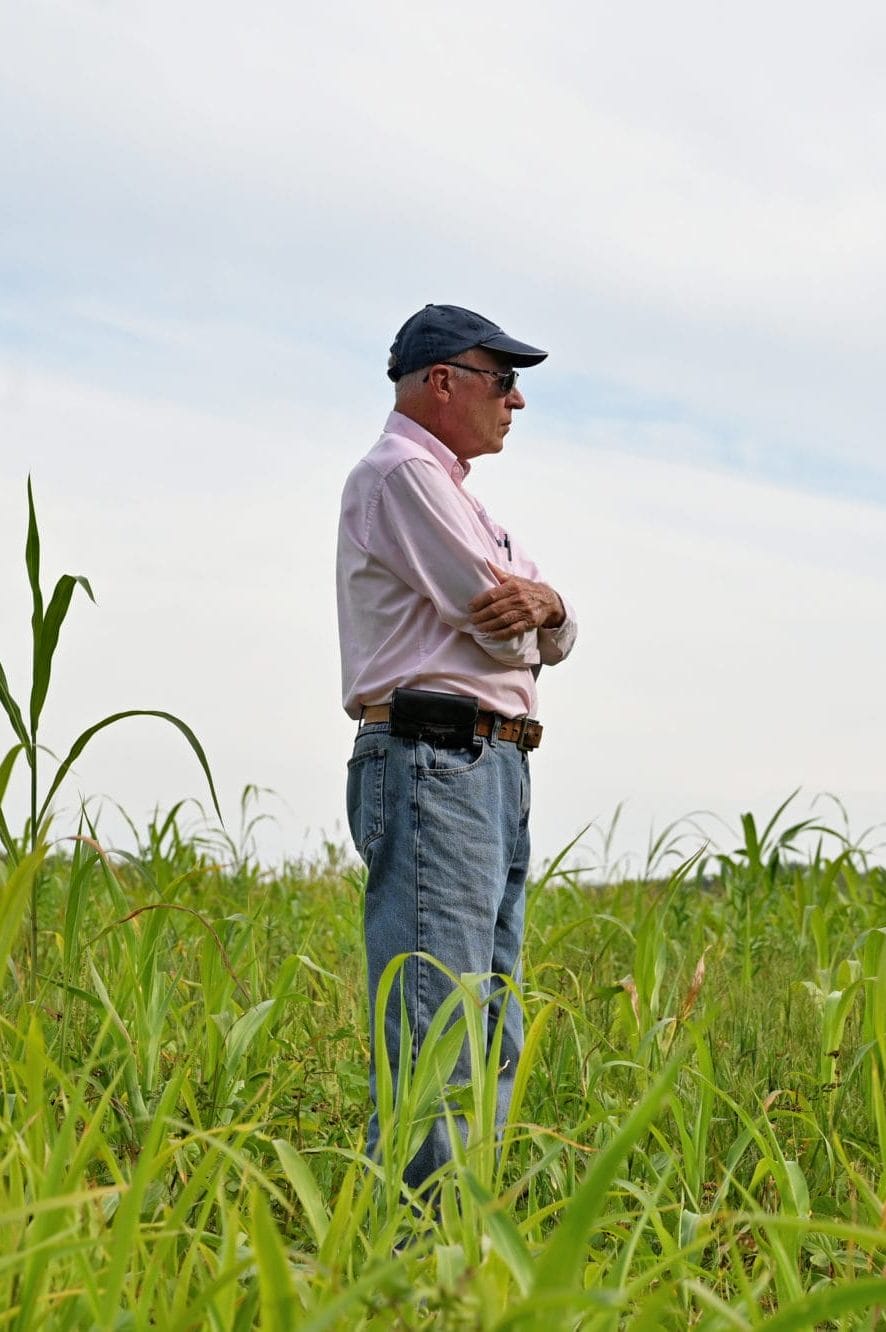
Livestock and the Land
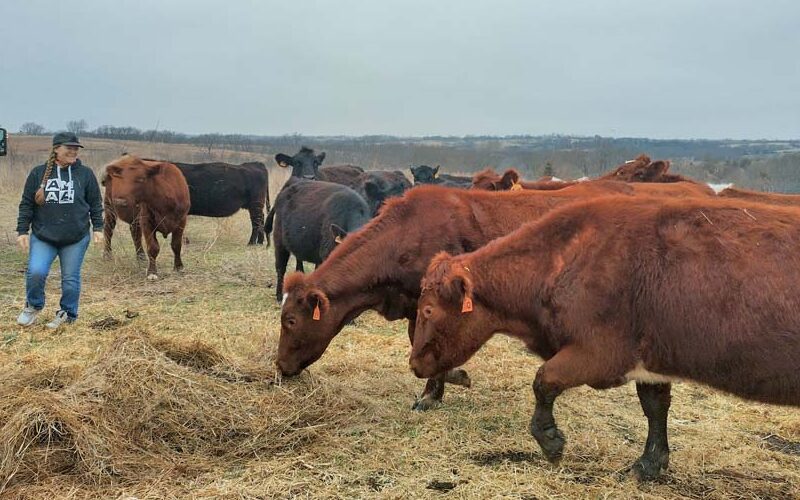
Tim's grandfather purchased the first parcel of the Kelley farm in 1907, making it a Missouri century farm. Tim grew up on the farm with his siblings, Sam and Margaret. He was fully immersed in farming life, from daily chores to raising livestock through 4-H. At 18, he left for college and spent eight years exploring the world outside of farming. Twelve years after he left the farm, he returned. Although he grew up on the farm, Tim had never made decisions for the operation. He began farming 400 acres with a typical conventional row crop and livestock setup, but it did not yield what he had hoped, especially with the equipment cost. Tim grew curious about changes he could make, and in the late 1980s, after a drought, he added warm-season native grasses and began amending his livestock management. “There had always been cattle, but I started intensifying the management,” Tim says. Until then, cattle had been allowed to openly graze large areas, spending eight to nine months on grass and then crop residue during the winter. Tim also built fences between sections of pasture to let them rest, added multiple paddocks and installed underground waterlines. While the soil and forage improved, it wasn't until he initiated high-stock-density grazing that he saw more rapid improvements. With this approach, cattle are rotated often to different pastures, which encourages more efficient grazing and gives plants more time to rest and recover. His journey to improve his soil health began in earnest in 2000.“The more I learned,” he says, “it seemed obvious that [conservation] was the right thing to do.”Over the years, Tim has become an expert on livestock management, especially as a means of preserving and improving soil organic matter. In 2003, he took part in a SARE research project that aimed to control forbs typically considered undesirable with multispecies grazing (Tim notes that with high-density grazing, all forbs have value as food for livestock or the “microbiological ecosystem”). At that point, he was grazing cow-calf, stocker and sheep herds on 150 acres of diversified grass and legume pasture. Even in a drought year, Tim says multispecies grazing effectively reduced weed pressure in the fields, affirming his approach – and his belief that he was on the right path. In 2016, PFI staff interviewed Tim for a member spotlight. He'd been using soil-health practices for nearly 20 years and had begun using Haney soil tests to assess his progress. In that interview, Tim shared that high-density grazing had helped boost organic matter on one of his properties to 7%. “It's pre-settlement levels for northwest Missouri or southwest Iowa – 6-8% is what they think the prairie had,” Tim says. Through careful observation and yearly testing, Tim found that while organic matter either held steady or dropped in his row crops, the cool- and warm-season grasses and legumes improved his soil health. As he transitioned from farm operator to non-operating landowner, he worked with each tenant to incorporate soil health practices. In 2023, he found Brent Nold through mutual acquaintances, and the two work closely to nurture the land through their shared vision.