In a Nutshell:
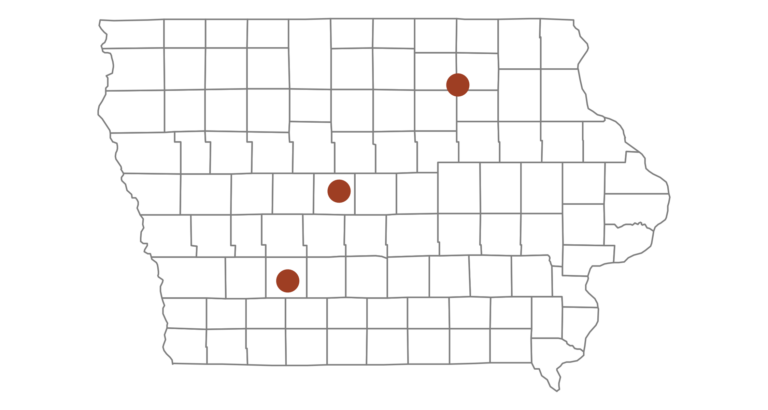
- 11 cereal rye varieties were trialed at three Iowa State University research farms.
Key Findings:
- Challenging wet weather in June and July delayed harvest, and there were significant lodging issues.
- Across all sites and varieties, hybrid cereal rye varieties averaged 62 bu/ac while open-pollinated varieties averaged 45 bu/ac.
- Most hybrid varieties outyielded most open-pollinated varieties at Boone and Greenfield, but Hazlet and Aroostook (both open-pollinated) were among the top performing varieties overall at Nashua.
Background
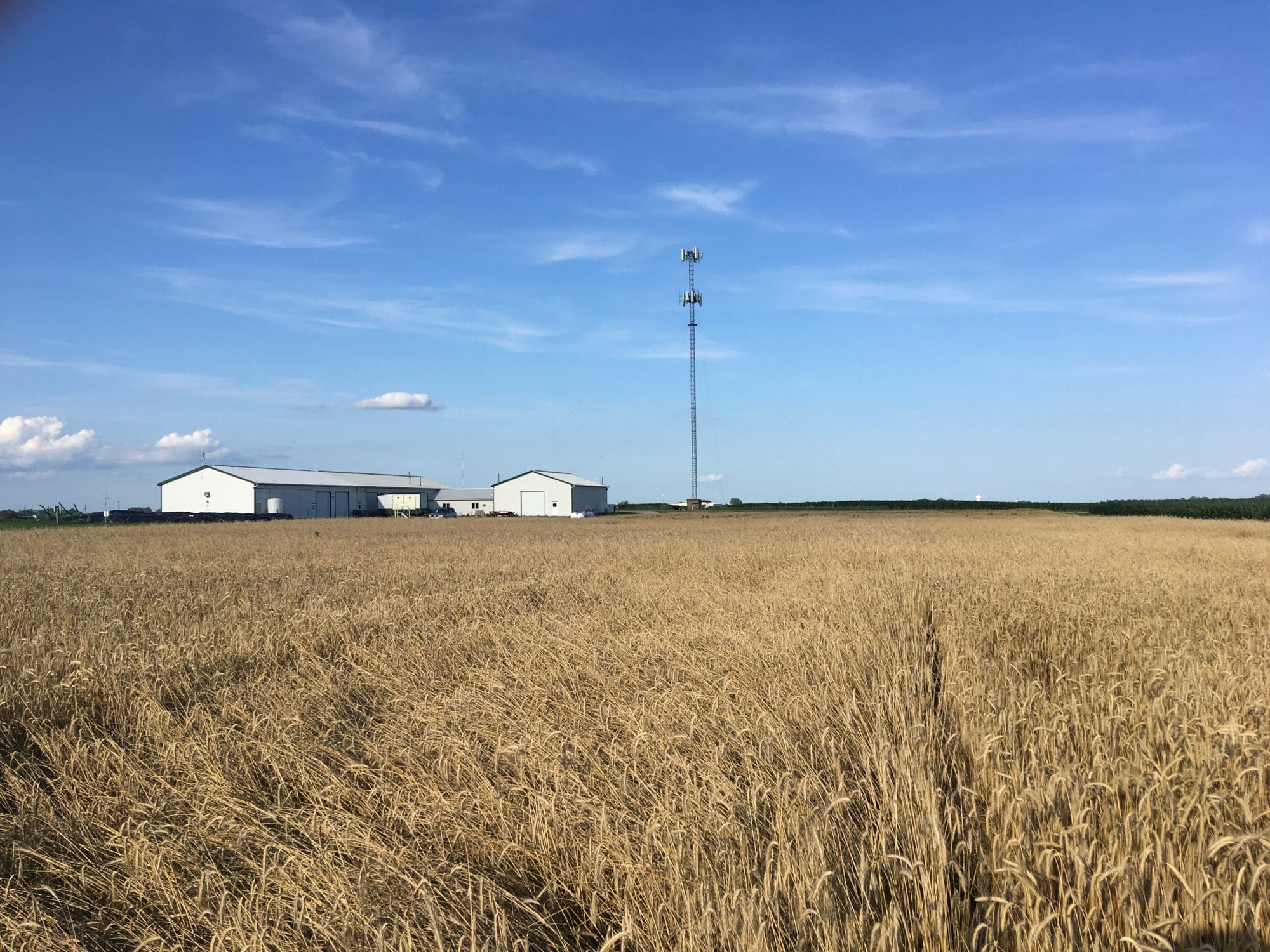
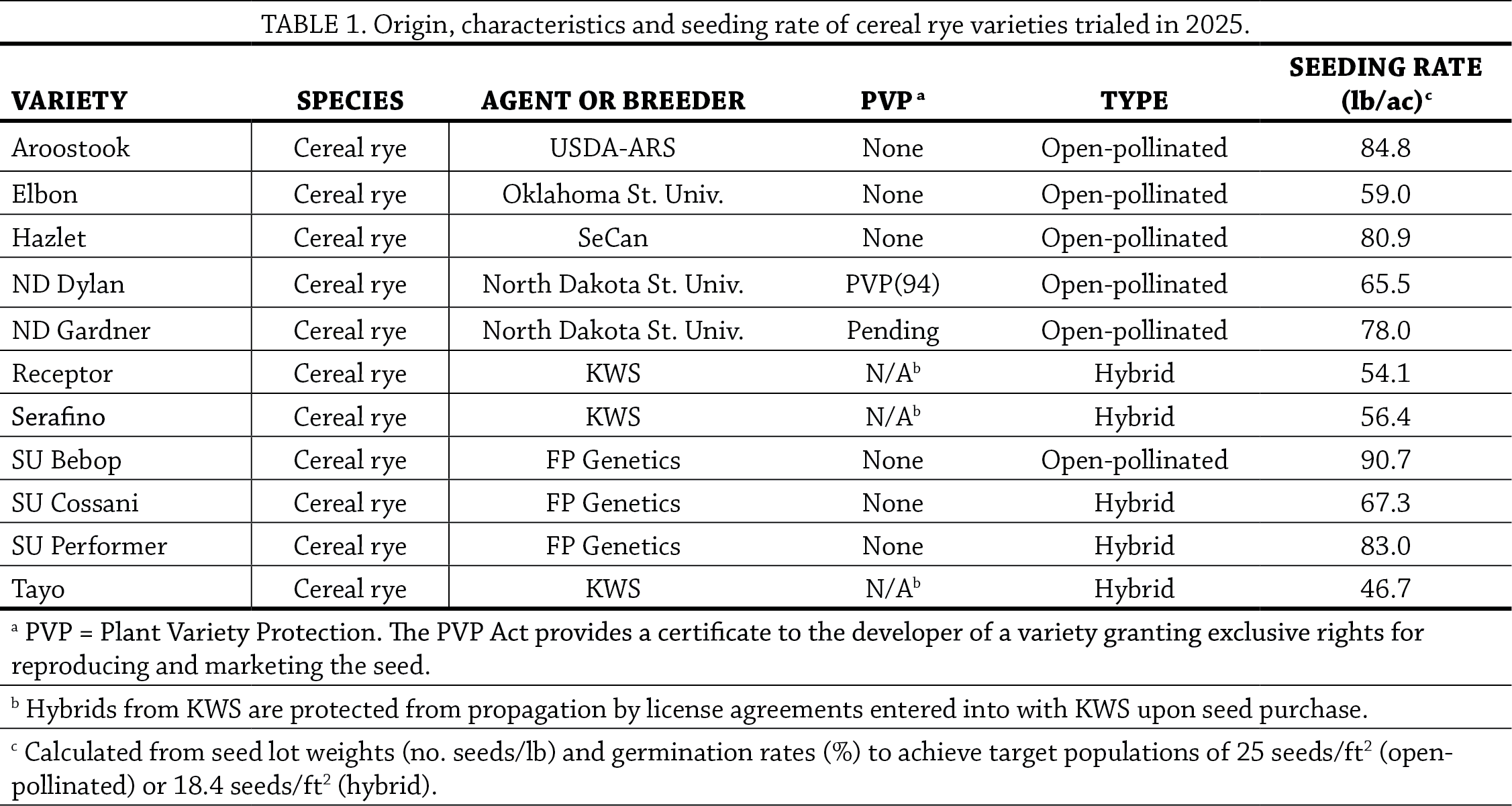
This was the seventh year that Practical Farmers of Iowa coordinated cereal rye variety trials at Iowa State University research farms at Nashua (northeast Iowa); it was the fifth year of trials at ISU research farms at Boone (central Iowa) and Greenfield (southwest Iowa). A fourth trial Kanawha (north-central Iowa) was not completed due to wet weather conditions around harvest. In the previous seven years of rye variety trials on ISU farms, SU Cossani, SU Performer, SU Bebop, Tayo and Serafino have been the top yielding varieties across sites. Overall, yields in PFI’s small-grains variety trials have varied quite a bit between years due to weather conditions and the retention and addition of higher performing varieties in the trials [1–7]. In 2024, the average cereal rye yield across the four participating Iowa research farms was 89 bu/ac.[1] In contrast, cereal rye variety trials conducted by the University of Minnesota reported an average yield of 118 bu/ac in 2024 [2]. In 2023, the average cereal rye yield across the four Iowa research farms was 42.6 bu/ac [3]. In 2022, the average cereal rye yield across the four research farms was 81.3 bu/ac [4]. Methods Variety trials were conducted at four locations in 2025: ISU Northern Research Farm in Kanawha; ISU Northeast Research Farm in Nashua; ISU Ag Engineering and Agronomy Farm in Boone; ISU Southwest Research Farm in Greenfield. Production characteristics and some breeding history about each of the trialed varieties can be found in Table 1. SU Bebop was trialed only at Nashua; Kanawha, Boone and Greenfield trialed ten varieties. Information on winter hardiness, days to heading, plant height and ergot susceptibility can be sourced from the University of Minnesota [8].
Results and Discussion
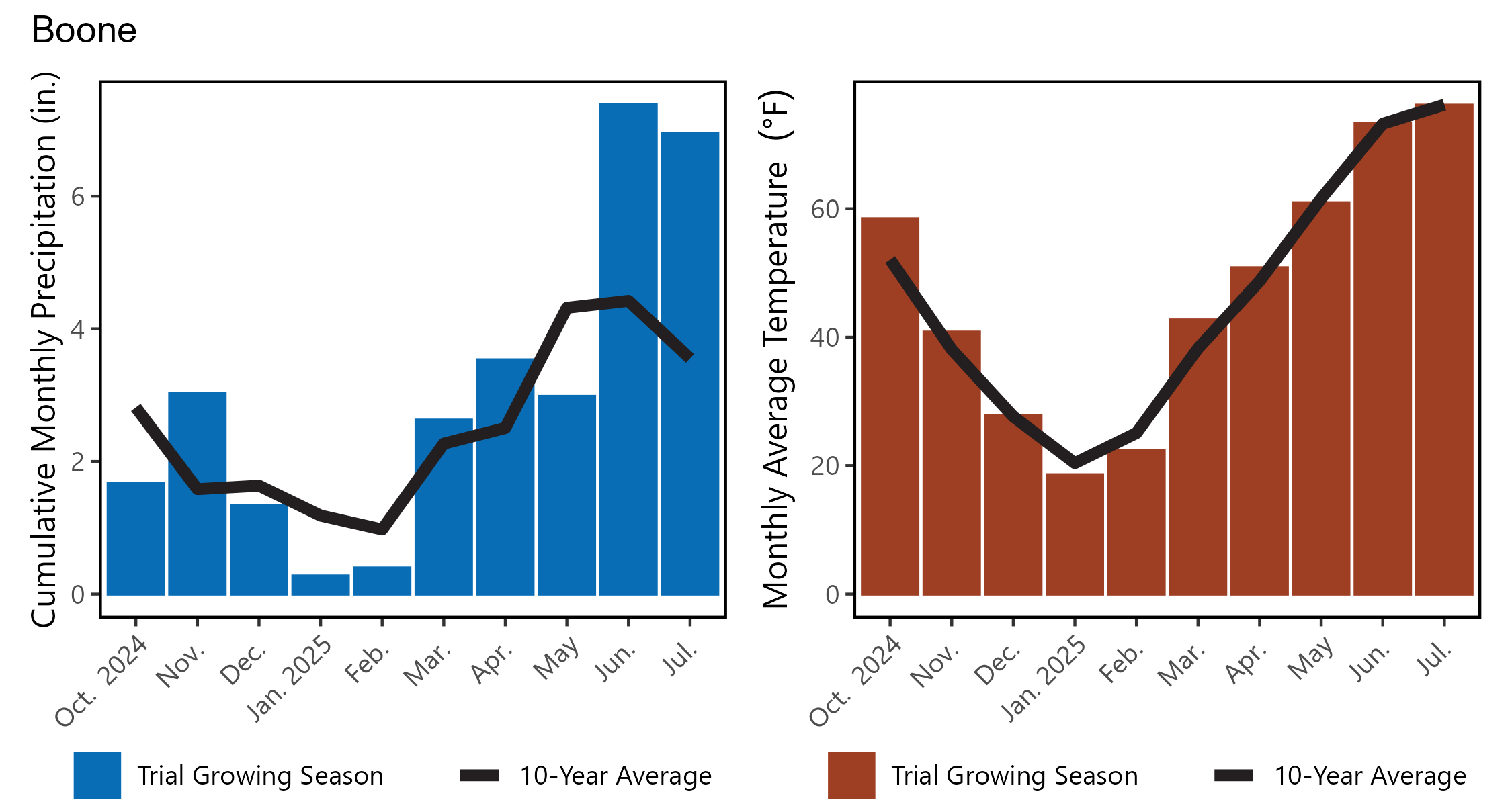
After a dry winter, weather conditions during the 2025 growing season were marked by near-record April, June and July rainfalls, making weed management and cereal rye harvest difficult. As a result, field managers at Kanawha were unable to harvest their cereal rye variety trial, and harvests at other sites were somewhat delayed. Lodging was a major issue in all varieties at Greenfield and Boone this year, though most severely in open-pollinated varieties. Across all sites and varieties, average 2025 rye variety trial yield was 53 bu/ac, down from 89 bu/ac in 2024 but up from 43 bu/ac in 2023. Hybrid cereal rye varieties averaged 62 bu/ac while open-pollinated varieties averaged 45 bu/ac across all sites and varieties. There were few statistically significant differences in yield between the five hybrid varieties at individual sites, and no consistent differences across sites; no single variety had consistently higher yields. At Boone and Greenfield, Serafino, Performer and Receptor were numerically the three top-yielding varieties. There were similarly few statistically significant differences between yields of open-pollinated varieties, though Aroostook yielded significantly higher than ND Dylan at Boone and ND Gardner at Greenfield. At Greenfield and Boone, most of the individual hybrid varieties significantly outyielded the individual open-pollinated varieties. Notably, at Nashua Aroostook (55 bu/ac) and Hazlet (58 bu/ac), both open-pollinated varieties, were among the top performing varieties this year, yielding significantly higher than hybrids Receptor (41 bu/ac) and Tayo (38 bu/ac). No cereal rye varieties made test weight (56 lb/bu) this year at any of the three sites. Hybrid varieties were, on average, about 10 in. shorter than open-pollinated varieties.ISU Southwest Research Farm, Greenfield
Previous crop:Soybean Replications:3 Harvested plot size: 5 ft X 60 ft Fertilizer applied: 124 lb/ac P, 273 lb/ac K and 28 lb/ac S on Mar. 17, 2025 36 lb/ac N as urea on Mar. 24, 2025 Planting date:Oct. 16, 2024 Harvest date: Aug. 5, 2025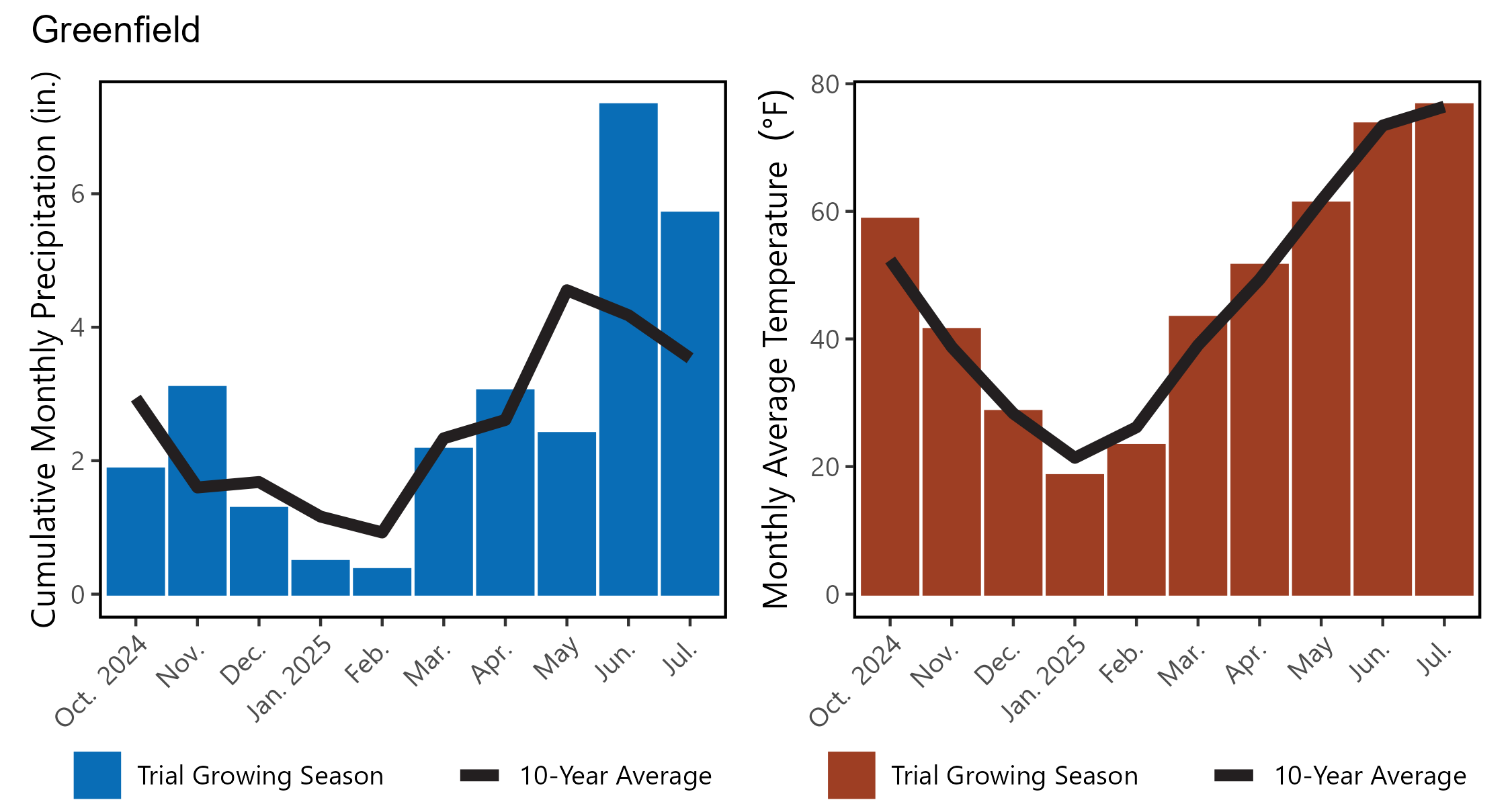
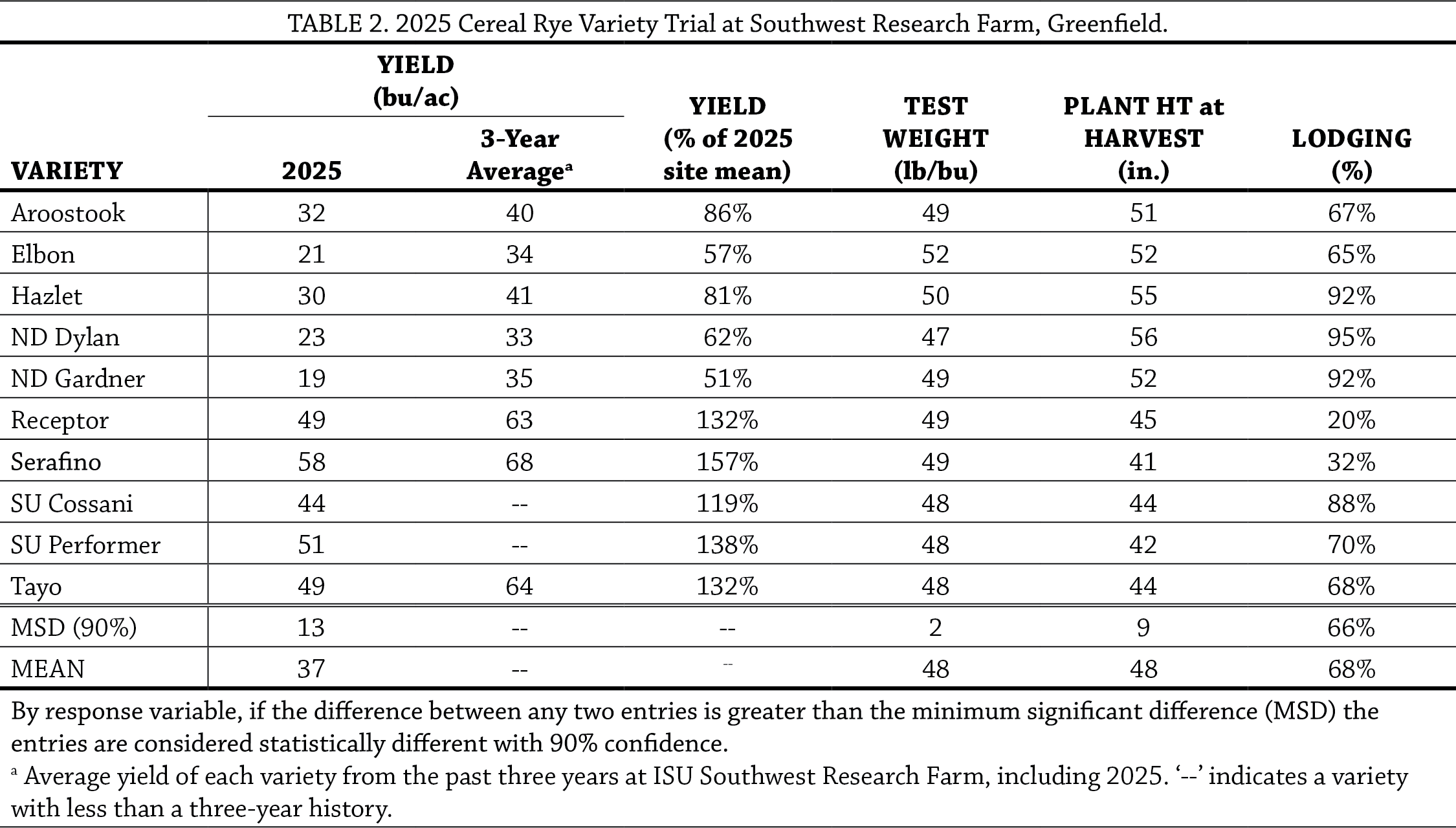
ISU Northeast Research Farm, Nashua
Previous crop:Soybeans Replications:3 Harvested plot size:8.125 ft x 50 ft Fertilizer applied: 31 lb P/ac and 200 lb K/ac on Oct. 25, 2024 31.8 lb S/ac as Supercal on Jan. 27, 2024 35 lb N/ac as urea on Mar. 27, 2025 Planting date:Oct. 11, 2024 Harvest date: Jul. 21, 2025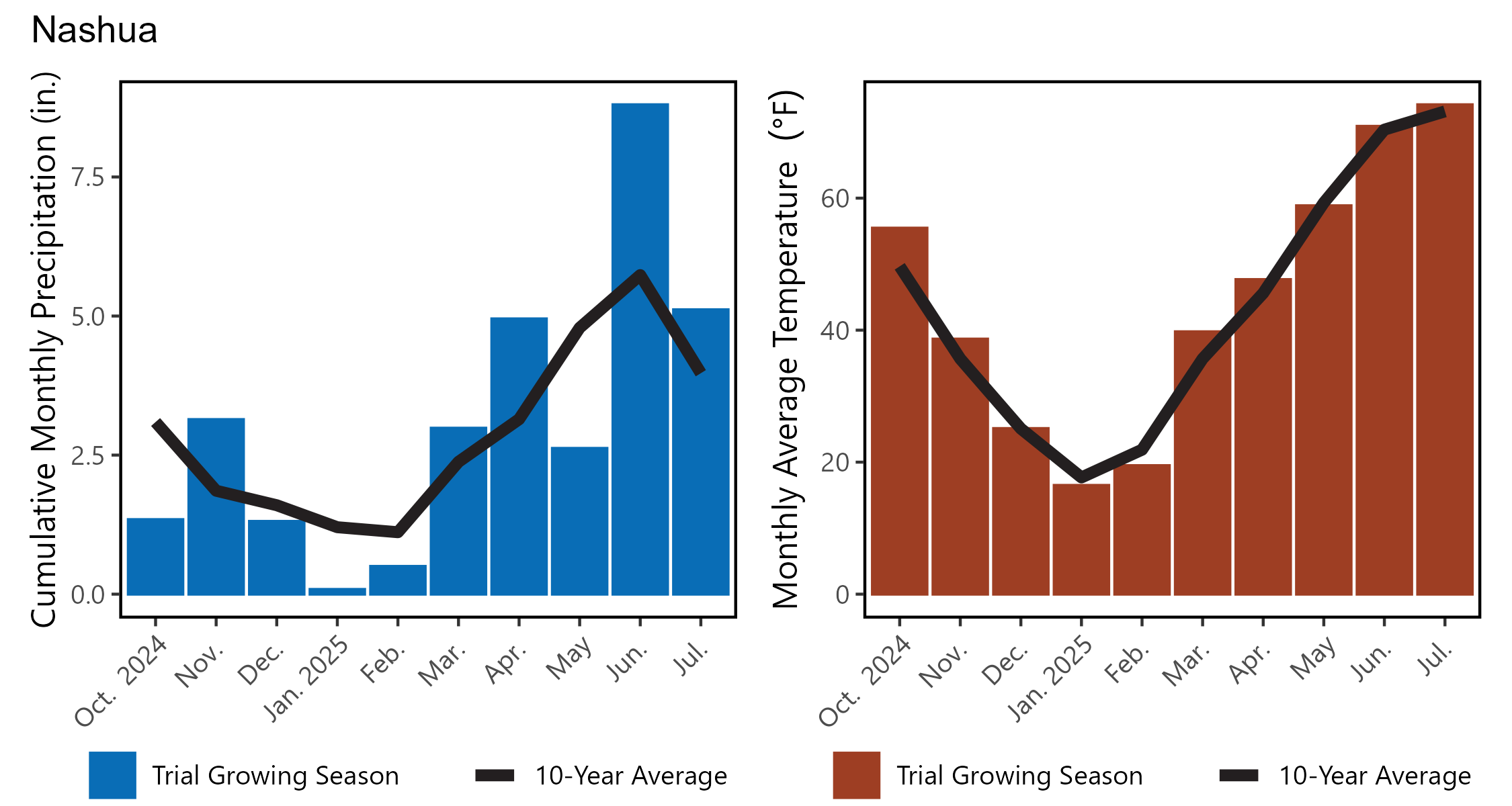

ISU Ag Engineering and Agronomy Farm, Boone
Previous crop: Soybeans Replications:3 Harvested plot size: 59 ft x 13.5 ft Fertilizer applied: 39 lb N/ac, 100 lb P/ac, 40 lb K/ac and 37 lb S/ac applied on Apr. 8, 2025 Planting date: Oct. 16, 2024 Harvest date:Aug. 13, 2025