Adding Organic Row Crops to Boost Farm Revenue
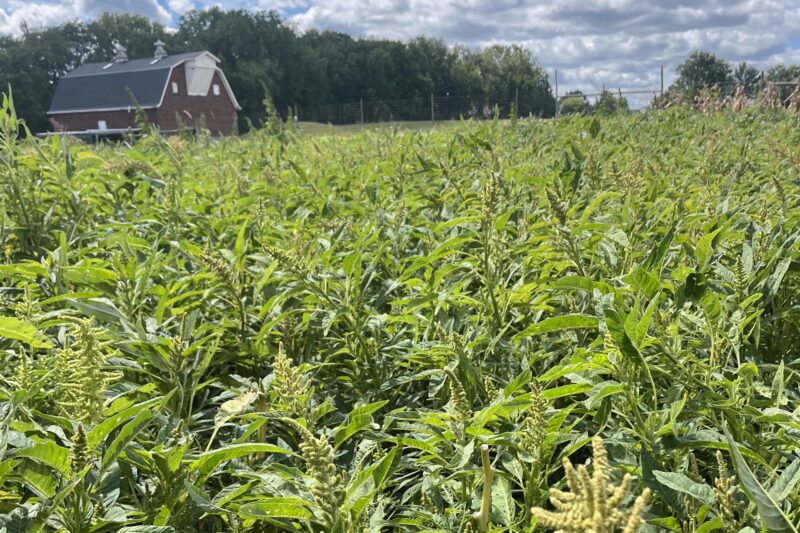
The path to this diversified operation has its roots in Seth's first year farming on his recently purchased farm. After losing money raising conventional corn and soybeans that year, Seth looked for a more profitable enterprise. “My only off-farm job growing up was on another farm – Dave Nees' farm, which was organic. I had done some cutting and baling hay,” Seth says. “After that first year of losing money, I remember thinking, ‘organic prices are really high!' So I talked to Dave a bit.” Seth began the transition to organic production on a 160-acre field next to the family's feedlot. A 50-acre portion of the field had been in alfalfa, so he applied manure and plowed the alfalfa under to plant corn the following year. The corn crop yielded well, and with organic corn prices over double the conventional corn prices, he found organic cropping to be profitable.“I realized that you have to think hard, not just work hard.”- Seth SmithSeth notes that raising organic row crops is significantly more labor-intensive than conventional row crops. “You spend a lot of time controlling weeds,” Seth says. Seeking ways to reduce that labor, for the last 20 years Seth and Lynn have been experimenting with more time-saving organic weed control methods. They were early adopters of a sub-inch-accuracy GPS system that enables higher speeds while tine weeding and harrowing. Seth also built a custom weed flamer. The machine uses propane to throw a flame on weeds, damaging the cell structure, either killing the weed or reducing growth.
Past Labor Limitations Spur Other Changes
Growing up, Seth recalls observing a neighbor whom Seth describes as “one of the hardest workers I know.” The neighbor put in long hours and was expanding the operation to try to eke out an additional profit, but eventually decided to sell the farm and work an off-farm job. Seeing the neighbor work long hours without making much money prompted Seth to look at his own work hours, and whether they were generating revenue or saving costs. “I realized that you have to think hard, not just work hard,” Seth explains. “When I had just come back home to start farming, there were three of us – my dad, the hired hand and me – all working seemingly endless hours, spinning our wheels constantly.”
Ridge-Till, Research Bring the Smiths to PFI
The family's ongoing willingness to experiment with new practices has a long history – and has linked the Smiths with PFI for two generations. In the 1980s, Lynn joined PFI around the time PFI co-founder Dick Thompson was pioneering ridge-till. A ridge-tiller himself, Lynn joined to learn more from Dick and other members. The Smiths' involvement in PFI was sparked again when Seth struck up a conversation with PFI member Paul Mugge, an organic farmer from Sutherland, Iowa, at the Iowa Organic Association conference.
Researching the Value of Grazing Cover Crops
About 15 years ago, Lynn and Seth observed some spring wind erosion on corn silage ground that unsettled them. The following autumn, they seeded oats with a fertilizer spreader and used a rotary hoe to incorporate the seed.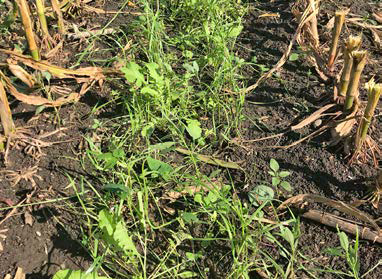
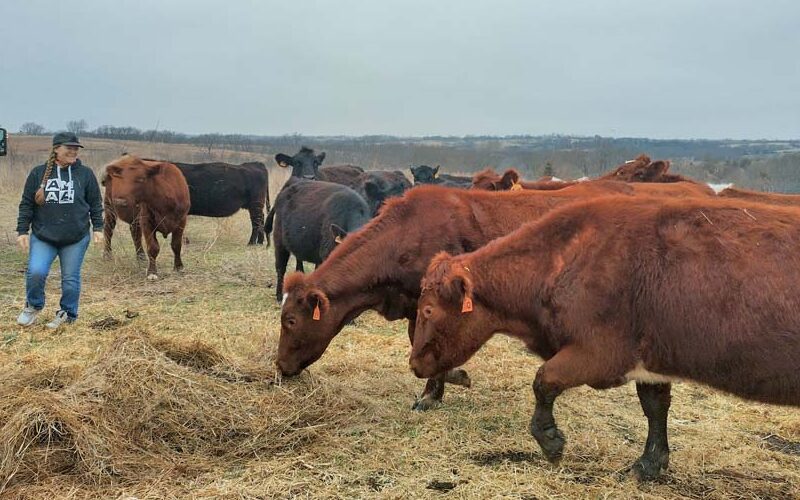
"We're starting to see better soil health, better water holding capacity and healthier plants. I'm attributing that to soil health of the no-till and cover crops with cows in the picture.” - Seth SmithReflecting on the results, Seth says, “We can grow cow feed [cover crops] a heck of a lot cheaper than we can chop silage or buy hay. Now our winter feed is the cheapest point of feed in the year.” Beyond the forage value, Seth adds that grazing cover crops can reduce labor and is contributing to healthier soil and plants. “A lot of years, we can go three months without hauling any feed while the cows are in a field,” he says. “We're starting to see better soil health, better water holding capacity and healthier plants. I'm attributing that to soil health of the no-till and cover crops with cows in the picture.”
Raising Cattle Runs in the Family
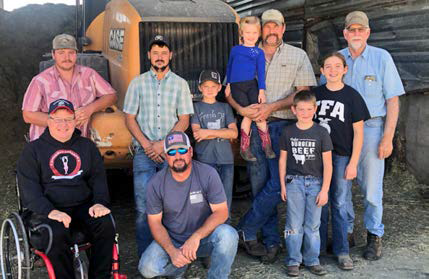
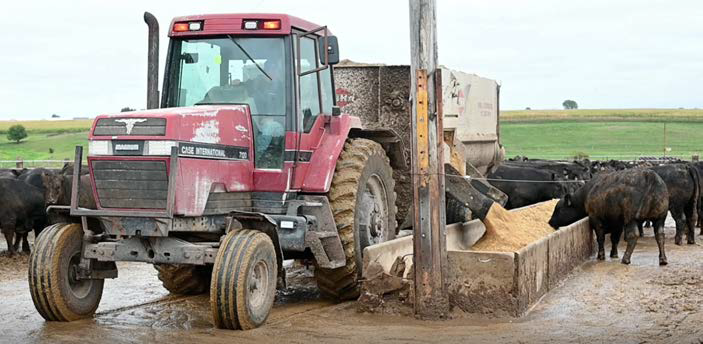
Something Seth did not change upon returning to the farm is finishing beef cattle – the family has been doing so for over 70 years. “We had the facilities, and we had the know-how. So expanding that was an easy way for me to join the operation versus starting something from scratch,” Seth says. “Plus, I have several generations of expertise to call on.”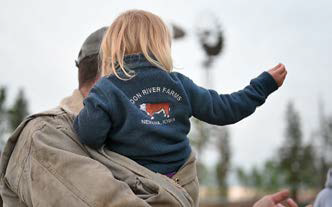
Direct Markets Build Community
Etta and Seth began direct-marketing some of their cattle in 2014. Today, if you pick up an issue of the local Storm Lake Times newspaper, you are likely to see an advertisement for Coon River Farms beef. The cattle are processed in the nearby towns of Holstein or Ruthven, which means jobs stay local.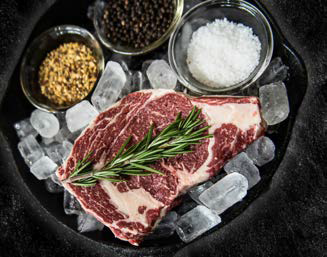
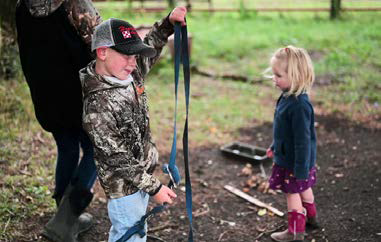
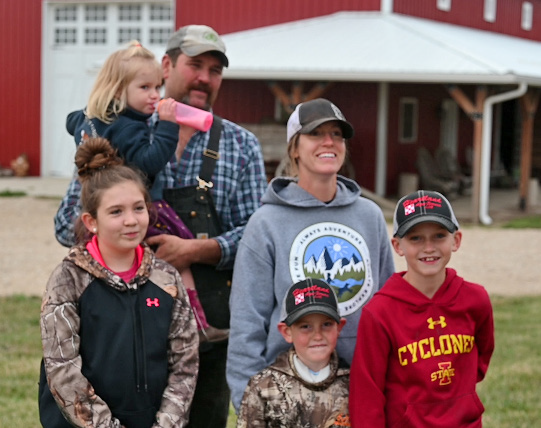
“ I believe more people find satisfaction in buying off the farm and using local lockers, keeping their dollars in the community.” - Etta Smith“It connects people to their food. They get interested in how that animal was raised, all the way through how it was processed,” she says. “They know they can drive by our place and see where their beef is being produced. It's also very rewarding as a producer to get that phone call from a customer saying they just ate the best steak of their life.” Skylar, Etta and Seth's eldest daughter, also runs a direct-market egg and broiler chicken business. In 2015, at age 6, she started her egg business, which she continues to run, and has had a broiler business since 2019. In 2021, she raised 150 broilers on pasture, moving them every couple of days. The experience is teaching her about what's involved with managing and marketing such an enterprise – and how to find ways to improve it. “Skylar has always been an entrepreneur and has paid her own way through every step of her business,” Etta says. “She orders her own feed to be delivered to the bulk bin, and she writes the checks from her account for all expenses. She understands break-evens and how that determines what she charges for her products.”
Reinvesting in Rural and the Next Generation