Seeding
Many farmers plant their small grains with a grain drill, as it allows for more precise seed-to-soil contact. However, it is also possible to broadcast small grain seed and come back with a light tillage pass and a cultipacker. To keep costs down on his small grains acres Tracy has used a trustworthy John Deere Van Brunt drill, but in recent years has been updating his spring seeding practices. “Our local NRCS has a no-till drill that has both grass seed and alfalfa seed boxes on it, they are renting that for ten dollars per acre and we're going to try that this year”, Tracy says. “It will make it easier to seed down our clover with our small grains.” In the past he has broadcast an alfalfa-clover mix while spreading fertilizer over the oats, and while it can work in a pinch, Tracy prefers to use a drill.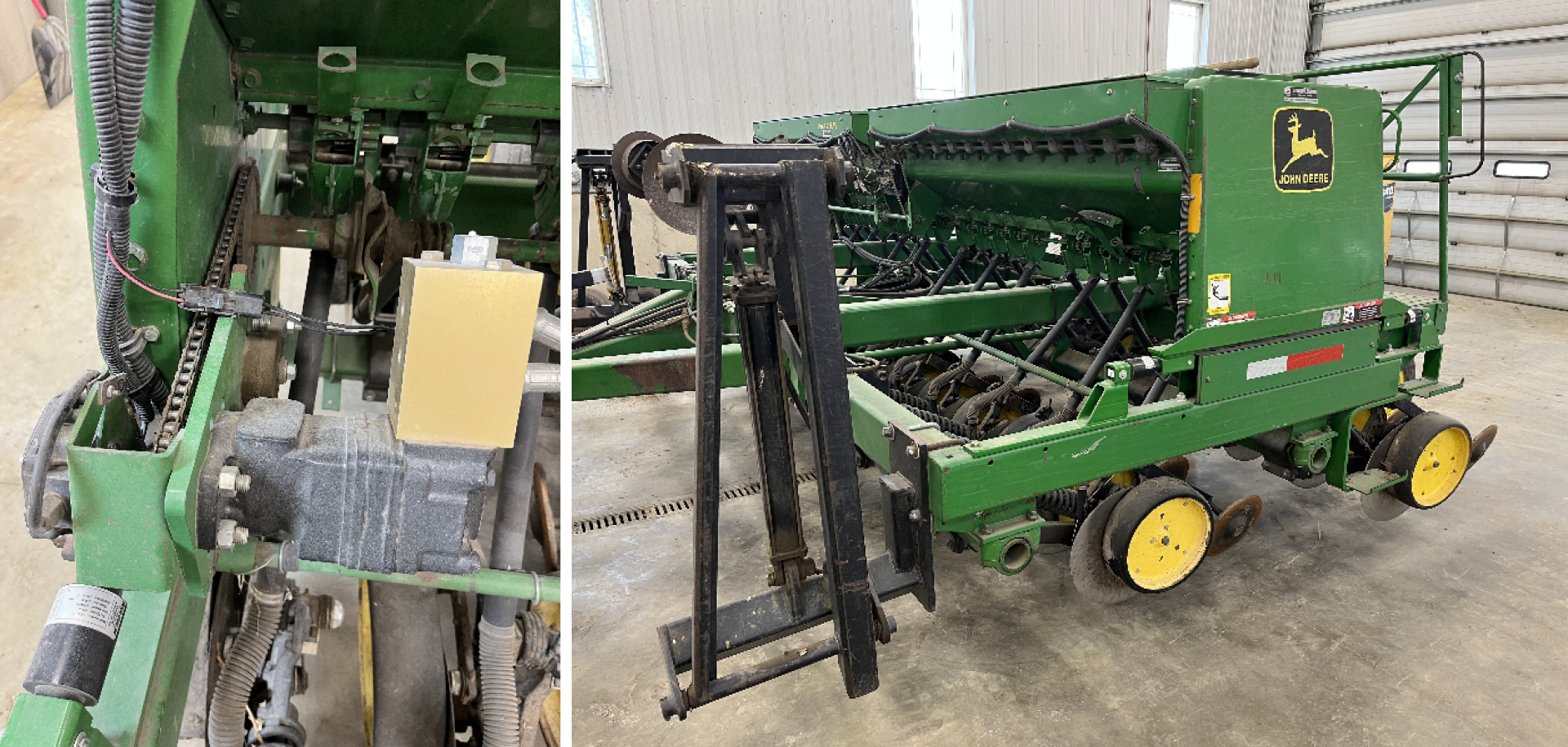
Harvest Time
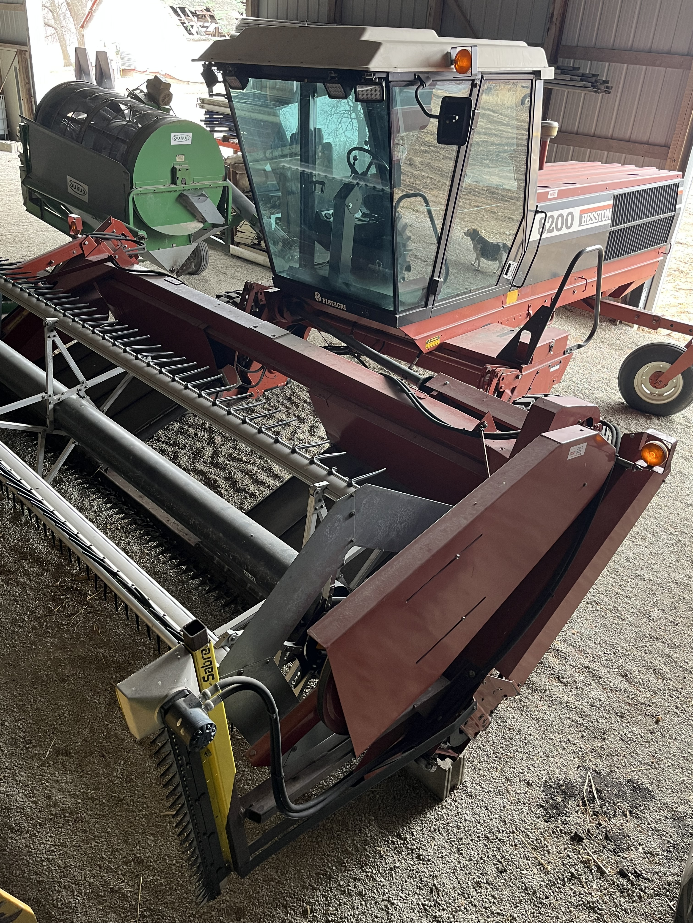
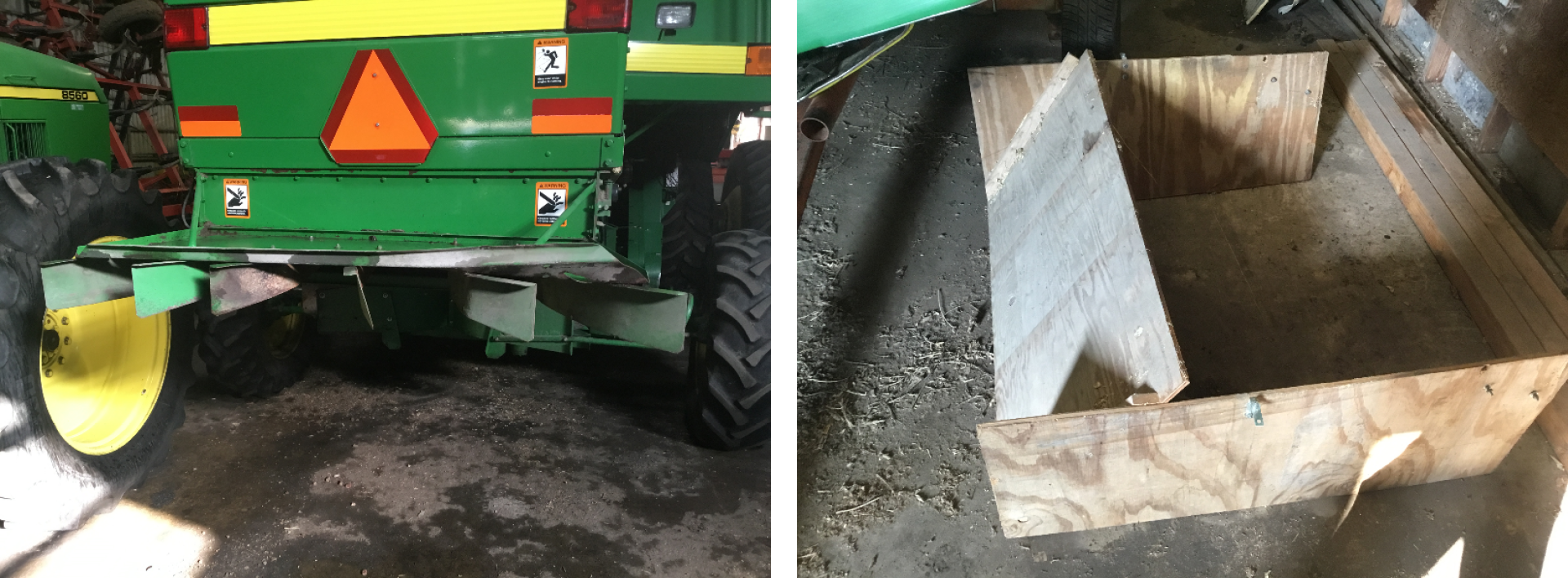
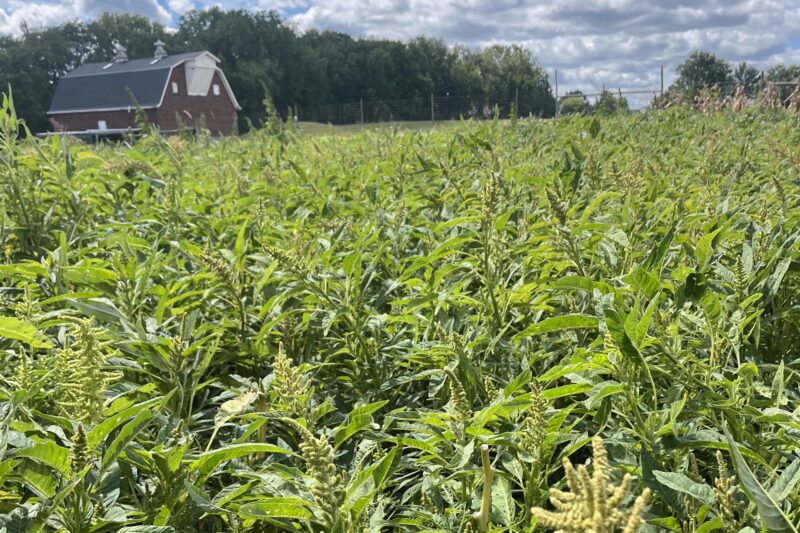
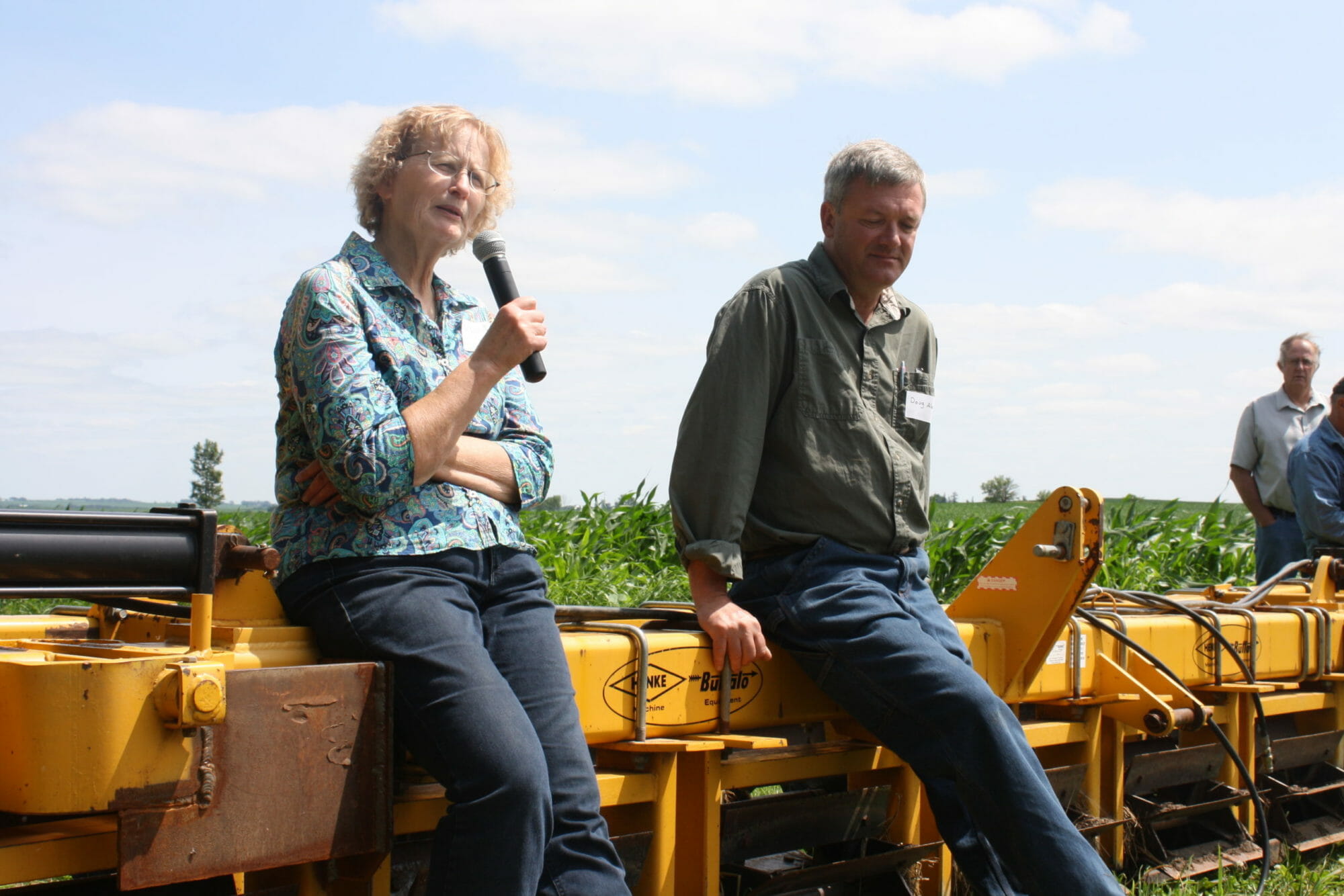
There are two main options for harvesting small grains: swathing the grains into a windrow or cutting and harvesting the grains directly. “I like to swath, it gets the oats dried down a little faster, and it makes it easier to combine” says Tracy. Doug and Margaret are also equipped to swath their small grains, although Doug says, “for the rye and the oats I go into the season planning to harvest them standing, but will adjust based on the amount of lodging and weed pressure.” When it's time to pick up the oats out of the windrow, Tracy uses a belt pickup head that was converted from an older model grain platform. He only had to make minor adjustments to fit it on his combine. He recommends adjusting the fan to achieve desired test weight. Watch Tracy harvest his swathed oats with his belt pickup head: