In a Nutshell
- Timing the fall planting of cauliflower and other slow-maturing crops is often difficult, especially when planting a new variety. There are many varieties of cauliflower available to farmers in array of colors, plant and head sizes and average days to maturity.
- Building on several past PFI studies, a group of cooperators conducted a trial to determine the performance of seven cauliflower varieties planted as fall crops.
Key Findings
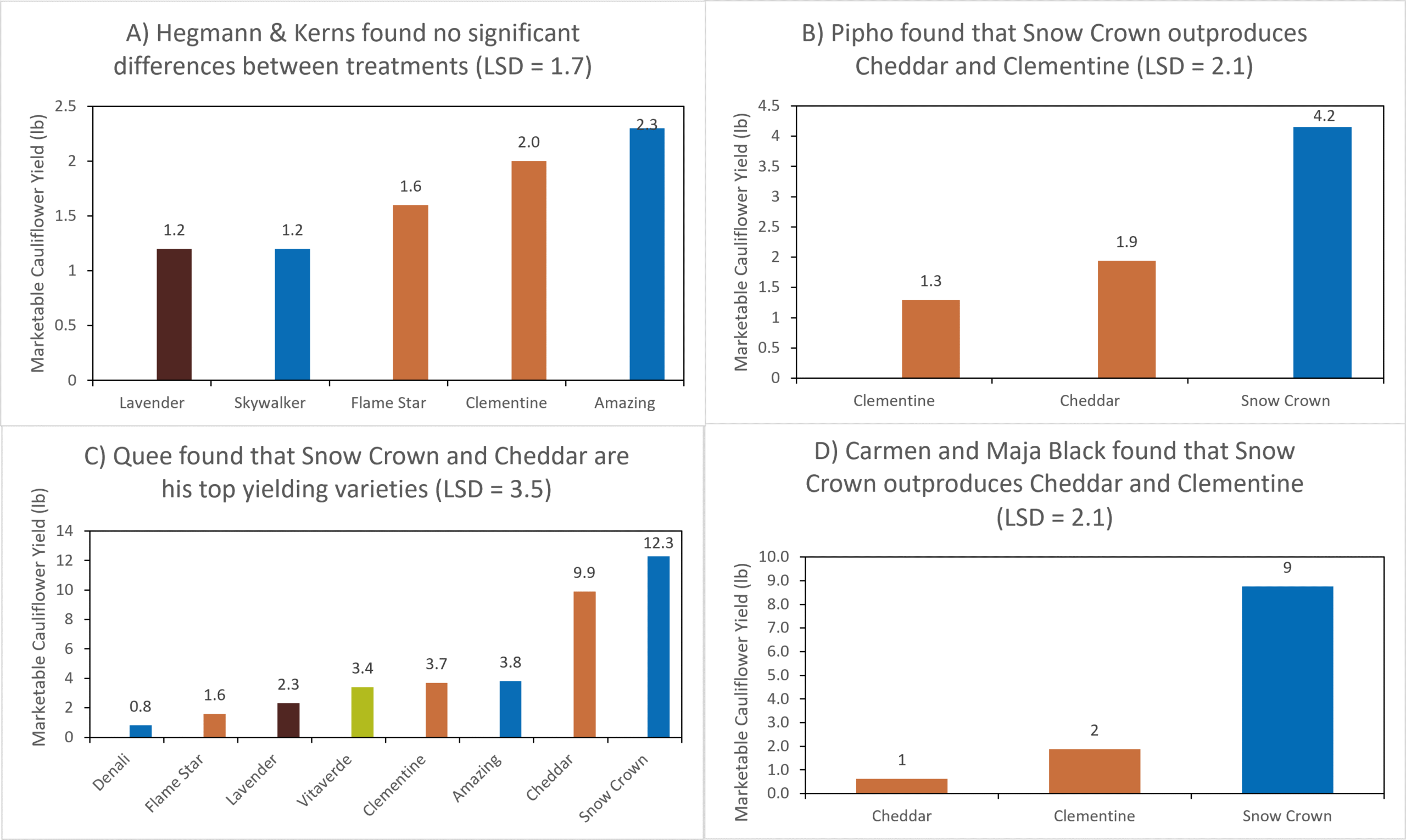
- Snow Crown was consistently high yielding and outyielded all other trialed varieties at two of three farms that tested it.
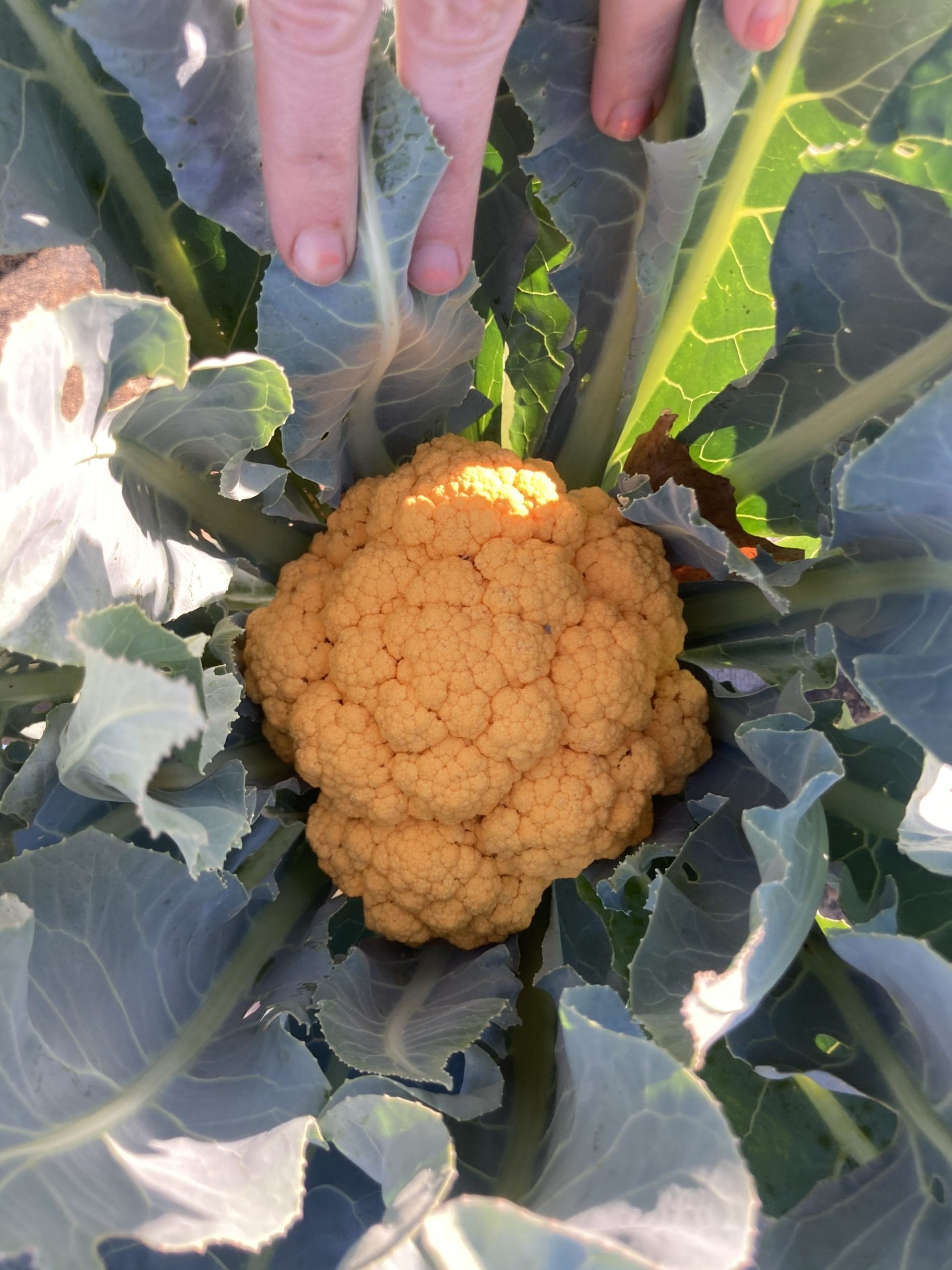
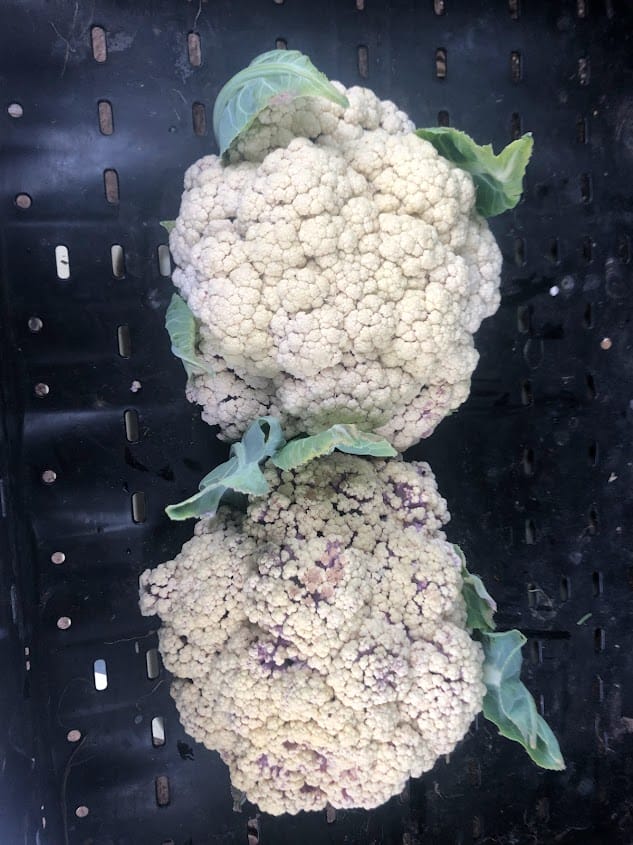
- Of the colorful varieties that cooperators tried, Cheddar generally performed the best. Lavender, the only purple variety trialed, produced minimal harvests at Hegmann & Kerns’ and Quee’s.
Background
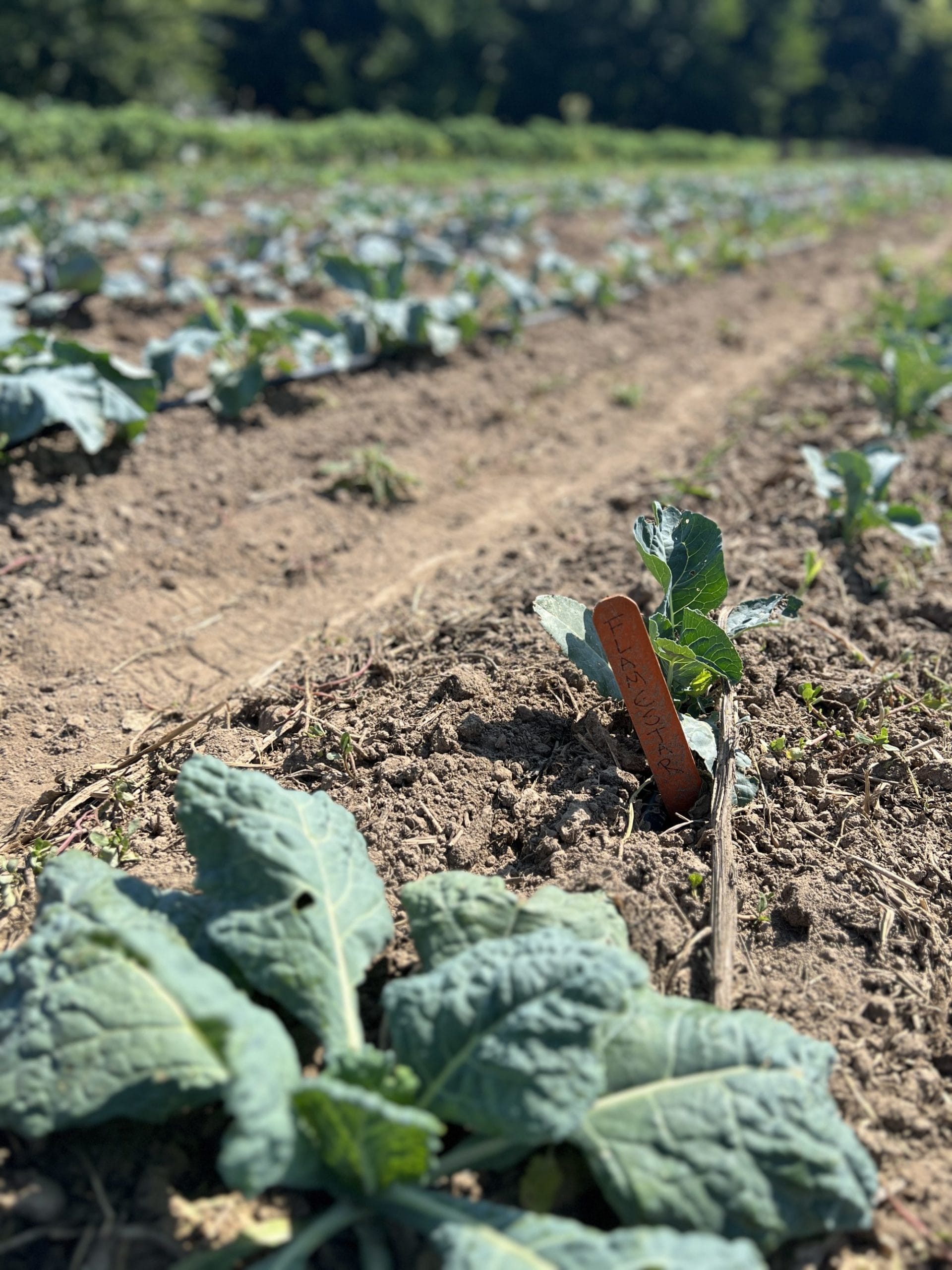
Cooperators Natasha Hegmann & Pete Kerns, Michael Pipho, Mark Quee and Carmen and Maja Black all had questions about which cauliflower varieties they should plant for their fall crop. Building on previous PFI Cooperator research investigating this topic in 2019 [1] and 2022 [2], they performed a cauliflower variety trial in fall of 2023. Each farm tested a subset of seven cold-tolerant varieties that vary in color, plant size, and days to maturity. The cooperators hoped to use the trial to improve their production by determining the performance of the different varieties. They were also very interested in trying new varieties and gauging customer interaction. At the outset, Carmen and Maja Black said “This research trial will inform when our farm plants cauliflower and which varieties we will prioritize, with yield, diversity, and customer enjoyment (exciting colors) as factors to consider.” Quee added: “figuring out start dates for fall-harvested crops is often challenging and this trial will hopefully help us improve at that.”Methods
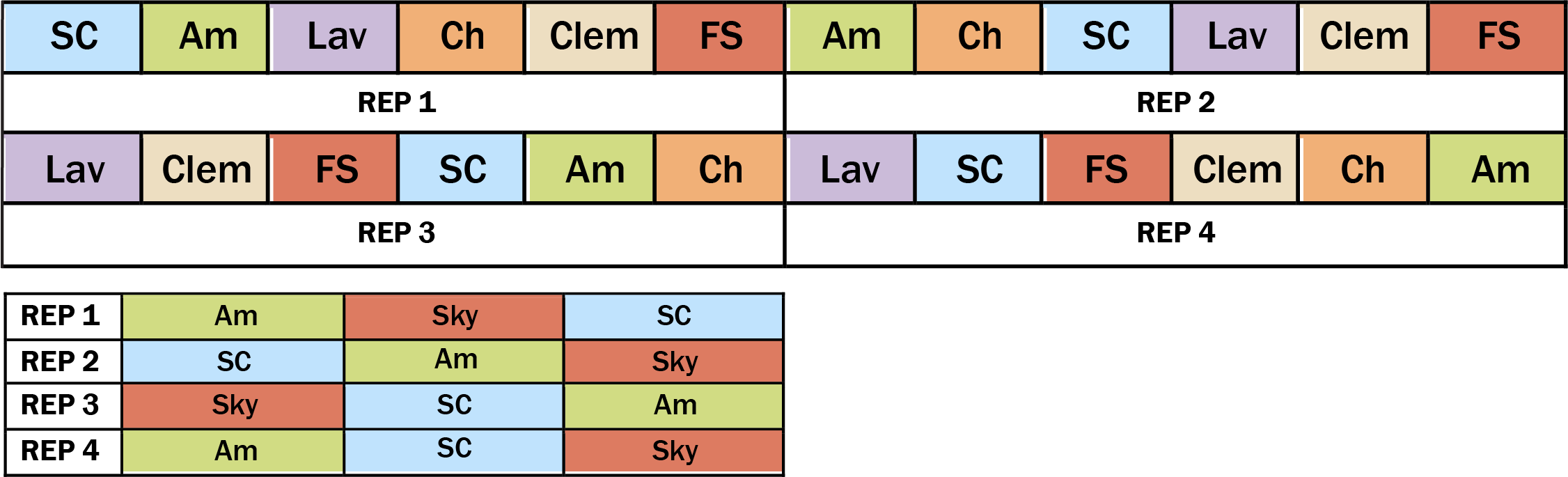
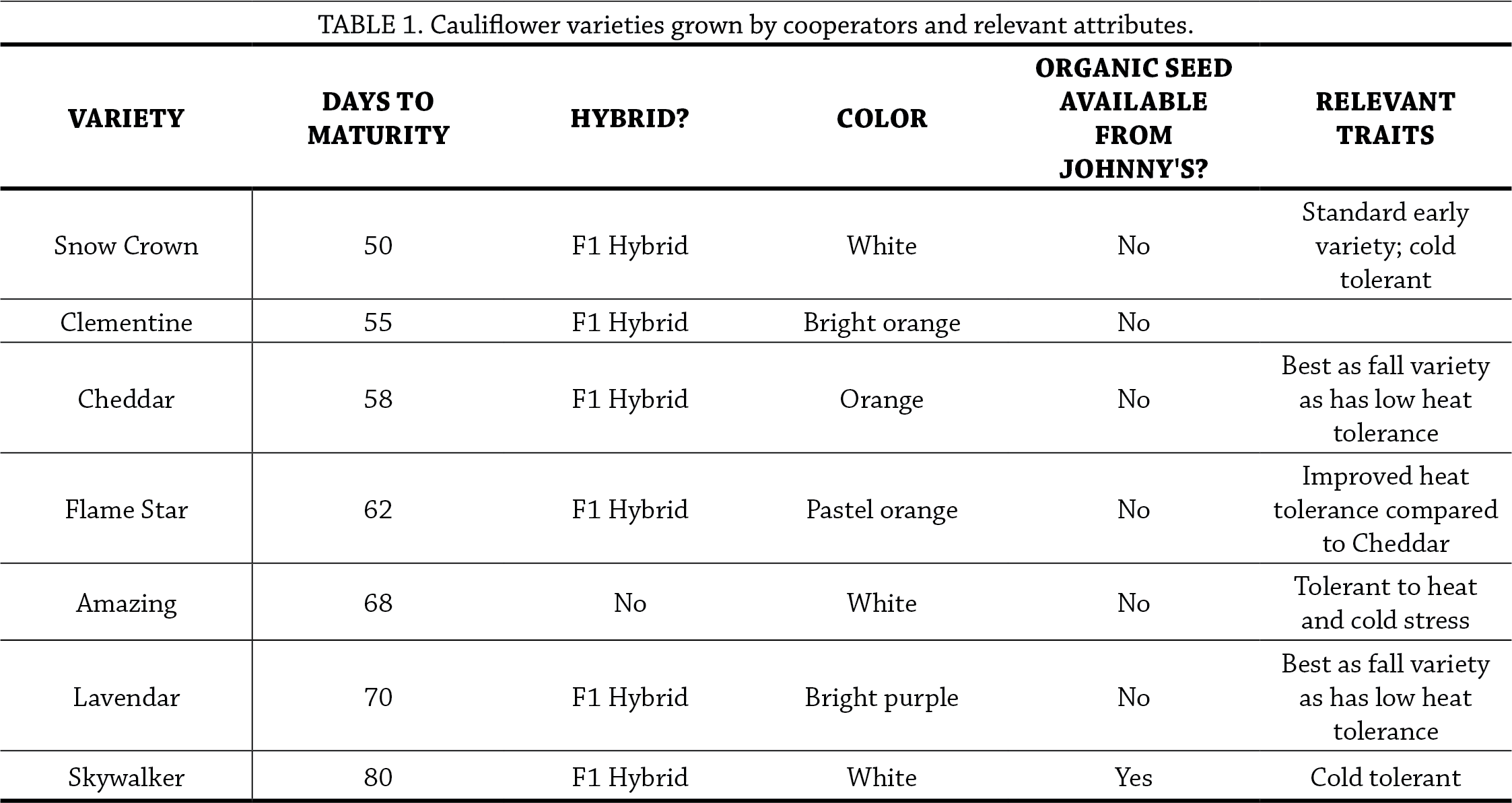
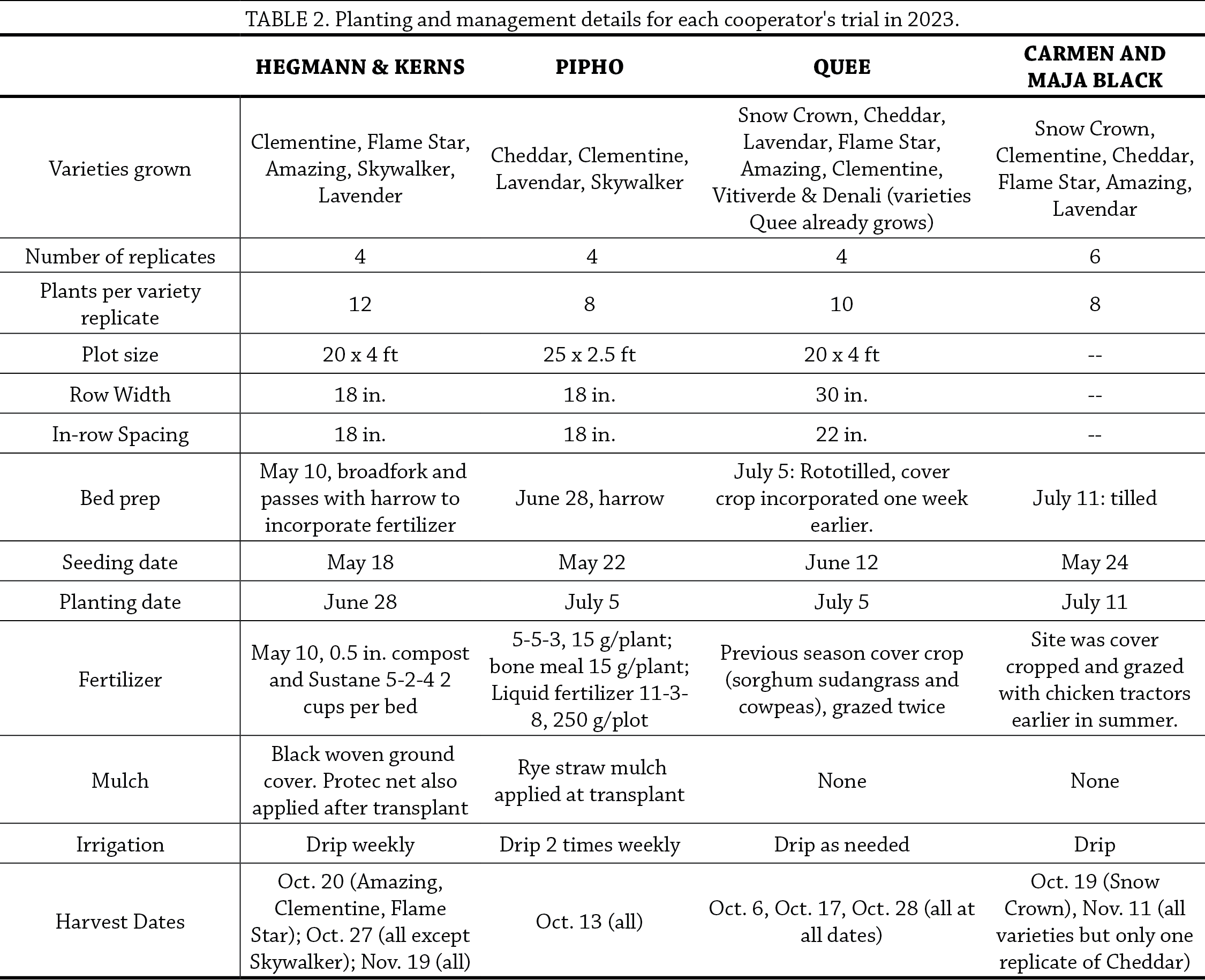
Design Cooperators tried the following cauliflower varieties: Snow Crown, Clementine, Cheddar, Flame Star, Amazing, Lavender, Skywalker (Table 1). Cooperators each chose varieties to grow from this list based on their individual preferences and needs (Table 2). Cooperators started seeds indoors and transplanted them in mid-to-late June on a single planting date. Each cooperator established at minimum four replicates of each selected variety; example experimental designs are shown in Figure A1. Treatment plot sizes and management details for each farm are shown in Table 2.
Results and Discussion
Conclusions and Next Steps
As previous cooperators trials on cauliflower varieties have shown, Snow Crown consistently yields better than most other cauliflower varieties in the fall, colorful varieties tend not perform as well as farmers might want and early seeding for transplants is key to getting a successful fall cauliflower crop. While some cooperators learned that they do not want to continue investing in fall cauliflower, others now feel more confident in trying some specific varieties on a larger scale. Quee and Pipho said that in future fall cauliflower trials, they want to also investigate pest and disease resistance in different varieties.Appendix – Trial Design and Weather Conditions