In a Nutshell:
- Hannah Breckbill, Emily Fagan and Jon Yagla wanted to see which potting soil produced the best transplants in each of their farms’ production systems, in order to determine how they should order potting soil in the future.
- Cooperators expected Vermont Compost, the most expensive choice, to perform better than Cowsmo and Beautiful Land Products.
Key Findings:
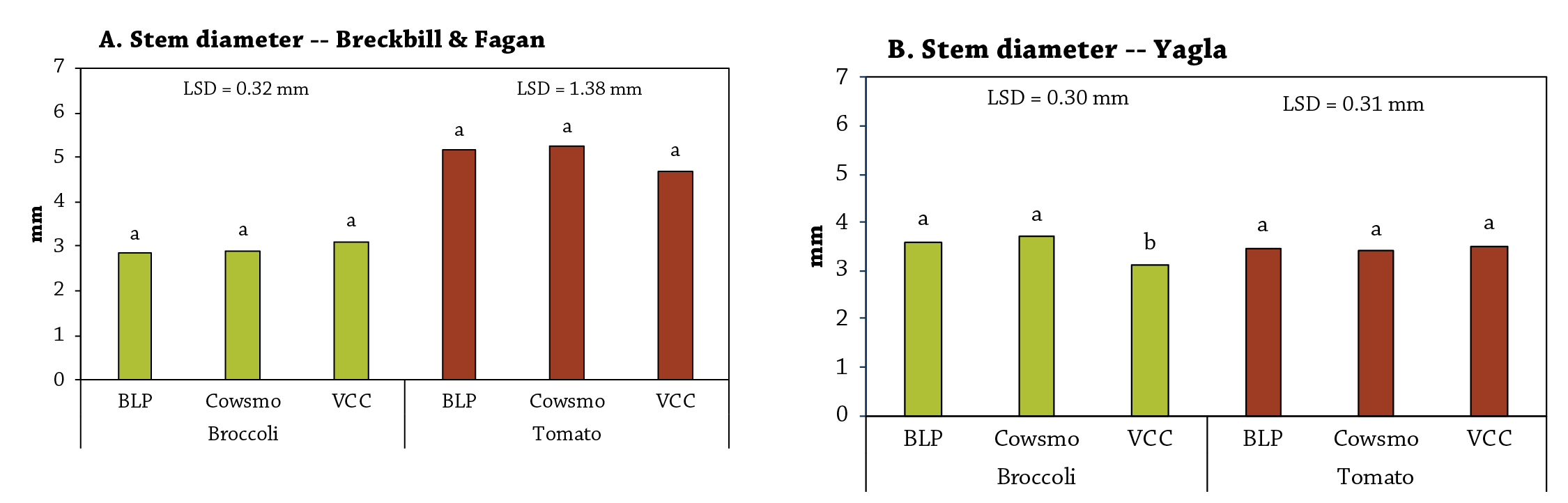
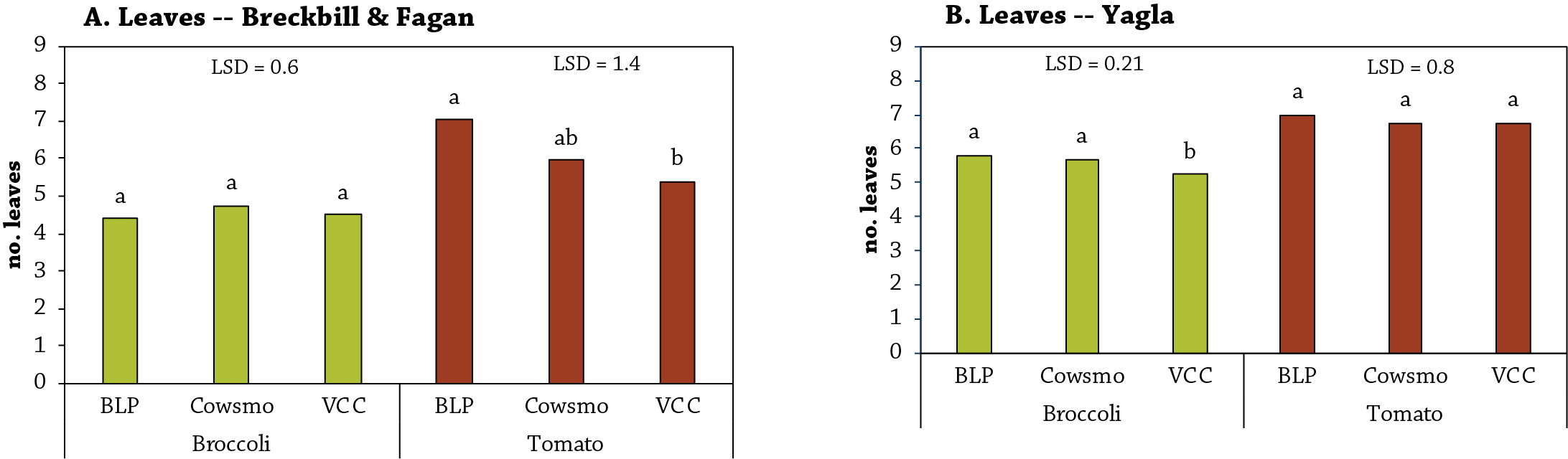
- At Breckbill and Fagan’s farm, the media did not statistically differ from one another. At Yagla’s, the Beautiful Land Products and Cowsmo soil outperformed Vermont Compost Company in stem diameter and number of leaves, but not in ease of work.
- Fagan will continue to bulk-order Cowsmo soil based on these findings, and all farmers have a better idea of what qualities they desire in potting soil.
Background
When growing vegetables that are seeded in a greenhouse and later transplanted into a field, the seed-starting media used is important to the initial resilience of these crops. Three brands of potting soil that are commonly used for these starter media in Iowa: Beautiful Land Products, Cowsmo and Vermont Compost Company. Beautiful Land Products is a local soil company out of West Branch, Cowsmo is a Wisconsin-based company that many farmers use (and is best for bulk orders), and Vermont Compost is an organic, high-quality potting soil and the most expensive of the three. Knowing the potting soil that each farmer prefers most will allow them to determine whether they should bulk order soil, purchase it from their local shop, or invest in a brand that is not local, but produces higher quality transplants.
Methods
Design
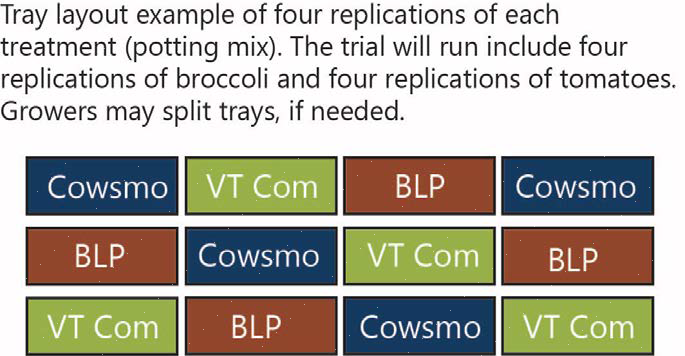
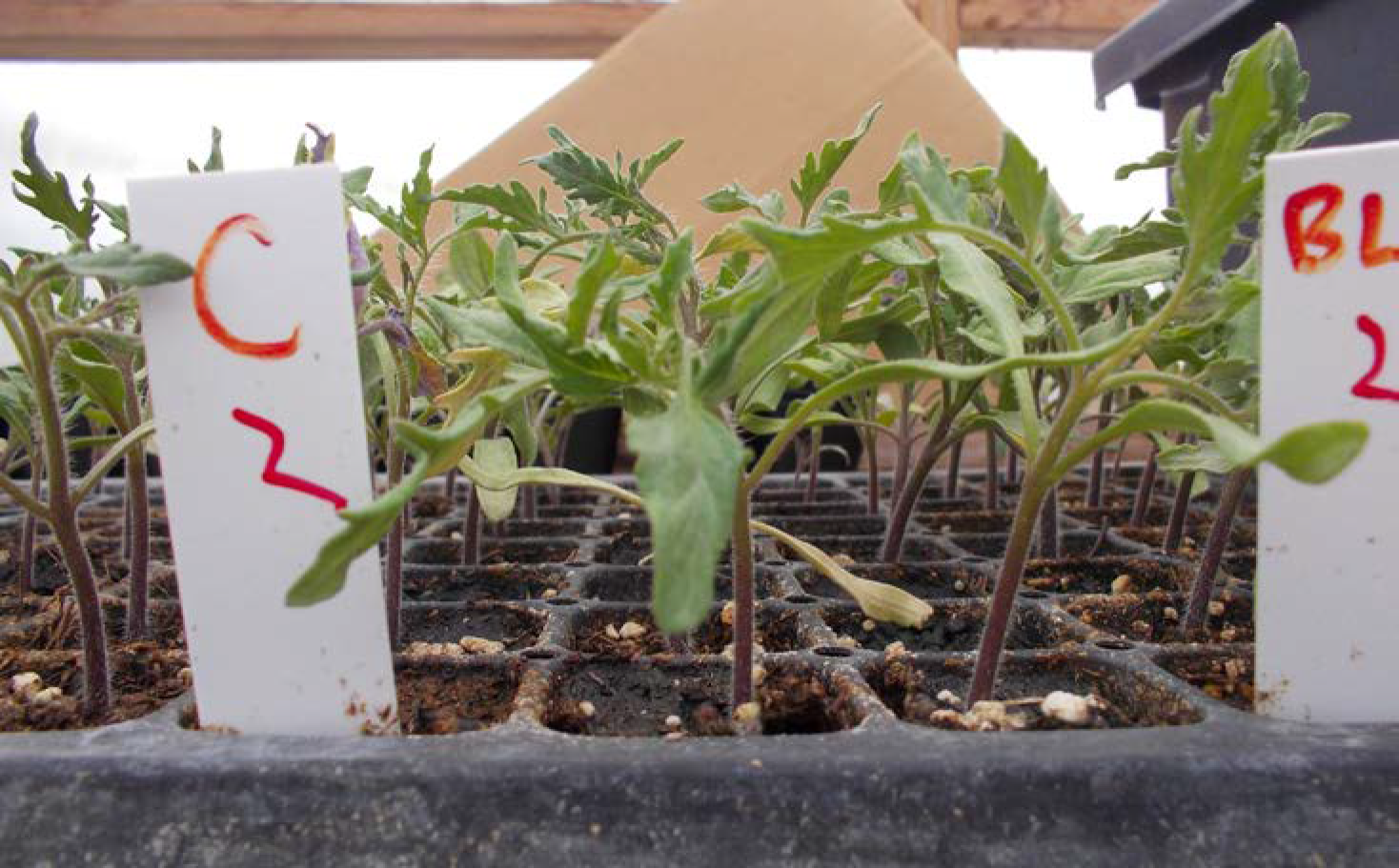
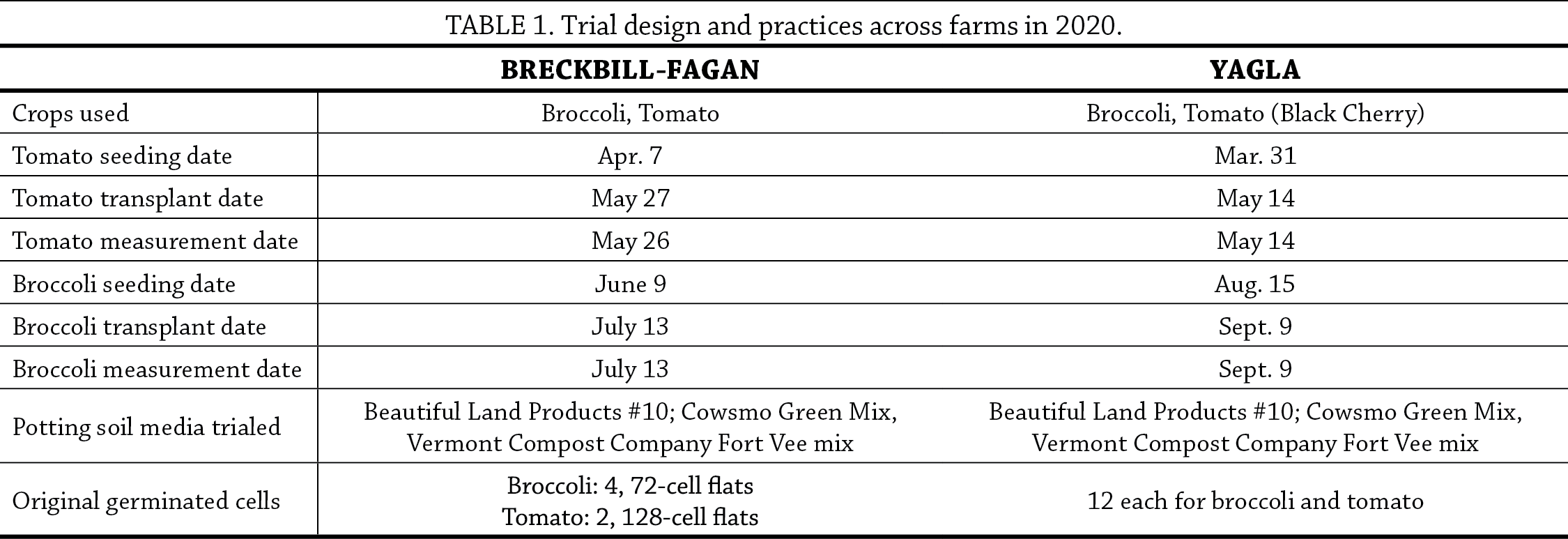
For both tomatoes and broccoli, cooperators prepared seedling trays in a randomized, replicated pattern of potting soil varieties. Cooperators could use any starting tray and blocks they normally used in their system, as long as it followed those guidelines (Figure A1). They used three different soils in their experiment: Beautiful Land Products (#10), Cowsmo (Green Mix), and Vermont Compost Company (Fort Vee mix). All of the mixes are seed starter or germination medias. Management information can be found in Table 1.
Results and Discussion
Potting soil evaluation
Before seeding broccoli and tomato, cooperators tested and evaluated each of the three brands of potting soil. For Breckbill and Fagan, the Cowsmo soil was the easiest and best to work with, especially for filling flats. For Yagla, the Vermont Compost Company soil was the best to work with in every category. Comprehensive evaluations are shown in Table 2.
 Germination rate
 was taken as a percentage of originally planted cells that germinated. Breckbill and Fagan only measured tomato germination rates at their farm, and found no significant difference in germination rate among the soils (Figure 1A). The broccoli at Yagla’s farm had a 100% germination rate regardless of potting soil (Figure 1B). Yagla’s tomato plants grown with Vermont Compost had a slightly better germination rate than the others, though we were not able to confirm this statistically.
Germination rate
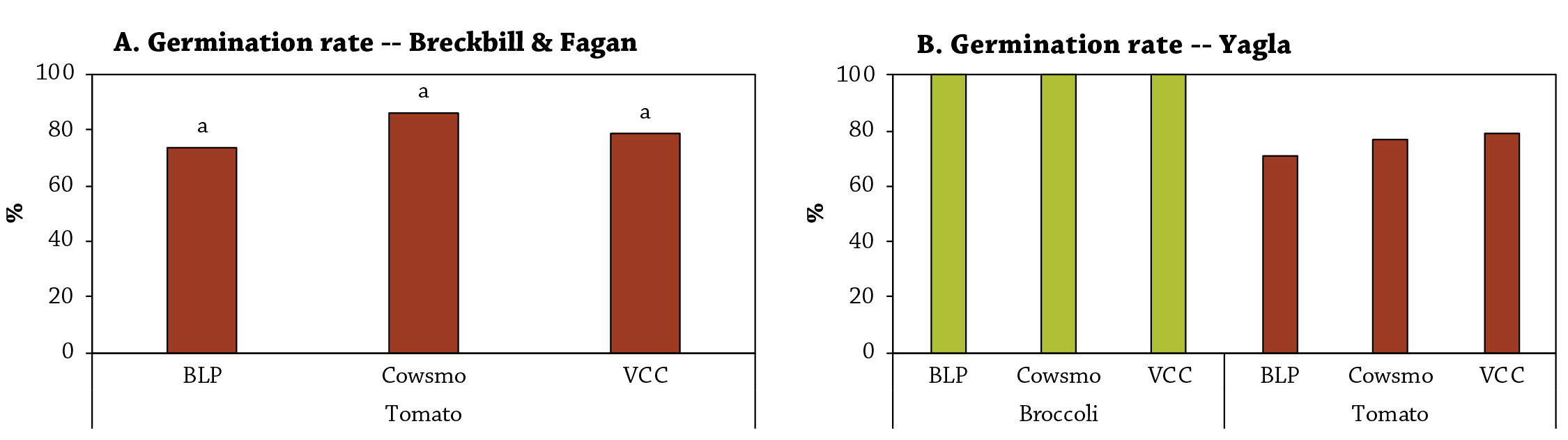
Germination rate was taken as a percentage of originally planted cells that germinated. Breckbill and Fagan only measured tomato germination rates at their farm, and found no significant difference in germination rate among the soils (Figure 1A). The broccoli at Yagla’s farm had a 100% germination rate regardless of potting soil (Figure 1B). Yagla’s tomato plants grown with Vermont Compost had a slightly better germination rate than the others, though we were not able to confirm this statistically.
Conclusions and Next Steps
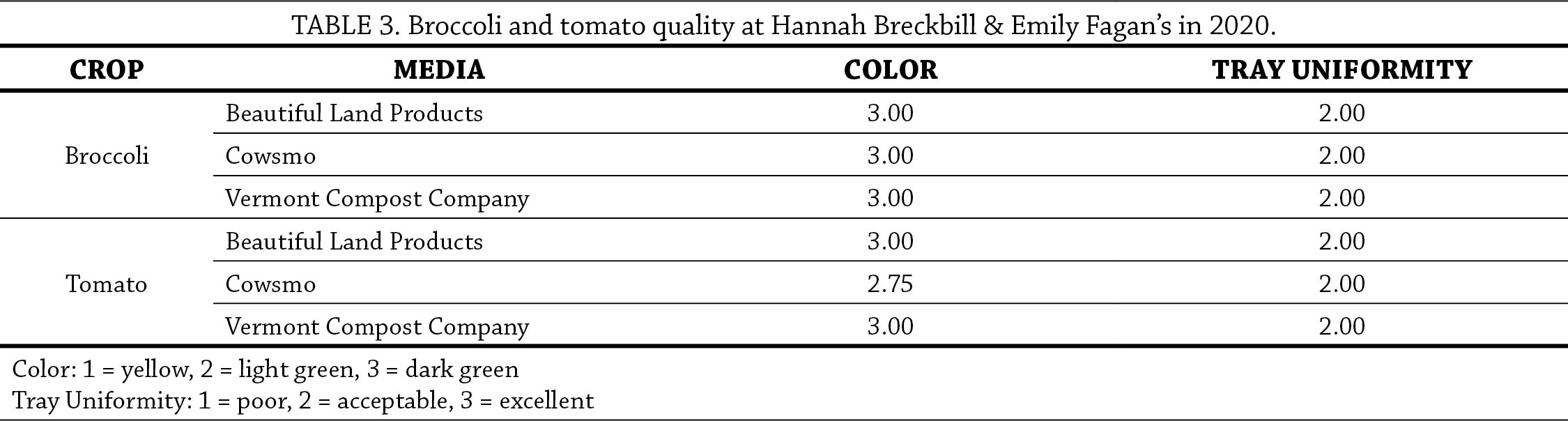
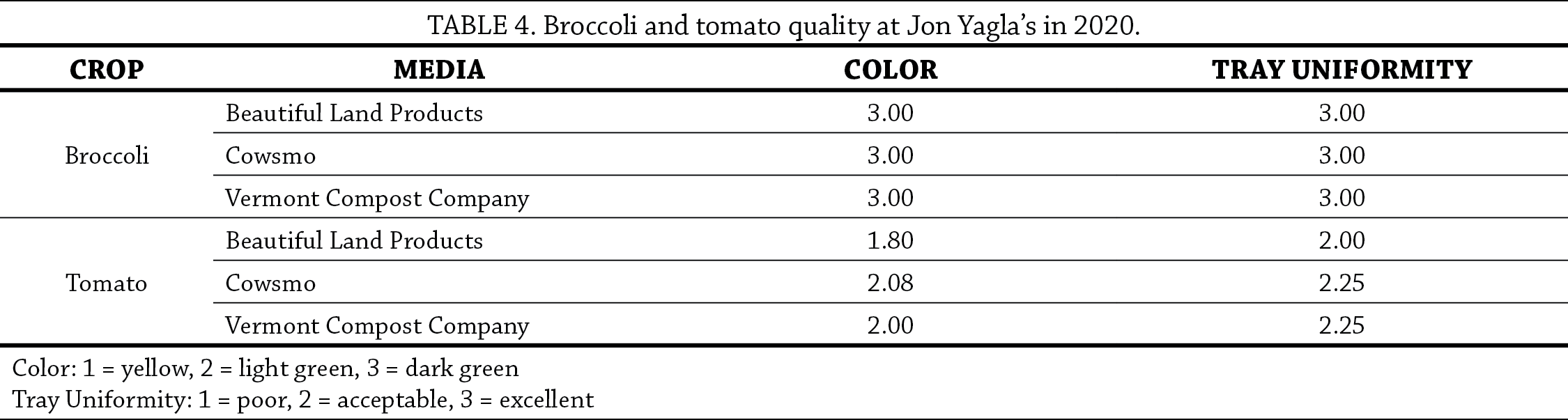
Cooperators were curious about which potting soils would work best for growing seedlings before transplant. They tested three products and Vermont Compost soil was expected to do significantly better than the other varieties due to higher cost. On Yagla’s farm, the Vermont Compost was the best soil to work with initially, and it had the highest germination rate, however it produced plants with thinner stem diameters and fewer leaves. Cowsmo had better color and good uniformity compared to Beautiful Land Products and Vermont Compost, but was one of the hardest for Yagla to work with. “I was pretty surprised overall that based on our measurements and observations it didn’t seem like Vermont Compost outperformed. They all seemed pretty similar,” Yagla said at the Cooperators’ Meeting in December 2020.

Appendix – Trial Design