In a Nutshell:
- Heat decreases radish marketable harvest yield and quality, causing plants to bolt, roots to get woody, and flavor to get sharp and bitter.
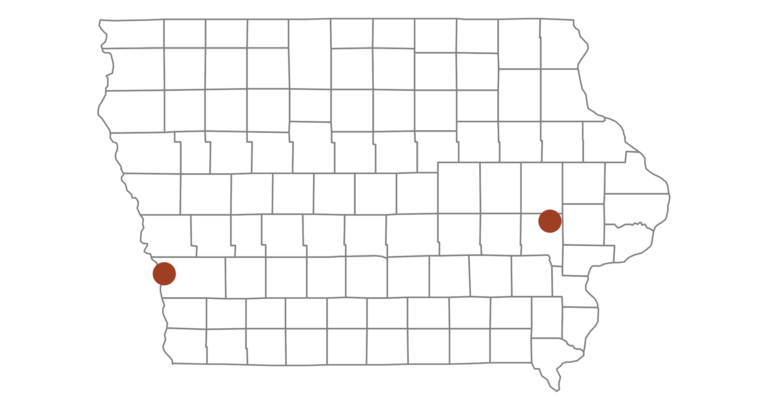
- Carmen & Maja Black and Terry Troxel tested 7 varieties of radishes for their heat tolerance, investigating whether they could be planted as summer radishes to meet summer demand for fresh local vegetables.
Key Findings
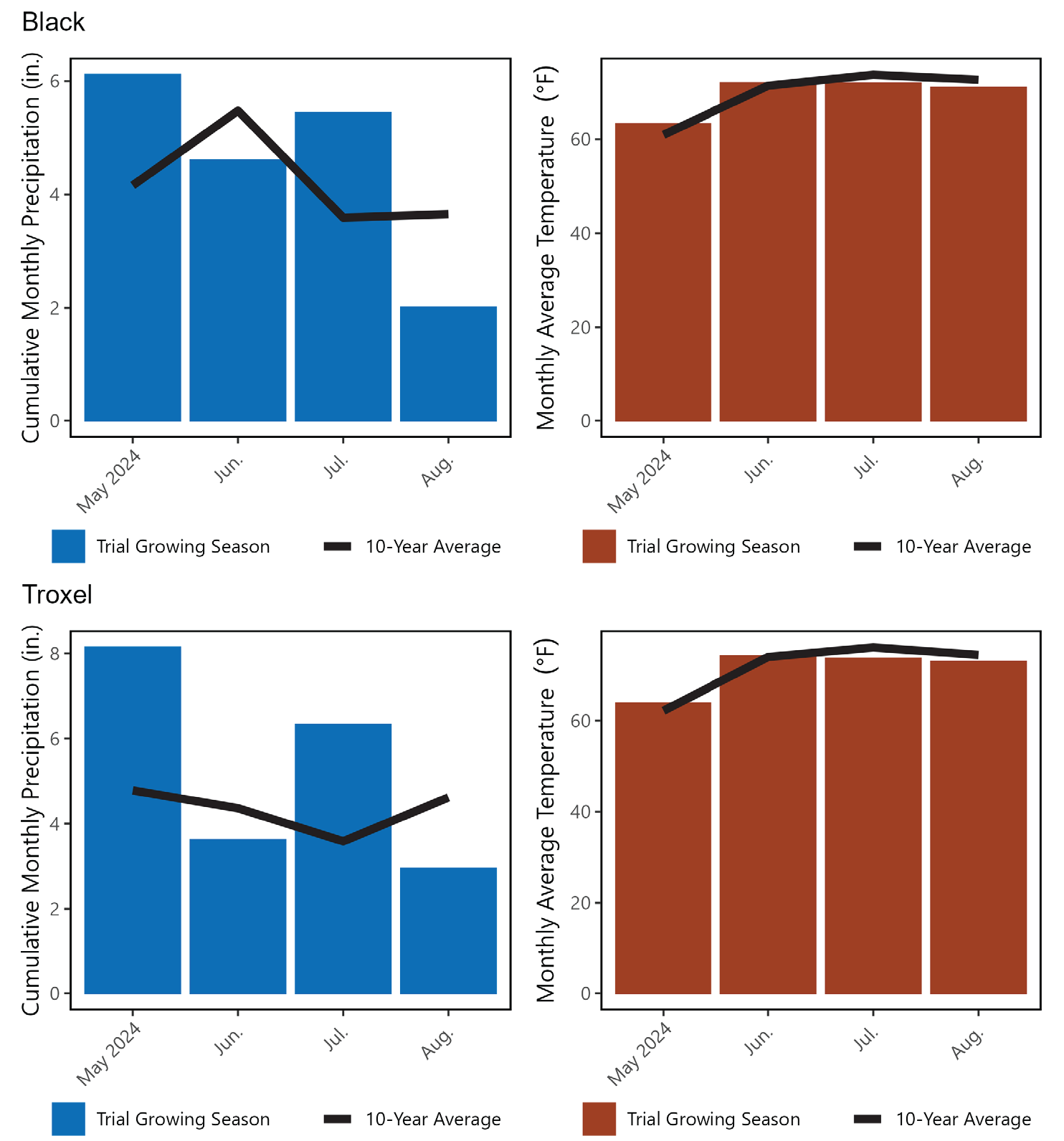
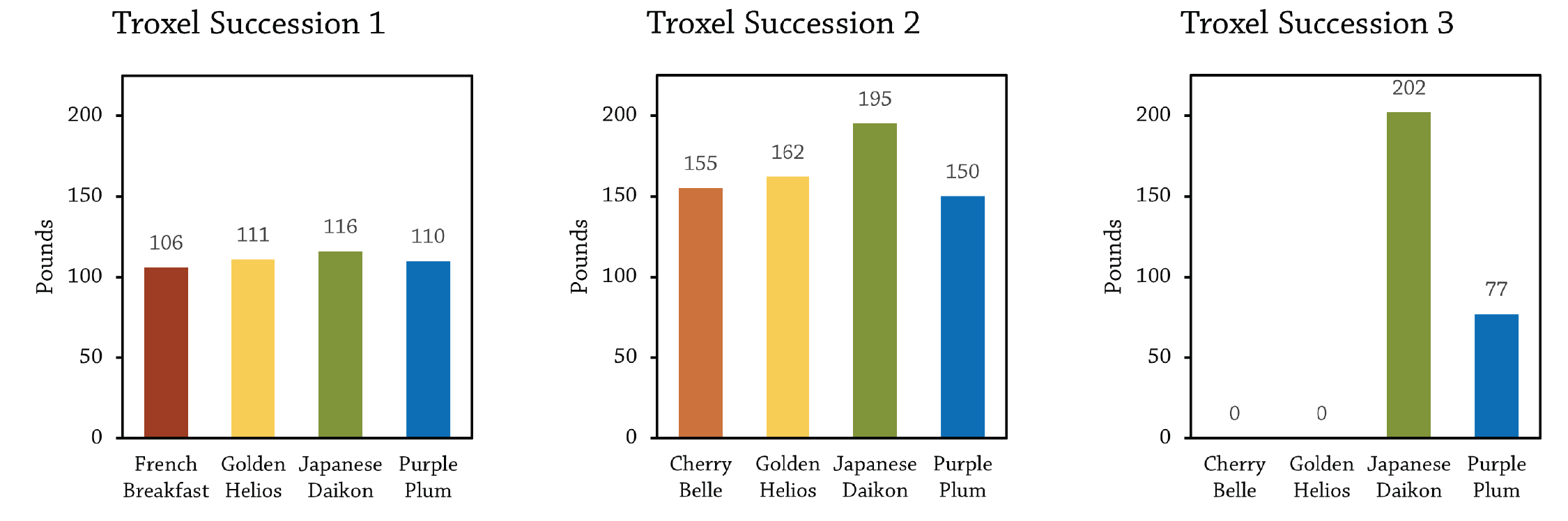
- Troxel, who harvested throughout the summer, found that high August temperatures drove down yields due to bolting.
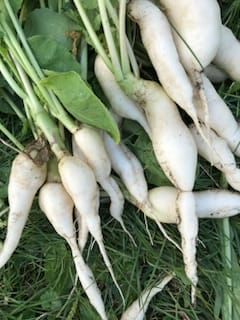
- Daikon stood out for Troxel as heat-tolerant and high yielding.
- The Blacks had the highest yields from Donato.
Background
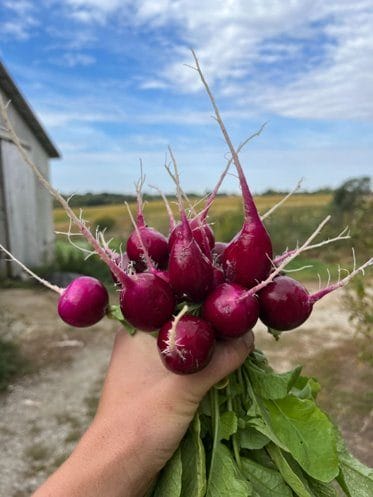
Heat tolerance has been the subject of previous PFI trials for broccoli, head lettuce and cabbage [1], [2], [3]. This year the focus was on radishes, as Iowa farmers aim to establish optimal practices to grow local produce throughout the summer. Radishes grow well in cooler conditions. Heat and drought conditions rob the swollen taproot of the moisture which makes it juicy and tender. Heat stress also triggers bolting in radishes, when the plant shifts life-strategy paths, supporting flowers and going to seed. This reduces the amount of energy that the plant stores in the root, again reducing the quality of taproot [4]. Cooperators trialed several different strains of radishes to see which would best handle the summer heat. Troxel hoped to add diversity to her cropping system and CSA lineup. Carmen Black cited seed companies’ focus on coastal production areas as a reason for suboptimal applicability and accuracy of advice, prescribed practices, and varietal traits. Conducting this study in Iowa, she hoped to identify varieties that would perform well in the local conditions. There are several possible criteria that can be used to evaluate the radish varieties. These include:- Taste – this can range from mild to peppery; hot growing conditions tend to lead to more ‘hot’, peppery, bitter, radishes
- Radish appearance – the ideal is blemish-free and regularly shaped spheres, with vibrant exterior colors and white flesh
- Field hold – radishes with a wider window before they start to get woody or mealy make it easier to have a more marketable harvest
- Even maturation and harvest – reduces the work of managing readiness within the plot and the risk of missing the harvest window for part of the crop
- Stem strength – this is important for ‘bunching’ the radishes for sale and distribution
- Heat tolerance – as noted above, heat negatively affects several of these criteria. The goal of this trial is to identify radishes that can be grown in the Iowa summer.
Methods
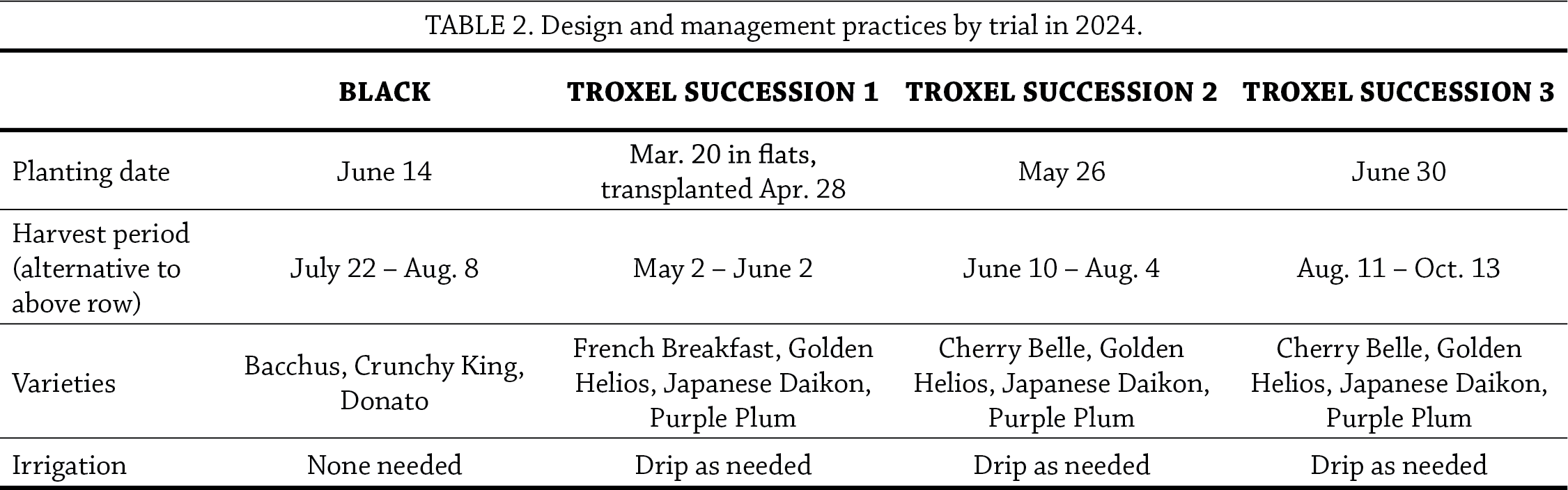
Design The cooperators tested the following radish varieties: Bacchus, Crunchy King, Donato, Golden Helios, Purple Plum, Cherry Belle, and Japanese Daikon (Table 1). The plot layouts used in the Blacks’ experiment are shown in Table A1. Troxel planted three successions of radishes between April and June but did not replicate variety treatments.Treatment plot sizes and management details for each farm are shown in Table 2.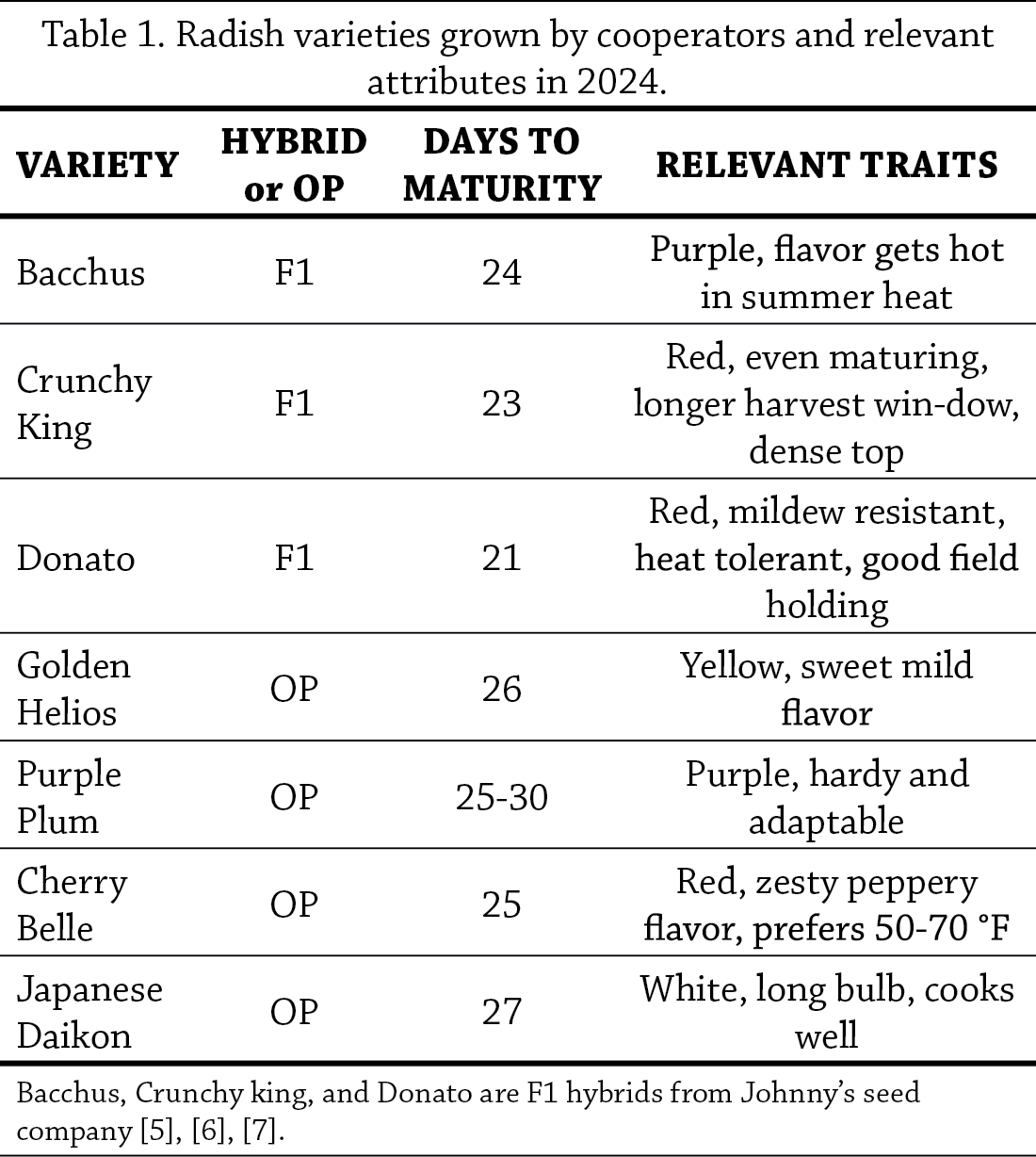
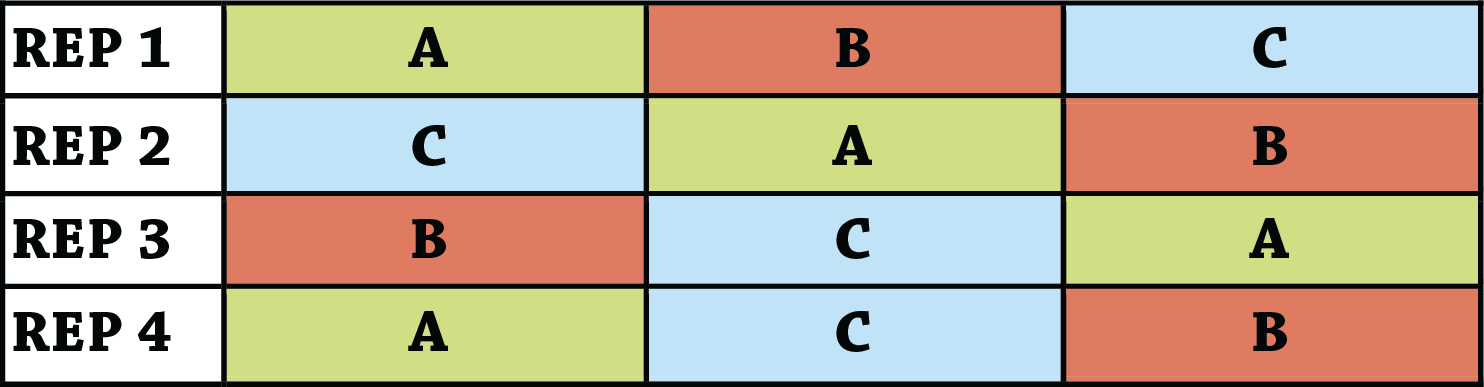
 Measurements Both farms collected yield data by plot, measuring the weight of all marketable radishes, with their tops, from each plot. The Blacks also weighed those radishes that were harvested that were not marketable, categorized as ‘seconds’. Troxel evaluated the strength of the stems as either: 1–unacceptable, 2–acceptable, or 3–preferred. Troxel also documented the proportion of plants of each variety that had bolted at harvest. Data analysis We used Fischer’s LSD at a 95% confidence level to determine if there were significant differences between varieties. For each metric, the difference between any two varieties was compared with the LSD. A difference greater than or equal to the LSD indicates the presence of a statistically significant treatment effect, meaning one treatment outperformed the other and the farmer can expect the same results to occur 95 out of 100 times under the same conditions. A difference smaller than the LSD indicates the difference is not statistically significant and the treatment had no effect. We can perform this analysis because the cooperators had completely randomized and replicated experimental designs (Figure A1). We could not perform statistical analyses on Troxel’s results due to lack of replication.
Results and Discussion
Black The Blacks had significantly higher marketable yield from Donato, compared to Crunchy King and Bacchus (Figure 1). Crunchy King had significantly less seconds than Donato and Bacchus (Table 3).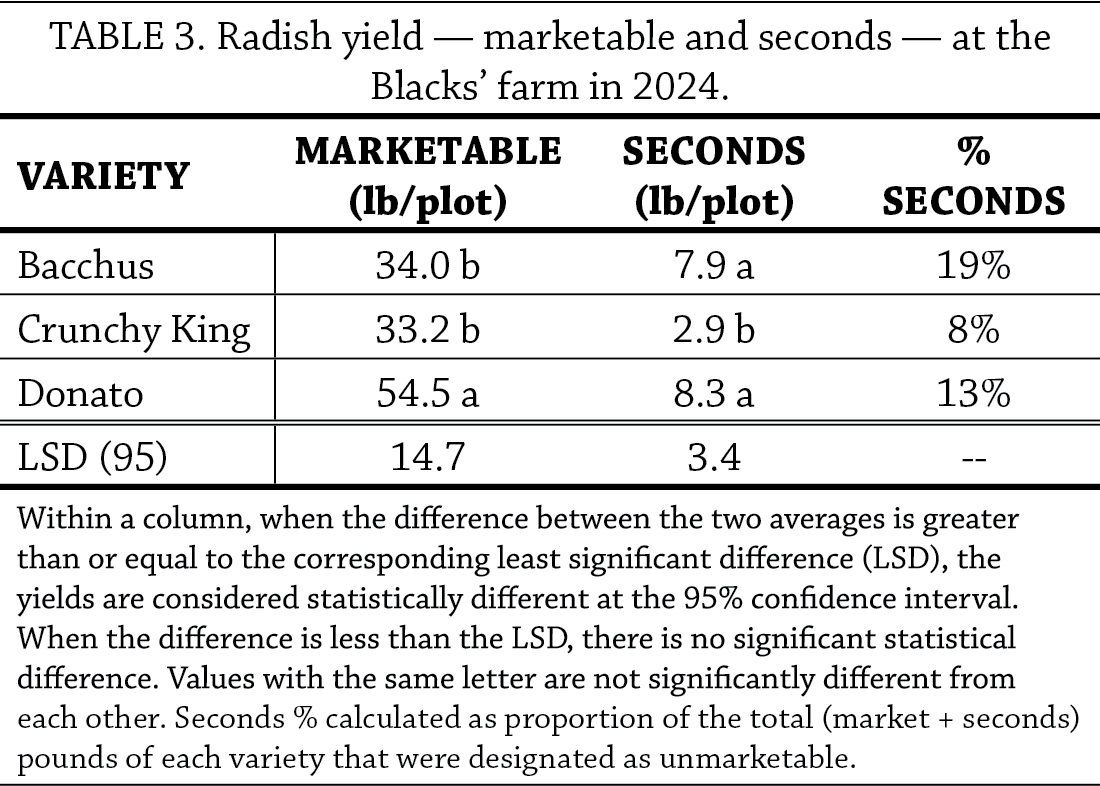

Conclusions and Next Steps
Carmen & Maja Black found that they had a better harvest from the June planted radishes than from their more traditional April planting (not reported as part of this trial). Donato was the highest yielding variety, but all three varieties performed well. Carmen Black mentioned it was nice to have both purple and red radishes in bunches. In the future they will allocate more space in the crop rotation for June and July radishes than for March and April radish plantings. Troxel was pleased with the performance and market acceptance of Daikon radishes. Participating in the trial gave her experience growing and marketing radishes that would enable her to expand the role radishes play in her crop rotation going forward.Appendix – Trial Design and Weather Conditions