In a Nutshell:
- There are close to 1.7 million acres of CRP land in Iowa, much of which could be utilized as grazing land, but strict grazing restrictions apply. Research shows that properly managed grazing improves grasslands and contributes to soil health.
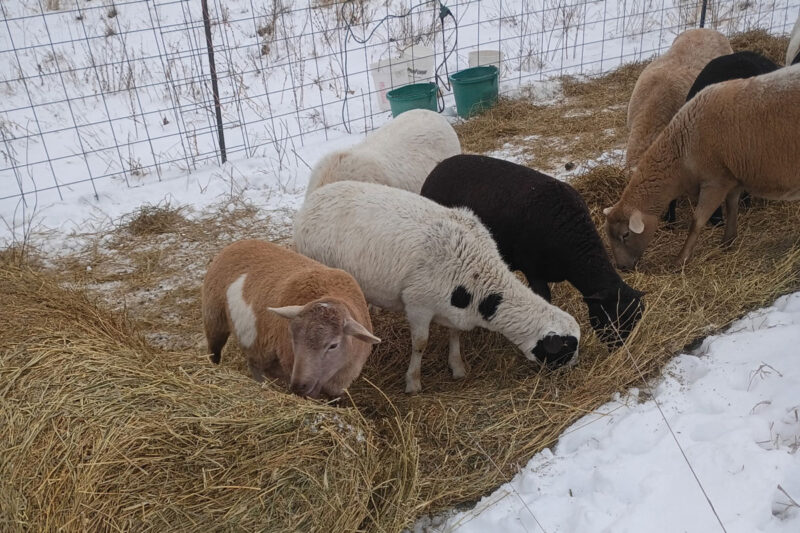
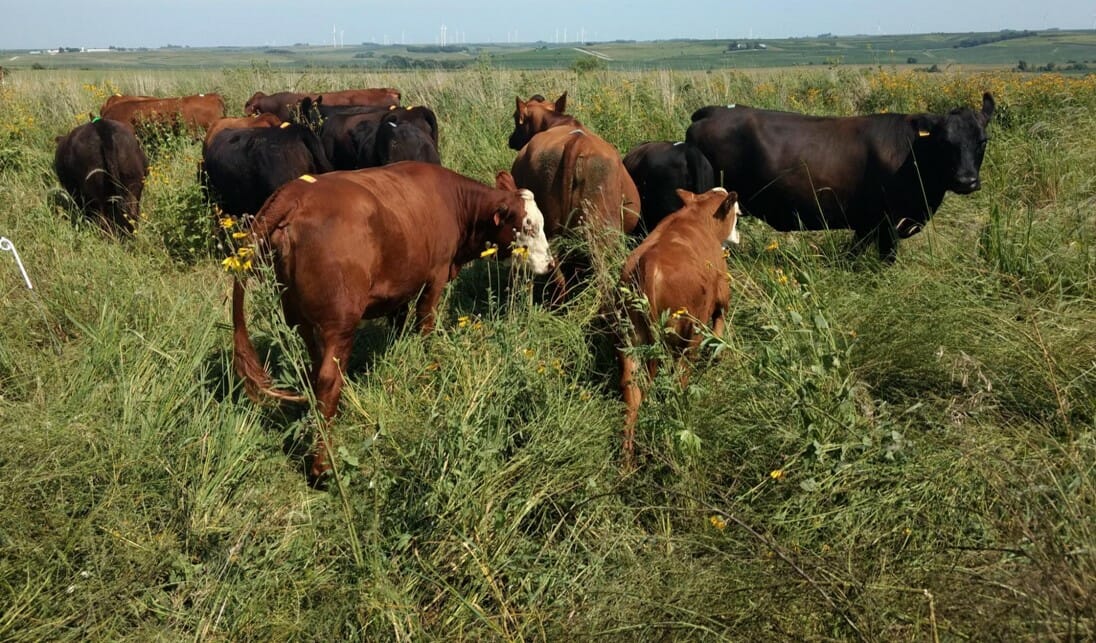
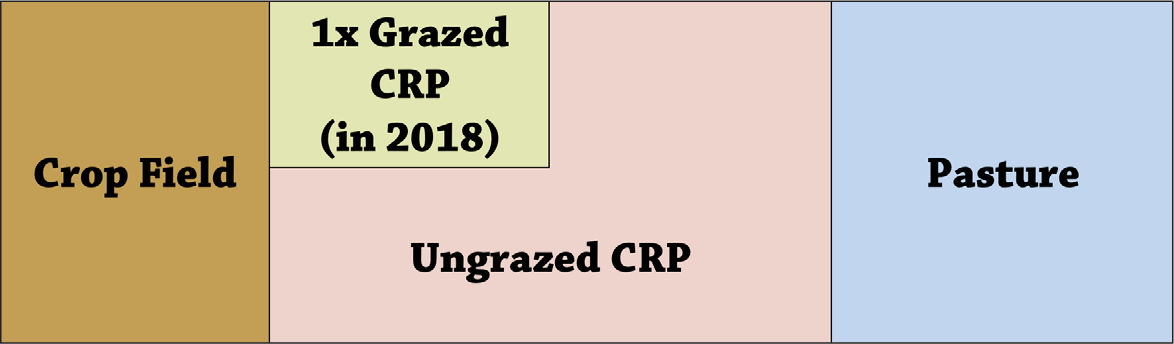
- Dave and Meg Schmidt wondered if grazing their CRP land would increase soil health. They grazed a portion of their CRP with cattle for two weeks in Aug. 2018 and then monitored soil health metrics for three years. For comparison, they included three additional fields: grazed perennial pasture, ungrazed CRP land and a row-crop field.
Key Findings:
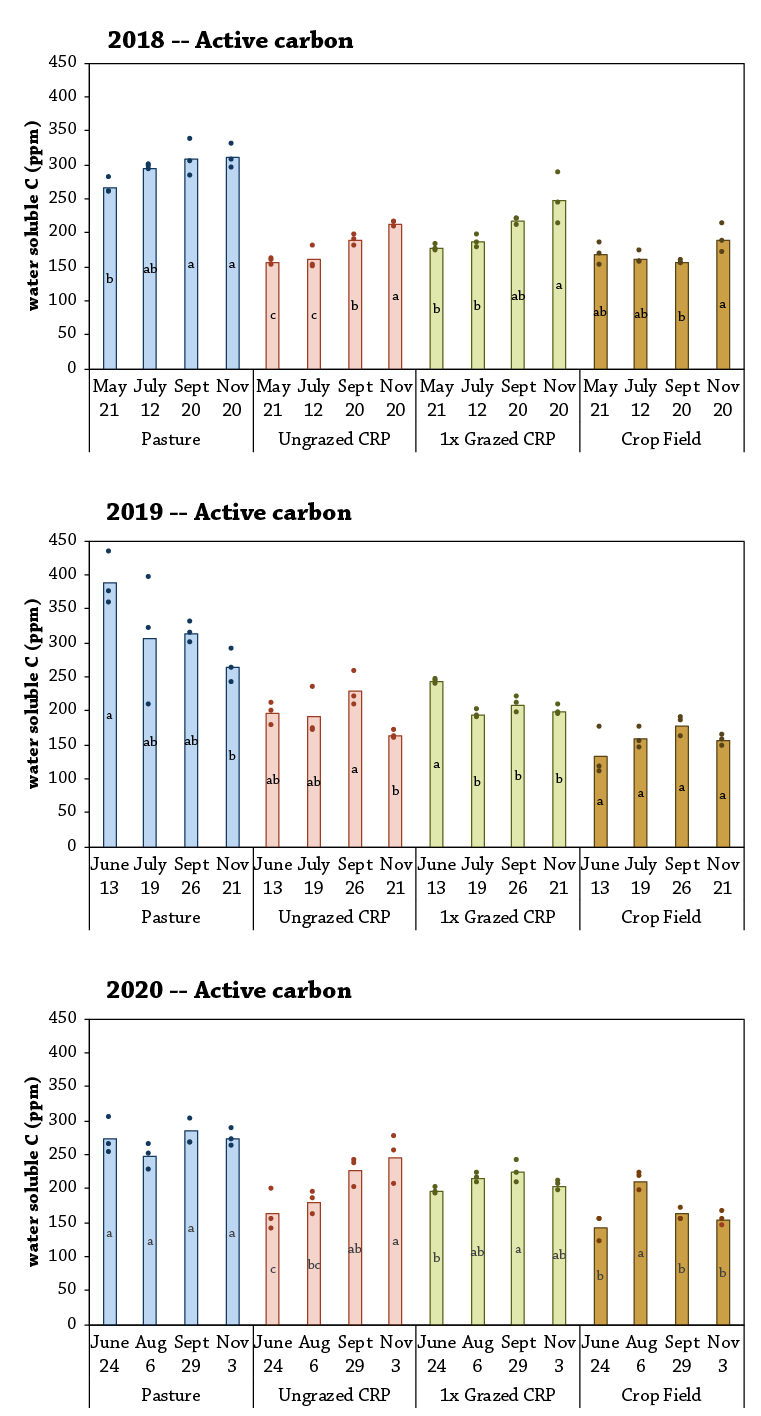
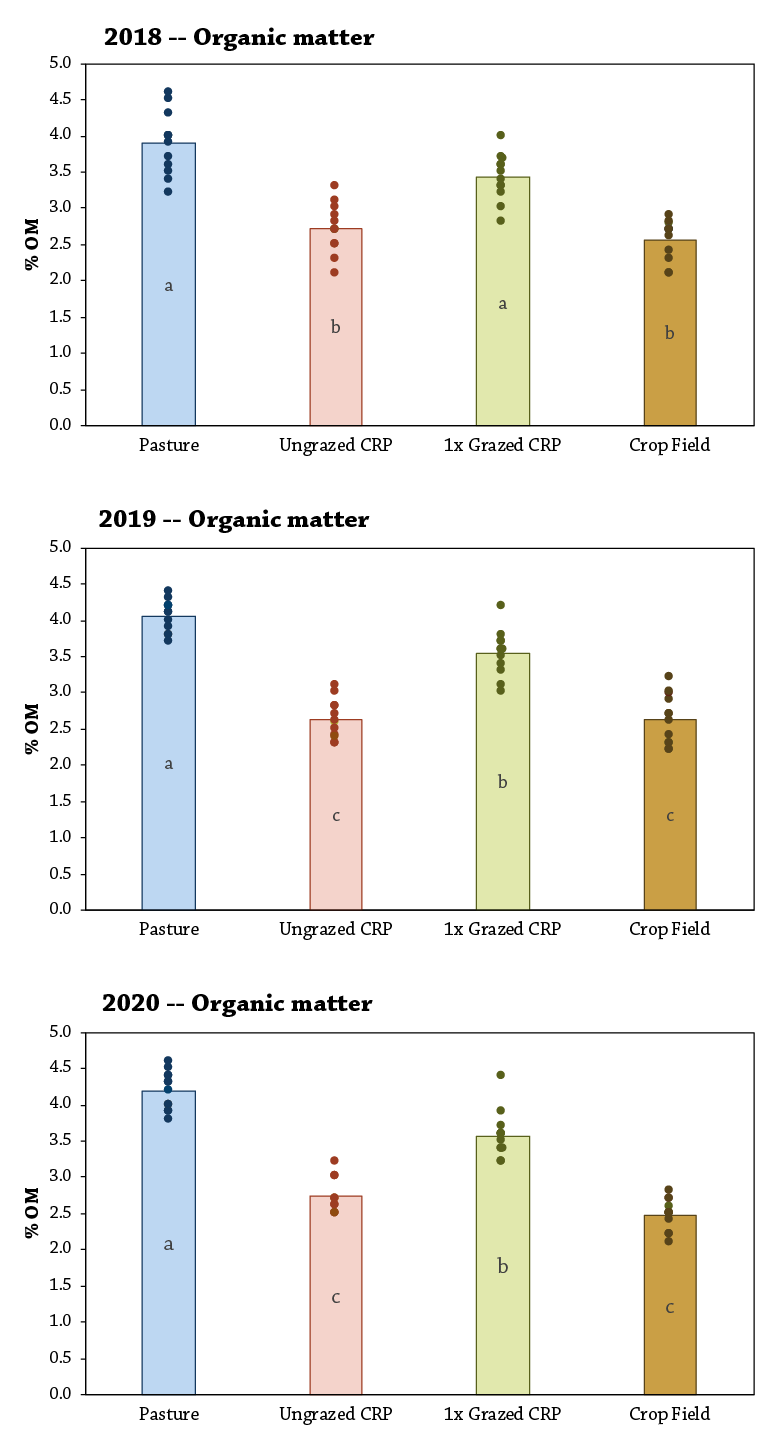
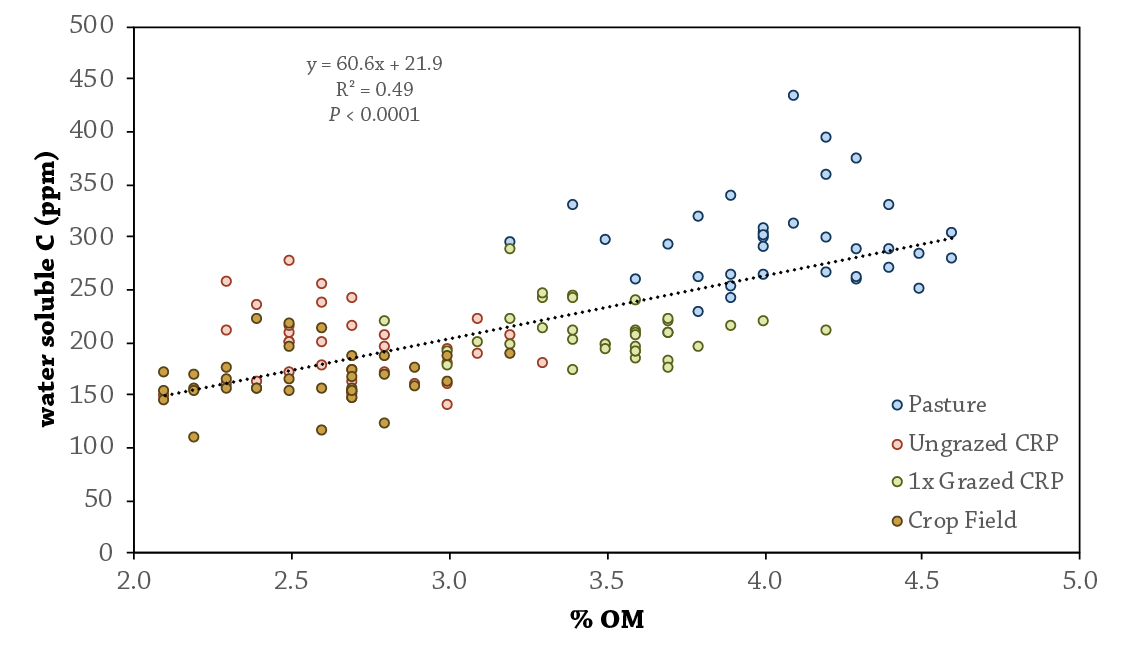
- The grazed perennial pasture ranked highest for microbial respiration, active carbon and soil organic matter. The crop field ranked lowest. The grazed CRP ranked higher than the ungrazed CRP, but had more organic matter from the start of the trial.
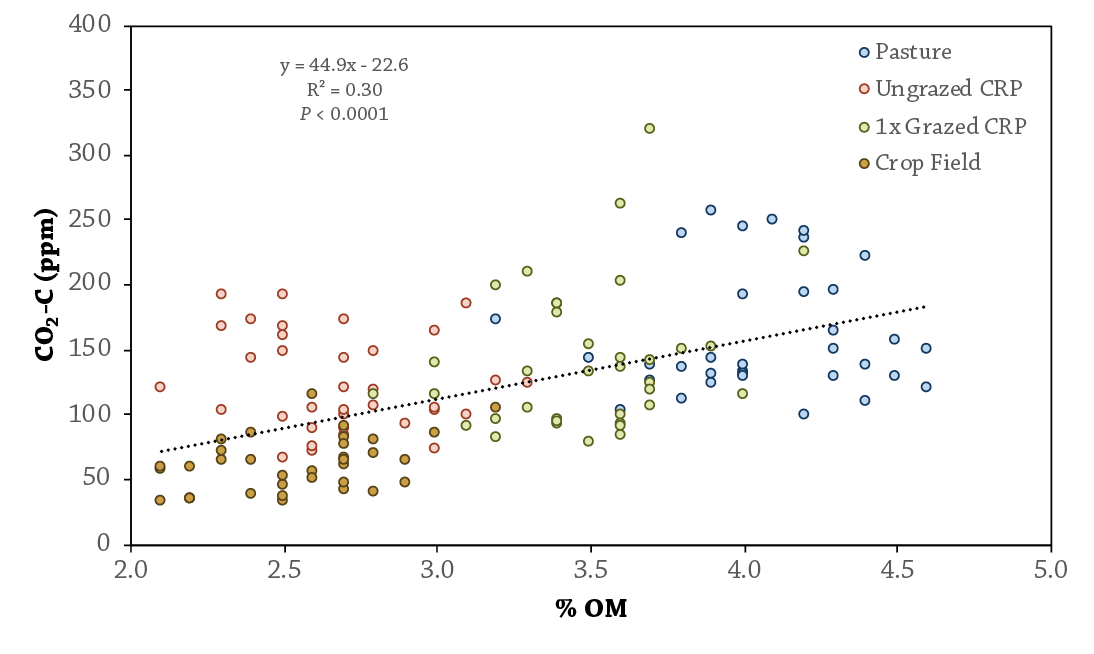
- Our data shows that with more organic matter, both microbial respiration and active carbon increase.
- The CRP grazing period, from August 2-16, 2018, may not have been long enough for animal impact to affect soil health indicators, but grazing did not have a detrimental effect on soil health in CRP land.
Background
The Conservation Reserve Program (CRP), administered by the Farm Service Agency (FSA), encourages farmers and landowners to convert highly erodible cropland or other environmentally sensitive acreage to vegetative cover, such as native grasses, in exchange for an annual payment.[1] The primary goals of the CRP program are to reduce soil erosion and provide habitat for grassland birds. 1,674,453 acres of Iowa land is enrolled in the CRP program.[2]
Methods
Design
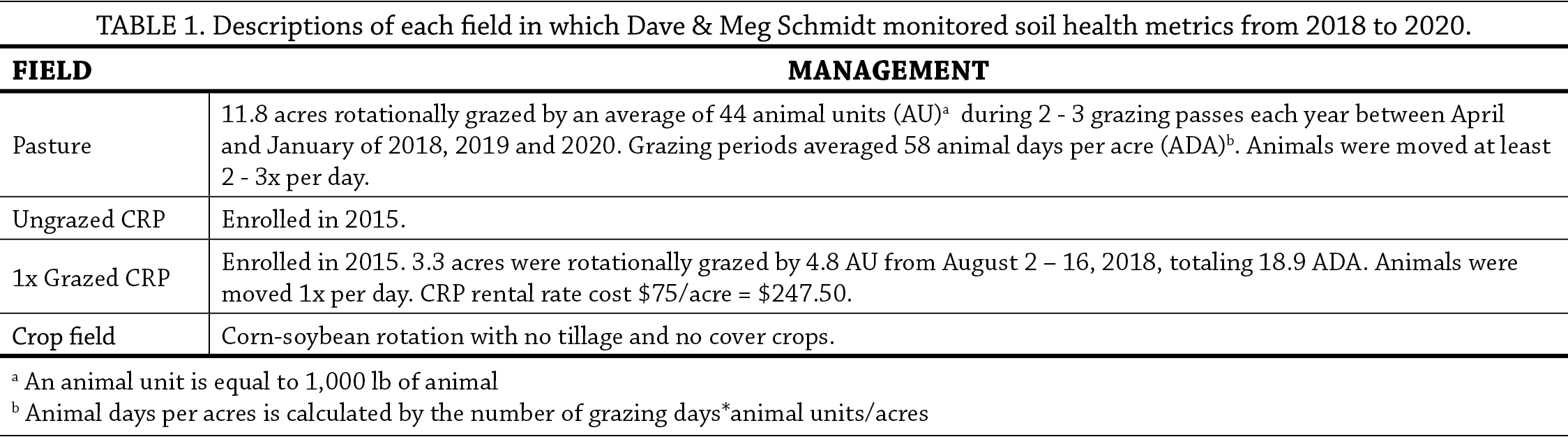
The Schmidts established four fields under different management from which they monitored soil health metrics (Table 1).
 Soil samples were analyzed for microbial respiration by determining the burst of CO2-C following rewetting of dried soil using an infrared gas analyzer. Other soil indicators measured included water soluble carbon (active C) and organic matter (OM).
Results and Discussion
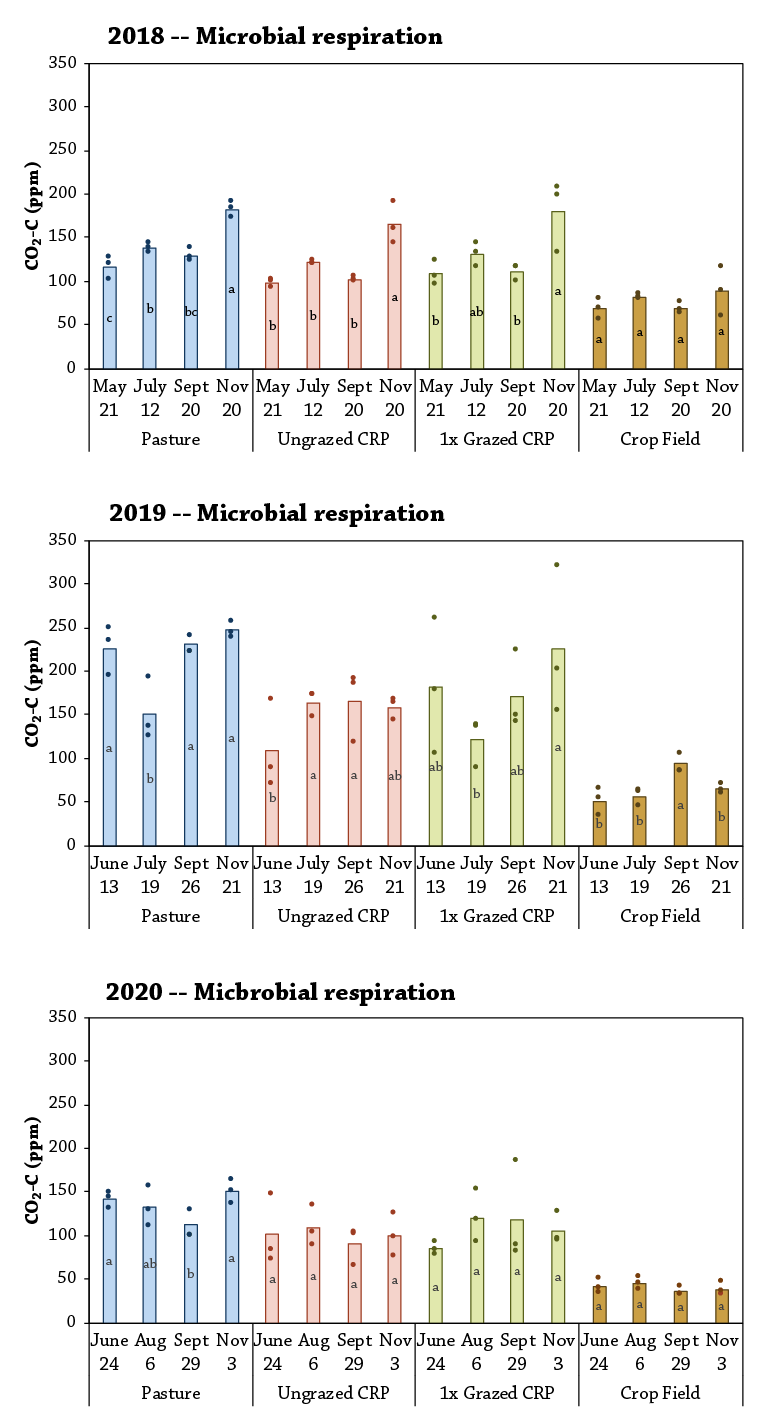
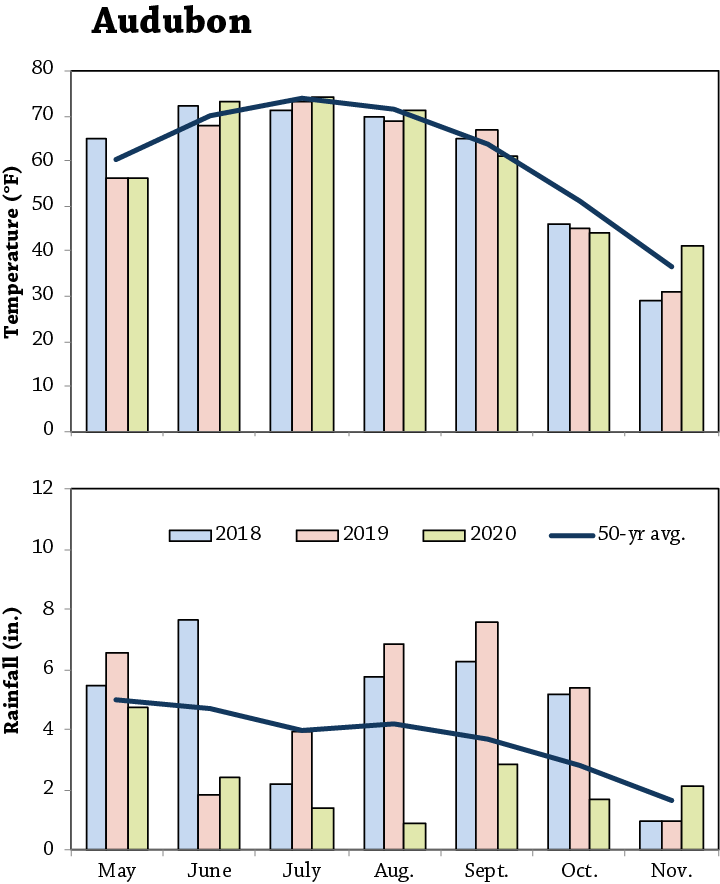
Microbial respirationFigure 1 shows that microbial respiration in each field tended to fluctuate through the year; except in 2020, presumably due to severe drought (Figure A2) that likely limited microbial activity in all fields. In 2018, microbial respiration increased through the year for the three fields in perennial vegetation (pasture, ungrazed CRP, grazed CRP); in the row-crop field, respiration did not change through the year. In 2019, ungrazed pasture behaved similarly to 2018. The pasture and the CRP that was grazed in 2018, however, displayed a different pattern; namely, between the first (June) and second (July) sample dates. That the pasture and grazed CRP displayed similar patterns to one another could be a function of the similar soil types (Table 2). The row-crop field remained consistently low in microbial respiration all three years relative to the other fields in perennial vegetation. Overall, the fields in perennial vegetation had more fluctuation and higher rates of microbial activity than the row-crop field, presumably due to increased abundance and species diversity of microbes in perennial systems.
Conclusion and Next Steps
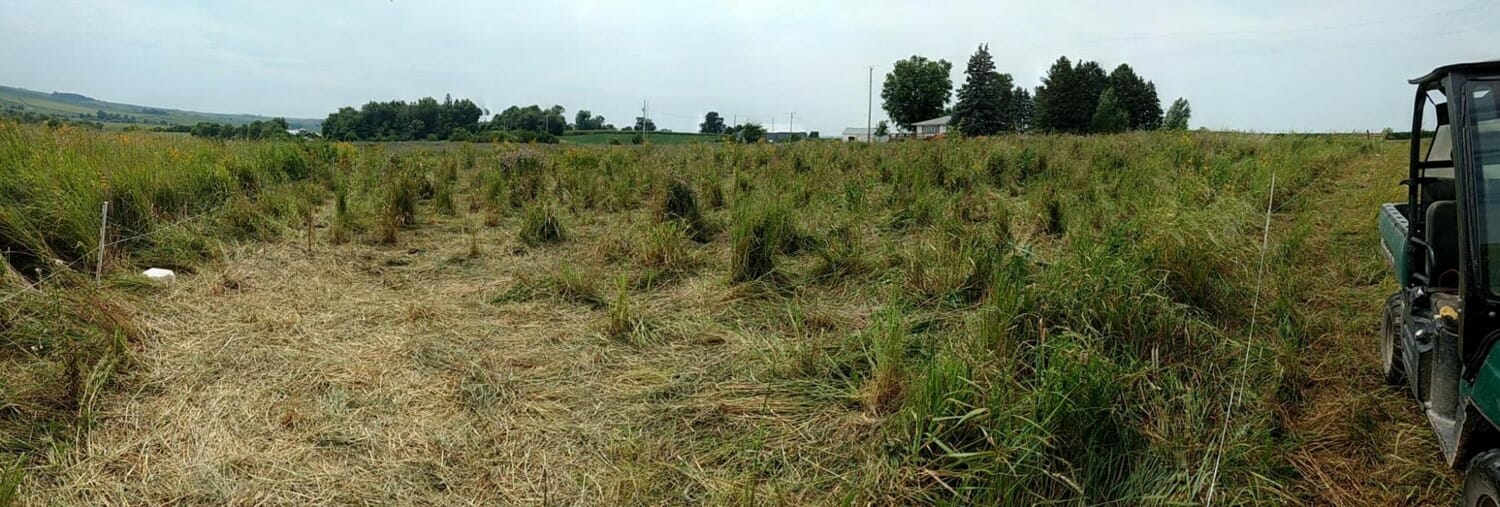
Although the results do not indicate that grazing a section of a CRP field made a significant difference in soil health over three years, Dave Schmidt believes soil health will improve over the long term. “The key is to really hammer it like the buffalo did and then leave it for a year, but that's just about impossible in terms of [CRP] management. The cattle had to be kept at a lot lower density since the vegetation was tough and woody in August,” explained Schmidt. Importantly, this research showed that grazing did not have a detrimental effect on the CRP field. In drought years, such as 2020, the FSA allows emergency grazing of CRP acres with no payment reduction.[6] Schmidt thinks, “CRP is very valuable during a drought, but marginal when it's not rent-free. Even if we were allowed to graze out of season I think the animal days per acres would be a lot lower than in cool-season perennials, although average daily gains are probably similar around late June to mid-July.” In conclusion, the CRP grazing period (2 weeks in August 2018) may not have been long enough for animal impact to make a difference in soil health indicators. When comparing all four fields, it is evident perennial vegetation supports increases to soil microbial activity and soil health compared to the row-crop field containing annual vegetation (corn, soybeans). In theory, managed grazing of CRP land on a consistent basis could potentially improve the health of CRP soils.
Appendix – Trial Design and Weather Conditions
References
- Conservation Reserve Program | NRCS. https://www.nrcs.usda.gov/wps/portal/nrcs/detail/national/programs/?cid=stelprdb1041269 (accessed February 2021).
- USDA. 2021. Conservation Reserve Program - Summary January 2021. https://www.fsa.usda.gov/Assets/USDA-FSA-Public/usdafiles/Conservation/PDF/SummaryJanuary2021Updated-1.pdf (accessed March 2021).
- Conservation Reserve Program (CRP) | NRCS Iowa. https://www.nrcs.usda.gov/wps/portal/nrcs/ia/programs/nrcs142p2_007948/ (accessed February 2021).
- Teague, R. and U. Kreuter. 2020. Managing Grazing to Restore Soil Health, Ecosystem Function, and Ecosystem Services. Frontiers in Sustainable Food Systems. 4:1–13 (accessed March 2021).
- Iowa Environmental Mesonet. 2021. Climodat Reports. Iowa State University. https://mesonet.agron.iastate.edu/climodat (accessed March 2021).
- USDA. 2020. Disaster Assistance Emergency Haying and Grazing. Farm Service Agency. https://www.fsa.usda.gov/Assets/USDA-FSA-Public/usdafiles/FactSheets/crp_haying_grazing_factsheet.pdf (accessed March 2021).