In a Nutshell:
- Planting green is a practice where farmers plant soybeans into a green and growing rye cover crop to maximize growth and benefits of the cover crop. When farmers terminate the rye within a week or two after soybean planting, there tend to be no negative yield effects relative to terminating covers before planting, but delaying termination more than that can have negative yield effects.
- Alec Amundson, Landon Brown, Jeremy Gustafson, Ross McCaw, Scott Shriver and Tracy Skaar decided to test if planting later relative maturity soybeans can help avoid soybean yield decline when planting green and delaying rye termination by more than two weeks. They conducted a trial exploring the effect of soybean relative maturity (Early/Late RM) and cereal rye cover crop termination timing (Near-Plant/Delayed) on soybean yield when planting green.
Key Findings
- Cooperators waited an average of four days to terminate rye in their Near-Plant Termination treatment and an average of 21 days to terminate rye in their Delayed Termination treatment. They planted Early/Late RM soybeans that were an average of 0.8 relative maturity groups different from each other.
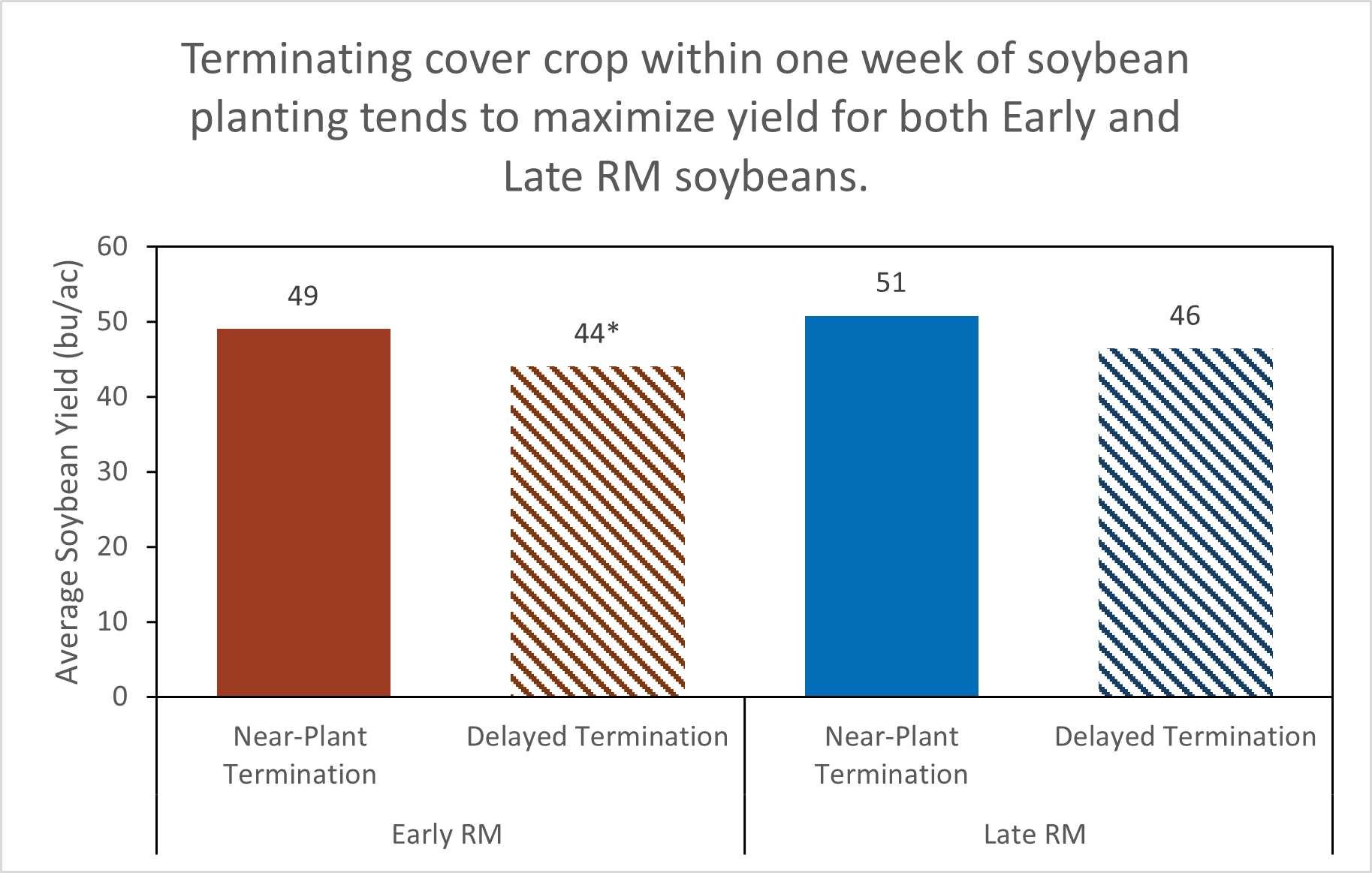
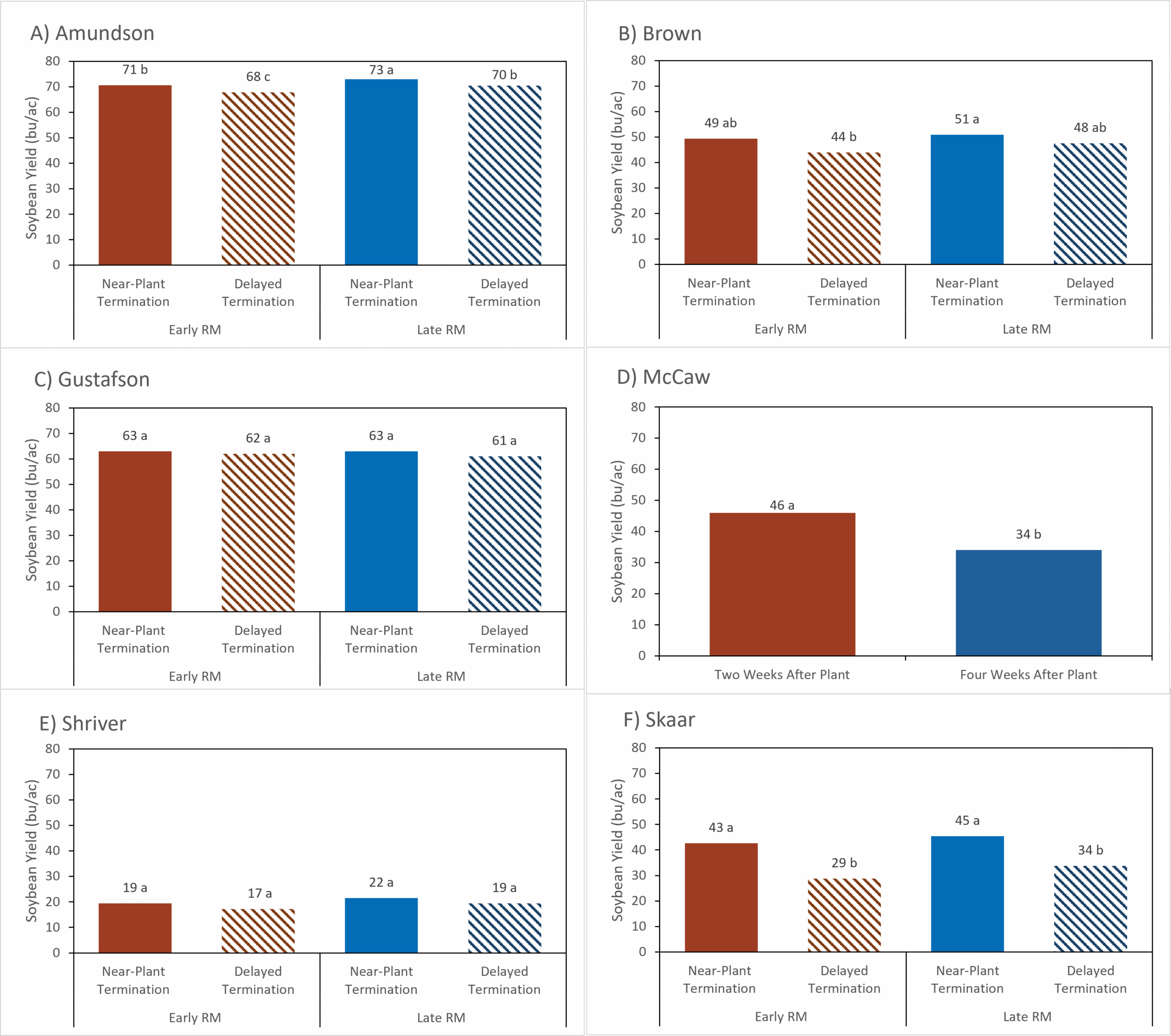
- At three out of six trial locations, Near-Plant Termination treatments consistently outyielded Delayed Termination treatments in both Early and Late RM soybeans.
- Across all trials considered together, Early RM soybean yield averaged 5 bu/ac lower under Delayed Termination compared to Near-Plant termination. Statistically, Late RM soybean yield was not significantly lower under Delayed Termination compared to Near-Plant Termination, but yield did trend lower.
- Cooperators concluded that later maturity soybeans did not offset yield decline when delaying cover crop termination to more than two weeks after planting soybeans.

Background
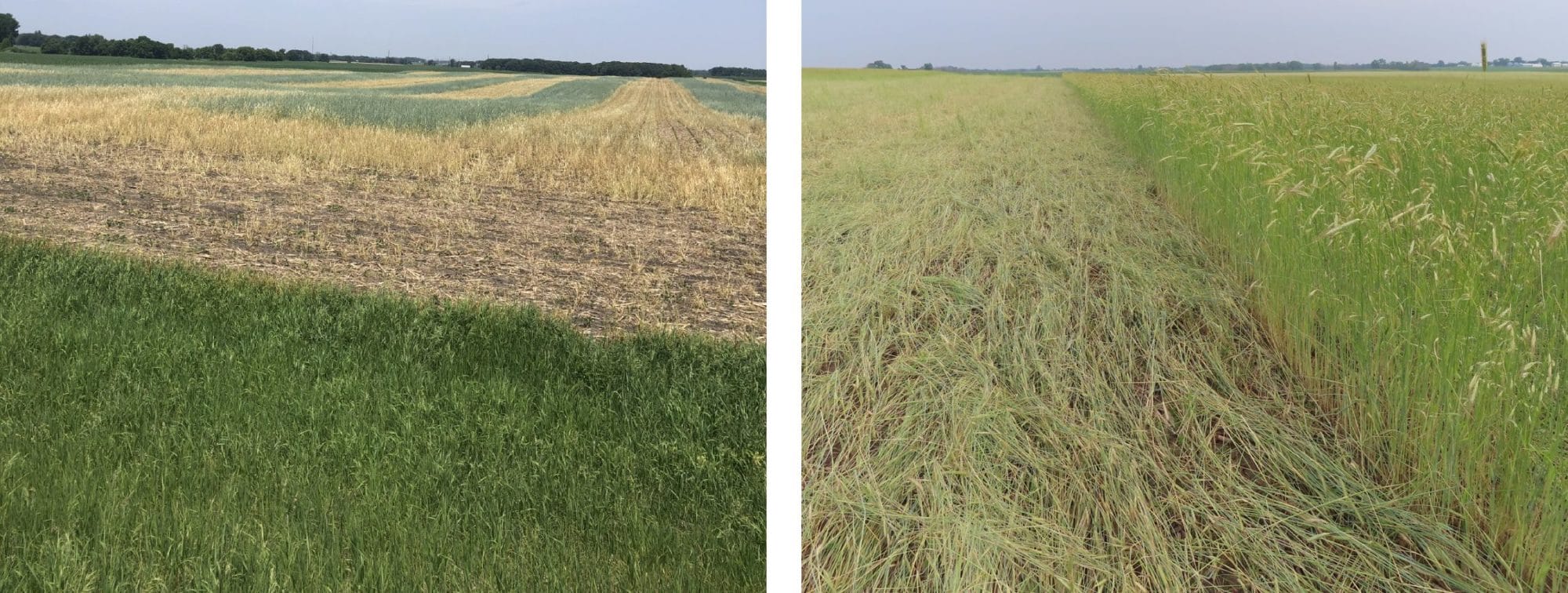
Planting green is a practice where a cash crop is planted into a living cover crop and the cover crop is terminated days to weeks later using herbicide, roller-crimping or a combination of those methods. This management practice is growing in popularity when planting no-till soybeans into a cover cropped field. Planting green lets cover crops grow a bit longer in the spring, increasing cover crop biomass [1] and weed suppression [2], [3] while still giving the cash crop an earlier start. Planting soybeans green and terminating within one week of planting has generally been found to either not impact the yield of the soybeans or sometimes to slightly increase the yield [3]. The soybeans do face some light, nutrient, and water competition from the cover crop until it is terminated. Cover crop termination more than a week or so after soybean planting may ultimately negatively affect soybean yield, especially in a dry year, [2], [4], [5] but does not always result in reduced yields [1], [6]. Alec Amundson has been planting later-maturing soybeans when relay-cropping, a system where a farmer plants soybeans into standing rye and harvests both the rye for seed and soybeans in the same year. He has noticed improved soybean yields when planting later vs. earlier maturing soybeans in this system. Amundson and a group of five other cooperators decided to test if later maturing soybeans could offset some of the yield decline seen when planting green and delaying cover crop termination. They designed a trial exploring the effect of soybean relative maturity and cover crop termination timing on soybean yield. Amundson noted that “We want to continue to maximize yield and cover crop growth. This will be a great way to test our theories of how we can do both.” While the cooperators came to this trial with a variety of experiences with planting green into cereal rye cover crop, everyone was interested in fine-tuning their methods with soybean relative maturity and cereal rye termination timing. Echoing a common theme among participants, Ross McCaw commented that he hoped this trial would help him “show the community that these practices work.”Methods
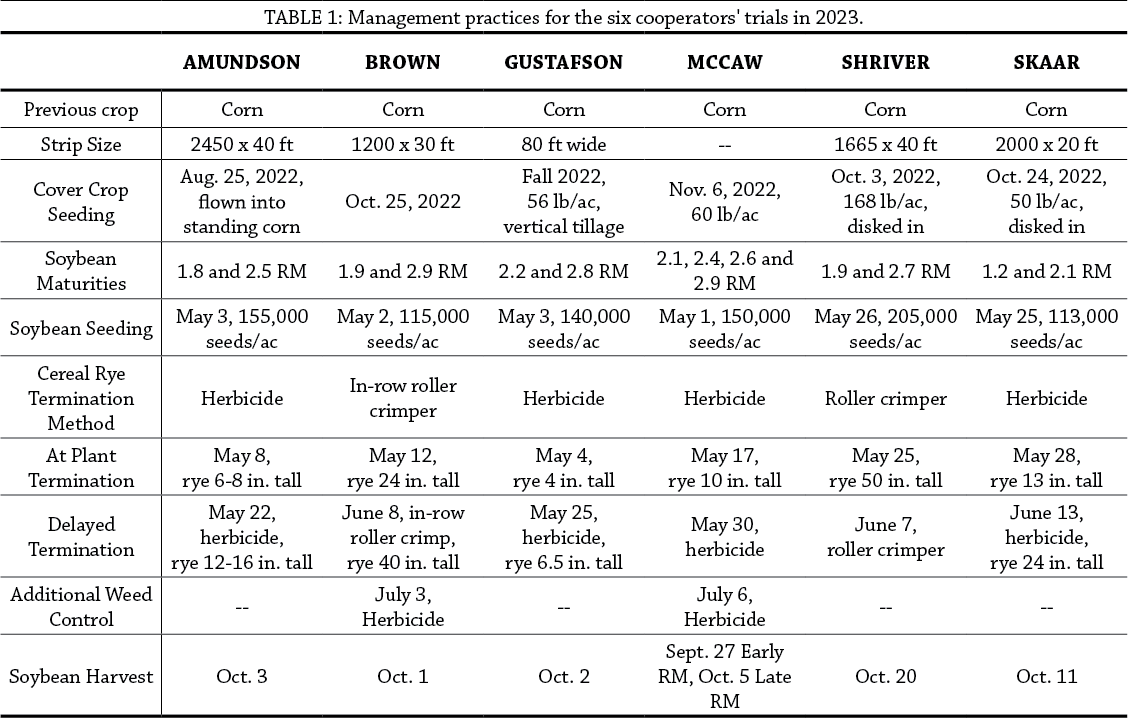
Design Cooperators no-till drilled two varieties of soybeans, one early maturing variety (Early RM) and one later-maturing variety (Late RM), into standing cereal rye. Cooperators chose varieties for their trials based on their location and typical practices and planted both varieties on the same day (Table 1). They then subjected both maturities of soybean to the following rye termination treatments:- Near-plant: Cover crop termination (via herbicide or roller-crimper) at soybean planting or within 1 week of planting.
- Delayed: Cover crop termination (via herbicide or roller-crimper) 2-4 weeks after soybean planting.
Results and Discussion
Conclusions and Next Steps
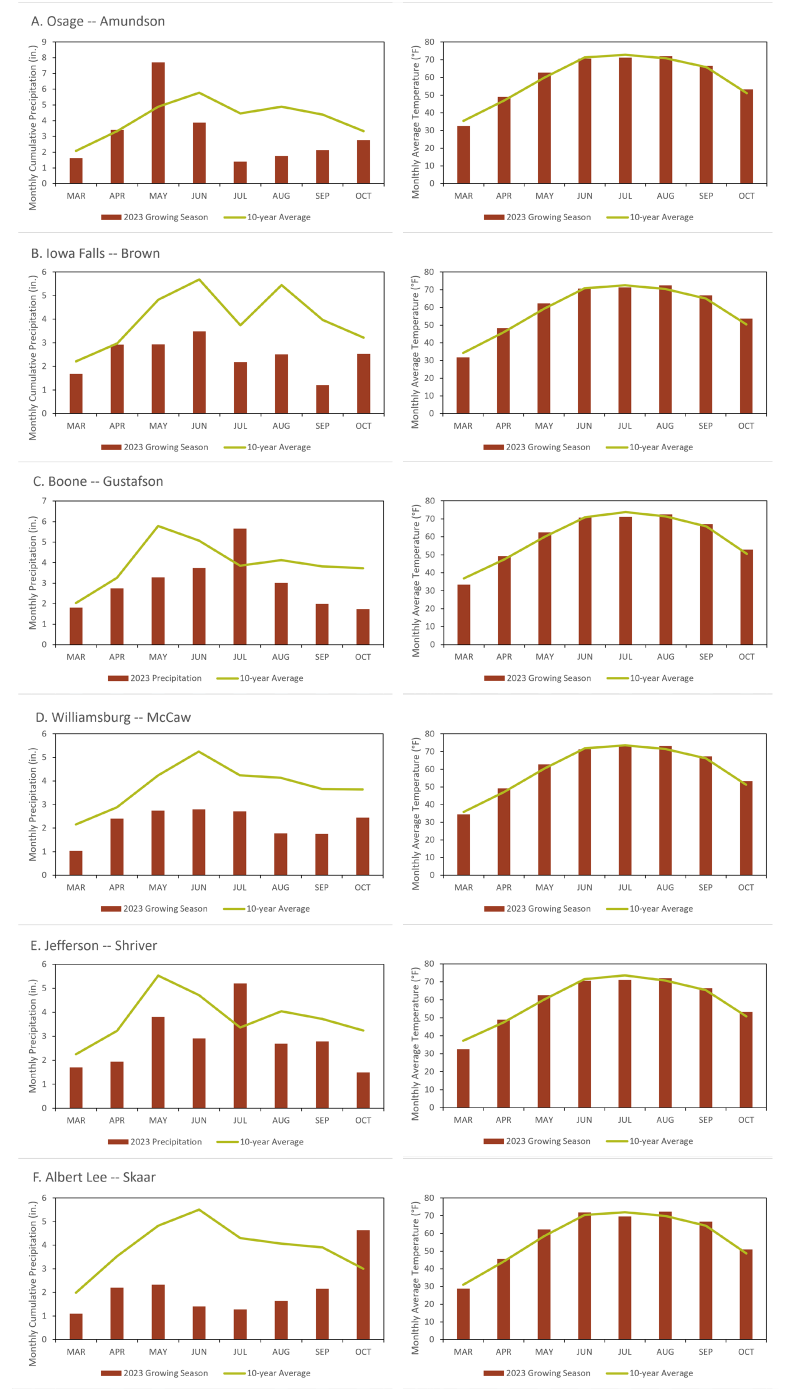
In 2023, Late RM soybeans did not consistently offset all yield decline from delaying cover crop termination by more than two weeks after planting green. Delaying cover crop termination by an average of 21 days did reduce soybean yields at three out of six trial locations and in Early RM soybeans across trials analyzed as a whole. These results build on previous work emphasizing the importance of terminating cover crops on the early side when planting green in a dry spring. Drought may have impacted the effect that Late RM soybeans had on yield decline under Delayed cover crop termination, and Skaar and McCaw are considering repeating this trial in 2024 to further investigate the question in what will hopefully be a more normal precipitation year. All six cooperators found that they learned something through the trial about a variety of topics including when to terminate cover crops when planting green in dry conditions, what relative maturity soybeans work well at their farms and weed management in cover cropped systems.