From the President and Director
This annual report shares a broad summary of Practical Farmers’ work in 2025. As you read on, you’ll see that our membership, budget, staff and program offerings continue to grow – and with that growth, our impact continues to deepen.
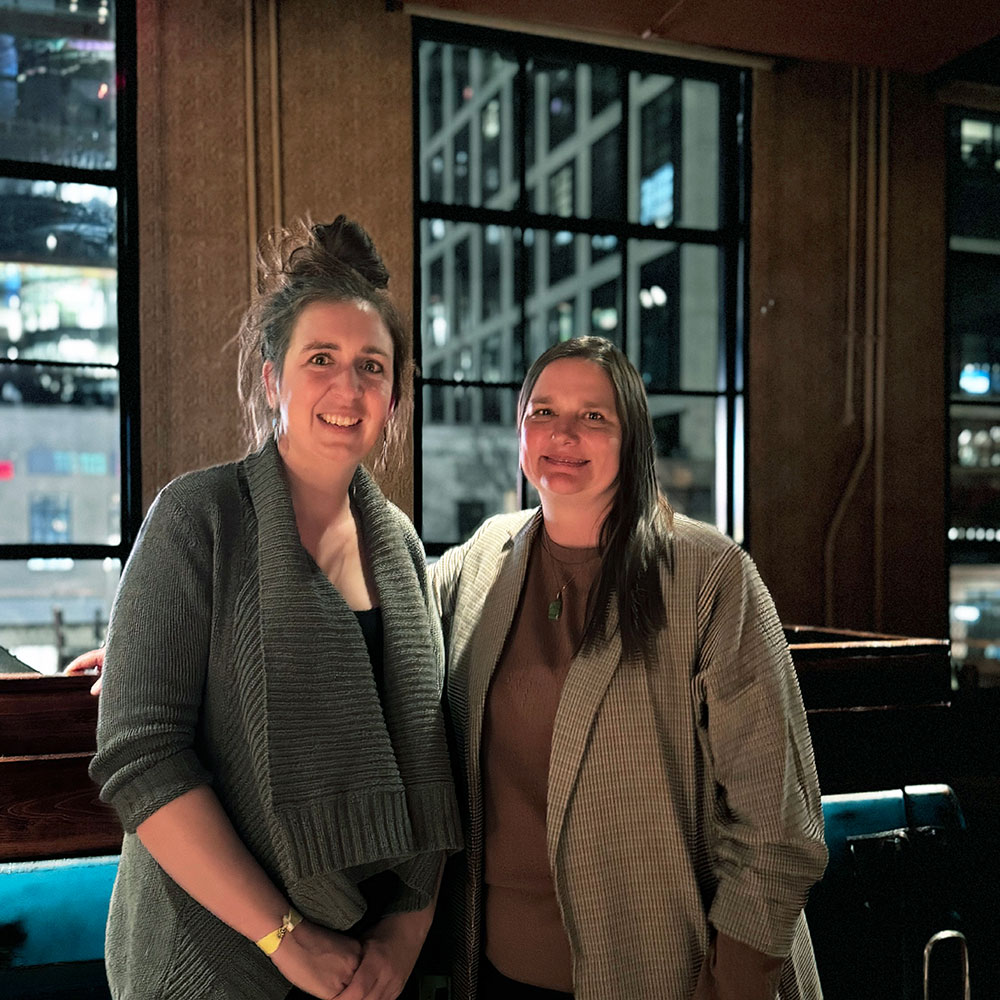
2025 represented a milestone of sorts for Practical Farmers of Iowa: We celebrated 40 years of farmer-to-farmer learning. This organizational birthday gave us a chance to reflect on our growth and impact over the years, as well as what’s been happening in the broader agricultural landscape. PFI was founded in 1985 amidst the farm crisis – and we’re proud of PFI’s work over the last four decades. Yet farmers remain in crisis today.
Recent years have seen a familiar pattern: PFI has experienced tremendous growth and increased impact. Yet each year, despite these successes, we continue to see more farm consolidation, water pollution and rural community decline. These trends weigh heavily on many of us – PFI members and staff – who care deeply about the future of our state.
As PFI members, each of us has played a role in growing our organization – by participating in our welcoming farmer network, being curious about conservation and profitable farm practices and caring about resilient farms and communities. In this way, we have together created a big tent that more farmers, landowners and supporters from Iowa, and beyond, have been inspired to join. Collectively, our efforts are getting us closer to our vision of a diverse, resilient agricultural landscape. And through our individual actions, we are setting an example for others and helping create positive change in our communities.
As we consider our path forward, we’re asking big questions. How do we strategically think about our individual roles – and PFI’s collective role – in tipping the scales toward, rather than away from, diverse farms, healthy food and vibrant communities? How do we more effectively work toward meaningful systems change?
2026 marks an important moment for PFI: a year of strategic planning. Your ideas matter in this process. Contact us and let us know how you think we can harness our collective efforts to make the change we all want to see a reality. And, as you move through this report, you’ll see many examples of how you can engage with us more – because our work depends on the strength of this community.
The big tent we cultivate is intentional. We don’t always agree. But we show up, we listen and we work together.
This kind of collaboration is more important now than ever.
Thank you for helping this organization evolve, and for harnessing all that is good about PFI as we work together for a better future.
Carmen Black, Board President
Sundog Farm, Solon
Sally Worley
Executive Director
Farmer-Led Education
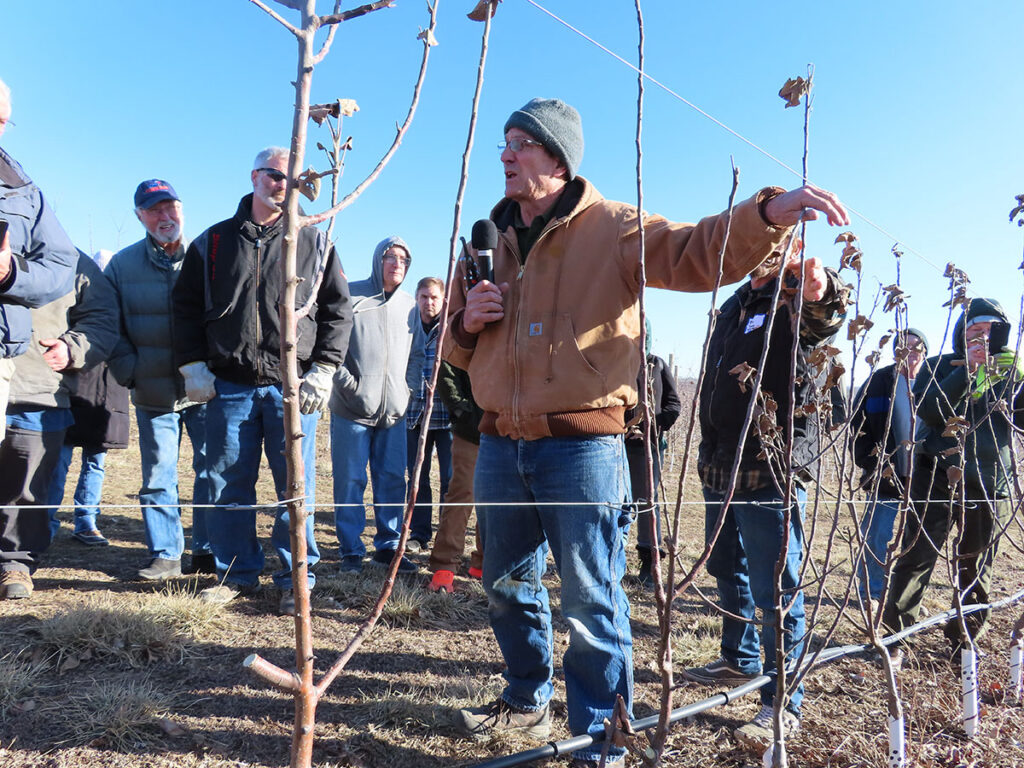
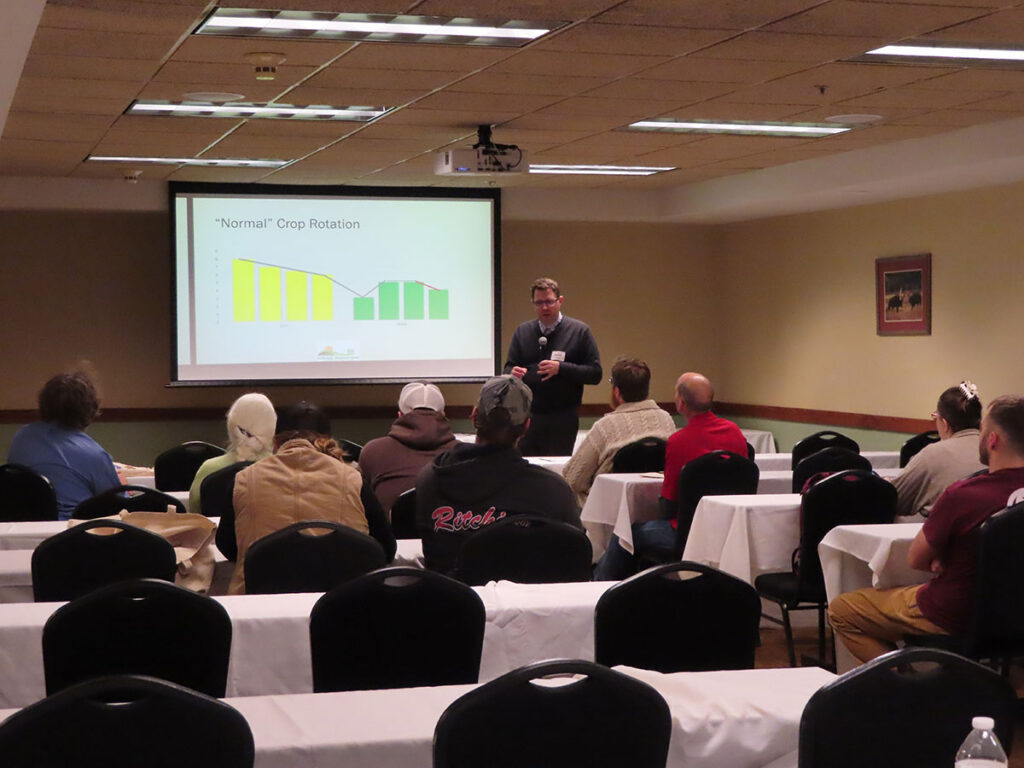
Practical Farmers was founded on farmer-led education. In 2025, PFI hosted a record number of farmer-led events. At PFI, farmers’ first-hand experiences are deeply valued and openly shared. Sharing specific details of farm operations with each other requires trust, which is why our events include ample time for relationship- and network-building.
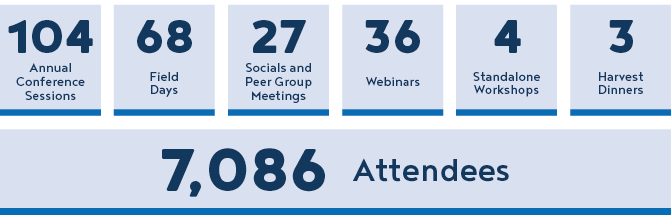
In 2025, PFI stewarded farmer-led education and network-building through 287 events that welcomed 7,086 attendees. PFI also participated in 71 partner events, from speaking to tabling to helping arrange for farmer speakers. This strong presence creates community. Equally important, this amount of engagement creates change.
Events in 2025
Honoring Farmer Leaders
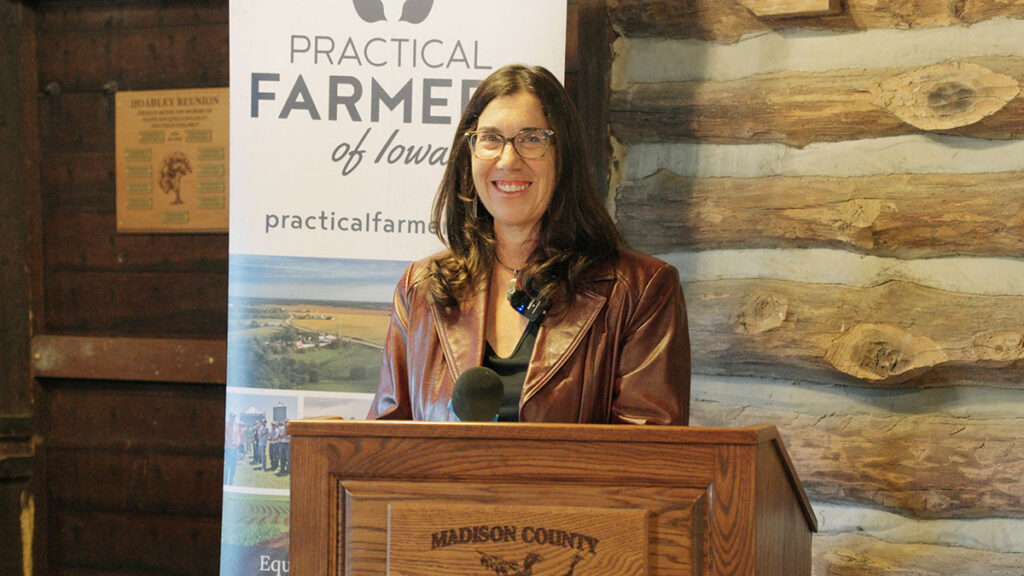
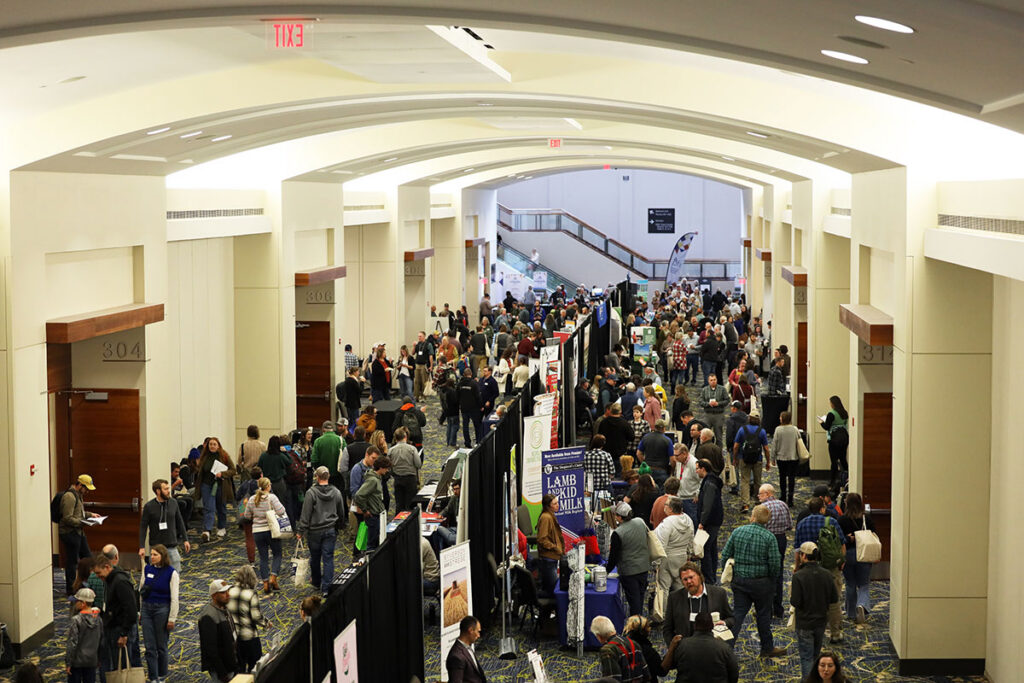
In January 2025, 1,191 farmers, supporters and exhibitors came together for Practical Farmers’ annual conference for shared learning and connection.
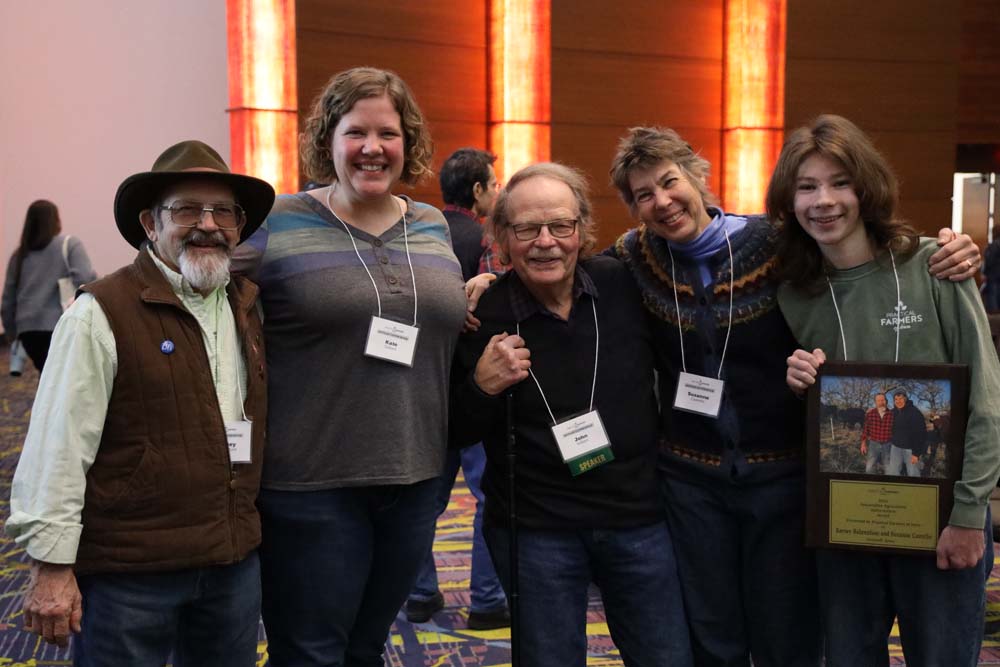
The above photo was taken after John Gilbert presented the Bahrenfuse-Castello family with the 2025 Sustainable Agriculture Achievement Award for their work creating vibrant communities, healthful food and diverse farms. John says, “Our families came up together through PFI. It’s a privilege to honor their decades of contributions to the agriculture community.”
Farmer-Educators in the News
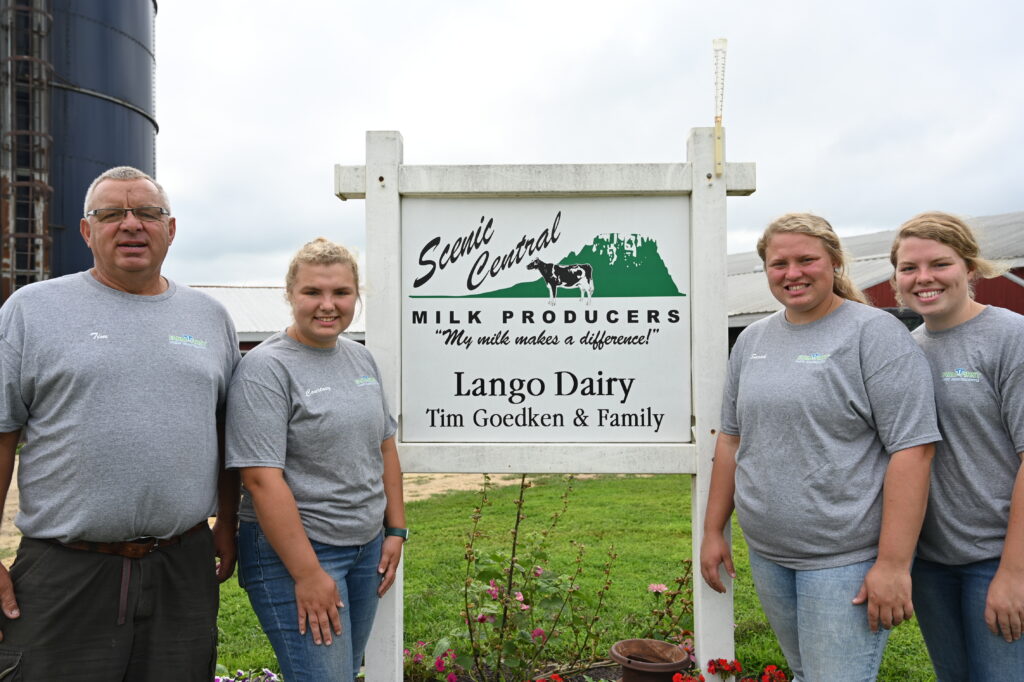
Practical Farmers’ marketing and communications department works to let communities know what’s happening in their area. For example, staff from the Dyersville Commercial newspaper attended Tim, Courtney, Sarah and Tara Goedken’s field day last August and published an article about the family’s plans to transition the farm to the next generation.
Two-Way Learning
Landon and Ann Plagge and Knute and Amanda Severson hosted a field day together at the oat mill being constructed in Albert Lea, Minnesota. Someone who attended said they most appreciated “the candid discussion on what makes farmers successful, or not, and why, along with the first-hand experience.” They also thanked PFI for finding such well-informed speakers. That’s the magic of PFI – who is more informed about the success of farmers than farmers themselves?
Our farmer educators are also farmer learners. Landon attended Daniel and Emily Sheetz’s field day exploring organic crop management strategies near Garwin, Iowa, earlier in the year. Landon says, “It was valuable to learn from other farmers about comparative yields, fertility plans and nutrient loss in organic versus conventional production systems.”
This two-way information exchange transforms individual efforts into a collaborative approach that more effectively strengthens our farms and communities. Thank you to all our farmer educators and learners for showing up and participating in this powerful, symbiotic network in 2025.
Research
Practical Farmers of Iowa’s Cooperators’ Program empowers farmers to generate and share knowledge through timely and relevant farmer-led research. In the last five years, participation in our annual Cooperators’ Meeting has more than doubled, and the number of trials has more than tripled. We welcome this growth because of the value farmers place on doing on-farm research. Participants have consistently told us two things about taking part in PFI research:
- The results help them make a confident decision going forward.
- Their research is strengthened by working with peers.
This feedback reflects the power of this research community:
It builds relationships, a sense of belonging and shared power among those in it.

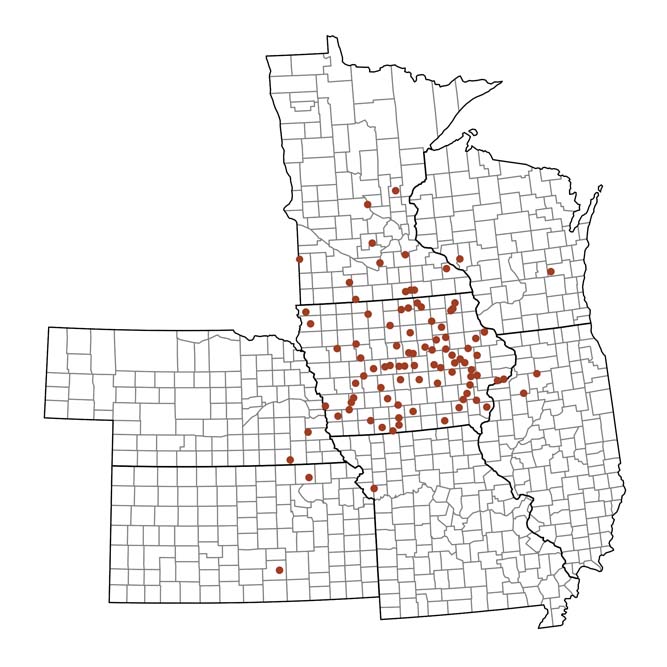
Farmers decide the focus of trials they conduct based on the challenges and opportunities they’re seeing on their farms. At PFI, we pride ourselves on welcoming all kinds of farmers into our big tent. This diversity is evident in the breadth of on-farm research projects farmers choose to do. You’ll find a wide range of enterprises and research objectives represented. At the heart of these projects is the boundless curiosity of the farmer-cooperators, who are always asking questions and seeking answers – through the powerful tool of on-farm research.
On-Farm Research Project Locations
Snapshots of 2025 Research Projects
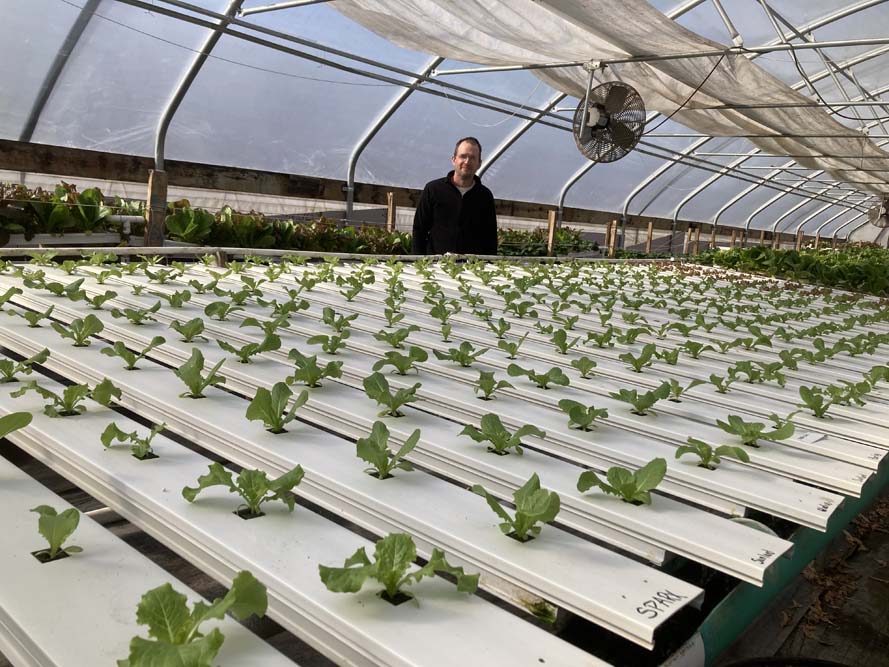
Lee Matteson
Lee Matteson of Lee’s Greens in Nevada, Iowa, tested raising lettuce in the heart of winter using hydroponic methods.
Kate Solko & Kyle Maxwell
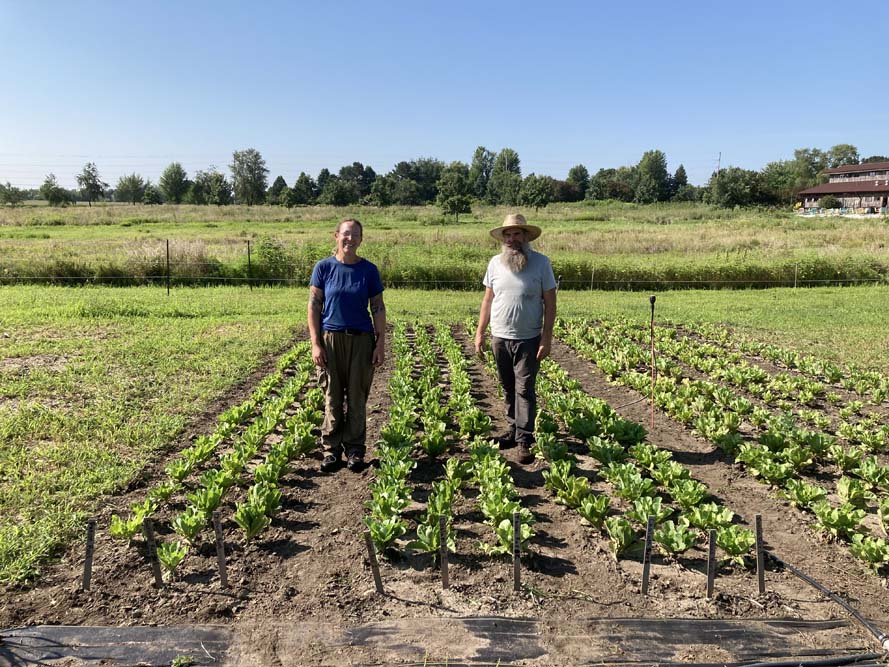
Kate Solko and Kyle Maxwell of Root to Rise Farm in Ames, Iowa, trialed heat-tolerant varieties so they can feed customers lettuce in the heat of summer.
Jake Bigelow
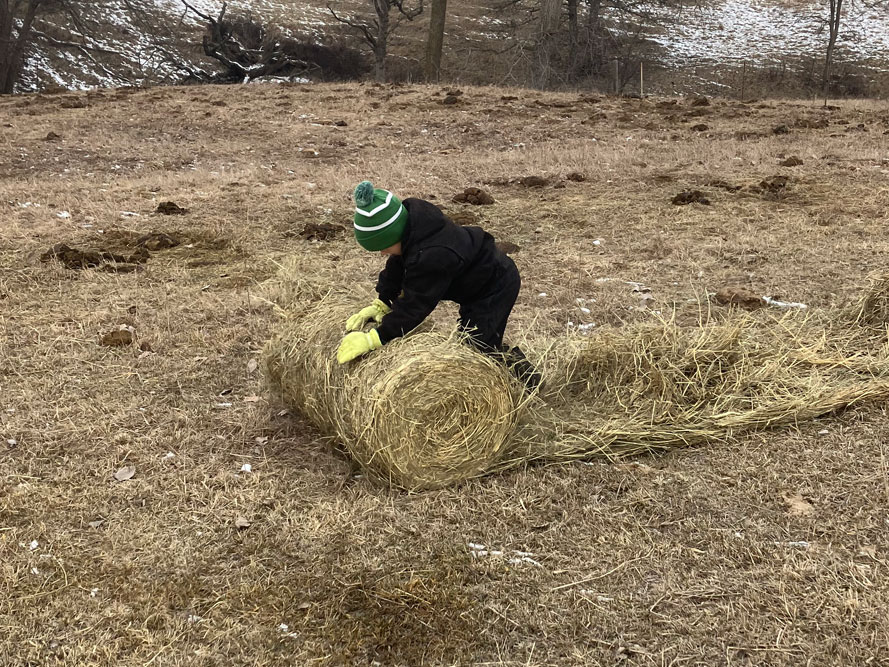
Jake Bigelow of Bigelow Family Farm near Winterset, Iowa, researched how bale-grazing may impact soil fertility and compaction of pastures. Jake says, of his trial: “Since I have been bale-grazing for many years, I had the feeling that I was getting more biomass from unrolling hay. This took it a step further by quantifying it.”
Hannah Breckbill
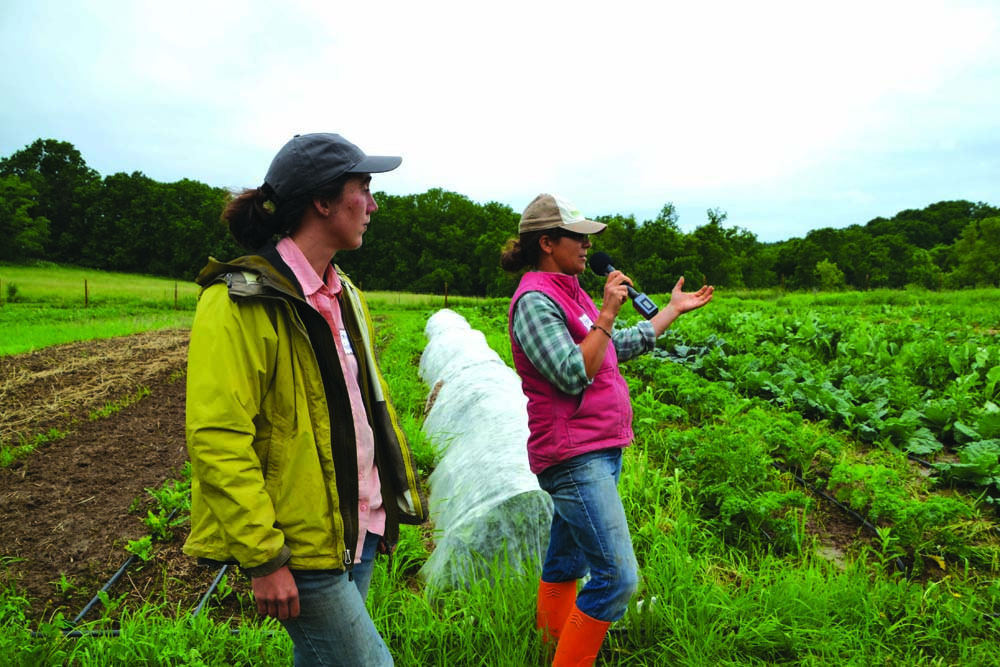
Hannah Breckbill of Humble Hands Harvest near Decorah, Iowa, tested how grazing versus mowing affects native habitat management.
Kate Edwards
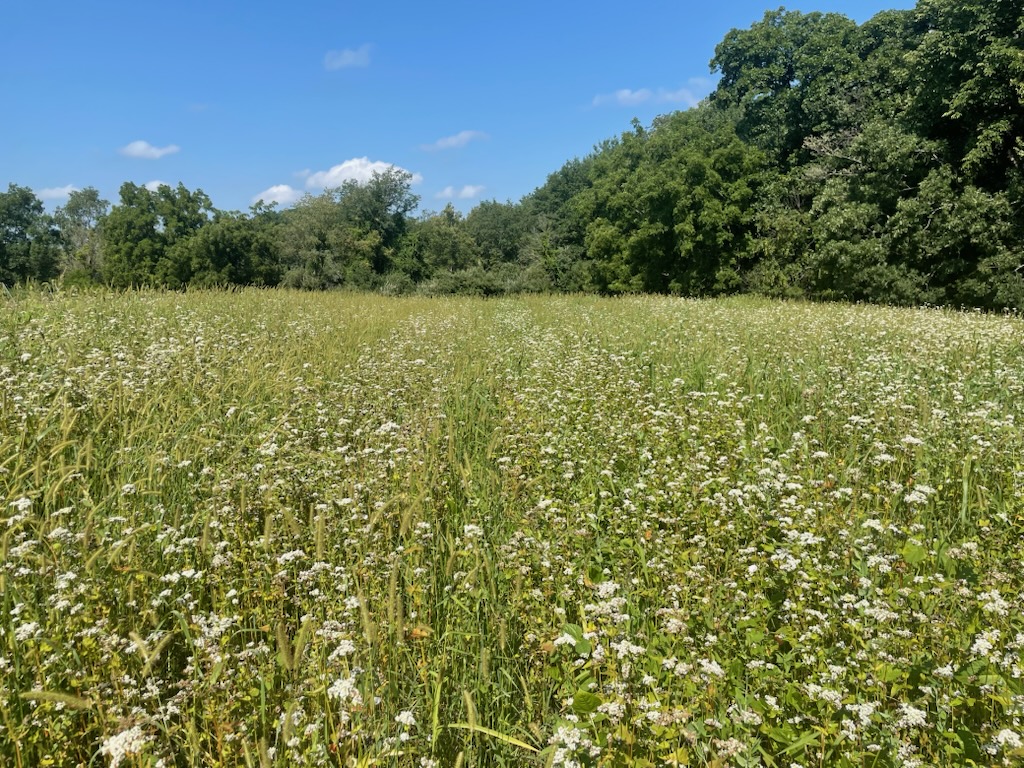
Kate Edwards of Wild Woods Farm near Iowa City, Iowa, investigated summer cover crops between cash-crop vegetable crop production.
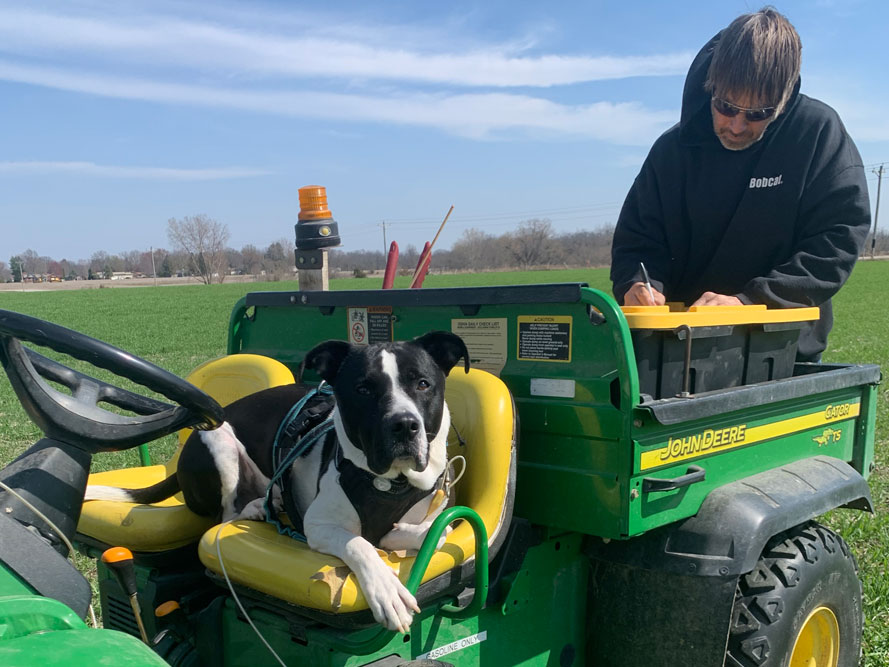
Tim Shellabarger
Tim Shellabarger, who farms near Brighton, Iowa, trialed alternatives to cereal rye for fall-seeded
cover crops.
Cooperators in the News
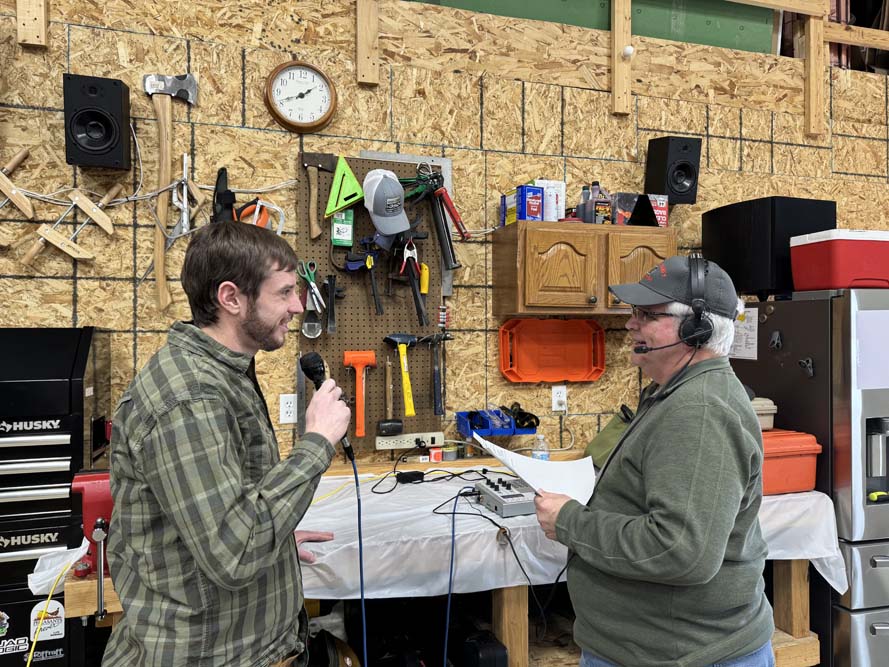
Cooperators collect data on their farms, but this data is useful to others too. Practical Farmers publishes research reports that are available to the public and free to download. Cooperators hold field days and conference sessions to showcase their work. And, they share their results widely through media outlets – as depicted in this photo, where Keaton Krueger, left, talks with a reporter from “The Big Show” about his on-farm research learnings.
Farm Viability
Creating Viable Farms With Customized Support in 2025
Practical Farmers’ farm viability efforts make it easier for farmers and landowners to implement conservation, production and business changes that make their farms more resilient. This department provides personalized support to help farmers and landowners define success for themselves. It then provides the following services to help them succeed:
- Technical assistance
- Business coaching
- Financial incentives
- Cost-shares
- Connections to resources
- Education to policymakers on
- PFI members’ priorities
- Supply chain development
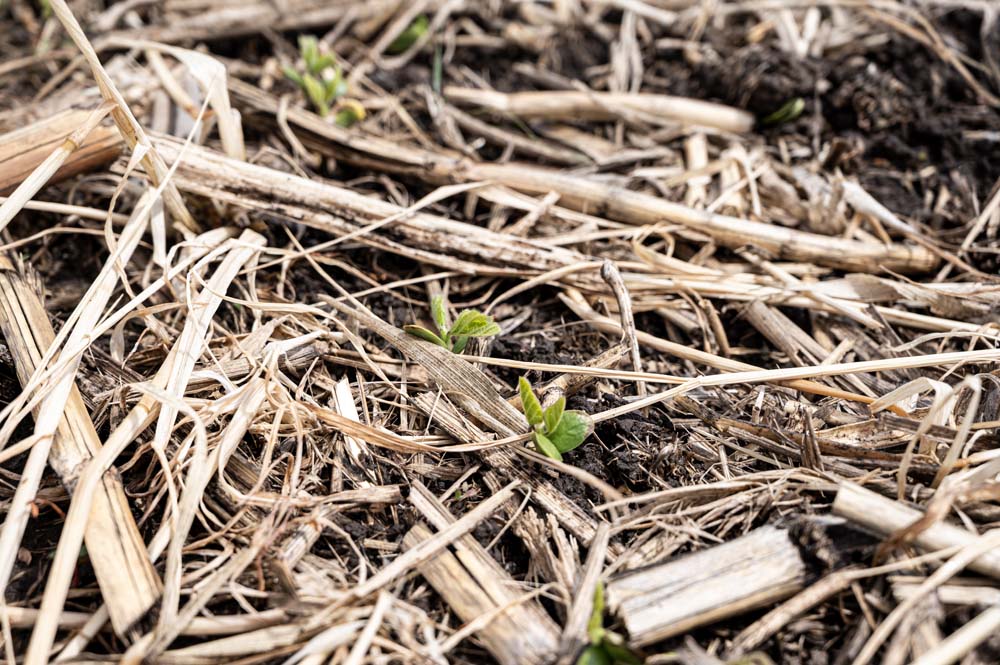
Building Farmers
Practical Farmers’ business development team helps farm and food businesses grow stronger. Part of this effort includes assisting farmers and landowners with land access and farm transfer – both of which are critical issues due to scarce land access opportunities and high land prices. An aging landowner population is driving massive transfer of farmland. Without intervention, this massive land transfer will lead to continued consolidation of farmland and fewer, larger farms. Practical Farmers is working to help stem this consolidation and provide land access for farmers, along with the skills and training to create successful farm businesses.
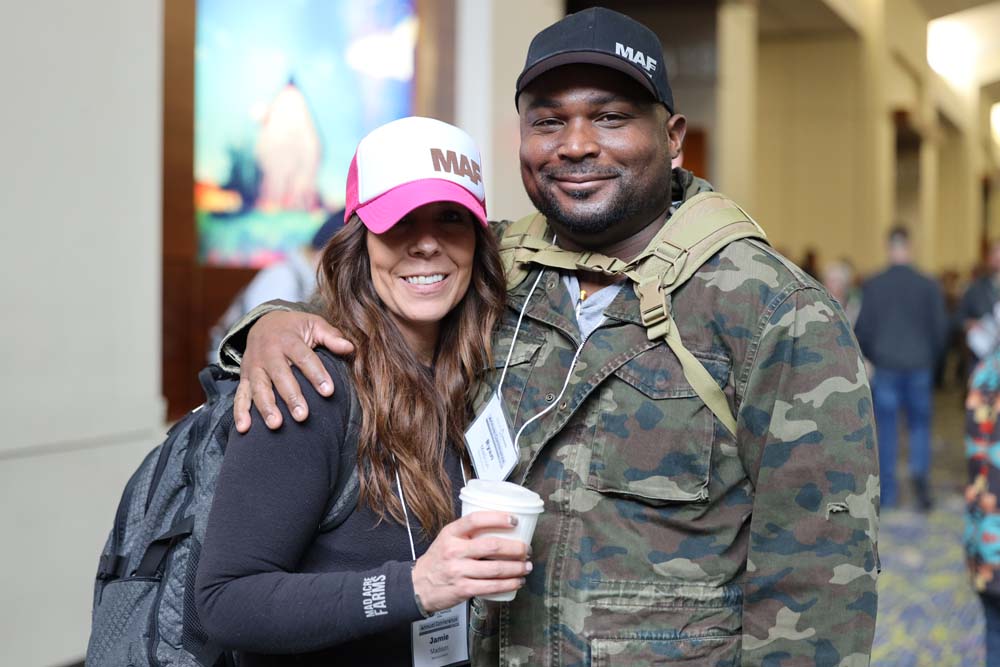
Ryan Madison of Mad Acre Farms near Gladbrook, Iowa, took part in Practical Farmers’ Savings Incentive Program in 2025. Ryan says, “I farm because it’s my way of giving back – to the land, to my family and to the community. It’s hard work, but it’s also the best work I’ve ever done. As a small specialty crop farm focused on building an agritourism destination, we believe the Savings Incentive Program can provide us with the resources, guidance and community support needed to grow our farm’s impact and efficiency.”
Business Development
Our business development staff members provide farmers the knowledge, one-on-one business support and financial assistance to invest in their businesses.
Program Impact
Cover Crop Business Accelerator
With tailored business coaching, technical guidance and financial incentives, this program supports the startup and growth of cover crop seed and application businesses.
42 farms added or scaled a cover crop business. These businesses received funding to help with equipment costs and marketing projects, and received one-on-one business and agronomic support.
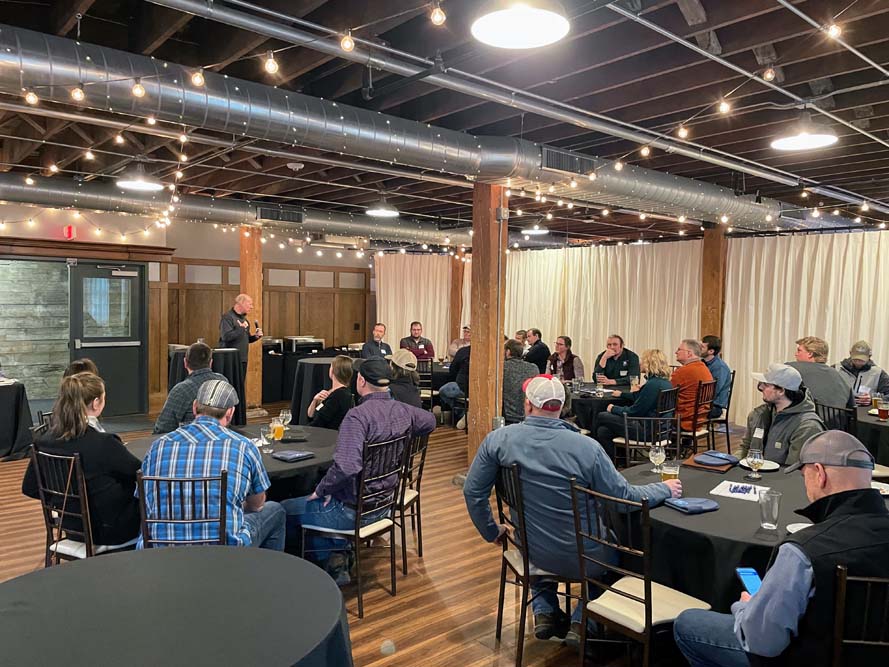
Cover Crop Business Accelerator participants gathered to get to know each other and compare business strategies at a networking event in Des Moines last year. Nathan Whitney, who farms near Trenton, Missouri, attended. After enrolling in the Cover Crop Business Accelerator, Nathan recently started a cover crop business, SkyVantage Ag. Nathan says, “It was a great opportunity. Without the help, I probably would not have gone ahead and started a business.”
Empower Farmers Program
This program offers upfront payments to support the success of historically underserved farmers and ranchers by helping to reduce financial barriers to start and scale farm operations.
61 farmers received $82,500 through the program and reported investments of $125,105 in growing their farm businesses.
Infrastructure Investment
Program Impact
Livestock Infrastructure Cost-Share
The livestock infrastructure cost-share helps graziers adopt regenerative grazing practices that improve forage, soil and water quality.
20 farmers enrolled, together receiving $48,700 to invest in livestock infrastructure.
Produce Safety Cost-Share
This program helps farmers invest in on-farm food safety improvements.
34 farmers received $68,000. The farmers reported leveraging the funds to invest $177,078 in improving on-farm food safety in their operations.
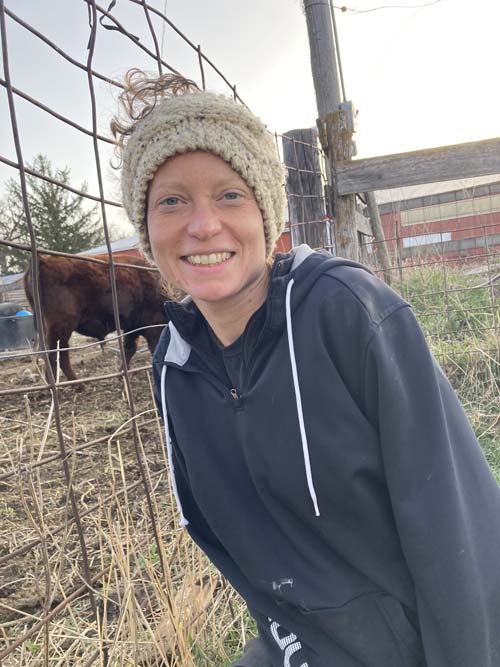
Elana Gingerich, who farms near Parnell, Iowa, participated in Practical Farmers’ livestock infrastructure investment program in 2025. Elana says, “The money that I was able to put towards grazing supplies through this program has made a huge impact. I’ve been able to graze areas of the farm I never thought I could. I can sustainably grow my herd by 50%, or maybe even double it, without overgrazing due to my ability to rotate and get to new areas.”
Diversified Cropping Systems
Program Impact
Extended Rotations
This cost-share helps farmers extend their rotation with a small-grain and legume cover crop.
142 farmers enrolled, receiving $255,980 in cost-share to add small grains or reduce inputs on 12,799 acres of crop ground.
N Rate Risk Protection
Farmers in this program reduce nitrogen on entire fields to see how reducing inputs affects their bottom line at field scale.
84 farmers took part, receiving $145,860 in incentive and risk protection dollars.
Together, they reduced nitrogen on 29,712 acres.
P Stewardship for Soybeans Pilot
In 2025, Practical Farmers piloted a cost-share program offering $5 per acre to help farmers
avoid nitrogen losses from phosphorus fertilizer products applied ahead of soybeans.
10 farmers received $18,603 in cost-share to help them improve phosphorus stewardship on 3,720 acres.
Cover Crops
This program provides cost-share to help farmers add or expand the use of cover crops on
their farms.
2,430 farmers received $10 million in cost-share to plant cover crops on 903,193 acres.
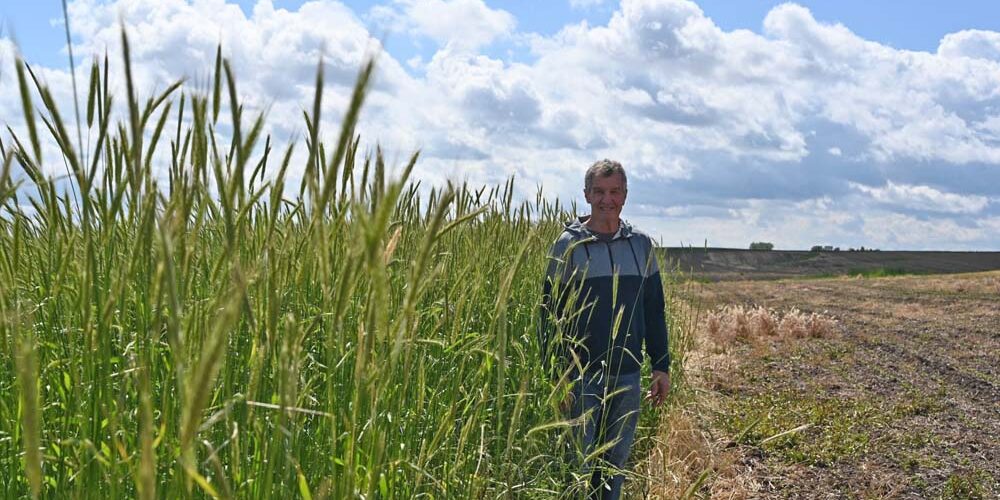
Jim and Mary Pelzer, of Tipton, Iowa, were one of the 2,430 farmers who participated in PFI’s cover crop cost-share in 2025 that resulted in more than 900,000 acres of cover crops on the ground.
Mary talked about the tension between conservation and profit in a PFI magazine article from 2025. She said, “You have to have enough return on investment to keep on farming, but hopefully leave the land better than you found it.”
In 2025, PFI featured more than 130 members in our quarterly magazine, the Practical Farmer.
Marketing and Communications
Practical Farmers of Iowa’s marketing and communications department works to share the diverse voices of our members so we can help drive the food and farming narrative. Examples of how members were featured in the news in 2025 are scattered throughout this report. In addition, here are a couple of other highlights from 2025:
- 307 unique members were featured in at least 674 stories in the media.
- People spent more than 66,500 hours watching PFI videos on YouTube. Our videos, focused on farmers sharing their expertise and experiences, received almost 262,000 total views.
Investing in Habitat
Practical Farmers and partners helped farmers and landowners transition strategic parcels of land back to habitat to improve their environmental outcomes and bottom line.
Peri-Urban Farm Beneficial Insects
This program provides a customized conservation plan and financial support for farmers to add native plants, such as insectary strips or beetle banks.
11 beneficial insect habitats were planted using $17,454 in financial assistance.
Xerces Society provided technical assistance.
Prairie Strips
This program helps farmers and landowners establish prairie strips on their row crop fields.
4 farmers and landowners added 30 acres of prairie strips to their crop fields.
Row Crops to Prairies and Trees
This program helps farmers establish prairies or trees in row crop fields.
12 farmers signed up to establish 129 acres of perennial vegetation on cropfield.
Precision Conservation
This program, carried out in partnership with Pheasants Forever, uses yield data and spatial information to transition unprofitable areas to habitat.
- 1,988 acres of cropland were analyzed.
- 21 precision conservation plans were created.
- 145 acres of habitat were established on low-yielding and environmentally sensitive areas.
Advocating for a Resilient Farm and Food System in Iowa
Practical Farmers’ members engaged with policymakers on a wide range of topics, from the needs of beginning farmers, to the need to keep funding working lands programs like the Conservation Stewardship Program, to increasing access to crop insurance for a more diverse group of crops.
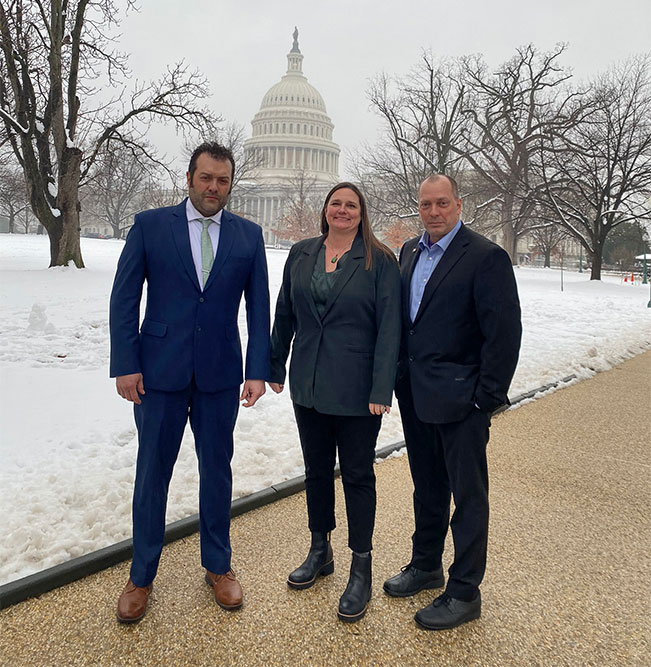
In 2025, PFI’s board of directors, at the suggestion of the policy committee, added local and regional food system development to Practical Farmers’ policy portfolio. Pictured here, from left to right, are David Rosmann, who farms near Harlan, Iowa; Sally Worley, PFI’s executive director; and Tony Thompson, who owns Prudent Produce and farms near Elkhart, Iowa. They visited Washington, D.C. to share PFI members’ most pressing priorities with Iowa’s policymakers in February 2025.
Membership
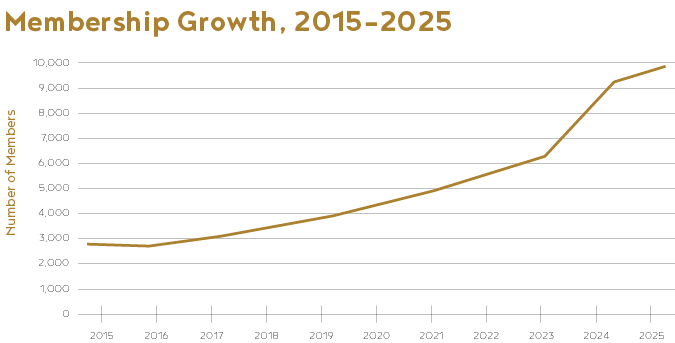
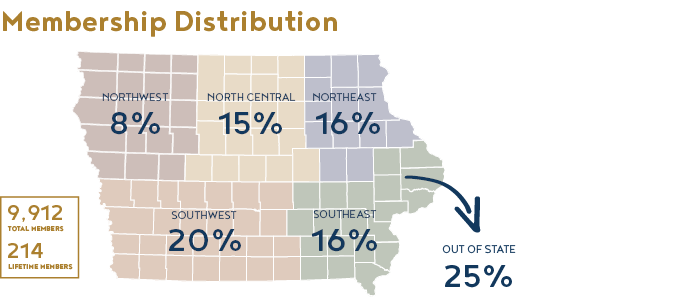
Practical Farmers ended 2025 with a record-high membership of 9,912. Ten supporters became lifetime members in fiscal year 2025, helping us grow our total number of lifetime members to 214 by year’s end.
Financials
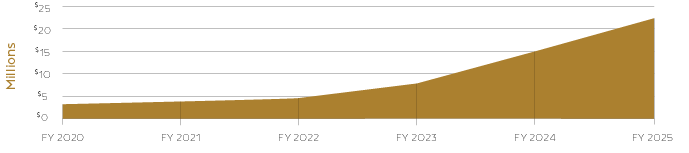
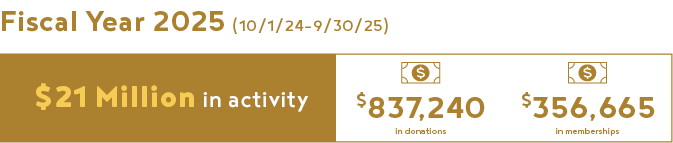
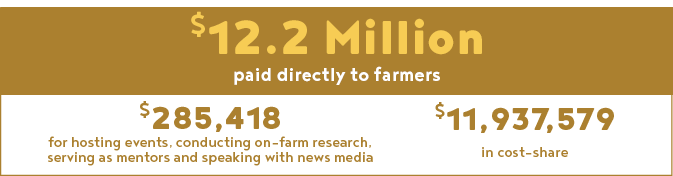
An increase in programming and jump in the size of our membership led to a larger budget in 2025. Here’s a snapshot of fiscal year 2025 financials.