In a Nutshell:
- Mid-summer cabbage is popular, so Carmen & Maja Black, Kate Edwards, Alice McGary, Hannah Breckbill & Emily Fagan wanted to determine which cabbage variety: Farao, Red Express, Tiara, Charmant, Red Jewel or Famosa, produced the highest yield and quality summer cabbage in Iowa.
- Farao performed well in 2019, so growers expected it to have consistent production and quality this year.
Key Findings:
- Farao and Tiara generally performed best, with higher yield and quality, however each farm had slight differences in which variety performed the best
- Farmers have a clearer picture of what cabbage varieties to plant in the summer, and which to avoid, such as red cabbage.
Background
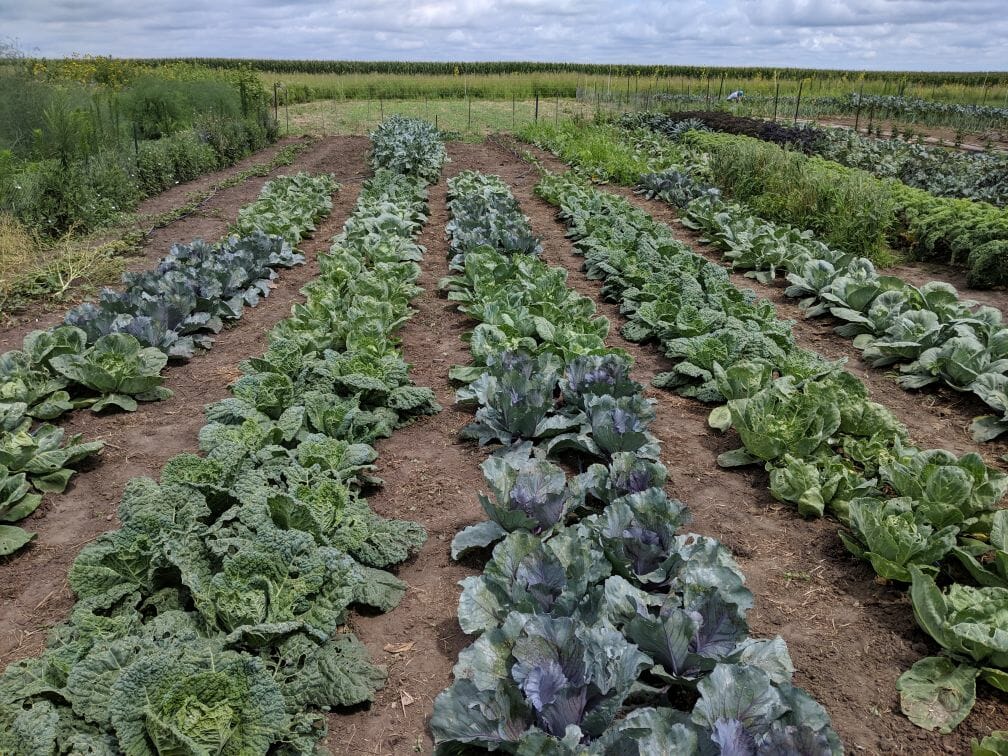
Cabbage is a crop that thrives when grown in the fall in Iowa. Coleslaw, however, is most popular in the hot, humid summer, and requires cabbage grown earlier in the year to be ready for harvest by July. While cabbage is not a summer crop, heat-tolerant varieties have been developed and released for summer growing. In 2019 Emily Fagan, Kate Edwards, Carmen and Maja Black performed a cabbage variety trial to test heat-tolerant varieties of cabbage from the East Coast[1]. They found that Farao performed best against the three other varieties (Primo Vantage, Caraflex, and Capture), and were curious about testing Farao against other, new cabbage varieties, including two red cabbages.
Methods
Design
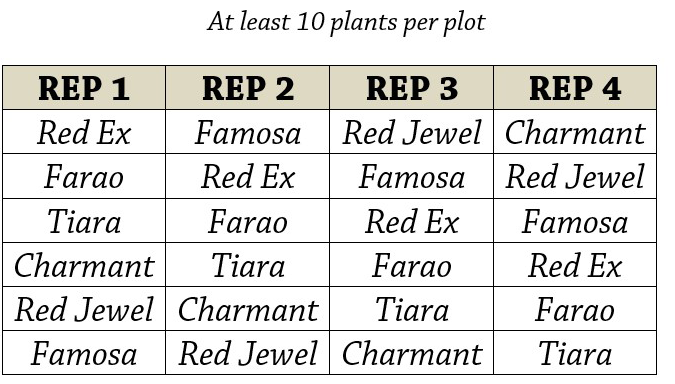
Each farm set up a randomized, replicated trial with four replications of each variety. Cooperators planted at least ten plants per plot, and tested up to six cabbage varieties: Farao, Red Express, Tiara, Charmant, Red Jewel, and Famosa. The replications allowed for statistical analysis of the results (Figure A1).
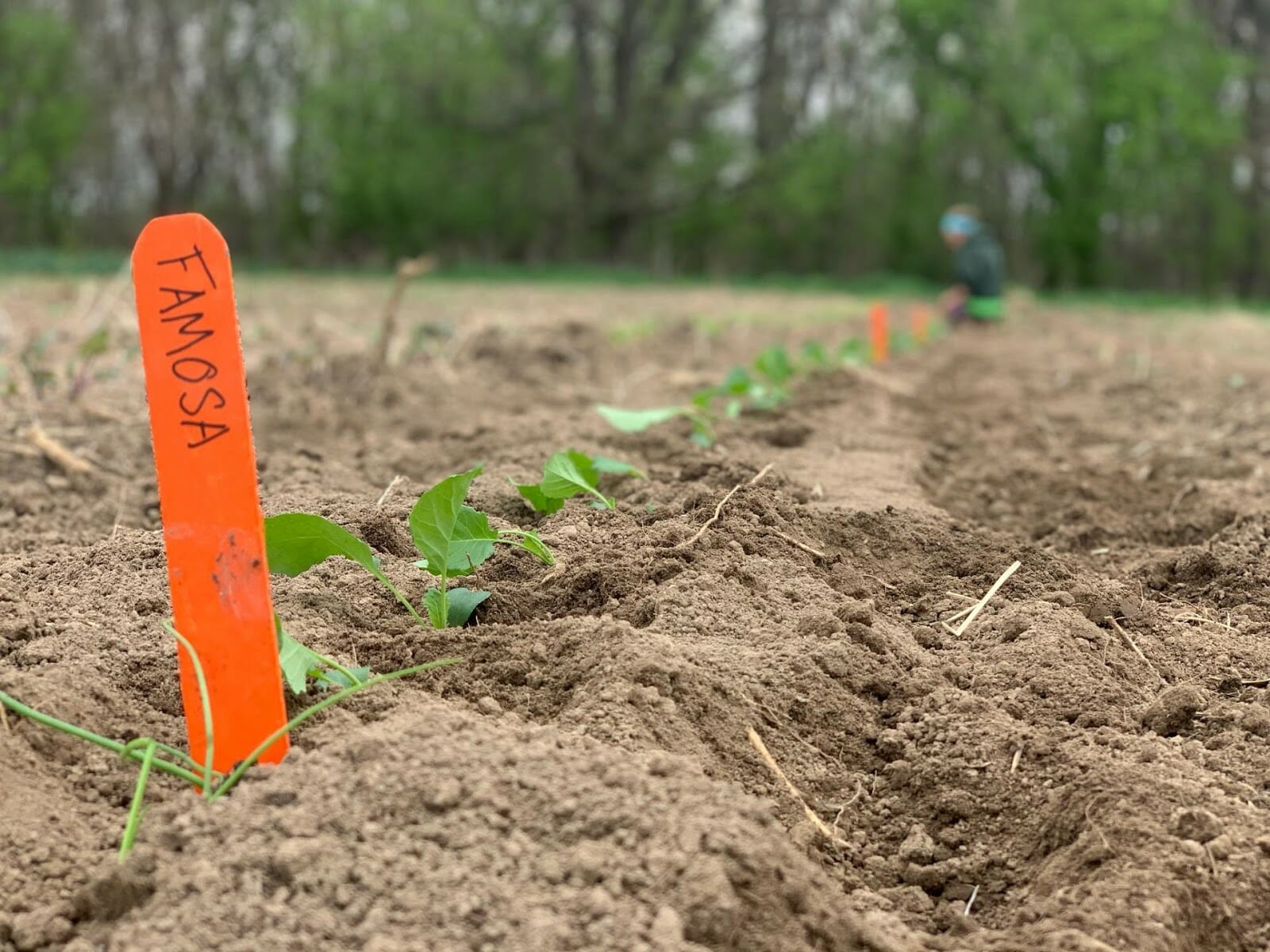
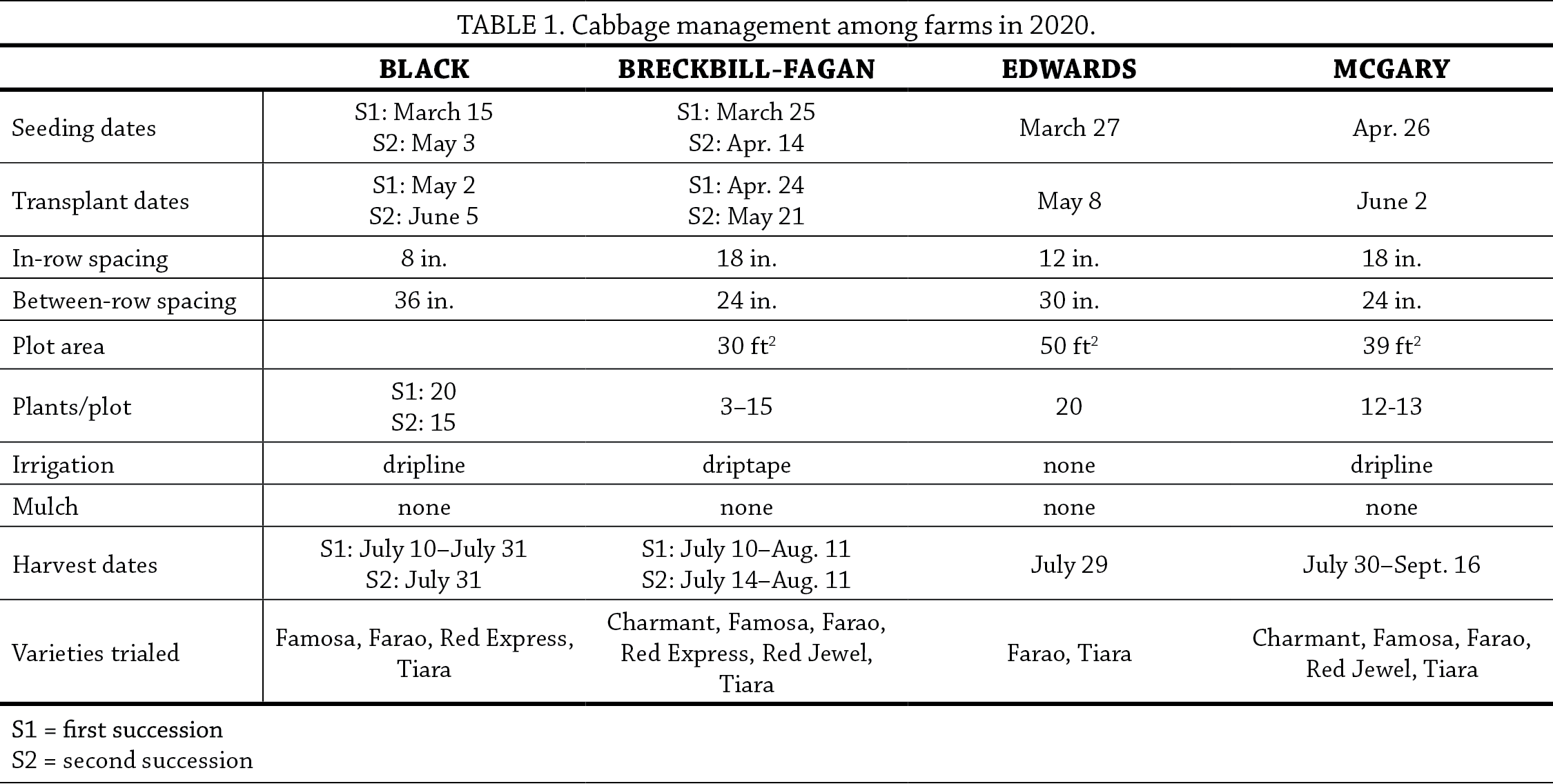
In late March through early May, cooperators seeded their cabbage varieties in the greenhouse. Then, around a month after seeding, cooperators transplanted the cabbage into their fields in the design format from Figure A1. In late July through mid-September, or when the cabbage was deemed mature, cooperators harvested and measured it. Management information can be found in Table 1.
Results and Discussion
Hannah Breckbill and Emily Fagan
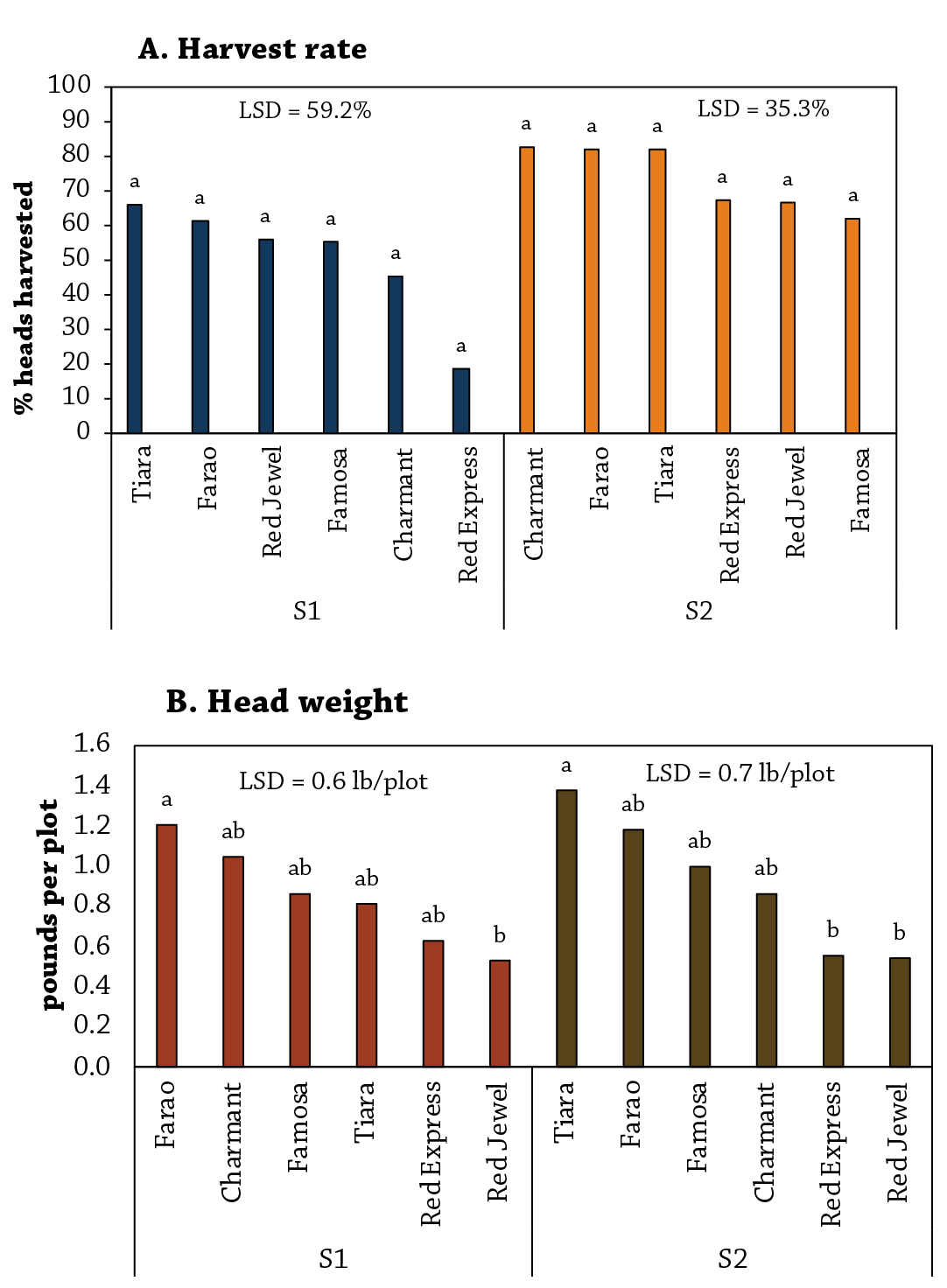
At Breckbill and Fagan’s farm, there was no significant difference in harvest rate among the six varieties, with Succession 2 seeing a higher harvest rate generally (Figure 1A). Head weight varied by succession: Farao performed significantly best in S1, and Tiara in S2. In both successions, Red Jewel performed significantly worse than the other varieties, and Red Express also performed poorly in S2 (Figure 1B). Given that Farao produced one of the highest head weights in both successions, this confirms its consistent high production on Breckbill and Fagan’s farm.
 Alice McGary
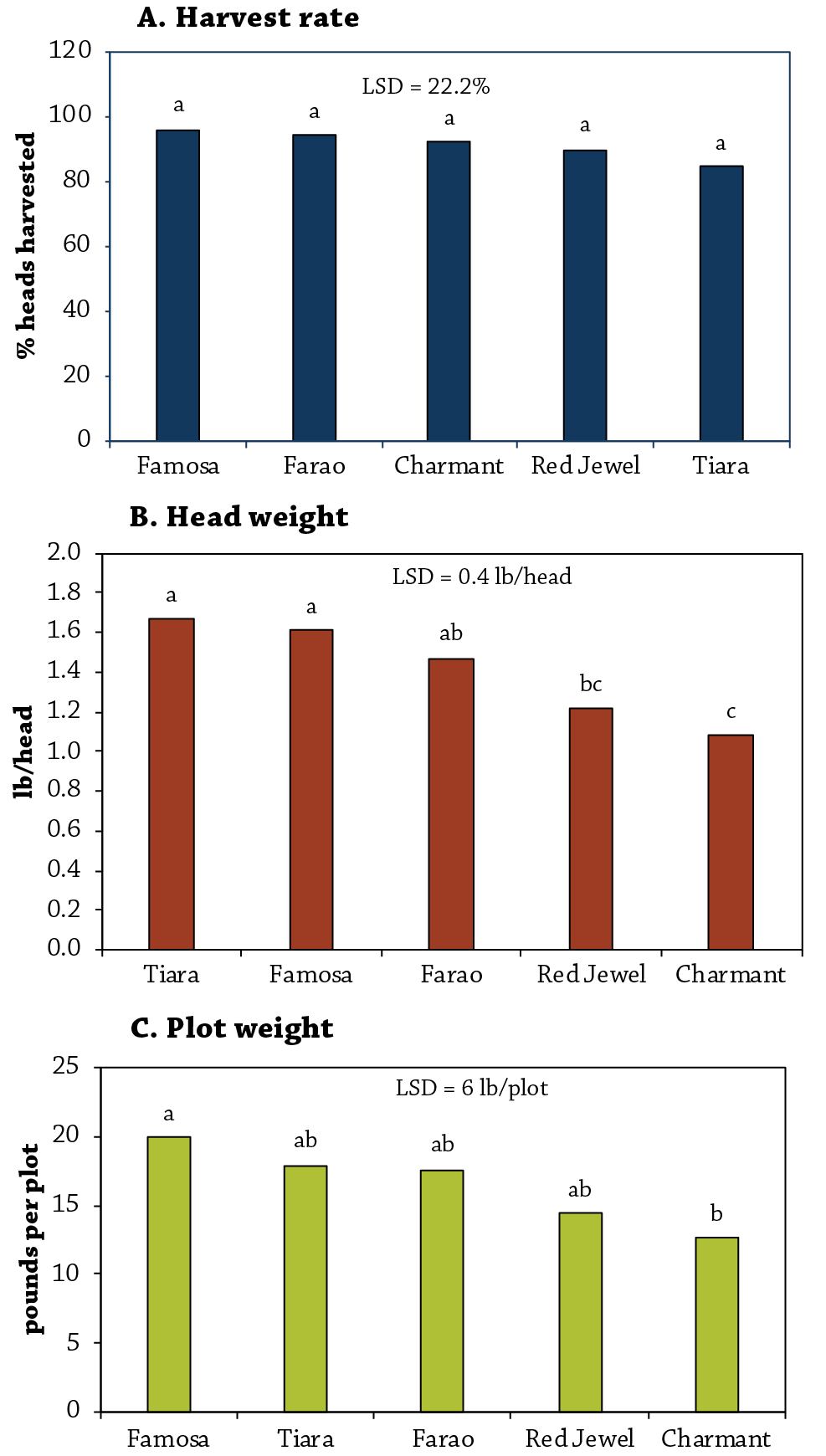
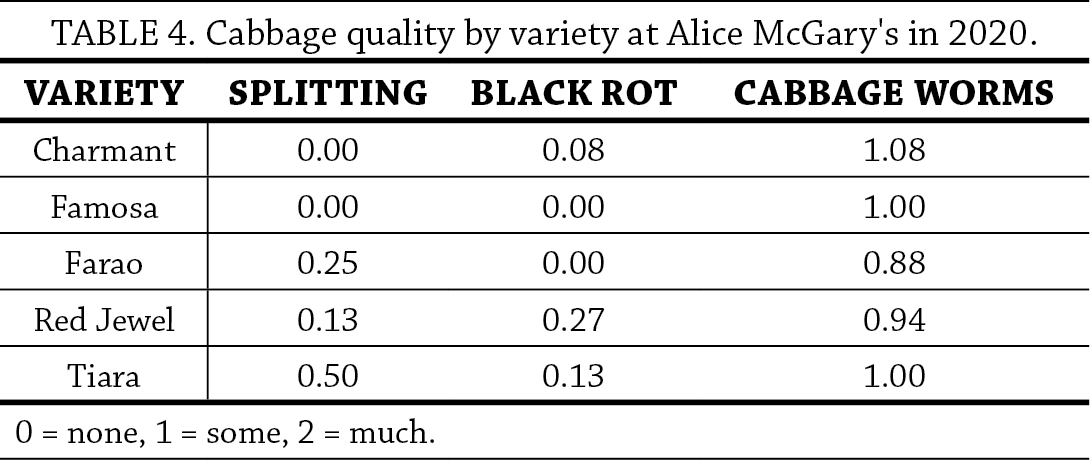
McGary compared five varieties of cabbage in one succession. No significant difference was found in harvest rate across these five varieties (Figure 3A). There were differences in head weight among varieties, however. Tiara and Famosa had the highest head weight, followed by Farao, Red Jewel and Charmant (Figure 3B). In plot weight, Famosa again performed significantly better than other varieties, and Charmant performed significantly worse (Figure 3C).
Alice McGary
McGary compared five varieties of cabbage in one succession. No significant difference was found in harvest rate across these five varieties (Figure 3A). There were differences in head weight among varieties, however. Tiara and Famosa had the highest head weight, followed by Farao, Red Jewel and Charmant (Figure 3B). In plot weight, Famosa again performed significantly better than other varieties, and Charmant performed significantly worse (Figure 3C).
 Carmen and Maja Black
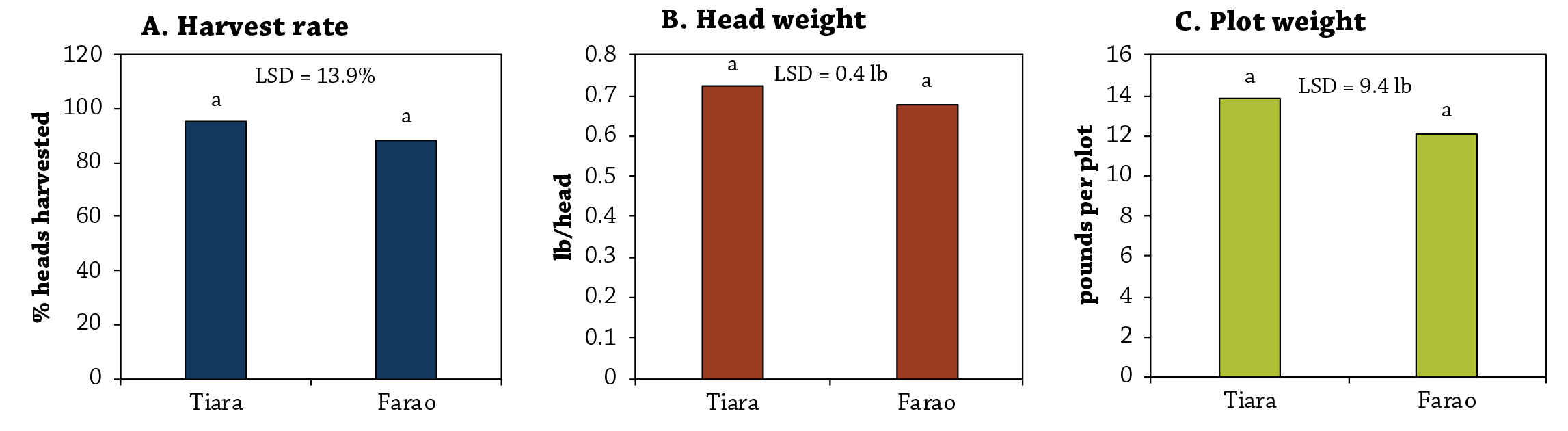
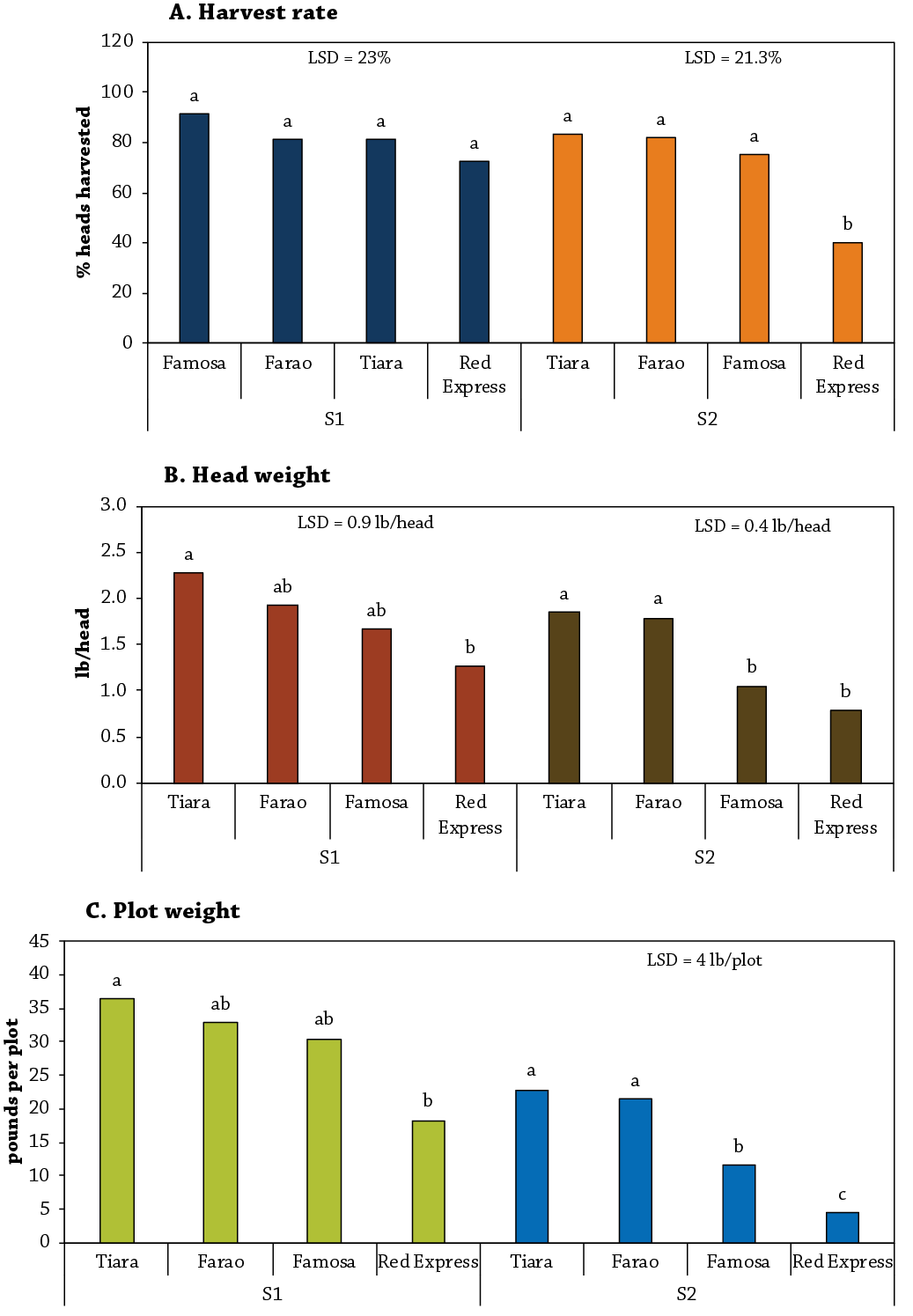
At Carmen and Maja Black’s farm, four varieties were tested in two successions: Famosa, Farao, Red Express and Tiara. The harvest rate among varieties was statistically similar in S1, but in S2 Red Express had a significantly lower harvest rate (Figure 4A). Tiara had the best head weight in both successions, and Red Express had the worst, by a statistically significant margin (Figure 4B). The same was true of plot weight, with Tiara having the highest and Red Express the lowest, by a very significant amount (Figure 4C).
Carmen and Maja Black
At Carmen and Maja Black’s farm, four varieties were tested in two successions: Famosa, Farao, Red Express and Tiara. The harvest rate among varieties was statistically similar in S1, but in S2 Red Express had a significantly lower harvest rate (Figure 4A). Tiara had the best head weight in both successions, and Red Express had the worst, by a statistically significant margin (Figure 4B). The same was true of plot weight, with Tiara having the highest and Red Express the lowest, by a very significant amount (Figure 4C).

Conclusions and Next Steps
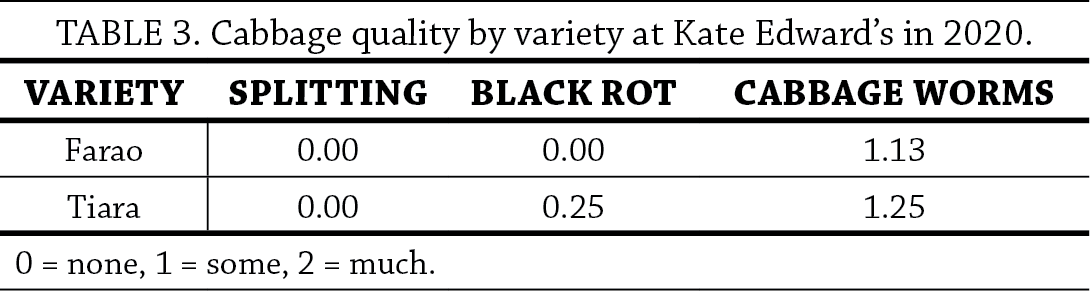
Cooperators expected Farao to be a top producer and provide better quality. This turned out to be true at each of the four farms with Tiara consistently scoring among the best as well.
For Emily Fagan, this trial taught her which varieties to plant and which to avoid. “[It] will save me from trying to grow unproductive varieties in the summer,” Fagan said. Kate Edwards noted that while factors outside of her control were challenging, the trial was still valuable.
Cooperators want to continue the Cabbage Variety Trial for a third year this growing season. Edwards plans to compare her year 1 and year 2 varieties for a final verdict. “I also plan to stagger the seeding date in the greenhouse a little and plant our plants when they are ready instead of waiting to get a better distance between trial successions,” Edwards said. Hannah Breckbill and Emily Fagan also wish to participate in the trials third year, but have learned that red cabbage does not grow as well for them. “I think we'll stop trying red cabbage in the summer, and will add a new variety of green cabbage to our summer plantings,” Fagan said.
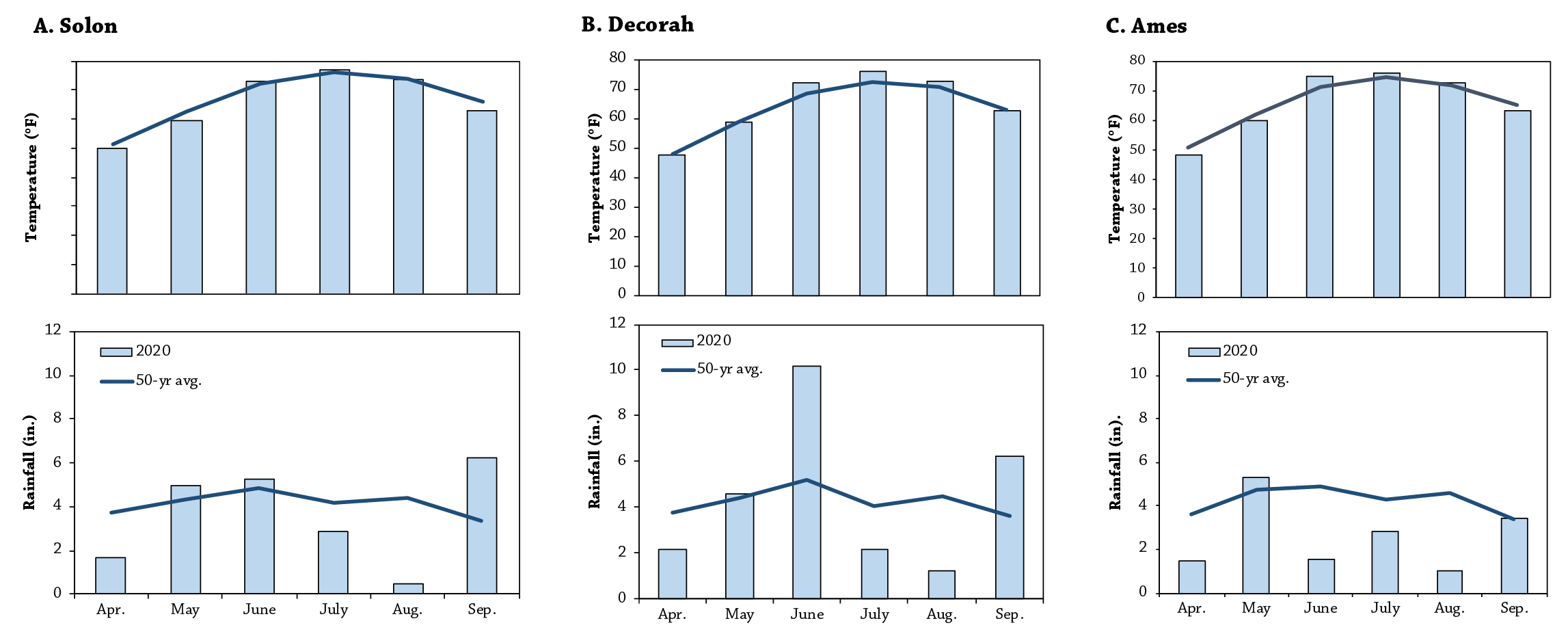
Appendix – Trial Design and Weather Conditions
References
- Kolbe, L., C. Black, M. Black, K. Edwards and E. Fagan. 2020. Cabbage Variety Trial. https://practicalfarmers.org/research/cabbage-variety-trial/.
- Iowa Environmental Mesonet. 2021. Climodat Reports. Iowa State University.