In a Nutshell:
- The ‘Carmen’ F1 variety sweet pepper is an excellent pepper, but the complexities of maintaining an F1 hybrid line are reflected in the seed price.
- Cooperators were motivated to identify an OP line that could match or come close to Carmen, which would be cheaper to buy and whose seeds they would have the option of saving.
Key Findings
- Carmen produced the highest total yields and largest peppers.
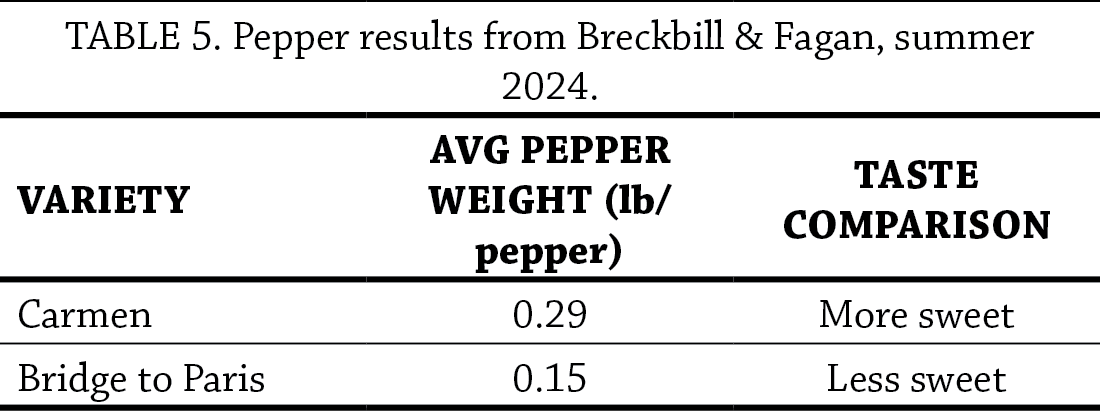
- In taste tests, Carmen peppers were almost always sweeter than the other varieties.
- At Pipho’s farm, Corno di Torro produced more individual peppers, over a longer period than Carmen.
Background
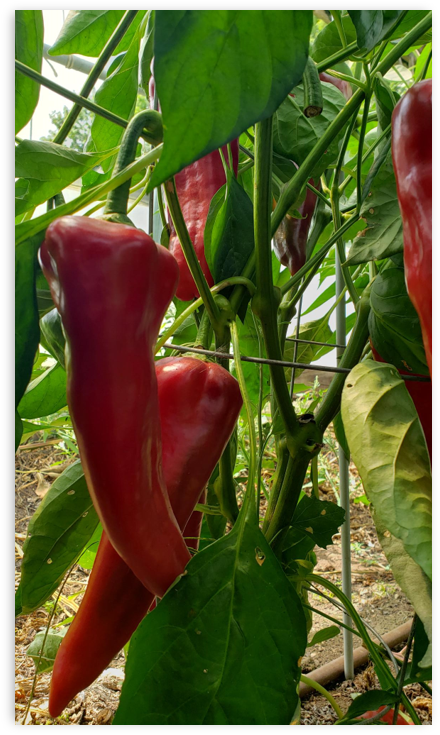
‘Carmen’ is a best-selling and best-producing F1 sweet pepper variety. “F1” designates it as a hybrid, the product of the controlled crossing of two distinct parental lines. As such it benefits from heterosis (hybrid vigor) where the offspring of hybrid crossings outperform the parental lines because they inherit the benefits from both parents. Carmen tastes good, matures rapidly, and is well adapted to cooler growing environments like Iowa. However, its hybrid background comes with a downside: it requires the management of the two distinct lines, with controlled, hand-pollinated, crosses to produce Carmen hybrid offspring. This adds cost and complexity for the seed producers, which is passed to the grower as additional cost. Carmen plants produce well, but saving and regrowing Carmen seeds is not practical, as the future generations will be less consistent, with more of the parent-line traits fully expressed, including possible deleterious traits. An alternative is to grow non-controlled, open pollinated (OP) varieties. Rather than coming from a single controlled lineage, or the crossing of two lineages, OP plant varieties are population of plants that have been selected for desired characteristics, with no control of pollination. OP lines are not as consistent between individuals in the line as F1 hybrid lines, but are more consistent over time across generations. The larger pool of genes in an OP line—which results in this lower inter-individual level of similarity—makes the line more resilient against climate change, and against weather or other shocks for which a hybrid might not have been selected. Hannah Breckbill and Emily Fagan, Marla Looper, and Michael Pipho were motivated to carry out this investigation of Carmen and OP pepper varieties to inform their efforts to save good seeds and genetic material for future use, to increase their operations’ resiliencies. Seed saving also helps secure financial and logistic independence from the seed company. Fagan wrote “If we can find an open pollinated pepper variety that we like just as well as Carmen, then we'd be able to save the seed if we wanted to. It could help us feel more resilient, being able to work on a Midwest-adapted variety.”Methods
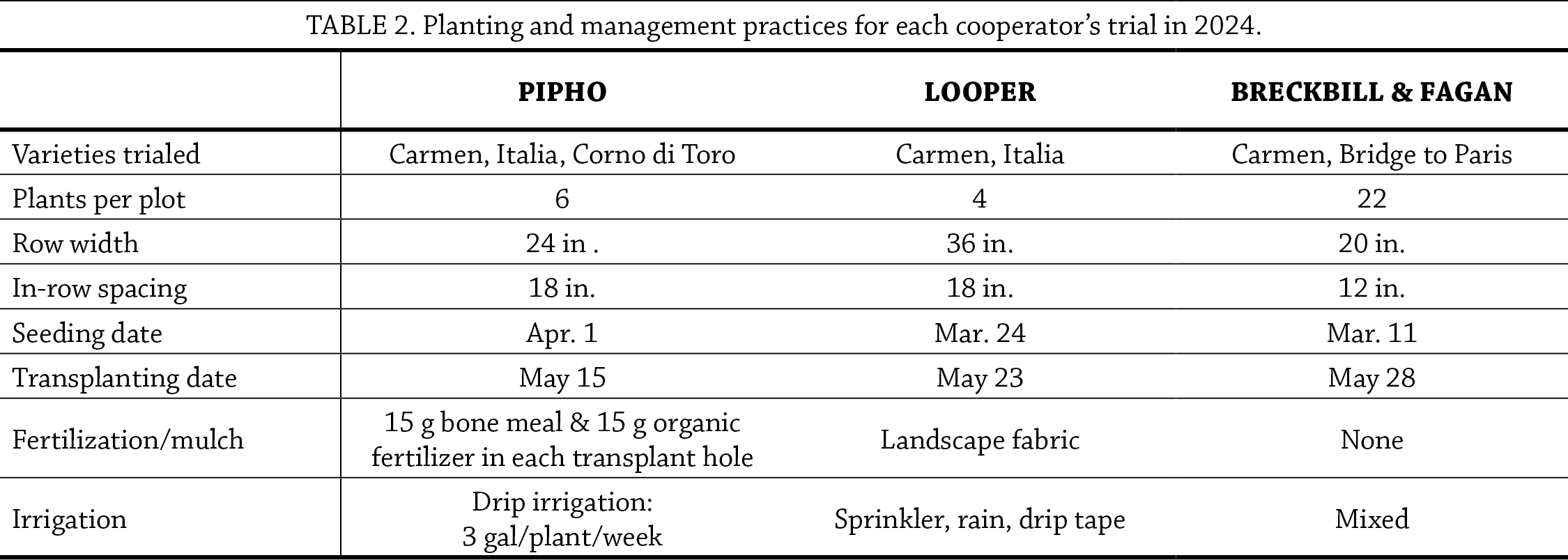
Design Cooperators tested the following sweet pepper varieties: Carmen, Italia, Corno di Torr, and Bridge to Paris. Carmen served as a standard point of comparison and was grown by all of the farms. The other varieties tested against Carmen were selected by the cooperators based on their individual preferences and seed availability (Table 1). Production practices for each farm are presented in Table 2. Seeds were started indoors and transplanted outside in mid-May. Each cooperator established at least four replicates of each selected variety.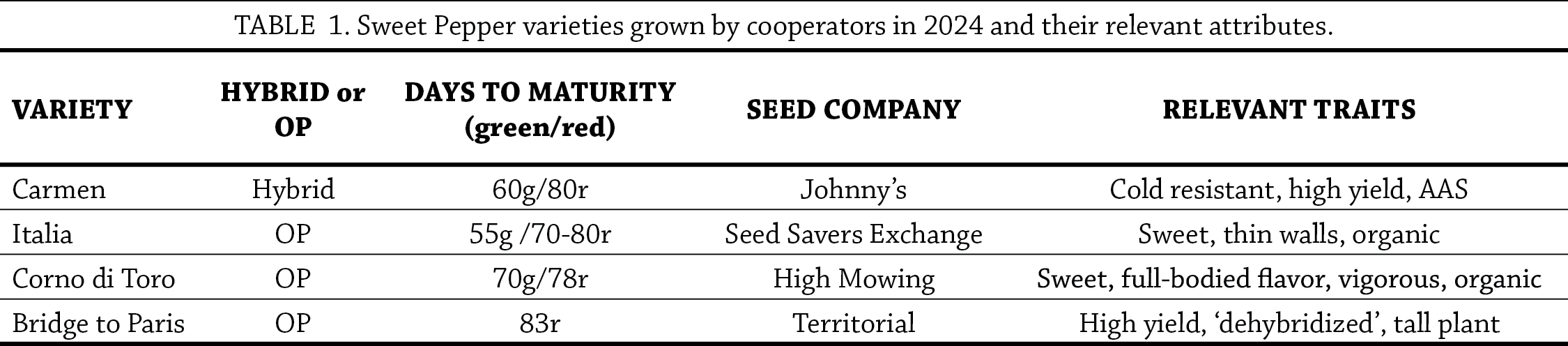
 Measurements
Harvesting about once a week during the harvest window, from August 8 through October 4, 2024, cooperators weighed the marketable peppers, and counted the number of marketable fruits, enabling the calculation of an average weight for each replicate.
They also tasted a random sampling of the marketable peppers from each variety. They noted whether the OP varieties were more, less, or as sweet as Carmen.
Data analysis
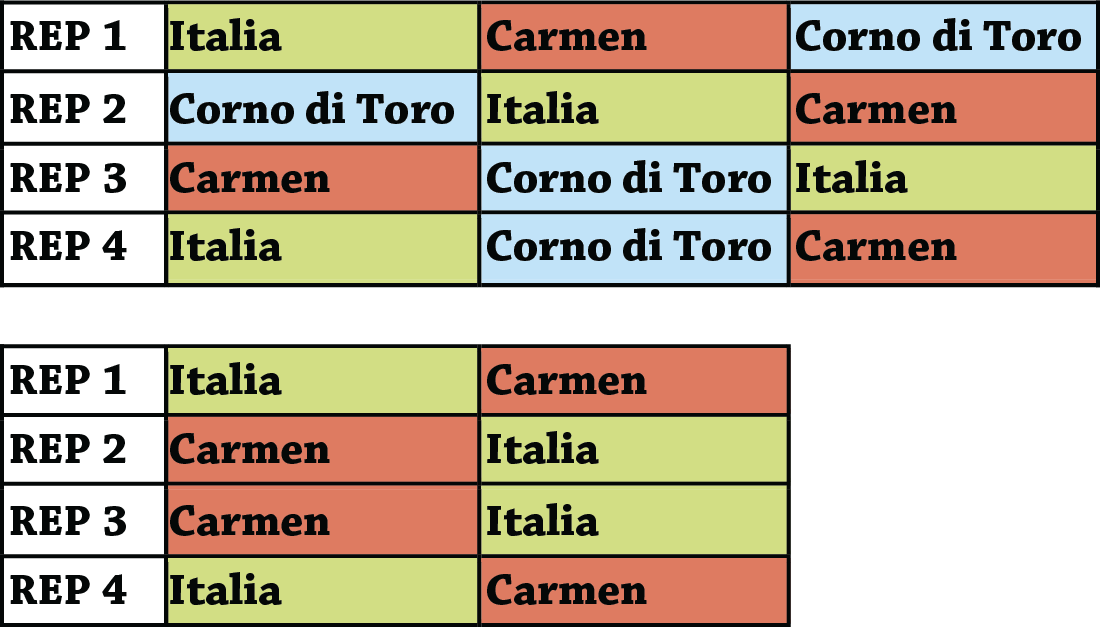
We used Fischer’s LSD at a 95% confidence level to determine if there were significant differences between varieties. For each metric, the difference between any two varieties is compared with the LSD. A difference greater than or equal to the LSD indicates the presence of a statistically significant treatment effect, meaning one variety outperformed the other and the farmer can expect the same results to occur 95 out of 100 times under the same conditions. A difference smaller than the LSD indicates the difference is not statistically significant and the treatment had no effect. We can perform this analysis where the cooperators had completely randomized and replicated experimental designs (Figure A1).
Measurements
Harvesting about once a week during the harvest window, from August 8 through October 4, 2024, cooperators weighed the marketable peppers, and counted the number of marketable fruits, enabling the calculation of an average weight for each replicate.
They also tasted a random sampling of the marketable peppers from each variety. They noted whether the OP varieties were more, less, or as sweet as Carmen.
Data analysis
We used Fischer’s LSD at a 95% confidence level to determine if there were significant differences between varieties. For each metric, the difference between any two varieties is compared with the LSD. A difference greater than or equal to the LSD indicates the presence of a statistically significant treatment effect, meaning one variety outperformed the other and the farmer can expect the same results to occur 95 out of 100 times under the same conditions. A difference smaller than the LSD indicates the difference is not statistically significant and the treatment had no effect. We can perform this analysis where the cooperators had completely randomized and replicated experimental designs (Figure A1).
Results and Discussion
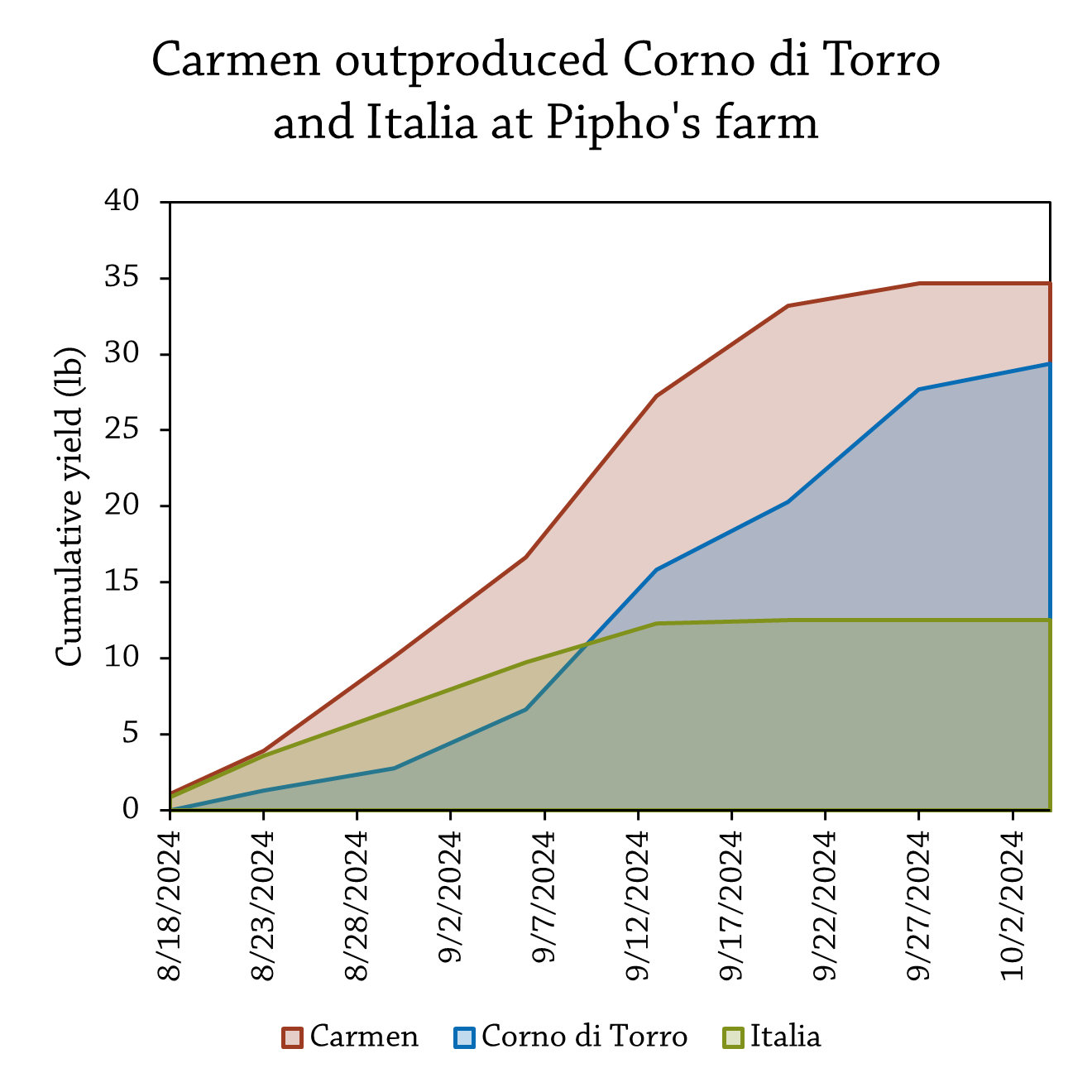
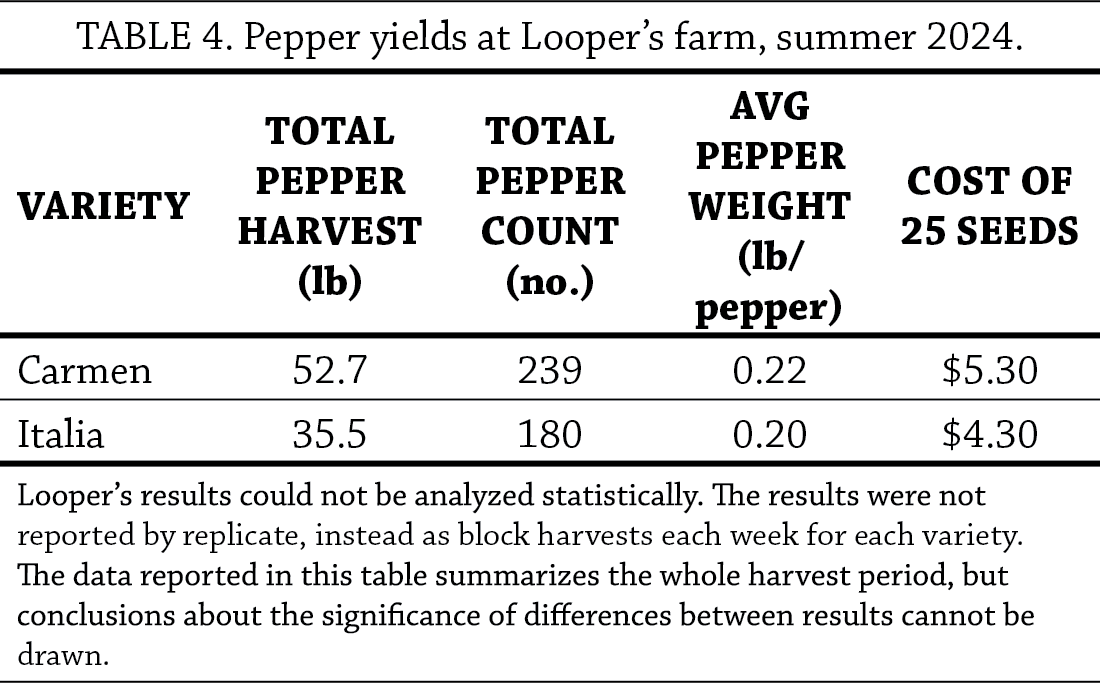
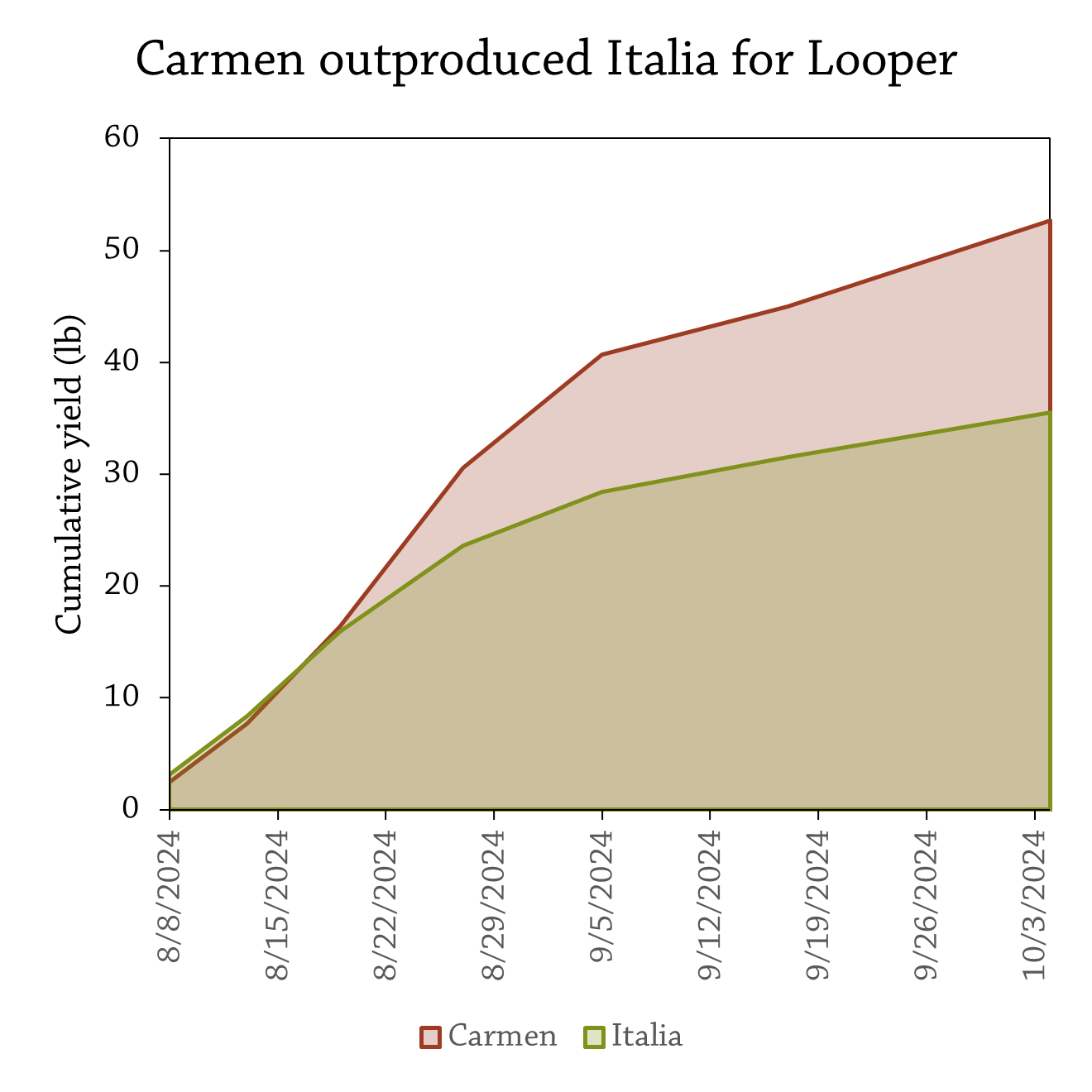
Pipho Pipho saw good germination from all three of his varieties (>95%) and had 100% survival after transplantation. Corno di Toro and Italia were less productive and had more variation between plants and peppers than Carmen (Table 3). Corno di Toro produced more total individual peppers than Carmen, the only metric in the entire project where Carmen was surpassed. He noted that Carmen started slightly faster than the other two (Italia, Corno di Toro) and were slightly larger at transplantation (Figure 1). Perhaps due to his later seeding and transplanting dates, his production peaked later than Looper’s. Pipho had some standout Corno di Toro individuals producing for weeks after the other plants had stopped. He remarked that Corno di Toro’s longer, shallower production arc worked well for him, since at the peak of the season he had more peppers than he could use and he was forced to find alternative outlets.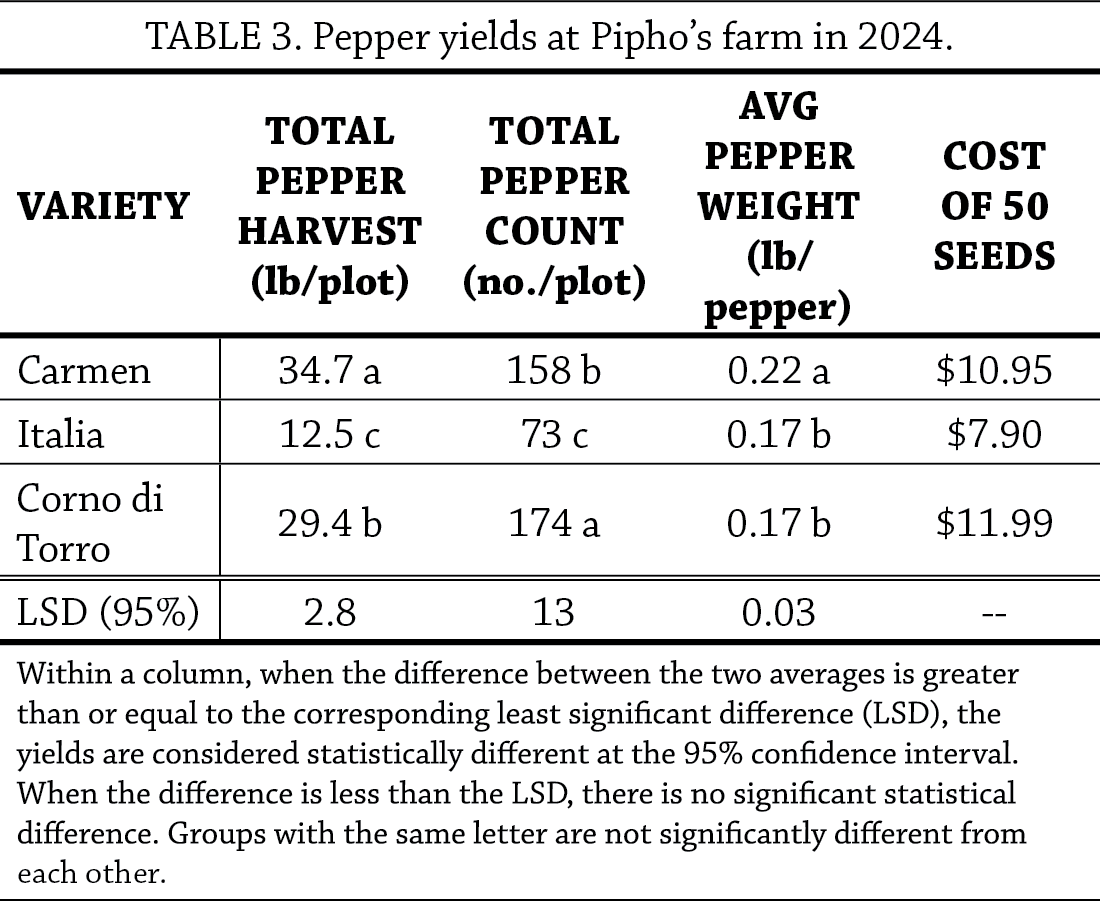
Conclusions and Next Steps
This project was conducted in hopes identifying an open-pollenated, ‘bull’s horn’, Italian sweet pepper variety that could rival the Carmen F1 hybrid by Johnny’s Seeds, which Breckbill & Fagan referred to as their ‘gold standard’ variety. We evaluated three alternative varieties, and although none matched Carmen in total yield or pepper size, individual varieties’ traits could find niches in a diversifying operation. For example, Corno di Toro produced more individual peppers, over a longer period at Pipho’s farm, which he wrote would help him to extend his season. The trials helped cooperators evaluate whether any of the alternative varieties would meet their needs. Breckbill & Fagan wrote that they would avoid Bridge to Paris for market production. Pipho wrote that he “saw a very clear difference between the pepper varieties tested, which will help [him] make better planting decisions going forward. He will be planting approximately equal numbers of the Carmen and Corno di Torro peppers... Based on the results, [he] will not be planting Italia plants.” This project will be repeated in 2025.Appendix – Trial Design and Weather Conditions
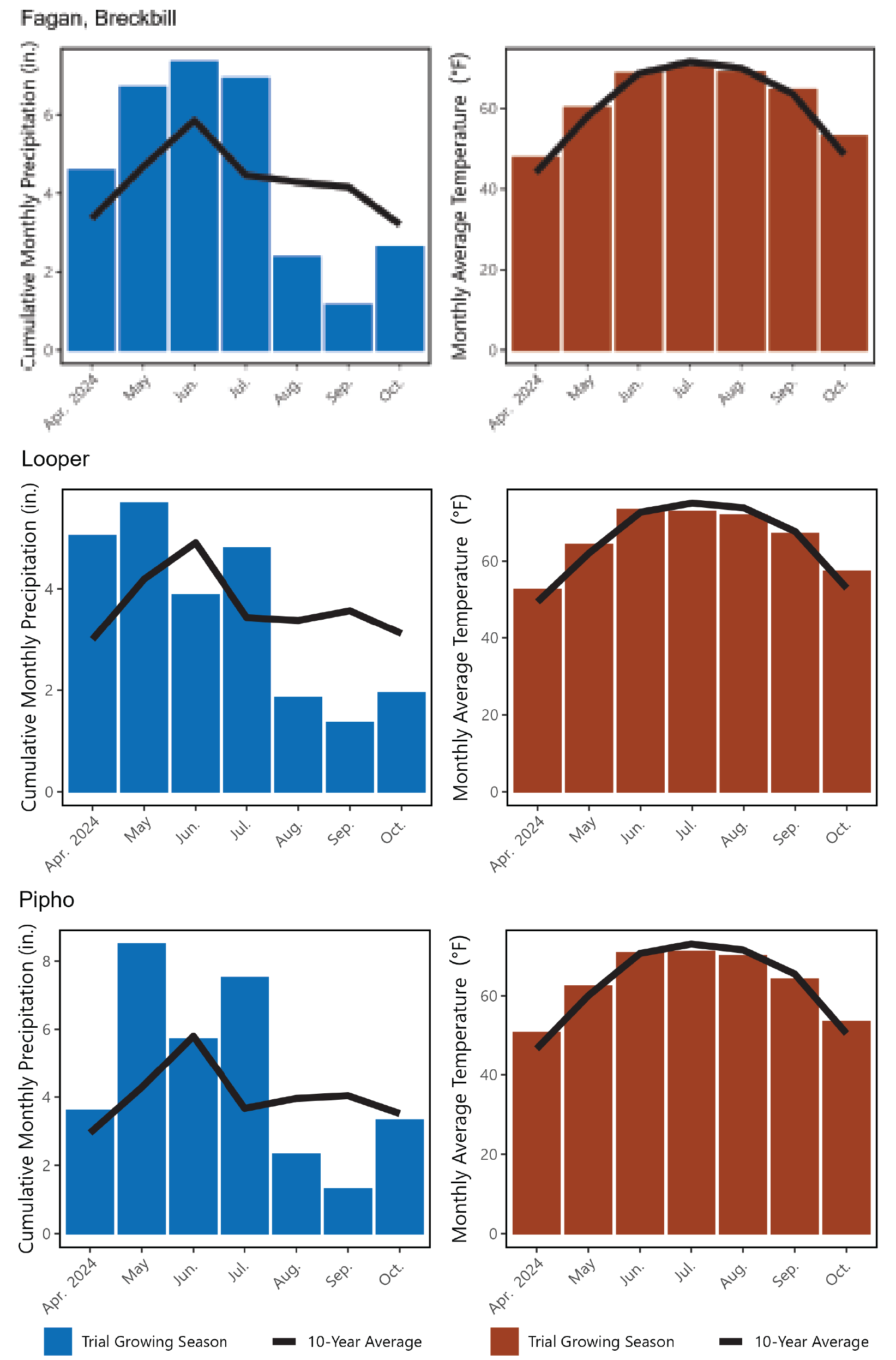
Funding Acknowledgement
Funding for this project was made possible by a grant/cooperative agreement from the U.S. Department of Agriculture (USDA) Agricultural Marketing Service. Its contents are solely the responsibility of the authors and do not necessarily represent the official views of the USDA.References
[1] A. H. Sparks, “nasapower: A NASA POWER Global Meteorology, Surface Solar Energy and Climatology Data Client for R,” J. Open Source Softw., vol. 3, no. 30, p. 1035, Oct. 2018, doi: 10.21105/joss.01035. [2] A. Sparks, nasapower: NASA-POWER Data from R. (2024). [Online]. Available: https://CRAN.R-project.org/package=nasapower