What is Hybrid Cereal Rye?
Crop Analyzer Results
This case-study analysis used the Crop Rotation Analyzer Tool to compare the farmer's three rotations:- His current corn-soybean rotation (henceforth “two-year rotation”)
- His current continuous corn system (henceforth “continuous corn”)
- A hypothetical corn-soybean-hybrid rye/red clover rotation (henceforth “extended rotation”)
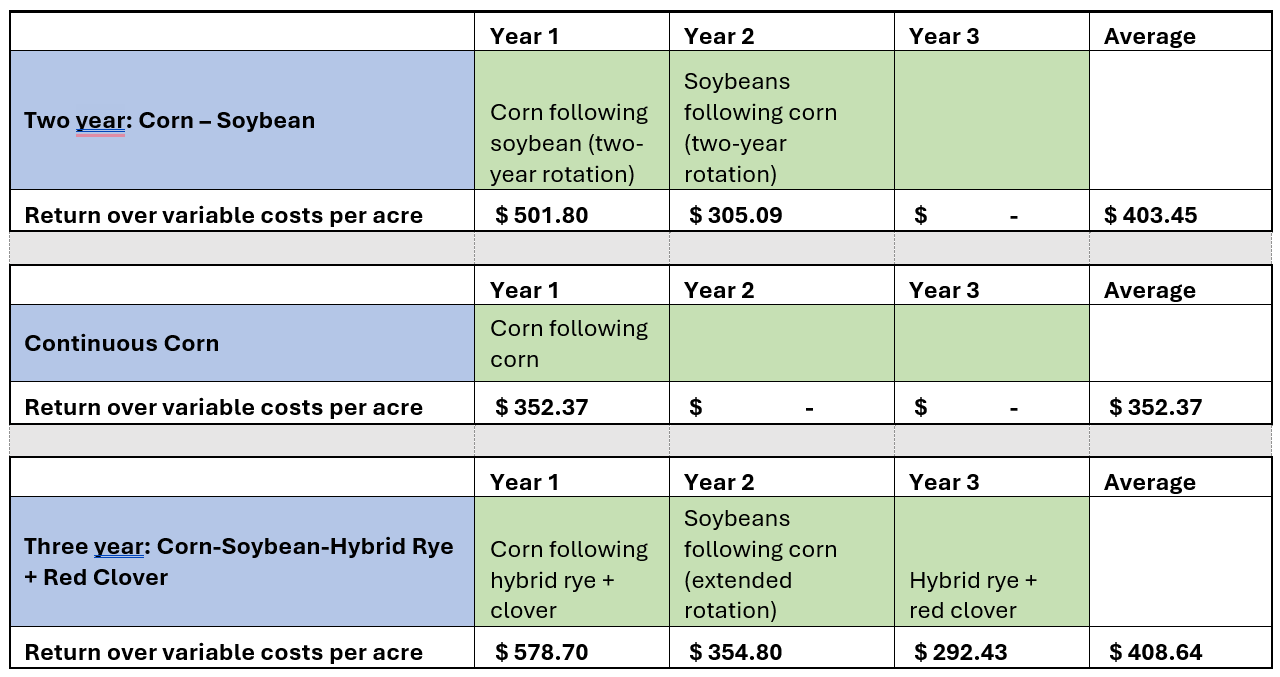
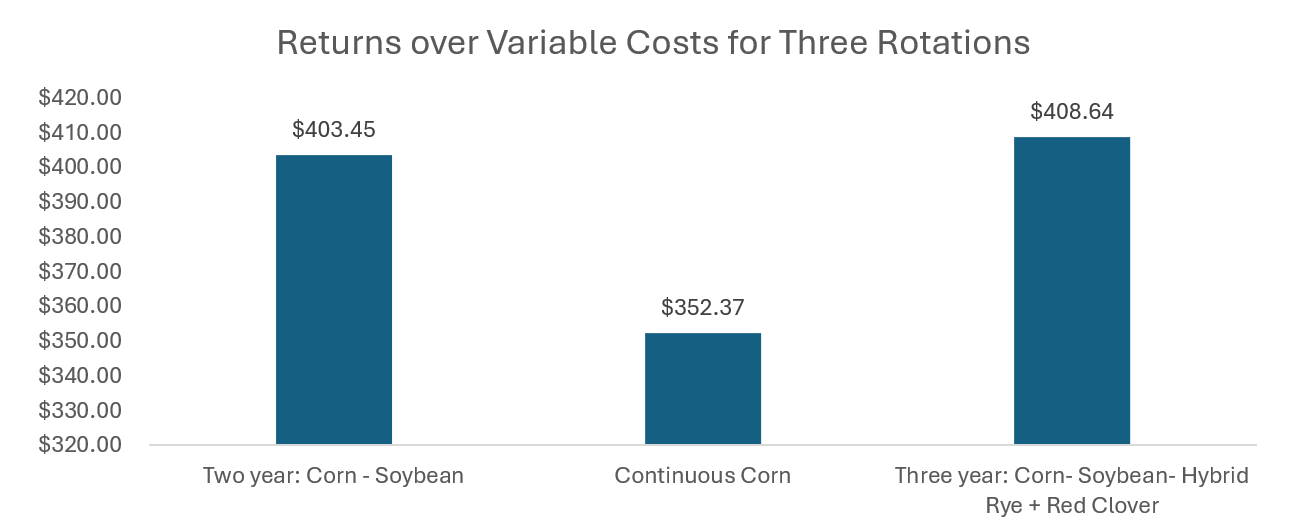 Of note, the hybrid rye plus red clover is the least lucrative year out of any crops in all three rotations. However, increased profitability of the crops grown in rotation with hybrid rye makes up for the lower returns during the hybrid rye year. See the table below.
Budget Assumptions and Sources
The budget estimates for this study were co-developed with the western Iowa farmer who was curious about raising hybrid rye. We used his actual input prices, yield estimates, and revenue estimates for the two-year budget and the continuous corn budget. Because the farmer provided a fair amount of detailed financial information specific to his farm, we opted to keep him anonymous. Values for the extended rotation budget with hybrid rye and clover were developed by PFI and approved by the farmer. The corn and soybean input and yield estimates were based on the farmer's actual numbers. Hybrid rye production expenses and revenue estimates came from a combination of KWS production guides, responses from farmer participants in PFI's small grain cost-share and consultation with experts from Albert Lea Seed and UM Forever Green. Insights on estimates for yield impacts of different rotations were provided by a professor emeritus of cropping systems. Digging into the costs and revenue of hybrid rye, we made the following assumptions:- Straw was harvested from the hybrid cereal rye crop. This was an important source of revenue ($216/acre), but also added to the costs of production, with $68/acre being spent in the mowing, raking, baling and moving of the bales, plus the added expenses of P and K removed in straw. Without the additional revenue from straw, the extended rotation would not be more profitable than the two-year rotation.
- We took a conservative approach to the hybrid rye revenue in the case study. We used moderate estimates of 95 bushels of grain per acre for yield and $5.40 per bushel for price. (This was $0.40 higher than the price of corn used for the analysis.) We estimated 1.8 ton straw/acre at $120/ton. It is likely that a producer could bring in higher yields and potentially higher prices depending on the market.
- We included zero crop protectants for hybrid rye; however, we assumed needing the following N-P-K rates (in lbs/acre): 64-109-117. This penciled out to roughly half the cost of fertilizer in corn from the two-year rotation.
Financial ‘Wins' of Hybrid Rye in the Rotation
Including hybrid rye in the rotation is economically advantageous in two important ways: 1. Higher corn and soybean yields in the extended rotation and 2. Savings on input costs for the crop years in the extended rotations.Extended Rotation Begets Higher Corn and Soybean Yields
In this example, we used the farmer-provided yields in the two-year and continuous corn rotations. We then assumed a 5% increase in yield of the corn in an extended rotation compared with the two-year rotation (11 bu/acre), and a 7% increase in soybean yield between the two-year rotation and the extended rotation (4.2 bu/acre). This estimation is based off a series of peer-reviewed journal articles linked below in the “Additional Resources” section.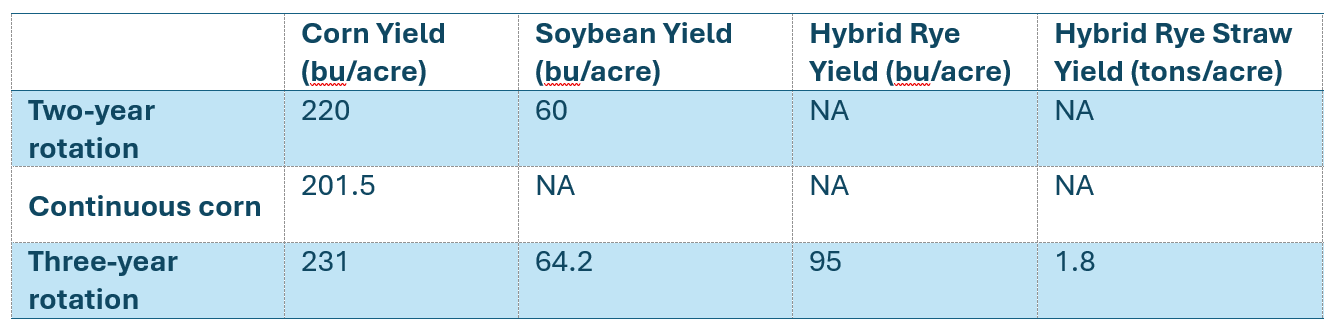
Extended Rotation Enables Savings in Purchased Inputs, Especially in Corn
The other financial win of hybrid rye in a rotation is the savings in crop production expenses—especially in corn following hybrid rye plus red clover. The extended rotation with hybrid rye plus red clover scenario included a robust red clover stand following the hybrid rye; the scenario accounted for a ~100 lb N/acre credit from the red clover. For reference, the soybean credit was about 45 lb N/acre per the farmer's estimation. The reduced N rate to corn in the extended rotation saved about $22/acre. Note that reducing N still resulted in higher yield estimates of corn in the extended rotation, as indicated above.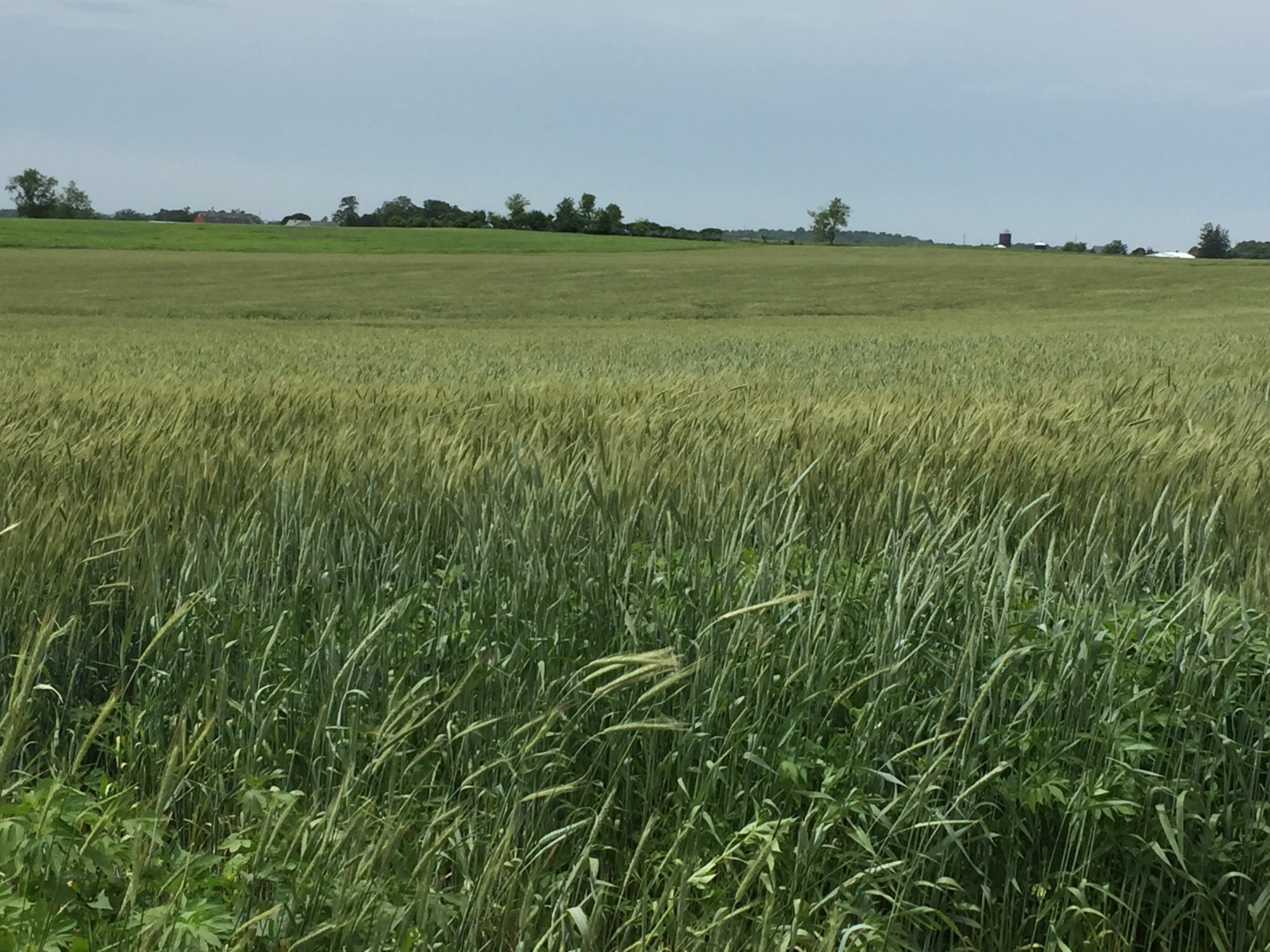 This case study uses some real numbers and some hypothetical numbers. If the numbers used don't resonate for what might occur on your farm, you can download a copy of the Crop Rotation Budget Analyzer workbook and adjust values to more accurately reflect your situation.
With a few key assumptions, the economic case for hybrid rye is real. The work is now about building markets to ensure there is a reliable outlet for farmers to sell hybrid rye.
This case study uses some real numbers and some hypothetical numbers. If the numbers used don't resonate for what might occur on your farm, you can download a copy of the Crop Rotation Budget Analyzer workbook and adjust values to more accurately reflect your situation.
With a few key assumptions, the economic case for hybrid rye is real. The work is now about building markets to ensure there is a reliable outlet for farmers to sell hybrid rye.
Additional Resources
Justification for yield increases in an extended rotation are based off data from: "Cropping Systems Coordinated Agricultural Project: Extended Rotations.” Presented at Iowa State University, Ames, IA; August 5‐7, 2014. Authors: Joe Lauer, Emerson Nafziger, Maciej Kazula, Maria Villamil, Gevan Behnke, and Thierno Diallo. "Wheat improves nitrogen use efficiency of maize and soybean-based cropping systems.” Authors: Amélie C.M. Gaudin, Ken Janovicek, Bill Deen, David C. Hooker. Agriculture, Ecosystems & Environment, Volume 210, 2015, Pages 1-10, https://doi.org/10.1016/j.agee.2015.04.03 “Corn and soybean yields and returns are greater in rotations with wheat.” Ken Janovicek, Dave Hooker, Alfons Weersink, Richard Vyn, Bill Dean. Agronomy Journal, Volume 113, Issues 2, Pages 1691-1711, https://doi.org/10.1002/agj2.20605 2024 KWS Hybrid Rye Production GuideThis material is based upon work supported by the U.S. Department of Agriculture, under agreement number NR213A750013G024. Any opinions, findings, conclusions, or recommendations expressed in this publication are those of the author(s) and do not necessarily reflect the views of the U.S. Department of Agriculture. In addition, any reference to specific brands or types of products or services does not constitute or imply an endorsement by the U.S. Department of Agriculture for those products or services.