Tammy Deal's dogs Zoey and Gracie gaze upon a blue-green algae bloom in Lake Panorama, caused by an excess of nitrogen and phosphorus in the water. Photo courtesy of Tammy Deal.
Farmers and landowners are taking actions and speaking up for practices that support cleaner water
The Middle Branch
Everything clicked at a class hosted by the Women, Food and Agriculture Network in 2019. “That was really where farming practices and water quality started coming together for me,” says Tammy Deal, referencing demonstrations showing that soils from cover cropped, no-till and pastured fields retain water and structure better than repeatedly tilled bare fields.
Tammy had been managing her family’s farmland near Panora, in Iowa’s Raccoon River Watershed, since returning home in 2011. But because she was not farming herself, learning about field crop agriculture had been a gradual process.

“What I understood from the class,” Tammy says, “is that many of the nutrients we use to feed our crops will actually stay with the soil in the field if you have cover crops and no-till practices in place.”
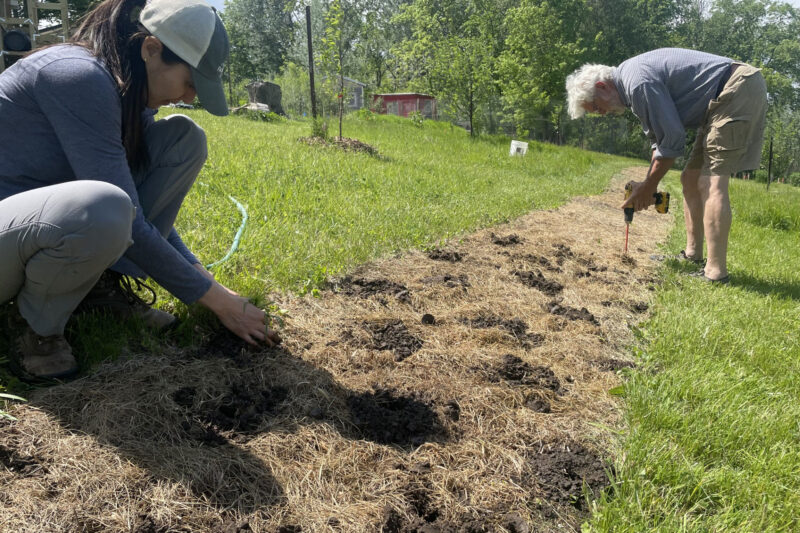
Inspired by what she learned, Tammy decided to try cover crops and no-till on her family’s farmland. She recruited a local cover cropping farmer to farm one of her fields. That first year went well. Over the ensuing years, Tammy’s other tenants took up the practices too, with her support.
To encourage open communication and constant growth, one question Tammy asks her tenants each year is, “If there’s one thing that we could do to continue to improve this farming operation for the next year, what would you suggest we try?” That invitation to exchange ideas has helped Tammy and her tenants adopt more conservation practices each year.
Yet water quality continues to be a concern for her, especially from her home looking out over Lake Panorama, where she enjoyed swimming as a child. “When I moved back here in 2011, there was about a two-week episode of blue-green algae blooms. And over time, the length of those blooms kept increasing.”
The blooms, caused by an excess of nitrogen and phosphorus in the water, can be highly toxic – harmful to swim in, much less drink. Tammy never lets her dog in the water, and she knows neighbors who have had dogs die after accidental swims in the lake during a bloom.
The North Branch
Two counties away, in the North Raccoon River Watershed, farmer James Hepp is also appalled by the state of Iowa’s water. “I grew up with Twin Lakes 5 miles away and you’d never dream of swimming in it,” he says. “Looking back, that was normal. But that’s not normal, it’s wrong.”
He understands that much of the nitrate making its way into rivers comes from farms. Some of it is from fertilizer leaking from farm fields into waterways. Wind can also blow nutrient-dense topsoil into ditches, where it gets washed into nearby streams.
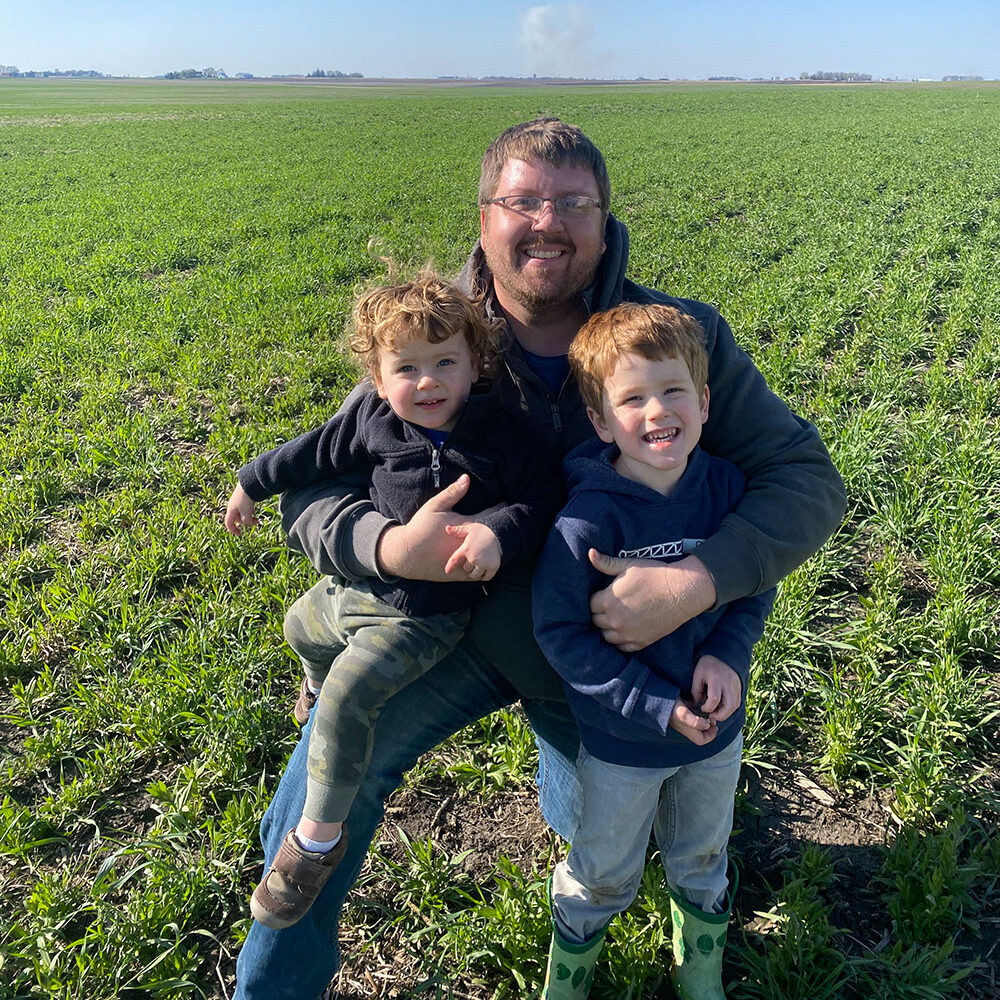
Like Tammy, knowing that farms play a key role in Iowa’s water quality guides many of the decisions James makes for his operation. As a first-generation farmer, he rents nearly all his acres and says he’s grateful the landowner – his farming mentor, Keith Sexton – has never demanded that he farm a particular way.
In 2020, James took over farming all of the Sexton family’s acres. He raises corn and soybeans and embraced no-till and cover cropping after seeing the weed reduction potential of his first rye cover crop. James also found that he was able to reduce his herbicide passes in the spring, saving $15-$20 per acre.
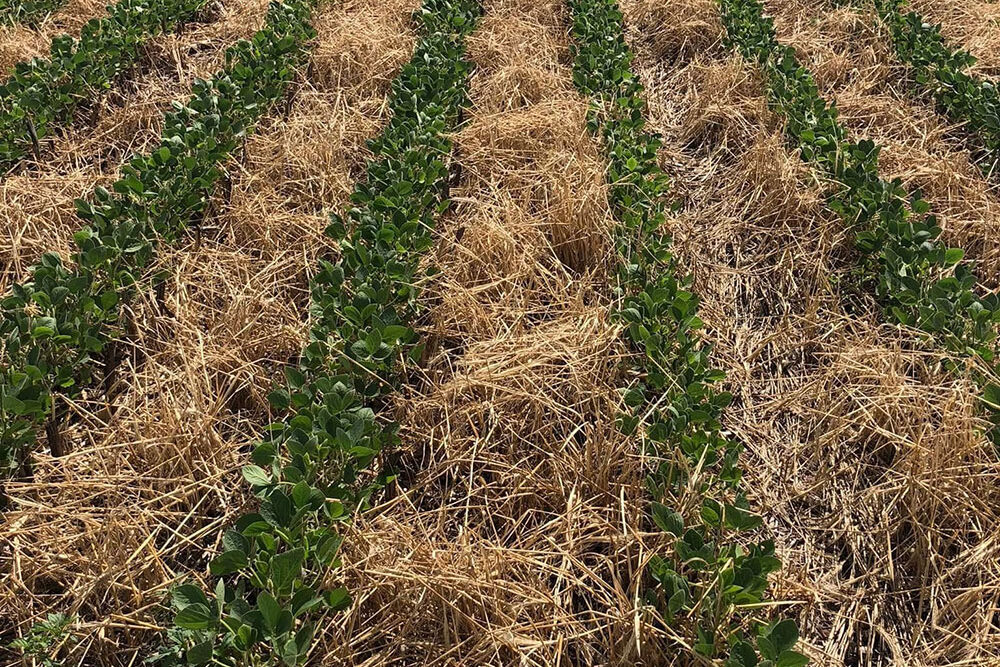
Eventually, James added small-grain crops into his rotations: cereal rye for cover crop seed and food-grade oats. He values the yield bump oats offer a corn crop. He also likes that he can grow his own nutrients through a summer cover crop mix following the small grain in rotation. James’ farming practices flow from his concern for both the health of his soils and downstream impacts. Seeing ditches blackened with topsoil in the winter frustrates him.
“Every speck of dirt has a nutrient value to it, and where does it go? It goes to the ditch,” he says. “What does the ditch do? Fill with water. Where does the water go? Down the tile.”
The Confluence
James’ and Tammy’s farms sit on different ends of the Raccoon River Watershed, which drains about 1.7 million acres of cropland. Waters from tributaries within the watershed convene just northwest of Van Meter and flow about 30 miles east to the confluence with the Des Moines River.
Just upstream, along the final stretch of the Raccoon River, is the Fleur Drive Treatment Plant, one of the water treatment facilities overseen by the regional Central Iowa Water Works. The plant sources from the Raccoon and Des Moines rivers, as well as groundwater, to provide drinking water for 600,000 residents of the Des Moines metro area.
In early December 2025, nitrate levels in the Raccoon River rose above 10 milligrams per liter, the legal federal limit for safe consumption. The plant was able to draw from slightly cleaner groundwater and Des Moines River sources for a time. But nitrate levels in the Des Moines River soon rose above that limit too, forcing CIWW to turn on its nitrate removal system in early January. The last – and only other – time the water utility had to run that system in the month of January was in 2015.
Normally, high nitrate levels are more of a concern from April through June as snow thaws and spring rains fall. But milder winter temperatures and lack of frost allowed unusually high levels of nutrients to enter waterways, causing the nitrate spike. Since turning on the nitrate removal facility in January, Central Iowa Water Works has had to run it nonstop at a cost of between $4,000 and $16,000 per day, according to the utility.
High nitrate levels can max out the facility’s treatment capabilities. That’s what happened last summer, when nitrate levels rose past 20 milligrams per liter – the highest level recorded since 2013, when it reached a record 24.4 milligrams per liter. The dangerously high levels in 2025 forced officials to enact water use restrictions, including a first-ever lawn watering ban, for the entire metro area.
The Influence
James and Tammy have been using their stories to influence others. “We’re running the nitrate plant already,” James says. “As much as I hate it, I think that’s a great headline to help us further our point faster. Enough’s enough.”
James has joined with Iowa farmers Matt Bormann and Zack Smith to form an advocacy group called the Lobe Rangers to raise awareness and push for a change in policies affecting soil and water health. “Peer pressure is a really big deal in farming,” James says. “The amount of people I talk to that love what I’m doing and know it works but won’t do it because their neighbor will make fun of them is baffling to me.”
A long-time attendee of educational events for farmers, James is increasingly stepping up to present at such events. He’s hoping to normalize the conversation about the responsibility farmers have to safeguard Iowa’s water quality.
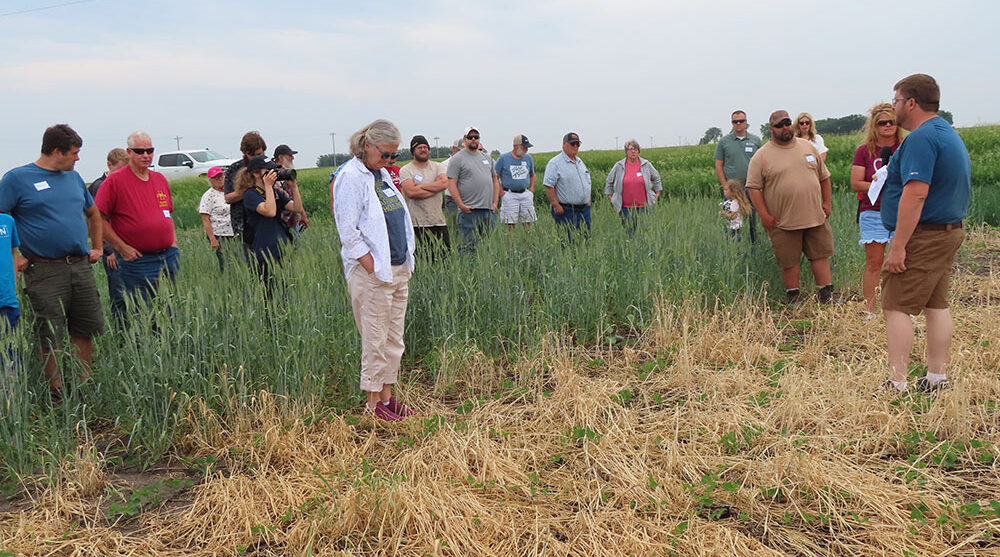
Meanwhile, Tammy is making her own splash. As a landowner successfully working with tenants to adopt new conservation farming practices, she spends much of her time engaging with other landowners. For several years, she hosted a Ladies’ Lunch for women landowners to learn ways to work with tenants to make gradual on-farm changes.
Tammy and James both believe that education, as well as opening lines of communication between farmer tenants and landowners, is key to making the changes needed to improve Iowa’s water quality. Though the work can be daunting as nitrate levels remain high, the ripples of their efforts are widening.
“When I get older,” James says, “I want my kids to look back and say, ‘I’m glad Dad stood up for something.’ Because we need to change. We have to change.”
Learn More
Curious about current water quality in Iowa? See the latest data on nitrate levels, pH, E. coli and more in wells, rivers and treatment plants across Iowa through these two sites: