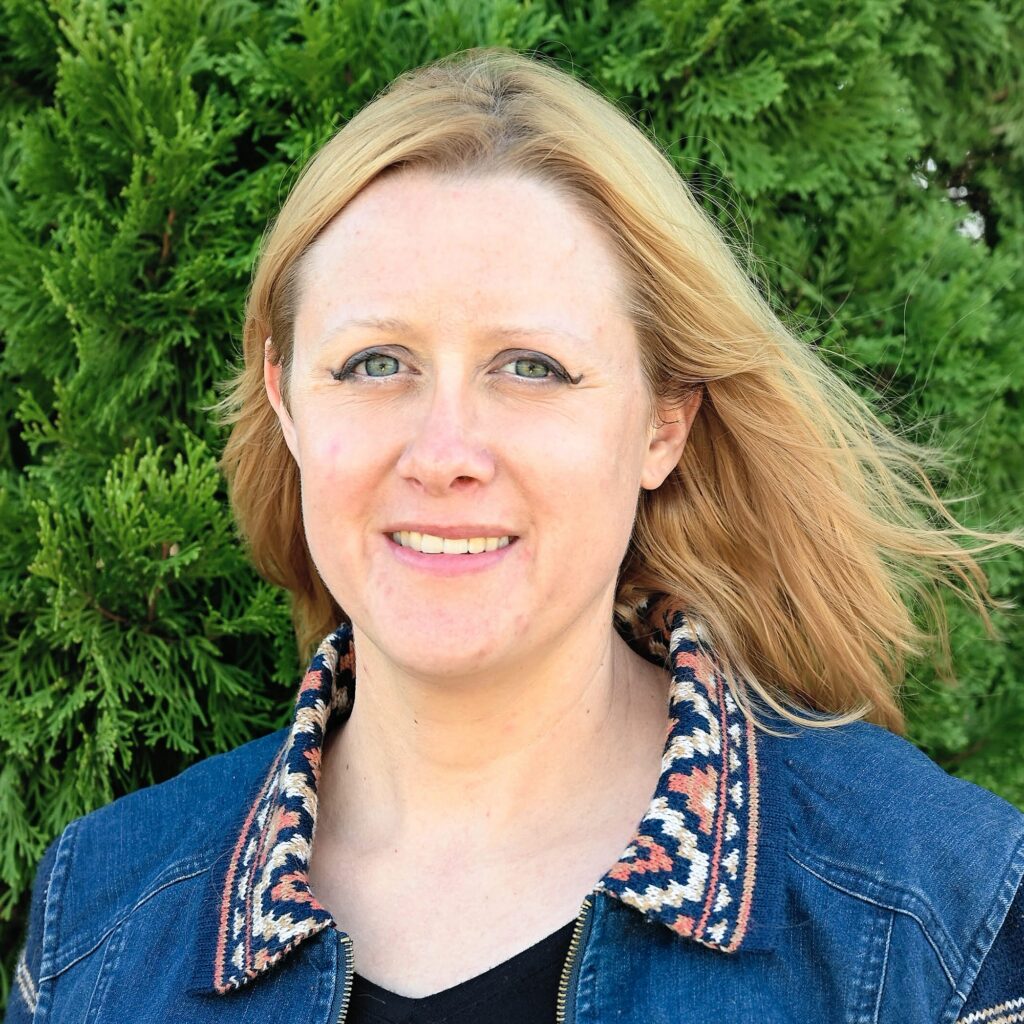
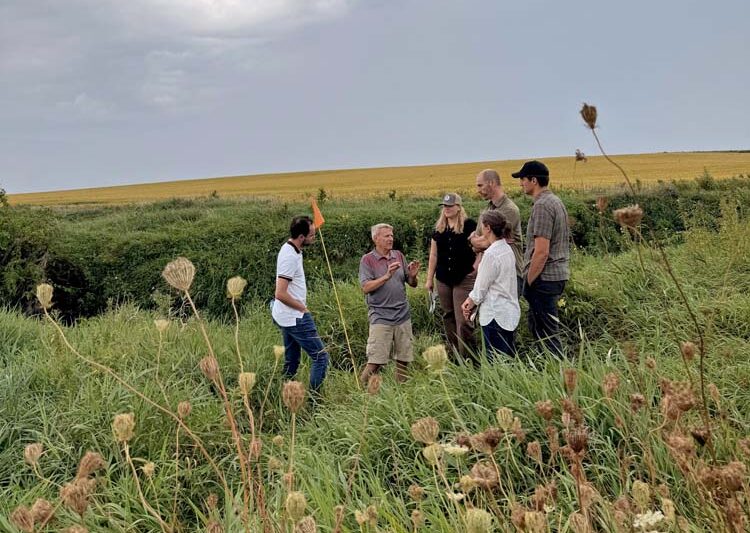
Grace Yi of PFI has been instrumental in helping get the pollinator strips off the ground.
Cal Wolfpack and her family recently embarked on a journey to transform their farm, Profound Existence Herbs, into a thriving ecosystem that supports beneficial pollinators. Cal and her partner, Zak, moved to Iowa from Ithaca, New York, in November 2021, after working as farm hands across the country, going on to purchase their land in Milo, Iowa, in 2022. The land offers diverse soils, ranging from wetland clays to loamy prairie soils.
“Our goal is to create a space that harmonizes native plant species with medicinal and edible plants,” Cal explains.
More Than Just Habitat
Last year, Cal signed up for a Practical Farmer’s cost-share program focused on empowering small-scale farmers to support native pollinators, funded through The Dean Witter Foundation. The project will establish nearly 500 square feet of native prairie plants, providing support for insects and wildlife and improving soil health to benefit the farms’ medicinal plantings. For Cal, the project began with a simple observation.
“Our orchard started blooming. Our apple and pear trees were blooming, but there were no pollinators,” she says. “I could count the number of insects I was seeing. It was bad.”
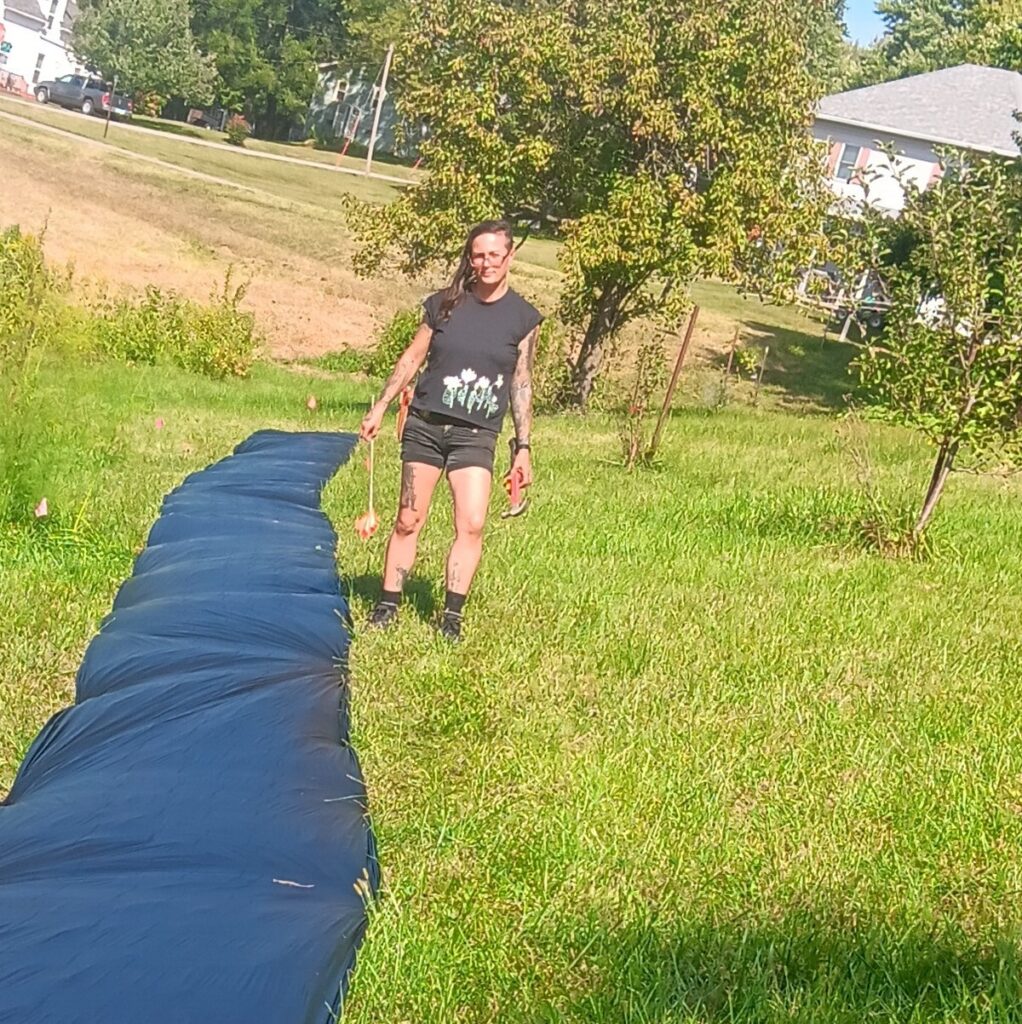
Like many small-scale growers, Cal and Zak think carefully about “function stacking” or choosing plants and practices that provide several benefits at once. For perennial plantings, that means supporting pollinators while stabilizing the small hillside and increasing biodiversity creating habitat for wildlife. The plantings reflect the farms' focus on herbal medicine. The wild bergamot, butterfly milkweed and sochan offer both habitat and practical use. Their approach reflects a broader philosophy about land stewardship.
“When I was trained as an herbalist, I was also trained as a forager,” Cal explains. “Conservation is always at the forefront. If you’re benefitting from plants and ecosystems, you should also be giving back and helping sustain them.”
Before making major changes to the property, the family spent an entire year simply observing the land, even resisting mowing so they could see what was already growing.
Their informal survey revealed several ecosystems including wetland, woodland, prairie and an ephemeral stream. Cal’s father, Leland Searles, an ecologist, documented more than 100 plant species, highlighting the natural diversity that had already been there.
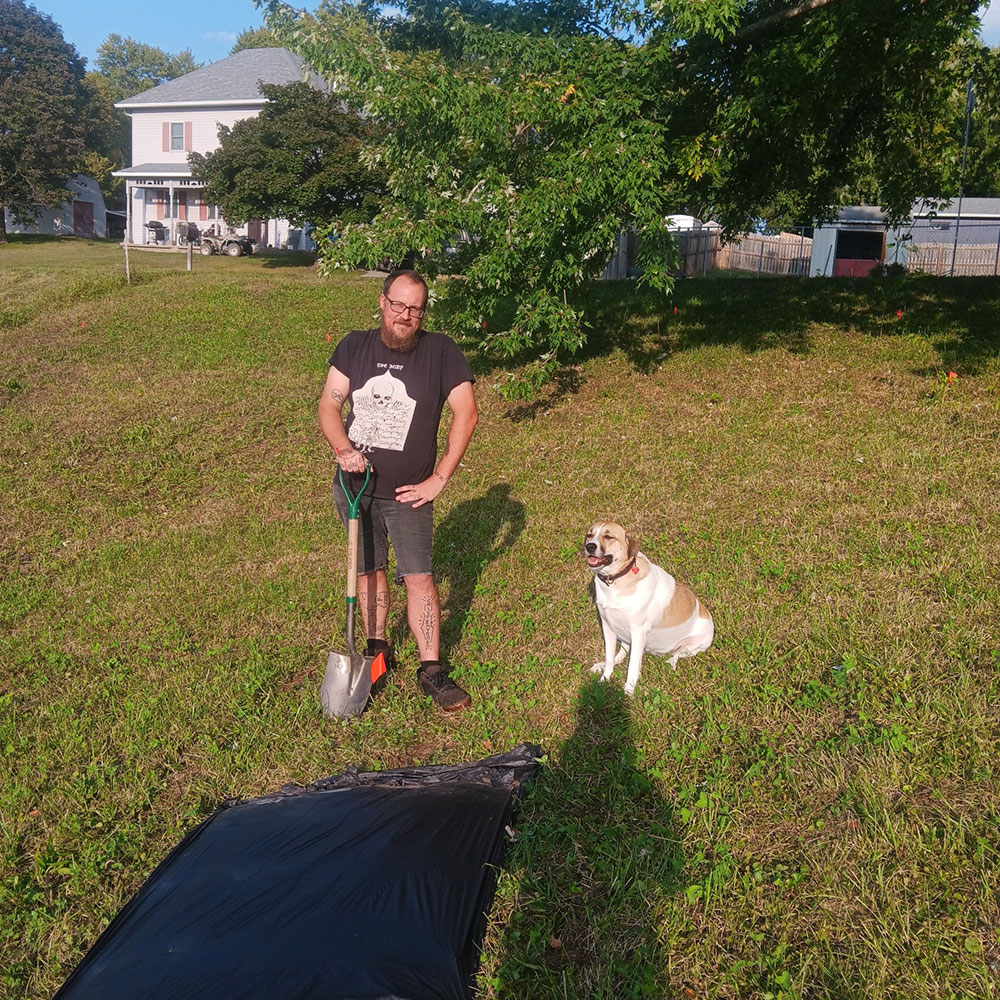
That same diversity is also present in the native perennial strips that Cal and Zak installed this spring. The individual species chosen for the strips took into consideration the varying soil types found in them.The soil type in both strips transitions from wet clay to loamy soil and from full shade to full sun. The wet areas called for deep-rooted native grasses and forbs, while the shady, tree-covered edges create areas for shade-tolerant species.
Designing for Diversity
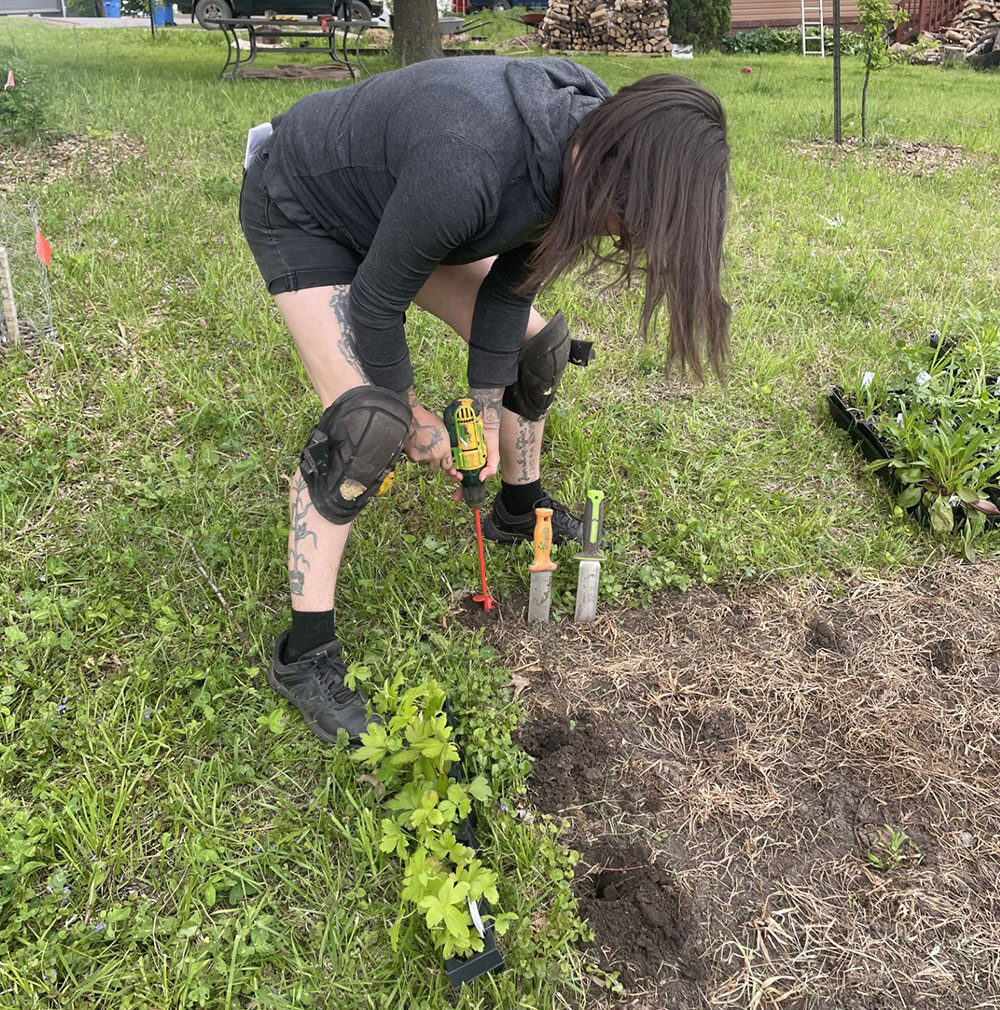
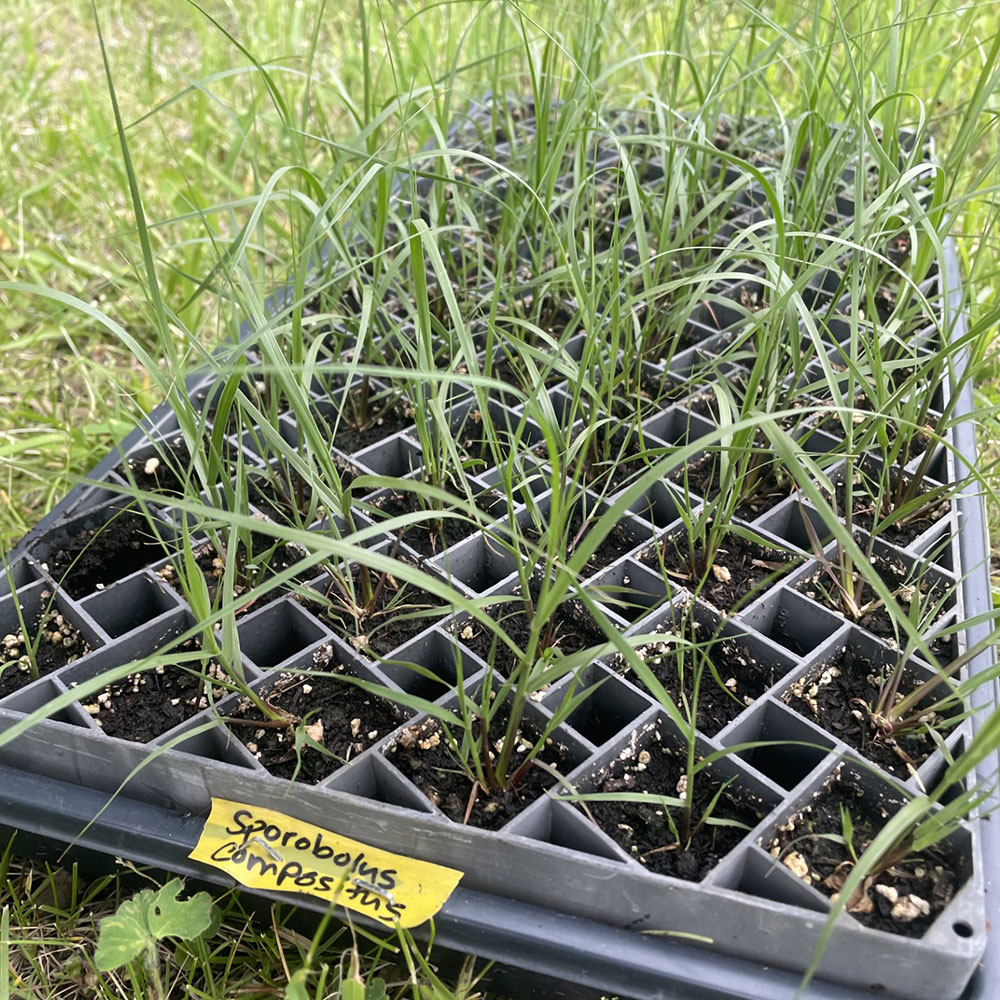
The strips contain approximately 465 individual plugs - one plant per square foot. Roughly half of the plants are native grasses and sedges like little bluestem, prairie brome and several sedge species adapted to wet soils and clay. The remaining half is more than 25 species of flowering plants.
The planting also includes nitrogen-fixing species intentionally limited to less than 10% of the total plants. Nitrogen fixers improve soil fertility, but too many can create ideal soil conditions for more aggressive and invasive species.
Among the more notable species in the project is lead plant, a native shrub with roots extending more than 15 feet underground, stabilizing soil and improving water filtration.
As Cal explains, “The greater your species diversity, the better your chances of survival success. You don’t know what’s going to thrive until it’s in the ground.”
These native perennial strips are more than just Cal and Zak’s farm. The property sits near the headwaters of the Middle River watershed. The family hopes their natives disperse their seeds and establish downstream. They also capture and manage water through rainwater collection systems and rain gardens.
The Wolfpacks hope this project will show how habitat restoration can work in smaller and more urban settings. While many conservation programs focus on larger agricultural operations, Profound Existence Herbs is proof that pollinator habitat can fit into small spaces while still providing meaningful ecological benefits.
For Cal and Zak, the project has a larger personal impact. After years spent travelling for seasonal farm work, their property is an opportunity to build something lasting.
“We’ve planted so many orchards and gardens at other people’s places,” Cal says. “Then we’d leave before ever seeing them produce.”
Now, for the first time, they get to stay. They get to watch the trees in their orchard grow, see pollinators flourish and build a lasting native habitat. And someday soon, they will get to harvest fruit from that orchard while pollinators buzz around them.