Leaders and “Compassionate Activists”
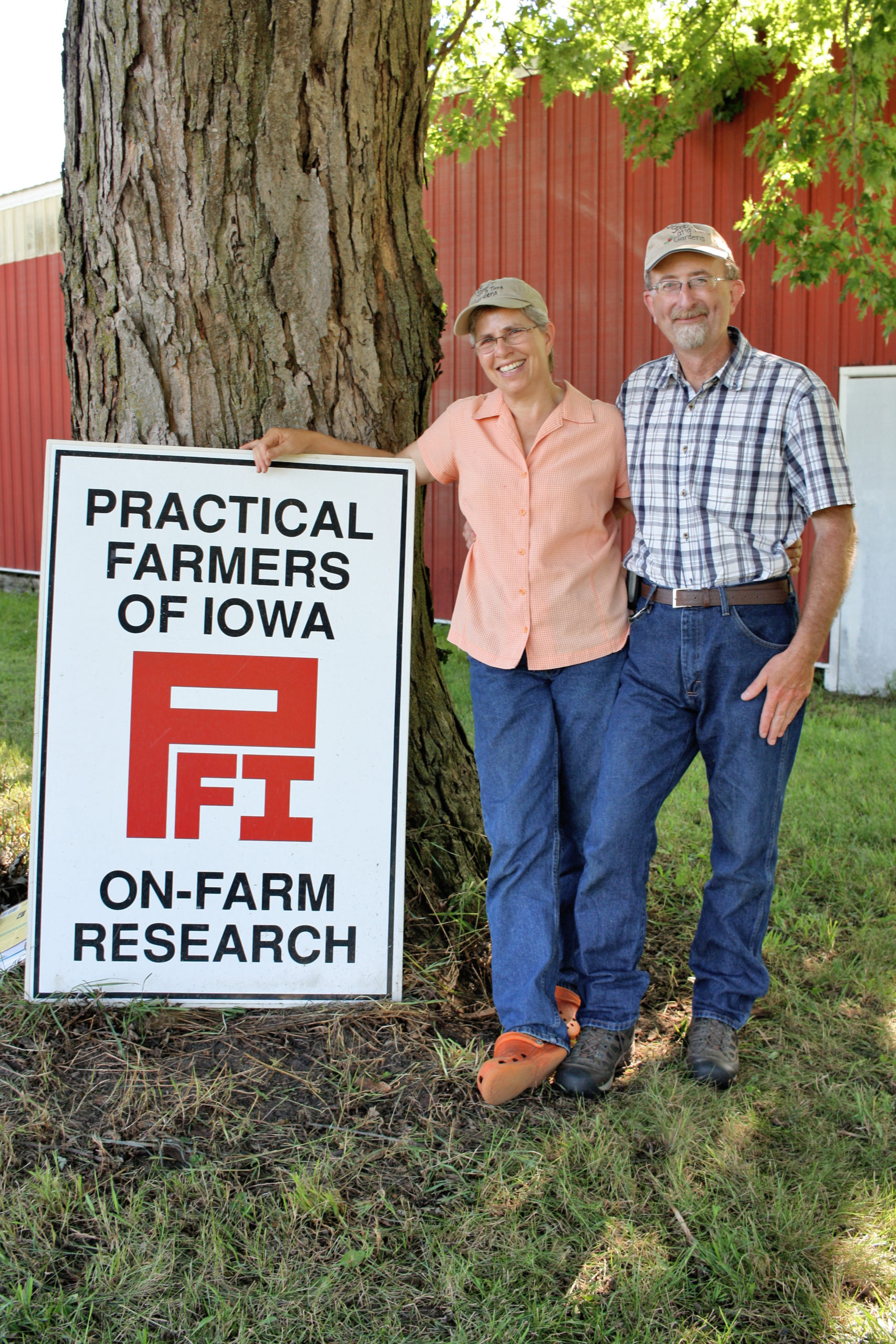
Getting into farming was a way for Tim and I to put our skills together and make an impact on rural economic development. – Jan LibbeyFor these efforts, Jan and Tim were honored with PFI's 2022 Sustainable Agriculture Achievement Award, which recognizes an individual or couple that has shown exemplary commitment to sustainable agriculture, generously shared their knowledge with others and been influential in efforts to foster vibrant communities, diverse farms and healthy food. The award was presented virtually during PFI's 2022 annual conference in Ames, Iowa. “This award is a great honor, and we are quite humbled,” Tim says. “This award lifts up leaders that reflect the PFI vision. We think we've just been doing our part – so we are awed and appreciative of this recognition.” “Jan and Tim have shown a true commitment to sustainable agriculture,” says Irene Frantzen, a lifetime member of PFI and past award recipient who, with her husband, Tom, nominated Jan and Tim for the award. “They have been pillars in our PFI family, great mentors to others and they care deeply about the land and water, a healthy environment and people in general. They exemplify true leadership and compassionate activism.”
Finding Purpose in Positive Action
Looking back, it's hard to imagine Iowa's local food scene without Jan and Tim. But the couple's journey to farming and the center of north-central Iowa's local foods movement was not something they could have predicted. Both nature lovers at heart, they moved in 1990 to the Kanawha land they built their farm on, attracted by its natural beauty – rolling hills formed by the last glacier; proximity to East Twin Lake Wildlife Management Area, a 490-acre natural glacial lake, wetland and woodland complex; and an abundance of birds and wildlife.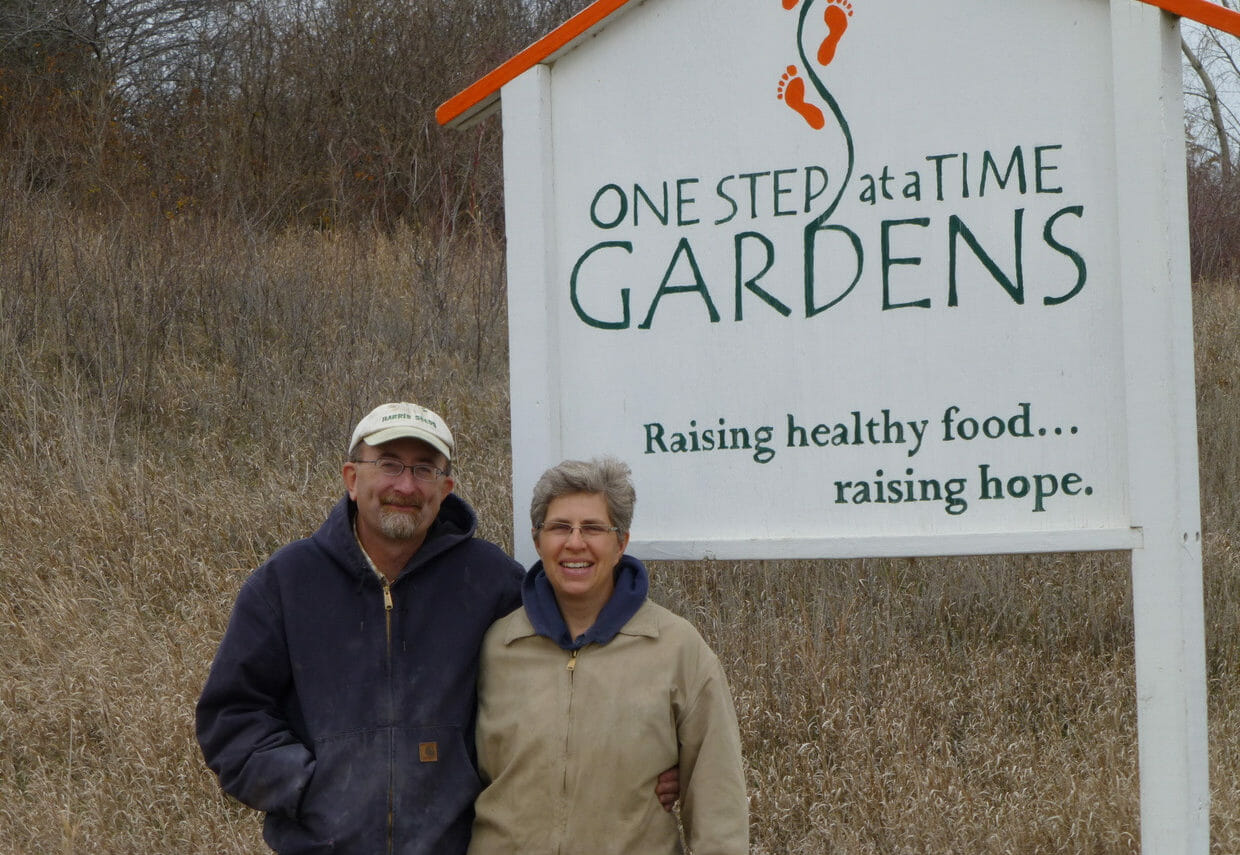
Growing Connections, One Step at a Time
They already raised a large garden for personal use and were selling some produce at farmers markets. Tim had grown up on a diversified farm near Odebolt, Iowa, and he learned from his mother about what was involved with tending a big garden and raising many different kinds of plants. Jan, an Iowan by birth, moved with her family to big cities in several states before returning to Des Moines at age 11. This neighborhood – located on a quiet, dead-end street across from a large city park – fueled a budding love of the outdoors. “A CSA seemed like a good way to engage people and land connections, more than just going to the farmers market,” Jan says. “I had zippo gardening experience, so Tim was my teacher.” In 1996, the couple launched their CSA with six members the first year and 12 the second. They started small intentionally – and their farm name was chosen partly as a reminder about the importance of patience. The name came to Jan one night in the mid-1990s as she watched their daughter Jess, then a toddler, take deliberate steps to reach the sink. The couple had been working to establish their business through farmers markets but hadn't yet started the CSA, and Jan recalls her impatience with their progress. “Jess must have been about three. We had a little stepstool in the bathroom and she was stepping up to reach the sink,” she says. “And then it just clicked. All sorts of things fit together. I felt we weren't getting there fast enough. I wasn't satisfied and needed a reminder to be patient. On a broader, more philosophical basis, that's what this work is all about – one step at a time working toward a more sustainable relationship with the land, and with each other.” After the modest start, Jan and Tim quickly scaled up. Tim was still working full-time off the farm. Jan had earlier left her job with the county to care for their two children – son Andrew, now 32, and Jess, now 30 – and she handled most of the farm marketing, in addition to her involvement with emergent local food initiatives. By 2002, they were at a point where Tim felt he could leave his corporate job and farm full-time.
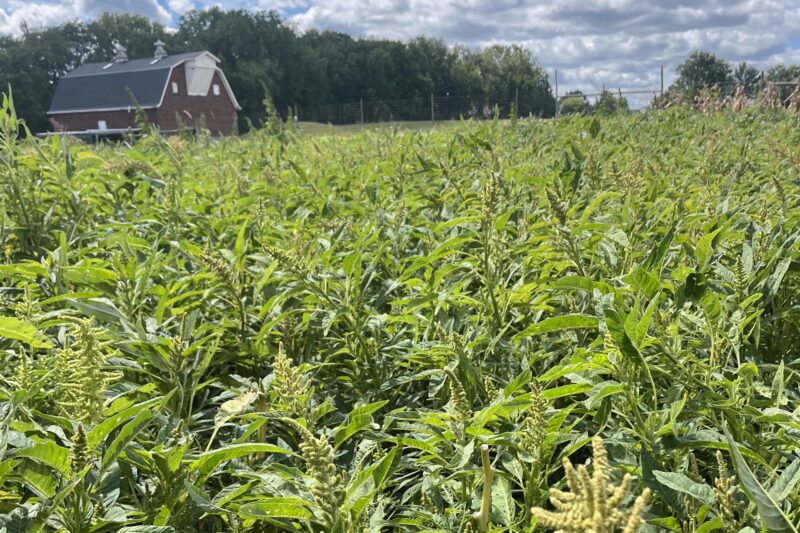
"This state needs places to support natural habitat, and we are perfectly positioned for this farm to be a neighbor to East Twin Lake." – Tim LandgrafAround this time, Jan and Tim were simultaneously working on habitat restoration projects on the farm, including a 2-acre wetland restoration completed in 2001 and another 15-acre wetland established in 2007 (all told, they've added more than 40 acres of habitat since moving to the farm). They were also deeply involved in north-central Iowa's burgeoning local foods movement.
Increasing Local Foods Advocacy
Jan had already been involved with Iowa Network for Community Agriculture, a group she connected with soon after attending the 1995 CSA workshop. In 2011, she helped found Healthy Harvest of North Iowa as one among several regional food system groups developing across the state. “Healthy Harvest focuses on the producer base,” Tim says. “There are three legs to that base: producers, buyers and retail buyers. For all those legs, Healthy Harvest was trying to heighten awareness.” The non-profit's work started to accelerate in 2012, and Healthy Harvest saw the need and opportunity to expand its work on behalf of a vibrant local-food economy from awareness to access – getting local foods into more people's hands. In 2014, a project to explore producer collaboration and reach intermediary markets opened the door for what would become North Iowa Fresh, a regional food hub that first focused on aggregating local food products to distribute wholesale, then directly to consumers. It wasn't long before Tim also got involved. “Healthy Harvest was helping grow the connections and conversation in rural north-central Iowa,” Jan says. “There's a strong connection between Health Harvest and North Iowa Fresh.”Transitioning From Farming
2014 also marked a transition for the couple. “We were at a point of wanting to cut back [our farm work],” Tim says. “Just the physical toll on us, and to a certain extent, the weather was more frustrating than it had been in terms of getting crops in at the right time and meeting schedules.” At its peak, their CSA had around 150 members, and they raised over 50 different vegetables and herbs on 9 acres and in two high tunnels. They also raised about 950 pastured chickens each summer that they integrated into their crop rotation. But as they embarked on this next phase, they started strategically scaling down. They ended their Des Moines route in 2013, and in 2018, made the decision to wind down their CSA. To ensure their customers still had access to locally raised food, Jan and Tim suggested customers purchase four weeks of shares with North Iowa Fresh, which was launching its own delivery route. “We turned everything over to North Iowa Fresh,” Tim says. “We gave them our delivery list. NIF handled produce, delivery, communications.”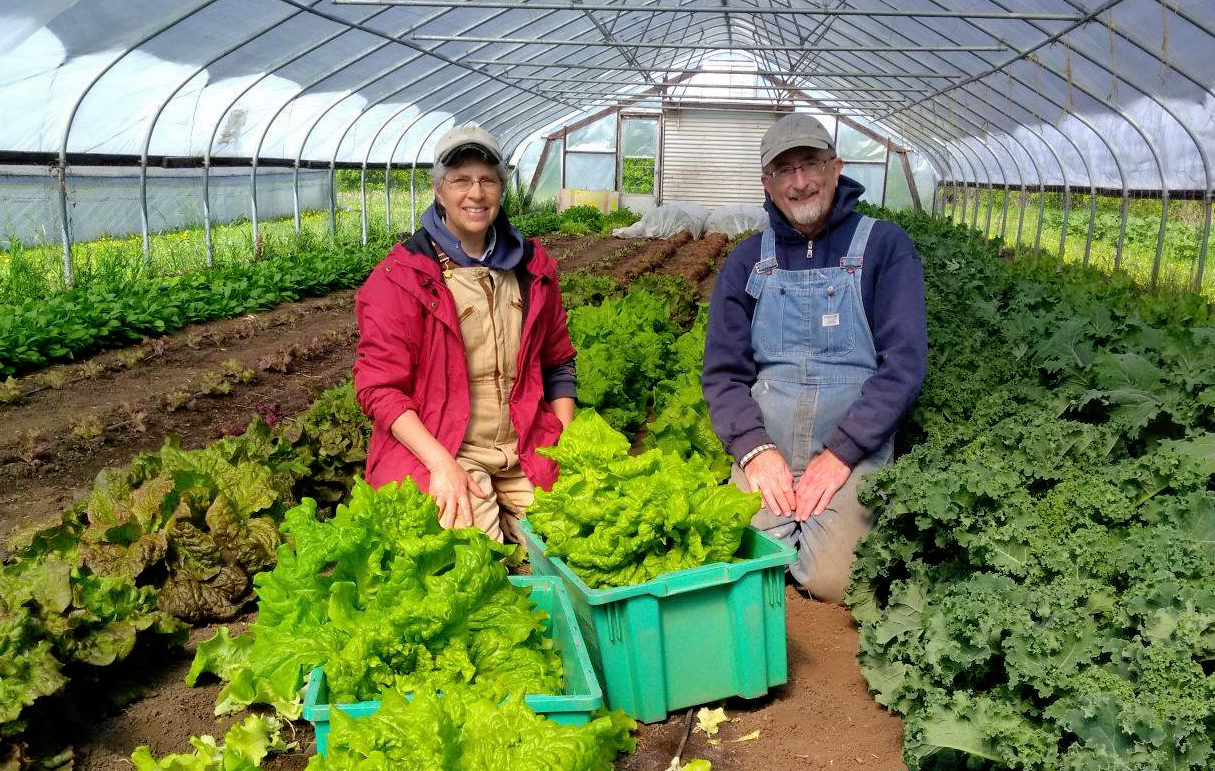
Continuing the Local Foods Conversation
With the dissolution of North Iowa Fresh and the subsequent easing of demands on their time, Jan and Tim have been planning for the future of their land. As always, their decision-making has been rooted in practical and strategic considerations. Neither of their children has expressed interest in farming. Nor have any of the aspiring farmers Jan and Tim have mentored over the years. Their son, Andrew, lives in Lititz, Pennsylvania, where he works as a test engineer for Case New Holland. Their daughter, Jessica, lives in Minneapolis and works in human resources for Minnesota Speaker Company, which designs industrial speakers for everything from airplanes to ventilators. The lack of a farm successor has led Jan and Tim back to what originally drew them to the land: its special ecological attributes and their love of nature."When we started, we didn't have a clear sense of where this local foods work could go." – Jan Libbey“Our kids are not living here, so it doesn't look like being a food farm is the most logical or best use of this ground,” Tim says. “This state needs places to support natural habitat, and we are perfectly positioned for this farm to be a neighbor to East Twin Lake. So that's where we're moving and looking – some sort of conservation easement.” Over the past few years, the couple has gradually taken out of production many of the fields they once used to grow produce for their CSA. In line with their conservation goals, much of that land they've put into pollinator habitat. “We have one field left that we'll keep for vegetables for us,” Tim says, adding they'll probably still do a bit of growing for wholesale. “We're going to garden for ourselves for the first time in about 26 years,” Jan says, adding with a note of glee, “and we'll get the first-quality produce. The farmers always get the seconds.” They're also looking forward to spending time with their granddaughter – their first grandchild – who was born to Jessica and her wife, Katrina, in January. Jan and Tim actually accepted their Sustainable Agriculture Achievement Award virtually from Minnesota, just a day after welcoming the newest generation to the family. Reflecting on the quarter-century of their lives at the leading edge of Iowa's local foods movement, both Jan and Tim see their farming journey as part of a broader conversation they chanced to encounter in its early stages – and as a natural extension of their interests in stewardship, community well-being and working for positive change. “It's been a very formative 25 years,” Jan says. “We've been traveling on with the movement in Iowa. We got in very early in that conversation and we've been very active with it. But this has been a national conversation. When you start to think about movements like that, you think of phases of awareness. Once you get enough awareness, you start to see how all the pieces of the system come together. “When we started, we didn't have a clear sense of where this local foods work could go. Today, there's growing awareness around environmental and food system issues. COVID has been a shock to the system – and it's a very interesting time to be pushing that conversation forward.”