Expanding Conservation
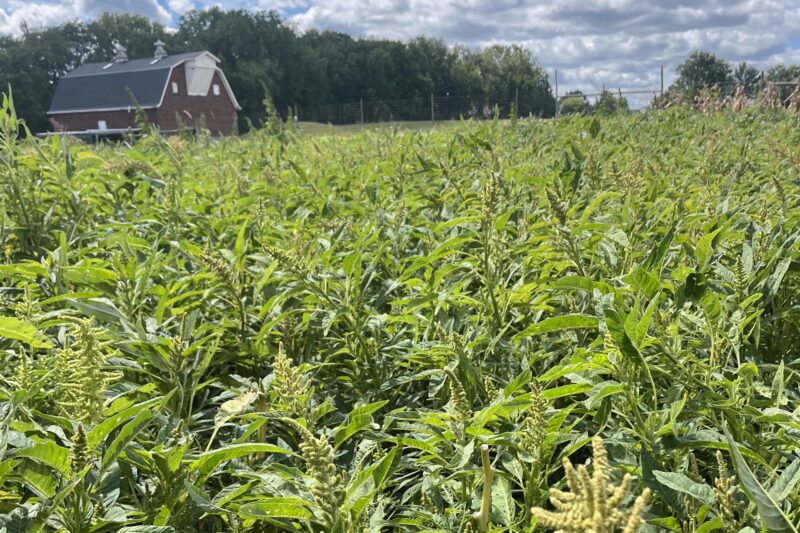
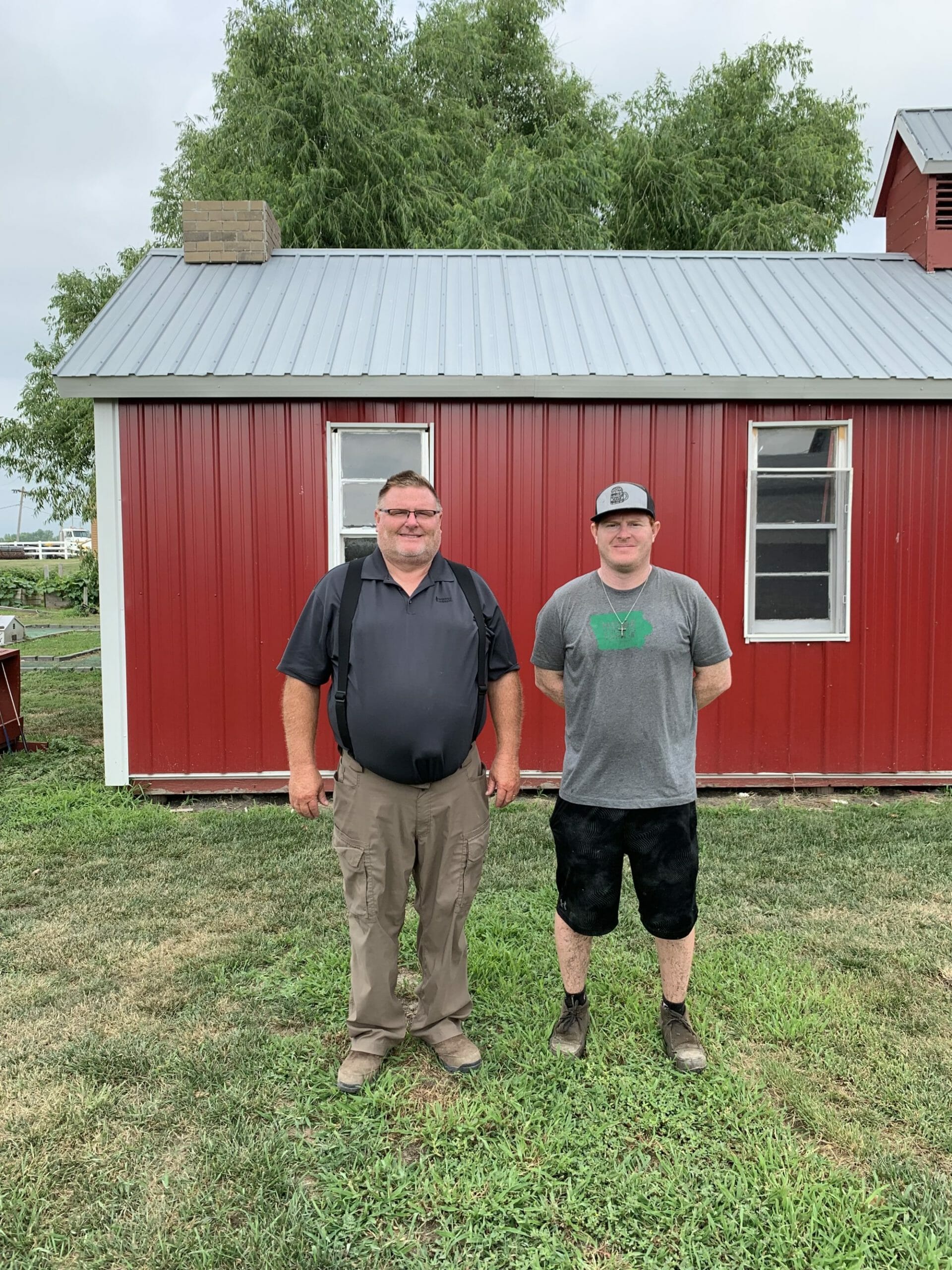
Arthur and Lee are part of Wisecup Family Farm and Museum, which is home to four generations of farmers: Arthur, his father Lee, grandfather Charlie and their families, who all play an integral part. Established in 1942, the farm today is a mix of conventional corn and soybeans planted into diverse cover crop mixes, restored wetlands, pollinator and quail habitat and an on-farm museum. The family's journey towards more conservation practices on the land picked up after Arthur returned to the farm in 2014 from Doane University, in Crete, Nebraska, where he studied environmental science. While the family had started experimenting with no-till in 2010, once Arthur returned, they invested more time and energy pivoting towards a no-till cover crop system. By 2020, the Wisecups had transitioned all their acres to no-till. In 2018, the Wisecup family enrolled 237 acres of their land into the federal Conservation Reserve Program and installed wetlands. Their commitment to conservation has not gone unnoticed: In 2019, the family received the Pheasants Forever & Quail Forever Precision Farmer of the Year Award. In 2020, the family got involved with Practical Farmers through PFI's cover crop cost-share program, which has helped them in their push to expand cover crops on their land. One of their goals, as conventional farmers, is to find ways to reduce herbicides and synthetic nitrogen. They are making progress. “We have noticed some reduction in herbicide use,” Arthur says. “Nitrogen reduction has been trial-and-error. We are learning but we are confident in cover crops."Sharing Their Journey
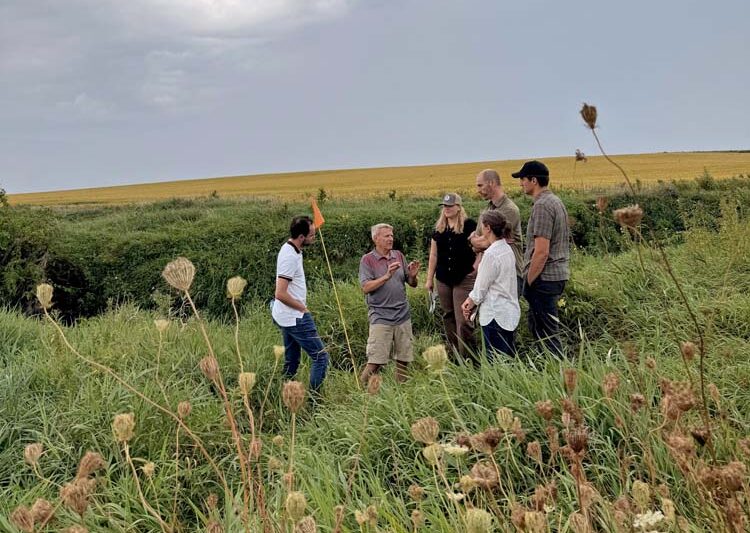
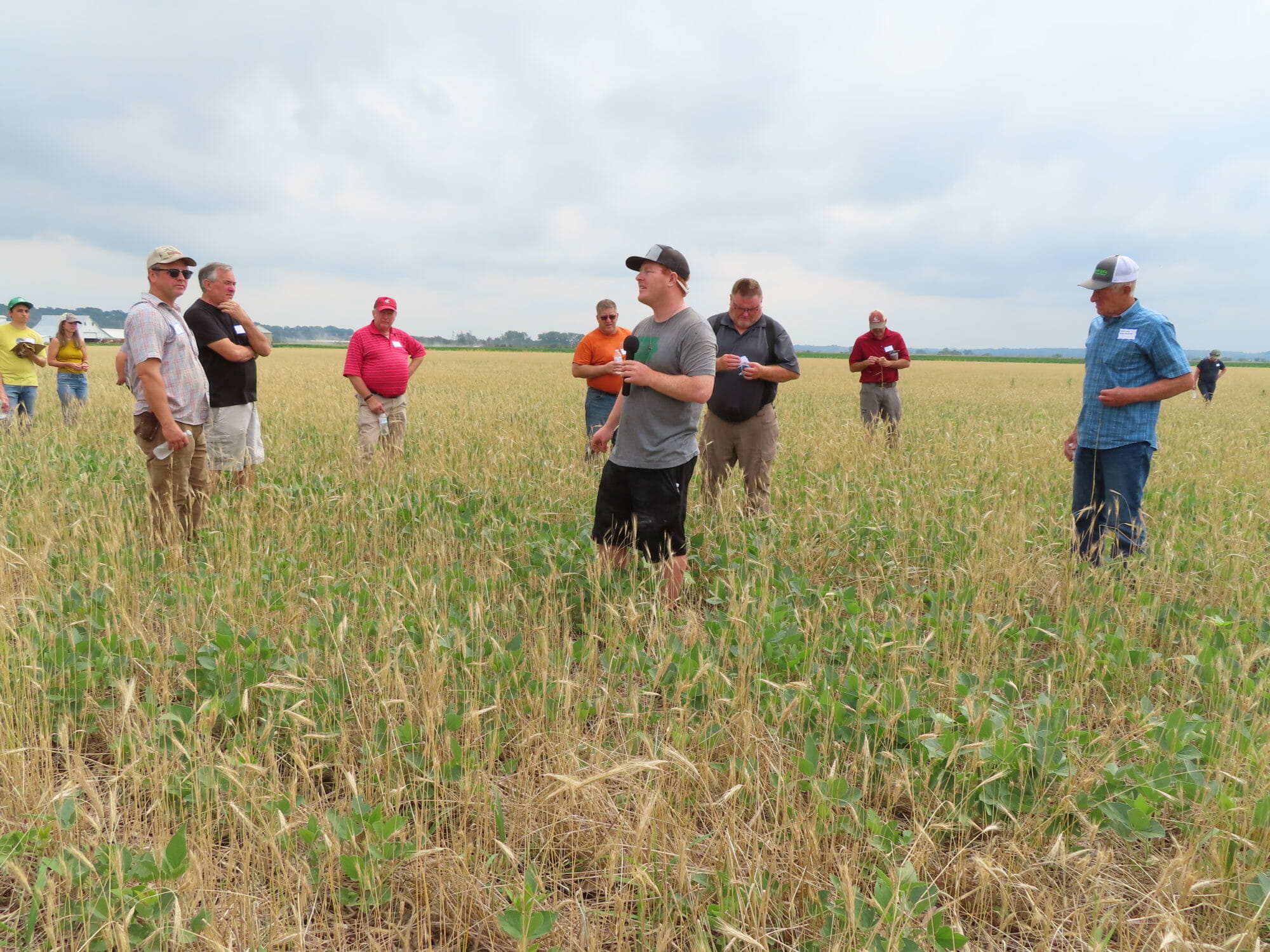
“We want farmers to not be afraid to plant cover crops on the river bottom” –Lee WisecupIn July, Arthur and Lee hosted a field day to showcase practices they have adopted in their recent journey with cover crops and no-till. “We want farmers to not be afraid to plant cover crops on the river bottom,” Lee says. “Very few people are doing it in our local area.”
Getting the Job Done
Part of the Wisecups' learning process has involved experimenting with the best ways to seed their cover crop. Common seeding methods include aerial seeding, drilling and broadcasting after harvest in the fall. Different factors can influence the choice of seeding method – such as what equipment a farmer already has that can get the job done. “Going big” with covers requires thinking ahead and looking for new ideas, particularly when trying something outside the norm. For Arthur and Lee, this has involved finding creative ways to outfit their existing seeder to save money while making it work better for diverse cover crops mixes.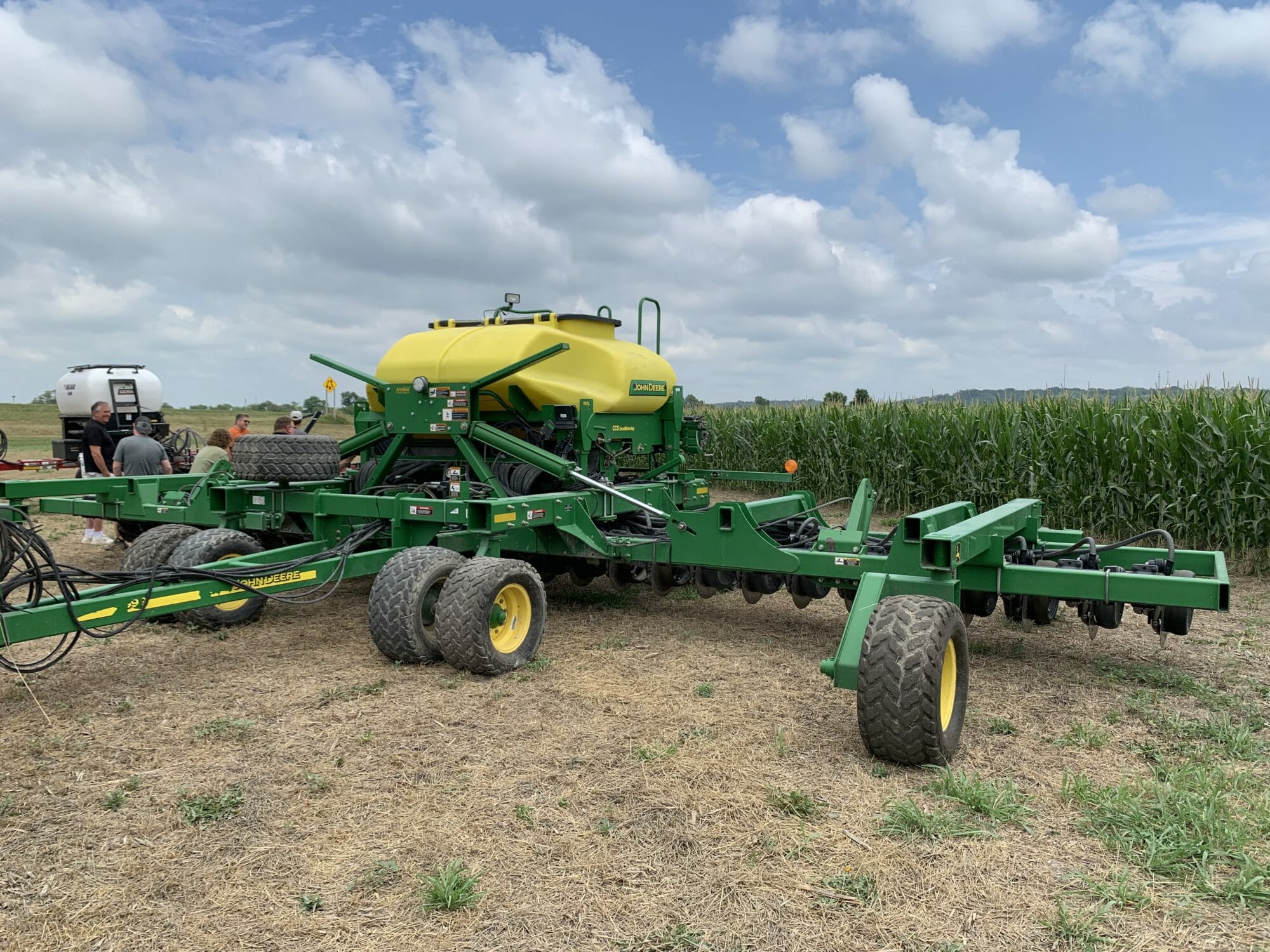
Refining Equipment Plans
But father and son have also encountered some limitations to the seeder. “In our current air seeder, all the cover crop seed is blended in one tank,” Arthur says. “Blending seed in the tank gets all the cover crops seeded in one pass, but plants all the seeds at the same rate and depth.” The Wisecups would now like to get a no-till drill with at least two seed tanks that will let them plant multiple cover crop species simultaneously. “With two tanks, we're hoping to split the winter camelina to give it a better chance to start growing than it has in the blended tank,” Arthur says. The new planter also needs to successfully plant their cash crops. Lee and Arthur recently tested a multi-tank minimum-till drill and immediately ran into some snags. “We hoped that minimal-till would be sufficient to plant soybeans into corn stubble, but the row units did not operate evenly in their full no-till system,” Arthur says. “It was shooting the beans on top of the ground instead of putting it in an inch deep.” An uneven planting depth will lead to poor emergence and a poor stand. While they're back to the drawing board, father and son continue to workshop ideas that will let them plant at the correct depth in a no-till system. “We're hoping we can work with our local John Deere to build something,” Arthur says. While the Wisecups continue to experiment and refine, the cover crops trajectory spurred by the floods has blossomed into committed curiosity about the ways cover crops can help them build farm resilience – and that is perhaps a silver lining of the disaster: After successfully covering all of their acres, they are now poised to envision even more ambitious ways to improve cover crops and conservation on their farm.Return to Table of Contents Next article: "Pathways to Peppers"