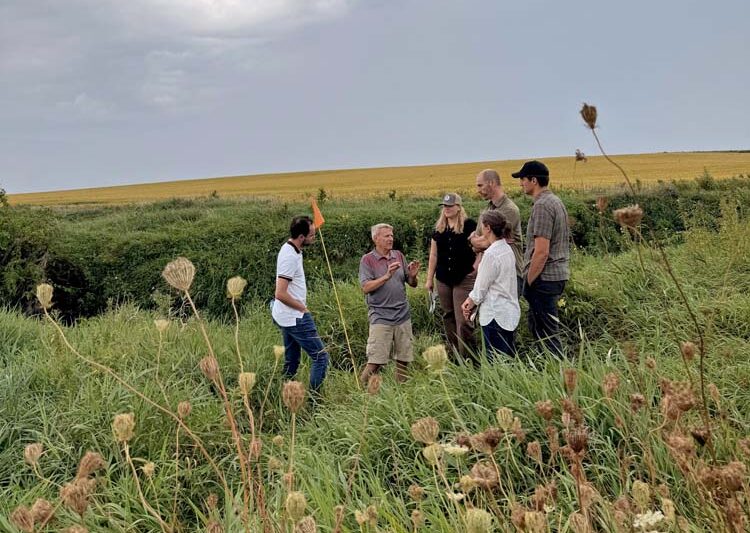
Paul Quam on his farm near Jefferson, Iowa.
Artificial insemination has advantages and disadvantages. But when farmers are clear about their goals, it can help them build their ideal cattle herd
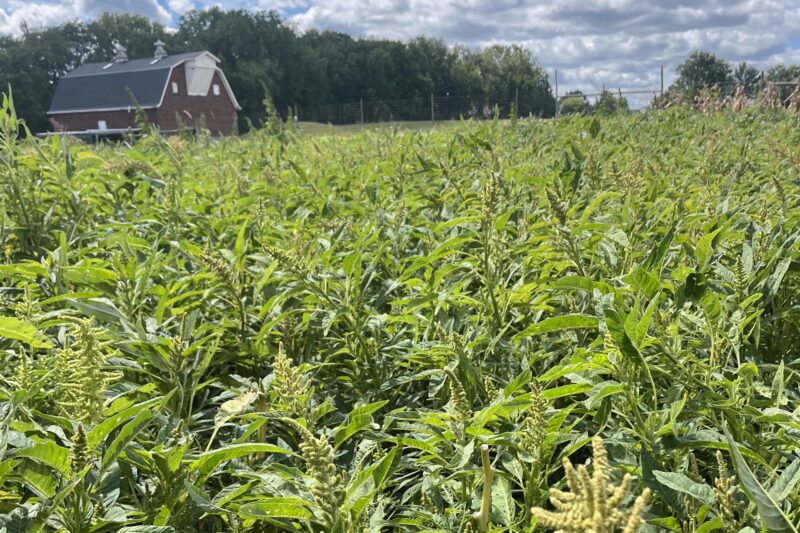
For 30 years, against the hilly backdrop of Hardin Creek just outside Jefferson, Iowa, Paul Quam has worked to improve his land.
He’s rerouted drainage to dry the floodplains, which now grow more than just reed canary grass as forage. The hillsides are clear of dense honeysuckle and the clutching windfall of downed branches, and grass grows abundantly now that sunlight can reach the ground.
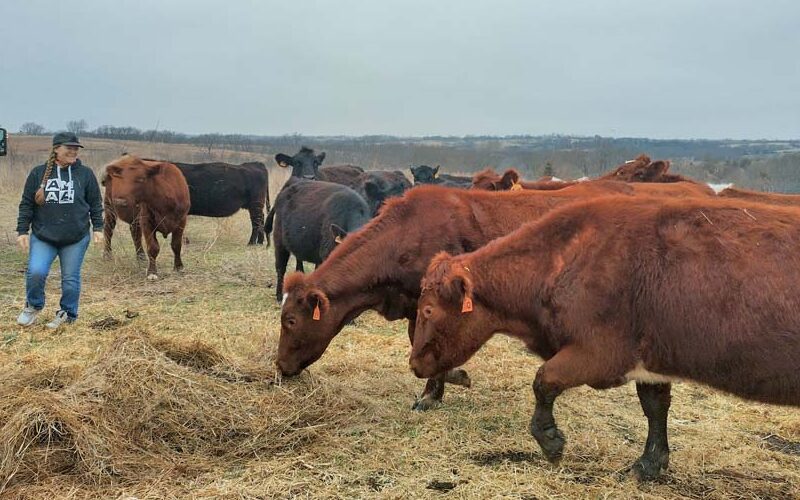
Paul has also meticulously improved his herd of around 25 beef cows using a combination of artificial insemination and natural breeding. Paul says his aim is to have cattle built for the land they live on, the forage they eat and his management needs. His efforts show results. Over the decades they’ve become better mothers, more docile and smaller-framed.
But AI isn’t necessarily the right tool for all farms. Deciding whether to use it on your farm depends on your goals, budget, farm size and available time or labor, among other factors.
Some Benefits
For Paul, one of the main benefits is access to genetics. Flipping through one of his bull genetics catalogues, he says he’s not reliant on the quality of bulls on his or his neighbors’ farms. “These bulls are probably going to be in the top 1% of the bull population of the United States. It’s not unusual for one to cost a quarter-million dollars. We could never afford to own a bull like that.”
Artificial insemination has been used in livestock for over 100 years. Today, in the dairy industry, about 60% of animals are bred using AI, according to the U.S. Department of Agriculture’s National Institute of Food and Agriculture. But it’s still somewhat rare in beef cattle operations, accounting for 5%-10% of inseminations.
Jim West, a retired veterinarian in Ames, Iowa, says that all types of cattle operations and farm sizes can benefit. His background in breeding programs and international genetic transfer goes back decades.

“If you have specific goals that you’re breeding for, AI can speed up significant advances in your herd,” he says.
If the goal is improving your herd’s genetics, AI offers faster results because you’re choosing from “the best of the best.”
It’s also simpler to move genetic material like semen and embryos across state lines than it is to move live animals, which are subject to a range of strict federal, state and Tribal regulations meant to prevent disease and protect animal welfare. With AI, farmers can access wider genetics while minimizing biosecurity risks, and the costs and paperwork involved in transporting live animals.
In his catalogue of bulls, Paul has marked the ones that interest him. Like a seed catalogue (you could say this is technically a seed catalogue), pictures are augmented by descriptions and statistics – like “expected progeny differences.” That’s an industry term referring to quantified traits like calving ease and meat marbling that farmers can expect to manifest in a bull’s offspring. With AI, Paul can match each cow with a different bull who complements her strengths or addresses her weaknesses. The a-la-carte approach lets him raise the quality of his herd more quickly than using his own bull to breed all of his cows.
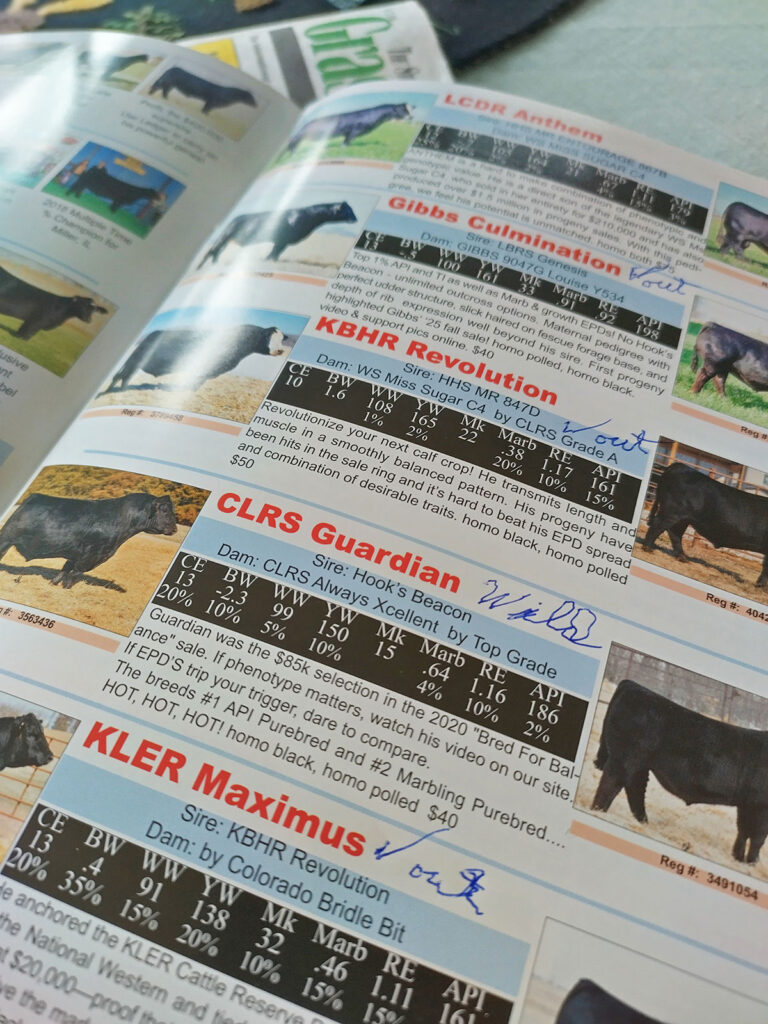
more before buying, plus one bull he has experience with but whose
calves are a little wild.
Logistics
For years, Paul had a professional AI technician handle the process. But a combination of cost and logistics swayed him to learn how to do it himself. “If you call and your technician says ‘I’m at my daughter’s softball game in southeast Iowa, it’ll have to be tomorrow,’ that doesn’t work,” Paul says. “There’s a very short window for this.”
Because cows cycle every 21 days, missing that window delays conception and breeding by almost a month. This can be addressed using hormone treatments to synchronize heat cycles, which would ensure all cows are ready to breed on a date preset with the technician. But that adds other challenges, like rounding up the animals to administer the hormone shots. It might also require extra labor and special handling facilities.
Learning to do AI alleviated some of Paul’s logistical challenges. But he says it takes practicing on hundreds of cows to become competent. He recommends taking classes and offering to help neighbors for free to gain experience. Training helps farmers understand a cow’s reproductive anatomy, semen handling, sanitation protocols and how to use an AI gun properly to ensure correct semen placement – and to avoid harming the cow. Performed incorrectly, artificial insemination can cause pain, lead to infection or even result in infertility or death. It can also lower your success rate. Attention to detail is crucial.
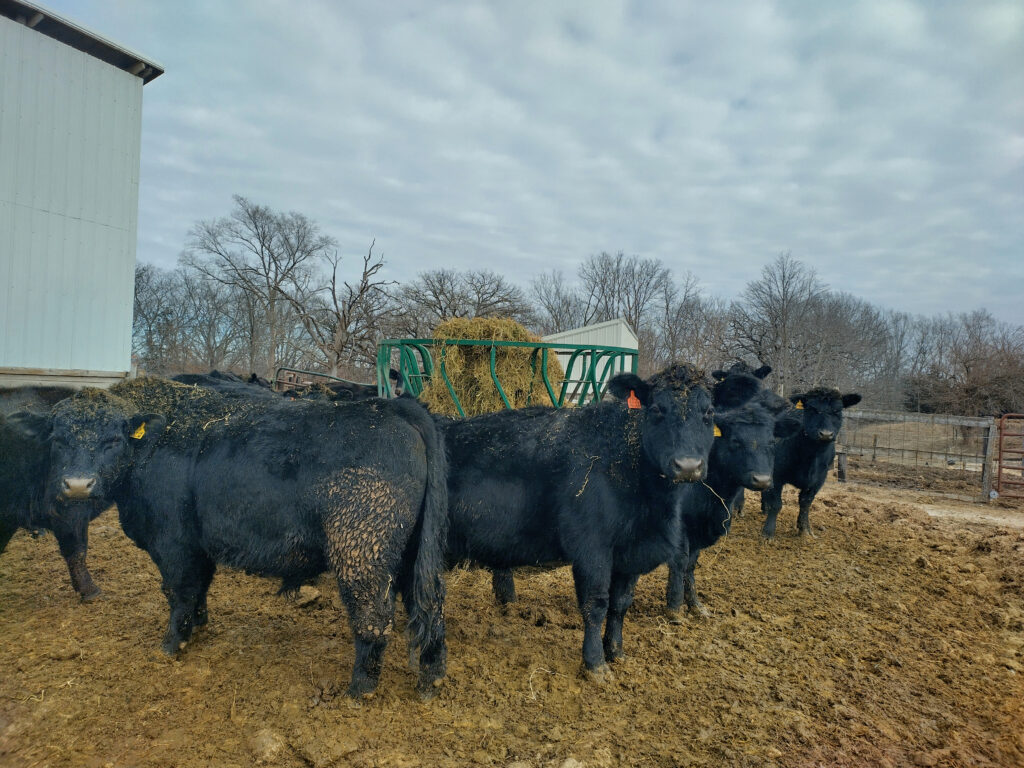
Even after you’ve achieved a level of familiarity and confidence, success can be mixed. Paul says his cows conceive around 70% of the time through AI, though his success has varied by 20% on either side of that. There’s only so much you have control over, Paul explains. Even if the cow is in perfect health, the semen is pristine and the timing is perfect, it could be 100 degrees in the shade and nothing will take.
In part, that’s why Paul’s bull is usually more successful, at around 80% of cows bred on their first cycle. Jim points out that bulls have better luck because they have nothing else to do. “They’re standing out there, willing to try multiple times,” he says. “It’s more likely they’ll hit the perfect moment.” Fresh semen also has more sperm that live longer compared with frozen and thawed sperm.
To make sure his cows have the best chance of being bred, Paul keeps a “clean-up” bull on hand. Ten days after artificially inseminating his cows, he lets the bull out with them. The time delay allows for enough difference in development that when he later does a blood test to check for pregnancy, he can tell which cows conceived by AI and which were bred naturally.
This approach means that Paul still has to maintain a bull, which adds expense on top of the costs of his AI program. Going 100% AI is possible, but it requires a high level of skill and management. So for Paul, keeping the bull is worth it for ensuring all his cattle get bred in a timely manner.
Things To Consider
Beyond the learning curve, starting an AI program also has other costs, ranging from semen straws and storage tanks, to drugs for synchronizing cows’ heat, to labor and handling costs – along with fees to hire a professional AI technician. And while boosting a herd’s genetics is one of the advantages of AI, there’s a flipside as well: large-scale genetic diversity can rapidly drop.
The dairy industry presents a cautionary tale. In 2015, Penn State University researchers found that over 99% of Holstein sires today trace their lineage back to just two bulls from the 1960s. While Penn State is now leading an effort to recover lost Holstein lineages, it will take time to meaningfully fix the bottleneck. Inbreeding “narrows the genetic base,” Jim says. This can increase the risk of inherited diseases and make it hard for a population to adapt to future disease or environmental threats.
Jim underscores the point with another example. In the late 1980s and early 1990s, dairy farmers around the world started noticing a higher number of stillborn calves. Others were getting recurrent infections and dying within a few months. Tracing the common denominator, USDA researchers found the farmers had all bought genetics from an American bull – another popular sire from the 1960s – that was a carrier for bovine leukocyte adhesion deficiency.
“He impacted the dairy industry all over Western Europe and across this country just because he had really good feet and legs,” Jim says. “But he also had bad blood.”
Protecting his herd’s health is one reason why Paul uses AI, and why he’s chosen to keep a closed herd from the start. By only growing his herd from calves born on the farm, Paul avoids the risk of exposing his cows to parasites and diseases that could lurk in outside cattle. He can trace the lineage of all his animals back generations, and can do the same with the bulls he selects in the donor registry. But as the cautionary tales show, AI isn’t a guarantee against future problems either.
So how do you decide if AI is for you? Paul emphasizes the importance of knowing your numbers and comparing potential expenses between systems. If you’re starting from scratch, the question of economics might balance out differently than if you’ve already invested in infrastructure.
Paul adds that AI doesn’t have to be all or nothing. It can be used as part of a hybrid system. Like other management practices, it’s important to do your homework, know your goals – and treat AI as another possible tool for building the farm you want.