PFI members are working to flip the script of water quality in Iowa – and showing how individual efforts can lead to positive change.
The weather in Red Oak, Iowa, on March 9, 2024 was ideal for an early-spring day in Iowa – sunny and 65 degrees with a warm south wind. But just upstream of town, an ecological disaster was slowly unfolding.
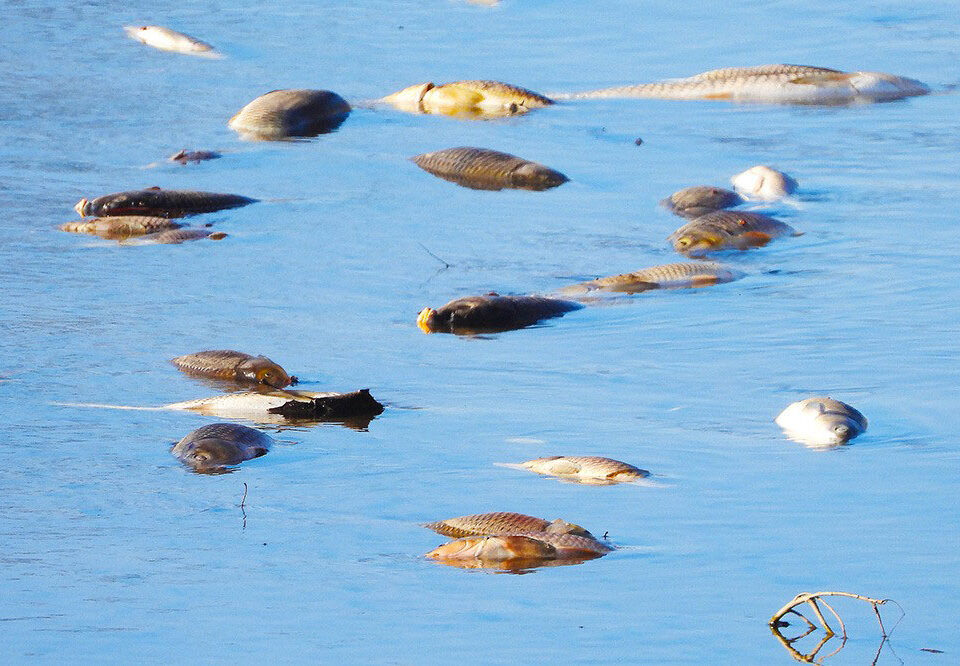
An agricultural co-op had left a valve open. Over two days, 265,000 gallons of concentrated nitrate fertilizer flowed unchecked into the East Nishnabotna River. The spill would spread 60 miles and kill over 750,000 fish – as well as frogs, mussels and other aquatic life – as it flowed downstream before reaching the Missouri River. It would rate among the worst fish kills in Iowa history.
A year later, after the state had made little progress seeking accountability for the spill, beginning farmers Jodi Reese and Terry Langan of nearby Griswold decided to take action. In March 2025, the couple founded Nishnabotna Water Defenders. The nonprofit, based in Red Oak, seeks to raise awareness about water quality, advocate for local watersheds and engage the community through education and hands-on water quality monitoring.
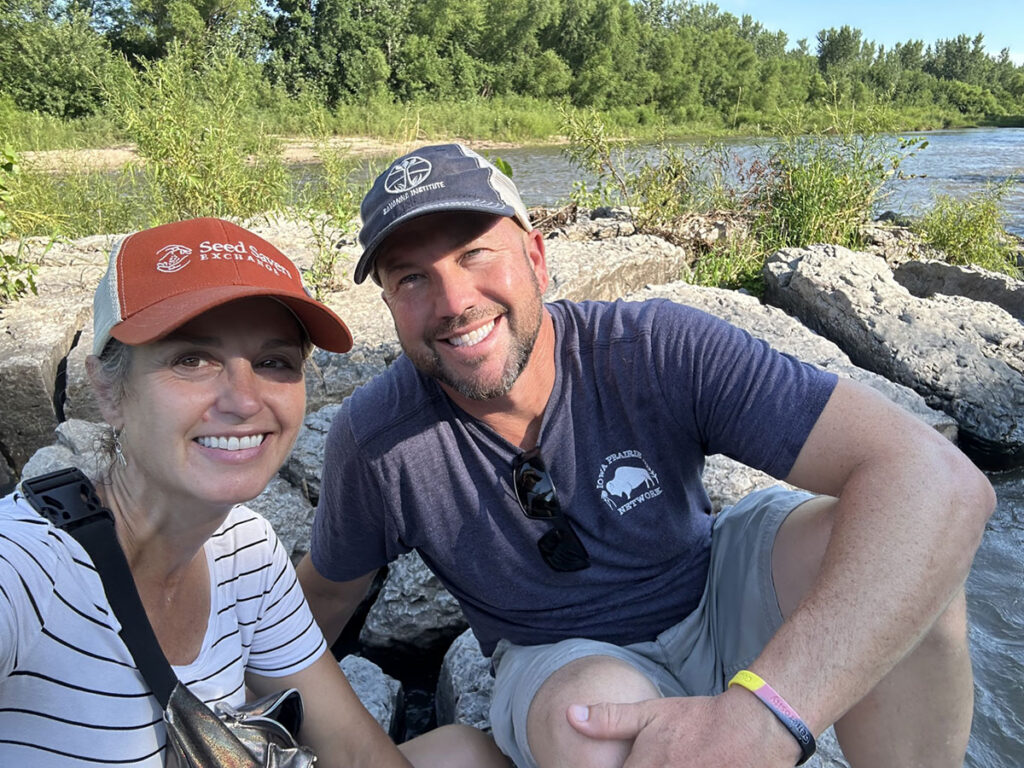
“We are encouraging a symbiotic and reciprocal relationship with our water in Iowa,” Terry says.
A Daunting Problem
The grassroots organization grew out of the couple’s frustration with repeated pollution incidents. Across Iowa, the water quality picture is stark. Iowa’s rivers have some of the highest nitrate pollution in the nation. Many streams, lakes and wetlands are routinely contaminated by nutrients and bacteria.
This is reflected in the data. According to a draft report released in February by the Iowa Department of Natural Resources, about two-thirds of Iowa’s tested streams and lakes are impaired. The listing means a water body fails to meet state water quality standards for uses such as swimming, fishing, protecting aquatic life or drinking water.
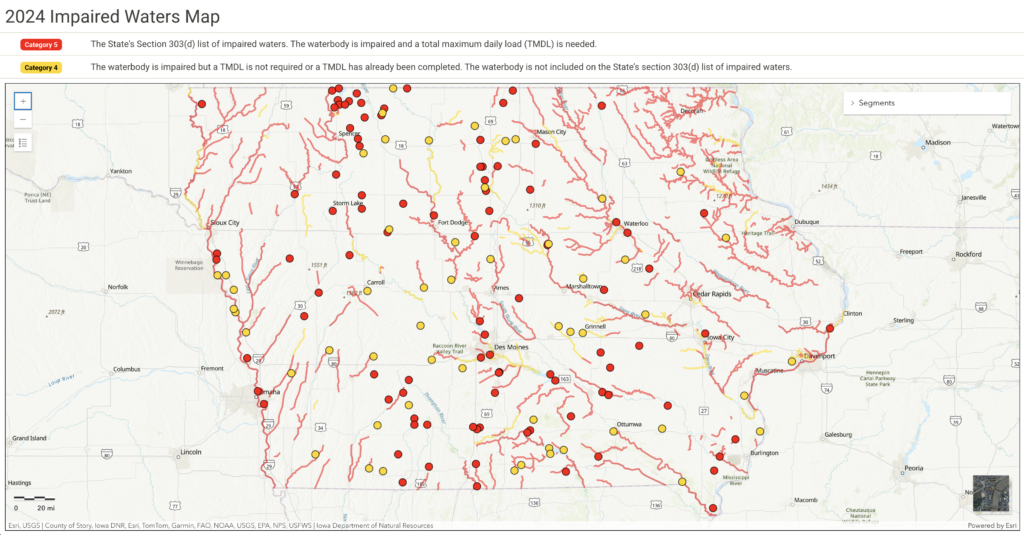
The factors causing poor water quality are many, ranging from agricultural sources like manure, nutrient and chemical runoff, to poorly maintained septic and sewage systems, to runoff from roads, construction sites and urban areas. The end result, however, is the same: degraded waters that can harm people and the environment.
But the story doesn’t end there. Across the state, people are taking action – from projects to restore streams and rivers, to farmers planting cover crops, to concerned citizens, like Jodi and Terry, working to engage their communities.
Engaging the Public
Since founding Nishnabotna Water Defenders, the group has expanded its mission. “We want to help residents at the local and state levels foster a deep connection to the water in Iowa, and understand the impact agriculture can have on it,” says Jodi, who works full-time as a nurse. Working with Izaak Walton League, NWD has hosted events within the Red Oak area centered on water quality.
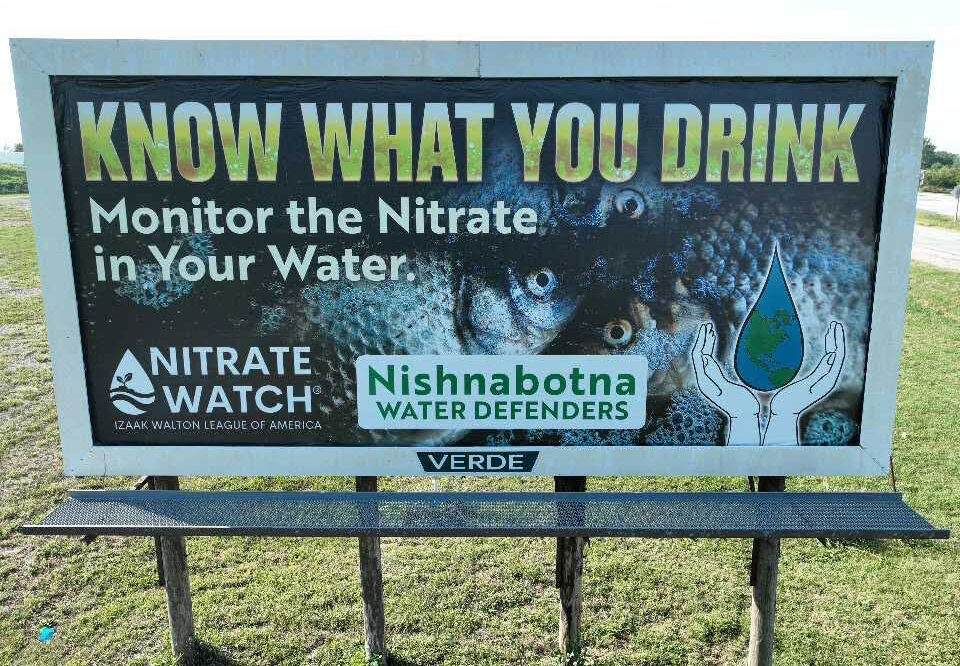
Through the league’s Nitrate Watch program, NWD provides free nitrate test kits, available to anyone in Iowa. Data from the kits is uploaded to Izaak Walton League’s Clean Water Hub, a national database that collects and visualizes data from a range of community-based water quality monitoring projects. To raise awareness about water quality, and the nitrate test kits, NWD installed two billboards within the watershed in 2025 that encourage people to think about what’s in their water.
The organization is also advocating to have stormwater, runoff and tile drainage added to the definition of point-source pollution. The original Clean Water Act of 1972 did not include tile drainage as a point source, Jodi explains, exempting it from regulation under the act. NWD is hoping to change that. “Pretty much all of Iowa had its water table lowered by 4 feet as tiling was put in over the last century-and-a-half to make land more suitable for farming,” she says. “Now there is all this tiling that rushes water off the land but isn’t recognized as a source of contamination.”
Despite their advocacy, Jodi and Terry emphasize that Nishnabotna Water Defenders is not anti-farming. Terry has ancestors, including his dad, who farmed in Nebraska. With Jodi, he’s now returning to his family’s small-scale farming roots. They have 80 acres of farmland outside of Griswold that they’re working to restore.
“What we want to see is an Iowa that is both an agricultural state and a state with clean water,” Jodi says. “We believe both can exist together.”
Planting cover crops is one practice they say is proven to improve water quality leaving farmland. These crops grow when cash crops are absent, absorbing excess nutrients in the soil that can leave fields during heavy rain before spring planting or after harvest.
Jodi also encourages farmers to be intentional about when they apply fertilizer. “Apply at planting,” she says, “not when it is convenient timing or the middle of winter, where it may wash off into creeks. It would save money, time – and our water from unneeded nutrient runoff.”
Restoring Oxbows
A couple of hours away, near Lohrville, Iowa, farmers Kathy and David Law have also taken action to protect water quality. Their 300-acre corn, soybean and cattle farm sits along Purgatory Creek, a sinuous waterway that flows into the North Raccoon River. To help improve water quality in the creek, they have restored several oxbows on their land.
“I wanted to restore the creek to how it was in the 1960s and ‘70s,” Kathy says. “There used to be so many fish, minnows and vegetation, but I noticed all of that life disappearing in the late 1990s and early 2000s. I wanted to restore it to how it was in my childhood.”
Oxbows are U-shaped, shallow ponds that were once part of a stream or river’s winding path. Over time, these bends got cut off from the main channel, connecting only during heavy rain or floods. When restored on farmland, oxbows are excellent filters of runoff from nearby fields. According to The Nature Conservancy, they can remove, on average, 62% of excess nutrients, like nitrate.
Oxbows also provide vital habitat for a range of species – including the endangered Topeka shiner, a prairie minnow that needs clear, slow-flowing water with gravel or sandy bottoms. Once abundant across parts of the Midwest and Great Plains, their numbers plummeted due to widespread habitat loss, land use changes and water pollution. In 1998, when Topeka shiners were listed as federally endangered, they were believed to occupy just 20% of their historic range.
In 2021, Kathy and David partnered with the U.S. Fish and Wildlife Service and Iowa Soybean Association to restore five oxbows on their land. The process involves excavating silt and mud that’s built up over time, often decades, to reconnect the oxbow to the water table. Kathy says when she and David learned that restoring oxbows could help bring Topeka shiner back to Purgatory Creek, they were eager to take part. “It was just a no-brainer that we wanted to do it,” she says.
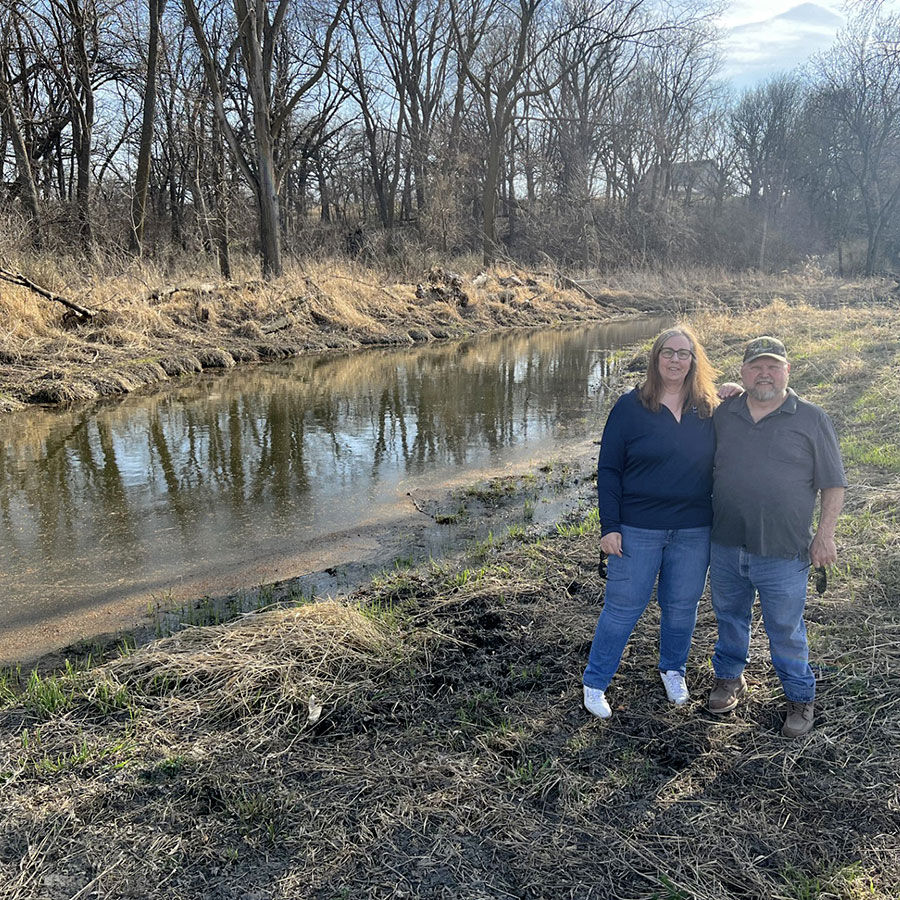
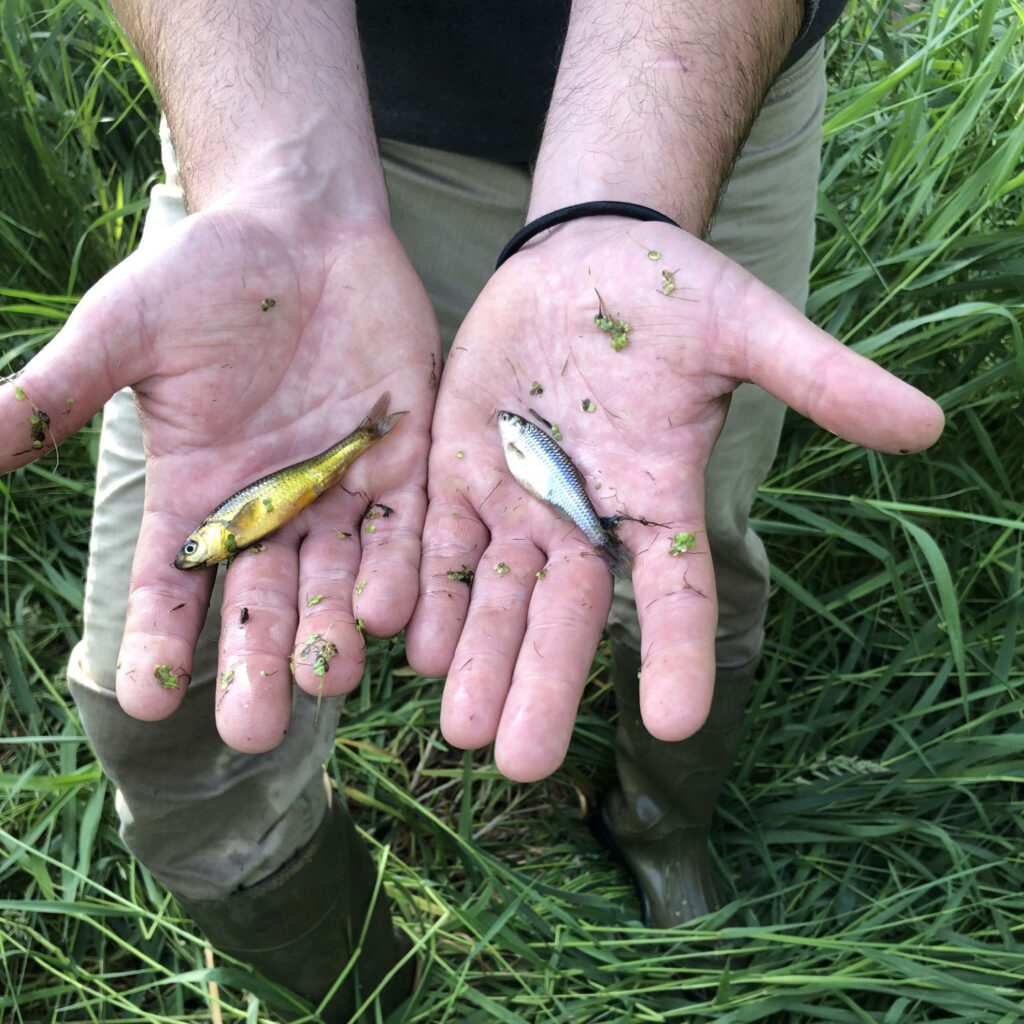
In 2025, after three years of waiting, their dedication paid off: A population of the silvery minnow, with its reddish-orange fins and dark stripe, was confirmed by FWS staff during routine monitoring. “That’s the first time it was documented that we had them,” Kathy says.
“It was very exciting, creating a new home for them [Topeka shiner]. For us, it was the right thing to do.”