Meet the farmer behind one of Iowa’s first community-supported agriculture farms
In 1988, Laura Krouse purchased 72 acres of land outside of Mount Vernon, Iowa. It was also her first year teaching biology at nearby Cornell College. But she had summers free – and a desire to farm. There, on the land she would later call Abbe Hills Farm, Laura grew a large garden, raised laying hens for eggs, produced open-pollinated corn for seed and harvested hay.
But she also did something unusual for the time. While many Iowa farms focused exclusively on corn and soybeans, Laura saw a different path. “I knew I couldn’t make any money growing corn and soybeans,” she says. “I had to find a different route.”
So, she began scaling up vegetable production. Laura built hoophouses and filled them with rows of sprouting vegetables. At a time when local food systems were still rare, she began growing food directly for her community.
She didn’t know it then, but these choices would have a profound impact – one that would ripple far beyond the borders of her land.
Building Community Through Food
In 1995, Laura launched Abbe Hills Farm – one of Iowa’s first community-supported agriculture programs. Community members who wanted fresh produce would pay ahead for a share of the vegetables Laura raised.
That support would help cover a portion of Laura’s farm operating budget while ensuring CSA members received healthy food raised with care. Just as importantly, the CSA model meant farmers and local people were working together to support one another. That first year, Laura supplied produce to 10 CSA members. At its peak, she would feed nearly 200 families.
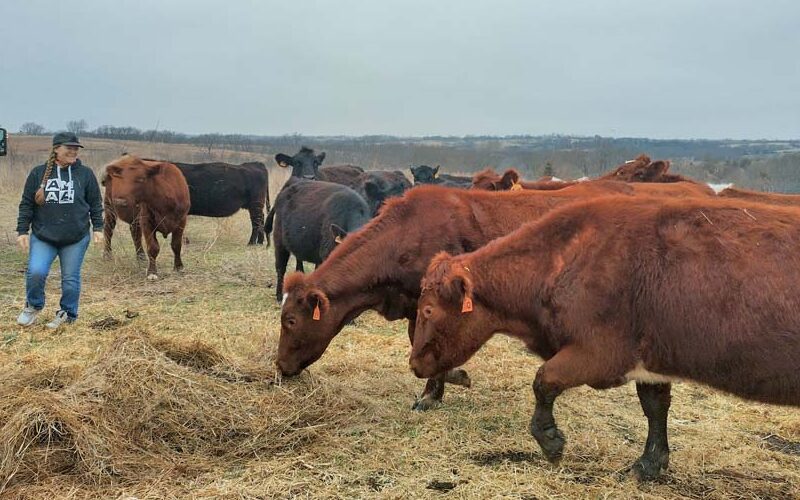
For more than 30 years – through droughts, market uncertainty and even the powerful 2020 derecho that tore through the farm, destroying both of her hoophouses – Laura has fed her community a cornucopia of vegetables, along with eggs from her pastured chickens.
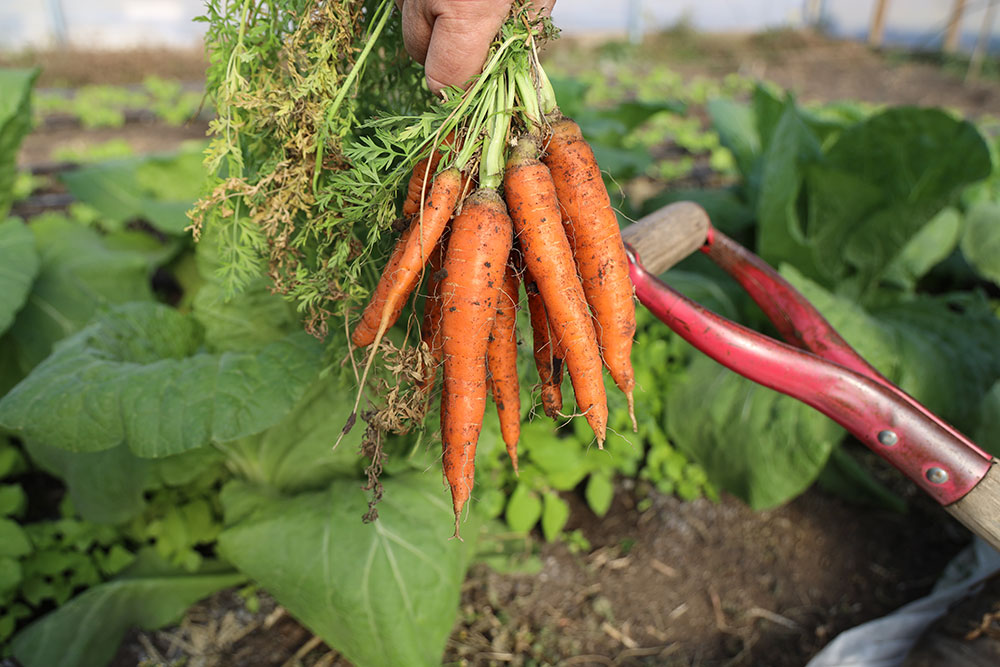
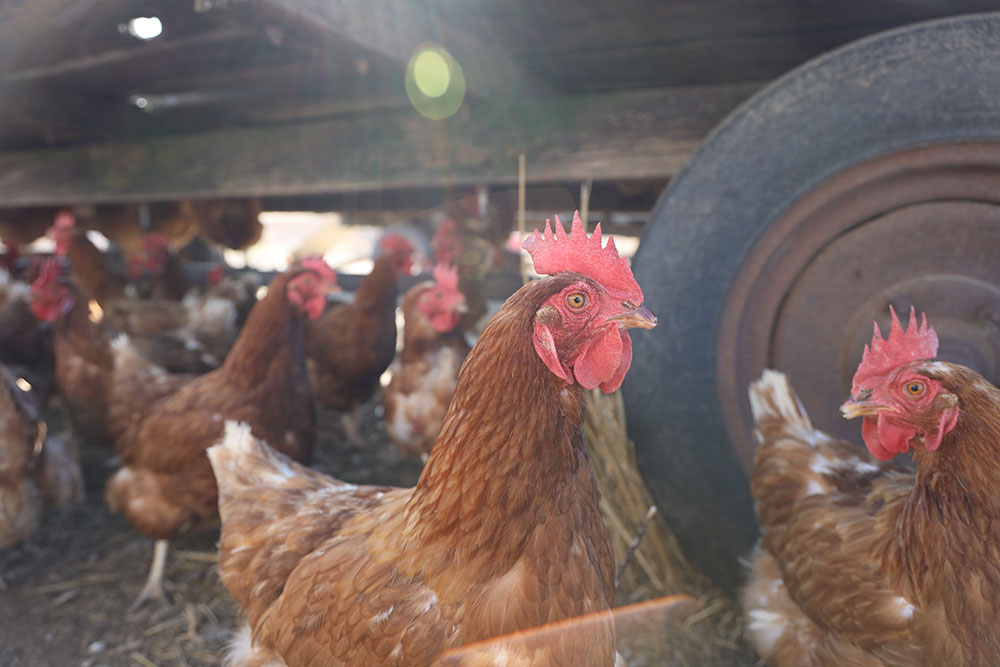
a mobile coop.
By her estimate, she has prepared about 57,600 boxes of produce for local households, each filled with vegetables she and her team planted, harvested, washed and packed by hand. “Growing food is fun,” Laura says. “It’s an honor to grow food people like to eat and that I know is good for them.” Over the years, Laura expanded food access even more – by supplying fresh food to local restaurants, including Cobble Hill and Feedwell Kitchen & Bakery in Cedar Rapids, as well as retirement homes and food hubs.
As it turns out, with those first hoophouse crops, Laura wasn’t just planting vegetables – she was planting the seeds of Iowa’s local-food movement.
Finding Her Path
Laura grew up in northern Linn County, Iowa. While she didn’t grow up farming, she spent much of her childhood gardening with her family, which sparked an early interest in water quality, conservation and the environment.
Laura entered Iowa State University as a political science major with plans to become an environmental lawyer. But her future path changed when she asked to take a soils course. “I was told it wasn’t allowed because it didn’t count toward my degree requirements,” Laura says. She chose to follow her curiosity and switch her major to agronomy – a decision that directed her path toward farming.
Laura earned degrees in agronomy and farm management from ISU, followed by a master’s degree in agronomy from the University of Florida. Her graduate work focused on subsistence farming, where families grow food primarily to feed themselves, which brought her to farming communities in Iowa, Kansas, Florida and Costa Rica.
During that time, Laura studied food farms and learned about many different systems in practice. Along the way, she realized she wanted to farm herself. Farming, she says, gave her room to experiment. “It’s a really creative career,” Laura says. “You can do a lot of things. You can also get stuck in a very narrow box. But I saw the opportunity to do some really fun things.”
More Than Vegetables
Everything fell into place in 1988, when her mother spotted a farm listing in the newspaper. Laura purchased the property that would become Abbe Hills Farm and set about farming in a way that reflects her values of community and land stewardship.
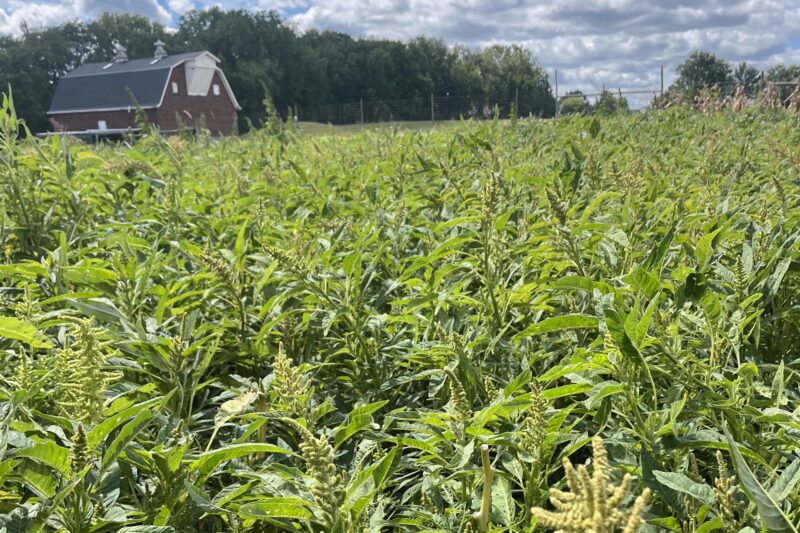
That stewardship goes beyond vegetables. Open-pollinated corn tassels sway, releasing pollen carried naturally by wind rather than developed by a corn breeder. “I grew it, processed it for seed and sold it all around the Upper Midwest, primarily to organic farmers and dairy farmers,” Laura says. The base genetics of this corn come from seed that has been grown and carefully selected on the farm since 1903.
Across the farm, a pond she built captures runoff, restored wetlands filter water and pollinator habitat hums with life. She uses minimal pesticides and rotates crops using extended rotations of cover crops, corn, soybeans and hay. These practices all improve water quality and soil health, and strengthen the farm over time.
Despite her influence, Laura does not see herself as a pioneer. “I just did what I wanted to do, which is farm.”
Still, she understands that the early choices she and other growers made mattered. When local food systems were just getting started in Iowa, Laura and those other local-food trailblazers showed that community-based farming could work – and endure.

Laura’s influence also extends beyond her own farm. She served for more than 20 years as a commissioner with the Linn Soil and Water Conservation District. And she taught biology at Cornell College for nearly two decades.
When asked about her success, Laura is quick to credit the people around her. “Everything I know, I’ve learned from connections I’ve made through PFI,” she says. “I just feel so lucky to know people who can figure things out, look at things differently and try something new.”
A Career Worth Honoring
In January, Laura received PFI’s 2026 Sustainable Agriculture Achievement Award for her lifelong commitment to sustainable farming and feeding her community. Each year, PFI honors an individual or couple that has shown exemplary commitment to sustainable agriculture, generously shared their knowledge with others and been influential in efforts to foster vibrant communities, diverse farms and healthy food.

Longtime PFI member and board member Margaret Smith, of Hampton, Iowa, presented the award. The two first met at ISU when Laura transferred into the agronomy program. Margaret recalls spotting Laura right away. At the time, there were only three women enrolled. “Her farm has been a perfect vehicle for her to live her values: education, environmental wellbeing, fairness and good food,” Margaret says. “Iowa is better for the work Laura has done.”
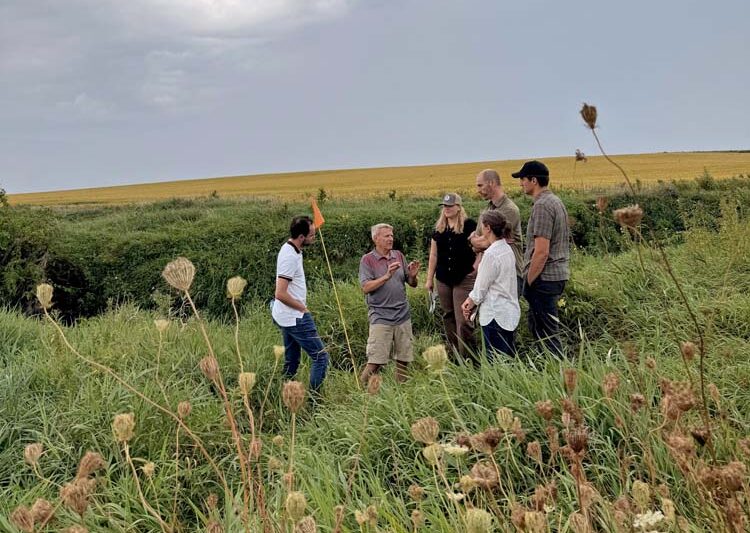
Laura has made sharing knowledge a central part of her work. Over the years, she has mentored hundreds of students and beginning farmers, many of them working side by side with her in the hoophouses and fields at Abbe Hills Farm. She has also taken part in PFI on-farm research and shared her knowledge at many field days, conferences and more.
“I’ve had the privilege of being around a lot of really creative people who want to farm,” Laura says. “It makes me feel hopeful about how we’re going to feed ourselves.”
Making Space
That hope carries into her plans for the future. After decades of hard work, the years show in her weathered hands, and Laura is beginning to step back as young farmers take over both the farm and the open-pollinated corn business. Still, she remains closely involved. Laura continues to manage the crop ground, tends to her home garden, keeps an eye on the hoophouses and offers advice when needed.
“These are really smart, creative, competent and capable young families,” she says. “They’re going to do awesome things, as long as we get out of the way.”
She carries a quiet pride in what she has built, earned by showing up year after year. At the heart of her work is a simple belief she has held from the start. “I just want people to be able to have access to really good food,” Laura says. “Everybody, no matter their income, ought to be able to eat well.”