In a Nutshell:
- Iowa vegetable farmers Roxane Mitten, Jon Yagla and Jordan Scheibel wanted to put conventional wisdom to the test and investigate if larger seed garlic and potato onions produce larger yields compared to small or medium seed.
- Mitten and Yagla wished to investigate the role of seed garlic head size on harvest metrics. Scheibel was interested in a slightly different question: do differently sized cloves from the same, large head produce larger or smaller yields?
- All three producers assessed the effect of small, medium and large potato onion bulbs on yield and survival.
Key Findings
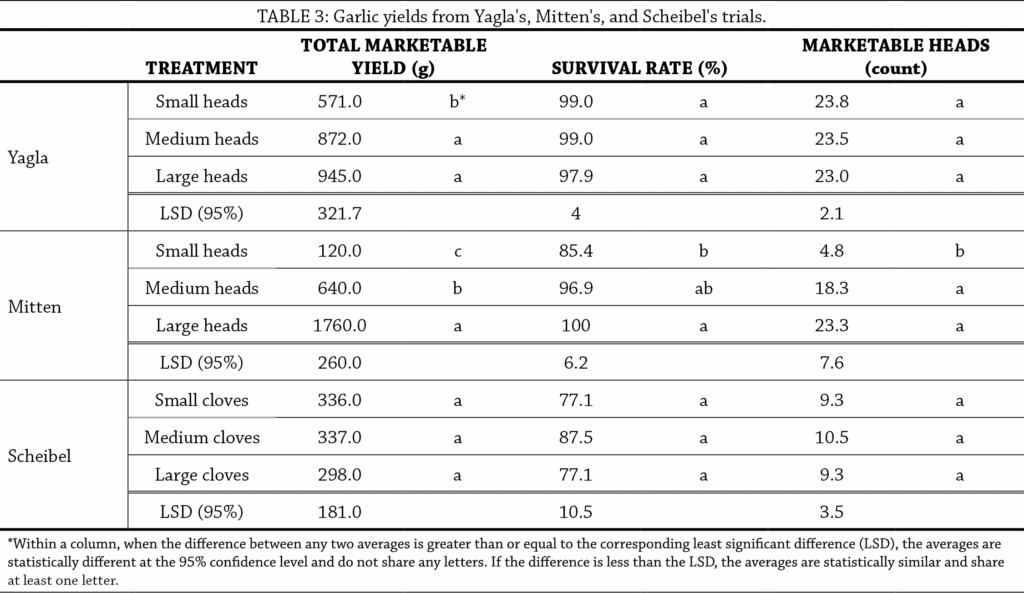
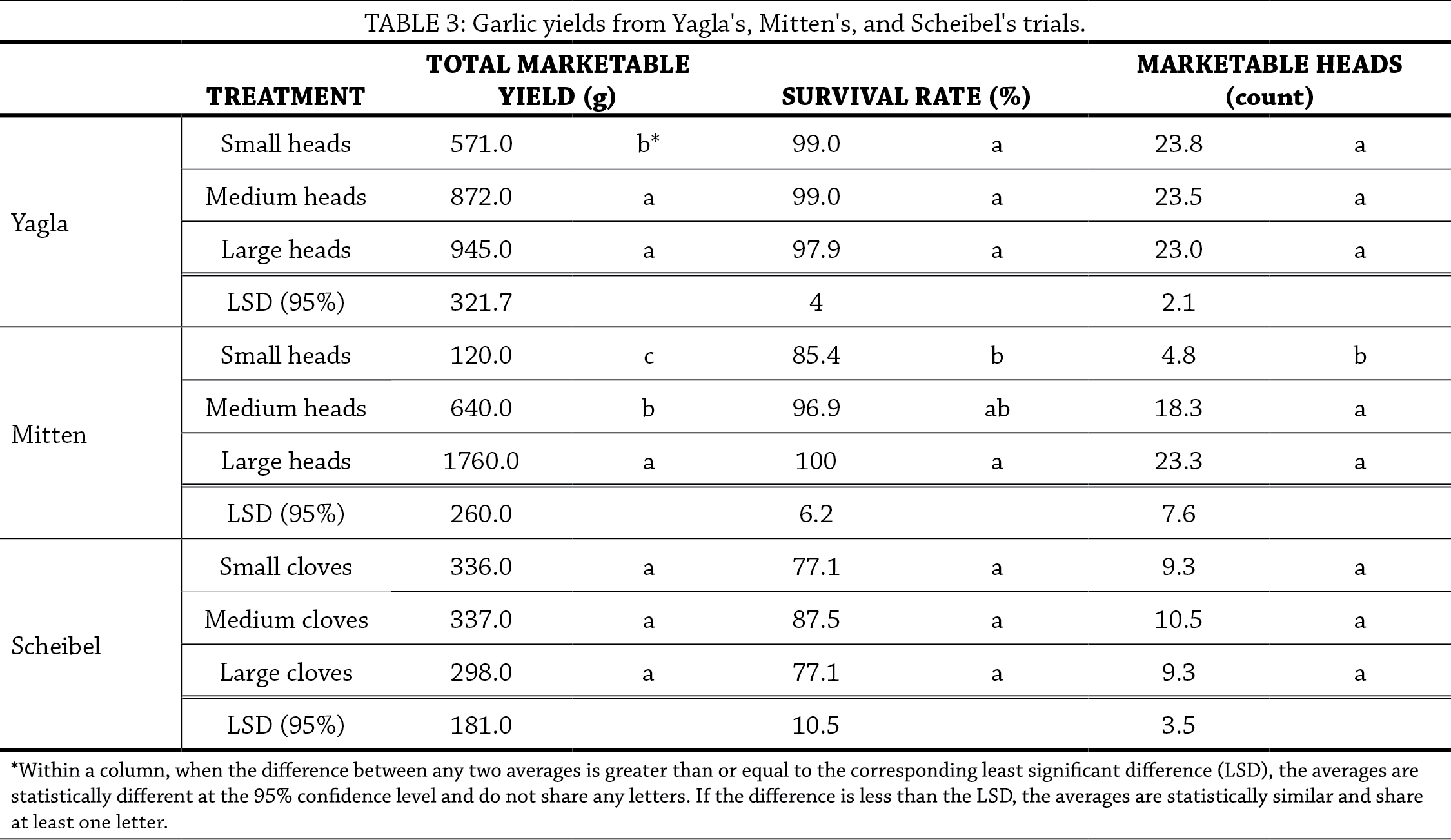
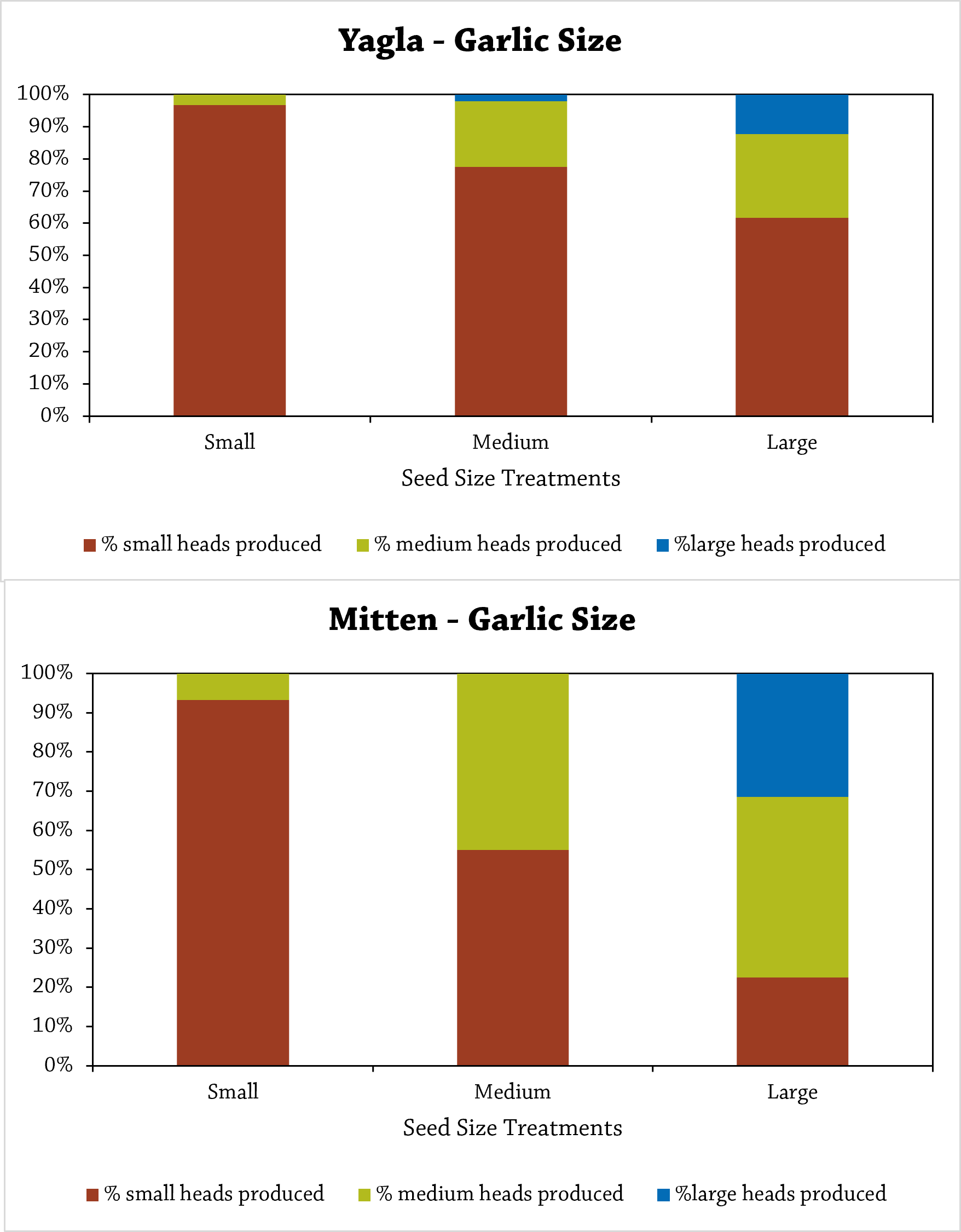
- Mitten and Yagla both found that using large garlic heads for seed produced greater yields than small heads. Mitten also found that large heads outperformed medium heads. Scheibel found no difference in the marketable weight of garlic grown from different sized cloves of large heads.
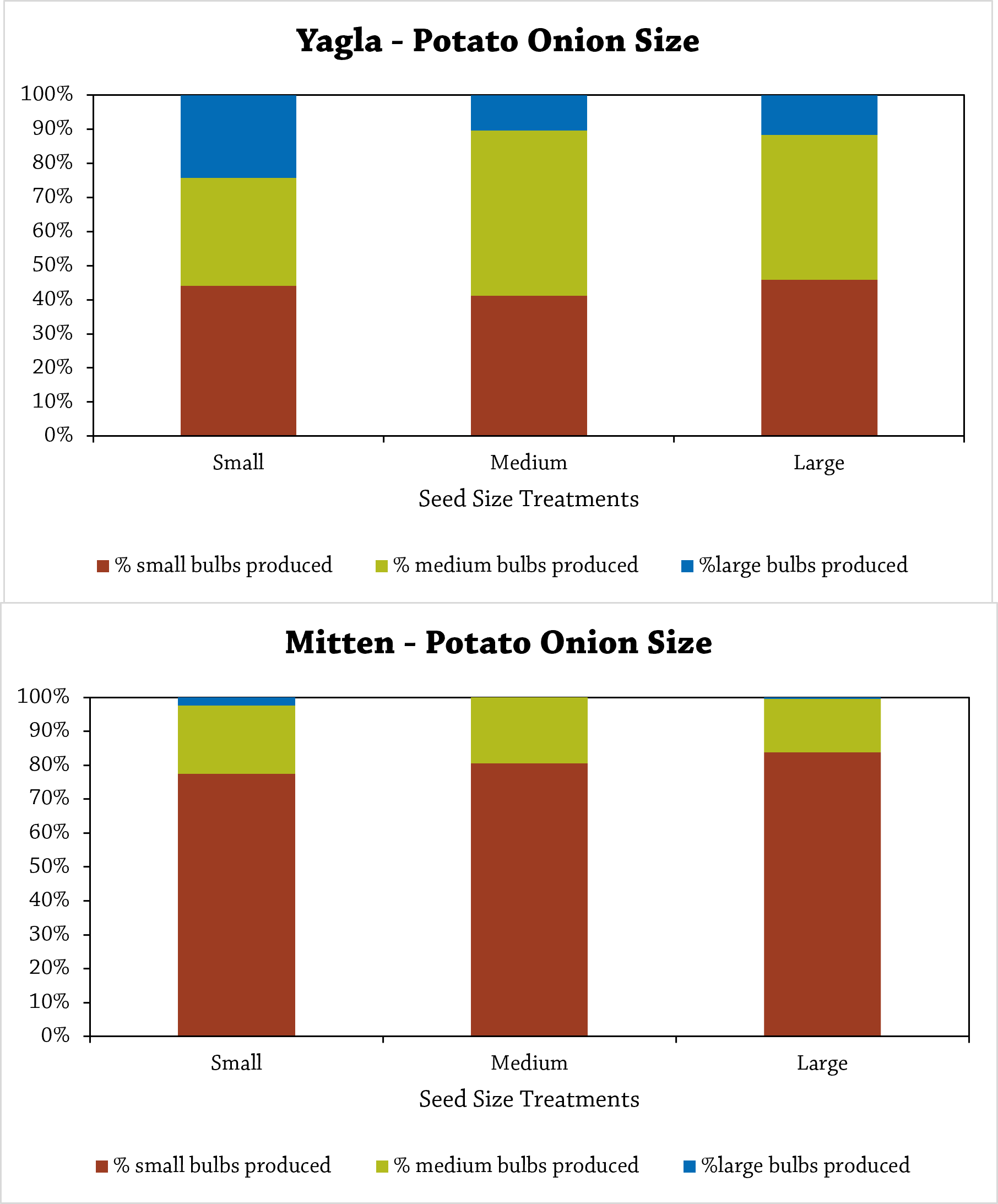
- Mitten and Yagla also both found that large potato onion bulbs produced larger yields than small bulbs. Scheibel found no effect of potato onion bulb size on yield.
Background
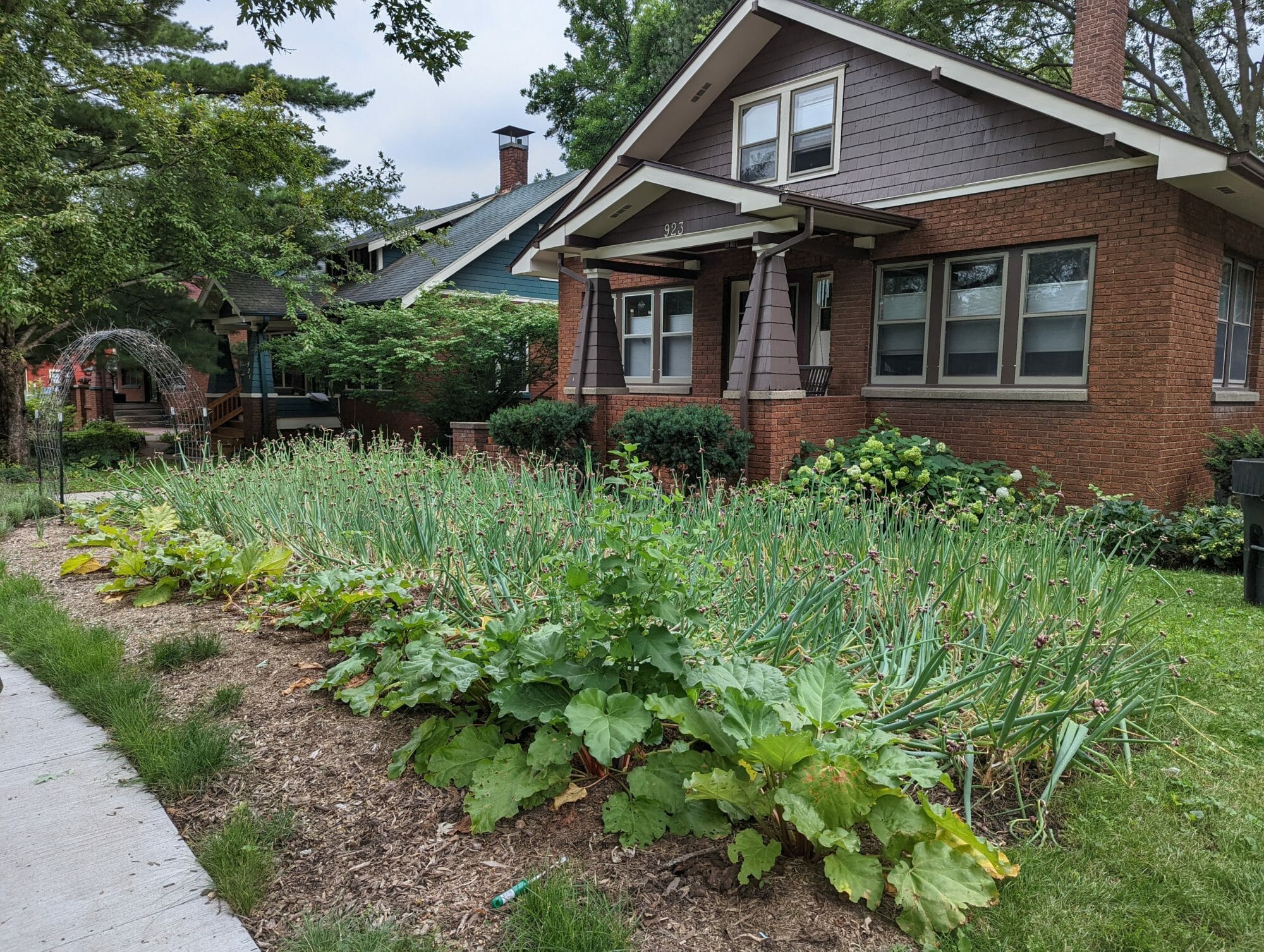
Garlic and potato onions are both bulbous alliums that grow from a single planted garlic clove or potato onion bulb. Though they are perennial plants, both are typically raised annually by harvesting the whole plant in mid-summer and replanting individual cloves or bulbs in the fall. Many farmers chose to save some of their own garlic and/or potato onion crop each year for replanting because it is simple to do so and more cost-effective than buying new seed stock each year. Conventional wisdom and horticultural research [1,2] say to use the largest garlic heads and potato onion clumps as seed stock to maximize yield the following year. However, larger garlic and potato onions are also more attractive to customers, so reserving the largest individuals for seed may take away from the marketability of the crop. Iowa vegetable farmers Roxane Mitten, Jon Yagla and Jordan Scheibel wanted to put conventional wisdom to the test and investigate how the size of planted garlic and potato onions affect yield. Before the trials, Yagla commented, “Having a better understanding of how garlic bulb sizes affect yields and quality of bulbs may lead to a significant change in how I distribute different sizes.” Similarly, Scheibel noted that “If we find that smaller seed pieces can be planted and achieve similar yield and quality to larger seed pieces, we will be able to sell more of the premium size and quality of our crop while maintaining our seed stock. The result would be increased sales from our garlic crop without increasing production area.” The trial was also an opportunity for some of the cooperators to try a new crop as neither Mitten nor Yagla had grown potato onions before. Potato onions, also called multiplier onions, are bulbous alliums that produce 6-15 bulbs per cluster.[3] They have golden yellow skins and pale yellow to white bulbs. They can be harvested for spring onions or for bulbs and they taste like mild onions. One of Mitten’s goals for the trial was to gain “a better understanding of how potato onions can be grown for market and an increased interest in perennial alliums on the farm.” Scheibel, who has been growing potato onions for several years primarily to sell to a seed company, noted that “growing as much premium size seed as I can is important. I otherwise do not have a market for small seed pieces, unless we can determine through this trial that they could be replanted to produce larger bulbs the next season.” Though all cooperators hoped to find that seed size does not affect yields, they went into the experiment expecting that it would. Mitten and Yagla hypothesized that marketable garlic yield, proportion of large and medium heads, and survival rate of medium seed stock would be greater than yield and survival rate of small seed stock but equal to large seed stock. Scheibel hypothesized that large garlic cloves and onion bulbs would produce larger yields than small cloves.Methods
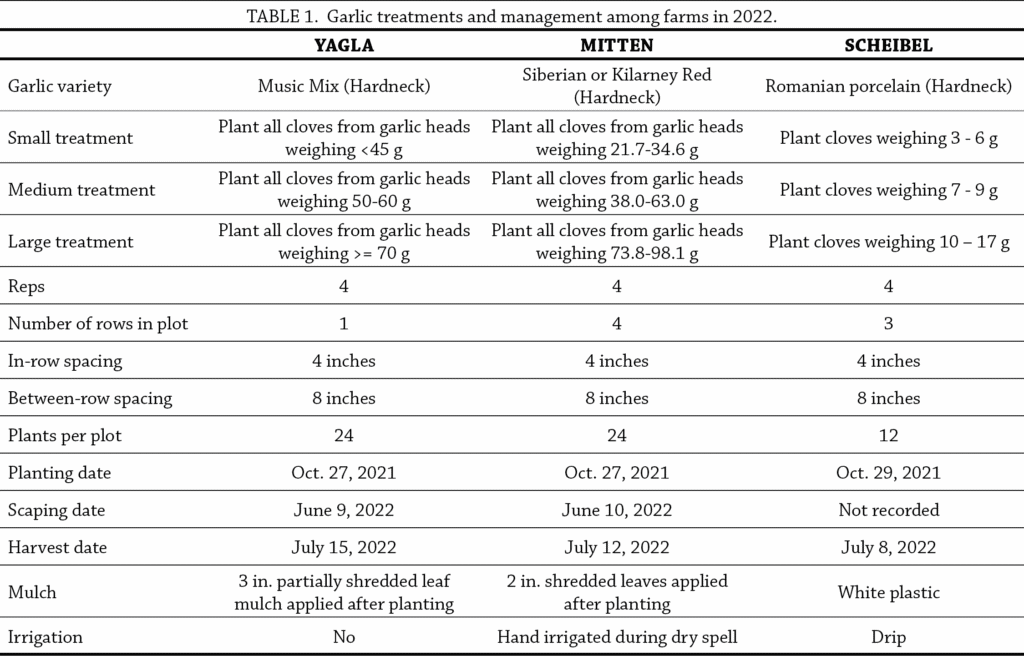
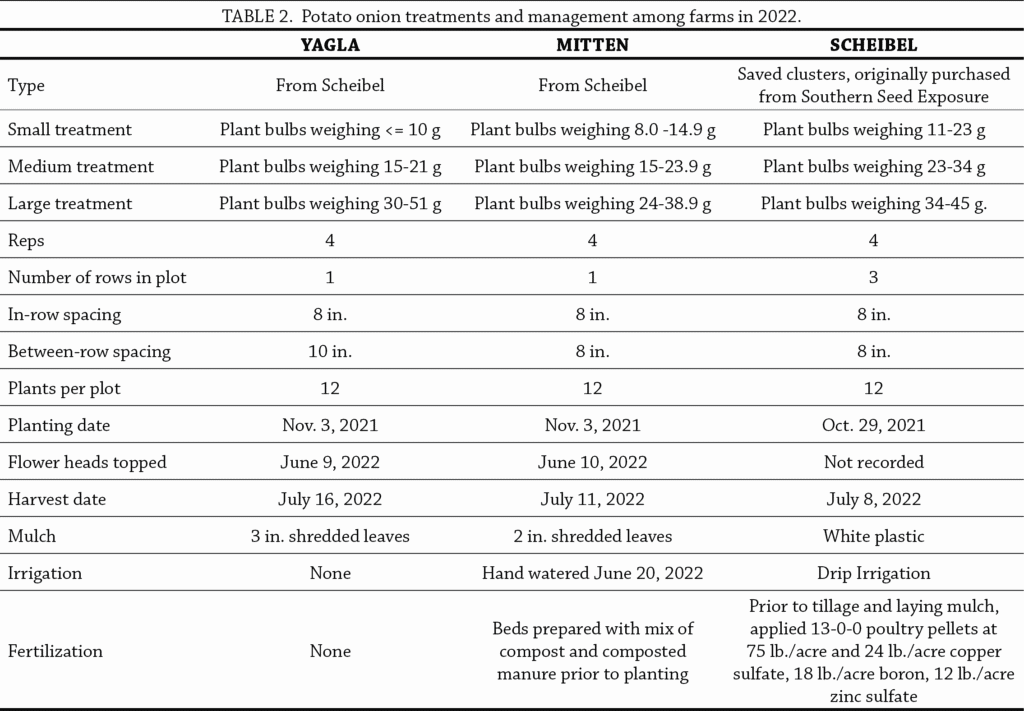
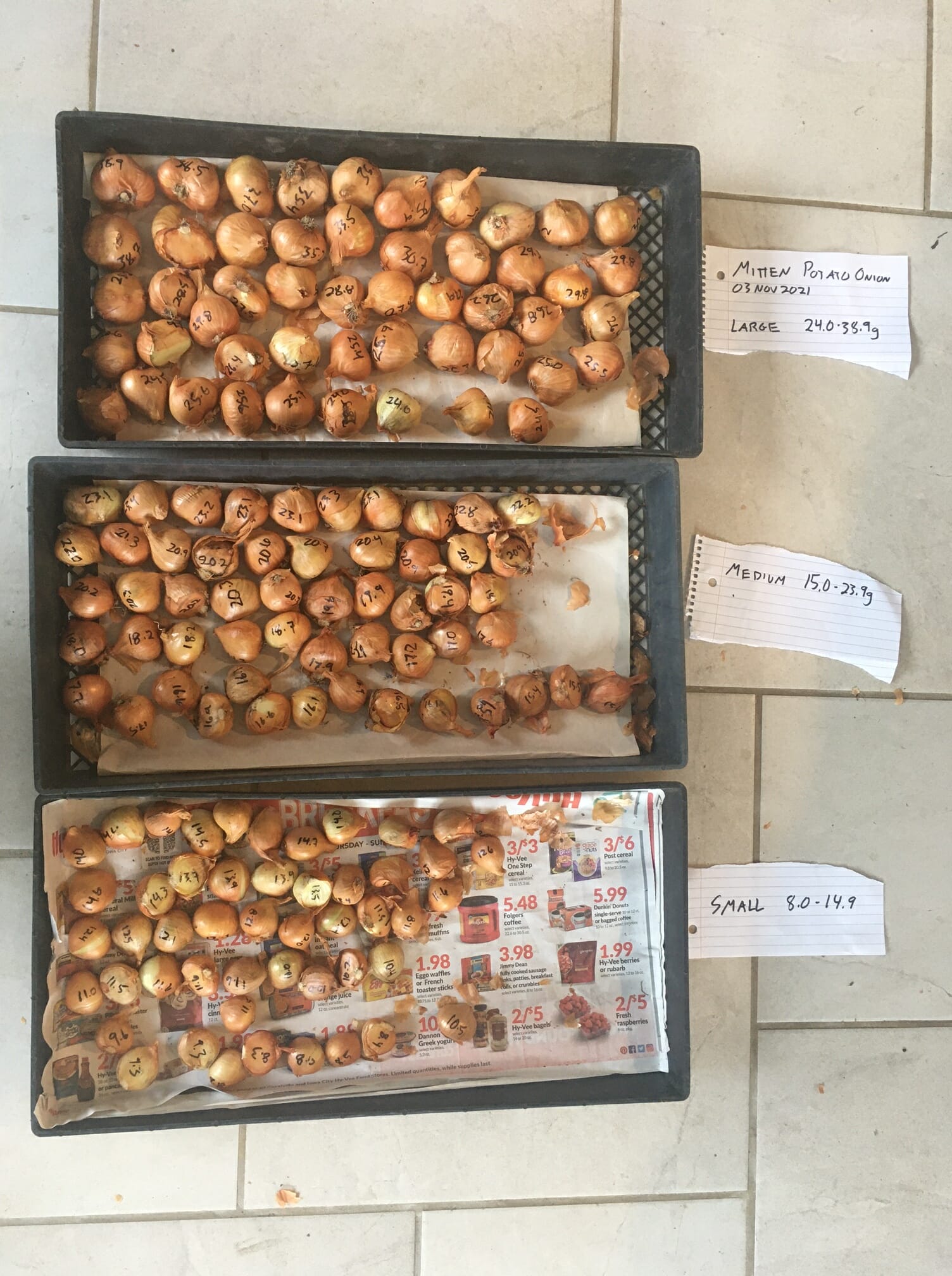
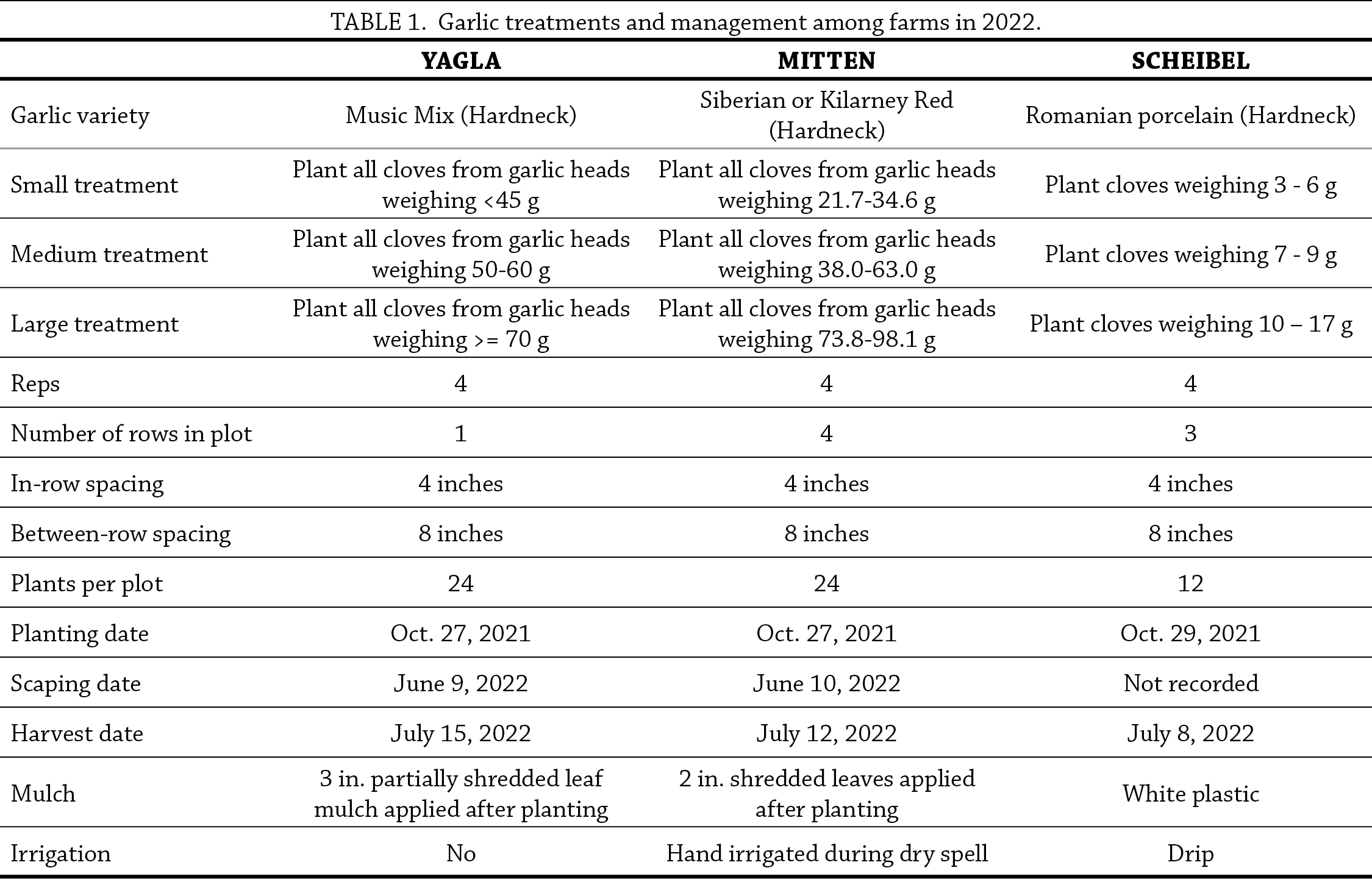
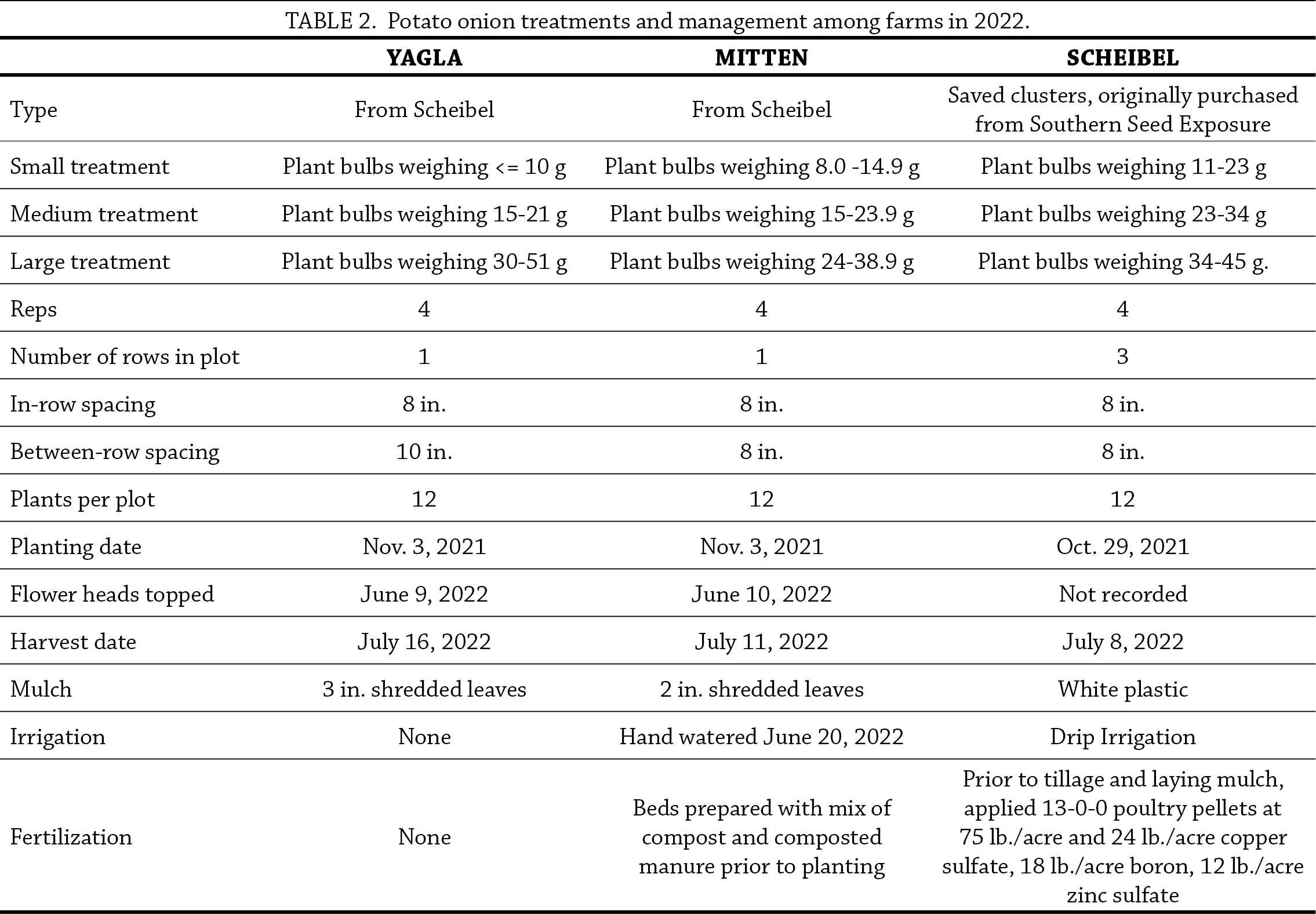
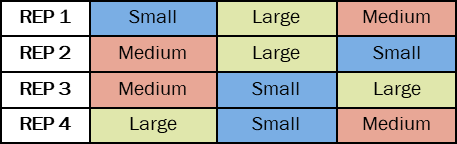
DesignPlant spacing and management at all three sites for garlic is described in Table 1 and for potato onions in Table 2. Cooperators established treatments by weighing their garlic heads (Mitten and Yagla) or garlic cloves from large (2-2.5 in. diameter) heads (Scheibel) and potato onion bulbs (all) and dividing them into small, medium and large weight classes. All cooperators planted the alliums in late October or early November 2021. Cooperators replicated each size class four times for a total of 12 plots (3 size classes x 4 reps) at each site. Size class treatments were assigned randomly to single plots within each block of replicates.

Results and Discussion
Survival rate Mitten found that survival rate was lower in the small treatment than the large treatment (Table 3). Yagla and Scheibel did not find any difference in survival rates between treatments.

Conclusions and Next Steps
The combined results of each cooperator reinforce the conventional wisdom that the largest garlic heads and potato onion bulbs should be saved each year to maximize yield the following season. The size of garlic cloves from large heads, in contrast, may not affect yield. Though it might be tempting to sell large garlic heads and onions that are more attractive to consumers, Yagla and Mitten concluded that they would continue reserving their largest alliums for next season’s seed stock. Yagla commented “I will trust that planting my largest heads is worth it.” Mitten reflected that this trial was important because “some other generally understood growing 'facts' are not true for Iowa. Therefore, this was helpful to verify for seed selection.” Yagla and Mitten learned a lot about growing a new crop, potato onions, through this trial. Yagla is excited to continue growing potato onions in the future but will continue to experiment to fine tune his seeding rate. “This trial really made me think about how spacing impacts yield. I will increase my spacing and use large and medium sized bulbs for seed stock.” Mitten reflected that while she was glad to have tried it, “I do not think this is an onion I choose to grow for market.”
Appendix – Trial Design and Weather Conditions
References
- Castellanos, J. Z., Vargas-Tapia, P., Ojodeagua, J. L., Hoyos, G., Alcantar-Gonzalez, G., Mendez, F. S., Alvarez-Sanchez, E., & Gardea, A. A.. 2004. Garlic Productivity and Profitability as Affected by Seed Clove Size, Planting Density and Planting Method. HortScience. 39(6), 1272–1277. https://doi.org/10.21273/HORTSCI.39.6.1272 (accessed June 2023).
- Desta, B., Tena, N., & Amare, G. 2021. Growth and Bulb Yield of Garlic as Influenced by Clove Size. The Scientific World Journal. 2021, e7351873. https://doi.org/10.1155/2021/7351873. (accessed June 2023).
- Stephens, James M. 2018. “Onion, Potato—Allium Cepa L. (Aggregatum Group)” UF/IFAS Extension document number HS633. (accessed June 2023).
- Iowa Environmental Mesonet. 2022. Climodat Reports. Iowa State University. http://mesonet.agron.iastate.edu/climodat/. (accessed June 2023).