In a Nutshell:
- Waiting to plant organic, no-till soybean until terminating cereal rye by roller-crimping delays planting to late May.
- To try to plant soybeans earlier in roll-crimped cereal rye, Scott Shriver planted soybeans 17, 13 and zero days before roller-crimping and compared yields and stand counts. In a separate trial, Shriver compared soybean yields and stand counts between soybeans drilled in 7.5-in. row-widths and soybeans planted in 30-in. row-widths.
Key Findings
- Soybeans planted zero days before roller-crimping (June 5) yielded higher than soybeans planted 17 (May 19) and 13 days (May 23) before roller-crimping and had a higher stand count than soybeans planted 13 days before roller-crimping. Soybeans drilled in 7.5-in. row-widths had higher yields and stand counts than soybeans planted in 30-in. row-widths.
- Based on the results of this study, Shriver plans to drill soybeans in 7.5-in. row-widths and wait to plant soybeans until closer to the date of roller-crimping cereal rye.
Background
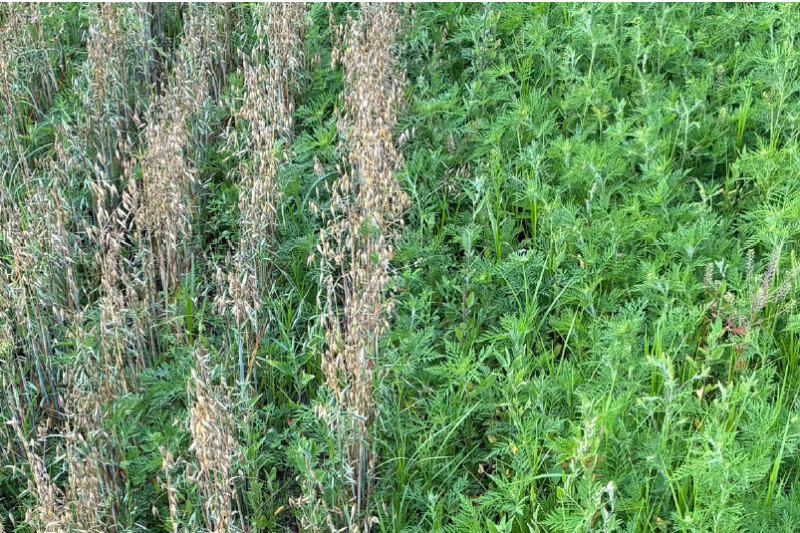
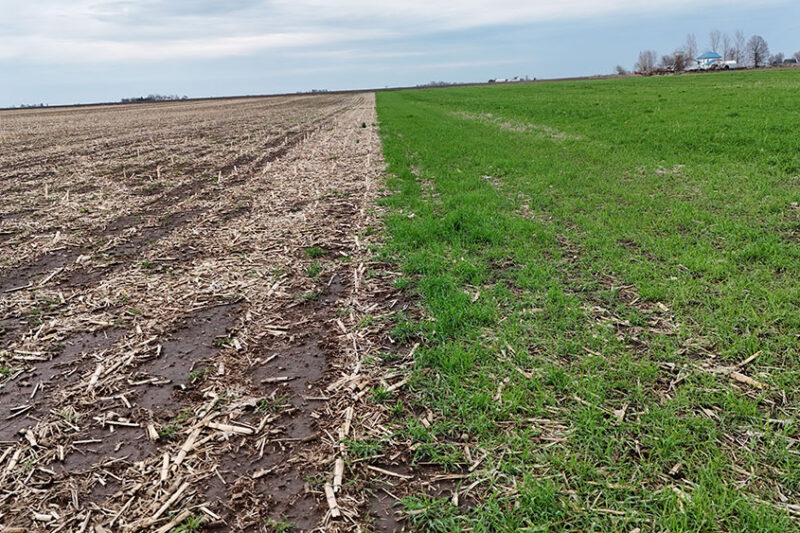
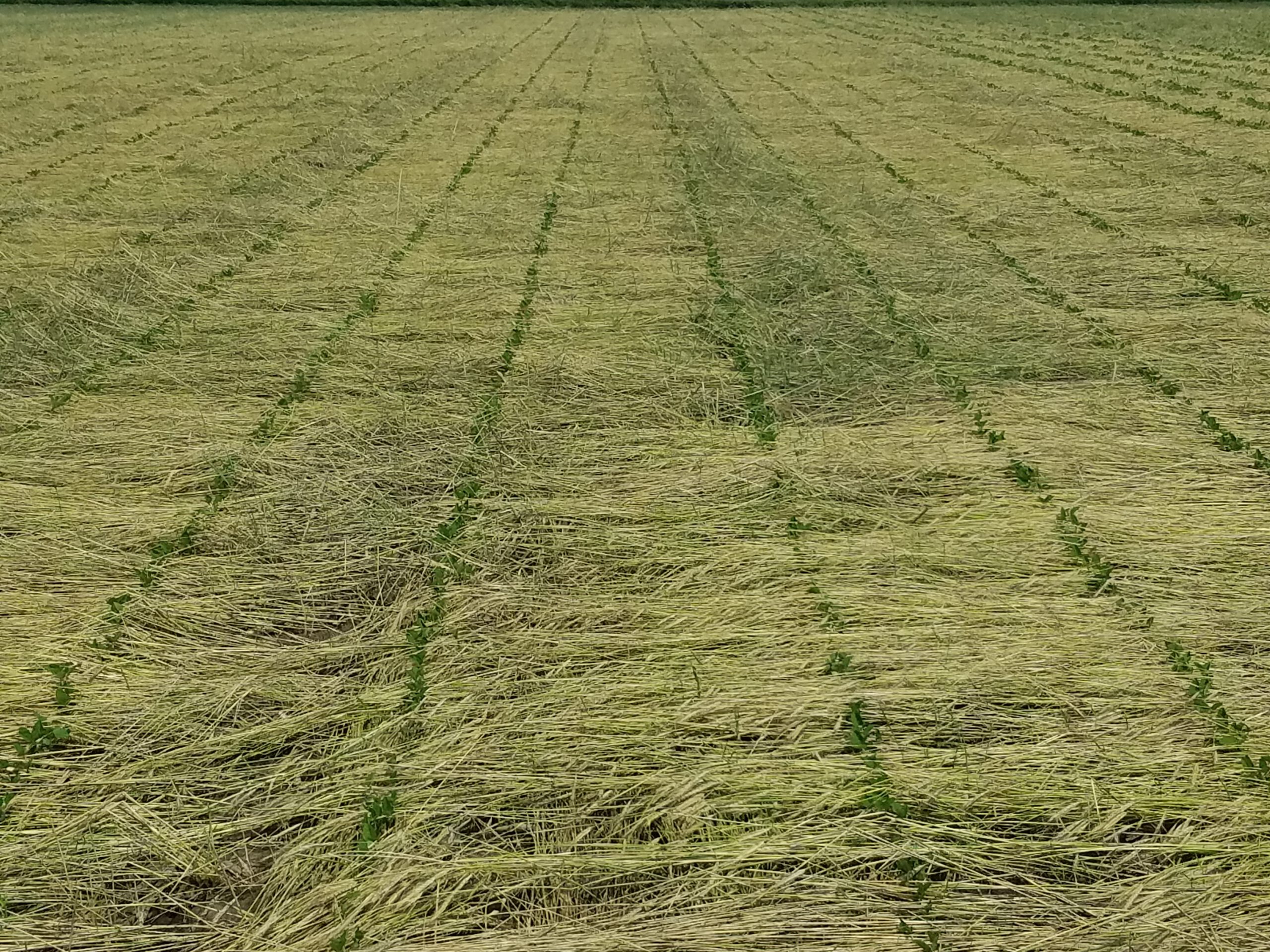
While early planting of soybeans is important to maximize yield potential, in Iowa it has not been considered a possibility with organic, no-till soybeans.[1] Forgoing the use of tillage and herbicides in organic, no-till soybeans makes cover crops such as cereal rye essential for weed control; however, without herbicides, termination of cereal rye has proven tricky to manage. Mowing and roller-crimping are two organic-approved, no-till options for terminating cereal rye. To effectively kill the cereal rye they must be done during the period when cereal rye reaches anthesis, but this growth stage does not occur in Iowa until late May or early June.[2,3] The logical assumption has been that planting soybeans in advance of cereal rye anthesis and subsequent roller-crimping to maximize earliness would result in termination of not only the cereal rye but the soybeans too. Thus, it was accepted by many that organic, no-till soybeans could not be planted in Iowa until late May – the time when cereal rye reaches anthesis and can be roller-crimped.[4]
Methods
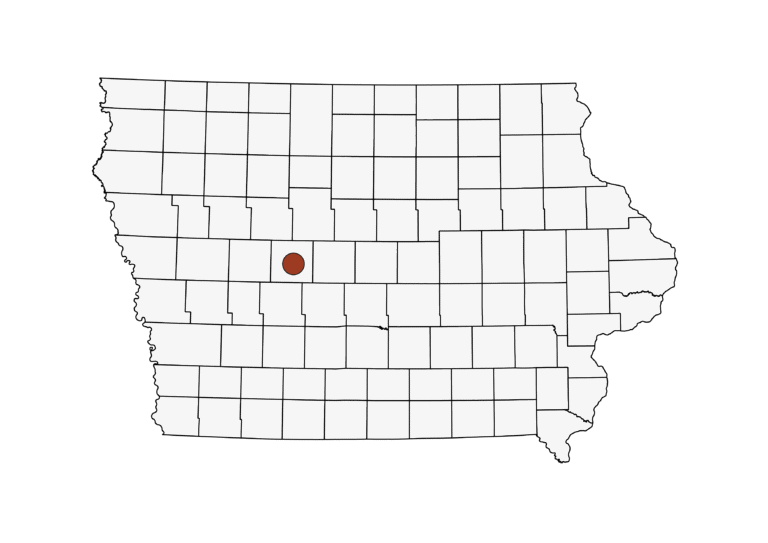
Two experiments were conducted by Scott Shriver near Jefferson in Greene County, Iowa, on certified organic land to investigate the impacts of seeding date and row-width on soybeans planted in roller-crimped cereal rye
Soybean seeding date
Treatments in the soybean seeding-date experiment included soybeans planted 17, 13 and 0 days before termination (DBT) of the cereal rye. Treatments were replicated four times in 40-ft-wide by approximately 1,100-ft-long strips arranged in a randomized complete block design.
In the seeding-date experiment, cereal rye (cv. Aroostook) was planted in all treatments on Oct. 20, 2017, using a box drill at a rate of 3 bu/ac. The following spring (2018), cover crop biomass was sampled on the same date of planting soybeans, which differed according to each treatment: May 19 (17 DBT), May 23 (13 DBT) and June 5 (0 DBT). Biomass samples were dried and weighed. Soybeans were planted in 30-in. rows at a rate of 175,000 seeds/ac using a planter in all treatments. On June 5, the cereal rye reached anthesis in all treatments and was terminated using a roller-crimper. Cultivation occurred in all treatments on July 26 and treatments were hand-weeded on Aug. 4. Stand counts were done in all treatments on Aug. 10 to determine the plant population between roller-crimping and harvest. Soybeans were harvested from the whole width of each strip on Oct. 25.
Soybean row-width
Treatments in the soybean row-width experiment included soybeans planted in 7.5-in. rows with an air-seeder no-till drill and soybeans planted in 30-in. rows with a planter. Treatments were replicated four times in 40-ft-wide by approximately 2,000-ft-long strips arranged in a randomized complete block design.
Cereal rye (cv. Aroostook) was planted at a rate of 3 bu/ac in all strips on Oct. 20, 2017, using a box drill. Soybeans were planted in both treatments into living cereal rye the following spring, on May 23, 2018, at a rate of 175,000 seeds/ac in both treatments. Thirteen days later, on June 5, cereal rye was terminated with a roller-crimper. Prior to termination, biomass was sampled for drying and weighing. Strips with 30-in. rows were cultivated on July 27 and both treatments were hand-weeded on August 2. Stand counts were done on Aug. 10 before harvesting from the whole width of each strip on Oct. 24.

Results and Discussion
Soybean seeding date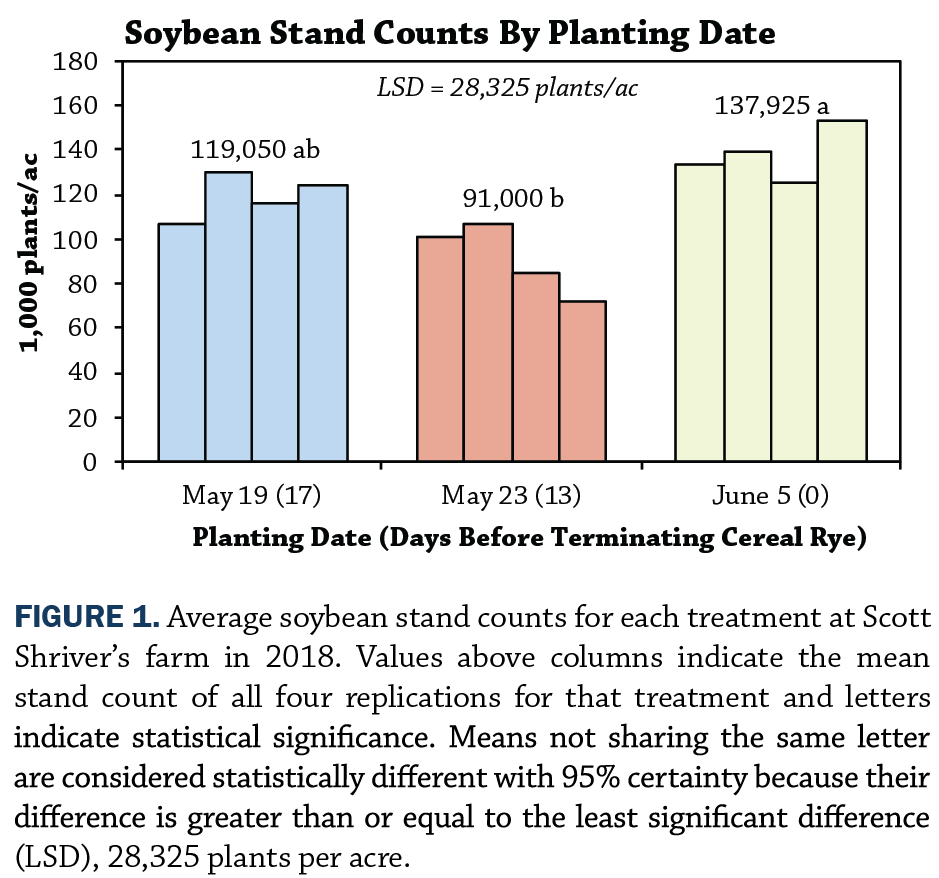
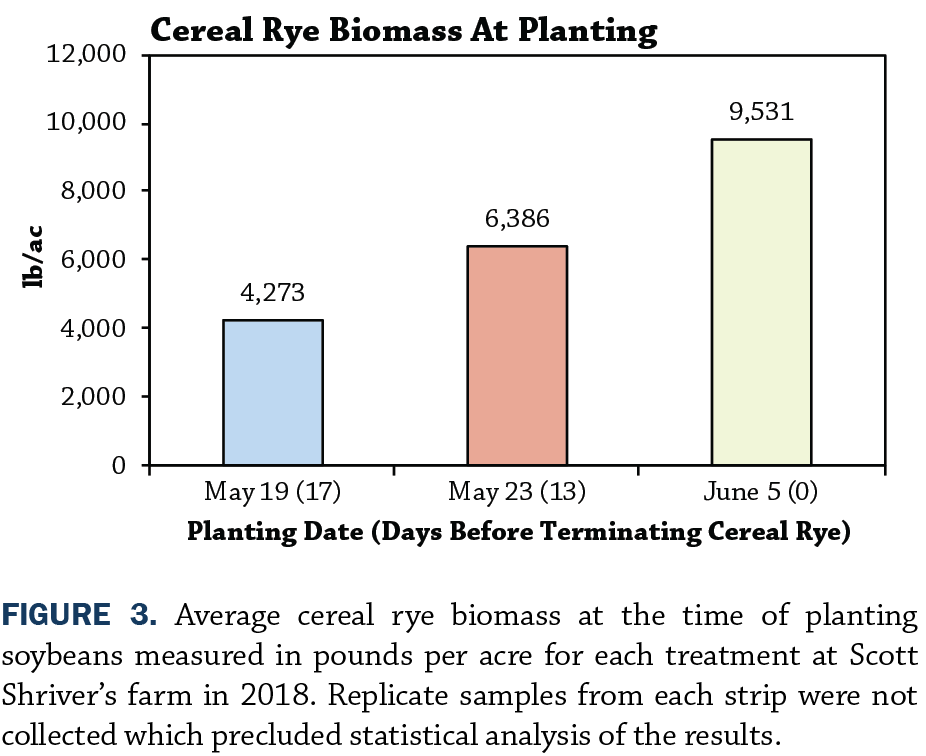
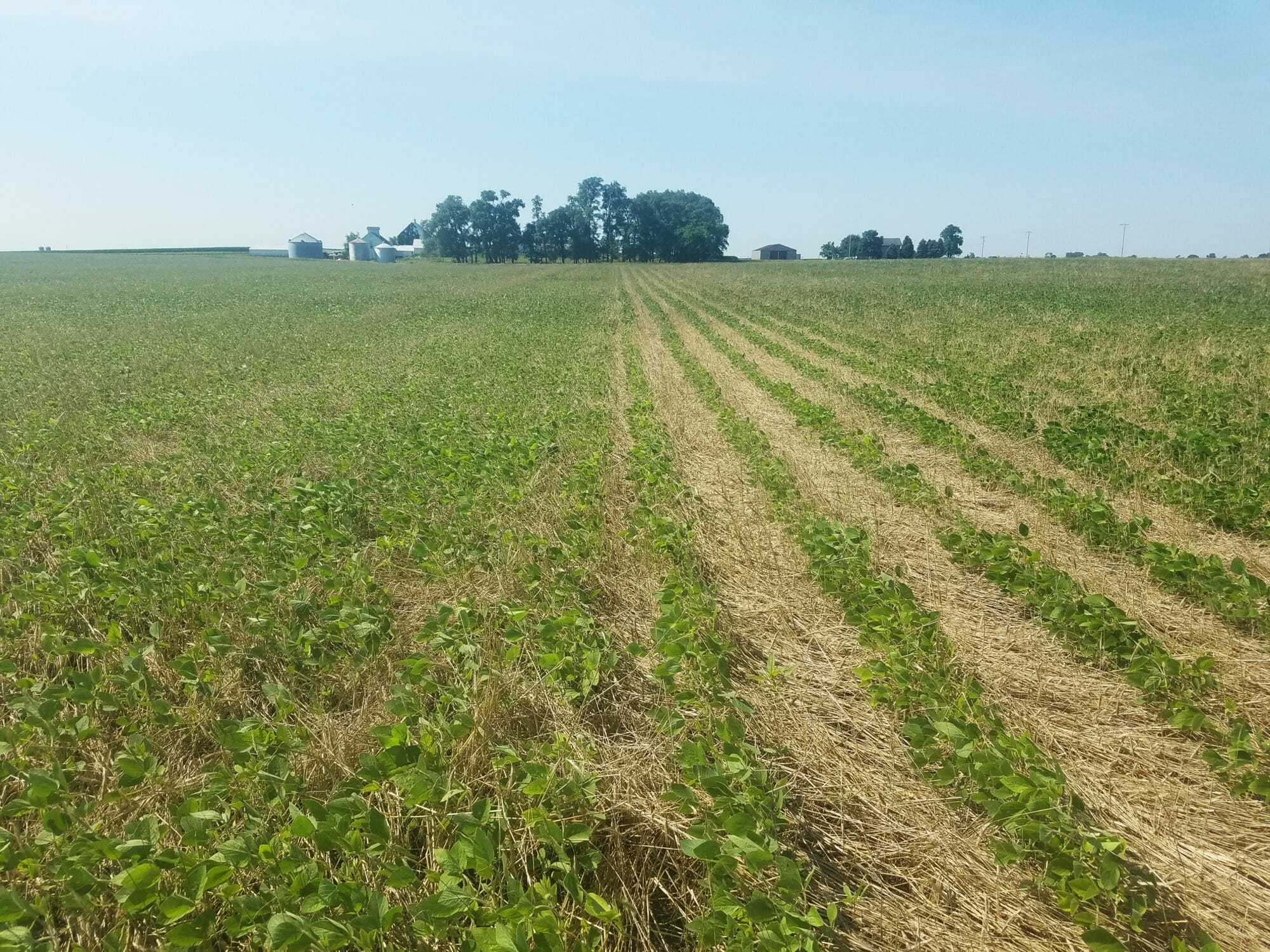
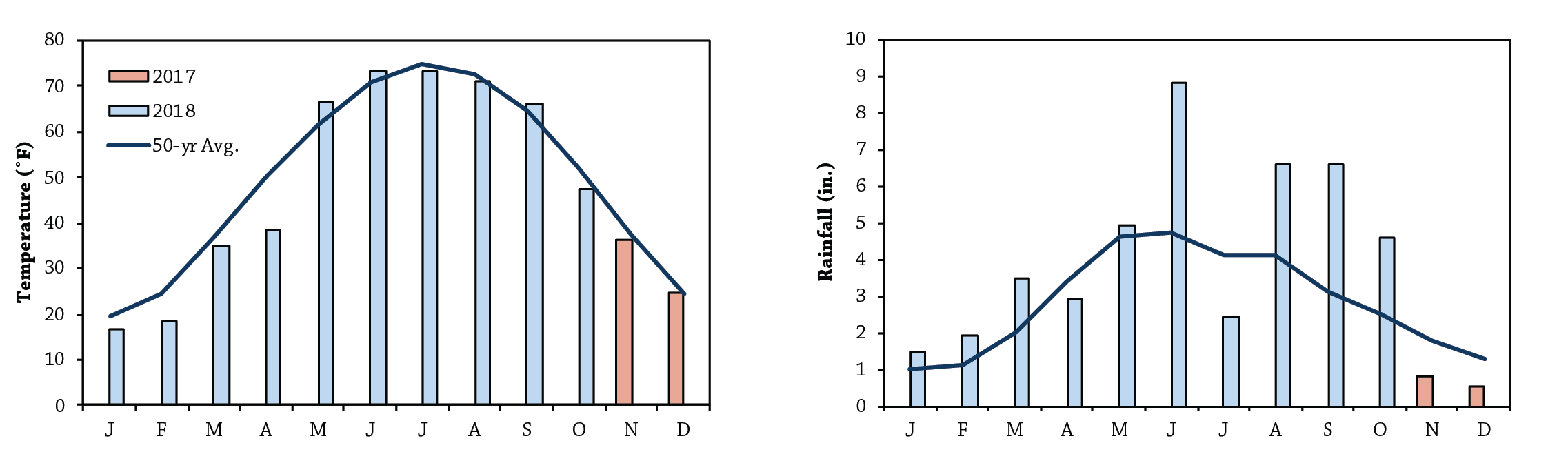
The average stand count of soybeans planted zero DBT (137,925 plants/ac) was greater than the average stand count of soybeans planted 13 DBT (91,000 plants/ac) (Figure 1). The average stand count of soybeans planted 17 DBT (119,050 plants/ac) was intermediate. One factor contributing to a smaller stand count in soybeans planted 13 DBT may be the roller-crimping snapping some soybean stems. There was clear evidence of snapped stems in the row-width experiment in which soybeans were also planted 13 DBT of cereal rye. Photos of mature soybean plants planted at 17 and 13 days before roller-crimping in this experiment show roller-crimper damage that was overcome by the plants as evidenced by crooked growth of stems. It is interesting that average stand counts of the soybeans planted at 17 and 13 DBT of cereal rye were not both statistically lower than stand counts of soybeans planted zero DBT. Shriver recalled that at the time of roller-crimping the cereal rye, soybeans planted 13 DBT were about 5 inches tall and at the first-trifoliate stage, and soybeans planted 17 DBT were about 6 inches tall, a bit spindly and at about the second-trifoliate stage.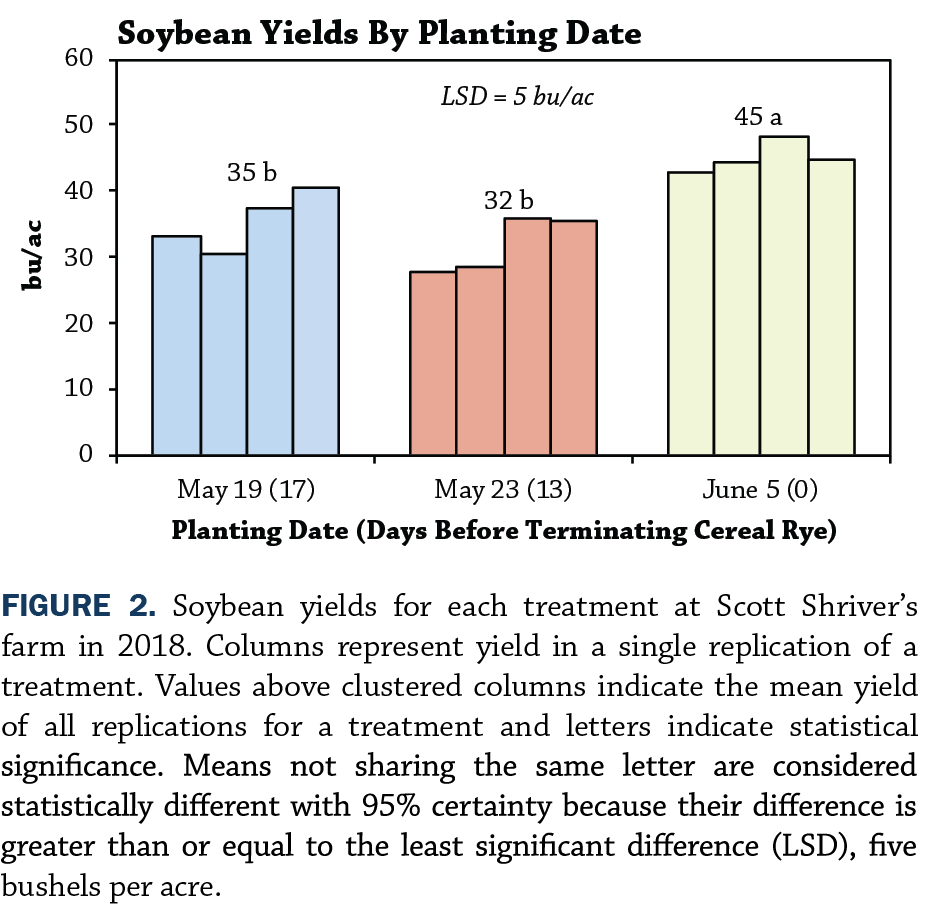 Soybean yield followed a similar, but not identical, trend to soybean stand counts. Soybeans planted zero DBT yielded 45 bu/ac, which was significantly greater than yields in soybeans planted 17 and 13 DBT (Figure 2). Yields of soybeans planted 17 and 13 DBT were statistically similar and yielded 35 bu/ac and 32 bu/ac, respectively. Despite above-average rainfall in May and June (Figure A1),[8] competition with the living rye into which soybeans were planted in the 17- and 13-DBT treatments is likely the cause of lower yields in those treatments. Yields in all three treatments were lower than the 2018 average for Greene County – 57 bu/ac.[9] The average amount of cereal rye biomass at each planting date was 4,273 lb/ac on May 19, 6,386 lb/ac on May 23 and 9,531 lb/ac on June 5 (Figure 3). Snapped seedlings and plant damage from roller-crimping may also be a cause of yield loss in the earlier plantings.
 Soybean row-width
Yields in the soybeans drilled in 7.5-in. row-widths averaged 41 bu/ac and were statistically greater than yields in soybeans planted in 30-in. row-widths, which averaged 33 bu/ac (Figure 4). This is consistent with the findings from a broad pool of research showing narrow row-width has a positive effect on soybean yield.[7,10,11] Shriver did not cultivate the soybeans drilled in 7.5-in. row-widths, which saved approximately $13.50/ac in that treatment according to the 2018 Iowa Farm Custom Rate Survey.[12] Similar to the soybean seeding-date experiment, yields in this experiment were lower than the 2018 Greene County average of 57 bu/ac.[9] Cereal rye biomass averaged 5,258 lb/ac at the time of termination, which occurred 13 days after planting soybeans.
Soybean row-width
Yields in the soybeans drilled in 7.5-in. row-widths averaged 41 bu/ac and were statistically greater than yields in soybeans planted in 30-in. row-widths, which averaged 33 bu/ac (Figure 4). This is consistent with the findings from a broad pool of research showing narrow row-width has a positive effect on soybean yield.[7,10,11] Shriver did not cultivate the soybeans drilled in 7.5-in. row-widths, which saved approximately $13.50/ac in that treatment according to the 2018 Iowa Farm Custom Rate Survey.[12] Similar to the soybean seeding-date experiment, yields in this experiment were lower than the 2018 Greene County average of 57 bu/ac.[9] Cereal rye biomass averaged 5,258 lb/ac at the time of termination, which occurred 13 days after planting soybeans.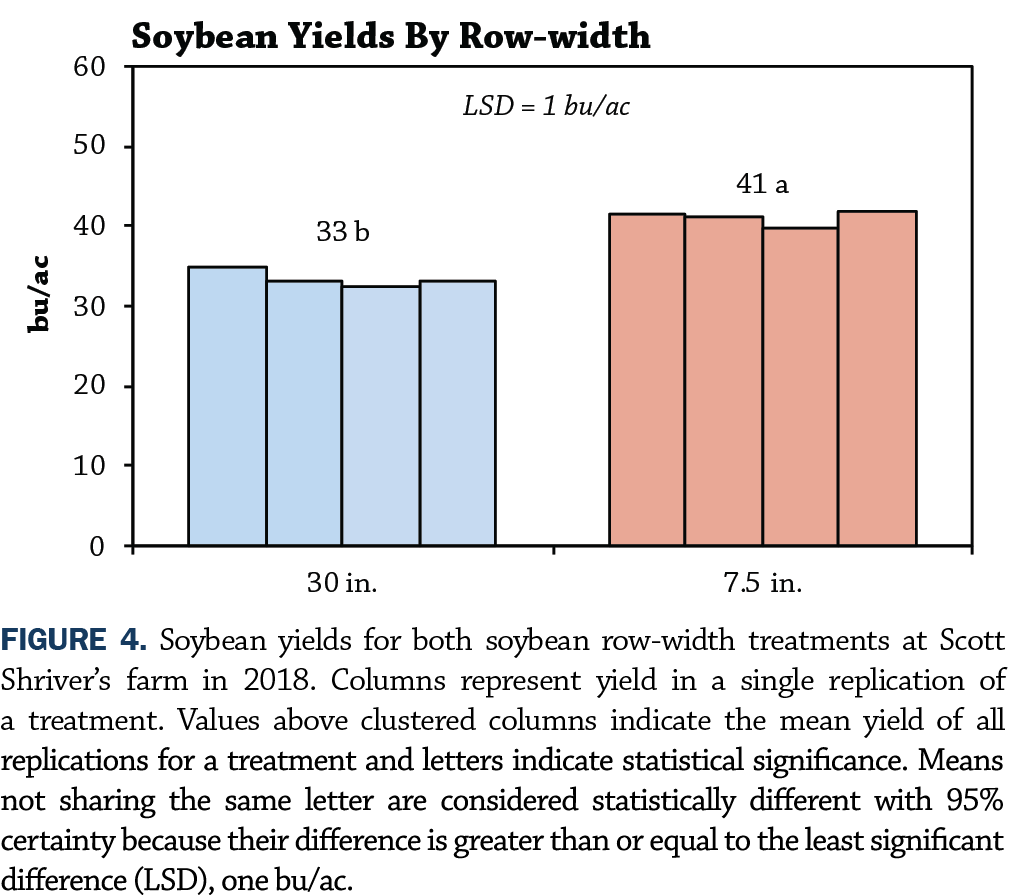 The average stand count of soybeans planted in 7.5-in. row-widths (129,700 plants/ac) was statistically greater than the average stand count of soybeans planted in 30-in. row-widths (77,425 plants/ac) (Figure 5). The reasons for the difference in plant populations is unclear as soybean seeding rates were equal for both treatments. One potential factor contributing to the difference is the planting method used in each treatment – drill for 7.5-in. row-width and planter for 30-in. row-width. However, Shriver commented, “We did not notice anything at planting time that indicated a poorer planting from the 30-in.-row planter. It has a sophisticated down force system to get the seed in the ground that the drill does not have.” Shriver also remarked that neither planter type had difficulties planting through the cereal rye. Furthermore, soybeans and cereal rye in both treatments were roller-crimped at the same growth stage, ruling out the possibility of any differences in damage to soybeans caused by roller-crimping.
Conclusions and Next Steps
The benefits of early planting were not achieved when soybean planting and emergence preceded roller-crimping of cereal rye. The seeding-date experiment showed benefits to yield and plant population when soybeans were seeded on the same date of roller-crimping the cover crop (June 5) compared to seeding 17 or 13 days in advance on May 19 or 23, respectively. These results are likely due to damage to soybean seedlings caused by the roller-crimper and due to competition with living cereal rye during the period between planting soybeans and terminating rye in the treatments planted 13 and 17 days before roller-crimping.
Appendix - Weather Conditions
References
- Pedersen, P. and J. De Bruin. 2007. Early planting of soybean is very important. IC-498. Integrated Crop Management. Iowa State University Extension and Outreach. https://crops.extension.iastate.edu/early-planting-soybean-very-important (accessed March 2019).
- Mirsky, S.B., W.S. Curran, D.A. Mortensen, M.R. Ryan and D.L. Shumway. 2009. Control of Cereal Rye with a Roller/Crimper as Influenced by Cover Crop Phenology. Agronomy Journal. 101:1589–1596. https://naldc.nal.usda.gov/download/37221/PDF (accessed April 2019).
- Neu, K. and A. Nair. 2017. Effect of Planting Date and Cultivar on Cereal Rye Development and Termination for Organic No-Till Production Systems. Farm Progress Reports. Iowa State University. https://lib.dr.iastate.edu/cgi/viewcontent.cgi?article=1195&context=farmprogressreports&unstamped=1 (accessed April 2019).
- Moyer, J. 2016. An Introduction to Organic No-Till Farming. Ecofarming Daily. Acres U.S.A. http://www.ecofarmingdaily.com/book-week-organic-no-till-farming/ (accessed April 2019).
- Silva, E. and L. Vereecke. 2017. No-till Soybean Trial 2017. OGRAIN Factsheet 18-1. University of Wisconsin Organic and Sustainable Agriculture Research and Extension. https://ograin.cals.wisc.edu/wp-content/uploads/sites/65/2018/01/OGRAIN-Fact-Sheet-18-1-No-Till-soy-2017-REVISED-5.pdf (accessed April 2019).
- Silva, E. and L. Vereecke. 2018. No-till Soybean Trial 2018. OGRAIN Factsheet 19-1. University of Wisconsin Organic and Sustainable Agriculture Research and Extension. https://ograin.cals.wisc.edu/wp-content/uploads/sites/65/2019/01/Notillsoy2018.pdf (accessed April 2019).
- De Bruin, J.L. and P. Pedersen. 2008. Effect of Row Spacing and Seeding Rate on Soybean Yield. Agronomy Journal. 100:704–710. https://www.researchgate.net/publication/242167123_Effect_of_Row_Spacing_and_Seeding_Rate_on_Soybean_Yield (accessed April 2019).
- Iowa Environmental Mesonet. 2019. IEM “Climodat” Reports. Iowa State University Department of Agronomy. http://mesonet.agron.iastate.edu/climodat/ (accessed April 2019).
- Johanns, A. 2019. Historical Soybean Yields by County in Iowa. A1-13. Ag Decision Maker. Iowa State University Extension and Outreach. https://www.extension.iastate.edu/agdm/crops/pdf/a1-13.pdf (accessed March 2019).
- Gailans, S., J. Boyer and S. Shriver. 2017. Rolling Cover Crops and Soybean Row-Width. Practical Farmers of Iowa Cooperators’ Program. https://practicalfarmers.org/research/rolling-cover-crops-and-soybean-row-width/ (accessed March 2019).
- Pedersen, P. 2008. Optimum Plant Population in Iowa. Iowa State University Department of Agronomy. https://crops.extension.iastate.edu/files/article/OptimumPlantPop_000.pdf (accessed April 2019).
- Plastina, A., A. Johanns and C. Welter. 2018. 2018 Iowa Farm Custom Rate Survey. FM 1698. Ag Decision Maker. Iowa State University Extension and Outreach. https://store.extension.iastate.edu/product/1792 (accessed March 2019).