Funding provided by IDALS and Walton Family Foundation.
In a Nutshell:
- Hot weather causes romaine lettuce plants to bolt, elongating the stalk and flowering instead of forming marketable heads.
- Six farms conducted trials growing lettuce in the heat of the summer, each testing Fusion, Sunland, and one other variety of their choice.
- Varieties performance and quality were measured to evaluate heat tolerance
Key Findings:
- Several trials produced few or no usable heads; growers reported bolting, small heads, bitterness, disease pressure, and storm damage as limiting factors.
- Variety performance differed by farm, but the chosen alternative varieties often stood out under stress: Purple Fusion at Edwards’, Chalupa at Maxwell and Solko’s, and Sparx at the Zierkes’.
- Sunland showed inconsistent performance, including productivity in some cases but frequent issues with bitterness, bolting or lower eating quality.
Background
For diversified vegetable farmers in Iowa, producing romaine lettuce through midsummer is both valuable and difficult. CSA farms often need leafy greens to maintain variety in weekly shares during the gap before late-summer crops such as tomatoes and sweet corn are fully available, while market farms continue to see steady customer demand for head lettuce. July and August heat, however, can quickly reduce lettuce quality by encouraging bolting, limiting head formation and contributing to bitter flavor even when heads appear marketable.
These challenges have made farmers interested in identifying romaine varieties that can better tolerate summer conditions while still producing usable, good-tasting heads within their existing production systems. Growers are also interested in practical alternatives to specialty lettuce types that may be easier to harvest or useful for salad mix but can be expensive to seed. By comparing full-size romaine varieties under real farm conditions, this trial aimed to help farmers evaluate which varieties could extend lettuce availability, maintain quality during heat stress and fit the needs of CSA and market production.
In 2017 and 2018, PFI Cooperators tested varieties of lettuce to evaluate heat tolerance and disease resistance [1], [2]. In 2025 six farms returned to the subject, testing nine romaine lettuce varieties for performance and quality resilience in the heat.
Methods
Design
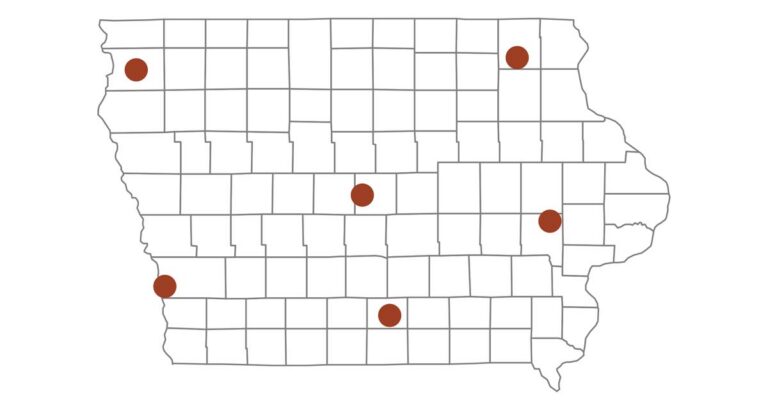
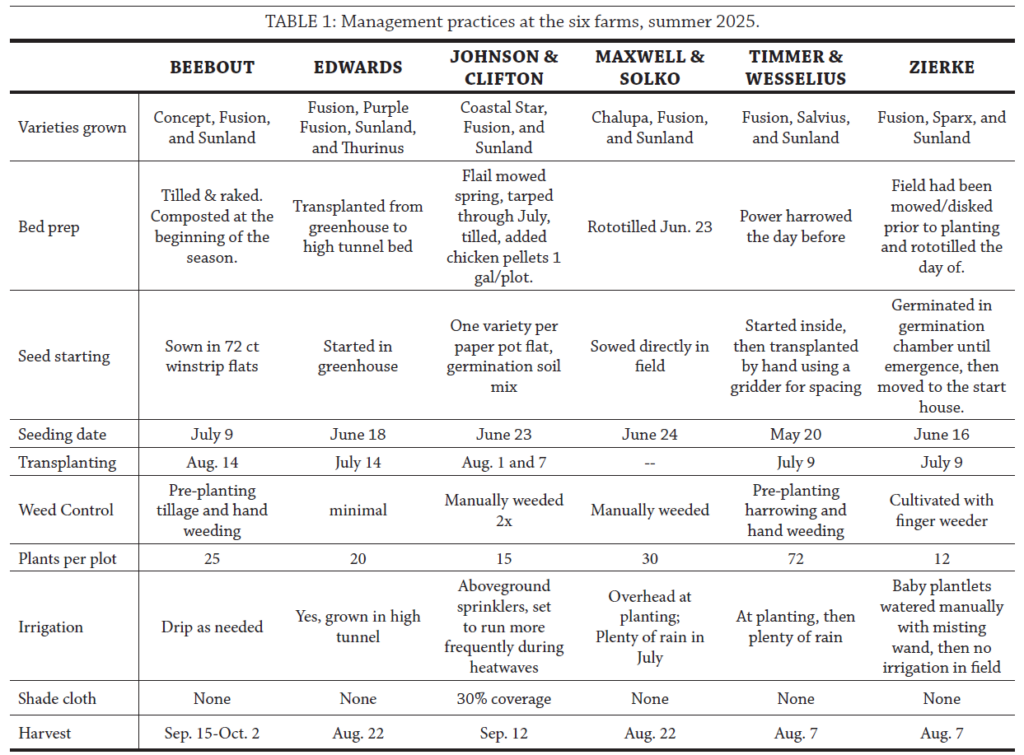
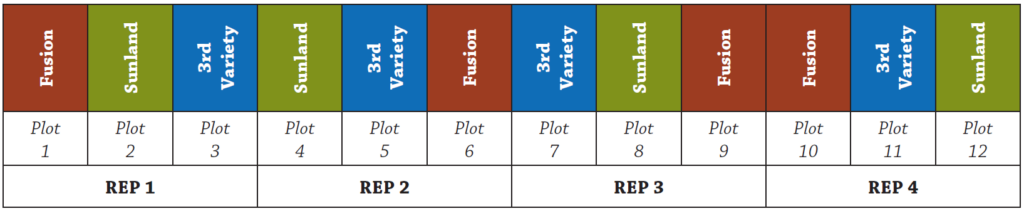
Six farms participated in the project. All of them grew two of the same varieties: Fusion and Sunland, and chose a third variety that they were interested in trialing to compare with those two. An example of the randomized, replicated experimental layout of the trials can be seen in Figure A1. Because growing conditions vary so greatly between farms, it was decided that each farm would grow their lettuce following their standard procedures, setting their own timelines. To this end, farms chose their own planting and transplanting dates, growing the plants during periods when they knew that they would experience summer conditions and heat stress (Table 1). Growing periods were chosen when each farm thought that the data would be of most use to answer their research question—seeking to stress the plants while still getting enough harvest for useful data.
Measurements
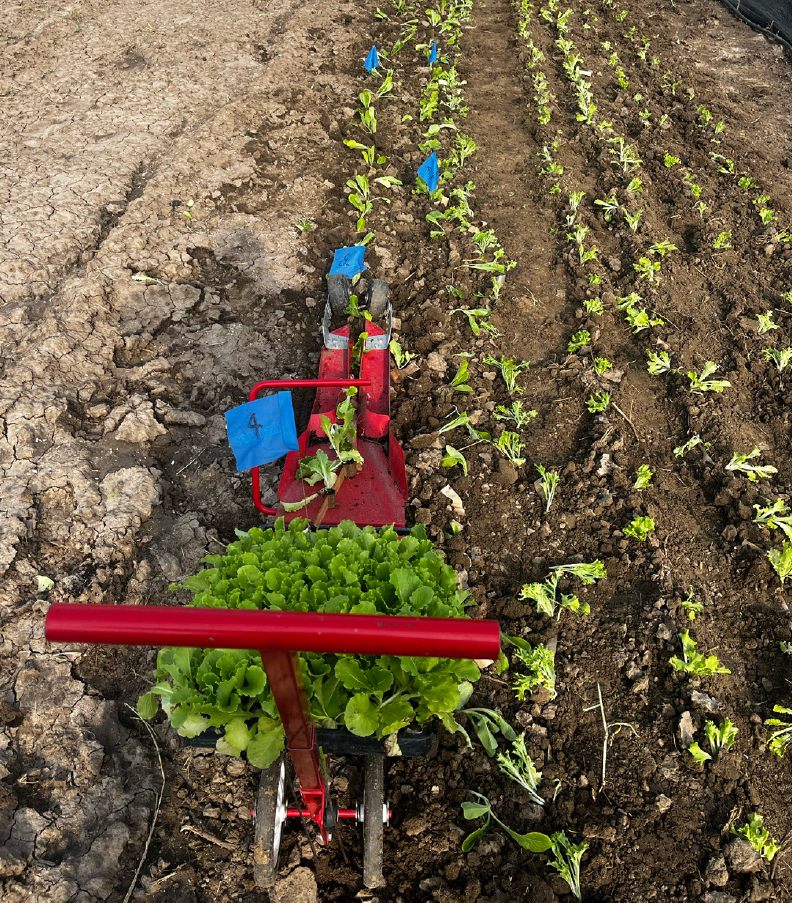
In an effort to simplify data collection in the field, many farms agreed to grade and count the heads, rather than weigh them. To enable quantitative analyses, descriptive categories were mapped onto numerical scales for analysis. For example: Large/High=3, Medium=2, Small/Low=1. A weighted average of all the scores for the heads in each replicate was then taken in order to report on the relative size and quality of the heads, as well as the number of heads produced by each variety. The averages were weighted to control for the varying number of heads in each replicate. Other farms did weigh their yield, and in those cases the average yield weight is reported below.
Qualitative data was also assessed with taste tests and observations at each farm, reported via scores for each replicate for bitterness and bolting.
Data Analysis
Because each farm used a completely randomized, replicated design (Figure A1), data were analyzed separately by farm to test whether romaine variety affected head count, head size, head quality or yield, depending on which measurements were collected. We first evaluated whether each data set met the assumptions for parametric analysis by using the Shapiro-Wilk test for normality and Levene’s test for equality of variance. When those assumptions were met, we used analysis of variance (ANOVA) to test for variety effects at the 95% confidence level. When data did not meet those assumptions, we used the Kruskal-Wallis test. For Johnson and Clifton’s trial, transplant date was included as an additional factor in the ANOVA because they transplanted two successions. Results described as statistically significant indicate differences that would be expected to occur at least 95 times out of 100 under identical experimental conditions.
Results and Discussion
Overall Trends and Results
Growing periods were chosen when each farm thought that the data would be of most use to answer their research question—seeking to stress the plants while still getting enough harvest for useful data. Some farms may have pushed this envelope—Maxwell & Solko grew their lettuce through the hottest days of July and August heat and only had one variety that formed heads that they felt they could measure. Results varied widely between farms. Each of the farms’ findings are presented separately below.
Across farms, the trial summer romaine performance was highly variable and strongly shaped by local growing conditions, with heat, heavy rainfall, disease pressure, storms and bolting all limiting marketable production in at least some locations. No single variety consistently outperformed the others across all farms, but several farm-selected alternatives stood out in specific contexts: Purple Fusion was the highest yielding and most marketable variety at Edwards’ farm, Chalupa was the only variety to produce measurable heads for Maxwell and Solko, and Sparx was favored by the Zierkes because produced heads that were neither stunted nor bitter. Sunland’s performance called into question its ‘heat-tolerant’ categorization; although it was not dead-last on any farm, it did not shine on any of them. Beebout and Edwards highlighted it as particularly prone to bolting—its quick bolting led Beebout to harvest it early and it.
Jill Beebout – Blue Gate Farm
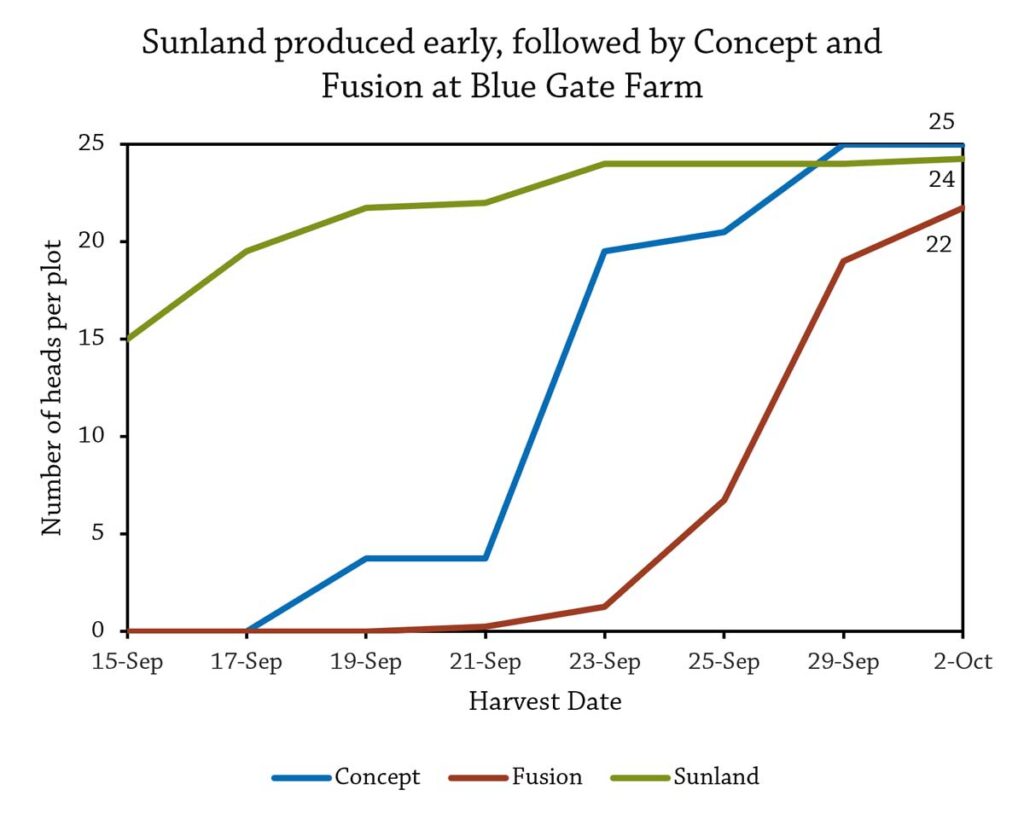
At Blue Gate Farm, Beebout evaluated three varieties (Concept, Fusion, Sunland). In Figure 1, we track the number of heads harvested over time between September 15 and October 2. Most of the Sunland heads (green line) were ready on the first harvest date in mid-September. We then see Concept (blue line) come on-line, first providing heads on September 19 and reaching 25 heads in each replicate (100% of transplanted heads reached harvest) 10 days later, on September 29. Fusion (red line) was ready to harvest last, and only 87% of the heads were ultimately harvested by October 2.
Most of Beebout’s lettuce heads were of medium size; the size score means ranged from 1.75 to 2.01 on a three-point scale (Table 2). Beebout scored Fusion highly for quality (2.65), and gave Concept a middling Score (average 2.22 but was more disappointed by Sunland (Table 2). Sunland bolted, forcing early harvest while the heads were still usable. Beebout remarked that “Sunland started to bolt first [and] were the least tasty, while Fusion were the most attractive”.

Kate Edwards – Wild Woods Farm
Kate Edwards grew four varieties of romaine at Wild Woods Farm-Fusion, Purple Fusion, Sunland, and Thurinus. She weighed all heads harvested, as well as counting the total heads and the number of marketable heads produced. She also assessed head quality, bolting, and bitterness on 0-5 scales.
Purple Fusion produced significantly higher yield than Fusion or Thurinus, and only Purple Fusion produced marketable heads (Table 3). However, even among this standout variety, the performance was spotty. The marketable heads came from only two of the original four planted plots. The other two Purple Fusion plots produced no marketable heads. Purple Fusion stood out in other measured attributes: Purple Fusion received the highest 'Quality' score and the lowest 'Bitterness' score of any of the varieties. Although Purple Fusion significantly outperformed the other varieties in these measures, it only had an average 'Quality' score of 1.75 out of 5—all the varieties were definitely feeling the heat.
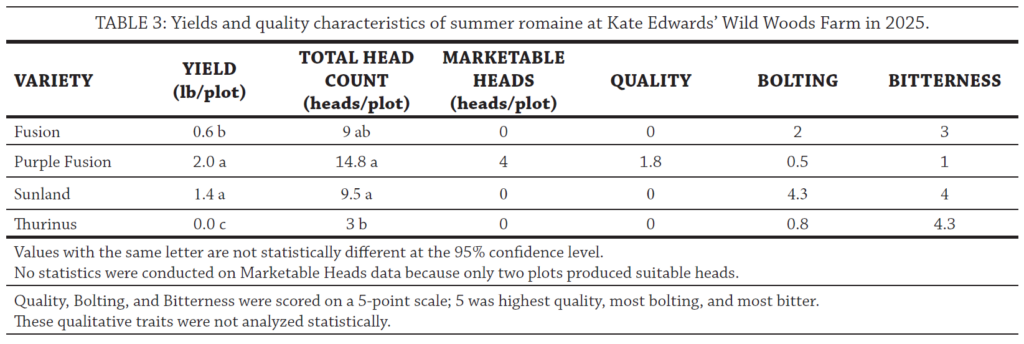
Sunland received a worse score from Edwards for bolting than any of the other varieties. Sunland and Thurinus (neither producing any marketable heads) were jointly the most bitter— with average 'Bitterness' scores of 4.0 and 4.25 out of 5. Thurinus produced three bitter heads that Edwards said were so small that they did not total even half a pound, the lower limit of Edwards' scale. Thurinus is reported in Table 3 to have no yield, but still has a 'Bolting' and a 'Bitter' score in Table 3 because although the plants did not produce any harvestable yield, there was enough plant material produced to support those observations.
Matt Johnson and Tiff Clifton – Long Walk Farm
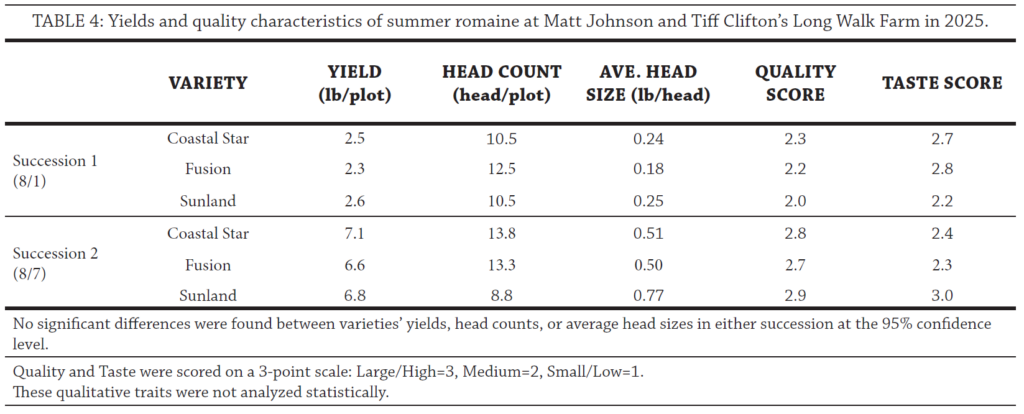
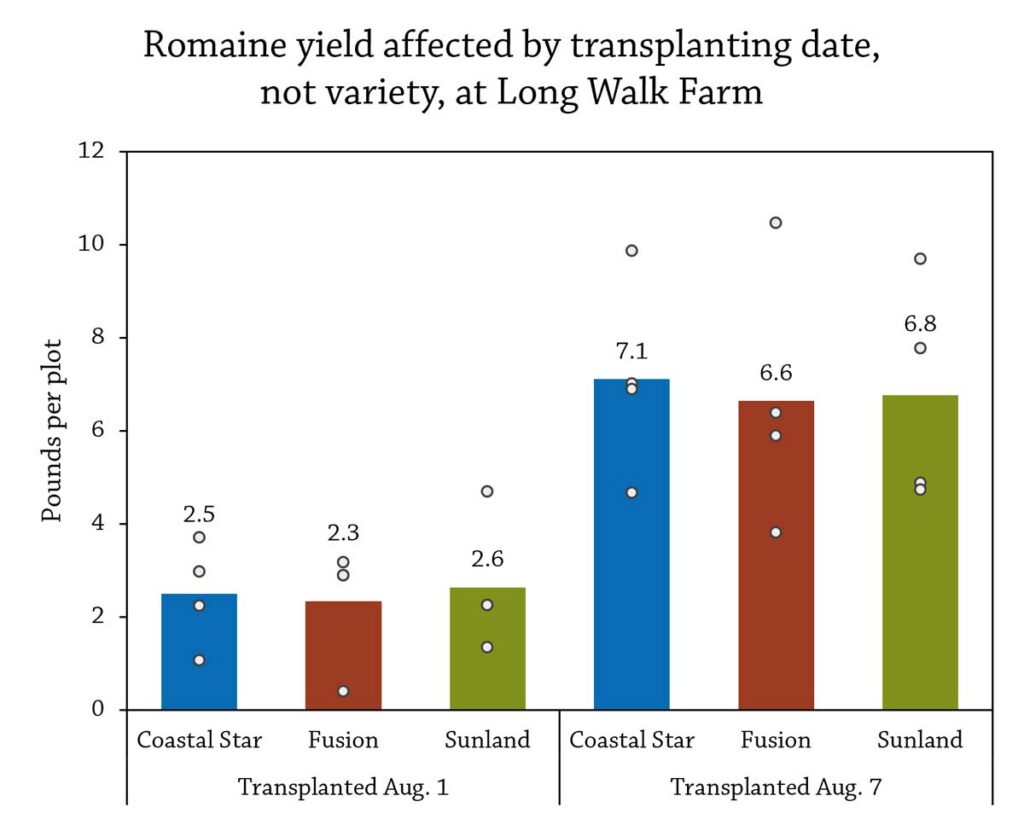
Johnson and Clifton planted three varieties on Long Walk Farm—Coastal Star, Fusion, and Sunland. They planted the seeds on June 23, then transplanted two successions, on Aug. 1 and Aug. 7, and measured their yields separately. Succession was therefore treated as a second variable in the analysis. There were no significant differences between varieties for head count, plot weight, head size score, or quality score within either succession (Table 4). However, plants with the later transplanting date (Aug. 7) significantly outperformed those that had been transplanted the week before for all varieties. Figure 2 shows yield affected by planting date, while variety had no effect.
Johnson also assessed head quality and taste. Transplant date had a significant effect on quality, with the later-transplanted plants producing higher-quality heads, but not on taste. In the later-transplanted group, Sunland had perfect taste notes, but in the earlier-transplanted group Sunland had the lowest scores and was significantly lower than Fusion.
Kate Solko & Kyle Maxwell – Root to Rise Farm
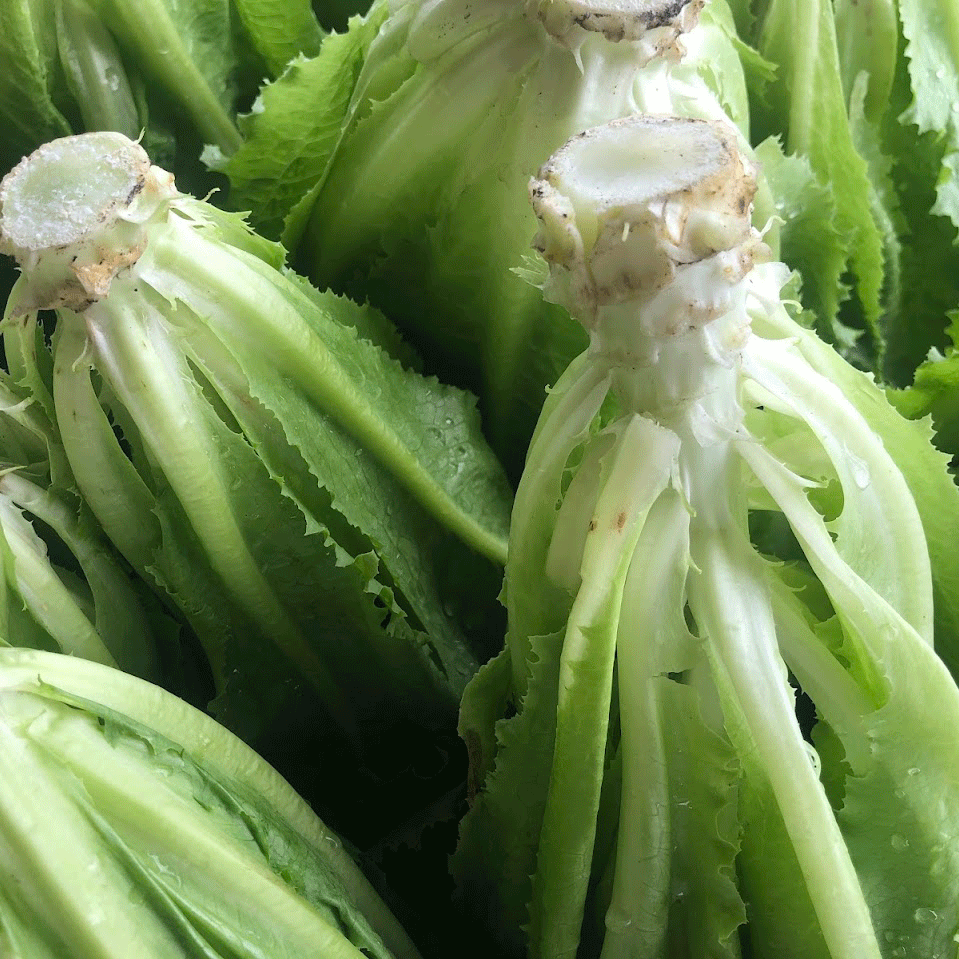
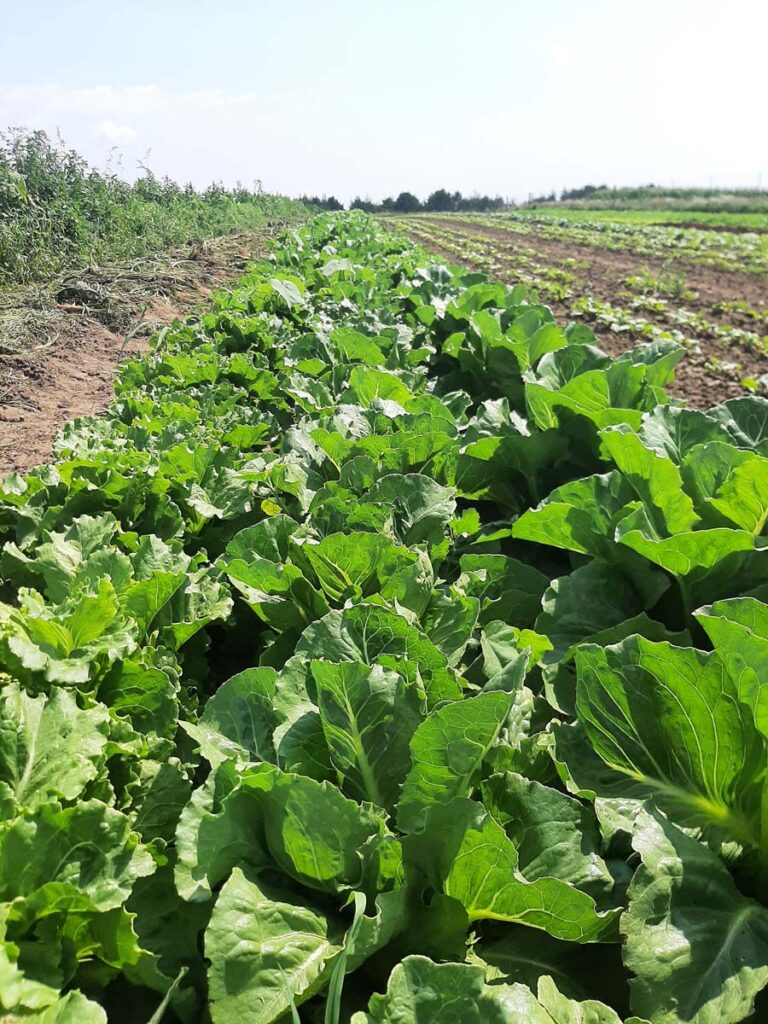
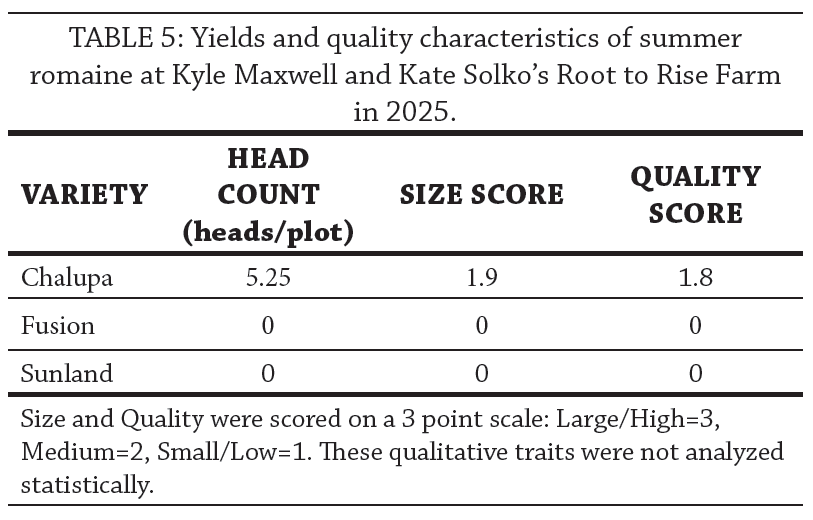
Maxwell & Solko grew Chalupa, in addition to Fusion and Sunland. Chalupa was the only variety that produced heads (Table 5). Most of those heads were medium or small sized, and all were medium or low quality. In the pair of photos, above, illustrating the effect of bolting on romaine lettuce, the photo on the right was taken on Root to Rise Farm. Maxwell commented that all the Fusion and Sunland plants looked like that; they did not get any usable heads from them.
Ana Timmer & Jon Wesselius – Cornucopia Farm
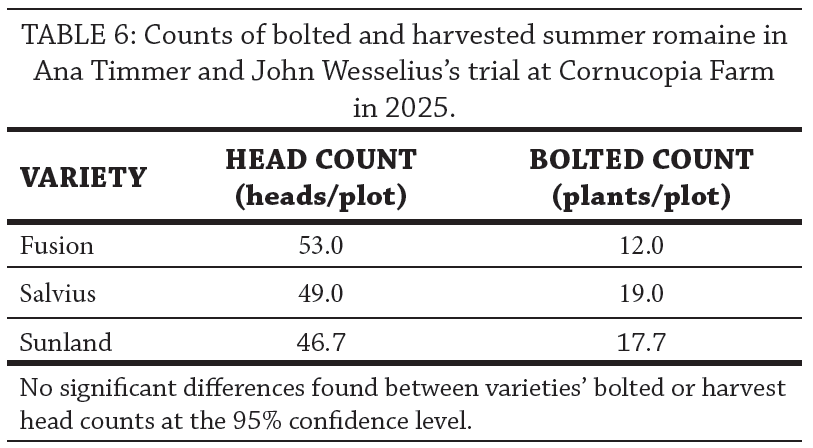
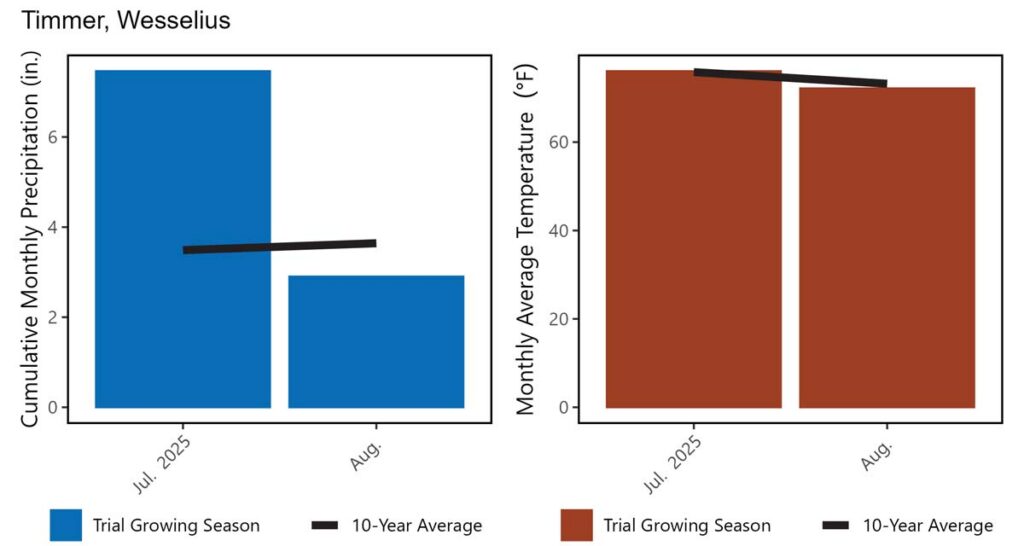
Timmer and Wesselius grew Salvius in addition to Fusion and Sunland. With 72 plants in each plot, they had the largest trial in the project. Although there were no significant differences between the varieties in any of the measured response variables (Table 6), Timmer noted enough differences to draw some conclusions and to make some changes going forward. She remarked that “Salivius bolted very quickly while the Fusion and Sunland tolerated the heat much better. [We’ll be] swapping out a few of the [old] romaine varieties for some new ones we trialed.”
Hail and storms damaged several reps, posing challenges for how to salvage the damaged yield. They sold the heads that were intact and made salad mixes from the rest. Timmer noted that after one storm “we harvested 32 lb of romaine [from the damaged rows] that we made into a mix.”
Carly and Ethan Zierke – Sweet Season Farm
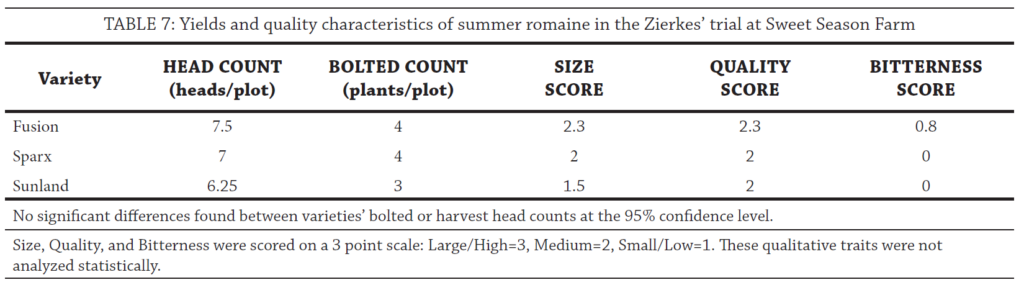
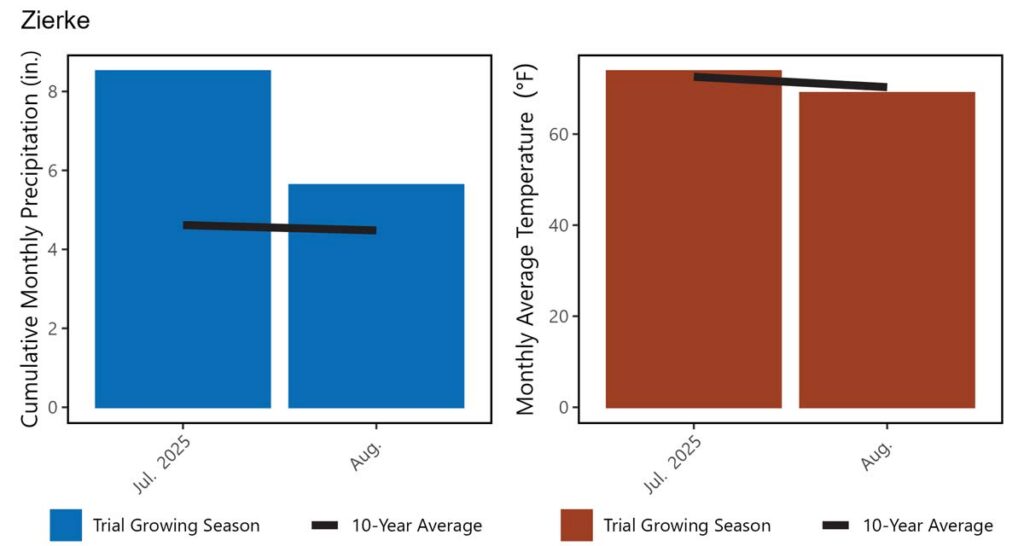
Carly and Ethan Zierke grew Sparx along with Fusion and Sunland. They measured number of heads, head size, quality, bolting, and bitterness.
Sparx was neither the smallest variety—Sunland—nor the most bitter—Fusion (Table 7), and so was considered the winner. Overall, 57% of their plants produced heads, from 12 plants of each variety in each plot. Carly reflected that “this trial was tricky in that many of the varieties struggled to produce high quality heads, in my opinion due to variables other than heat stress including heavy rainfall events and high humidity which led to rapid disease spread. That being said, I think that the ‘winner’ of the trial [Sparx] would have prevailed in a ‘normal’ growing season as well.”
Conclusions and Next Steps
Results were patchy, but participants still came away from this project with new knowledge and conclusions. Timmer wrote that “I have a better understanding of how different varieties of romaine behave in different types of weather” (they also got storm and hail damage). Johnson wrote that they would also be changing their lettuce lineup in response to what they saw in the trial—"We have consistently grown Coastal Star romaine, but we will also grow Sunland moving forward”. Carly Zierke wrote “I learned a lot about growing lettuce this season and this trial was a large part of that. We were experimenting with some new equipment and systems and it has encouraged me to home in on small things that can improve the quality of our crops”.
Data collection continues to be a topic of discussion: Timmer wrote “[We would like to simplify] the data collecting process as much as possible. New employees often help with harvesting, and they don't always understand what we're trying to accomplish with the trial. Having a very, very simple, single step process for data collection would be extremely helpful.” Carly Zierke wrote “I really liked the measurement system for evaluating how the crops were affected by heat. As farmers we can identify when things aren’t working the way we want but having a way to measure exactly what it is about the crop that’s going wrong and the degree to which it’s affected is really helpful.” Johnson wrote that being ‘forced’ to collect hard numbers for the trial was very valuable to them, since they usually do not record yields. He also wrote that “Larger sample sizes in order to further reduce variability in results.”
As extreme weather events seem to become more common, PFI will continue to support trials of varieties that may help extend growing seasons and maintain resilient productivity.
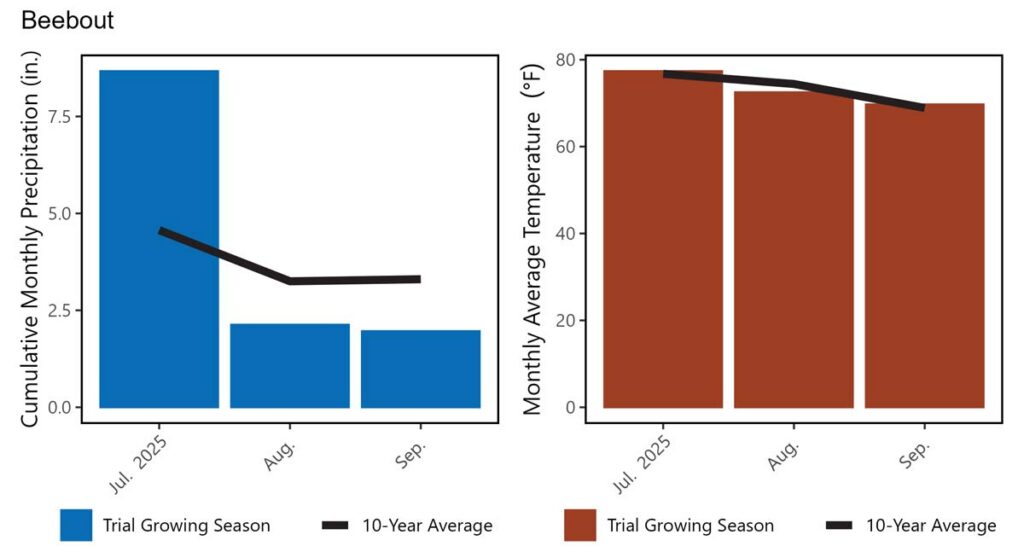
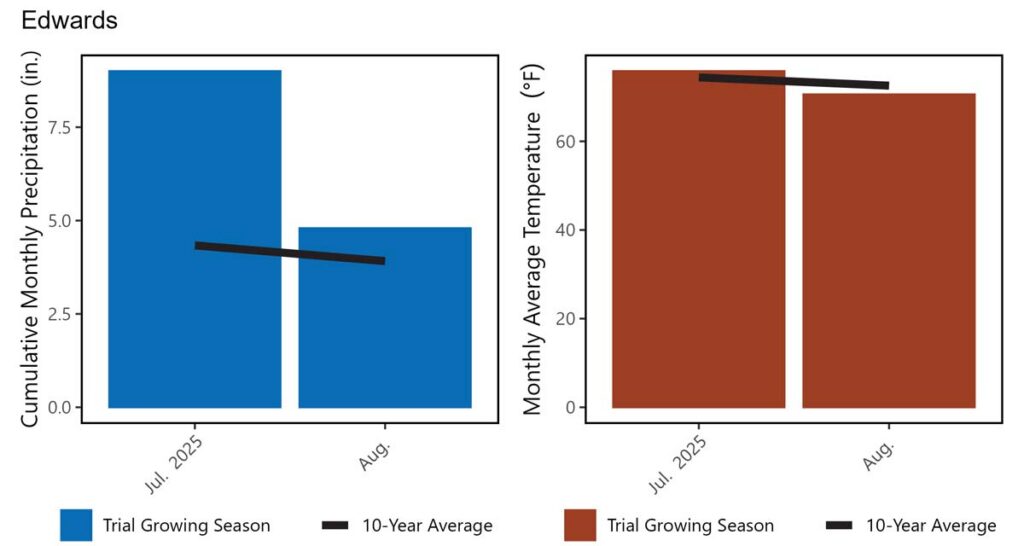
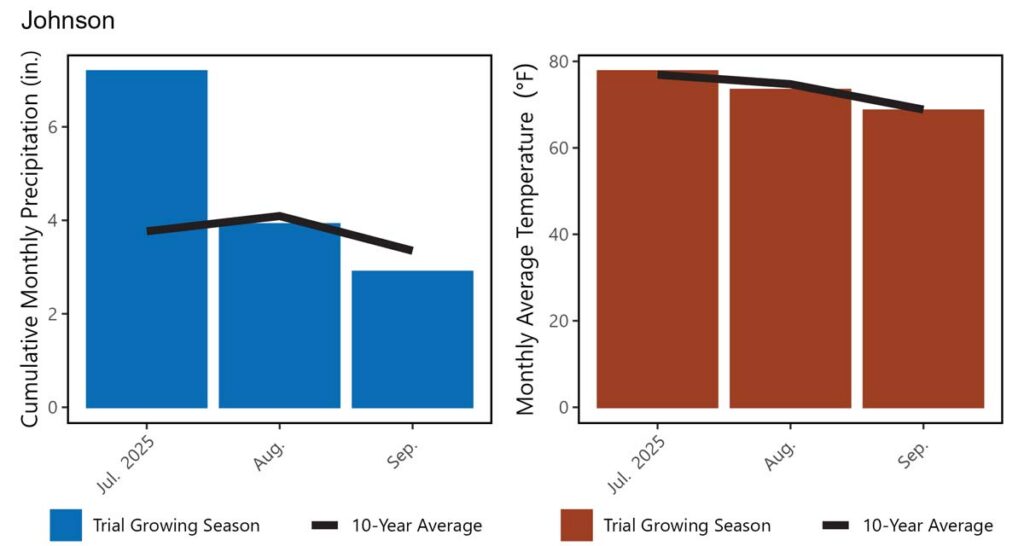
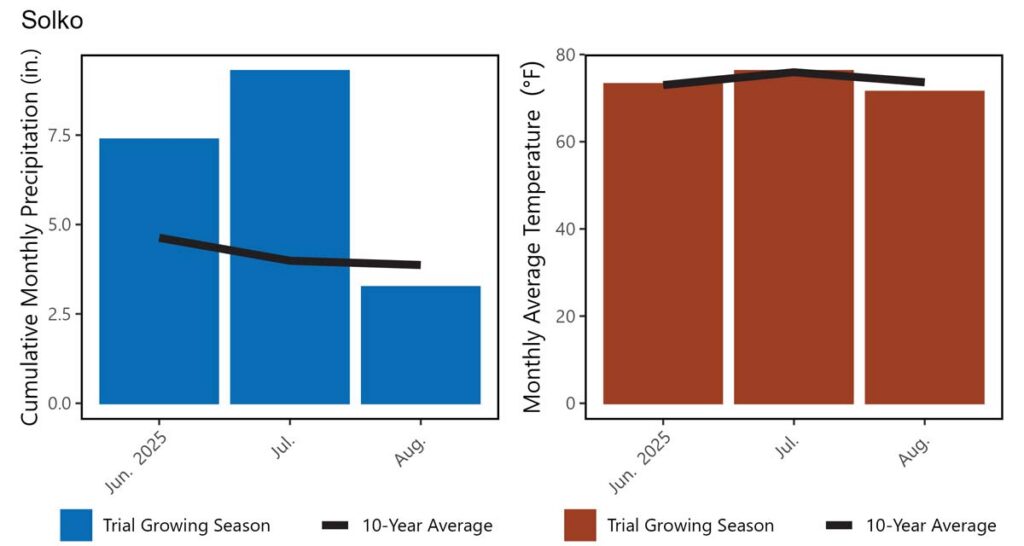
Appendix - Trial Design and Weather Conditions

Funding Acknowledgement
This project was supported by the U.S. Department of Agriculture’s (USDA) Agricultural Marketing Service through grant 23SCBPIA1187. Its contents are solely the responsibility of the authors and do not necessarily represent the official views of the USDA.
References
- “Summer Lettuce Variety Trial,” Practical Farmers of Iowa. Accessed: Feb. 13, 2025. [Online]. Available: https://practicalfarmers.org/research/summer-lettuce-variety-trial-2/
- “Summer Lettuce Variety Trial - Practical Farmers of Iowa.” Accessed: Jul. 12, 2026. [Online]. Available: https://practicalfarmers.org/resources/research-reports/summer-lettuce-variety-trial-2/
- “Chalupa - Organic Romaine Lettuce Seeds | Johnny’s Selected Seeds.” Accessed: Sep. 01, 2026. [Online]. Available: https://www.johnnyseeds.com/vegetables/lettuce/romaine-lettuce-cos/chalupa-organic-lettuce-seed-4791G.html?srsltid=AfmBOorE8kkoK21txrgPuhZfjwuQ4fwHC-TES8_Gzozp-7imCq4BNZaC
- “Coastal Star - Organic Romaine Lettuce Seeds | Johnny’s Selected Seeds.” Accessed: Sep. 01, 2026. [Online]. Available: https://www.johnnyseeds.com/vegetables/lettuce/romaine-lettuce-cos/coastal-star-organic-lettuce-seed-2963G.html?srsltid=AfmBOoo66dRjVJnql87Odu1UL5b2UHbWTR8I8ELp372LCfsjxaUOI0Q1
- “Concept Lettuce,” hawaiiseedgrowers. Accessed: Sep. 01, 2026. [Online]. Available: https://www.hawaiiseedgrowersnetwork.com/product-page/concept-lettuce
- “Concept Lettuce.” Accessed: Sep. 01, 2026. [Online]. Available: https://www.highmowingseeds.com/organic-non-gmo-concept-lettuce.html
- “Fusion - Lettuce Seed | Johnny’s Selected Seeds.” Accessed: Sep. 01, 2026. [Online]. Available: https://www.johnnyseeds.com/vegetables/lettuce/summer-crisp-lettuce-batavia/fusion-lettuce-seed-3593.html?srsltid=AfmBOooABnVwfJm22Ud6180Y7rJhr_0O48GhfQAMpFFltwhBgdfZcbfm
- “Purple Fusion - Lettuce Seed | Johnny’s Selected Seeds.” Accessed: Sep. 01, 2026. [Online]. Available: https://www.johnnyseeds.com/vegetables/lettuce/summer-crisp-lettuce-batavia/purple-fusion-lettuce-seed-5261.html?srsltid=AfmBOopooSDTsYOLs34XMagT_ir6GjSMwgxFnw4GH5lElNH-ohq_QvbZ
- “Salvius - Lettuce Seed | Johnny’s Selected Seeds.” Accessed: Sep. 01, 2026. [Online]. Available: https://www.johnnyseeds.com/vegetables/lettuce/romaine-lettuce-cos/salvius-lettuce-seed-2543.html
- “Lettuce Seeds | Cos | SALVIUS RZ | Rijk Zwaan USA.” Accessed: Sep. 01, 2026. [Online]. Available: https://www.rijkzwaanusa.com/lettuce/SALVIUS-RZ-prdLS10122-ctgCrops.lettuce
- “Sparx - Romaine Lettuce Seeds | Johnny’s Selected Seeds.” Accessed: Sep. 01, 2026. [Online]. Available: https://www.johnnyseeds.com/vegetables/lettuce/romaine-lettuce-cos/sparx-lettuce-seed-3156.html?srsltid=AfmBOoo-LXH4JHTWEWolIjBQ7tAkSxh7qopkTRlofavwCahTlCFOLUoF
- “Sunland - Romaine Lettuce Seeds | Johnny’s Selected Seeds.” Accessed: Sep. 01, 2026. [Online]. Available: https://www.johnnyseeds.com/vegetables/lettuce/romaine-lettuce-cos/sunland-lettuce-seed-4788.html?srsltid=AfmBOorMyFfApR-SL5xmD0LYqJxMZa_T743mVARddg_79s6TtpB92-nE
- “Thurinus - Red Romaine Lettuce Seeds | Johnny’s Selected Seeds.” Accessed: Sep. 01, 2026. [Online]. Available: https://www.johnnyseeds.com/vegetables/lettuce/romaine-lettuce-cos/thurinus-lettuce-seed-3210.html
- “Lettuce Seeds | Cos | THURINUS RZ | Rijk Zwaan USA.” Accessed: Sep. 01, 2026. [Online]. Available: https://www.rijkzwaanusa.com/lettuce/THURINUS-RZ-prdLS10629-ctgCrops.lettuce
- A. H. Sparks, “nasapower: A NASA POWER Global Meteorology, Surface Solar Energy and Climatology Data Client for R,” J. Open Source Softw., vol. 3, no. 30, p. 1035, Oct. 2018, doi: 10.21105/joss.01035.
- A. Sparks, nasapower: NASA-POWER Data from R. (2024). [Online]. Available: https://CRAN.R-project.org/package=nasapower