Funded by Builders Vision Philanthropy and NFWF.
In a Nutshell:
- Bale grazing is a winter-feeding practice in which livestock eat hay bales directly on pasture, allowing farmers to influence where they spend time and deposit their waste.
- In 2024, Adam Ledvina’s trial suggested that goats grazing on unrolled prairie hay bales could increase plant diversity, nutrients and soil penetrability within bale tracks compared with nearby non-bale-grazed areas.
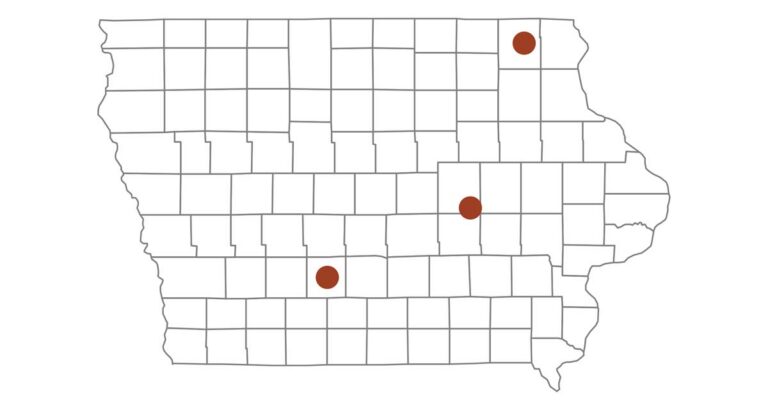
- In 2025, farmers repeated the experiment on two more farms—Hannah Breckbill in Decorah and Jake Bigelow in Winterset—to test whether bale grazing produced similar soil and pasture effects across different livestock, hay sources and field conditions.
Key Findings:
- Soil nutrient tests from the areas of grazing on unrolled bales had higher phosphorus, potassium, and micronutrients than non-bale-grazed areas.
- Bale-grazed areas had increased soil penetrability and higher numbers of plant species at Ledvina’s farm.
- Bigelow saw a significant increase in pasture biomass in areas where bales had been unrolled.
Background
Bale grazing is a winter-feeding practice in which livestock are fed hay bales directly on pasture rather than in a barn or sacrifice lot. In some operations, bales are placed around a field and animals are given access to them over time; in others, round bales are unrolled into long strips of hay. In either case, the practice keeps animals on the land while they eat, returning manure, urine, wasted hay and trampled residue to the pasture surface. This can reduce winter feeding infrastructure and labor while distributing organic matter and nutrients across areas where improved fertility or plant growth is desired [1], [3].
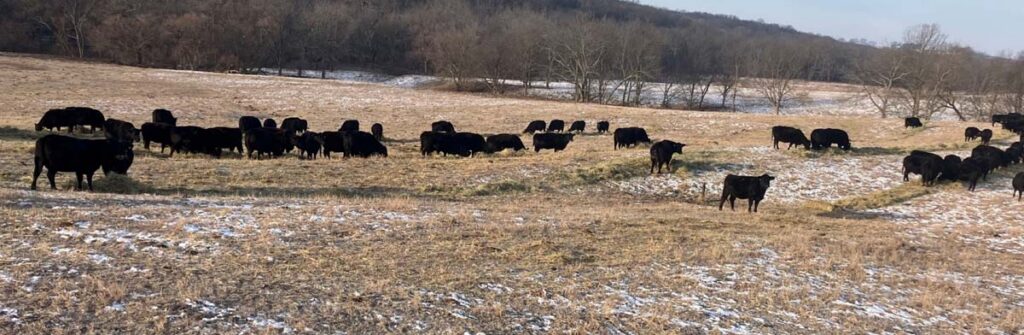
Bale grazing can also create management challenges. Animal traffic and congregation near feed can compact or disturb soil, especially when sites are wet or animals remain in one area too long. Uneaten hay can reduce feed efficiency, and winter water, shelter, animal health and site selection all require attention. For these reasons, the effects of bale grazing depend on how bales are arranged, how long animals have access to each area, soil and moisture conditions, livestock species and stocking density, and the condition of the existing pasture [2], [3].
In PFI’s 2024 trial, Adam Ledvina used unrolled prairie hay bales to winter-feed goats and to test whether the bale tracks changed pasture conditions. The prairie hay contained a diverse mix of plants, including mature seedheads, and the unrolled bale strips created a narrow zone where seed, mulch, manure, urine and hoof action were concentrated. Measurements taken inside and outside the unrolled bale tracks suggested that the treated areas had higher plant species diversity, higher phosphorus, potassium and several micronutrients, and deeper soil penetrability than nearby non-bale-grazed areas.
Those results motivated a broader 2025 trial. Last year’s work raised the possibility that bale grazing could be used intentionally as a pasture-improvement tool, not only as a winter-feeding strategy. But were the apparent benefits repeatable on other farms, and would similar effects occur with cattle and sheep as well as goats, with different hay sources and field conditions, and under different bale-grazing layouts? In 2025, two new farms, Hannah Breckbill in Decorah and Jake Bigelow in Winterset, joined the experiment to compare bale-grazed and non-bale-grazed areas across a wider set of pasture contexts.
Methods
Design
Bale-grazing practices varied across farms because hay availability, hay suitability, herd feeding needs and farmer goals differed among the cooperators. At each farm, nearby non-bale-grazed areas served as control treatments for the sake of comparison.
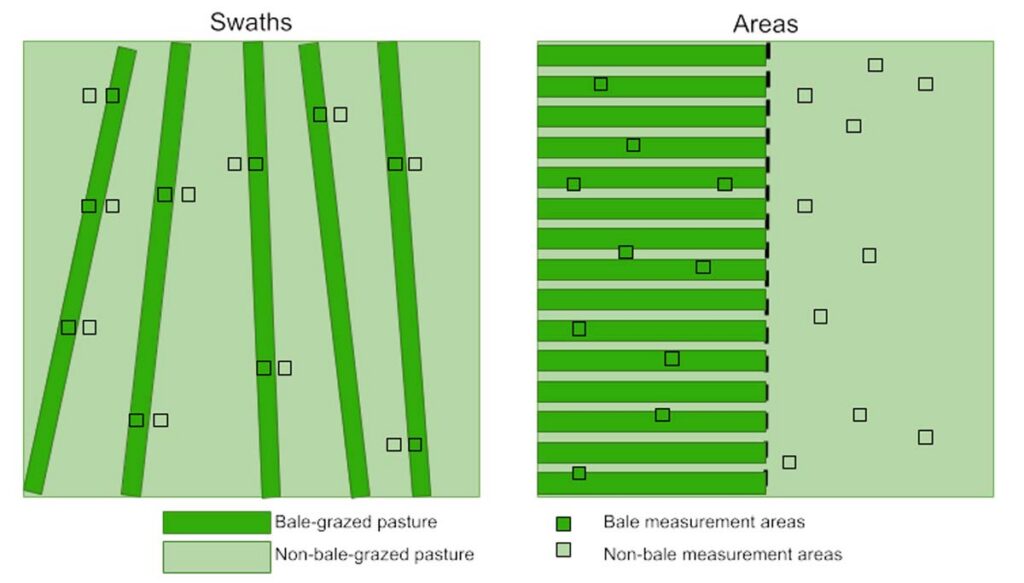
At Ledvina’s and Bigelow’s farms, round bales were unrolled with a bale-roller arm mounted on a truck or skid loader. As each bale unrolled, it left a hay swath about four feet wide—the height of the bale—and approximately 100 yards long. Ledvina and Bigelow spread bales in these swaths across larger pasture areas. Ledvina estimated that, by the end of winter, bale swaths covered about 30% of his total winter pasture enclosure.
Breckbill used a different layout. She dispersed hay within one half of a discrete pasture area, eventually covering the quarter-acre winter paddock where her sheep were confined with hay, detritus and waste hay. The following summer, soil from that winter paddock was compared with soil from a control paddock that had not held sheep or hay during the winter.
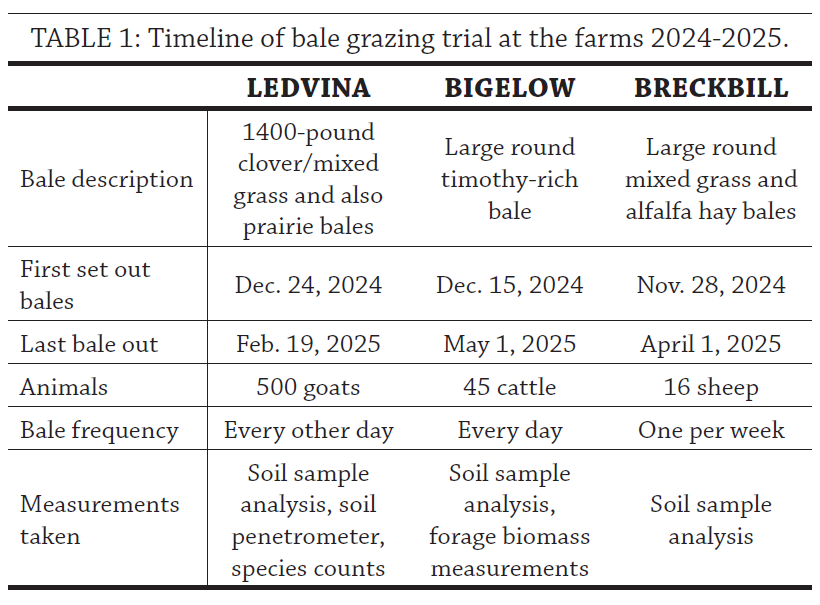
Figure A1 illustrates these two experimental layouts.
Operations and grazing summary
Ledvina has a herd of 500 head of goats. He rolled out one bale every other day throughout the winter, from December 24, 2024, through February 19, 2025. He unrolled one full bale every other day for 57 days through the depths of the winter, for a total of 29 bales. Near the end of the 2024 trial, Ledvina had invested in a bale-roller arm, which allowed him to unroll the bale from the back of his moving truck, giving him more control over the layout of the strip. He was therefore able to mechanically unroll the bales for the extent of the 2025 trial. The trial field was not grazed after the end of the bale grazing, so observations on the effects of the treatment were not swayed by goat activity after the end of treatment.
Bigelow has a herd of 45 head of Hereford cattle. He unrolled round hay bales across his pasture. Each cow eats around 30 pounds of dry matter per day, so at least one large bale per day is needed. Because he has a rig that allows him to drive the unrolling bale across the pasture, he was able to control the amount of bale that was unrolled to be eaten and the spatial distribution of the hay. This allowed him to tailor his feed amounts and distribution to the conditions, rolling out more hay during cold spells and avoiding wet spots—thereby both not wasting hay and directing cattle movement around the mud.
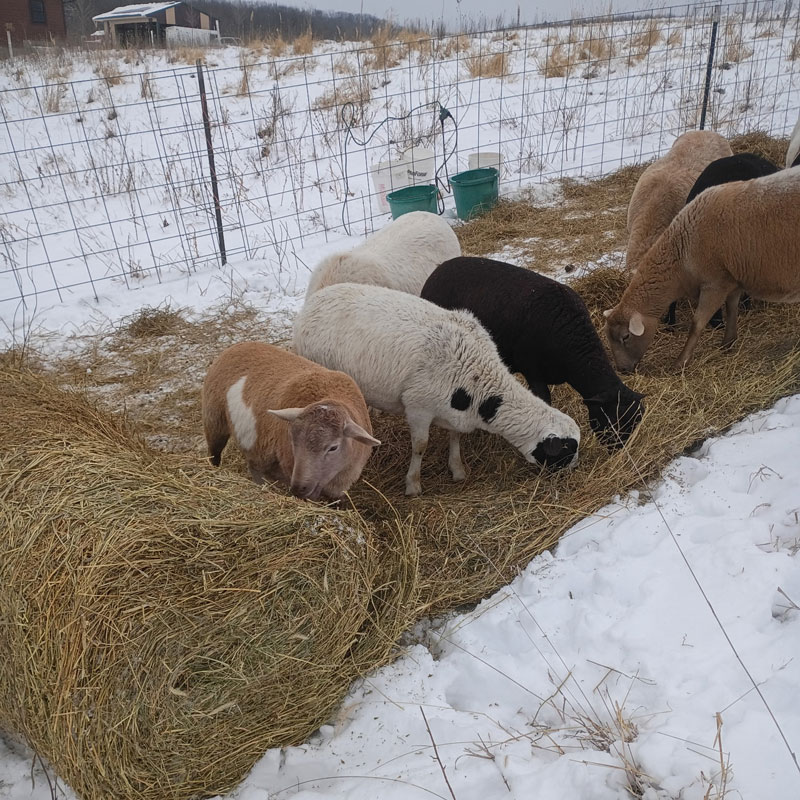
Breckbill shepherds 15 ewes and 1 ram. They overwinter in a quarter-acre paddock, where Breckbill feeds them hay by spreading it out over the ground. At this scale, unrolling the whole bale would be wasteful, so it has to be dispersed gradually. The 16 head of sheep consumed approximately one bale per week from the end of November 2024 through the beginning of April 2025. The quarter-acre winter paddock is subdivided out of a larger paddock and rotated over time so that the animal activity is spread around over years.
Measurements
All three farms took soil samples in summer 2025 and sent them to be analyzed by professional laboratory service providers. The samples were tested for soil pH, soil organic matter percentage, phosphorus ppm, and potassium ppm. In July, Breckbill took replicated samples from the winter pasture and the control pasture that had no sheep or unrolled hay on it in the winter. Bigelow took aggregated replicated samples, combining three samples from nearby areas into each of the replicate samples sent to the lab. Ledvina took aggregated samples, combining the soil from his ten survey spots into one sample for each treatment, so statistical analysis of this data is not possible, it is probably representative of the differences between the treatments.
Bigelow measured forage biomass on June 25, 2025, using paired samples from bale-grazed and nearby non-bale-grazed areas. For each observation, he tossed a 2 ft2 hoop into a visible bale strip and clipped all grazable aboveground vegetation within the hoop into a paper bag. He then collected a paired control sample from nearby pasture outside the bale-grazed swath using the same hoop dimensions and clipping method. At each measurement site, Bigelow collected three subsamples, air-dried the biomass for three to four weeks, weighed the dried material and averaged the three masses to produce the final biomass value for that site.
Ledvina measured native prairie species establishment by a species count on Sept. 8, 2025. He used a thrown hula-hoop to define areas where he surveyed the growing plant species. Measurements were taken in ten spots randomly selected within the bounds of the grazed bale strips, with paired measurements 10 ft outside the boundaries of the strip.
The effects of soil compaction were measured via a manual ‘push’ penetrometer on Sept. 8, 2025. Ledvina measured the depth at which the soil resisted with 300 pounds per square inch. Measurements were taken in ten spots randomly selected within the bounds of the grazed bale strips, with paired measurements 10 ft outside the boundaries of the strip.
By taking pairs of observations, with samples and/or measurements in and out of the treatment swath taken close to each other, we aimed to reduce the variability between our samples. This way, more (or ideally, all) of the difference between the members of the pairs should be attributable to the treatment.
Data analysis
We used Student’s T-Test at a 95% confidence level to determine if there were significant differences between bale-graze and non-bale-graze treatments. This means that any treatments we declare statistically different would be expected to occur 95 times out of 100 under the same conditions. We can perform this analysis because the cooperators had completely randomized and replicated experimental designs (Figure A1).
Results and Discussion
Across the 2025 farms, bale grazing tended to concentrate fertility and plant growth within the swath where bales were fed, but the strength of the response varied by farm and measurement.
Soil responses
The clearest soil responses were for phosphorus and potassium at Breckbill’s, where bale-grazed areas had significantly higher phosphorus and potassium than nearby non-bale-grazed areas (Table 2). At Bigelow’s, phosphorus and potassium were also numerically higher in bale-grazed areas, but those differences were not statistically significant (Table 3). At Ledvina’s, the aggregate soil samples showed much higher organic matter, phosphorus and potassium in the bale-grazed area than outside it, but those samples were composited and could not be analyzed statistically (Table 4).
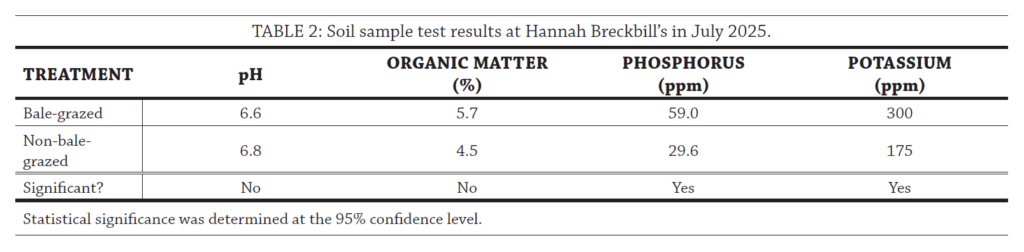
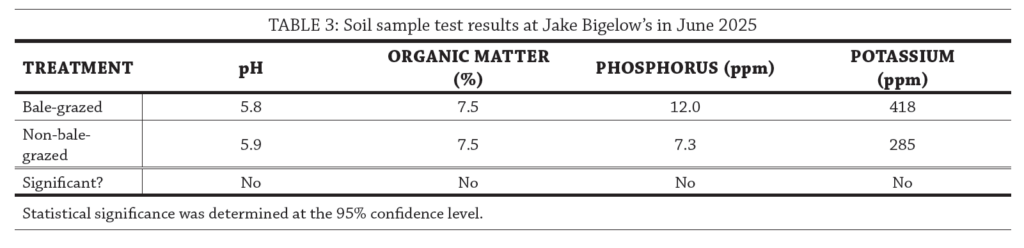
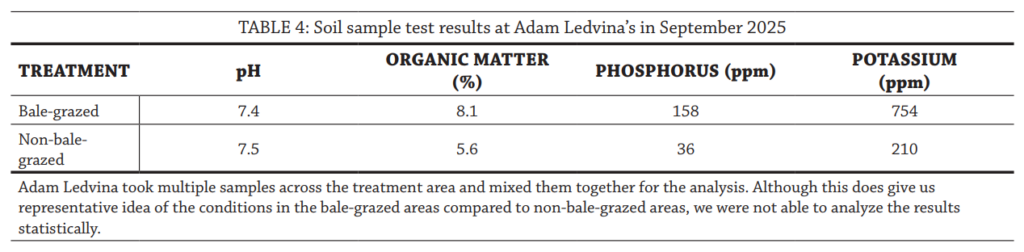
The soil test results suggest that bale grazing can create localized nutrient hotspots, especially for phosphorus and potassium, where hay, manure, urine and uneaten residue accumulate. At Breckbill’s, phosphorus was 59.0 ppm in the bale-grazed area compared with 29.6 ppm in the non-bale-grazed area, and potassium was 300 ppm compared with 175 ppm. Organic matter was not significantly different between the two treatments at Breckbill’s. At Bigelow’s, organic matter was also the same between treatments, while phosphorus and potassium were higher in the bale-grazed areas but not significantly different. These results indicate that nutrient effects may be most detectable where bale placement, animal use and baseline soil conditions create strong contrasts between treatment and control areas.
Soil penetrability showed another significant treatment response at Ledvina’s. The average depth at which penetrometer resistance reached 300 psi was greater in bale-grazed areas than in non-bale-grazed areas (Figure 1), meaning the bale-grazed soil was easier to penetrate (i.e., less compaction). This may reflect a combination of greater plant growth, more surface residue, higher organic inputs or different moisture conditions in the bale tracks. Because bale-grazed areas also received concentrated residue and livestock activity, the result suggests that, under the conditions of this trial, the added organic inputs translated to less resistance at the measured depth.
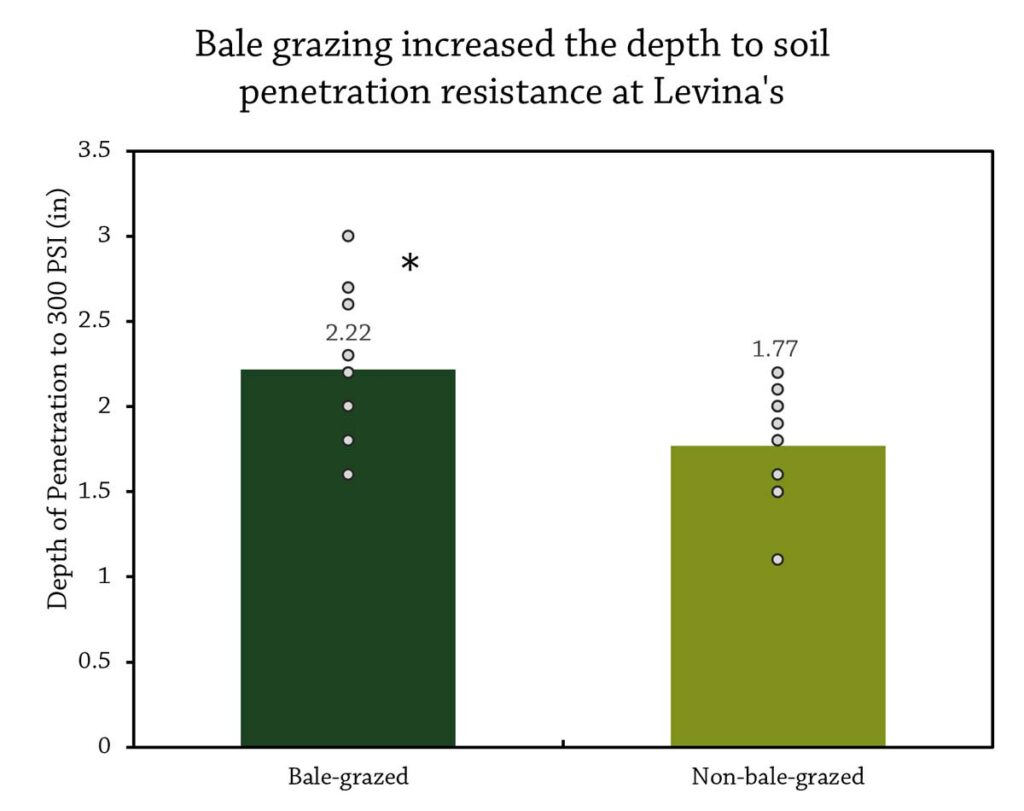
two treatments at Adam Ledvina’s in September 2025. Asterisk (*) indicates that the bale-grazed areas were significantly easier to penetrate than the non-bale-grazed areas at the 95% confidence level.
Plant responses
At Bigelow’s, bale-grazed areas produced significantly more dry forage than non-bale-grazed areas when observed in July 2025, two months after he set out the last bale of the year (Figure 2). The photo from Bigelow’s below shows the same pattern visually: the tracks of the unrolled bales remained visible in summer as stripes of taller, denser plant growth across the pasture hill.
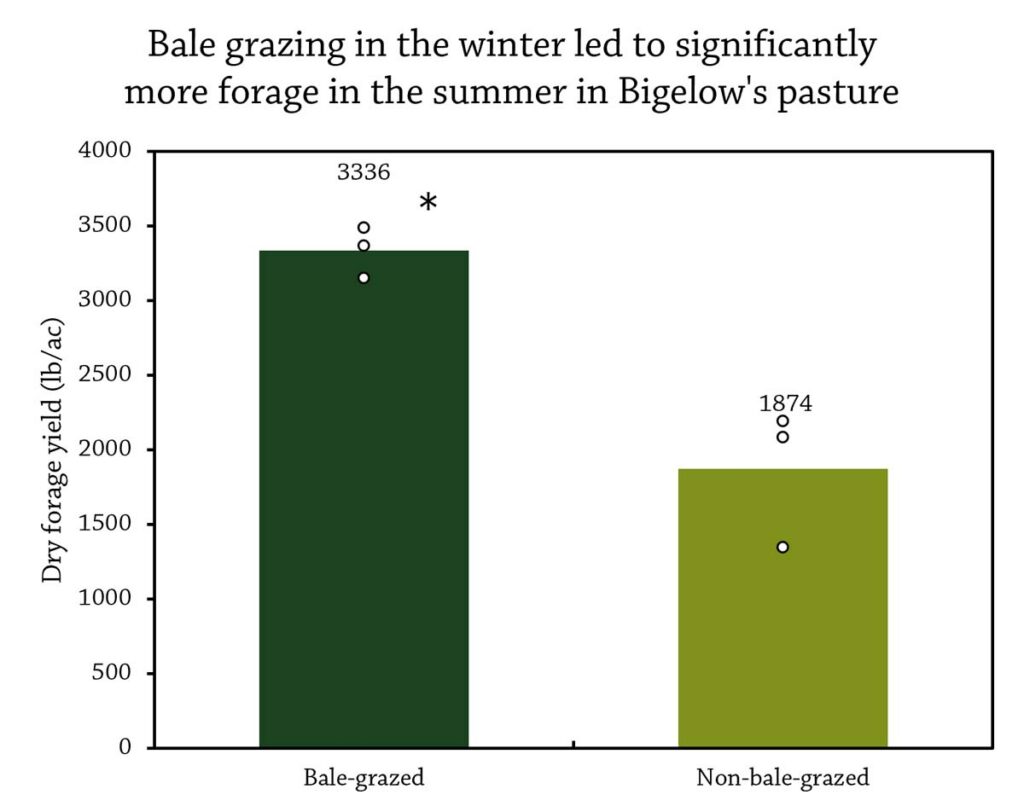
the two treatments at Jake Bigelow’s farm in July 2025, two months after he set out the last
bale for grazing. Asterisk (*) indicates the bale-grazed areas produced significantly more forage at the 95% confidence level.
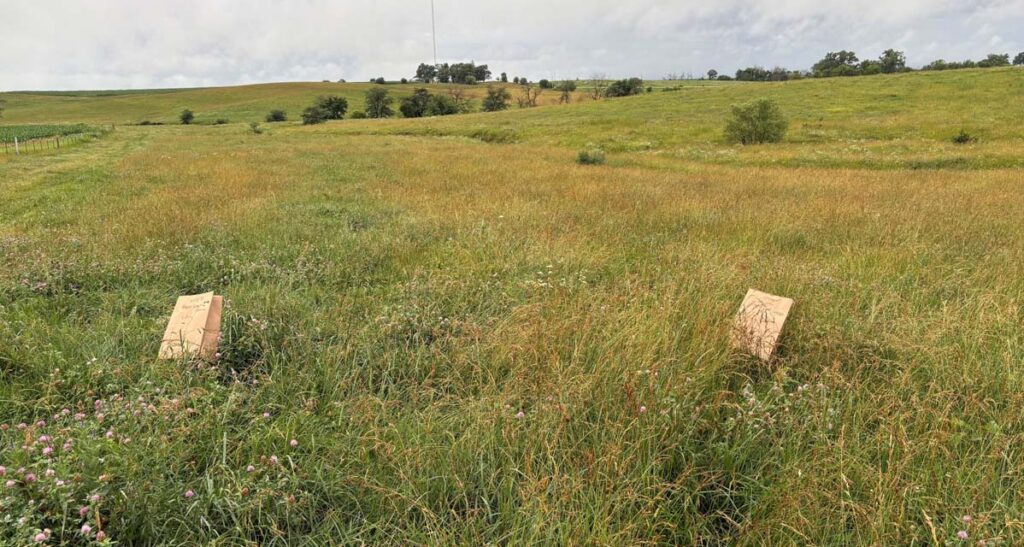
stands of plants. The paper bags are set out ready to collect paired biomass samples, one within the
swath of the unrolled bale (right) and one outside it (left). Photo taken Summer 2025.
At Ledvina’s, the average number of plant species counted in sample areas in September, seven months after the end of winter grazing was significantly higher in the bale-grazed treatment (Figure 3). This result matches the design of Ledvina’s treatment: prairie hay from established prairie was baled after seedheads matured, and the seeds then flourished in the bale strips where mulch, hoof action, and animal waste were concentrated. Ledvina observed many of the characteristic prairie species established in the pasture, including clovers, asters, partridge pea, and bluestem.
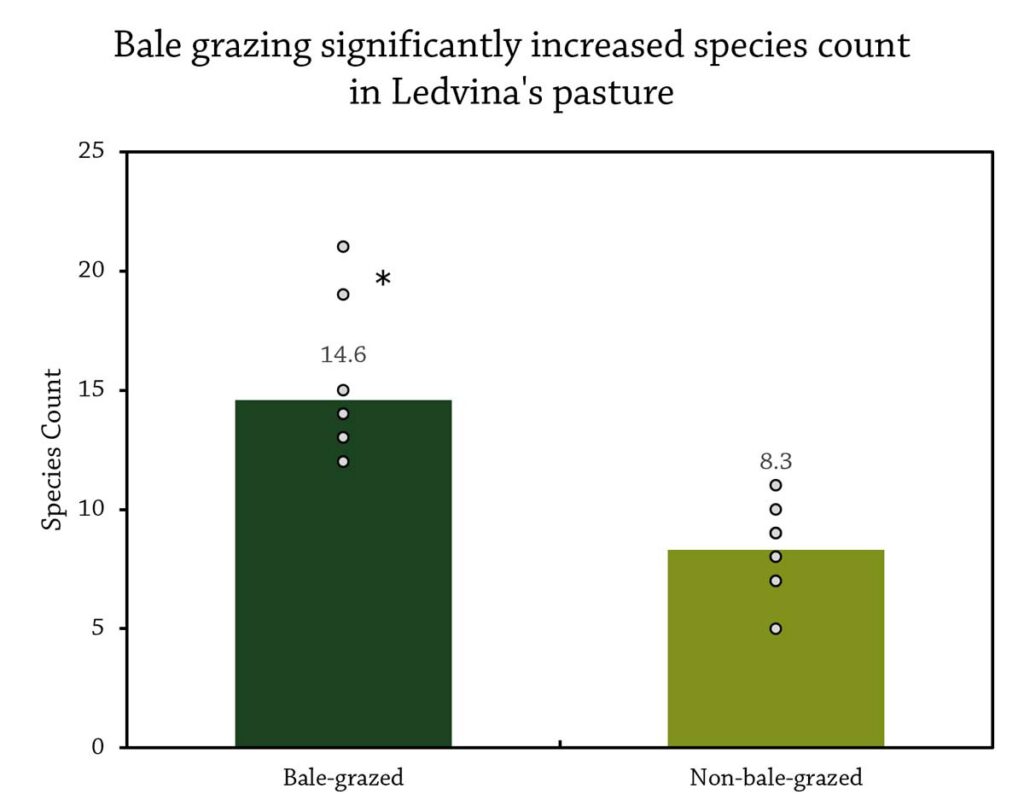
between the two treatments at Adam Ledvina’s farm in September 2025. The bales Ledvina
used were from a prairie field with the hay baled after the seedheads were mature. It is therefore
by design that the bale-grazed areas had significantly more species. Asterisk (*) indicates that the bale-grazed areas resulted in significantly more species at the 95% confidence level.
Ledvina was trying to distribute and establish a seed bank of different species to increase the diversity of plant species in his pasture. More diverse pastures are more resilient and productive across harsh climate events. From a feed perspective, prairie hay has a higher diversity of plants, with a greater range of digestible availabilities, than monocultural timothy- or mixed alfalfa hay. Ledvina calibrated the amount of hay that he put out to account for a higher level of ‘wastage’ from the rougher mixed prairie hay. The mulch left behind helped shelter the seeds that had been dispersed by the unrolled bales and then pressed into the soil by the goats’ hooves and fertilized by their waste. The increased biodiversity of the pasture was therefore advanced by the marginal inefficiency in the feeding strategy. On the other hand, Biglow used more digestible hay than Ledvina, intentionally preferring timothy in the hay and eschewing big-stem grass material. He was trying to feed his cattle as efficiently as possible, while minimizing detritus and distributing nutrients across the landscape.
The variance in their choice of hay was due both to the fact that the goats and cattle Ledvina and Bigelow were feeding have different feeding patterns and preferences, and because they had different aims that they were trying to achieve via bale-grazing mediation.
Breckbill was trying to solve a different set of problems. Her goal was to benefit from the nutrients in sheep manure while preventing waste hay from accumulating on the pasture, though she was limited in how effectively she could redistribute the hay.
Breckbill also produces vegetables organically, and the sheep are an integral part of their nutrient management. The difficulties of feeding the relatively few sheep from the large hay bales that they buy from a neighboring dairy somewhat constrains the size of the winter paddock. Unrolling a whole bale at a time would be a huge waste, and without the machinery to move the large bales and unroll parts of them spread out across the pasture, they resort to spreading the hay around by hand. When time and labor were short, they would sometimes roll a bale out into the pasture to let the sheep tear it apart, but this led to high level of waste and mats of waste where the bale was set out. Hay wastage is an issue, but ultimately nutrient cycling and availability and pasture recruitment are of primary concern, and the mats seem to slow decomposition and inhibit the growth of the grass below it. Bale grazing at this scale is still a work in progress, and Breckbill is trying a new technique this year, reseeding the pasture with a diverse mix of forages (timothy, alfalfa, chicory, and plantain) to see how they overwinter with the sheep.
Taken together, the 2025 results support the idea that bale grazing can be used as more than a winter-feeding strategy. Across the cooperating farms, bale-grazed areas often showed higher nutrient concentrations, more forage, greater species counts or easier soil penetration than paired non-bale-grazed areas. However, the response was not uniform across all farms or all measurements. This variation suggests that bale grazing outcomes depend on local conditions, including hay source, livestock behavior, bale placement, existing soil fertility and pasture condition. The strongest evidence from 2025 is that bale grazing can create measurable pasture changes, but the size and consistency of those changes will likely depend on how and where the practice is applied.
Conclusions and Next Steps
The 2025 trial showed that bale grazing can create measurable changes in pasture soils and plant communities, but those changes were not uniform across farms or measurements. Bale-grazed areas had higher phosphorus and potassium at Breckbill’s, produced significantly more dry forage at Bigelow’s, and had higher plant species counts and easier soil penetration at Ledvina’s.
Taken together, these results support bale grazing as a promising pasture-improvement practice when the goal is to concentrate organic matter, nutrients, seed and animal impact in targeted areas. The strongest evidence from 2025 was that bale grazing can increase phosphorus and potassium where residues and manure accumulate, boost forage production in some settings, and support greater plant species counts when seed-bearing hay is used. At the same time, the variation among farms shows that outcomes depend on site conditions, hay source, livestock species, bale placement and how long animals use each area.
Future trials should continue using paired bale-grazed and non-bale-grazed sampling areas across multiple farms. Additional measurements could track how long nutrient and forage effects persist, whether bale grazing changes weed pressure or desirable species establishment over time, and how management choices such as bale spacing, timing, animal density and hay type influence results. Farmers interested in using bale grazing for pasture improvement should treat it as a targeted tool: place bales where added fertility, residue, or seed are desired, and monitor soil conditions to avoid excessive disturbance in wet or vulnerable areas.
Funding Acknowledgement
This project is made possible through a grant from the National Fish and Wildlife Foundation, with support from NRCS, Cargill, Inc, and Nestle USA. Award number 2004.24.081651. The views and conclusions contained in this document are those of the authors and should not be interpreted as representing the opinions or policies of the U.S. Government or the National Fish and Wildlife Foundation and its funding sources. Mention of trade names or commercial products does not constitute their endorsement by the U.S. Government, or the National Fish and Wildlife Foundation or its funding sources.
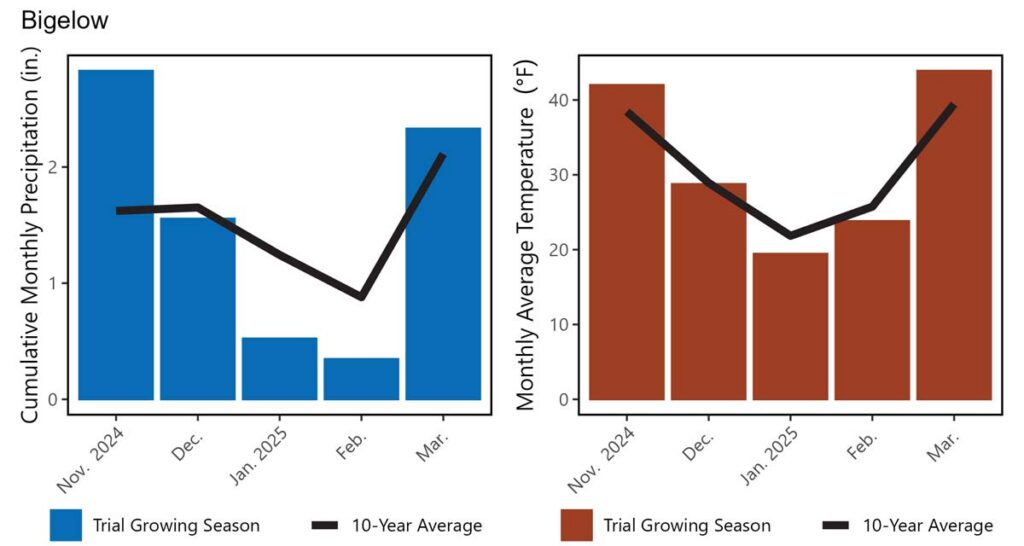
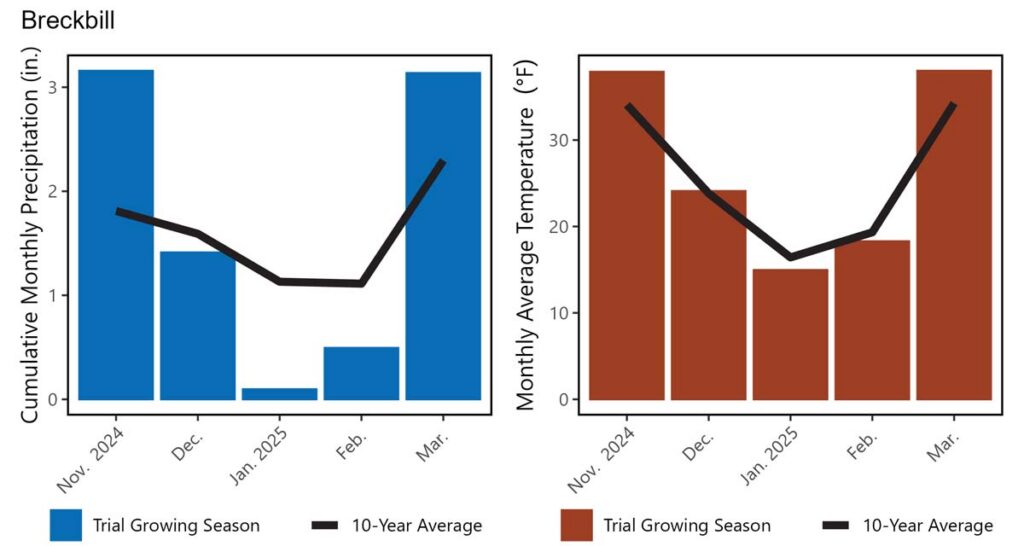
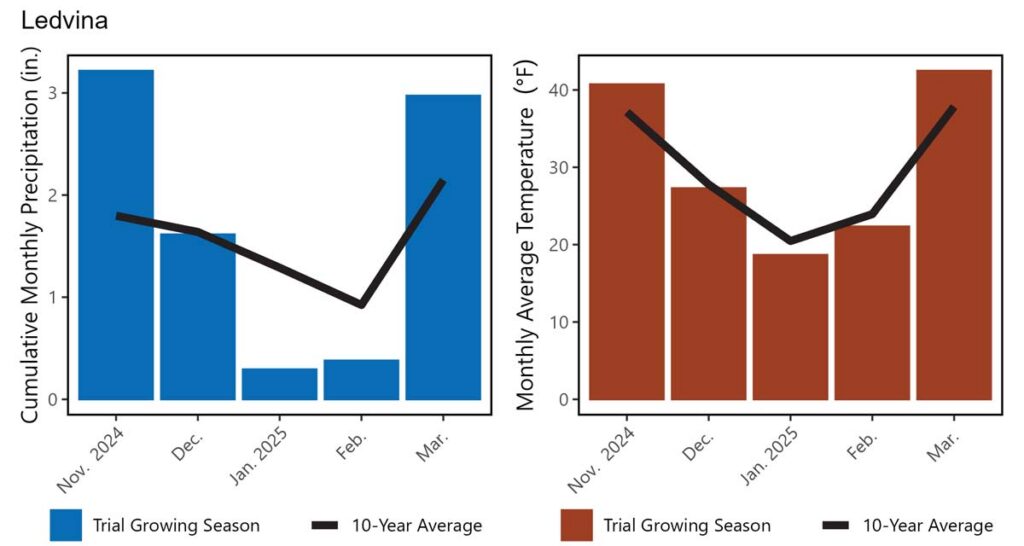
Appendix – Trial Design and Weather Conditions
References
- J. J. Bachler, “Winter Feeding Beef Cattle: A Review on Bale Grazing in the Northern Great Plains,” 2019, Accessed: Jan. 29, 2025. [Online]. Available: https://library.ndsu.edu/ir/handle/10365/30957
- S. Hart, Ed., “Grazing System and Management for Goat Production,” Prof. Agric. Work. J. PAWJ, 2020, doi: 10.22004/ag.econ.319746.
- “Bale Grazing 101 | UGA Forage Extension Team.” Accessed: Jan. 29, 2025. [Online]. Available: https://site.extension.uga.edu/forageteam/2020/09/bale-grazing-101/
- M. Chamas, “Goat Grazing to Reduce Parasite Loads,” Practical Farmers of Iowa, Cooperators’ Program Research Report, 2014. Accessed: Jan. 29, 2025. [Online]. Available: https://practicalfarmers.org/resources/research-reports/goat-grazing-to-reduce-parasite-loads/
- “Prevent Parasites Through Grazing Management.” Accessed: Jan. 29, 2025. [Online]. Available: https://extension.psu.edu/prevent-parasites-through-grazing-management
- A. H. Sparks, “nasapower: A NASA POWER Global Meteorology, Surface Solar Energy and Climatology Data Client for R,” J. Open Source Softw., vol. 3, no. 30, p. 1035, Oct. 2018, doi: 10.21105/joss.01035.
- A. Sparks, nasapower: NASA-POWER Data from R. (2024). [Online]. Available: https://CRAN.R-project.org/package=nasapower