Funding provided by Builders Vision Philanthropy.
In a Nutshell:
- Carmen is a high-performing F1 sweet pepper that many farmers value for yield, fruit size, flavor and consistency, but its hybrid seed is relatively expensive and cannot be reliably saved to reproduce the same consistently great production.
- Farmers were motivated to compare Carmen with other varieties, including open-pollinated varieties that could be cheaper to buy, easier to save seed from and better suited to grower control or local adaptation.
- Because a previous trial from 2024 trial showed that, although Carmen was difficult to beat, some open-pollinated varieties offered useful traits, Hannah Breckbill, Alice McGary, Kimberly Ropp, and Ana Timmer and Janna & John Wesselius joined to test their favorite varieties against Carmen in 2025 to gather another year of farm-based comparisons.
Key Findings:
- Carmen remained the most consistent pepper variety across farms, especially for fruit size, uniformity and total yield where trial conditions allowed full comparisons.
- Several varieties showed promise in specific contexts: Escamillo tracked closely with Carmen at Breckbill’s, Ajvarski was comparable to Carmen in Ropp’s shortened trial, Cornito Rosso produced more but smaller peppers at Timmer & Wesseliuses’, and McGary especially liked the taste of Bridge to Paris among the open-pollinated varieties she tested.
Background
In 2024, cooperators tested whether open-pollinated sweet pepper varieties could provide practical alternatives to Carmen, a high-performing F1 hybrid that many growers regard as a standard for yield, fruit size, flavor and adaptation to cooler Midwestern growing conditions [1]. Carmen’s hybrid background contributes to its consistency and performance, but it also makes seed production more complex and seed more expensive. Because saved seed from Carmen would not reliably reproduce the same variety, growers interested in seed saving, lower seed costs and greater independence from commercial seed companies were motivated to identify open-pollinated varieties that could match Carmen closely enough for market production.
The 2024 trial showed that Carmen remained difficult to beat. Across the farms, Carmen generally produced the highest total yields, the largest peppers and the sweetest fruit. At Marla Looper’s farm, Carmen out-yielded Italia by producing more fruits, and taste comparisons showed Italia was usually less sweet than Carmen. At Hannah Breckbill’s farm, Bridge to Paris had poor germination, and the harvest was disrupted before yield comparisons could be made, but the surviving peppers were smaller and less sweet than Carmen. Michael Pipho’s results were more mixed: Carmen produced the greatest total harvest weight and larger peppers, but Corno di Toro produced more individual peppers and continued producing later into the season, suggesting that some open-pollinated varieties may still offer useful traits for growers with particular market needs.
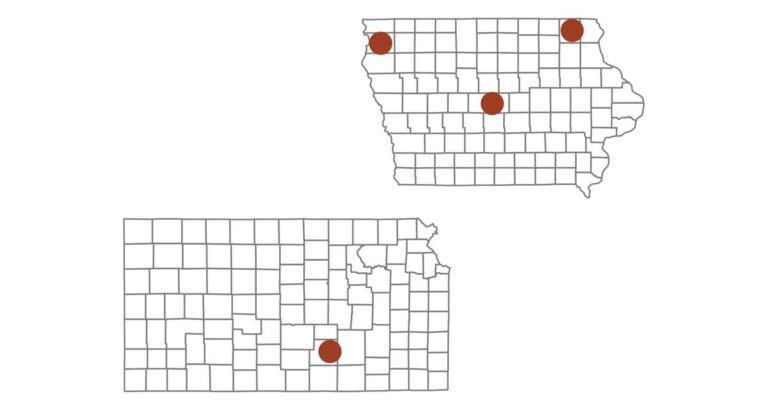
Continued interest in finding a variety that could compete with Carmen led to a repetition of the project in 2025. Hannah Breckbill decided to repeat the trial, though with a different slate of varieties. Alice McGary, Kimberly Ropp, and Ana Timmer and Janna & John Wesselius joined to test their favorite varieties against Carmen. Trial conditions, variety performance and grower priorities differed among farms, but this second year of data gives us a better look at which varieties were reliable across sites, which might fit specific production or market niches and whether any open-pollinated line could support growers’ goals for resilience, seed saving and practical production in the Midwest.
Methods
Design
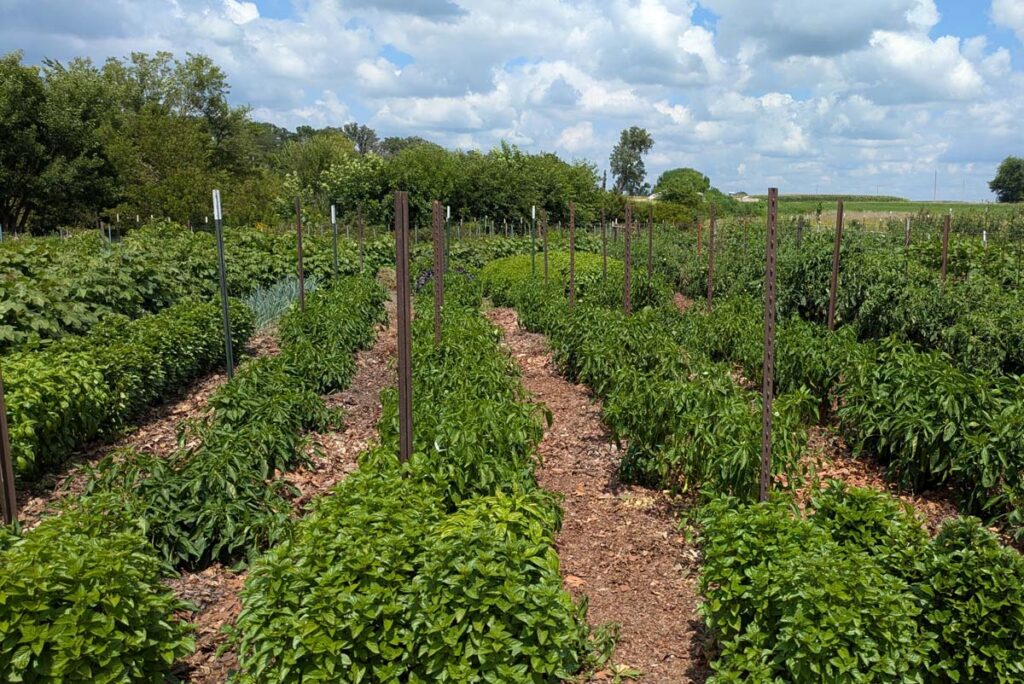
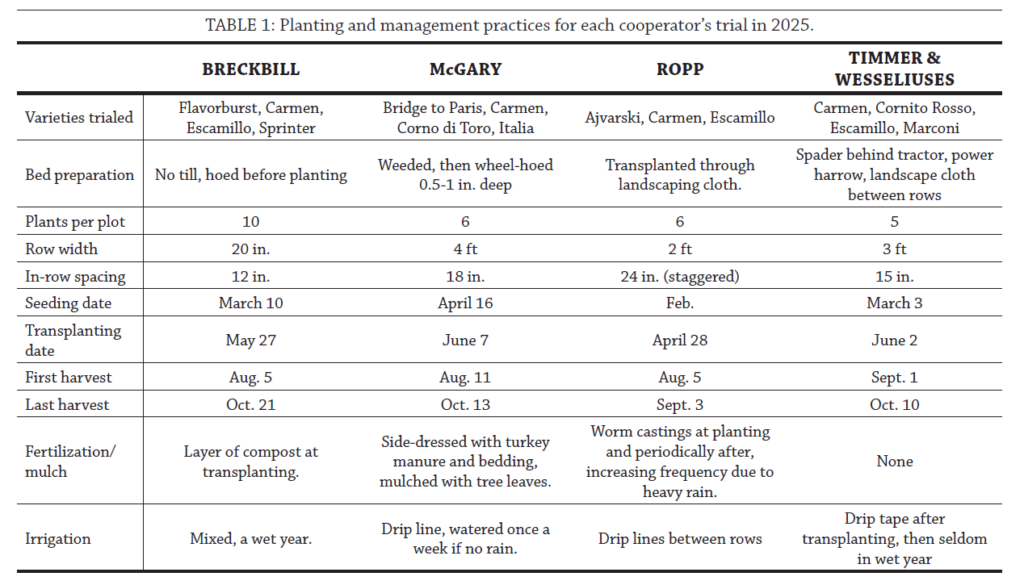
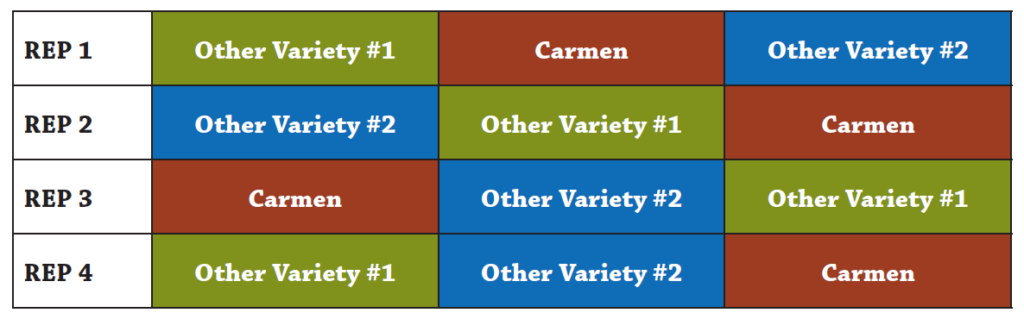
Cooperators tested a total of ten pepper varieties in this trial. Carmen, Cornito Rosso, and Escamillo are F1 hybrids [2], [3], [4]. Ajvarski, Bridge to Paris, Corno di Toro, Italia, and Marconi are open-pollinated (OP) varieties [5], [6], [7], [8], [9]. Sprinter and Flavorburst are F1 bell peppers [10], [11]. Carmen served as a standard point of comparison and was grown by all the farms. The other varieties tested against Carmen were selected by the cooperators based on their individual preferences and seed availability. Production practices for each farm are presented in Table 1. Seeds were started indoors and transplanted outside sometime between mid-April and early June, depending on farm climates and workflows. Each cooperator established at least four replicates of each selected variety. An example of the randomized, replicated experimental design used by the farmers is shown in Figure A1.
Measurements
Each farm harvested regularly throughout the period specified in Table 1. Measurements varied between farms. Timmer and the Wesseliuses counted all fruit picked throughout the harvest period from each plot. Breckbill and Ropp weighed the harvest of peppers from each plot. McGary did all the above, as well as counting the peppers that were culled, and noting how many of them had reached the fully-ripe, marketable, red stage. Because McGary’s plants were not trellised, many branches flopped over as fruit matured. To avoid wasting food, peppers on flopped branches were harvested however ripe they were. Thus, many peppers were harvested green, and the special count of marketable red peppers was taken.
McGary also tasted a random sampling of the marketable peppers from each variety. She noted pepper taste with a general view of identifying whether the other varieties were more, less, or as sweet as Carmen. McGary and her crew also recorded their qualitative observation on plant vigor, leaf color, insect resistance, and disease resistance for each rep at each harvest date.
Data analysis
We used an analysis of variance (ANOVA) followed by Tukey’s HSD at a 90% confidence level to determine if there were significant differences between treatments (varieties) within each experiment. A difference that is determined to be significant at this level is indicative of treatment effects such that we would expect the same results to occur 9 out of 10 times when rerunning the experiment under the same conditions. We can perform this analysis because all farms established completely randomized and replicated experimental designs (Figure A1).
A few replicates at McGary’s, Ropp’s, and Timmer & Wesseliuses’ were damaged or had such bad germination or early growth that they were terminated before bearing peppers. They were excluded from analysis. Where the reduced number of replicates fell below the threshold for analysis, the variety was excluded (only Escamillo at Ropp’s).
Results and Discussion
Mustard Seed Farm—Alice McGary
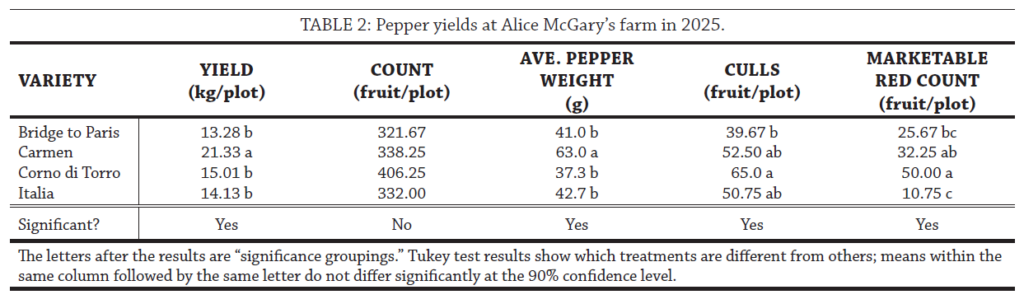
At McGary’s farm, Carmen produced significantly greater total yield than the other varieties tested (Table 2). Because total pepper counts did not differ significantly among varieties, Carmen’s yield advantage appears to have come from fruit size: at 63 g per pepper, Carmen produced the largest peppers in the trial. Corno di Toro produced significantly more marketable red peppers than Italia, but it also produced significantly more culls than Bridge to Paris.
McGary and her crew also sampled peppers at each harvest to compare flavor and recorded qualitative observations of plant vigor, leaf color, insect resistance and disease resistance. These observations are summarized in Table 3.
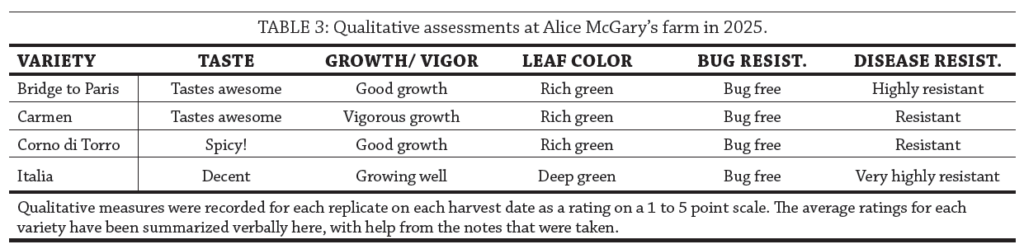
McGary had planned to trellis the peppers but was unable to do so. In the non-trellised system, Carmen’s strong, upright stems appeared to help it perform well, and this observation was supported by the yield data (Table 2). Because McGary’s practice was to harvest peppers from branches that had flopped to the ground regardless of fruit ripeness, trellising may have changed the proportion of peppers harvested at the fully red, marketable stage.
Humble Hands Harvest—Hannah Breckbill
Breckbill planted Carmen, Escamillo, Flavorburst, and Sprinter and tracked production over time. This trial included both bull’s-horn peppers and bell peppers: Carmen and Escamillo represented the bull’s-horn type, while Flavorburst and Sprinter were bell peppers that provided a comparison across pepper categories. Escamillo, an F1 bull’s-horn pepper sometimes described as a yellow Carmen, closely tracked Carmen throughout the harvest period (Figure 2).
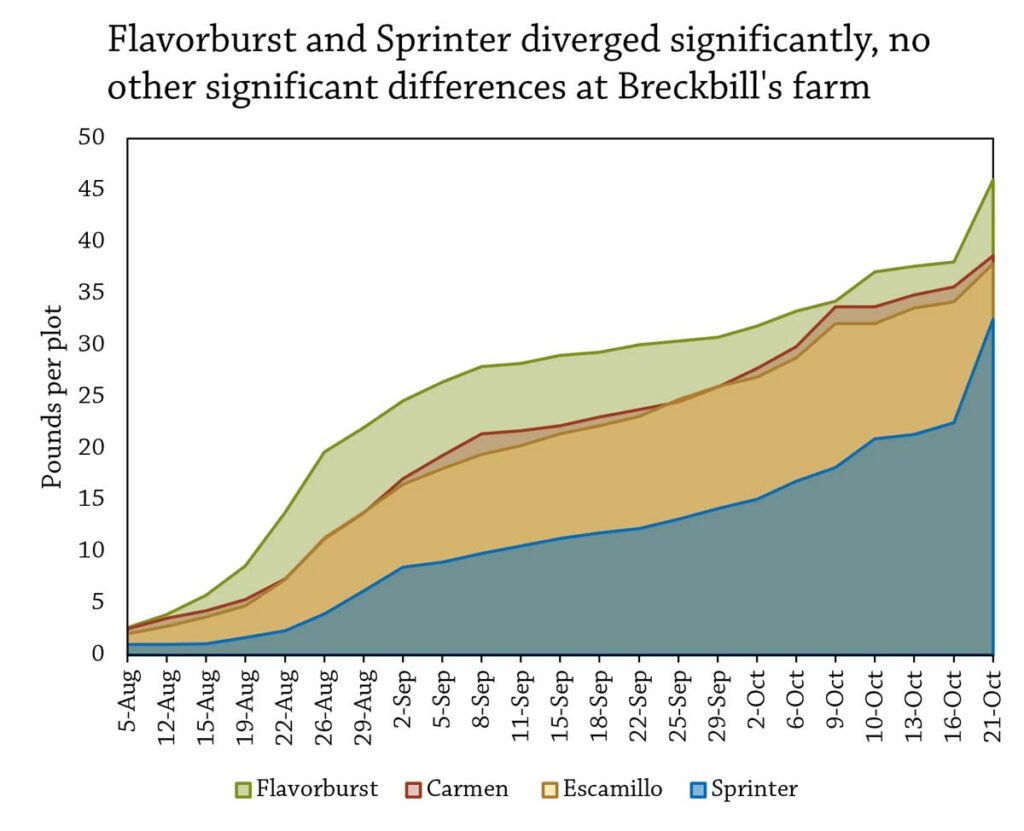
At Breckbill’s farm, final cumulative yield showed a clear difference between the two bell pepper varieties but not among the bull’s-horn varieties or between the two pepper types. Flavorburst produced significantly greater yield than Sprinter. Carmen and Escamillo performed similarly to each other and fell between the two bell peppers closely enough that they were not statistically distinct from either one.
ICT Urban Greens-Kimberly Ropp
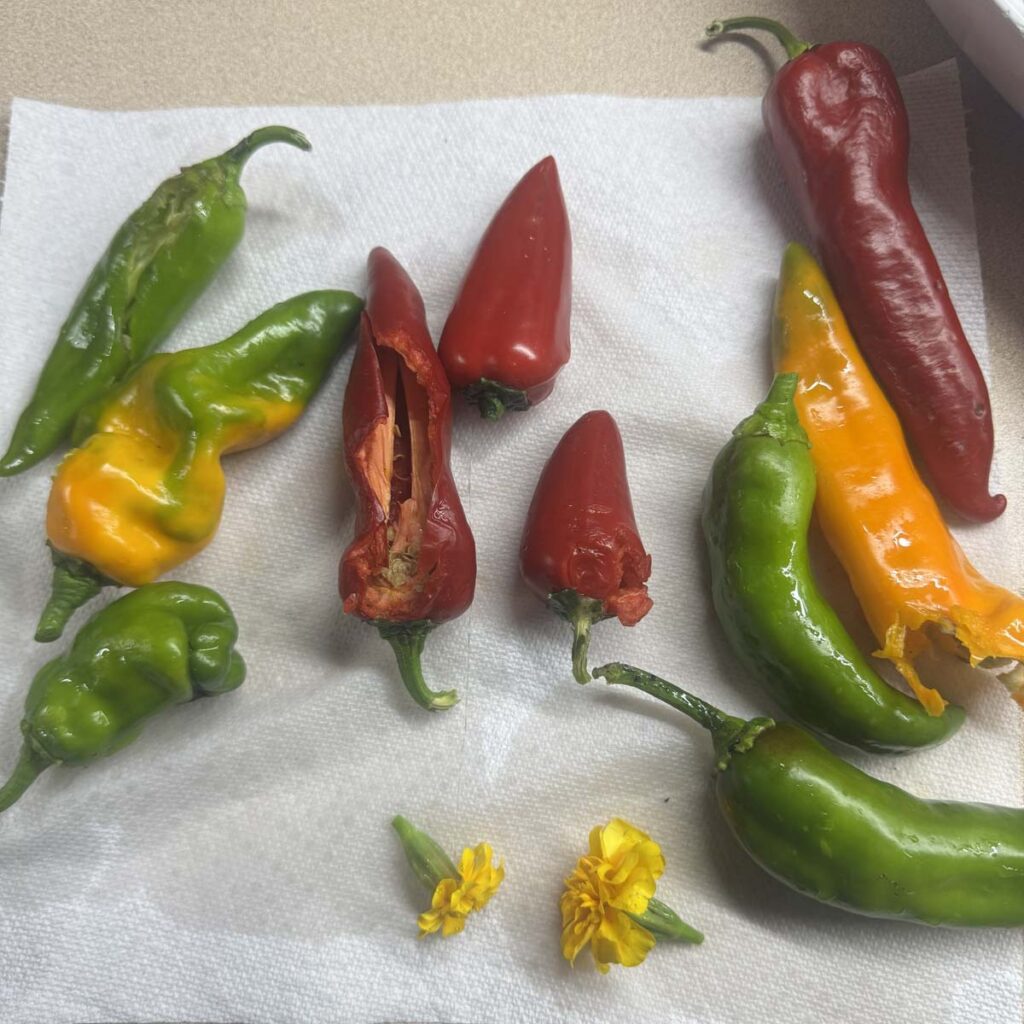
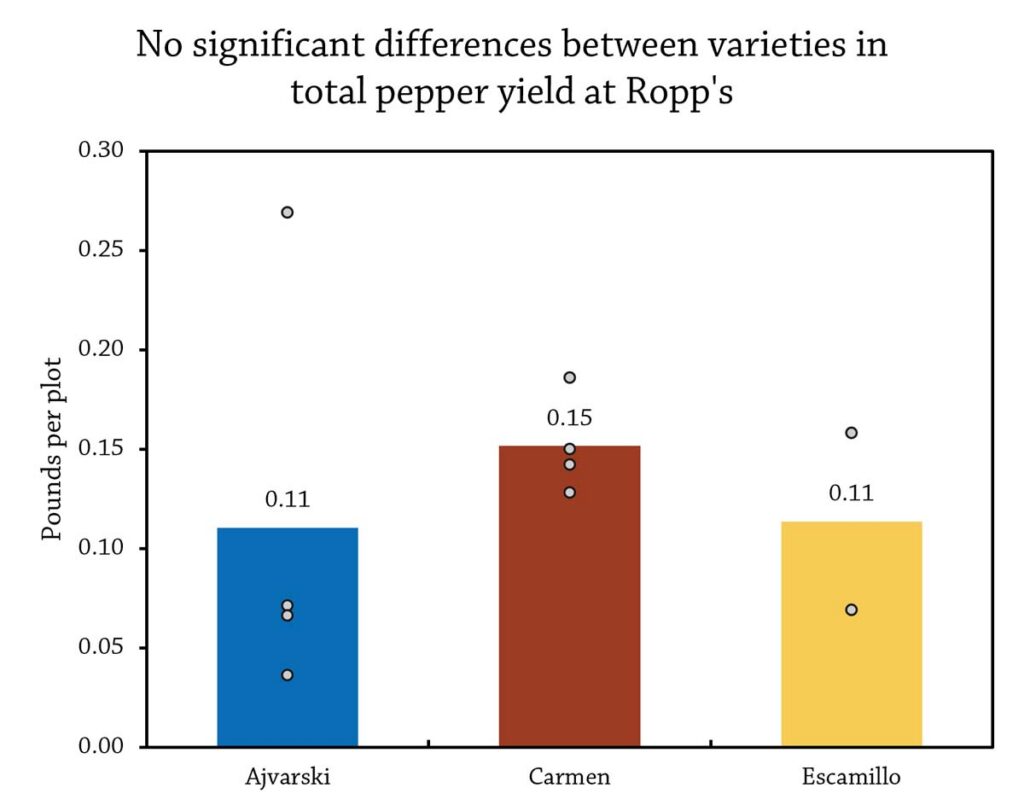
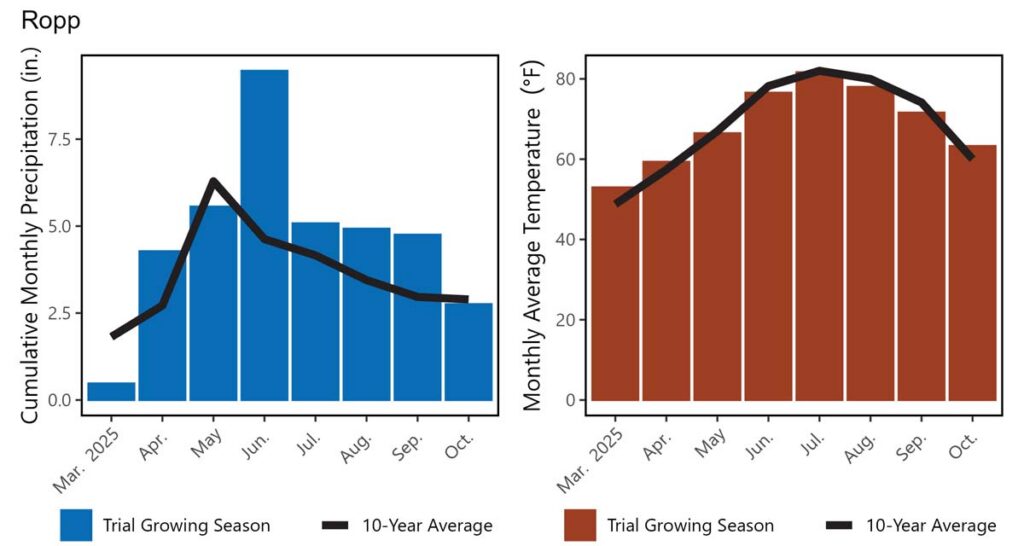
Ropp’s harvest season was cut short by a severe hailstorm on Sept. 5 (see photo below). Before the storm, she collected yield data through August and into early September. Poor germination limited Escamillo to two plots, so that variety was excluded from statistical comparison. Among the remaining varieties, Ajvarski and Carmen did not differ significantly in total yield; though Ajvarki’s yields seemed to vary much more widely among the plots (Figure 3).
Cornucopia—Ana Timmer and Janna & John Wesselius
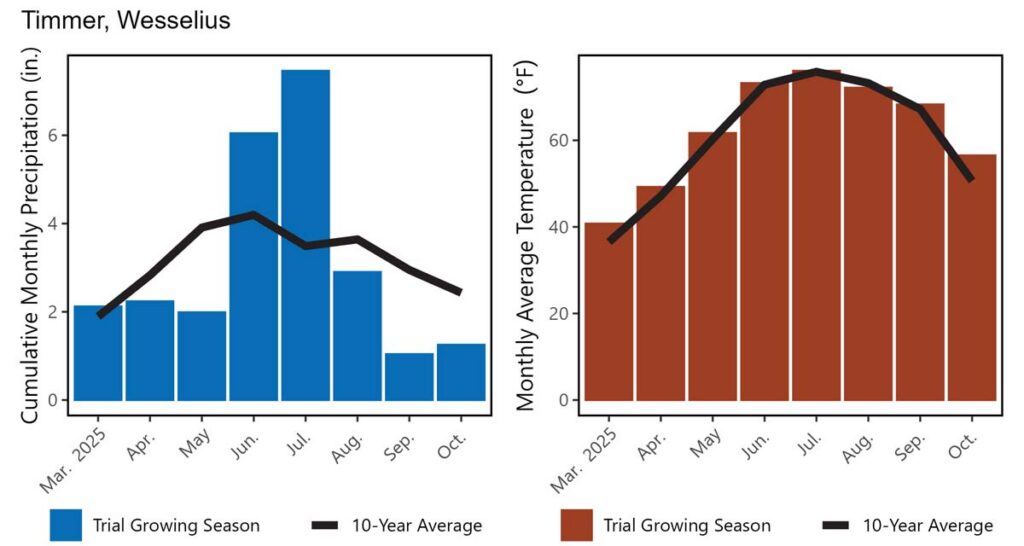
At the Cornucopia, a derecho on July 28–29 killed some plants and damaged many others. The storm delayed harvest, reduced productivity and added variability because some parts of the trial were hit harder than others. Timmer and the Wesseliuses recorded both pepper count and plot weight for each replicate during the first three harvests, then shifted to pepper count only after determining that count was both more useful for their purposes and easier to collect in the field.
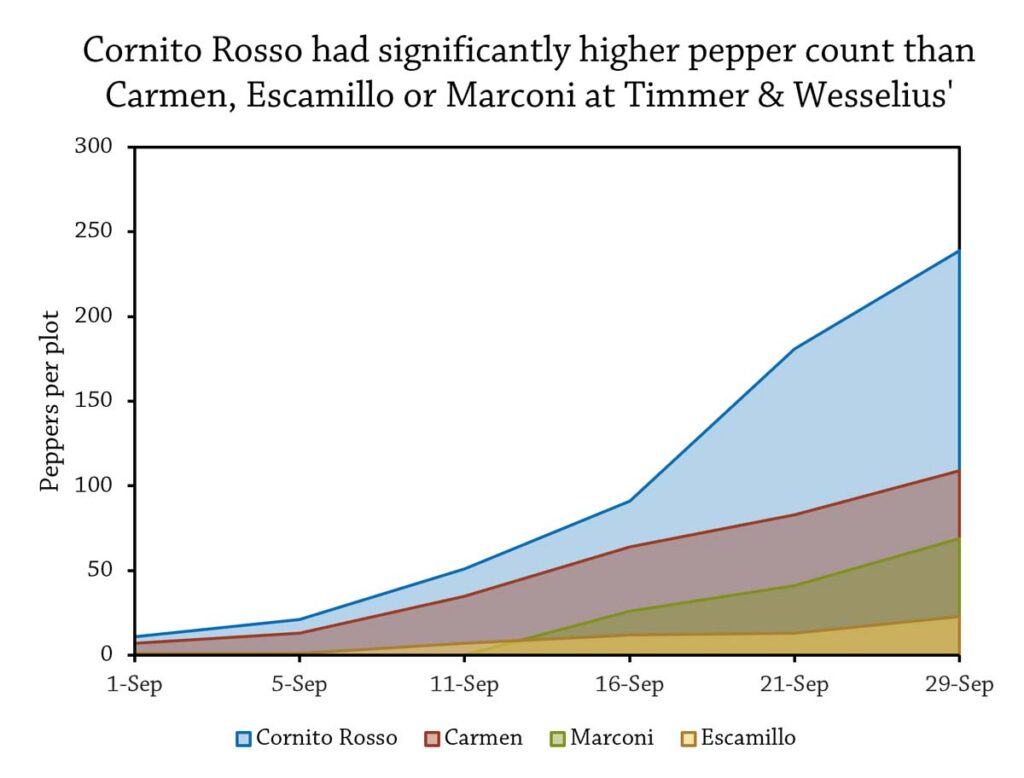
Cornito Rosso produced significantly more individual peppers than any of the other varieties tested at Timmer and the Wesselius’ farm (Figure 4). This included producing more than twice as many peppers as Carmen on average. The tradeoff was fruit size: Cornito Rosso peppers were about 60% as large as Carmen peppers. Based on the early harvests, projected season-long yield by weight would ultimately have been higher for Cornito Rosso than Carmen, but that projection assumes that early pepper weights were representative of fruit size throughout the season. Even with that caveat, the results point to a potentially useful market distinction: compared with the other varieties in this trial, Cornito Rosso produced significantly more, smaller peppers.
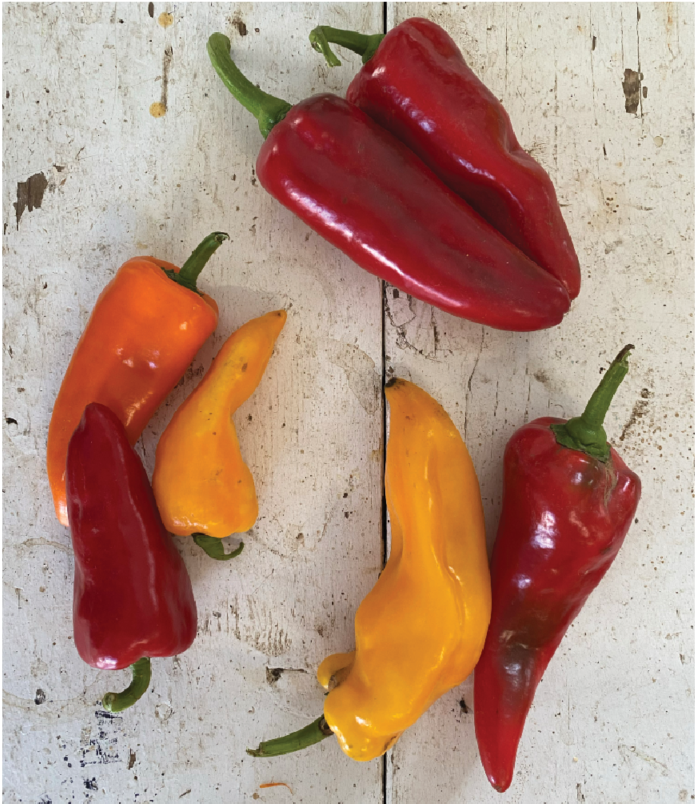
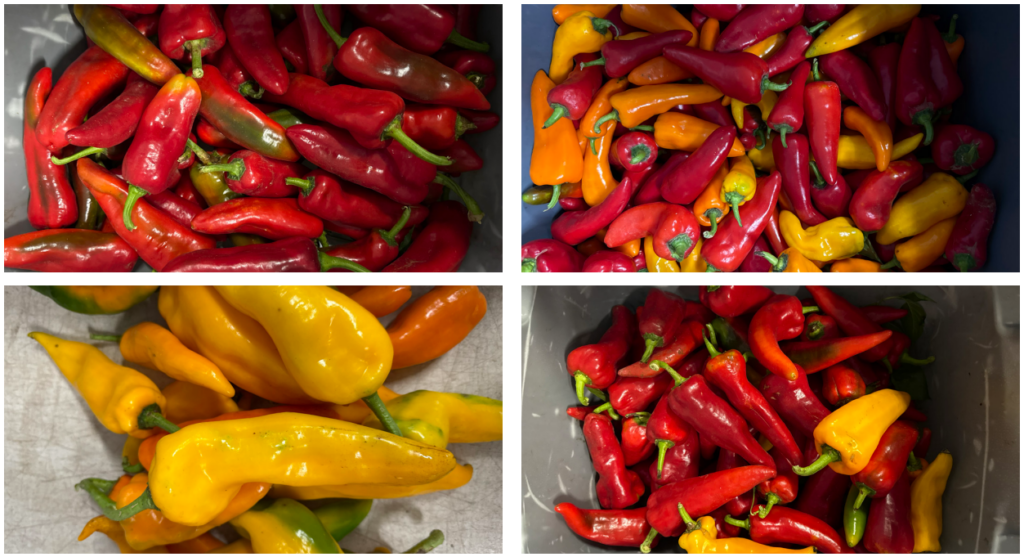
Marconi showed the variability expected from an open-pollinated variety, with a wider range of fruit sizes and colors than the hybrids, especially Carmen and Escamillo (see photo below). Escamillo underperformed at Timmer and the Wesseliuses’ farm but performed much more similarly to Carmen at the other farms where it was tested, especially at Breckbill’s (Figure 2).
Across the farms in this project, Carmen was the most consistent benchmark, especially for fruit size and total yield where conditions allowed a full comparison. The strongest alternatives tended to match Carmen in specific ways rather than across all measures: Escamillo tracked closely with Carmen at Breckbill’s, Ajvarski was comparable to Carmen in Ropp’s shortened trial, and Cornito Rosso produced many more but smaller peppers at Timmer and the Wesselius’. The open-pollinated varieties showed useful possibilities, McGary especially liked Bridge to Paris, but also more variability, reinforcing that variety choice depends on whether growers prioritize uniformity, total weight, pepper count, fruit size, or seed-saving and consistent performance generation-on-generation.
Conclusions and Next Steps
Across two years of trials, Carmen remained the most consistent benchmark for bull’s-horn sweet peppers. However, the results also showed that no single comparison captured the full value of each variety. Escamillo matched Carmen closely at Breckbill’s farm, Ajvarski was not significantly different from Carmen in Ropp’s shortened trial, and Cornito Rosso produced many small peppers at Timmer and the Wesseliuses’ farm. These results suggest that farmers may choose different varieties depending on whether they prioritize total yield, fruit size, uniformity and consistency, harvest period, pepper count, flavor, seed-saving potential or fit with a specific market.
The farmers highlighted individual pepper growing takeaways that were not variety related. Ropp and McGary wrote that they would try to get future peppers started sooner. McGary and Timmer thought that more trellising would have protected and improved their pepper yields. Weather disruptions in 2025, including hail and derecho damage, also emphasized the value of testing varieties across multiple farms and seasons before drawing final conclusions about performance.
The 2025 trials did not identify an open-pollinated variety to replace Carmen, but they helped cooperators better understand the tradeoffs involved in seed choice. Carmen’s uniformity, size and productivity are valuable for market growers, while open-pollinated varieties offer the possibility of local adaptation, seed saving and grower control.
These results have motivated farmers to take a next step: a farmer-led effort to dehybridize Carmen itself. Participating farmers are growing successive generations of self-pollinated Carmen descendants, selecting plants that most closely match the Carmen phenotype and culling individuals that do not. Over repeated generations, this process is intended to stabilize a population that retains Carmen’s key traits while becoming more suitable for seed saving. If successful, this work could eventually give growers access to a Carmen-like pepper that combines the performance growers value with the resilience, affordability and independence associated with an open-pollinated line.
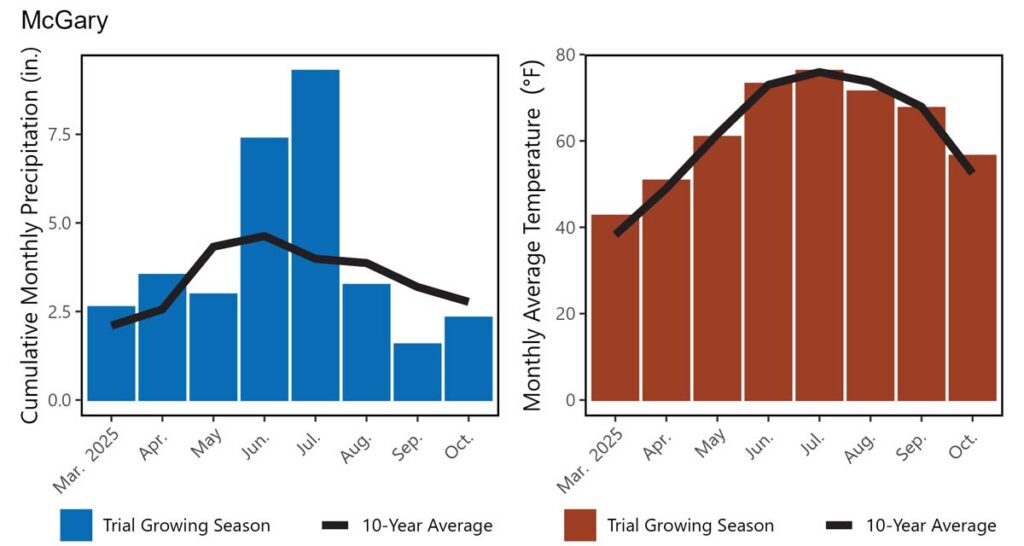
Appendix - Trial Design and Weather Conditions
References
- “Sweet Pepper Variety Trial - Practical Farmers of Iowa.” Accessed: Aug. 31, 2026. [Online]. Available: https://practicalfarmers.org/resources/research-reports/sweet-pepper-variety-trial/
- “Cornito Rosso - Organic (F1) Corno di Toro Pepper Seed | Johnny’s Selected Seeds.” Accessed: Aug. 30, 2026. [Online]. Available: https://www.johnnyseeds.com/vegetables/peppers/sweet-peppers/cornito-rosso-organic-f1-corno-di-toro-pepper-seed-3128G.html?srsltid=AfmBOopAx18wsyu4pOQRvGYVAnPyhefgDVohnUSQRguumfDogOI5EH3s
- “Carmen Pepper Seeds - Corno di Toro | Johnny’s Selected Seeds.” Accessed: Aug. 31, 2026. [Online]. Available: https://www.johnnyseeds.com/vegetables/peppers/sweet-peppers/carmen-f1-corno-di-toro-pepper-seed-2993.html?srsltid=AfmBOoou1NLqkFf3HBW_c3hMYDw9Tsz8tg8jTVHXRZZK0GzVzxsuT1w8
- “Escamillo - Organic (F1) Corno di Toro Pepper Seed | Johnny’s Selected Seeds.” Accessed: Aug. 31, 2026. [Online]. Available: https://www.johnnyseeds.com/vegetables/peppers/sweet-peppers/escamillo-organic-f1-corno-di-toro-pepper-seed-3125G.html
- “Sweet Pepper Seeds, Ajvarski,” Baker Creek Heirloom Seed Company. Accessed: Aug. 30, 2026. [Online]. Available: https://www.rareseeds.com/pepper-sweet-ajvarski
- “Bridge to Paris Pepper (Sweet) Organic Seeds,” Hudson Valley Seed Company. Accessed: Aug. 30, 2026. [Online]. Available: https://hudsonvalleyseed.com/products/bridge-to-paris-pepper
- “Marconi Red Organic Pepper - Seed Savers Exchange.” Accessed: Aug. 30, 2026. [Online]. Available: https://shop.seedsavers.org/marconi-red-organic-pepper
- “Corno Di Toro Sweet Bell Pepper Organic,” Southern Exposure Seed Exchange. Accessed: Aug. 31, 2026. [Online]. Available: https://www.southernexposure.com/products/corno-di-toro-sweet-bell-pepper/
- “Italia Organic Pepper - Seed Savers Exchange.” Accessed: Aug. 31, 2026. [Online]. Available: https://shop.seedsavers.org/italia-organic-pepper
- “Flavorburst - (F1) Bell Pepper Seed | Johnny’s Selected Seeds.” Accessed: Aug. 30, 2026. [Online]. Available: https://www.johnnyseeds.com/vegetables/peppers/sweet-bell-peppers/flavorburst-f1-bell-pepper-seed-54.html?srsltid=AfmBOorw0HS6JhnCeC7hv_5yOvLrwQ8q0XqxuhpC_lo1RxAsc7uReXPO
- “Sprinter - (F1) Bell Pepper Seed | Johnny’s Selected Seeds.” Accessed: Aug. 30, 2026. [Online]. Available: https://www.johnnyseeds.com/vegetables/peppers/sweet-bell-peppers/sprinter-f1-bell-pepper-seed-3186.html?srsltid=AfmBOora1-bBr3IMiKZdMDNqbOWQbOUCcgsbEn--bKTOiwE-M5v07biN
- A. H. Sparks, “nasapower: A NASA POWER Global Meteorology, Surface Solar Energy and Climatology Data Client for R,” J. Open Source Softw., vol. 3, no. 30, p. 1035, Oct. 2018, doi: 10.21105/joss.01035.
- A. Sparks, nasapower: NASA-POWER Data from R. (2024). [Online]. Available: https://CRAN.R-project.org/package=nasapower