In a Nutshell:
- Vegetable farmers are increasingly using tarps as a no-till method for preparing crop beds.
- Farmers Emily Fagan and Hannah Breckbill of Humble Hands Harvest are interested in using tarping to expand no-till practices on their farm. They designed an experiment to investigate how long an occultative (light-blocking) tarp must be on to effectively kill a rye cover crop and set back weeds including perennial Canada thistle.
Key Findings
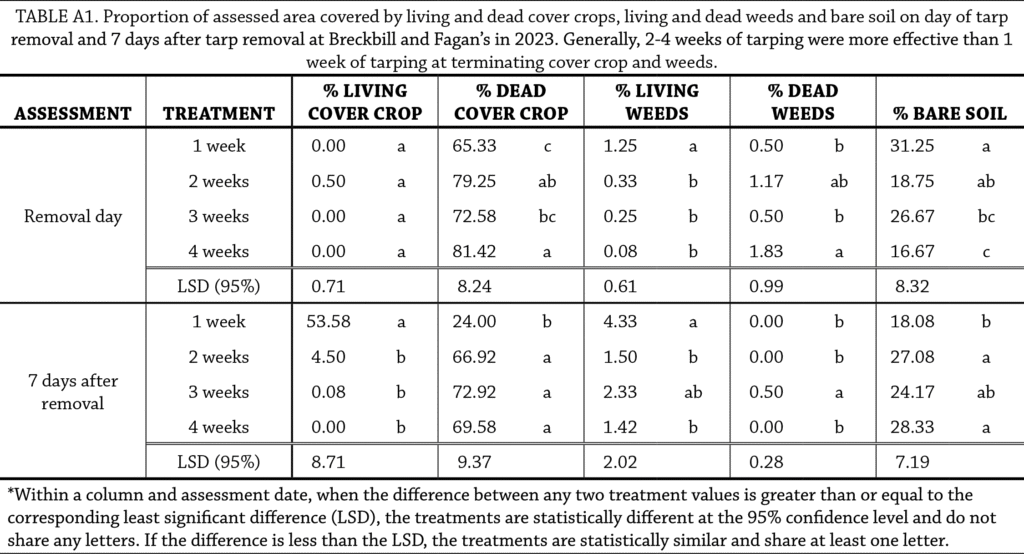
- Three and four weeks of tarping effectively terminated the rye cover crop and set back weeds for at least 1 week. Two weeks of tarping was statistically just as effective at killing cover crops and preventing weeds as the longer treatments, though there was a small amount of rye re-growth in this treatment.
- One week of tarping was not enough time to effectively kill cover crops and was less effective at preventing weeds compared to two, three and four weeks of tarping.
- Breckbill and Fagan reported that no tarping length they tested effectively killed perennial weeds, but these weeds were set back.
Methods
Design
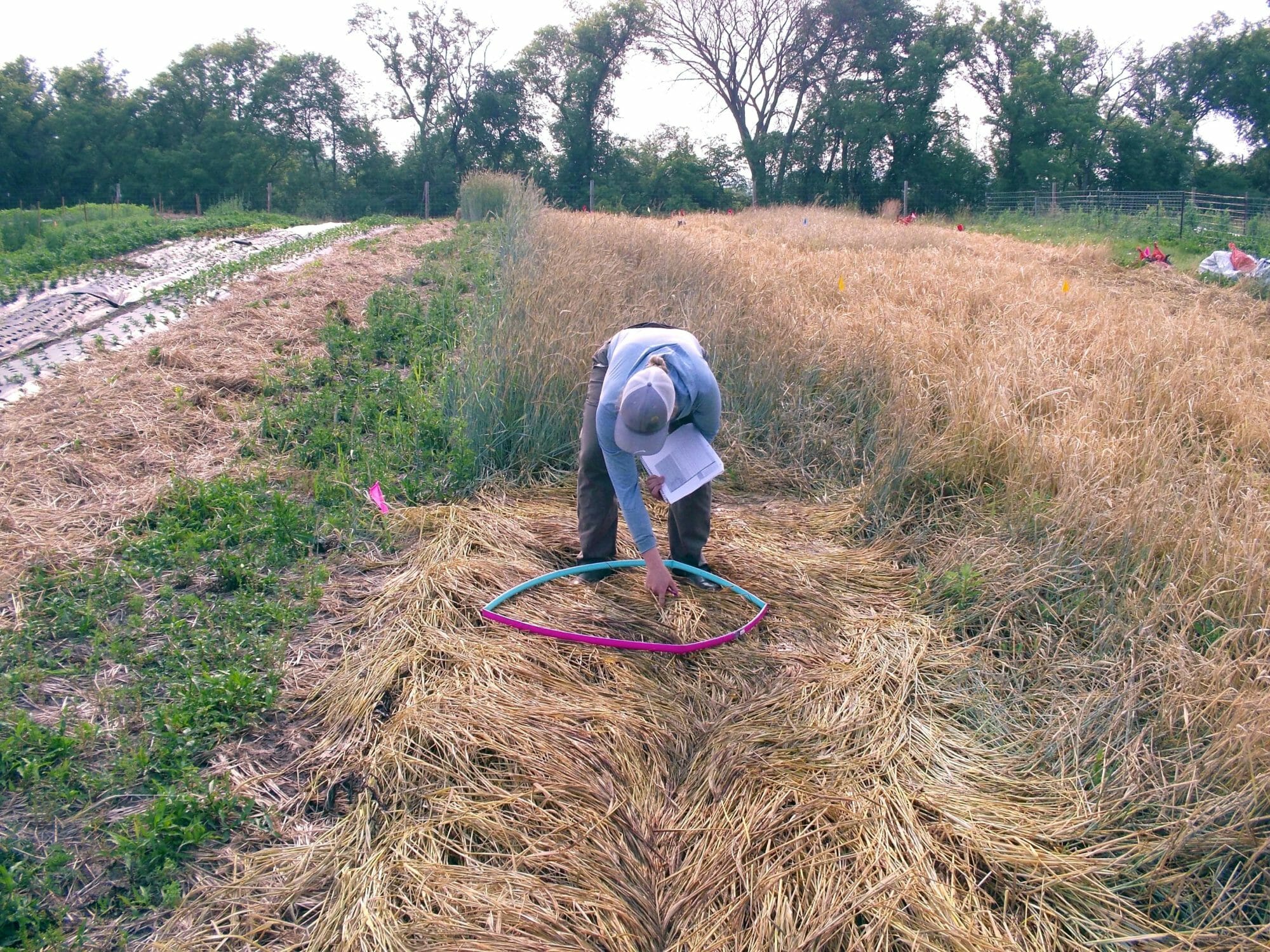
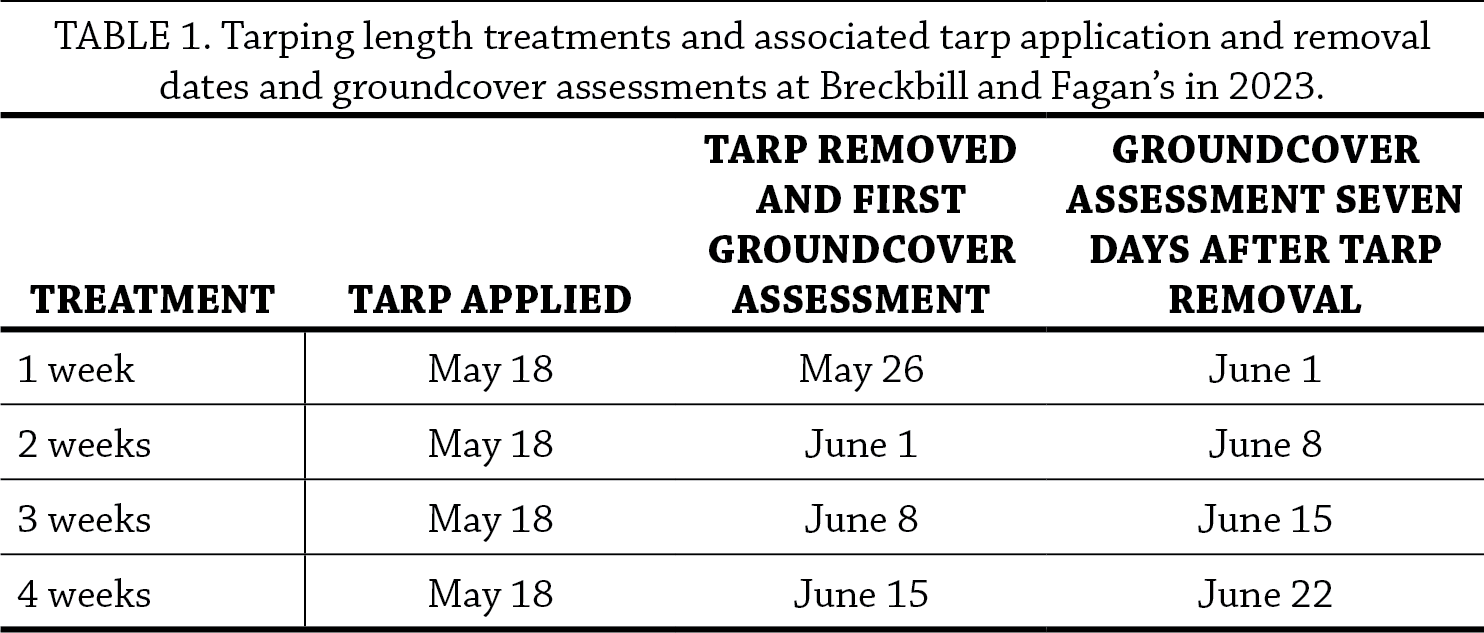
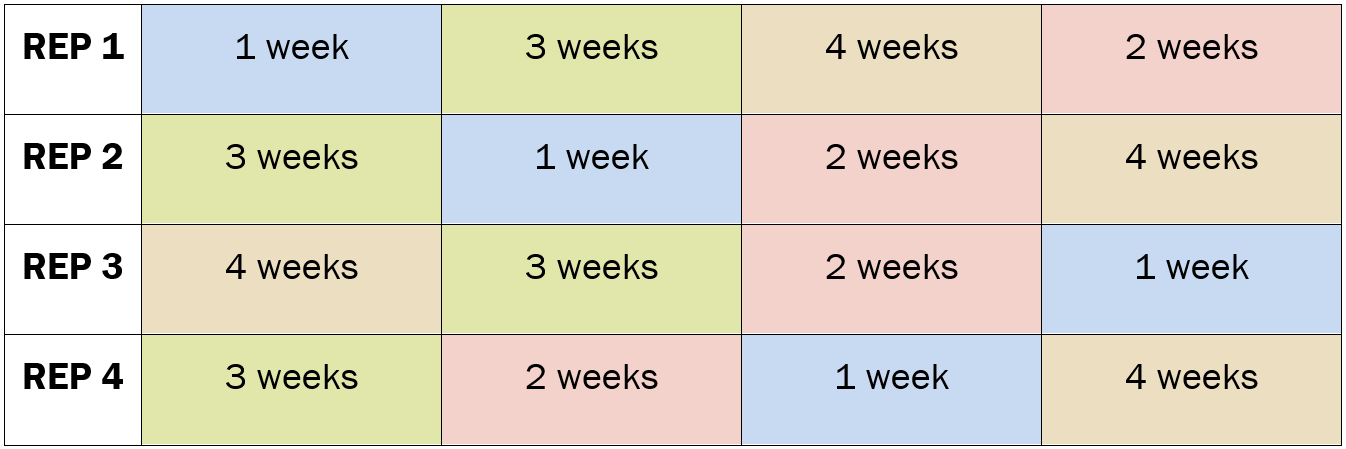
Cereal rye cover crop was established on Sept. 2, 2022. Rye was crimped by stomping on a t-post prior to tarp application on all treatments on May 18, 2023, just before the cereal rye heads were out. Tarps were then laid out and secured with sandbags. Cooperators tested four different tarping treatments, leaving the tarp on for one, two, three, and four weeks. Replications of each treatment were randomly assigned in four blocks leading to a total of 16 experimental plots of equal size (38 ft by 8 ft; Figure A1). Plot management is presented in Table 1. No crops were planted following tarp removal in any treatment.

Results and Discussion
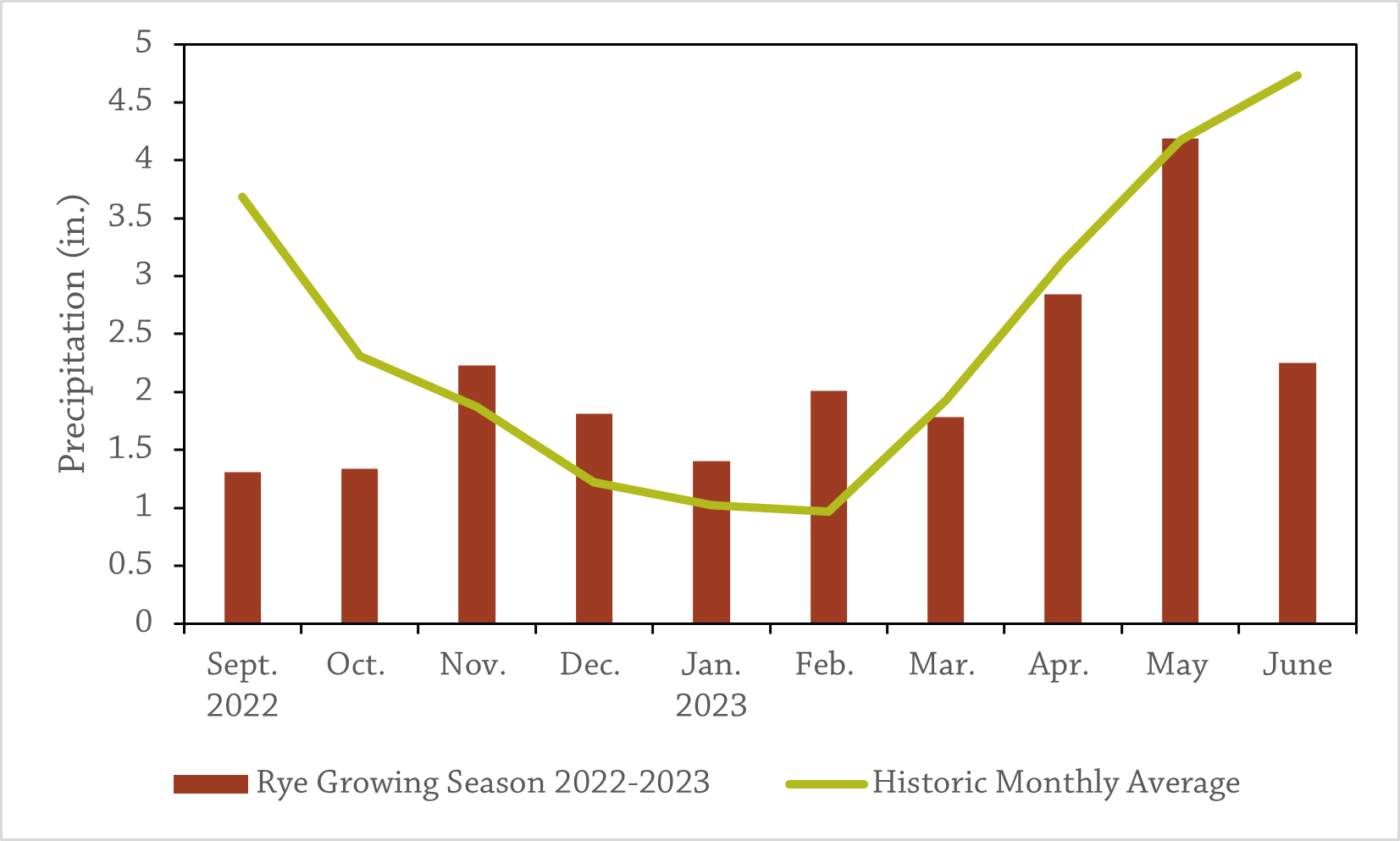
Growing Degree Day accumulation was relatively steady over the course of the experiment; for example, the 4-week treatment experienced a bit less than 4 times the number of GDDs as the 1-week treatment (Table 2). Treatments experienced similar numbers of GDDs in the week after tarp removal. However, the two-week and four-week treatments experienced more rainfall than the one- and three-week treatments, which could potentially have influenced weed growth and cover crop regrowth in these treatments.
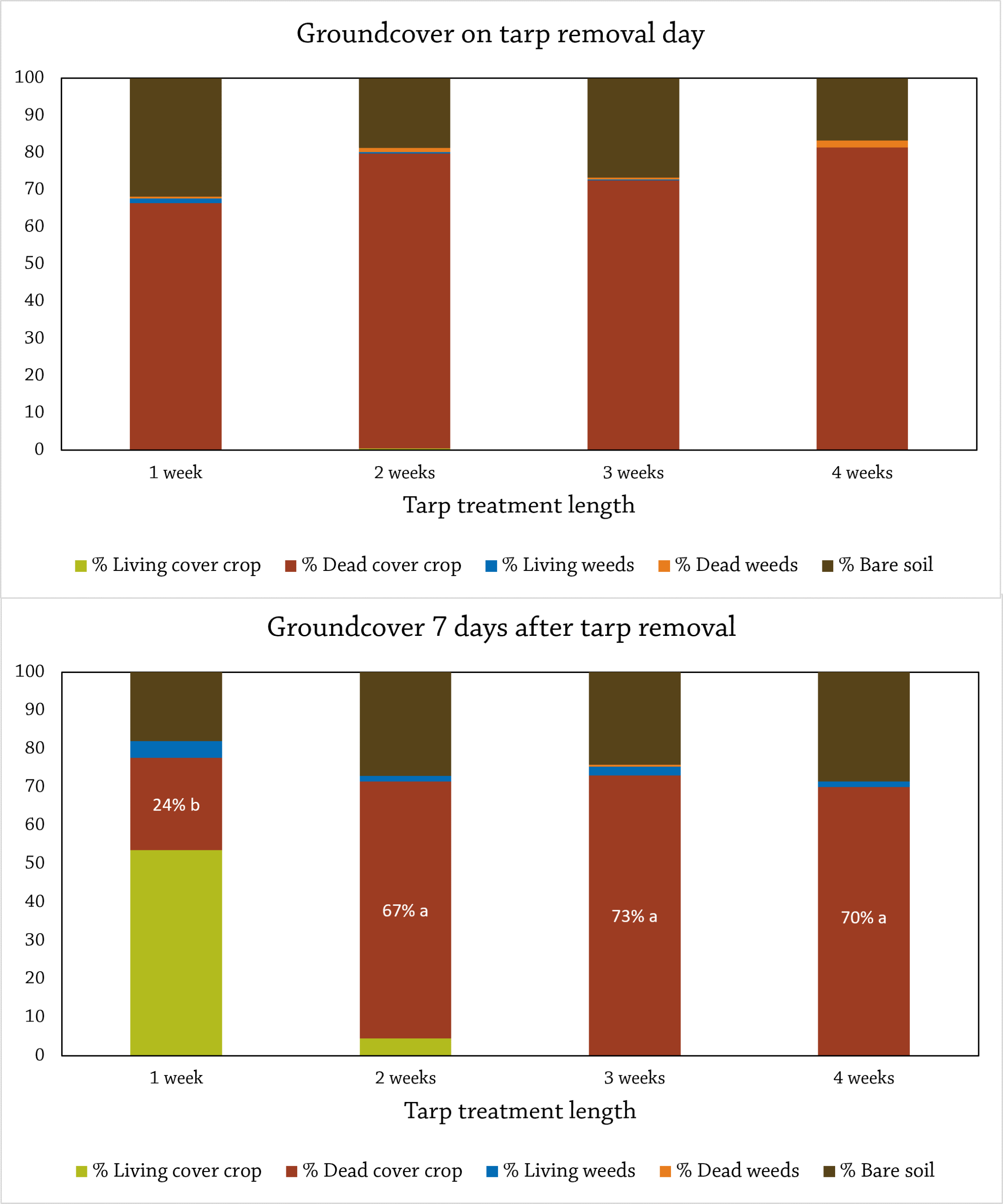
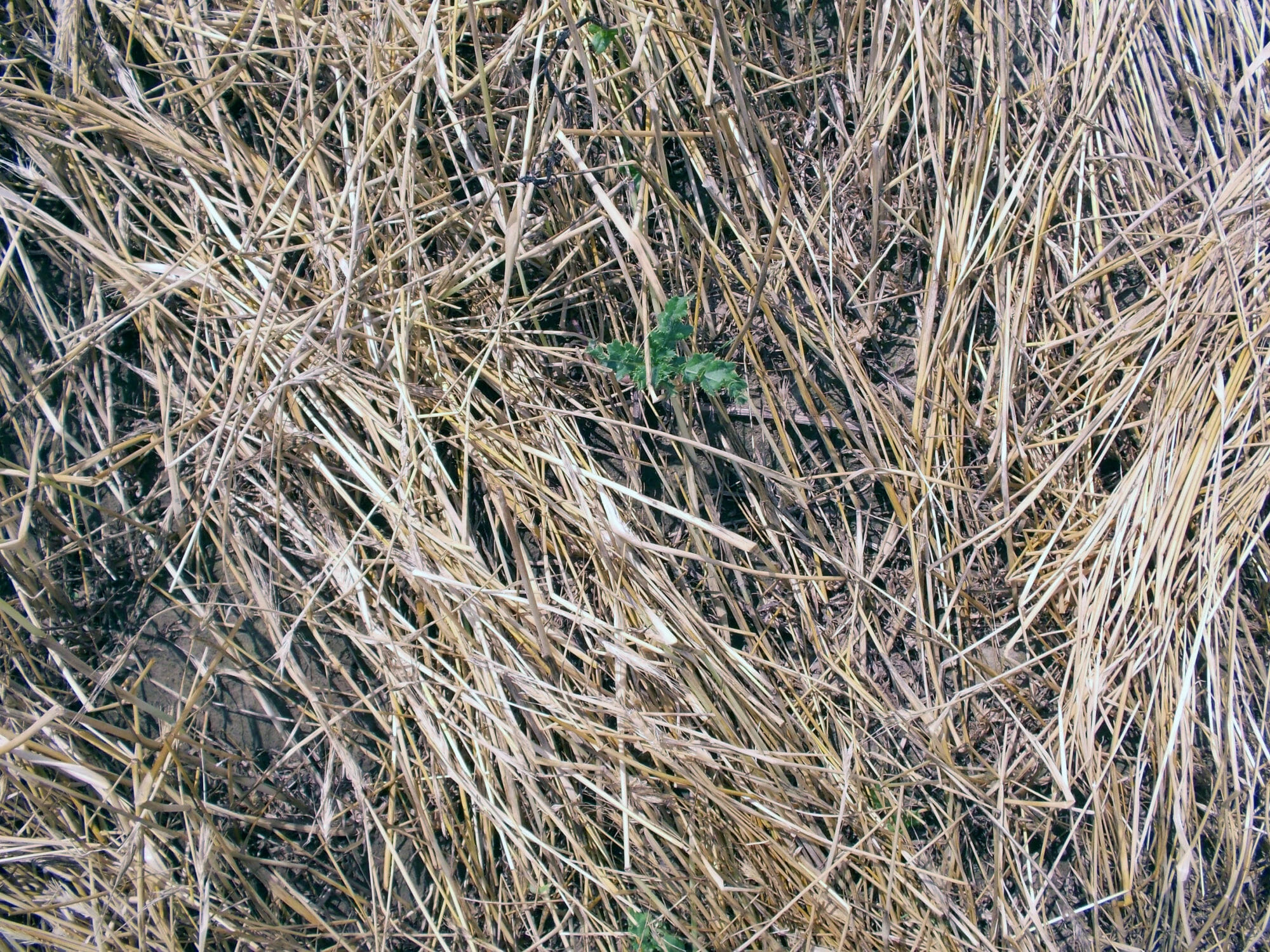
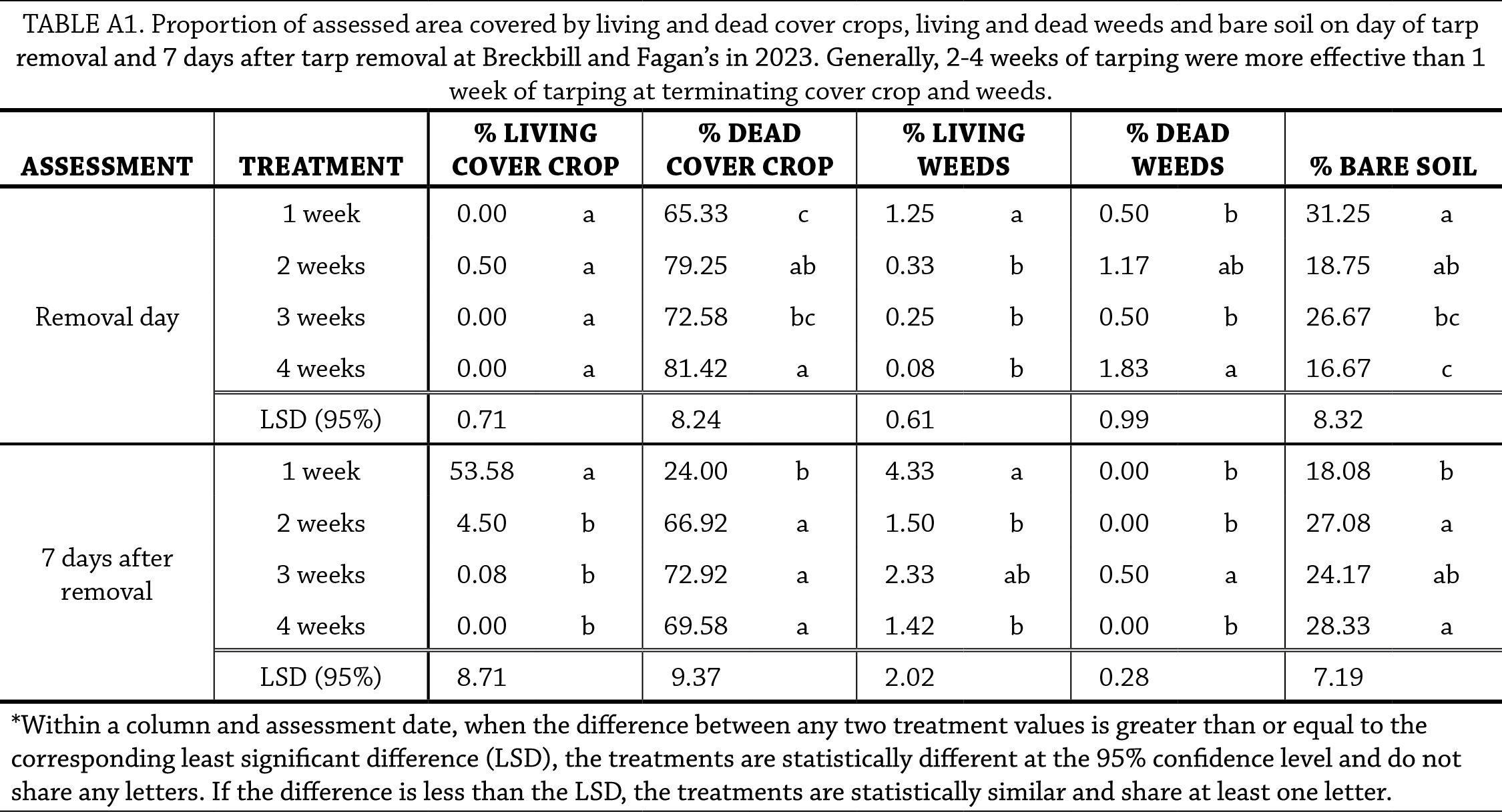
 While no treatment had significantly more living cover crop than any other on the day that tarps were removed, ~53% of cover crop in the one-week treatment was alive seven days after tarp removal (Figure 1, green bars). Percent living cover was significantly higher seven days after tarp removal in the one-week treatment compared to all other treatments, and there were no statistically significant differences in percent dead cover crop between two-, three-, and four-week treatments (Figure 1, red bars; Table A1). However, on average ~5% of plots in the two-week treatments had living cover crop one week after tarp removal. Fagan noted that it “generally seems like one week is not long enough to kill rye... two weeks is better but still not a great termination rate [and] three weeks seems to be the time when the cover fully dies.” Future research could also investigate the role of weather and accumulated GDDs on tarping efficacy; during a hot spell where GDDs are accumulated more quickly than during Breckbill and Fagan’s present trial, might a shorter tarping treatment effectively terminate a cover crop?


Conclusions and Next Steps
This trial demonstrates that between two and three weeks of tarping in May is sufficient to terminate a rye cover crop and sufficiently suppress weed growth for a no-till vegetable production system. In May 2023, these tarping durations were associated with 495–779 GDDs accumulated. Fagan reflects that “I have been feeling pretty uncertain about how long a tarp needs to be on in order to be useful... This trial has convinced me that three weeks is a really ideal amount of time to leave a tarp on, but that two weeks will do in a pinch.” She reported that the most valuable aspect of participating in the trial was “having incentive to be organized about answering the questions I have. I could see that tarping had a lot of potential to help speed up our planting system so it felt great to be really focused about figuring it out.” As for tarps affecting thistle growth, it seems that tarping helps set thistle back some but is not a full solution to Humble Hands’ thistle pressure. Fagan is curious to try other methods, perhaps in combination with tarping, in future trials.
Appendix – Trial Design and Weather Conditions

Funding Acknowledgement
This material is based upon work supported by the U.S. Department of Agriculture, under agreement number NR226114XXXXG004. Any opinions, findings, conclusions, or recommendations expressed in this publication are those of the author(s) and do not necessarily reflect the views of the U.S. Department of Agriculture. In addition, any reference to specific brands or types of products or services does not constitute or imply an endorsement by the U.S. Department of Agriculture for those products or services.
References
[1] N. Lounsbury, S. Birthisel, J. Lilley, and R. Maher, “Tarping in the Northeast: A Guide for Small Farms.” University of Maine Cooperative Extension, 2022. Accessed: Jun. 20, 2023. [Online]. Available: https://extension.umaine.edu/publications/1075e/ [2] R. Maher, A. Rangarajan, M. Hutton, B. Caldwell, M. Hutchinson, and N. Rowley, “Abstract: Comparison of Reduced Tillage Practices for Small-Scale Organic Vegetable Production.,” presented at the Tri-socities, Tampa, FL, 2017. Accessed: Jun. 01, 2023. [Online]. Available: https://scisoc.confex.com/scisoc/2017am/webprogram/Paper108479.html [3] M. J. Menne et al., “Global Historical Climatology Network - Daily (GHCN-Daily).” NOAA National Climatic Data Center, 2012. doi: http://doi.org/10.7289/V5D21VHZ. [4] Climodat Reports, “Iowa Environmental Mesonet.” Iowa State University. [Online]. Available: http://mesonet.agron.iastate.edu/climodat/