In a Nutshell:
- Roll-crimping is a mechanical method for terminating cover crops that allows farmers to reduce tillage and herbicide use.
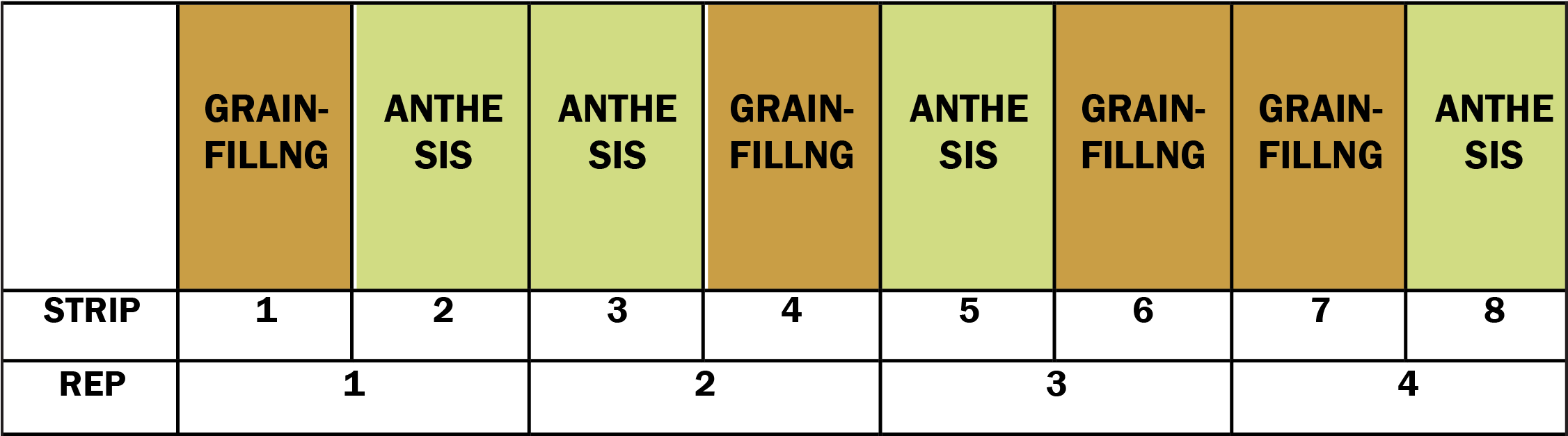
- Fred Abels, Jon Bakehouse, Keith Gorham and Kevin Veenstra investigated whether when they roll-crimp a rye cover crop (at Anthesis vs. at Grain-Filling) affected yield of soybeans no-till drilled into the rye cover crop prior to termination.
Key Findings:
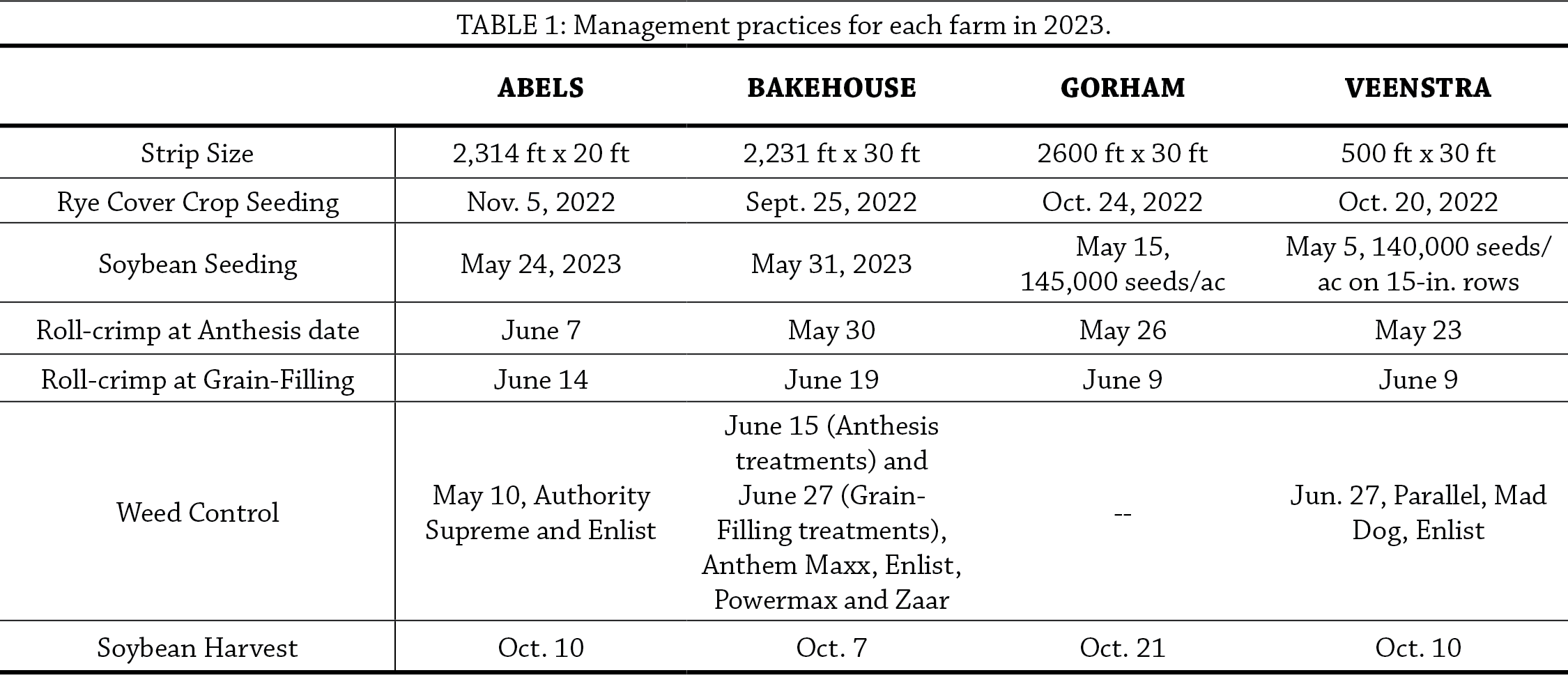
- Abels, Gorham and Veenstra terminated rye in the Anthesis treatment an average of 14 days after soybean seeding and terminated rye in the Grain-Filling treatment an average of 27 days after soybean seeding. Bakehouse planted late and terminated his Anthesis treatment the day before seeding soybeans and the Grain-Filling treatment 19 days after seeding soybeans.
- None of the four cooperators found that roll-crimp timing (at rye anthesis vs. at grain-filling) significantly affected soybean yields in 2023.
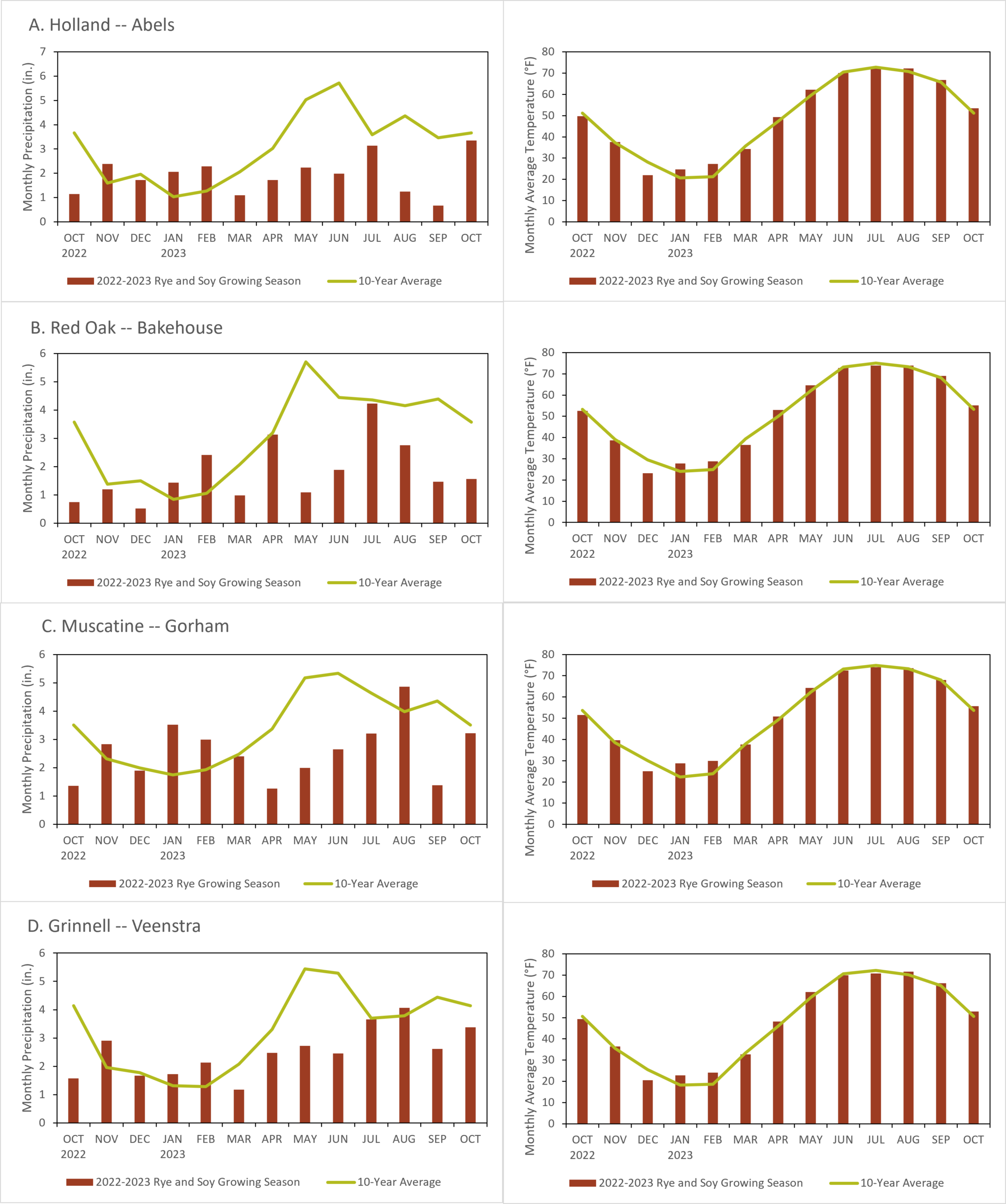
- 2023 was a very dry spring at all four trial locations. Some cooperators were pleased that their results showed that they can roll-crimp at anthesis even in a dry year without a yield decline, while others wondered if their results might differ in a more average precipitation year.
Background
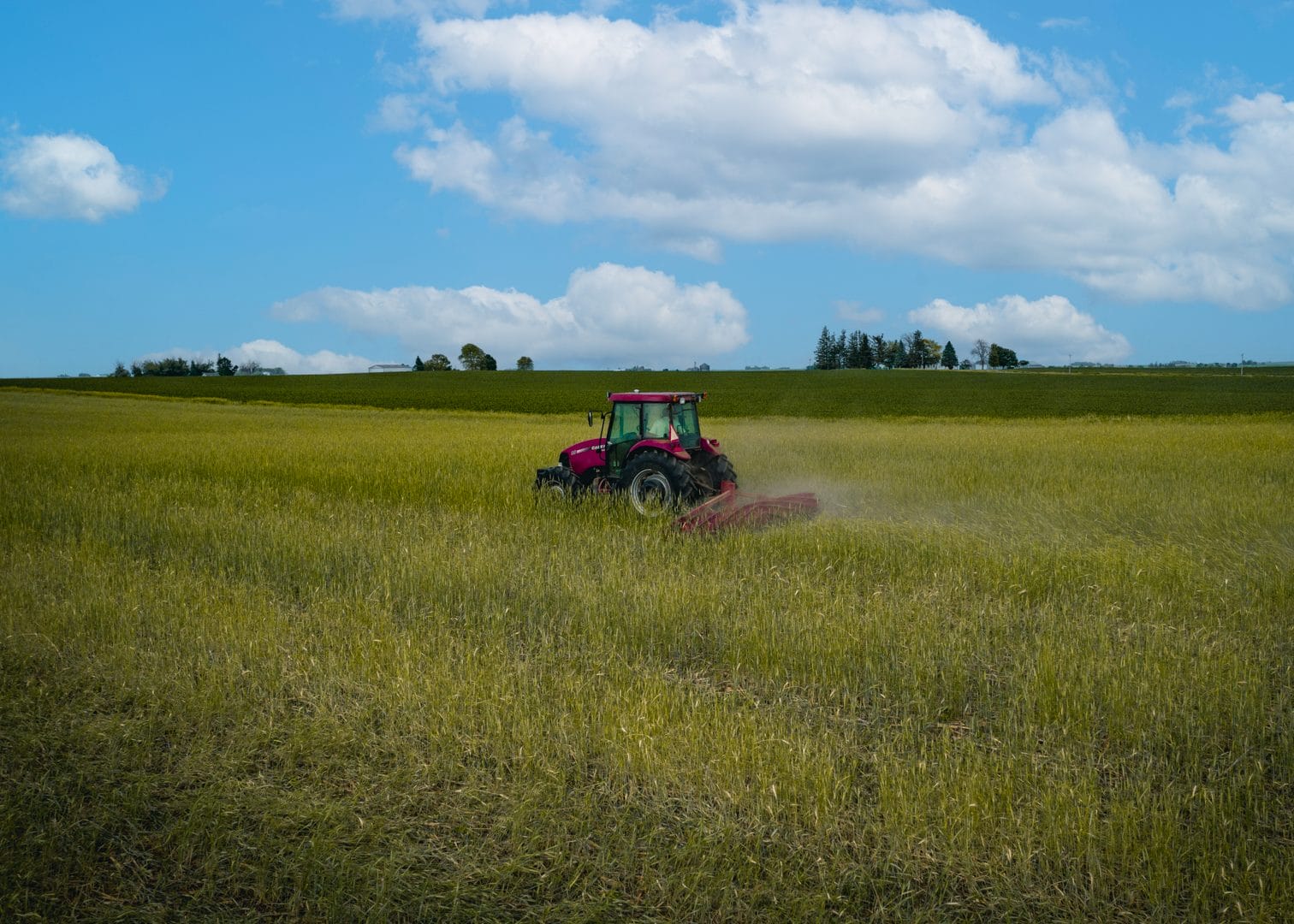
The roller-crimper is an implement developed by the Rodale Institute that flattens standing cover crop and crushes the stem, mechanically terminating it. The roller-crimper allows farmers to plant crops directly into a cover cropped field without using herbicide or tillage to terminate the cover crop [1]. Many organic farmers wishing to reduce tillage while suppressing weeds rely on cover crops terminated using roller-crimpers [2]. On conventional farms, roller-crimpers can also help reduce herbicide use, management time and costs while maintaining similar yields to chemical termination methods [3]. PFI Cooperators have been conducting trials to explore how to make their roller-crimpers work well for them since 2017 [4], [5], [6], [7], [8], [9]. This year, PFI members Fred Abels, Jon Bakehouse, Keith Gorham and Kevin Veenstra wanted to investigate the effect of roll-crimp timing on soybean yield in a system where soybeans are no-till drilled directly into a standing rye cover crop and the rye is terminated later in the season. This practice, commonly called planting green, gives the no-till soybeans an early start at growing while also allowing the cover crop to grow for a bit longer, maximizing biomass and subsequent weed suppression [10]. The cooperators chose to investigate the effect of two different roll-crimp timings (Anthesis vs. Grain-Filling) on soybean yield in this system. Past PFI research has shown that roll-crimping can be more effective at weed management when performed at Grain-Filling, but also that delaying rye termination by more than two weeks after soybean planting can decrease soybean yields [7], [9]. Abels summed up a common goal of the group well, saying “I want to make roll-crimping work for me and others to improve our bottom lines.”
Methods
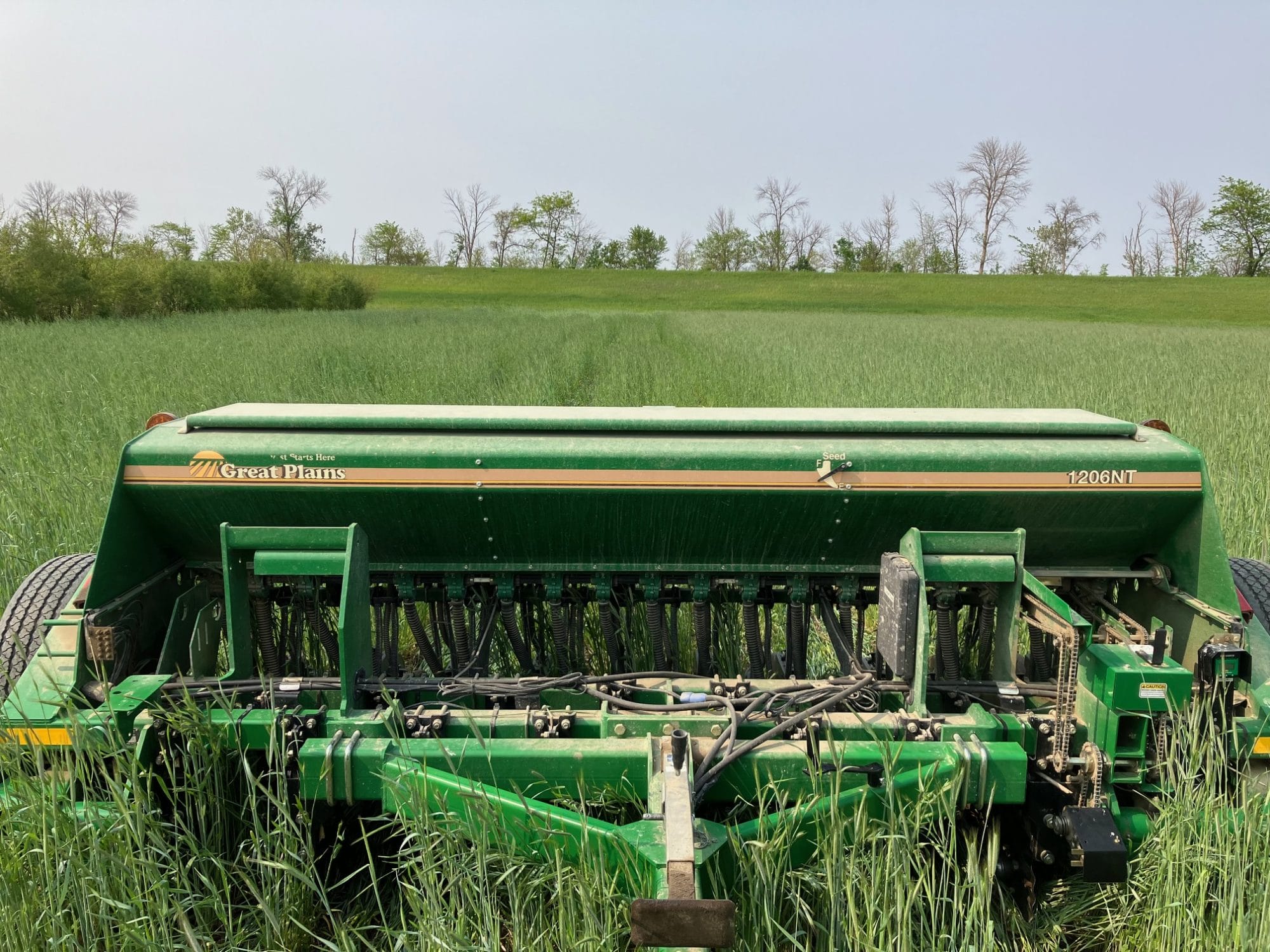
DesignCooperators drilled one type of soybean at a single population into standing cereal and then subjected them to the following rye termination treatments:
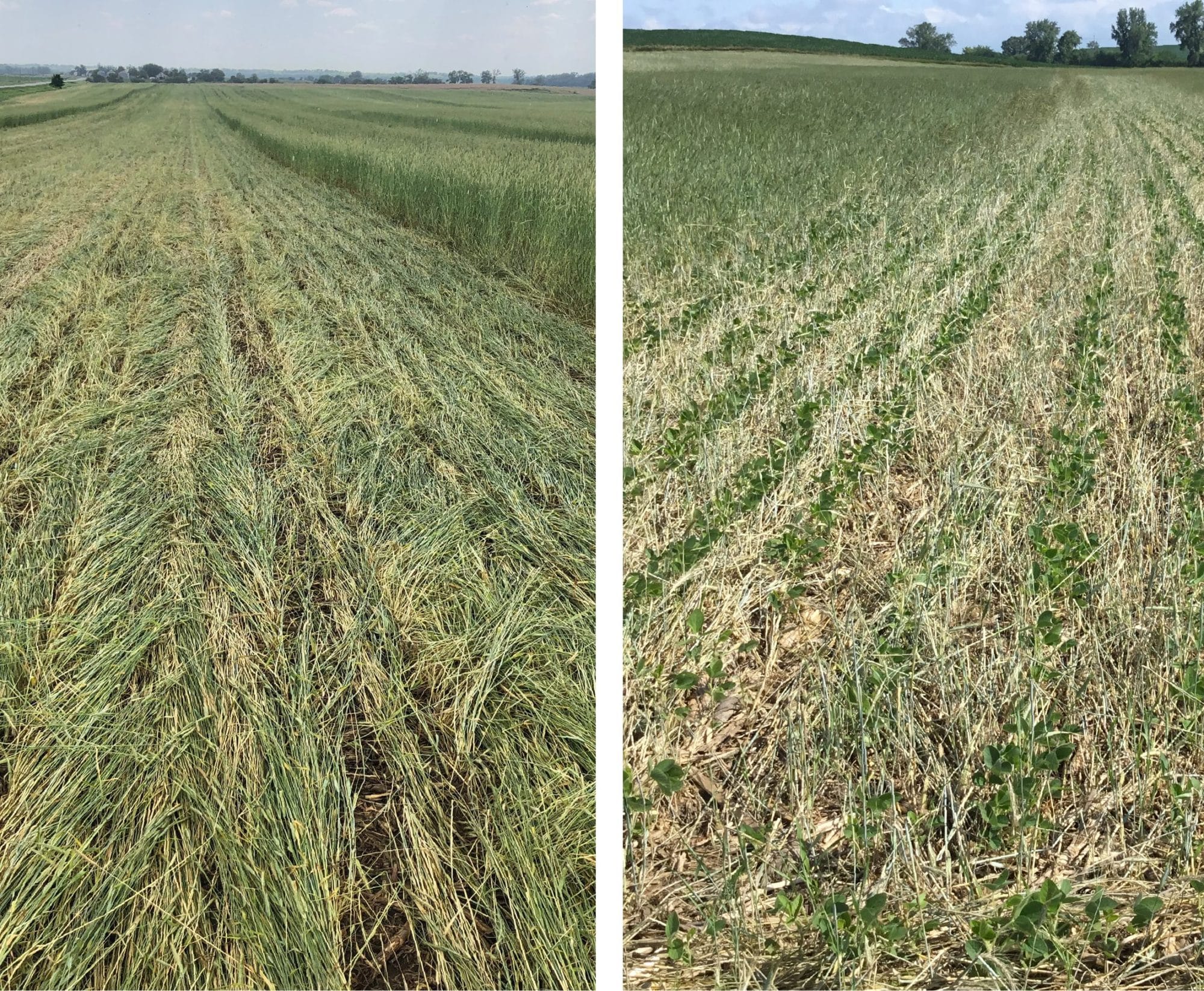
- Roll-crimp at Anthesis (flowering)
- Roll-crimp at Grain-Filling
Results and Discussion

Conclusions and Next Steps
In this trial, cooperators found that roll-crimping at rye Anthesis vs. Grain-Filling did not significantly affect soybean yield or cover crop biomass. However, PFI cooperators will likely continue fine-tuning roll-crimp timing through future trials, determining over time how weather and field conditions might affect management decisions year-to-year. Bakehouse also is interested in trialing different varieties of rye to see if roll-crimping is more effective at termination on certain varieties.
Funding Acknowledgements
This material is based upon work supported by the U.S. Department of Agriculture, under agreement number NR226114XXXXG004. Any opinions, findings, conclusions, or recommendations expressed in this publication are those of the author(s) and do not necessarily reflect the views of the U.S. Department of Agriculture. In addition, any reference to specific brands or types of products or services does not constitute or imply an endorsement by the U.S. Department of Agriculture for those products or services.
References
[1] J. M. Wallace et al., “Cover Crop-Based, Organic Rotational No-Till Corn and Soybean Production Systems in the Mid-Atlantic United States,” Agriculture, vol. 7, no. 4, Art. no. 4, Apr. 2017, doi: 10.3390/agriculture7040034. [2] E. M. Silva and K. Delate, “A Decade of Progress in Organic Cover Crop-Based Reduced Tillage Practices in the Upper Midwestern USA,” Agriculture, vol. 7, no. 5, Art. no. 5, May 2017, doi: 10.3390/agriculture7050044. [3] A. S. Davis, “Cover-Crop Roller–Crimper Contributes to Weed Management in No-Till Soybean,” Weed Sci., vol. 58, no. 3, pp. 300–309, Sep. 2010, doi: 10.1614/WS-D-09-00040.1. [4] S. Gailans, J. Boyer, and S. Shriver, “Rolling Cover Crops and Soybean Row-Width,” 2017. Accessed: Jun. 15, 2023. [Online]. Available: https://practicalfarmers.org/research/rolling-cover-crops-and-soybean-row-width/ [5] S. Gailans and T. Sieren, “Roll-Crimping Cover Crops and Soybean Seeding Date,” 2017. Accessed: Jun. 15, 2023. [Online]. Available: https://practicalfarmers.org/research/roll-crimping-cover-crops-and-soybean-seeding-date-2/ [6] S. Gailans and J. Bakehouse, “Terminating cover crop after soybeans,” 2021. Accessed: Jun. 15, 2023. [Online]. Available: https://practicalfarmers.org/research/terminating-cover-crops-after-seeding-soybeans/ [7] S. Gailans and J. Bakehouse, “Timing of Roll-Crimping Rye Cover Crop and Planting Soybeans,” 2022. Accessed: Jun. 15, 2023. [Online]. Available: https://practicalfarmers.org/research/timing-of-roll-crimping-rye-cover-crop-and-planting-soybeans/ [8] S. Gailans, H. Nelson, and S. Shriver, “Soybean row width and seeding date when using a roller-crimper for ceral rye cover crop,” 2018. Accessed: Jun. 15, 2023. [Online]. Available: https://practicalfarmers.org/research/soybean-row-width-and-seeding-date-when-using-a-roller-crimper-for-cereal-rye-cover-crop/ [9] H. Nelson, J. Bakehouse, and S. Bennett, “Terminating Cereal Rye After Seeding Soybeans (Or Not!),” Practical Farmers of Iowa, 2020. [Online]. Available: https://practicalfarmers.org/research/terminating-cereal-rye-after-seeding-soybeans-or-not/ [10] S. B. Mirsky, W. S. Curran, D. M. Mortenseny, M. R. Ryany, and D. L. Shumway, “Timing of Cover-Crop Management Effects on Weed Suppression in No-Till Planted Soybean using a Roller-Crimper,” Weed Sci., vol. 59, no. 3, pp. 380–389, Sep. 2011, doi: 10.1614/WS-D-10-00101.1. [11] Climodat Reports, “Iowa Environmental Mesonet.” Iowa State University. [Online]. Available: http://mesonet.agron.iastate.edu/climodat/