A Winding Path to Winter Wheat
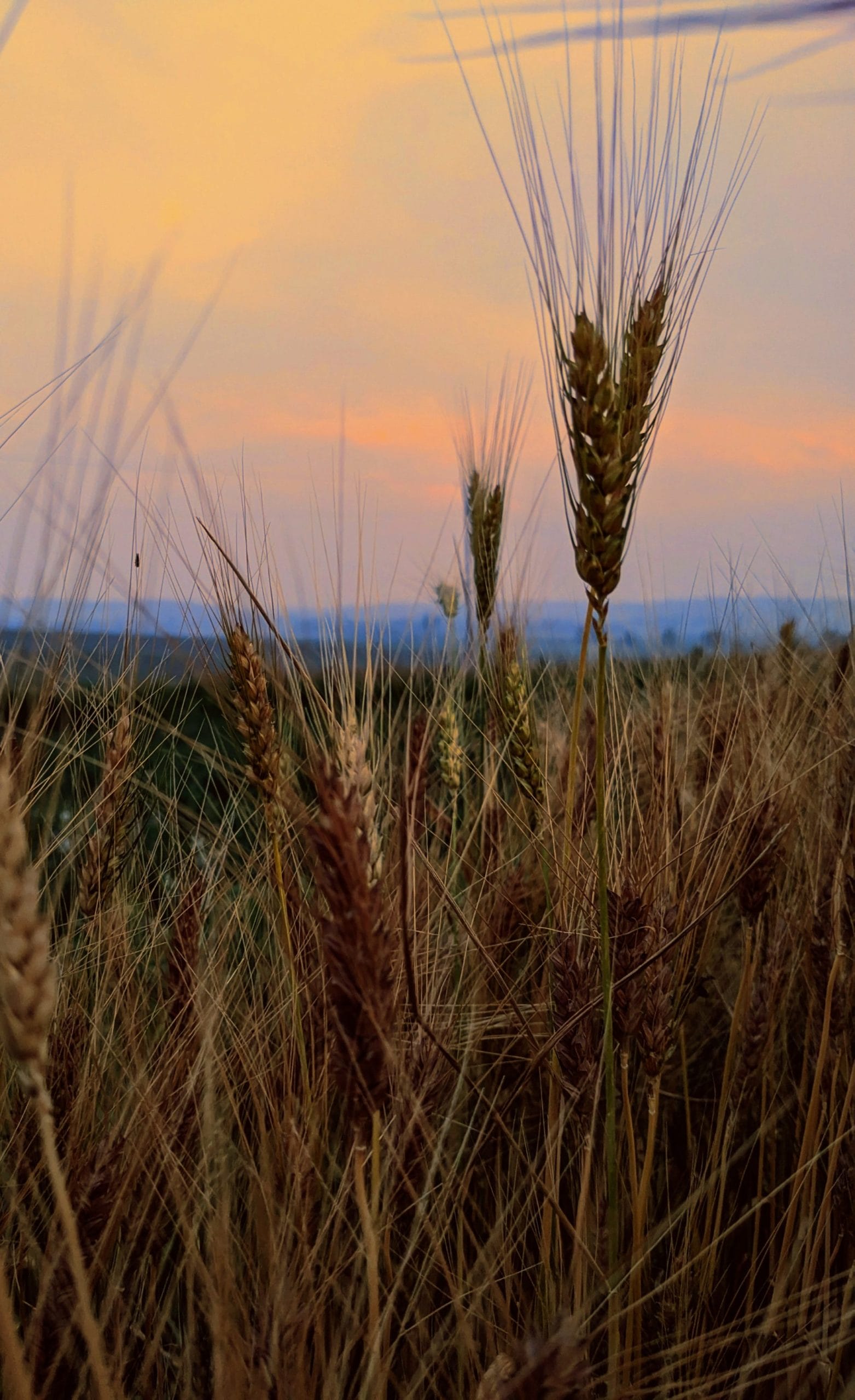
Daniel and Emily farm on land that was passed on to them from Emily's parents. As a farmer, her father, Alan Kouba, was unafraid to branch out from what was perhaps considered normal at the time and experiment with growing things differently. This, along with a desire to produce food-grade quality grain, provided inspiration for Emily and Daniel to choose to transition their approximately 600 acres to organic beginning in 2008. As they settled into their organic practices, they needed to incorporate more crops into their rotations, initially landing on oats as a nurse crop for hay to feed their cow-calf herd and 150 feeder cattle at the time. After attending a PFI small grains conference, now called Midwest Covers and Grains Conference, and hearing other producers offer insights into growing food-grade oats, Daniel and Emily decided to give food-grade wheat a try. Despite some trepidation due to the disease risk that comes with Iowa's humid summers, they recognized wheat's potential for increased profit and ventured out with soft red spring wheat. “We didn't attempt it in a small way,” Daniel says with a chuckle. “We grew 65 acres and I think it produced about 15 bushels to the acre. It wasn't good quality and we couldn't market it easily. It was not something we wanted to repeat.” A few years later, after learning at another PFI small grains conference to plant earlier maturing soybeans for the purpose of fall-seeding a rye cover crop, Emily and Daniel decided to give winter wheat a try. In early October 2022, Daniel drill-seeded 2-2.5 bu/ac of Wesley Hard Red Winter Wheat at 7.5-inch row spacing after soybean harvest with some expectation that it wouldn't fare well. It could then just become a cover crop and be tilled under in the spring to make way for another round of soybeans. “But that wasn't the case!” Daniel says. “We had a little bit of growth in the fall and by spring, we had a really good-looking wheat crop, so we left it. That went about 90 bushels to the acre on approximately 35 acres.”Observing the Gains

On to Another Season
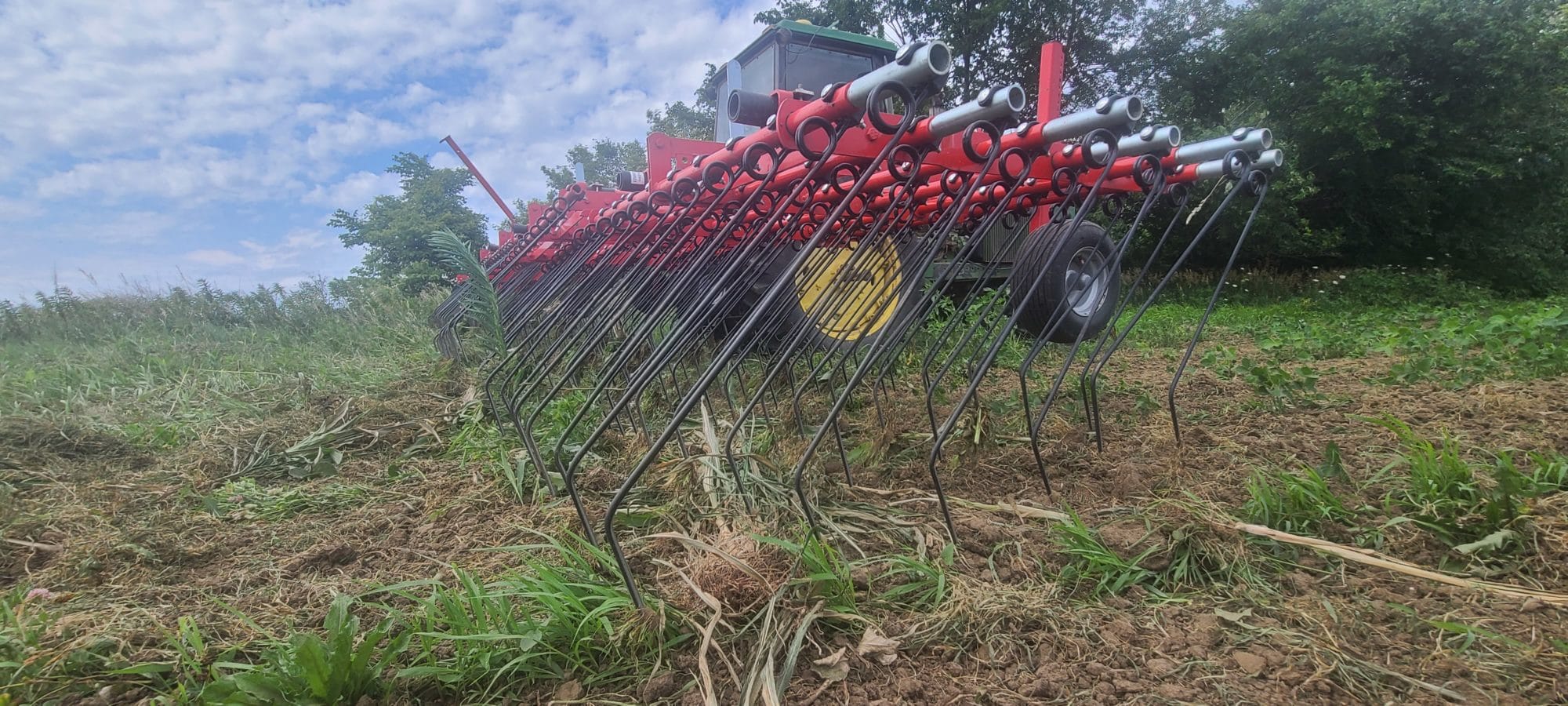
As Daniel and Emily begin their second season with winter wheat, they have drilled in 50 acres of the crop and have learned what they want to do differently this year. In their first season, Daniel used a vertical tillage machine to level the ridges left from row crop cultivation, but he felt it didn't end up being a big issue and hopes to avoid that extra task ahead of future wheat plantings. He also plans to direct-cut his wheat since it has had little weed pressure and swathing runs the risk of harboring insects or added moisture from unexpected rain. Though Daniel was encouraged by the low number of weeds in his first season growing winter wheat, he plans to use an Einbach 12-row Aerostar tine weeder to take out the weeds growing in the top half inch of soil. “I hope to see just a little less weed pressure as the crop matures, begins to die back, and lets the sunlight in. Then I won't have to do significant tillage just to put in the cover crop.” Daniel appreciates that winter wheat provides a broad window to plant a late-summer cover crop and looks forward to experimenting with some different mixes in the next few years that will retain nutrients and maintain soil health for many harvests to come.