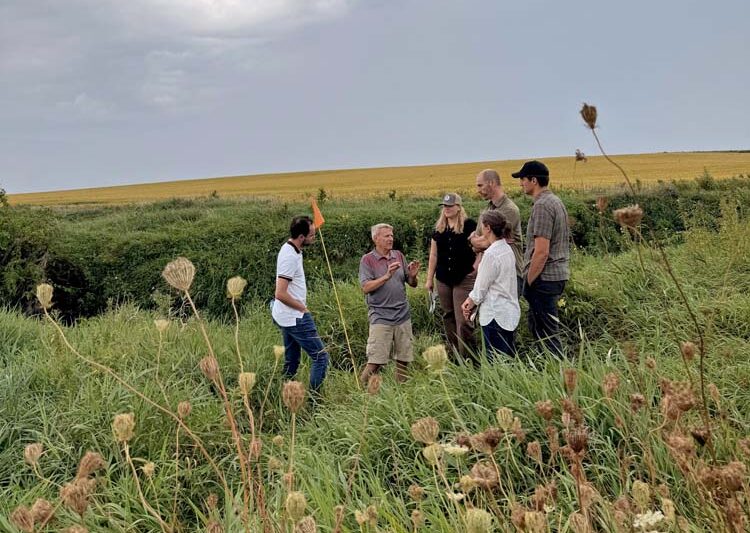
This February, I had the privilege to visit Washington, D.C., as part of a farmer fly-in organized by the National Sustainable Agriculture Coalition. Shaffer Ridgeway and Carmen Black, both PFI farmers and board members, joined me and my colleague Adam Mason, senior policy coordinator, to share PFI member priorities with policymakers. We teamed up with members of the Climate Land Leaders Initiative, including farmer and PFI member Seth Watkins and program director Sarah Hunt, to share farmers’ priorities with Iowa’s elected officials. Here are the main requests each farmer voiced:
Shaffer Ridgeway – Southern Goods | Vegetables and Cattle | Waterloo:
“Local Food Purchase Assistance was a game changer for our farm, as well as many farms in my area. We were able to provide healthy food to our local communities through food banks, daycare centers and food hubs. Food bank customers knew that we dropped off our produce Wednesdays at 1 p.m. and timed their visits to get our food. We’d drop off 300 pounds of greens, from collards to mustards, and they’d be gone by Friday.
“It was a big blow to us to learn that the renewal for LFPA was cancelled in March 2025. We’d already purchased our seeds and sent them to the greenhouse that custom-grows them. After a few days of mourning, we went back to work, pivoted our markets and survived 2025. Please support future programs, like the Local Farmers Feeding Our Communities Act, to bring back this market and avenue for healthy food for our communities.”
Carmen Black – Vegetables, Sheep, Goats, Chickens | Sundog Farm | Solon:
“I am excited that I can purchase federal crop insurance through the Whole Farm Revenue Protection program for the first time this year. We are not eligible for traditional crop insurance, and until this year have not been able to get a quote for any of the programs we are eligible for. I encourage you to continue working with the insurance industry to make these programs more accessible.
“Similarly, I urge you to include diversified farms and specialty crop farmers in future disaster programs like the upcoming Farmer Bridge Payments for American Farmers Impacted by Unfair Market Disruptions [a $12 billion aid package to help farmers weather market disruptions]. There are very few disaster programs that include specialty crop farmers.”
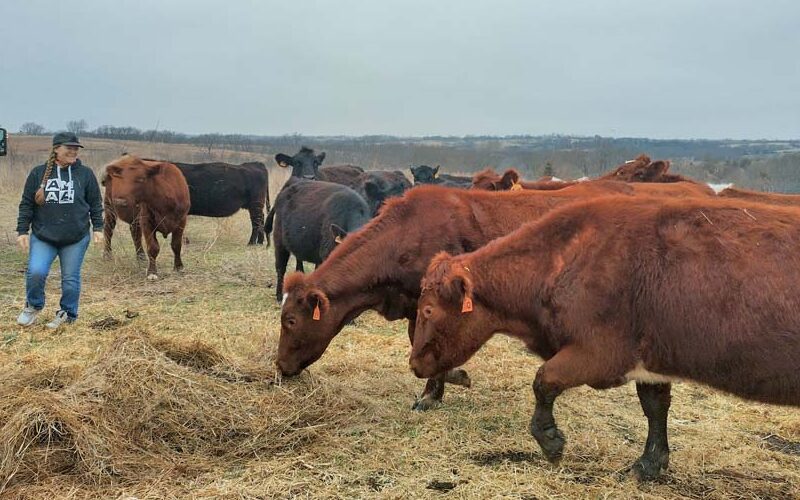
Seth Watkins – Cattle | Pinhook Farm | Clarinda:
“Programs like the Conservation Stewardship Program make it possible for farmers to steward the land in ways that best match its resource value. CSP brings diversity to the farm landscape, and this diversity bolsters the local community and its economy. In the southwest Iowa hills where my farm is, pastures, prairies, trees and conservation make the most sense on most of the farm. My farm has benefitted from these programs, and I want to ensure they are there for the next generation of farmers.”
As we headed into our elected officials’ offices, NSAC staff reminded us that our voices matter, and we have power to bring about change. Commodity groups frequently visit Washington, D.C., to share their needs. Yet one office we visited told us that these groups hadn’t brought up Whole Farm Revenue Protection access issues. While we don’t have funds to visit the nation’s capital as often as groups who have full-time lobbyists, our voices still matter. Showing up matters.
We have thousands of members who are finding creative and inspiring ways to steward their land, communities and the environment. Farmers like Kevin Novak and Tanner Faaborg, who have diversified their farms with mushrooms; Bonnie Warndahl, who has created land access for beginning farmers; and Kathy and David Law, who have worked to restore oxbows for water quality and imperiled species, like the Topeka shiner.
These farmers are all showing up in different ways to work toward a landscape of resilient farms and communities. Read their stories in this edition of the Practical Farmer. These farmers, and members like you, see the realities on the ground every day. Your experiences and insights matter. That’s why it’s even more important that we show up to share our priorities and solutions.
Shaffer, reflecting on our trip, said, “Getting involved in policy isn’t really my thing, but I’m glad I went and made my voice heard. I encourage others to talk to policymakers to ensure policies serve the needs of our farms and communities.”
As the spring brings a cycle of new beginnings, I hope this edition brings you inspiration and community.