Do cover crops affect crop yields?
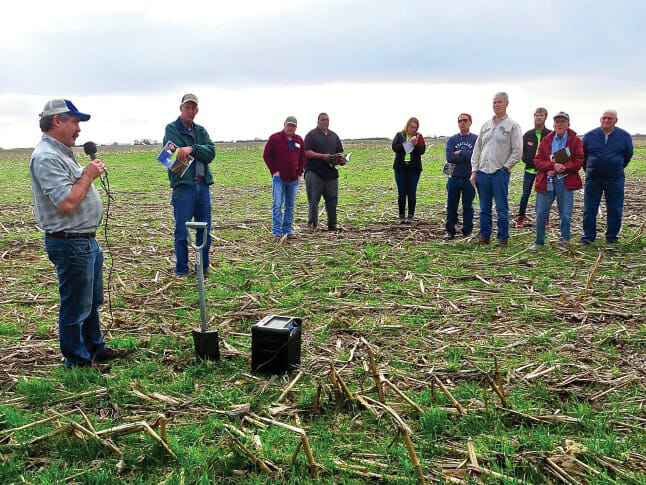
In 2008, PFI partnered with Iowa Learning Farms to recruit 12 farmers for a long-term study testing the effect of a cereal rye cover crop on corn and soybean yields. At that time, the benefits of using cover crops to prevent soil and nutrient loss from fields were well-established in the academic literature. The presence of roots during the fall, winter and spring holds soil in place and soaks up extra nutrients left over from cash crop production. But less was known about how corn and soybeans would respond to cover crops. Many people – farmers and researchers alike – viewed any plant growing in the spring before corn or soybeans were planted as a weed that would reduce yields. Ten years ago, this was the major concern on a lot of farmers' minds (and it's still probably on many farmers' minds today). To investigate this concern, the farmers participating in the study agreed to establish replicated strips in which they either seeded a cereal rye cover crop in the fall or left the soil bare (no cover crop). The following spring, the farmers terminated the cover crop in the strips and planted corn or soybeans in the entire field. Come harvest time, we compared grain yields from the cover crop strips and bare strips.
The difference in our knowledge about cover crops between the time we started and now is huge. – George SchaeferIn soybeans, the story is similar – but with a bit of a twist. Over 10 years, the cereal rye cover crop has had no effect on soybean yields across 20 of 29 trials. Unlike with corn, however, three farms saw improved soybean yield from the cover crop in the first three years of the experiment. In fact, the cover crop has boosted soybean yields eight times over the course of the study, and we found that those yield increases became more frequent as the study progressed. This has led many to suggest that the learning curve for growing soybeans after a cereal rye cover crop is much less steep than for corn. Most importantly, this long-term study has produced results similar to recent experiments by researchers at Iowa State University and Michigan State University that found cereal rye cover crops do not negatively affect corn and soybean yields. Both farmers and researchers agree that the key to avoiding negative effects lies with proper management.
What is “proper management” when cover crops are involved?
With the results of these studies in mind, the focus of PFI on-farm research has evolved to investigate practices that lead to consistent cover crop success. For instance, more recent studies have explored when to terminate a cereal rye cover crop relative to planting corn or soybeans, as well as when and how much nitrogen fertilizer to apply to corn following a cover crop. These are practical management decisions a farmer has control over, and their effects on crop production can easily be tested with on-farm strip trials.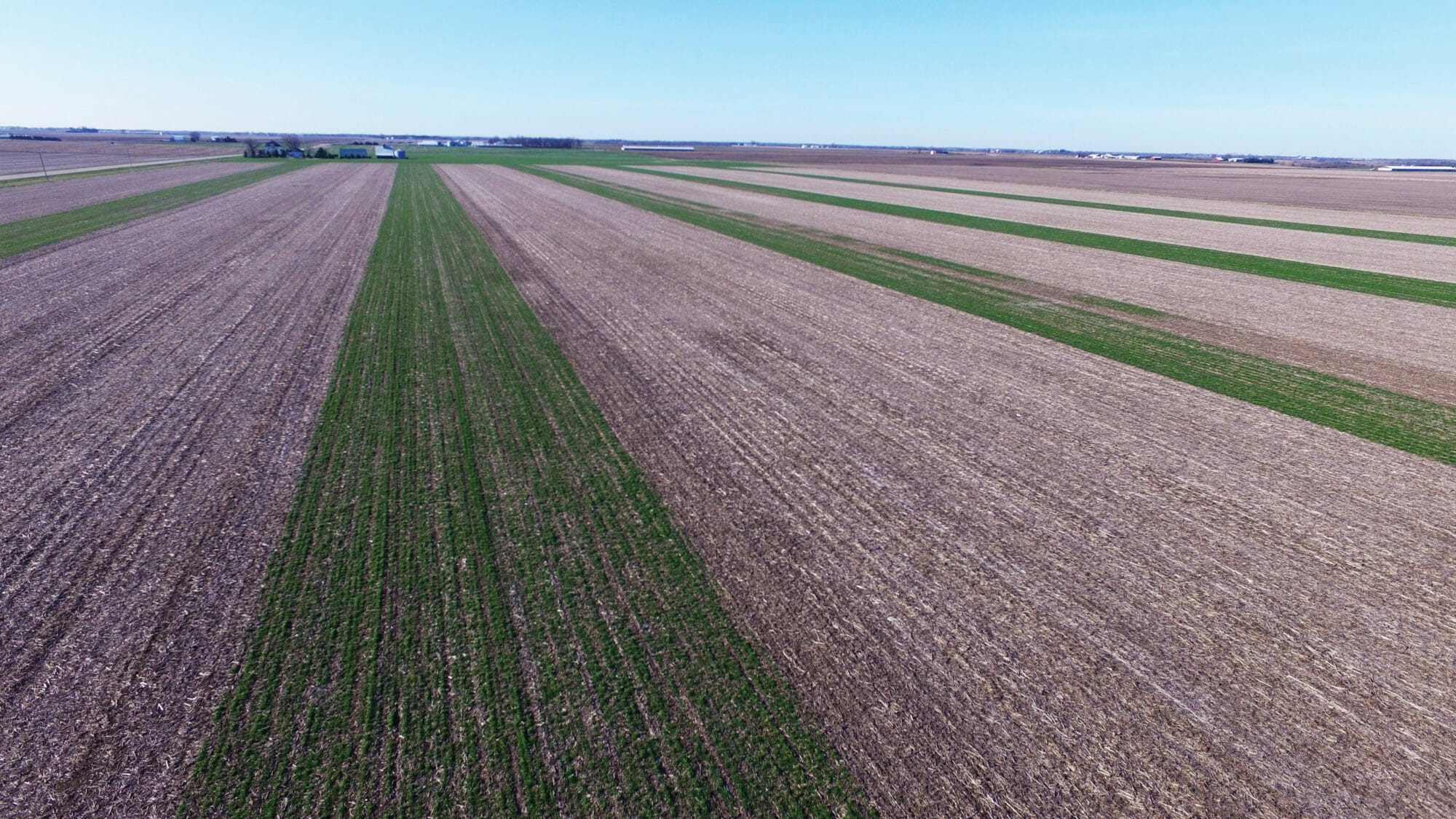
When should cover crops be terminated?
As a general rule of thumb, cereal rye cover crops are terminated 10 to 14 days before planting cash crops to avoid competition between the cover crop and cash crop for soil moisture and nutrients. Following this advice, farmers wishing to plant corn in mid- to late April would thus have to kill the cover crop in early April, when the cereal rye might only be 6 or 7 inches tall. But those who've used cover crops for a few years have found that the bigger the cover crop, the greater the benefits to weed control and water quality.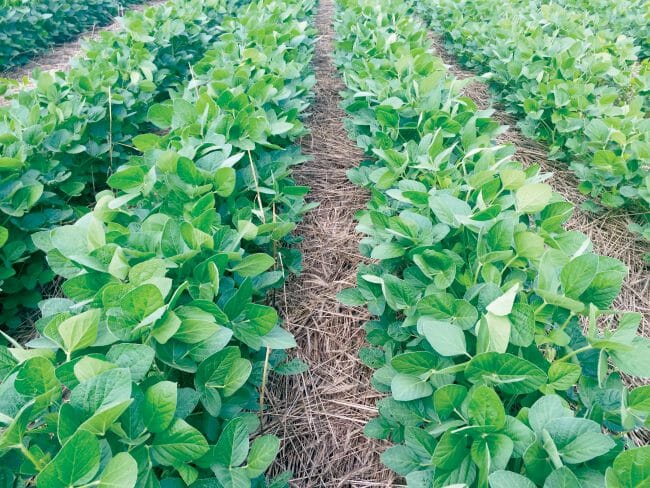


Do I need more nitrogen for corn after a cover crop?
Because corn is considered a heavy feeder when it comes to nitrogen – and because cover crops take up residual soil nitrogen – some farmers wonder if corn needs more fertilizer after a cereal rye cover crop. Results from eight on-farm trials between 2010 and 2017 seem to dispute this idea. Across these trials, Rob Stout, Tim Smith, Jeremy Gustafson and Dick Sloan seeded a cereal rye cover crop in the fall, which they terminated two weeks before planting corn the next spring.